Home Blog Page 89

Iranian Regime Close to Building Nuclear Bomb

As nuclear negotiations between the Iranian regime and the United States reach critical moments, new reports of Iran’s covert and alarming activities have further intensified global concerns.

On one hand, the International Atomic Energy Agency (IAEA) has reported suspicious explosive tests at Iran’s secret sites. On the other hand, analysts warn that Israel is under pressure to make a decision about a possible military strike.

According to the Jerusalem Post, the IAEA stated in a special report that Iran’s regime has conducted several covert explosive tests, which can only be interpreted as part of developing nuclear weapons.

Austrian Intelligence: Iran’s Regime is Actively Pursuing Nuclear Weapons

These tests, which utilized explosive neutron sources, were carried out at the Lavizan-Shian site and were documented at least twice—in February and July 2003. The agency also referred to other incidents, including the use of explosive chambers at the Marivan site and uranium-contaminated equipment at the Varamin site.

The report states that these locations were part of a structured and undeclared nuclear program, and that Iran has since attempted to clean up traces of these activities and has provided false information.

A significant portion of the report’s data is based on documents obtained by Israel’s intelligence agency Mossad in 2018 from the Iranian regime’s nuclear archive.

Enough uranium for 10 bombs

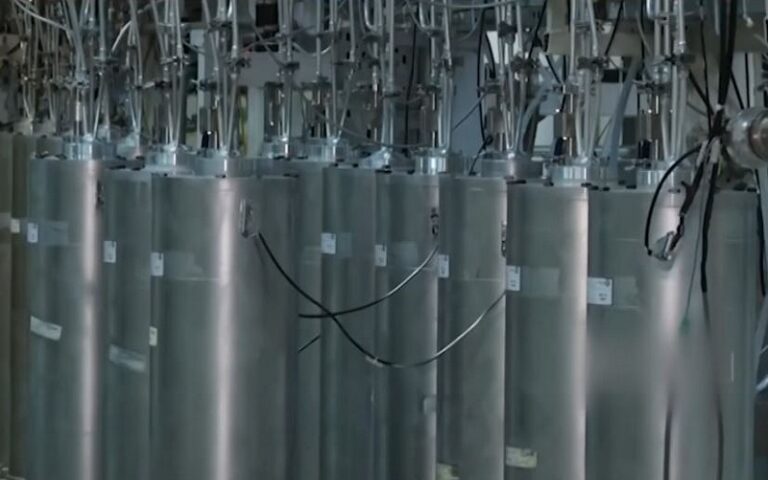
At the same time, the Telegraph, in an analysis by Richard Kemp, a former senior British Army officer, writes that Iran is currently producing enough 60% enriched uranium each month to build at least 10 nuclear bombs. Enriching this material to 90% weapons-grade would take only two weeks.

Kemp warned that the Iranian regime is rapidly expanding its nuclear and military capabilities, while the Trump administration continues to pursue a new agreement with Tehran. Trump had previously set a two-month deadline for reaching a deal, but that deadline has now expired, and it appears Tehran has rejected all offers.

Widespread Coverage of Iranian Resistance’s Nuclear Revelation

In this context, the Iranian regime is openly threatening Tel Aviv, while the ongoing nuclear negotiations between Tehran and Washington have hindered Israel’s ability to decide on military action.

The IAEA report and the amount of enriched uranium show that the Iranian regime’s nuclear case has entered a dangerous stage. If the current trajectory continues and no decisive action is taken, the regime may be only weeks away from acquiring full nuclear weapons capability.


Millions of Iranians Living Below the Poverty Line

The expansion of poverty under Iran’s regime in recent years has become a serious concern. Official statistics present a catastrophic picture of poverty in the country, although these figures are often manipulated to understate the reality.

According to a report by the Research Center of the regime’s parliament, the poverty rate has remained around 30% between 2019 and 2024. This means that approximately 25 to 26 million people in Iran live below the poverty line. However, unofficial and international sources estimate that as much as 80% of the Iranian population faces this challenge.

The Research Center reported a rise in the poverty rate to 30.1% in 2023. Salam Sattoudeh, a member of the regime’s parliament, also stated in early 2025 that about 25 million people live below the official poverty line. This figure is alarming and on the rise.

The Spread of Poverty in Iran

It must always be noted that statistics related to the poverty line and other negative indicators under Iran’s regime are either not published at all or are manipulated. The numbers released by the authorities are significantly lower than the actual conditions experienced by the population.

Beyond the spread of poverty, reports indicate that the income gap between individuals living below the poverty line and the line itself is increasing. This is known as the “poverty gap” index. The parliamentary Research Center reported that this index reached approximately 0.28 in 2022.

Poverty varies across different regions of Iran. For example, in the southeastern province of Sistan and Baluchestan, two-thirds of the population live in poverty. In contrast, the poverty rate in Tehran is around 13%.

In Tehran, the official poverty line is set at over 200 million rials (approximately $241). Anyone earning less than this amount is effectively considered to be living in poverty. In a metropolis like Tehran, the rising cost of housing alone has pushed many into poverty. Meanwhile, the official monthly wage for a worker with two children barely reaches 150 million rials (around $180). Some independent experts estimate the actual poverty line to be twice that amount, at roughly $500 per month.

Workers’ Wages Have Lagged Behind Inflation by 200% in Four Years

Official reports show that in Tehran, 55% of individuals’ income is spent on housing.

Chronic and high inflation in recent years has played a major role in increasing the number of impoverished people under Iran’s regime. In nearly five decades of clerical rule, the inflation rate has only been in single digits for about four years. Meanwhile, people’s incomes have not risen in line with inflation.

75% Of Iranians Live Below the Poverty Line

Fathollah Bayat, head of the Syndicate of Contract and Project Workers, stated that workers’ incomes have lagged behind inflation by as much as 200% over the past four years. This has reduced the purchasing power of the middle and lower classes, pushing a large number of workers below the poverty line.

The rise in unemployment has further worsened poverty under Iran’s regime. Iran’s Statistical Center recently reported at least 2 million unemployed individuals, including 800,000 university graduates. This situation has severely weakened household incomes across the country.

The deteriorating economic situation and damage to productive sectors have reduced job opportunities. As a result, many of Iran’s educated elites have chosen to emigrate. Under persistent high inflation, this has led to growing poverty among large segments of the population.

According to many regime officials, more than 60% of the country’s economy is controlled by regime-affiliated institutions and the Islamic Revolutionary Guard Corps (IRGC).

The High Number of People Living Below the Poverty Line Is the Result of the Mullahs’ Plundering

Former MP Behzad Nabavi stated in September 2019 that “60% of Iran’s national wealth is controlled by just four entities.” Under such conditions, the appointed government acts merely as a logistical coordinator—if that. Even this limited role is often denied to appointed governments, especially those aligned with the regime’s losing faction. Regime-aligned ideologues claim that public despair is due to incompetent and rent-seeking managers, but this is a way of minimizing the actual problem.

The regime’s incompetence—despite Iran’s vast oil, gas, and mineral wealth—has driven a large segment of the population below the poverty line. Iran possesses 28 billion barrels of oil (18% of global reserves), 56 times more discovered oil and gas than all of Europe, 38 times Europe’s mineral reserves, and 34 trillion cubic meters of gas (17.3% of global reserves), yet it has plunged its people into poverty.

While it is currently claimed that 25 million Iranians live below the poverty line, earlier statistics expose the lies of forgetful liars.

According to statistics from the Research Center of the regime’s Chamber of Commerce, about 32 million people were living below the poverty line at the beginning of 2022.

However, on November 17, 2024, the state-run website BourseNews reported that the poverty line in 2024 had risen by over 80% compared to 2022.

Considering the 32 million impoverished people in 2021 and the 80% increase between 2022 and November 2024, the number of poor individuals has reached 57 million. Undoubtedly, this number has continued to rise since November 2024, not decline.

Unauthorized Bank Profits in Iran and Massive Losses

The drop in currency and gold prices since mid-April, coupled with high volatility in cryptocurrency markets and an inflation rate that Iran’s Statistical Center has announced to be over 39%, has once again drawn the attention of depositors—both large and small—toward bank deposits as a risk-free investment option.

Amid this, the fierce and troubling competition among banks to attract public deposits by promising interest rates above the legal limit has raised concerns about how these banks will fund and sustain such payouts in the future. Opening large deposits with high interest rates not only violates the Central Bank’s regulations but also comes at the cost of massive losses for the already loss-ridden banks in the country.

Setting aside the cheap, rent-seeking and government-backed loans, and the interest-free and charitable lending schemes, the maximum legally permitted interest banks can charge on loans is 23%. In such a context, offering 31% interest on deposits results in at least an 8% loss per deposit, which adds significantly to these banks’ already astronomical accumulated losses.

The Banks of Iran: Serving the Economy or Corrupt Capitalism?

While the Central Bank has capped the maximum legal interest rate on bank deposits at 22.5%, competition among Iranian banks to attract depositors has driven them to offer 31% interest in special schemes for large-scale deposits.

These banks, burdened with massive accumulated losses, are willing to obtain needed funds from depositors even at the cost of deeper losses. Offering interest rates significantly higher than the interest earned on loans—despite having accumulated losses in the tens of trillions of tomans (with one US dollar trading at approximately 830,000 rials)—raises serious questions about the source and sustainability of such payments.

Many economic experts and market observers, worried about this ticking time bomb, are asking: When the Central Bank has set the maximum legal interest rate at 22.5%, what response has it given to the blatant violation of offering 31% interest?

These banks, through illegal activities, have themselves played a significant role in driving Iran’s 40% inflation rate. Now they are encouraging depositors to entrust their money to the banks to shield themselves from that very inflation—without clarity on who will use the funds, for what purpose, at what interest rate, and in which sectors or projects.

For example, Ayandeh Bank, the most loss-ridden bank in Iran, is leading the pack in offering high interest rates to raise funds. However, it has lent 83% of the public deposits it collected to itself. These loans have not been repaid, and 80% of them are now classified as doubtful or uncollectible.

The Iranian Regime’s Debt to Banks Has Increased By “Two and A Half Times” In Past Three Years

This bank, which generates a daily net loss of 3.6 trillion rials (approximately $4.3 million), has become a major burden on the country’s economy. Yet it continues to entice the public with promises of 31% interest to bring in even more deposits.

Among all Iranian banks, 10 have a capital adequacy ratio below the 8% minimum standard, and 9 banks have negative capital adequacy ratios.

The “capital adequacy ratio,” often called a bank’s buffer, is a key indicator showing how much capital a bank has to protect itself against the risks it has taken on. While this minimum is set at 12% in most countries and 8% in Iran, Ayandeh Bank’s ratio is estimated to be below -440%.

This means that if the bank faces any type of risk—for example, if a number of depositors simultaneously attempt to withdraw their funds—the bank will not be able to return their money. Even in the event of dissolution, a dire situation awaits the depositors, particularly large-scale depositors and both minor and major shareholders of the bank.

In order to keep such banks alive, the Central Bank is compelled to fulfill the unbalanced bank’s requests for funds and overdrafts. This inevitably leads to printing money and covering the overdrafts of these banks, meaning that it is not the government, nor the Central Bank, nor the regime that bears the cost of their continued operations—but rather the public, who pays through severe inflation caused by excessive and unsupported money printing without any backing of wealth or production.

Mehdi Bani Taba, an economic expert at the Research Center of Iran’s regime parliament, expressed regret over regime president Masoud Pezeshkian’s opposition to the dissolution of Ayandeh Bank. Referring to the bank’s monthly losses of 110 trillion rials (approximately $132.5 million), he warned that if this bank is not dissolved, the country’s economy will face an extremely disastrous situation within five years, as these massive losses will grow exponentially each year.

Regarding the beginning of the dissolution process of Ayandeh Bank, a major concern is that its largest debtor projects are not even eligible for seizure or sale. According to Rasoul Bakhshi Dastjerdi, an economist and member of the regime parliament’s economic commission, the Iran Mall does not possess an official deed. Moreover, the head of Ayandeh Bank has already sold the income and proceeds from Iran Mall to another company for a period of twenty years. This means that even for auctioning and liquidating the bank’s assets, there are no accessible funds or properties available for seizure or sale.

The Fate of Depositors

All depositors’ funds in Iranian banks are insured up to a limited amount by the Deposit Guarantee Fund. This fund is an independent institution that collects membership fees from banks and guarantees that, in case of a bank’s bankruptcy, part of the customers’ deposits will be repaid. According to law, the maximum guarantee per person, regardless of the number of deposits, is 1 billion rials (approximately $1,200).

Therefore, it is clear that the repayment of small depositors with less than 1 billion rials is given first priority.

In similar cases seen during the dissolution of other financial institutions, the process of repaying depositors has sometimes taken more than seven years. For instance, depositors of the Samen-al-Hojaj financial institution staged protests for years in front of the Central Bank demanding the return of their funds.

Even worse, the depositors’ funds held at the bank are not adjusted for the time elapsed before repayment, and in some cases, the value of their money has dropped more than fiftyfold by the time they actually receive it.

Thus, while bank investments may generally be considered lower-risk compared to other financial markets, the critical condition of Iranian banks and the legal recovery prospects for depositors and shareholders after a bank’s dissolution show that placing blind trust in this so-called safe haven is not without risk and danger.

Three Iranians Accused of Spying for Tehran to Be Tried in the UK in Fall 2026

During a preliminary hearing at the Old Bailey court in London, it was announced that the trial of three Iranian men accused of collaborating with the Iranian regime’s intelligence service will begin in October 2026 in the United Kingdom.

Defense attorneys for the defendants — Mostafa Sepahvand, 39; Farhad Javadi Manesh, 44; and Shapur Ghaleh Alikhani Noori, 55 — announced on Friday that their clients are likely to plead “not guilty” to all charges.

The formal plea hearing for the three men will be held on September 26, while their trial is set to begin on October 5, 2026, at Woolwich Crown Court in London.

Paraguay designates IRGC as a terrorist organization

The three are accused of “gathering information and planning acts of violence” on British soil.

The men, who were arrested on May 4 and remain in custody, are the first Iranians to be prosecuted under the UK’s National Security Act of 2023, which addresses threats posed by hostile foreign states.

All three are accused of actions that allegedly support the intelligence service of a foreign government. The UK police and Home Office have identified that foreign state as “Iran.”

The charges relate to alleged activities carried out between August 2024 and February 2025.

Prosecutors say the three men are also accused of surveillance and conducting reconnaissance operations targeting specific individuals in the UK.

Iranian Opposition Condemns Release of Tehran’s Convicted Diplomat-Terrorist Assadollah Assadi

UK Government Reaction

Following the announcement of the charges in May, Yvette Cooper, the UK Home Secretary, issued an official statement in response to the allegations against the three Iranian nationals.

The Home Secretary said that the Iranian regime must be held accountable for its actions and the UK will not tolerate the increasing threats posed by foreign governments on its soil.

She added that the UK government would consider taking further measures to counter state threats to national security.


Warning Resolution by IAEA Board of Governors: Tehran Has Violated Its Safeguards Commitments

In a new and escalating development in the Iranian regime’s nuclear case, four Western countries — the United States, the United Kingdom, France, and Germany — have submitted a draft resolution to the International Atomic Energy Agency (IAEA) Board of Governors, accusing Tehran of “violating its safeguards commitments.”

According to the Associated Press, this draft resolution, which was shared with the Board members on Thursday, June 5, stresses that since 2019, the Iranian regime has repeatedly refused to fully and promptly cooperate with IAEA inspectors regarding undeclared nuclear material and suspicious activities at hidden sites.

Iranian Regime Atomic Energy Organization Protests IAEA Reports

The Western resolution states that Iran’s lack of transparency in its nuclear program has raised serious questions about its peaceful nature, which could eventually lead to referral to the United Nations Security Council — the body tasked with maintaining global peace and security.

IAEA on the Scene; Iran Facing Unprecedented Charges

Rafael Grossi, the Director General of the IAEA, has been tasked with continuing efforts to implement the provisions of this and previous resolutions. The IAEA’s latest quarterly report confirms existing concerns and reveals undeclared Iranian nuclear activities at sites such as Lavizan, Varamin, Marivan, and Turquzabad.

A Western diplomat told the Associated Press that if this resolution is adopted, it would mark the first time in two decades that Iran is formally accused of violating its safeguards obligations.

Iranian Regime’s Warning: Europe on the Brink of a Strategic Mistake

In response to the move, Abbas Araghchi, former deputy foreign minister of the Iranian regime, described it as a “biased action” and said, “Baseless and politicized accusations against Iran will only escalate the crisis.”

He warned that Europe is on the verge of “a major strategic mistake,” and that the Iranian regime “will respond decisively to any violation of its rights.”

Efforts to Preserve Diplomacy; But Warning About Snapback Sanctions

While this resolution is considered a major step toward increasing international pressure on Tehran, Western sources say the aim is not to end diplomacy, but to pressure Iran into providing transparency. Based on this approach, for now, the case will not be referred to the UN Security Council.

However, the three European countries have warned that if Iran continues its lack of cooperation, they are prepared to activate the “snapback mechanism” and formally refer the case to the Security Council.


Trump: Iran Will Not Enrich Uranium; Otherwise I Will Do Something I Don’t Like

U.S. President Donald Trump told reporters about the Iranian regime’s nuclear issue saying: “They won’t be enriching. If they enrich then we’re gonna have to do it other way and I don’t really want to do it the other way but we’re gonna have to. There is not going to be enrichment.”

He added that after the end of his first presidential term, there were no problems. There were no wars, ISIS was 100% defeated, Iran was bankrupt, there was no issue with Hamas and Hezbollah, Israel had not been attacked, the Russia-Ukraine war had not happened, and there was no inflation in the U.S.

Alongside continued U.S. military threats, speculation about a potential Israeli military action against the Iranian regime has also intensified in recent weeks. Israeli officials have recently reinforced this speculation through both public and covert signals.

However, Axios quoted senior Israeli officials reporting that while Israel is conducting training and drills for potential strikes on Iran’s nuclear facilities, it has told the United States it will not take action unless negotiations fail.

Meanwhile, the Iranian regime, in a note addressing the Director General’s report to the Board of Governors of the International Atomic Energy Agency (IAEA) under the title “NPT Safeguards Agreement,” stated that 60% uranium enrichment is not prohibited under the NPT and that Iran’s 60% enrichment activities and stockpiles are under the Agency’s supervision and verification.

Iran’s Regime Dismisses IAEA Report About its Nuclear Program as “Biased and Baseless.”

The note, referring to the IAEA’s report on undeclared nuclear material or highly contaminated equipment, states security officials have recently discovered further leads indicating that sabotage or hostile actions were involved in contaminating those sites.

The Iranian regime claimed that all its nuclear materials and activities have been fully declared to the IAEA and verified by the Agency, and that it is making every effort to identify the origin of such particles at those locations.


Wall Street Journal: Iran’s regime buys raw materials for its missiles from China

The Wall Street Journal reported on Thursday, June 5, citing unnamed informed sources, that Tehran, amid tense nuclear negotiations with the United States, is seeking to rebuild its military capabilities and has ordered thousands of tons of materials needed to produce ballistic missiles from China.

According to the Wall Street Journal, the shipments include “ammonium perchlorate,” which, according to the sources, is expected to arrive in Iran in the coming months. Ammonium perchlorate is the main component used in producing solid fuel for Iran’s ballistic missiles.

The report adds that part of these materials will likely be sent to Iran’s regime-backed militias in the region, including the Houthis in Yemen.

Iran’s Regime Sends Long-Range Missiles to Its Proxy Forces in Iraq

According to the report, while advancing tense nuclear negotiations with the U.S. government, Iran’s regime is also working to strengthen its regional allies and rebuild its missile arsenal. At the same time, Tehran continues enriching uranium to weapons-grade levels and has explicitly stated it is not willing to negotiate over its missile program.

U.S. President Donald Trump stated on Wednesday, June 4, that he had a phone call with Russian President Vladimir Putin in which they discussed negotiations with Iran’s regime.

The Wall Street Journal wrote that an Iranian company called Pishgaman Tejarat Rafi Novin Co placed an order in recent months with a Hong Kong-based company named Lion Commodities Holdings Ltd.

The director of the Hong Kong company, representatives of the Iranian firm, and the Iranian regime’s mission to the United Nations did not respond to the newspaper’s request for comment.

A spokesperson for China’s Ministry of Foreign Affairs also told the Wall Street Journal that they had no knowledge of the deal.

Iran’s regime is trying to rebuild its “Axis of Resistance” following the collapse of Bashar al-Assad’s government in Syria and the serious damage inflicted on groups like Hezbollah in Lebanon and Hamas in Gaza. U.S. and Israeli attacks on Houthi positions in Yemen have also weakened this group, although their threats against Israel continue.

Sources informed the Wall Street Journal that Iran’s regime has recently transferred ballistic missiles to Shia militias in Iraq—groups that have previously attacked U.S. and Israeli forces. These transfers were also previously reported by the Times of London.

After the U.S. killed Qassem Soleimani in 2020, Shia militias in Iraq launched at least 12 ballistic missiles at the American airbase Ain al-Asad.

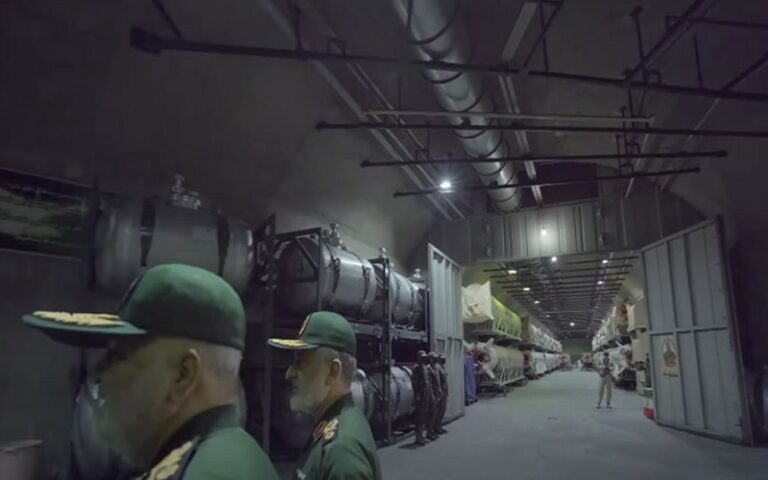
U.S. officials state that Iran’s regime possesses one of the largest missile programs in the region. Ammonium perchlorate, as an oxidizer, is the key component in the solid fuel of Iran’s effective ballistic missiles.

Earlier this year, two Iranian ships docked in China loaded more than 1,000 tons of sodium perchlorate, a substance used to produce ammonium perchlorate. According to reports, these materials, which arrived at Iranian ports in mid-February and late March, were sufficient to fuel approximately 260 short-range missiles.

A new contract for the import of ammonium perchlorate in larger volumes, according to an official, will provide the capacity to produce fuel for approximately 800 missiles. This agreement was signed months ago, likely before Donald Trump extended a nuclear negotiation proposal to the regime’s leader in early March.

On April 29, the U.S. Treasury Department sanctioned six individuals and six entities in Iran and China for their involvement in procuring raw materials for ballistic missiles, including sodium perchlorate. Two weeks later, additional sanctions were imposed on entities and individuals in China and Hong Kong.

In November 2022, the U.S. Navy announced that it had seized a ship in the Gulf of Oman carrying over 70 tons of ammonium perchlorate—a route Iran’s regime commonly uses to smuggle weapons to the Houthis.

Last October, Israel severely damaged the Iranian regime’s capability to produce solid-fuel missiles by targeting approximately 12 planetary mixers used in the production of missile fuel.

The Wall Street Journal further reported, citing a knowledgeable official, that Iran’s regime has begun repairing these mixers. As a result, part of the imported materials will likely be used domestically, while another portion will be transferred to groups such as the Houthis.

Bandar Abbas Explosion Exposes Regime’s Deadly Cover-Up

Storing these flammable materials carries high risks. In April, an explosion at Rajaee Port—which handles a major share of Iran’s container trade—left dozens dead. State-run media reported that the explosion was caused by improper storage of explosive materials by a unit of the IRGC Quds Force. According to an official, some of the sodium perchlorate imported from China was also destroyed in that explosion.


Escalating Human Rights Violations in Iran: Focus on Women’s Rights and Arbitrary Executions

In a June 2025 article published on Opinio Juris, Melanie O’Brien, Associate Professor of International Law at the University of Western Australia, and Javaid Rehman, former UN Special Rapporteur on the situation of human rights in Iran, examine two deeply concerning issues in the country: systemic discrimination against women and girls, and the state’s escalating use of arbitrary executions.

The authors note that these violations are not new. “The Iranian regime is and has been brutal and violent since its inception through the Iranian revolution of 1979.” Persistent patterns of abuse include “violation of the right to freedom of assembly through violence against and arrests of protestors; arbitrary detentions; torture and cruel treatment; discrimination against minorities; enforced disappearances; cruel and inhuman punishments; the use of the death penalty as a tool of political repression; and systematic discrimination against women and girls.”

Following the death of Jina Mahsa Amini in custody of security forces in 2022 and the emergence of nationwide protests, the UN Human Rights Council established the Independent International Fact-Finding Mission on the Islamic Republic of Iran (FFMI). Originally focused on abuses related to the protests, the FFMI’s mandate was expanded in March 2025 to investigate broader, ongoing violations.

Gender Apartheid and Legalized Violence

Rehman observes that Iranian authorities “have maintained a system of gender apartheid,” marked by “draconian laws, policies and practices” that violate the rights of girls and women. Criminal liability for girls begins at nine lunar years for qisas (retribution) and hudud (fixed penalties), and the legal age for marriage remains 13, with even younger marriages permitted with judicial approval. “Child marriages are forced marriages and inherently destructive to the life of the girl child.”

14 Men and Women Hanged in a Single Day in Iran

Women face systemic barriers in public life. They cannot head the judiciary, and though they may sit on judicial panels, “Iranian law prohibits them from rendering a final judgment.” Moreover, the Iranian regime’s Penal Code “expressly permits a man who witnesses his wife committing adultery to kill or assault either or both parties.”

A 2024 law titled Protection of the Family through Promoting the Culture of Hijab and Chastity aimed to enforce strict hijab requirements through 71 articles. It imposed steep fines and potential imprisonment for women failing to comply, extended penalties to civil servants and business owners, and empowered intelligence agencies to enforce the rules. UN experts condemned the law, stating on 13 December 2024: “[t]he new hijab law marks an intensification of state control over women’s bodies in Iran and is a further assault on women’s rights and freedoms.” Following this criticism, Iran’s National Security Council paused the law, allegedly due to “ambiguity in the legislation,” though the authors argue international pressure played a key role.

Arbitrary Executions as State Repression

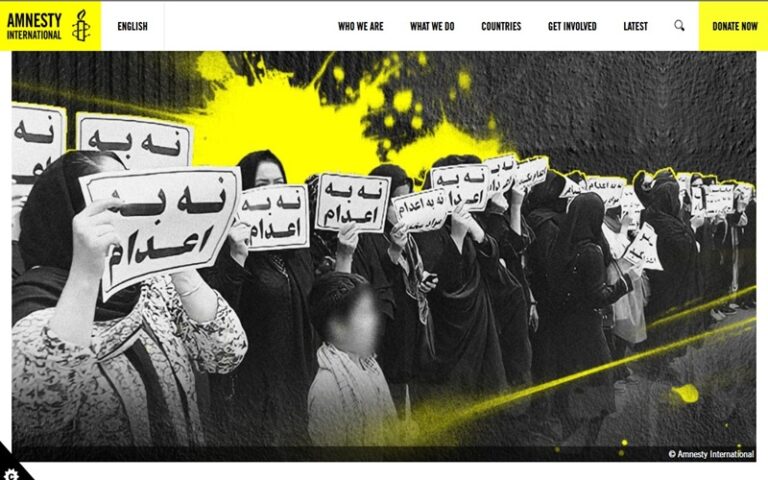
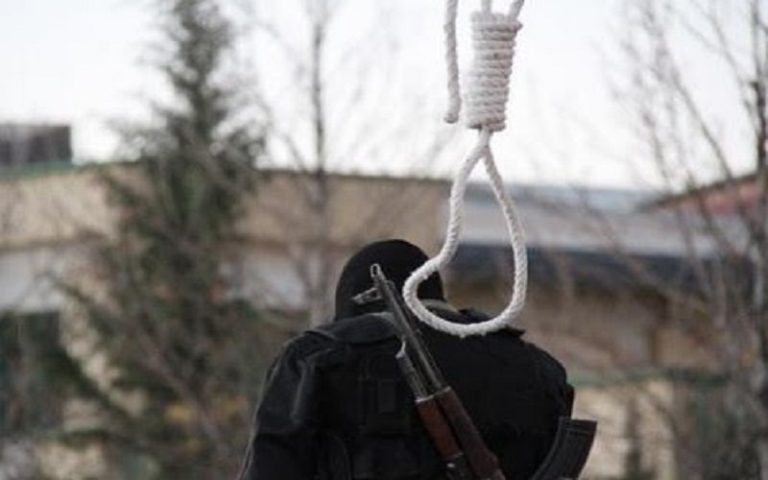
Iran remains “the highest known executioner per capita amongst all countries.” In 2024, “at least 901 people were reportedly executed,” a 6% increase from the previous year. The regime applies the death penalty for over 80 offenses, including moharebeh (taking up arms), efsad-e fel-arz (spreading corruption), and baghy (armed rebellion), along with drug offenses, apostasy, and repeated alcohol consumption.

Iranian Prisoners Sound Alarm as Regime Escalates Executions

Executions disproportionately target ethnic and religious minorities, juveniles, and women—many based on coerced confessions. “At least 31 women were executed in 2024, the highest number of executions of women in any country in the world.” The authors describe this as “the worst form of state-sanctioned violence against women and girls.”

Rehman also recalls past atrocities. In a 2024 UN report, he documented “summary, arbitrary and extra-judicial executions of thousands of arbitrarily imprisoned political opponents,” including the 1988 massacre. These acts, he argues, amount to “crimes against humanity of murder and extermination, as well as genocide.” Victims included many women and children; some women were reportedly raped before execution.

The Demand for Accountability

The authors call on Iran to “respect the fundamental human rights and dignity of all girls and women; end gender apartheid in Iranian society; eliminate in law and in practice all forms of persecution of and discrimination and violence against women and girls.” They further urge Iran’s regime to “immediately end the barbaric arbitrary practice of the death penalty.”

However, they emphasize that the absence of accountability remains a major obstacle: “If accountability is denied for abuses committed over 30 years ago, there is little to no chance of justice within the regime for recent and current abuses.” Their 2024 report drew sharp backlash from Iranian authorities, underscoring the regime’s resistance to scrutiny.

Still, international pressure has shown impact, as seen with the hijab law’s suspension. The authors urge continued support for Iran-focused UN mechanisms and direct diplomatic pressure: “There must be an end to the continuing impunity of this regime; all victims and their families deserve justice and accountability.”


Khamenei: U.S. Interference In Uranium Enrichment Issue Is Nonsense

On Wednesday, June 4, Iranian regime supreme leader Ali Khamenei rejected the U.S. demand in nuclear negotiations that “Iran will not be allowed to enrich uranium,” during a speech at the 36th anniversary of the death of Ruhollah Khomeini, the founder of the regime.

Khamenei stated that “uranium enrichment is the key to the nuclear issue,” adding, “The enemies have also focused on enrichment.”

He continued with harsh language, saying: “Why are you interfering in whether Iran should have enrichment or not? What’s it to you! Who do you think you are?”

Khamenei was referring to the U.S. proposal for reaching a nuclear agreement, which had been delivered to Iran on May 31 by the foreign minister of Oman.

U.S. President Donald Trump stated on Truth Social on Monday, June 2, that as part of a potential nuclear agreement, Washington would not accept any uranium enrichment by Iran.

Khamenei further claimed that the Iranian regime had “experienced America’s unreliability in the 2000s when it came to 20% fuel,” and said: “America’s main point is that Iran should not have a nuclear industry, so you will depend on America. Our response to America’s nonsense is clear: they can’t do a damn thing about it.”

In his speech, Khamenei described the nuclear industry as a “mother industry” and claimed that “multiple scientific fields are influenced by the nuclear industry.”

The Iranian regime’s leader further added: “The nuclear industry is not just for energy. That’s only one of its benefits—this is a mother industry. If we have one hundred nuclear power plants but no enrichment, it’s useless.”

Uranium enrichment: Industrial use or a cover for building nuclear bombs

Khamenei’s claims about the scientific application of the nuclear industry come at a time when the United States and its Western allies fear that the Iranian regime, under the guise of ordinary nuclear activities, is enriching uranium to high levels in pursuit of building nuclear weapons.

These concerns have intensified because, according to the latest report by the International Atomic Energy Agency (IAEA), the Iranian regime has increased its stockpile of 60%-enriched uranium to over 400 kilograms.

In this context, Rafael Grossi, Director General of the IAEA, had previously stated that if Iran enriches uranium to a higher purity level, its stockpile would be sufficient to build at least six nuclear bombs.

According to experts, 60% enrichment is only one technical step away from 90% enrichment, which is the level needed to produce a nuclear weapon. The IAEA report also emphasized that Iran is the only non-nuclear-armed country that has enriched uranium to this level.

Khamenei’s remarks also come after the Iranian regime has spent billions of dollars in national resources over the past two decades on nuclear programs, expanding uranium enrichment in a manner that, according to experts, lacks any economic or technical justification.

These statements are also made while Iran’s only nuclear power plant, located in Bushehr, currently imports its fuel from Russia. The nuclear program has produced no tangible results in meeting Iran’s energy needs, and in recent months, power outages due to energy imbalances have caused serious harm to both the industrial sector and the daily lives of citizens.

Medicine Shortages In Iranian Pharmacies And Online Sales

The power struggle between online sales platforms and pharmacies over the distribution of medicine online continues, as the “Deregulation and Business Environment Improvement Board” has declared the Food and Drug Administration’s directive banning pharmacies from cooperating with online platforms to be illegal and has demanded its cancellation.

On May 21, the Food and Drug Administration banned pharmacies from collaborating with online sales platforms. This reaction came after the Iranian Pharmacists Association accused online platforms of undermining drug distribution security by creating a virtual black market.

The association referred specifically to the sale of narcotic medications and rare or scarce drugs through black market channels.

Pharmacy owners and pharmaceutical companies, due to the Iranian regime’s policies, are entangled in complex financial difficulties, including 40 trillion rials (approximately $48.192 million) in bounced checks, and 290 trillion rials (approximately $349.397 million) in outstanding receivables from insurance companies and the Targeted Subsidy Organization.

Online drug sales, at a time when insurance companies and the Targeted Subsidy Organization delay for months in compensating the difference between the real and official prices of medicine, are seen as a temporary remedy for the deeply troubled finances of pharmacies.

Although the head of the Food and Drug Administration had promised in March 2025 that online drug sales would be implemented under full supervision and within new regulatory frameworks starting spring 2025, a new wave of opposition led the Pharmacists Association to submit a protest letter to the president regarding the activities of online sales platforms.

Ramin Moghadam, a digital health expert, told the state-run Mehr news agency that the Deregulation Board has no authority to intervene in health matters regarding online pharmaceutical delivery, stating: “A purely economic perspective from the Deregulation Board on online drug delivery is harmful.”

On the other hand, Marzieh Bazrafshan, legal deputy of the Iranian Pharmacists Association, has described the excessive insistence of platforms on selling medicine online as suspicious.

Many pharmacists and pharmacy owners believe that platforms like Snapp and Digikala, under the protection of the government—especially the Ministry of Information and Communications Technology—are bypassing the Ministry of Health and Medical Education’s oversight over healthcare standards and services.

Snapp and Digikala treat medicine like mobile phones and consumer goods

Many pharmacists and pharmacy owners support making medicine more accessible to patients, but emphasize that it must be done through a healthy and regulated process.

What has caused pharmacists to take a stance against pressure from platforms like Snapp and Digikala is that these companies are treating medicine the same way they handle mobile phones, refrigerators, electronic goods, and other consumer products.

These platforms want to create their own stockpile of medicine and fulfill requests for medication without considering whether a prescription is required.

Lack of pharmaceutical delivery standards; easy access to drugs like Tramadol

One of the points emphasized in the Pharmacists Association’s letter was the emergence of a black market for medicine through these platforms, which it referred to as a “virtual Naser Khosrow”—a reference to the infamous black market street in Tehran.

One outcome of the involvement of unrelated ministries in pharmaceutical delivery and the pressure from platforms is that drugs like Tramadol—a narcotic painkiller that must only be dispensed with a prescription—have been listed as available medications in online systems. Previously, a person without a prescription might have had to search multiple pharmacies to possibly obtain it, but now, they can simply place an order through the platform and easily purchase it.

Another critical issue—especially with specialized medicines—is how they are transported. Some medications must be handled with extreme care during transit to avoid any movement. Currently, there is no oversight on how these drugs are transported in online sales, which is a responsibility that the Food and Drug Administration must enforce, just as it does for physical pharmacies.

Maintaining the cold chain, where certain medicines must be stored at temperatures between 2 to 8 degrees Celsius, is another critical factor. Currently, there is no oversight on this aspect in online distribution, and due to frequent power outages, this issue can lead to spoilage of medications.