


 AFP: Despite warnings from Iraq’s top officer, the United States stuck Wednesday to its drawdown schedule and suggested just “dozens” of US embassy troops might remain in Baghdad after 2011.
by Tangi Quemener
 WASHINGTON, August 12, 2010 (AFP) – Despite warnings from Iraq’s top officer, the United States stuck Wednesday to its drawdown schedule and suggested just “dozens” of US embassy troops might remain in Baghdad after 2011.
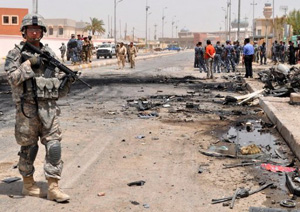
There are now 64,000 American soldiers in Iraq, but this number is due to fall to 50,000 by the end of the month when the United States declares an end to combat operations and switches to a training and advisory mission.
“We’re on target by the end of the month to end our combat mission,” White House spokesman Robert Gibbs told a press briefing, as US President Barack Obama huddled with his civilian and military national security team on Iraq.
Hours earlier, Iraq’s top military officer told AFP on the sidelines of a defense ministry conference in Baghdad that American forces may be needed in the conflict-wracked nation for a further decade.
“At this point, the withdrawal is going well, because they are still here,” Lieutenant General Babaker Zerbari said.
“But the problem will start after 2011 — the politicians must find other ways to fill the void after 2011. If I were asked about the withdrawal, I would say to politicians: the US army must stay until the Iraqi army is fully ready in 2020.”
The general’s remarks came after eight of his soldiers were killed in a brazen attack that exposed Iraq’s still massive security problem as it struggles to install a government five months after a general election.
Weekend violence left at least 60 people dead across Iraq, including 43 killed in a trio of bomb blasts late Saturday in the southern city of Basra.
A top White House advisor fanned the flames by suggesting the US military presence in Iraq after the main American pullout in 2011 could be limited to “dozens” or “hundreds” of troops under the embassy’s authority.
“We’ll be doing in Iraq what we do in many countries around the world with which we have a security relationship that involves selling American equipment or training their forces, that is establishing some connecting tissue,” said Anthony Blinken, national security advisor for Vice President Joe Biden.
“This is something that’s common to many embassies around the world, under the authority of the chief of mission, the ambassador, and typically it involves some small numbers of military personnel,” he said.
“But when I say small, I’m not talking thousands, I’m talking dozens or maybe hundreds, that’s typically how much we would see.”
Blinken downplayed the notion a US withdrawal would usher in a security void.
“There are many remaining issues that Iraqis need to resolve,” he said, “but in terms of the danger that some people were concerned about, about a vacuum developing in Iraq in the absence of a government formation, we haven’t seen that.”
All US troops are supposed to leave the country by the end of next year, according to the terms of a bilateral security pact, and Obama has insisted the ongoing withdrawal is on schedule and will not be altered.
General James Mattis officially took the helm Wednesday of the US Central Command, or CENTCOM, which has overall control of the wars in Iraq and Afghanistan, replacing General David Petraeus.
Petraeus had taken over direct command of the faltering Afghan conflict after his predecessor, General Stanley McChrystal, was fired for giving a damaging magazine interview.
Mattis, a four-star Iraq veteran, took command of operations in the Mideast and Central Asia at MacDill Air Force Base in Tampa, with Defense Secretary Robert Gates looking on.
Assuming command, he said: “to our friends in the region: I bring a message of steadfast continuity and unrelenting engagement with you. We are standing besides you and we will work with you to promote security and stability.”
The US deployment in Iraq reached its peak in 2007 at 170,000 troops but their presence has gradually diminished over the past 18 months.


