


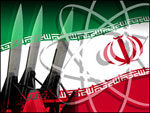
 AFP: Iran laid out “red lines” Monday related to its ballistic missile programme, atomic sites and uranium enrichment ahead of fresh nuclear talks with world powers. Deputy Foreign Minister Abbas Araqchi said “defence-related issues are a red line for Iran”.
By Siavosh Ghazi
Tehran (AFP)— Iran laid out “red lines” Monday related to its ballistic missile programme, atomic sites and uranium enrichment ahead of fresh nuclear talks with world powers.
President Hassan Rouhani insisted Iran was “serious” about the talks, as his negotiators warned they would not back down on some of the thorniest issues of the decade-long dispute.
Iran’s defence minister meanwhile announced the successful testing of a new ballistic missile capable of evading defensive systems and causing “great destruction.”
Negotiations are to resume in Vienna on February 18 and 19 between Iran and the so-called P5+1 — Britain, France, the United States, Russia and China plus Germany.
Building on an interim deal reached in November, negotiators hope to reach a comprehensive accord to allay international concerns Iran is seeking a nuclear weapons capability, allegations denied by Tehran.
Iran made progress in separate but parallel negotiations over the weekend with the UN nuclear watchdog by agreeing to divulge information that could shed light on allegations of possible past weapons research.
Under a deal reached in Tehran with the International Atomic Energy Agency (IAEA), Iran will explain its need for sophisticated detonators that could be used to initiate a nuclear chain reaction.
But on Monday, Deputy Foreign Minister Abbas Araqchi, also a senior Iranian nuclear negotiator, said “defence-related issues are a red line for Iran and that Tehran “will not allow such issues to be discussed in future talks.”
The US lead negotiator in the talks, Wendy Sherman, last week told a Senate hearing Iran’s ballistic missile programme would be addressed in the comprehensive deal.
On Monday, official news agency IRNA cited Defence Minister Hussein Dehgan as saying Iran had successfully tested both the ballistic missile and a laser-guided projectile on the eve of the 35th anniversary of the Islamic revolution.
The missile programme — targeted by UN Security Council sanctions — worries Western powers, as Iran boasts long-range missiles with a maximum range of 2,000 kilometres (1,200 miles), enough to reach Israel.
Sherman had also argued Iran does not require an unfinished heavy water reactor in Arak nor the underground Fordo uranium enrichment site for its civilian nuclear programme.
But another Iranian nuclear negotiator, Majid Takhte Ravanchi, on Monday reiterated Iran would not accept the closure of “any of its nuclear sites.”
The Arak site is of international concern because Iran could extract weapons-grade plutonium from spent fuel if it builds a reprocessing facility.
Last week, Iranian nuclear chief Ali Akbar Salehi said changes could be made to Arak’s design to produce less plutonium and “allay the worries.”
‘Lack of trust’
Salehi has said Iran would refuse to give up uranium enrichment to 20 percent, a few technical steps short of weapons-grade material.
Supreme leader Ayatollah Ali Khamenei, who has the final say on key state matters, “has said that Iran should not give up its right to enrich (uranium) to 20 percent,” Salehi said.
Salehi also announced the development of a new type of centrifuge “15 times more powerful” than those currently being used to enrich uranium.
The November deal stipulates that Tehran stops 20 percent enrichment for six months while transforming its current stockpile into a form that is more difficult to refine.
Foreign Minister Mohammad Javad Zarif, Iran’s top negotiator, said Monday the talks in Vienna would be “difficult,” anticipating a framework for future negotiations would be discussed.
“The biggest challenge is the lack of trust,” he said.
Tehran-based analyst Mohammad Ali Shabani said the progress in talks with the IAEA may smooth negotiations with the P5+1.
“The new agreement is a good indicator that Iran is serious in its commitment to a political solution to the nuclear issue,” Shabani told AFP.
The Vienna-based IAEA seeks to probe allegations Iran’s nuclear work before 2003, and possibly since, had “possible military dimensions.”
IAEA chief inspector Tero Varjoranta said Monday Tehran’s promise to provide “information and explanations” for the development of Exploding Bridge Wire detonators was only a “first step.”
These detonators can have non-nuclear applications, the IAEA said in a November 2011 report, but are mainly used in weapons research, making Iran’s stated development of them a “matter of concern.”
The 2011 report detailed information made available to the IAEA, much of it thought to have been provided by Western and Israeli intelligence, about “possible military dimensions” of Iran’s programme.


