


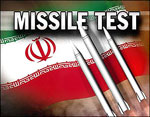
 Huffington Post: The Islamic Republic has exercised a tactical shift with regards to its mass strategic signaling about its military and ballistic capabilities, development of nuclear technologies, covert operations, and long-range missiles. Iranian officials have considerably altered their tone, becoming less strident with regards to sending messages to others about their nation’s strategic and military capabilities.
The Huffington Post
By Majid Rafizadeh
The Islamic Republic has exercised a tactical shift with regards to its mass strategic signaling when it comes to its military and ballistic capabilities, development of nuclear technologies, covert operations, long-range missiles and ICBM capabilities.
In the past, Iranian leaders and Iran’s state media outlets did not hesitate in projecting their military power more publicly, boasting about their ballistic and defense accomplishments, nuclear capabilities, buildups in conventional, unconventional weaponries, as well as publicizing their manufacture of weaponries including long-range missiles and drones.
Nevertheless, Iranian officials have considerably altered their tone, becoming less strident with regards to sending messages to other countries about their nation’s strategic and military capabilities. In addition, the Iranian state media has also been less inclined to publicize the aforementioned arenas.
Iran Denies Involvements
In other words, the Iranian government has evidently toned down its ostentatious attitude and publicity of its military buildup. Does this policy convey that Iranian leaders have become less inclined to pursue their regional hegemonic ambitions and objectives?
The recent developments suggest otherwise. For example, although the Islamic Republic denies involvement in other countries affairs including Yemen, Bahrain, Iraq, the IRGC’s covert operations in several countries including Iraq and Syria have been on the rise. Tehran’s most crucial instrument for covert operation are the Quds Forces and Etela’at (Iran’s intelligence ministry). The increasing power of Iran’s Quds Force, an elite branch of Iran’s Revolutionary Guards Corps, has been clear in several parts of the Middle East. Iran’s political and military relationships- with some powerful non-state players, including Hamas- have progressed as well. In addition, Iran has become increasingly engaged in Syria, alongside Hezbollah.
In terms of strategic influence, Iran would previously frequently threaten to block or cause serious damages to the shipment of oil through the Strait of Hormuz. Nevertheless, these threats seem to have been removed from the discourse of Iranian government under the presidency of Hassan Rowhani.
On the other hand, according to a recent report from classified Pentagon assessment and Bloomberg News, when it comes to nuclear technologies and military advancements in the Strait of Hormoz, the Islamic Republic “continues a low-profile buildup of weapons in and near the Strait of Hormuz”.
Iran’s leverage and control over the Strait of Hormuz is crucial for the global economy since approximately 20 percent of the world’s petroleum, and (nearly 35 percent of the total seaborne traded oil), passes through the Strait of Hormuz. When it comes to boosting attack crafts and anti-ship ballistic missiles in the Strait of Hormuz, the classified report points out, “Iran continues to develop its anti-access and area denial (A2AD) capabilities to control the Strait of Hormuz and its approaches. Tehran is quietly fielding increasingly lethal symmetric and asymmetric weapon systems, including more advanced naval mines, small but capable submarines, coastal defense cruise missile batteries, attack craft, and anti-ship ballistic missiles.”
In addition, the Islamic Republic, which possesses a covert long-range ballistic missile development program, is expected to launch an intercontinental ballistic missile (ICBM) by 2015. This issue has become a growing concern for other regional countries and Western nations. Iranian leaders have declined to discuss their ballistic missile program and capabilities in the context of the nuclear negotiations between the Islamic Republic and the P5+1 (China, France, Russia, the United Kingdom, the United States, plus Germany). The issue of Iran’s ballistic missile development programme is a “red line”, as Iranian officials and negotiators have stated.
With regards to Iran’s nuclear technologies and pursuit of nuclear and atomic weaponry, Iran appears to be ratcheting up its nuclear technological capabilities even after the nuclear interim deal was reached. According to the classified report “Iran continues to develop technological capabilities that could be applicable to nuclear weapons and long-range missiles, which could be adapted to deliver nuclear weapons, should Iran’s leadership decide to do so.”
The Fundamental Objectives
Iran has undoubtedly learned from its past strategic and tactical mistakes. Rowhani and his technocrat team were part of the system when these gaffs were made in the last decade, and they now have introduced a new policy.
Publicity about Iran’s ballistic missile program, military, and nuclear capabilities, triggered these strenuous economic sanctions and isolated the Islamic Republic regional and globally, endangering the hold on power of the government. Although there are some disagreements between Rowhani and the senior cadre of the IRGC, the underlying tactical shift of the Islamic Republic follows Rowhani’s modern agenda: Speaking softly while still pursuing Iran’s hegemonic ambitions.
Iran has attempted to alleviate the concerns of other countries. Rowhani pointed out that Iran’s military and defense developments are solely defensive and aimed at strengthening regional security “Our neighbors should know that if we become powerful in defense industries, it is not merely for our own security, but it is for the security of the entire region… We do not seek an arms race, but we ourselves will make the necessary decisions for defending ourselves and we do not seek the permission of others in this regard.”
The fundamental objectives behind keeping a low profile for the Iranian government are the following:
1. The end and underlying goal is to ensure the power and rule of the Supreme Leader, Ayatollah Ali Khomeinei
2. Wielding more direct or indirect power by secretly strengthening its alliances with other Shiite states and non state actors
3. Projecting Iran as the sole regional power
4. Pursuing Tehran’s regional hegemonic ambitions
5. Removing the economic sanction imposed on Tehran, and
6. Wielding direct power in the region and internationally by reaching nuclear and atomic capacities
—
Majid Rafizadeh, an American scholar and political scientist, is president of the International American Council on the Middle East.


