

Farmers, Workers, and Truck Drivers Hold Protest Rallies in Iran
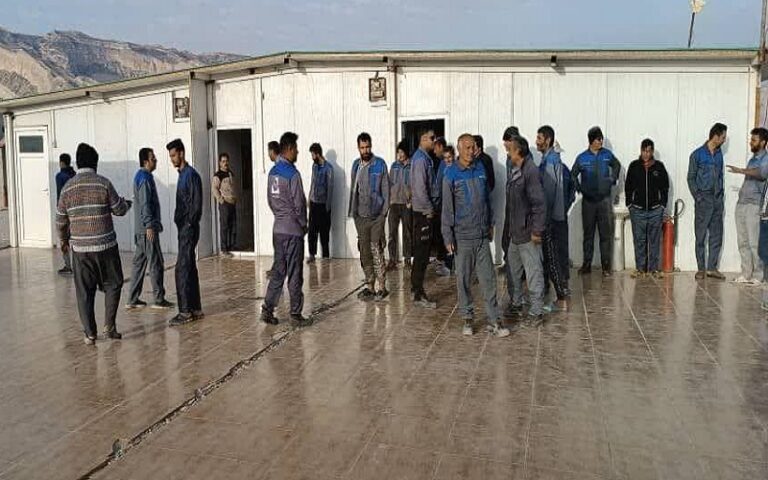
Economic protests continued on Wednesday, March 5, with gatherings of workers, retirees, farmers, and defrauded investors in several cities across Iran, as well as a truck drivers’ strike in Isfahan.
According to reports published on social media, Wednesday’s economic protests included gatherings of workers from Bagan Dam in Bushehr, farmers in Ilam, oil retirees in Ahvaz, defrauded investors of the Caspian financial institution, housing applicants, and a truck drivers’ strike in Isfahan.
According to a citizen-recorded video, a significant number of truck and freight trailer owners, protesting against “discrimination and monopolization in cargo distribution,” went on strike by stopping their vehicles on the eastern bypass of Isfahan.
Additionally, a group of farmers gathered in front of the Ilam governor’s office to protest against the Siyahgol Mine for violating “environmental laws and their living space.”
The mine officials, while “violating environmental laws,” have exposed the farmers to “threats to their living environment” and an “environmental crisis.”
Workers employed in this project, which is being carried out on the border of Dashti and Jam counties to supply drinking and industrial water to the region, have gone on strike in protest against “a four-month delay in their wages.”
The protesters say that “their last received salary was from November 2024,” and now, on the verge of the Iranian New Year (March 21), they are “empty-handed” and “facing economic, livelihood, and family difficulties.”
European Union: The Iranian Regime Must Not Attain Nuclear Weapons
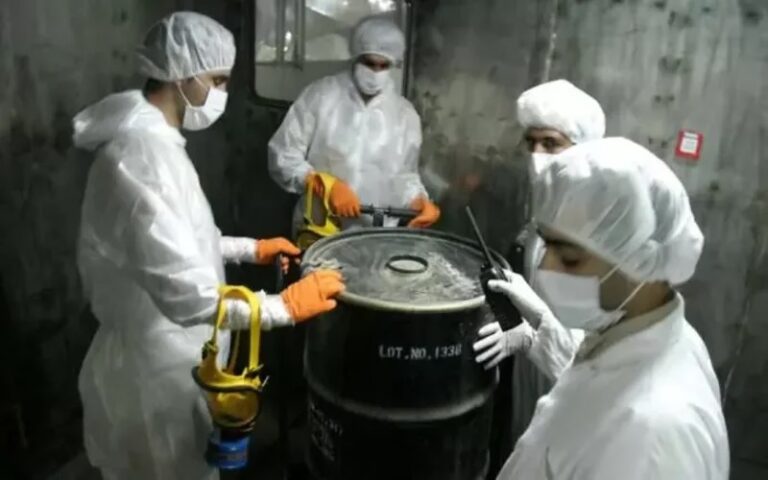
The European Union delegation at the Board of Governors meeting of the International Atomic Energy Agency (IAEA) on Tuesday, March 4, stated in a declaration that preventing the Iranian regime from obtaining nuclear weapons is a “key security priority” for the EU.
According to the website of the EU delegation to the IAEA, the European Union called on all countries worldwide to support the implementation of UN Security Council Resolution 2231, which endorsed the 2015 nuclear agreement (JCPOA), adding that this agreement serves as the foundation for IAEA monitoring and reporting.
In its statement, the European Union expressed regret that “Iran has not made the necessary decisions to return to its nuclear-related commitments under the JCPOA” and emphasized that “Iran’s unabated nuclear advances over the last five years are of utmost concern.”
The statement also highlighted that “the risk of a nuclear proliferation crisis in the region” is increasing due to the Iranian regime’s ongoing nuclear activities.
Iranian Regime Accelerates Uranium Enrichment to Concerning LevelsThe EU delegation stated that its member states remain committed to a diplomatic solution to address this issue and noted that Albania, Bosnia and Herzegovina, Iceland, Liechtenstein, Monaco, Montenegro, North Macedonia, Norway, Moldova, and Ukraine are also aligned with the EU’s statement. The European Union, expressing deep concern over the alarming expansion of the Iranian regime’s nuclear program, stressed that Iran has significantly deviated from its commitments under the JCPOA. It further stated that it is particularly concerned about the substantial increase in the production and stockpiling of highly enriched uranium, as well as the expansion of Iran’s nuclear enrichment capabilities and operations. Prior to this, Howard Solomon, the acting U.S. representative at the IAEA Board of Governors meeting, had expressed deep concern over the acceleration of the Iranian regime’s nuclear program and emphasized that the United States would not yield to Iran’s actions. Rafael Grossi, Director General of the International Atomic Energy Agency, told the Board of Governors on Monday, March 3, that the Iranian regime had increased its stockpile of 60% enriched uranium to 275 kilograms. The IAEA Director General described the Iranian regime as the only non-nuclear state that has engaged in uranium enrichment to this level and called it a serious cause for concern. The European Union delegation to the IAEA, in its statement, pointed out that the Iranian regime has halted the implementation of its nuclear commitments under the JCPOA and added that “For four years, the Agency has been unable to carry out several key JCPOA-related verification and monitoring activities.” The statement expressed concern that the Iranian regime is the only non-nuclear state in the world that systematically produces and stockpiles highly enriched uranium. It urged Iran to change its concerning nuclear trajectory and immediately fulfill its commitments. The European Union also “urges Iran to return to the provisional implementation of the Additional Protocol, to ratify it, and to resume implementation of all JCPOA-related monitoring and verification measures,” which Iranian regime officials claim to be peaceful. The statement emphasized the necessity of full cooperation with the IAEA and affirmed that the European Union fully supports the Agency’s efforts to continue its long-term mission regarding Iran’s nuclear activities.
Disappearance of Imported Gold; The Iranian Regime’s Hidden Game with National Wealth
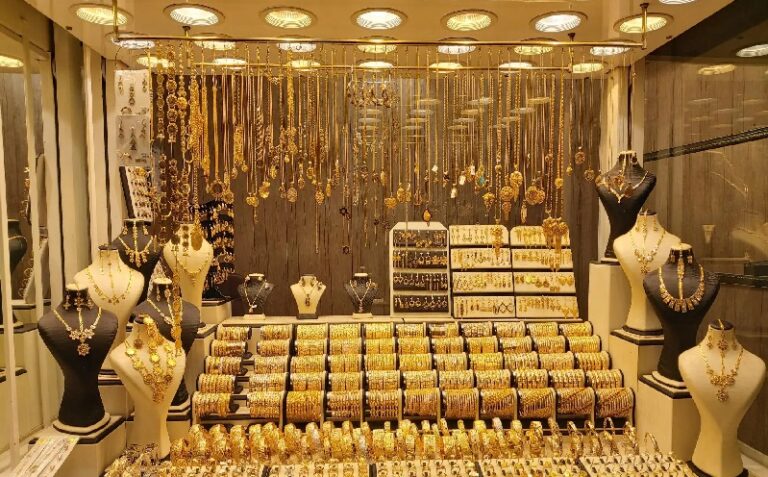
According to customs data, the Iranian government imported more than 81 tons of gold from March to December 2024, but only one-third of it was sold in the market, leaving 61 tons unaccounted for.
The Iranian government has reported $6.3 billion worth of gold imports during this period, marking a 294% increase compared to the previous year.
Since November 2022, the Iranian government has lifted restrictions on gold bar imports and has provided facilities and incentives to facilitate gold imports.
A Tsunami in Iran’s Currency and Gold Markets: Warnings of Economic CollapseThis policy has led to a sharp increase in gold bar imports. Mohammad-Hadi Sobhanian, the head of the Tax Affairs Organization, announced on January 15, 2025, that imports of gold, platinum, and raw silver are exempt from taxes and customs duties. Due to currency transfer issues, the Iranian government is purchasing gold as a means to circumvent U.S. sanctions and compensate for its budget deficit. It appears that most of the imported gold has been added to the Iranian Central Bank’s reserves. With $6.3 billion divided by 81,591 kilograms of imported gold, the price per kilogram amounts to $77,214. Based on the 28,500-rial “NIMA exchange rate” (a subsidized rate for essential imports, while the free-market rate is 950,000 rials per dollar), the price of one kilogram of gold is 22 billion rials (approximately $23,165 at the NIMA rate). Customs data also lists the total value of imported gold as 180 trillion and 912 thousand billion tomans (approximately $190.4 billion at the free-market exchange rate). By selling only one-third of the imported gold, the full amount of money spent on it has been recovered!!! From January 17, 2024, to February 25, 2025, a total of 81,591 kilograms of gold was imported into Iran. However, only 20,088 kilograms of it—whether in the form of bullion or various types of coins—has been sold, which is about one-fourth of the total. Based on the NIMA exchange rate of 285,000 rials per dollar, the price of each kilogram of imported gold was 22 billion rials. In other words, considering the NIMA exchange rate of 285,000 rials per dollar, the purchase price of each kilogram of gold was 22 billion rials, whereas its selling price in bullion form reached 87 billion rials per kilogram. This means the gold bars were sold at 3.9 times their purchase price.
Budget deficit compensation this time through gold manipulation
The regime managed to recover the entire cost of the 81-ton imported gold by selling only about one-fourth of it (20,088 kilograms) at free market rates, despite purchasing it at the NIMA rate of 285,000 rials per dollar. This leaves three-fourths of the imported gold—61,503 kilograms—as pure profit for the clerics. Based on the average selling price of bullion and various coins, the value of the more than 61 tons of unaccounted-for gold, which remains in the hands of the regime, is currently estimated at approximately 509.5 trillion tomans (5.095 quadrillion rials). Moreover, the higher the price of bullion and coins rises, the greater the additional profit for the regime. With this amount of money, the regime could once again purchase and import an additional 231.5 tons of gold at the NIMA exchange rate of 28,500 tomans per dollar. To cover a massive budget deficit amounting to 8% of the total 2024 budget, the regime has once again looted the Iranian people. While Massoud Pezeshkian, the president of the Iranian regime, officially removed the NIMA exchange rate of 285,000 rials per dollar for medicine and essential food items, he instead used it to import gold—only to sell it at free market prices and further exploit the Iranian people.Serious Water Pressure Drops and Outages in Tehran
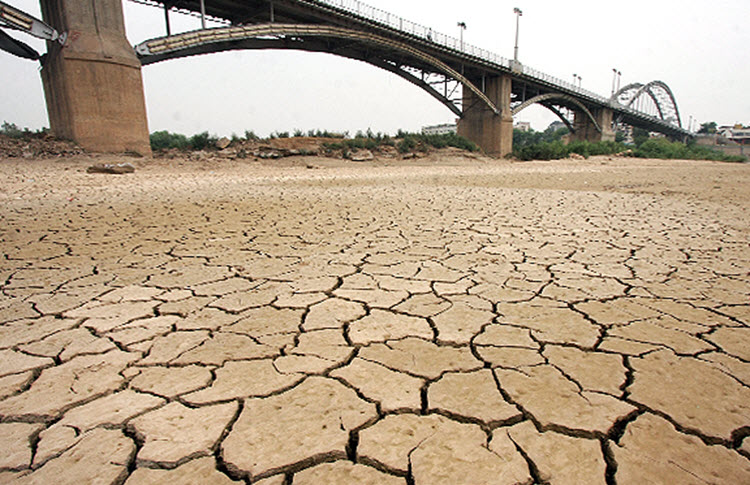
Reports from Tehran indicate that residents in various parts of the capital have been experiencing water pressure drops and outages for several days. In some areas, the pressure is so low that only the ground floors of buildings can access running water during certain hours.
In recent days, in addition to citizens, several journalists have also reported on Persian-language social media about the severe water pressure drop in different parts of Tehran, with some areas facing complete water shortages.
Several journalists have also criticized the lack of media coverage on this crisis and questioned whether a directive has been issued to media managers preventing them from covering the situation.
Tehran on the Brink of a Water CrisisMeanwhile, on Monday, March 3 (13 Esfand 1403), Mohsen Ardakani, the CEO of Tehran’s Water and Wastewater Company, claimed that the water distribution and supply network is “completely stable” and that there is no cause for concern. However, two days earlier, Hessam Khosravi, deputy director of Tehran’s Water and Wastewater Company, had stated that due to “increasing water resource shortages and the inability to compensate for them, we are forced to regulate the city’s water pressure”. This contradiction in official statements has raised concerns about the true state of Tehran’s water resources, leading many to believe that the water crisis in the capital is more serious than authorities are admitting. This regime’s official also stated that Tehran’s water pressure has been adjusted to control consumption in such a way that water pressure is only available up to the second floor. Some social media users have reported that despite experiencing these conditions for nearly five days, the response from relevant authorities, including Tehran’s water department, to their inquiries has been: “We don’t know, go buy a pump and a water tank.” According to a report by Tehran’s Water and Wastewater Company, this year’s rainfall has been 46% lower than average years and 25% less than last year. Currently, the water reserves of Tehran’s five main dams are only at about 6% capacity. Similarly, the Regional Water Company of Alborz Province has confirmed that only 8% of the Karaj Dam is currently filled, marking a 55% decrease compared to the same time last year—essentially leaving the Karaj Dam reservoir nearly empty. However, reports indicate that the Taleqan Dam’s water reserves are in a better state than the Karaj Dam, with 50% of its capacity currently filled. Water shortages are an issue across almost all of Iran. According to official statistics, as of January, every province except Gilan, Mazandaran, and Khorasan Razavi has experienced reduced rainfall, ranging from 1% to 88% below normal levels.
Iran: Lives of Political Prisoners Pakhshan Azizi and Varisheh Moradi at Risk

Seventeen human rights organizations have expressed concern over the imminent execution of Pakhshan Azizi and Varisheh Moradi, two civil activists in Iran, in an open letter to the German government, the European Parliament, and United Nations human rights bodies.
According to the human rights organization Hengaw, these 17 organizations have called on the German government, the European Parliament, and UN human rights bodies to take action to save the lives of these two Kurdish political prisoners.
Iranian Political Prisoner Varisheh Moradi in Critical Conditions on 16 Day of Hunger Strike
Charge: Fighting for Justice and Human Rights
The letter, published on Monday, March 3, states that Azizi and Moradi’s alleged crime is “fighting for justice and human rights.” The execution sentences are described as “not only a direct attack on their lives but also an unprecedented violation of the fundamental rights of women, ethnic minorities, and activists worldwide.”UN Experts Challenge Death Sentence of Iranian Political Prisoner Pakhshan AziziThe organizations stressed: “Pakhshan Azizi and Varisheh Moradi symbolically represent many brave women and men in Iran who stand for freedom and justice, enduring unimaginable personal risks in the process.”
Global Call to Halt the Execution of Pakhshan Azizi and Varisheh Moradi
The statement added: “The Iranian regime systematically uses the death penalty as a tool of repression to silence dissenting voices—a practice that must not be ignored by the international community.”Calls for Action from Germany, the EU, and the UN
The letter urged the German federal government and the European Union to use “all diplomatic tools to ensure the immediate suspension of the death sentences of Pakhshan Azizi and Varisheh Moradi.” The letter also called on the United Nations to “urgently demand” that Iranian authorities respect international human rights standards and abolish the death penalty.Appeal to Iranian Civil Society for Solidarity
The letter also called on Iranian civil society to “join this call and its demands, show solidarity, and take a stand against oppression in Iran.” Message to Pakhshan, Varisheh, and the People of Iran: “The World Will Not Stay Silent” The signatories concluded by stating their intent to “send a clear message to Pakhshan, Varisheh, and all the brave people of Iran that when lives are at risk, the world will not stay silent.”Sentences Against Pakhshan Azizi and Varisheh Moradi
On July 23, 2024, Pakhshan Azizi was sentenced to death and four years in prison by Branch 26 of Tehran’s Revolutionary Court, presided over by Judge Iman Afshari, on charges of “Baghi (armed rebellion) through membership in anti-government groups.” Similarly, on November 10, Varisheh Moradi was sentenced to death by Branch 15 of Tehran’s Revolutionary Court on charges of “Baghi”Iran Dramatically Increased Gas Exports to Turkey Amid Energy Crisis
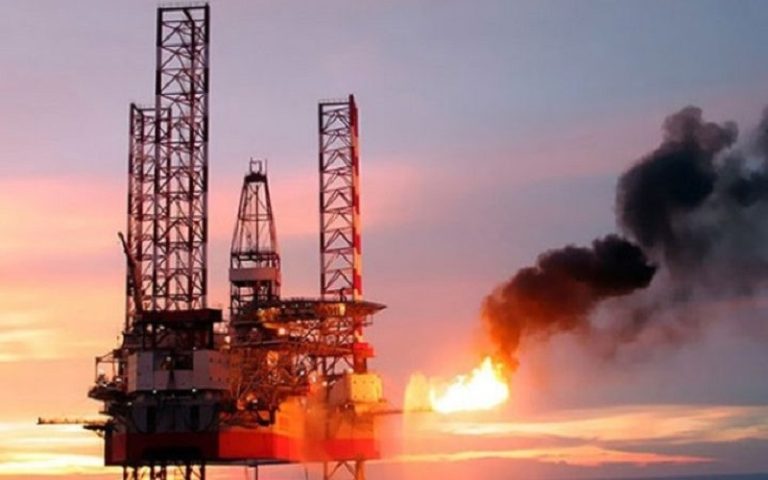
New data from Turkey’s Energy Market Regulatory Authority (EMRA) reveals a 30% surge in Turkey’s gas imports from Iran in 2024 compared to the previous year. In 2023, Turkey purchased approximately 7 billion cubic meters of gas from Iran.
More notably, Iran’s gas exports to Turkey increased by 75% in the last four months of 2023 compared to the same period in the previous year, despite Iran facing a massive gas shortage domestically.
This sharp increase in gas exports during the cold months comes as Iran has been grappling with a severe gas shortage. In recent months, the government has imposed strict restrictions on gas supply to industries, while shortages at power plants have led to widespread electricity blackouts across the country.
Gas Supply Cut to 12 Petrochemical Complexes in IranThe exact revenue the Iranian regime has generated from gas exports to Turkey remains unclear. However, data from the Turkish Statistical Institute (TurkStat) shows that Turkey’s total imports from Iran—including gas—amounted to only $2.45 billion in 2023. Amid the gas shortage, Iran has not only restricted industrial and power plant operations but has also resorted to burning large quantities of mazut (heavy fuel oil) as a substitute.
Iran Could Have Earned More by Exporting Mazut Instead of Gas
Seven billion cubic meters of gas is equivalent to seven billion liters of mazut or diesel. Had Iran exported this amount of mazut or diesel instead of gas, it could have generated at least $3.5 billion in revenue—exceeding Iran’s total earnings from gas and other exports to Turkey.Iran’s Gas Exports Surge Despite Unmet Domestic DemandIran’s gas exports to Iraq surpass those to Turkey. Despite the growing gas shortage, the administration of Massoud Pezeshkian, the Iranian regime’s president, has allocated 16 billion cubic meters of gas exports in the 2025 budget, valued at $5 billion—two billion cubic meters more than in the 2024 budget.
Iran’s 25-Year Gas Export Agreement with Turkey Nearing Expiry
Iran’s 25-year gas export agreement with Turkey is set to expire next year, and Iranian regime officials have repeatedly called for its extension.Replacing Iranian Gas in Turkey and Iraq
After months of resistance from Iranian regime’s officials, Turkey finally began importing Turkmen gas via Iran on Saturday. This year, a total of 1.3 billion cubic meters of Turkmen gas is set to be delivered to Turkey through a swap agreement with Iran. Iraq has also signed a similar agreement with Turkmenistan, but Iran has yet to approve the swap of Turkmen gas to Iraq.U.S. Pressure on Iraq to End Dependence on Iranian Gas
The Trump administration recently warned Iraq to halt its gas purchases from Iran. Since last year, the Iraqi government has signed several major foreign contracts to reduce its reliance on Iranian gas. Last week, coinciding with a U.S. ultimatum, Iraq reached an agreement with British energy giant BP to further develop its oil and gas fields.Member of European Parliament Sponsors Two Political Prisoners on Death Row in Iran
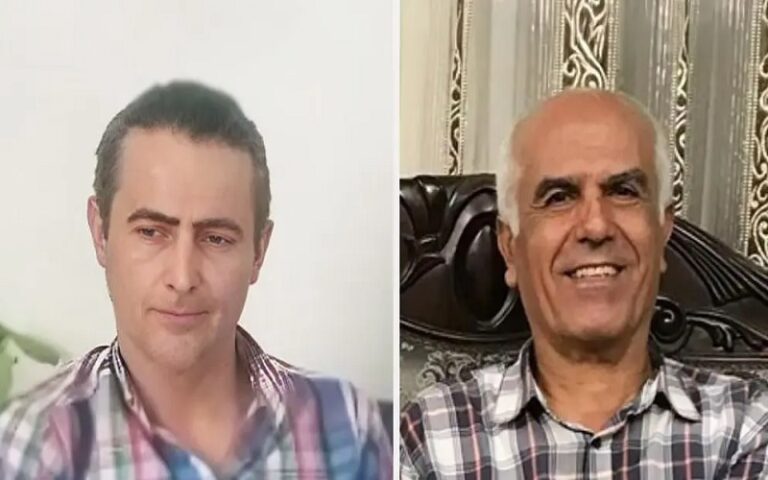
Per Clausen, a member of the European Parliament from Denmark’s Red-Green Alliance party, announced that he has taken political sponsorship of two political prisoners on death row in Iran, Mehdi Hasani and Behrouz Ehsani-Eslamloo.
On Monday, March 3, Clausen wrote on X (formerly Twitter), highlighting the Iranian government’s execution of approximately 1,000 people annually: “Today, I decided, as a member of the European Parliament, to take political sponsorship of these two prisoners who are at imminent risk of execution.”
Earlier, Branch 39 of Iran’s Supreme Court announced that it had rejected the appeal request for a retrial of Behrouz Ehsani-Eslamloo and Mehdi Hasani. Hasani and Ehsani have been sentenced to death on charges including “rebellion (Baghi), waging war against God (Moharebeh), corruption on earth (Efsad fil-Arz),” as well as “membership in the People’s Mojahedin Organization of Iran (PMOI/MEK)” (the main opposition group to the regime), “gathering classified information,” and “assembly and collusion against national security.”Det iranske præstestyre henretter omkring 1000 mennesker om året. Mennesker som ofte kun har gjort sig skyld i at yde modstand mod dette regimes undertrykkelse af sin egen befolkning. Det har jeg ofte protesteret imod.
— Per Clausen (@PerClausen3) March 3, 2025
I dag har jeg så besluttet at oprette et politisk faderskab… pic.twitter.com/2D6eHlMNdf
Iranian Political Prisoner Mehdi Hassani Faces Imminent Execution After Supreme Court Rejects Retrial RequestAccording to Amnesty International, at least 853 people were executed in Iran in 2023, marking a 48% increase compared to the previous year. The wave of executions has continued in 2024, with at least 1,000 executions, including protesters and civil activists, being executed following unfair trials in Iran’s Revolutionary Courts. Human rights activists have warned that the execution of Behrouz Ehsani and Mehdi Hasani could signal the beginning of a new wave of executions. Human rights organizations continue to call for international pressure to halt the implementation of death sentences in Iran.
Iran: Behrouz Ehsani Said; I Have Never Bargained Over My Life with AnyoneAmnesty International has stressed that the death penalty is a blatant violation of the right to life and has called for its immediate abolition in Iran. In addition to Mehdi Hasani and Behrouz Ehsani-Eslamloo, several other political prisoners, including Pakhshan Azizi and Varisheh Moradi, are also at risk of execution.
Political Prisoners in Iran: The World Must Act to Stop the Killing Machine
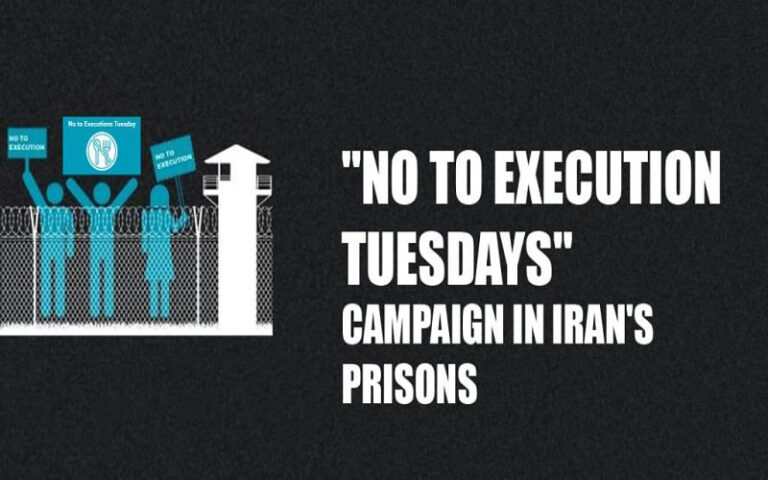
Political prisoners participating in the 58th week of the “No to Executions Tuesdays” campaign called for “more serious and urgent action from the world’s awakened consciences to stop the killing machine” in Iran.
In their statement on Tuesday, March 4, the prisoners announced that several inmates in Miandoab Prison had joined the campaign and started a hunger strike. With this, the number of participating prisons in the campaign increased to 38.
Participants in the “No to Executions Tuesdays” campaign stated that “the authoritarian regime ruling Iran has executed 85 people in just the first two weeks of Esfand (starting February 19).”
Warning from the “No to Executions Tuesdays” Campaign on the Death Sentence of a Prisoner Accused of RebellionAccording to the statement, “at least 53 people were executed last week, including 24 Kurds and Baluchis, and one individual was brutally hanged in public in Esfarayen.” The campaign emphasized: “These barbaric executions, especially at the doorstep of Nowruz (the Iranian New Year, beginning on March 21), which bring mourning to hundreds of Iranians, clearly demonstrate that this medieval regime has no goal other than instilling fear in society and seeks to prolong its survival solely through repression, torture, and executions.” The “No to Executions Tuesdays” campaign noted: “In response to this state violence against defenseless people in Iran, many compatriots and freedom-loving individuals across Iran and the world have joined the campaign alongside committed prisoners in various prisons, condemning the criminal executions in Iran.” The prisoners participating in the campaign reiterated in their statement this week their call for “more serious and urgent action from the world’s awakened consciences to stop the killing machine.” In its 58th week, the “No to Executions Tuesdays” campaign continued in Evin Prison (women’s ward, wards 4 and 8), Ghezel Hesar Prison (units 2, 3, and 4), as well as Karaj Central Prison, Greater Tehran Prison, Khorin Varamin Prison, Chubindar Prison in Qazvin, Arak Prison, Khorramabad Prison, Asadabad Prison in Isfahan, Dastgerd Prison in Isfahan, and the Sheiban and Sepidar prisons in Ahvaz. Last week, a group of prisoners in Miandoab Prison in East Azerbaijan Province announced that in protest against execution sentences, they would join the “No to Executions Tuesdays” campaign and go on a hunger strike starting Tuesday, March 4, 2025. The statement concluded: “Once again, and more than ever, we call on the world’s awakened consciences to take more serious and urgent action to stop this killing machine.”
Fuel Smuggling Mafia and the Policy of Concealment in Iran
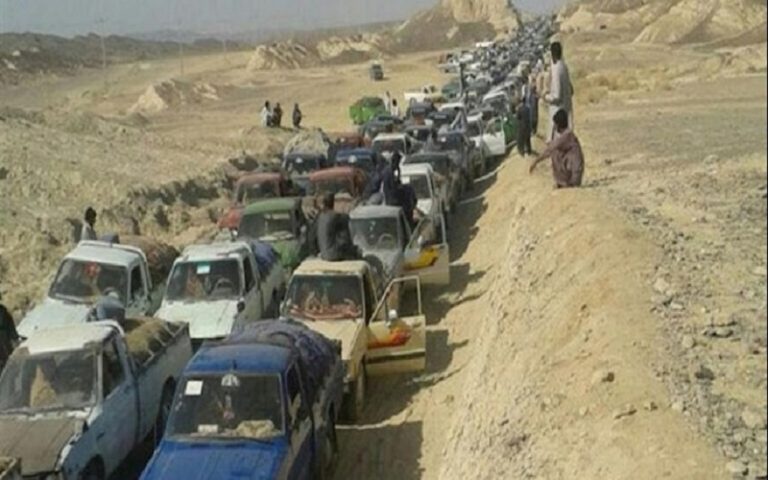
Fuel smuggling has become one of the most pressing economic crises in Iran today. Official reports indicate that 20 to 30 million liters of fuel “disappear” daily. However, the reality is that this fuel is not lost but systematically smuggled. The true beneficiaries of this illicit trade are powerful institutions and influential groups within the ruling system. The existence of a complex and deeply rooted fuel smuggling mafia is no longer a secret—even high-ranking officials of the regime openly acknowledge it.
Masoud Pezeshkian openly questioned this phenomenon, stating:
“How can nearly 20 million liters of fuel disappear daily when the state itself is both the producer and distributor? These thieves should be executed.”
Similarly, Mohammad Bagher Ghalibaf, the head of the regime’s parliament, admitted:
“Between 25 to 30 million liters of fuel are smuggled out of the country every day. There is no doubt that this smuggling is conducted in an organized manner, as the main producers and consumers of this fuel are the very entities behind this trade.”
Iran: Theft of “70,000 Liters” of Jet Fuel Per Day from Bandar Abbas Pipeline
The Organized Structure of Fuel Smuggling
These statements point to the existence of a well-organized smuggling network operating freely across Iran’s borders. While everyone is aware of this network, a policy of concealment and cover-ups is actively employed to protect those involved. On December 20, 2023, the Iranian regime’s newspaper Arman Melli shed light on the nature of this network, stating: “These smuggling operations are carried out by organized groups that exploit weaknesses in oversight systems. These networks have strong communication structures and wield influence at the highest levels of decision-making in the country.” The fundamental question remains: How can such a network smuggle tens of millions of liters of fuel daily when all border crossings and energy transport routes are under the strict control of security and military agencies?Iranian Regime’s Role in Iraq’s Oil Smuggling Network
Adding to the evidence of the regime’s involvement in large-scale fuel smuggling, Reuters published a report on December 3, 2024, revealing a sophisticated oil smuggling network in Iraq. This network reportedly generates between $1 billion and $3 billion annually for the Iranian regime and its affiliated groups. The report, based on information from five informed sources and three Western intelligence reports, indicated that the network exploits Iraqi government policies that allocate subsidized fuel to asphalt factories. Instead of using the fuel for its intended purposes, smuggling networks redirect it for export to other countries. According to Reuters, between 500,000 to 750,000 tons of heavy fuel oil—equivalent to 3.4 to 5 million barrels of crude oil—are smuggled monthly from Iraqi factories and primarily exported to Asian markets. A common tactic used by this network involves blending smuggled Iraqi fuel with Iranian fuel and selling it under the label of an Iraqi product. This allows the Iranian regime to bypass strict U.S. sanctions on its oil exports while reaping enormous profits. Notably, when Reuters sought comments from Iranian regime and Iraqi authorities, both governments declined to respond.Government Complicity in Fuel Smuggling
Perhaps the most shocking admission regarding the Iranian regime’s involvement in fuel smuggling came from Pezeshkian himself, who revealed during a parliamentary session that the government purchases approximately 9 million liters of fuel daily from smugglers. This statement confirms that the authorities are fully aware of these smugglers’ identities. Instead of combating them, the government engages in direct business transactions with them. If the regime knows who these smugglers are, why does it not take action against them? The answer lies in the deeply entrenched interests that profit from this trade.The Iranian Regime’s Security Forces: The Key Players in Fuel Smuggling
Despite repeated claims of ignorance and denial from regime officials, it is evident that smuggling 20 million liters of fuel daily is not the work of small-scale criminals or disorganized groups. Fuel smuggling has become a highly structured operation controlled by entities with the resources to manage, regulate, and even legitimize these transactions. At the forefront of this operation is the Iranian regime’s security forces, which play a primary role in this illicit trade. By controlling ports, border crossings, and international smuggling networks, these forces have turned fuel smuggling into a multi-billion-dollar industry. A significant portion of the profits is funneled into military entities and proxy groups, while key officials and influential figures within the regime receive their share of the enormous revenues. Meanwhile, the Iranian people bear the consequences—suffering from fuel shortages, soaring prices, and economic crises exacerbated by corruption and sanctions.The Policy of Concealment and Misinformation
A deeper analysis of Iran’s fuel smuggling crisis reveals that it is not merely an economic problem but a structural and political one. Although government officials publicly acknowledge large-scale smuggling, no concrete actions have been taken to curb it. Everyone knows who is responsible, yet a policy of cover-ups and misinformation continues to shield the real perpetrators. The state-run Ham Mihan highlighted this deception in its editorial, criticizing the government’s inaction: “Can you publish a report exposing the true scale of this network? Why the silence? Does it conflict with political interests? Who are these smugglers you keep threatening without taking any real action? If these threats had ever been enforced, there would be no need to repeat them daily. The day you publish an official report listing the names and photos of these so-called ‘respectable’ smugglers, only then will the people believe that you are serious about ending this crisis.” As long as this powerful smuggling mafia remains active, fuel smuggling will persist, intensifying economic pressure on the Iranian people. After all, a knife cannot cut itself.Protests in Iranian Cities: from Economic Hardships to Unmet Demands
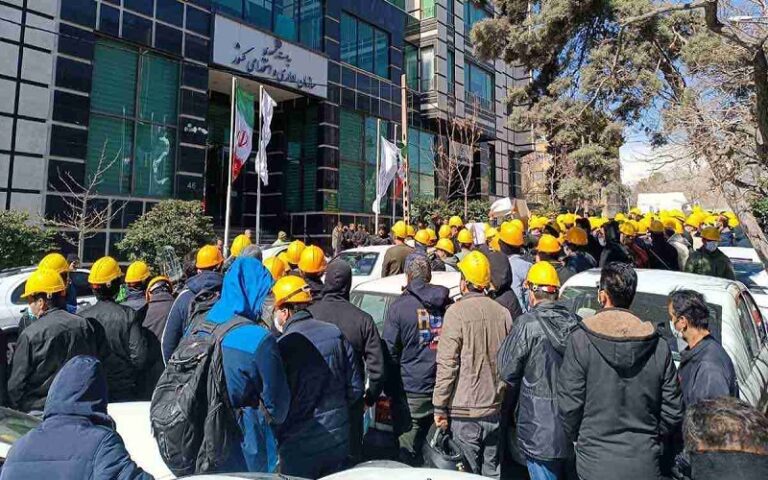
On Saturday, March 1, various cities across Iran witnessed protests by different segments of society. These protests stem from economic hardships, poor working conditions, and the government’s failure to fulfill its promises. The demonstrations, involving nurses, workers, retirees, and housing applicants, reflect widespread dissatisfaction with the current situation and the people’s efforts to claim their rights. Below are the details of these events.
Nurses’ Protest in Chaharmahal and Bakhtiari
On Saturday, nurses in the Chaharmahal and Bakhtiari province held a protest in front of the governor’s office. These healthcare workers protested against economic hardships and poor working conditions. According to informed sources, intelligence forces intervened, threatening the protesters and dispersing the gathering.Protests Continue as Iran’s Regime Neglects Teacher’s Woes
