

25% of Iran’s University Professors Have Migrated
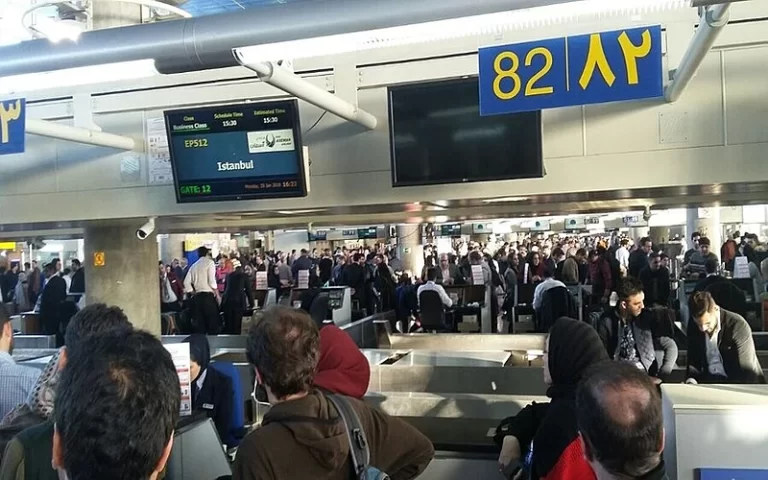
Hossein Simaei Saraf, the Minister of Science, Research, and Technology of the Iranian regime, has reported the migration of “25 percent of the country’s university professors in recent years,” describing this statistic as “concerning.”
This is not the first time warnings have been issued in Iran about the migration of academics, including professors and students, particularly elite professors and students.
Two months ago, Simaei Saraf also stated at a meeting of university presidents that the trend of academic migration from Iran is “on the rise.”
The Minister of Science did not specify the exact time period during which this number of professors migrated from Iran and merely referred to the “recent years.” It is also unclear whether this statistic pertains only to public universities or includes non-governmental higher education institutions as well.
Amid a lack of transparency regarding the state of professor migration in Iran, state-run media have outright denied the occurrence of such a phenomenon.
Jam-e Jam newspaper, affiliated with the Islamic Republic of Iran Broadcasting (IRIB), published an article in September of last year, coinciding with the reopening of universities after the nationwide protests of 2022, titled “The Lie of Professor Migration.” The article claimed that the state of university professors migrating abroad had not reached a crisis level.
Although Iran’s Minister of Science has cited multiple reasons for professors’ migration, both he and Iranian media have primarily emphasized economic factors as the main cause.
The Ideological Approach in Universities
From its inception, the Islamic Republic has been highly sensitive about universities and promptly launched a wave of purges under the banner of the “Cultural Revolution” in universities.
Among these, the regime’s sensitivity regarding humanities disciplines is particularly pronounced, with Ali Khamenei, the regime’s leader, emphasizing these fields and calling for the “Islamization” of universities.
The outcome of such conditions has been nothing but the decline of Iranian universities’ academic rankings and the failure to cultivate competent and skilled individuals to manage the country’s affairs.
Iran: 10 Prisoners Executed, Including A Woman
Human rights sources reported on Monday, November 25, that at least 10 prisoners, including a woman, were executed in various cities across Iran by the Iranian regime’s judiciary.
Executions by the Iranian regime’s judiciary continue unabated. According to the Human Rights Activists in Iran (HRAI), three prisoners named Ashkan Moradi, Jalal Haj-Babaei, and Davood Heidari, who had previously been sentenced to death on drug-related charges, were executed on Monday morning at Karaj Central Prison.
Additionally, human rights sources reported on Monday, November 25, that two prisoners were executed in Jiroft, one in Kermanshah, three in Karaj, one in Khorramabad, and three in Hamedan.
According to a report by the Iran Human Rights Organization on Monday, two prisoners named Nader Ghanizadeh, accused of “premeditated murder,” and Naser Soleimani, 62, convicted of drug-related charges, were executed at Jiroft Prison.
The Baluch Activists Campaign has also reported that 58 prisoners at this prison in Kerman Province are currently at risk of execution for these two charges.
According to the Iran Human Rights Organization, three prisoners, two of whom were identified as Meysam Noori, 42, and Arsalan Habibi, were executed on drug-related charges at Hamedan Central Prison.
The execution of these three prisoners took place on Thursday, and their cases were handled separately.
This human rights organization also reported the execution of a prisoner named Mostafa Souri, a resident of Kangavar, at Kermanshah Central Prison on charges of “premeditated murder” in recent days.
Additionally, the Human Rights Activists in Iran (HRAI) reported that on Sunday, November 24, Iranian regime officials executed a female prisoner accused of “murder” at Parsilon Prison in Khorramabad.
According to HRANA, the identity of the executed prisoner was announced as Fariba Maleki.
According to a previous report by the Human Rights Activists in Iran, between October 22 and November 25 alone, at least 133 executions were carried out, including one public execution, 24 death sentences, and seven confirmations of death sentences.
Iranian Workers’ Wages Do Not Even Cover Half of Their Expenses
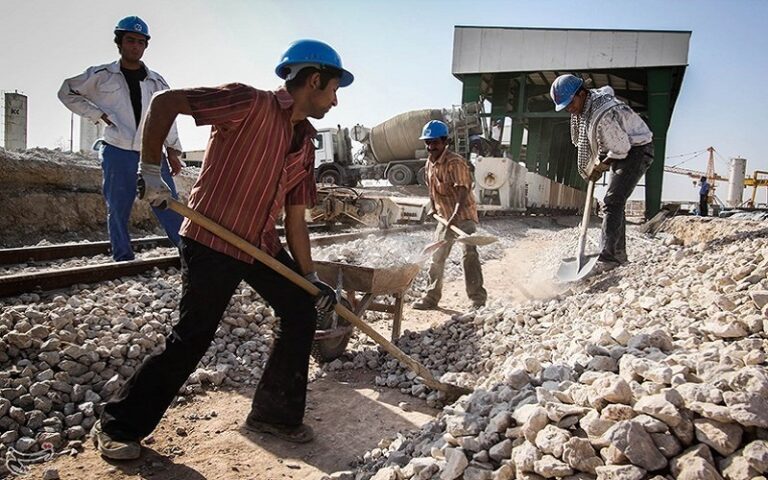
The state-run Tasnim News Agency, which is affiliated with Iran’s security apparatus, published a report emphasizing that the “recent wave of price hikes” has further reduced the purchasing power of the working class.
This state media outlet wrote that “data and field reports on living costs over the past four to five months indicate that the minimum livelihood basket for workers, based on food expenses, has increased by approximately 40%.”
According to Tasnim News Agency, workers’ wages “do not even cover half of their monthly expenses, as a significant portion of workers’ income is spent on rent.”
The gap between income and expenses for various segments of Iranian society, particularly workers, grows wider every day, which is why labor and professional protests are becoming a daily occurrence.
Meanwhile, the 2025 budget is being drafted in the regime’s Majlis (parliament), and a former MP states that even if wages in Iran were to increase fivefold, the standard of living would “only approach the global poverty line.”
Esmail Grami Moghaddam, a former member of Majlis, stated in an op-ed published on Sunday, November 24, in the state-run Etemad newspaper that “stagflation” is a barrier to achieving prosperity and that overcoming it is “extremely difficult.”
He stressed that “60% of Iran’s economy is tied to institutions whose revenues and expenditures are not reflected in the government’s budget,” and “to analyze the situation, we must focus on the visible 40% of Iran’s economy.”
Meanwhile, Iran’s Statistical Center announced on November 21 that the annual inflation rate has reached 33.1%, and Ahmad Meidari, the Minister of Cooperatives, Labor, and Social Welfare, claimed that pension funds are responsible for inflation in Iran.
The expansion of protests by various groups, including retirees, workers in different industries, teachers, defrauded investors, nurses, and healthcare workers, reflects the growing livelihood problems in Iran and the disregard of Iranian regime officials.
Iran’s Government Owes $400 Billion to The Banking System
The government’s heavy debts are one of the major challenges facing the current economy of Iran’s regime.
The Central Bank of Iran recently released statistics on the state of monetary and credit variables.
These statistics illustrate the government’s debt to the Central Bank and other banks.
An analysis of these figures shows that Ebrahim Raisi’s administration significantly increased borrowing from banks in its final months.
By the end of July 2024, the government’s debt to the banking network reached 16,000 trillion rials (approximately $22.857 billion).
Additionally, the government’s debt to the Central Bank rose to around 4,900 trillion rials (approximately $7 billion).
This is in contrast to the beginning of the 13th administration (Ebrahim Raisi’s government), when debts to the banking network and the Central Bank were 6,440 trillion rials (approximately $9.2 billion) and 2,010 trillion rials (approximately $2.871 billion), respectively.
These figures have seen significant jumps in less than three years, with debt to the banking network increasing by 148% and debt to the Central Bank rising by 128%.
According to the latest statistics, public sector debt to the banking network reached 16,540 trillion rials (approximately $23.628 billion) by the end of August 2024.
This figure represents a 38.6% increase compared to the same period last year.
The growth rate of public sector debt to the banking network under Raisi’s government reached 14.2% from March to August 2024.
In comparison, the growth rate of public debt in the same period last year was only 6.3%.
According to this report, about 2,600 trillion rials (approximately $3.714 billion) of public sector debt to the banking network belongs to state-owned enterprises.
The direct debt of the government to banks has also reached 13,940 trillion rials (approximately $19.914 billion).
Debt to the Central Bank
Studies indicate that public sector debt to the Central Bank reached 4,920 trillion rials (approximately $7.028 billion) by the end of August 2024.
Of this amount, the government’s debt is 3,320 trillion rials (approximately $4.742 billion), while state-owned enterprises owe around 1,600 trillion rials (approximately $2.285 billion).
The analysis reveals that the year-on-year growth rate of government debt increased from 25.2% in August 2023 to 69.4% in August 2024.
Gholamreza Salami, a government-affiliated economist, stated that “the official figures for government debt are around 7,750 trillion rials (approximately $10.785 billion), but these statistics are misleading.”
According to him, when all debts are accounted for, the government’s total debt surpasses the country’s gross domestic product (GDP).
Salami explained that “the total government debt amounts to $400 billion.”
At the free-market exchange rate of 700,000 rials per dollar, this figure translates to 280 quadrillion rials.
This figure is equivalent to 231 times the entire 2024 budget, which was set at approximately 64,790 trillion rials (about $96.842 billion).
Salami also stated that “the government owes 11,000 trillion rials (approximately $15.714 billion) to banks, half of which was accumulated during Raisi’s three-year tenure.”
He added that the government’s debt to the Social Security Organization amounts to 7,000 trillion rials (approximately $10 billion), while other government debts, including three-year maturity bonds, reach about 8,500 trillion rials (approximately $12.142 billion).
The government also carries substantial debt due to accumulated losses of banks and state-owned enterprises. State-owned companies like Bank Melli and Bank Sepah have recorded significant historical losses.
Pension Fund Deficits
The national and military pension funds have also become a serious challenge for Iran’s economy.
According to calculations, the deficit for these funds in 2024 exceeds 4,000 trillion rials (approximately $57.142 billion).
The increase in government debt to banks during Raisi’s administration has not only failed to decrease but has grown further. This trend has placed heavy financial pressures on Iran’s economy.
Price of Residential Electricity Increased by 38-83%
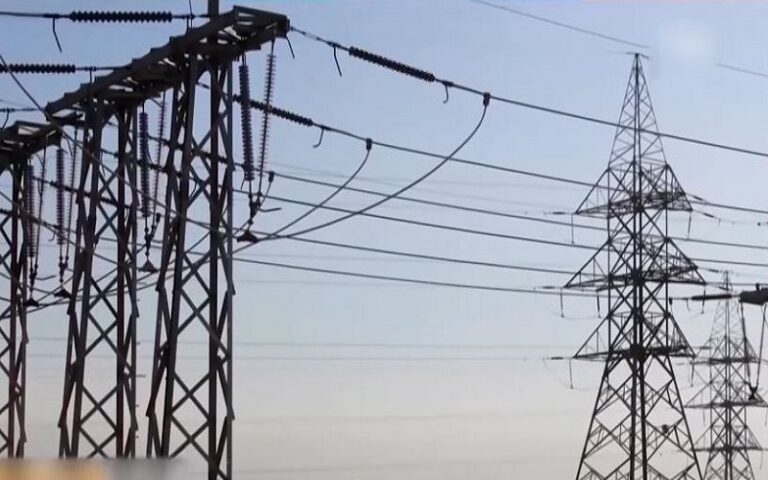
A review of the new tariffs shows that electricity costs for Iranian households have increased by approximately 38 percent up to the consumption threshold and by up to 83 percent beyond it.
The state-run Mehr News Agency reported on Saturday, November 23, that a comparison of the new tariffs with the previous ones (prior to September) for non-peak months indicates that the rate hikes, with two exceptions, are around 38 percent. However, for mid-range consumption between 200 to 300 kilowatt-hours (for rates under 200 kilowatt-hours), there is an 83 percent increase, and for mid-range consumption between 300 to 450 kilowatt-hours, there is a 78 percent increase.
The state-run Tasnim News Agency also published the new electricity tariffs, showing that, for example, after September, the price of each kilowatt-hour of electricity up to the consumption threshold increases incrementally depending on the region.
Abdolamir Yaghoubi, Director General of Energy and Customer Affairs at Tavanir (Iran’s national electricity company), stated that 75 percent of electricity consumers use below the threshold, with their bills amounting to approximately 180,000 rials (around $0.26). However, for those consuming above the threshold and up to 800 kilowatt-hours, the cost increases incrementally and can reach around 18 million rials (around $26).
The government, citing the continuous depreciation of the rial, argues that energy prices need to rise. This, however, is controversial due to the increasing poverty among the population and the inflationary effects it could cause.
In fact, under the new tariffs, electricity prices for extremely high-consuming Iranian households have reached one-quarter of the prices in the European Union.
For instance, statistics from the European Union indicate that the annual electricity cost for a household is €400 (more than the average monthly salary of an employee in Iran), but this amount is only slightly over one percent of the average annual salary of an employee in European countries.
It is also important to note that the average household electricity consumption in the European Union is 33 percent higher than that of Iranian households.
Mostafa Rajabi Mashhadi, CEO of Tavanir, also clarified on Saturday that, given the rising costs of electricity production, consumers who use up to 1.5 times the threshold will be charged 1.5 times the electricity supply cost, while those consuming more than 2.5 times the threshold will be charged five times the electricity supply cost.
This price increase comes as the Iranian government, about two weeks ago, began cutting off residential and commercial electricity across the country due to a shortage of natural gas and liquid fuel for power plants.
Low-Income Households Affected The Most By Rising Inflation in Iran
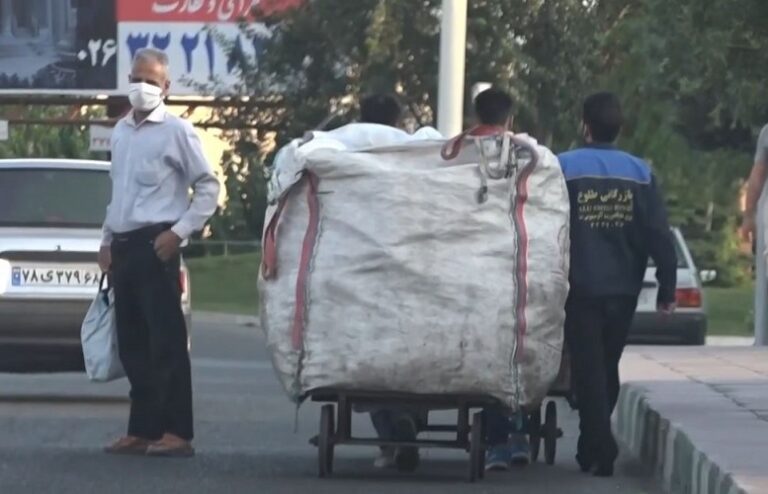
The latest report from the Iranian Statistical Center shows that with the continued rise in point-to-point and monthly inflation rates in November, the lowest-income group in society has borne the greatest burden of monthly inflation.
According to the Iranian regime’s Statistical Center, the point-to-point inflation rate in November reached 32.5 percent, while the monthly inflation rate rose to 2.8 percent.
This comes as the lowest-income group in society, categorized as the “first decile” in the inflation expenditure deciles for November, experienced a monthly inflation rate of 3.77 percent, marking an increase compared to October for this segment of society.
On the other hand, the monthly inflation rate for the wealthiest group, categorized as the “tenth decile,” was 2.53 percent, reflecting a 0.5 percent decrease compared to October.
According to the regime’s Tejarat News website, the disparity in inflation rates among different deciles is due to the types of goods consumed. Studies by the Iranian Statistical Center indicate that lower-income deciles allocate a larger portion of their income to purchasing food, beverages, and tobacco.
In this context, a field report in Iran on poverty and rising prices shows that people’s lives have increasingly become “credit-based,” and the installment purchase of essential goods has even “impacted the middle class.”
According to a report published on November 17 by the state-run Ham-Mihan newspaper, “Iranians’ interest in joining credit and installment purchase platforms is growing daily,” and the issuance of microloans has “increased by 200 percent.”
The report mentions “50 million rials (approximately $71.5) in credit for food purchases,” with repayment in four installments “without the need for a guarantor or collateral.”
According to the Majlis Research Center’s statement on October 24, the poverty rate increased by 0.4 percent last year, encompassing over 30 percent of Iran’s population. It is projected that this figure will remain at a similar level this year.
Currently, the minimum monthly wage for married workers with children covered under labor laws is approximately 110 million rials (around $157). Meanwhile, estimates from labor activists, some of whom previously held positions in government-affiliated institutions, suggest that the cost of living basket has reached approximately 370 million rials (around $528.5) per month.
Farshad Momeni, an economist, has emphasized that government budget policies for the upcoming year have made the situation increasingly dangerous and worrisome.
According to the Statistical Center, in November, Sistan and Baluchestan Province recorded the lowest inflation rate, while the three provinces of Isfahan, West Azerbaijan, and Ardabil recorded the highest rates.
A 42% Increase in Rental Prices in Iran Over the 12 Months
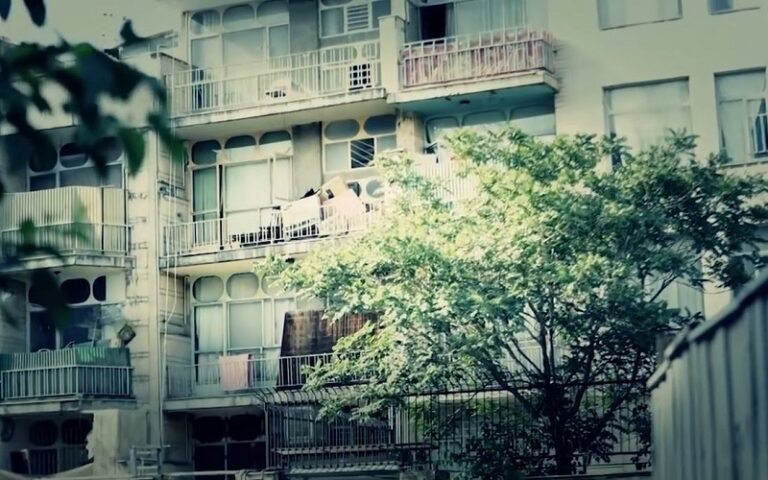
A new report from Iran’s regime Statistical Center indicates that urban rental prices have increased by approximately 42% over the 12 months ending in November, compared to the same period the previous year. Inflation in the rental sector is 8.6 percentage points higher than general inflation, despite the government setting a 25% cap on rent increases in July.
The latest Consumer Price Index report from the Statistical Center shows that housing rents increased by about 42% over the 12 months ending in November. The same report indicates that in November, rental prices rose by approximately 3% compared to October and by about 40% compared to November 2023.
The official report documenting a 42% increase in rents comes despite statements made on June 26 by Mehrdad Bazrpash, the Housing and Urban Development Minister of the previous government. During the 18th session of the Supreme Housing Council—effectively the last such session under Ebrahim Raisi’s administration—Bazrpash announced that an average rent increase cap of 25% had been approved.
Iran’s regime efforts to control prices through legislation—commonly criticized by opponents as “mandated price-setting”—generally fail.
Since July, following the implementation of the rent increase cap, annual inflation in the rental sector has been recorded by the Statistical Center as 41.4% in August, 41.7% in September, 41.8% in October, and 41.7% in November.
In all four months, rental inflation exceeded general inflation. From September to November, rental inflation was reported to be 6.6, 7.5, 8.2, and 8.6 percentage points higher than general inflation, respectively.
Rental costs have surged significantly since 2020. The primary reasons for this increase are, first, the steep housing inflation in previous years and its continued rise, and second, high general inflation since 2019.
The state-run Donya-e-Eqtesad newspaper criticized mandated price-setting in the housing sector, stating that if the government, instead of addressing general inflation and controlling the drivers of housing inflation, sets rent rates for the market, such measures will not only fail to gain market acceptance but will also provoke negative reactions due to attempts to impose prices below economic realities.
Air Pollution in Iran Causes 50,000 Deaths Per Year
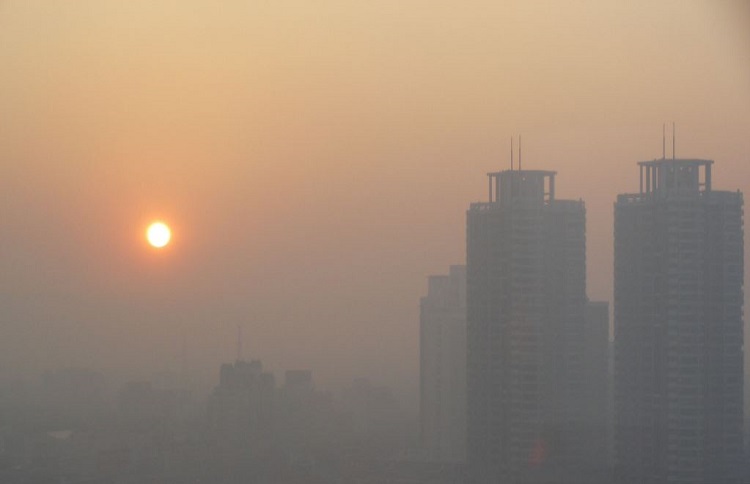
Mohammad Sadegh Hassanvand, head of the Air Pollution Research Center at Tehran University of Medical Sciences, stated that approximately 450,000 deaths occur annually in Iran due to various causes, with “about 50,000” of these being related to air pollution. This means nearly 12% of all deaths in the country are linked to air pollution.
On Saturday, November 23, Hassanvand emphasized that air pollution is “one of the serious risk factors and the most significant environmental pollutant” and told IRNA, the state-run news agency: “The most critical pollutant currently present in the country, which contributes to the number of unhealthy days, is particulate matter smaller than 2.5 microns (PM2.5).”
Hassanvand noted that this pollutant, recognized as a carcinogenic compound, has been measured since 2011. He added that between 2011 and 2018, the levels of this pollutant decreased due to “atmospheric instability and adequate rainfall in the country.”
However, he stated that in 2018, which was the best year in terms of air pollution, “the average concentration of PM2.5 particles in Tehran was 27 micrograms per cubic meter, which is 5.5 times the healthy limit.”
According to him, after 2018, there has been an almost continuous rise in PM2.5 concentrations for four consecutive years, during which “a record increase in air pollutants was set.”
Hassanvand pointed out that there is no effective program to control pollutants, emphasizing that reducing pollutant concentrations depends on heavy rainfall and atmospheric instability. If the weather remains stable, pollutant concentrations will also rise.
Currently, the level of PM2.5 particles in the country is “six times the global health limit” and the World Health Organization’s standard.
He also mentioned the inevitability of using mazut (a heavy fuel oil) as fuel in power plants, stressing the issue of a lack of air pollution control equipment in these facilities and industries.
Hassanvand also referred to the role of sanctions, most of which have been imposed by the United States due to Iran’s nuclear program. He emphasized that the sanctions have been impactful and added: “If proper investments had been made in this sector, our power plants would not have become obsolete and could have operated more efficiently.”
The Intensifying Brain Drain Crisis in Iran: A Look at Academic, Economic, and Healthcare Challenges

Amid growing concerns over the intensifying brain drain crisis in Iran, and as statistics point to the departure or desire to leave among a large portion of the country’s skilled workforce, Hossein Simayee Sarraf, the Iranian regime’s Minister of Science, has admitted that in recent years, “25% of university professors” have emigrated.
On Friday, November 22, Sarraf described this figure as “worrying” and a factor contributing to the “decline of universities and academic performance of students.” He added that if this trend continues, “their replacements may be of a weaker caliber.”
This regime official also highlighted various factors contributing to migration from Iran—including “job-related, economic, and socio-political” reasons—and identified economic problems as the primary driver behind the emigration of professors. He added, “Some of them don’t even plan to return.” Referring to the income levels of university professors in “our neighboring countries across the water,” he stated that “the salary of our full professors with 50 pay grades barely reaches $1,000.”
This comes in the aftermath of the death of Mahsa Amini in the custody of Iran’s morality police and the nationwide protests of 2022, which led to increased pressure from Iranian authorities on students—who were at the forefront of the protests—as well as professors who supported them. A significant number of these professors were suspended, dismissed, or forced into early retirement.
Additionally, other professors were removed from teaching positions after Ebrahim Raisi assumed presidency, due to their lack of alignment with the university presidents appointed under his administration.
While it was previously claimed that Massoud Pezeshkian, the president of Iran’s regime, had called for a review of the situation of dismissed professors, Kayhan newspaper—one of the most hardline publications in Iran and effectively a mouthpiece for the Supreme Leader and the regime’s core establishment—quickly attacked this idea, describing Pezeshkian’s remarks as “promoting lawlessness.”
Mahmoud Najafi Arab, the head of Tehran’s Chamber of Commerce, recently warned that in the past two to three years, more than 2,000 “startup visas” have been issued to young Iranians. Startup visas are granted to individuals with entrepreneurial ideas who intend to establish their businesses abroad.
Iranian economic experts warn that the emigration of entrepreneurs reduces economic growth and job creation while weakening Iran’s innovation and technology industries.
The accelerating trend of Iranian emigration in recent years has also repeatedly made headlines in the healthcare sector, fueling concerns over the collapse of the country’s healthcare system.
Recently, the head of Iran’s Nursing Organization stated that according to statistics from the Ministry of Health, “around 1,500 nurses left the profession last year.” However, these figures only account for nurses in the public sector and do not include private-sector nurses or graduates in this field who have not entered the workforce.
The state-run Ham Mihan newspaper reported in June 2024, quoting Iraj Khosronia, the head of the Scientific Society of Internal Medicine Specialists, about a shortage of specialized doctors nationwide.
Khosronia told the newspaper, “There is only one gynecologist for every 7,000 women in the country.”
Abolhassan Mostafavi, a member of the regime’s Majlis’ (parliament) Education and Research Committee, also recently reported a shortage of “12,000 doctors.”
Mostafavi stated, “Due to the shortage of doctors, many of our clinics in smaller towns have closed after 40 years.”
Official statistics indicate that over the past two decades, more than 6 million Iranians have emigrated.
The government-affiliated Rokna news agency, citing these figures, reported that around 40% of Iranian migrants hold higher education degrees, and the emigration of educated women has seen a “significant increase.”
Iran’s Regime Says It Will Increase Uranium Enrichment

The Iranian regime announced that it has immediately begun implementing measures in response to the International Atomic Energy Agency (IAEA) Board of Governors’ resolution and has informed the agency of its actions. Meanwhile, an advisor to the Iranian regime’s Supreme Leader Ali Khamenei has indicated Tehran’s readiness for a new agreement with the Trump administration.
Behrouz Kamalvandi, spokesman for the Atomic Energy Organization of Iran, stated on Friday evening, November 22, on Iranian state television that 60% uranium enrichment has not been halted and that “since last night, we have been instructed to increase the pace as well.”
He added: “We have the capacity to significantly increase enrichment levels.”
On Thursday evening, the IAEA Board of Governors condemned the expansion of Iran’s nuclear activities and issued a rebuke resolution against Iran for the second time in six months.
Several other regime officials also spoke on Friday of “reciprocal actions” against the IAEA and issued various threats.
For example, Ebrahim Azizi, head of the regime’s Majlis’ (Parliament) National Security and Foreign Policy Commission, threatened that “if the case is to return to the same futile cycle,” Iran would withdraw from the nuclear Non-Proliferation Treaty (NPT).
He was referring to a law passed in 2020 titled “Strategic Action to Lift Sanctions,” which was strongly criticized by then-regime’s President Hassan Rouhani.
Meanwhile, Mohsen Naziri Asl, Iran’s permanent representative to international organizations in Vienna, stated on Friday that the Iranian regime “is ready for positive engagement to achieve a sustainable solution through dialogue and constructive cooperation.”
According to the state-run IRNA news agency, he accused the European countries party to the Joint Comprehensive Plan of Action (JCPOA) of having “chosen the path of confrontation,” while claiming that Iran “has exercised restraint over the past two months and avoided any actions that might complicate efforts to revive the JCPOA.”
Previously, Abbas Araghchi, the regime’s foreign minister, had described the final year remaining before the expiration of Resolution 2231 and the JCPOA as a “critical year” and warned of the possibility of the snapback mechanism being activated during this time.
Meanwhile, Ali Larijani, an advisor to Khamenei, called on the “new U.S. officials” to provide the “necessary concessions” to achieve a new agreement.
On Friday evening, he wrote on X that the new U.S. officials must “accept Iran’s conditions and agree to the necessary concessions, including compensating Iran for damages and similar issues.”
Eight years ago, at the start of Donald Trump’s first term as the U.S. president, Khamenei had responded to Trump’s remarks about “tearing up the JCPOA” by saying: “If you tear up the JCPOA, we will set it on fire!”
Now, however, Ali Larijani, who recently traveled to Lebanon and Syria to deliver Ali Khamenei’s messages to the leaders of these two countries, stated that with Iran enriching uranium to 60% purity, the U.S. has two options: returning to the JCPOA along with “compensating for the economic damages caused by its unilateral withdrawal from the agreement,” or negotiating for a new deal “based on Iran’s and the region’s new position.”
Larijani concluded that applying pressure and issuing new resolutions at the IAEA Board of Governors “will lead nowhere,” and the only option for the West is “accepting Iran’s new position” and returning to the negotiating table to revive the JCPOA or reach a new agreement.
The publication of Larijani’s remarks on Khamenei’s official website, especially given his recent mission as Khamenei’s special envoy, could be interpreted as the supreme leader’s approval of this stance, particularly Iran’s “readiness for renewed negotiations with Washington.”
Following the recent IAEA Board resolution against Tehran, the regime swiftly announced the activation of another set of new centrifuges. This move could pave the way for Iran to be referred to the United Nations Security Council and the activation of snapback sanctions, especially with little time left before the JCPOA’s expiration date.
