

Power Outages Begin in Tehran; Government Spokesperson: Fuel Oil Burning in Power Plants Continues
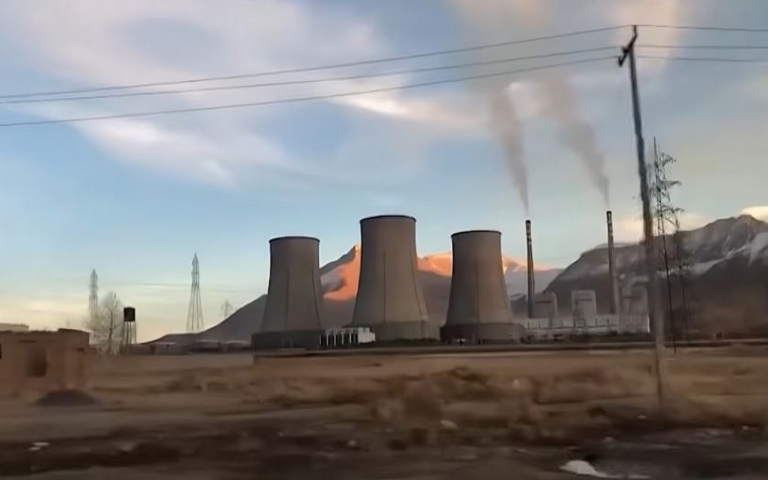
The Tehran Electricity Distribution Company announced that “scheduled and rotational power cuts” began across Tehran at 9 a.m. on Tuesday. Meanwhile, Fatemeh Mohajerani, spokesperson for the Masoud Pezeshkian administration, stated that the burning of fuel oil (mazut) will not be stopped, only reduced, and that power cuts will continue.
Each power outage is scheduled to last two hours, but citizens report that the announced schedule and areas of the outages are not consistently followed, causing problems for residents.
IAEA Director: Iran’s Room for Maneuver Is Diminishing
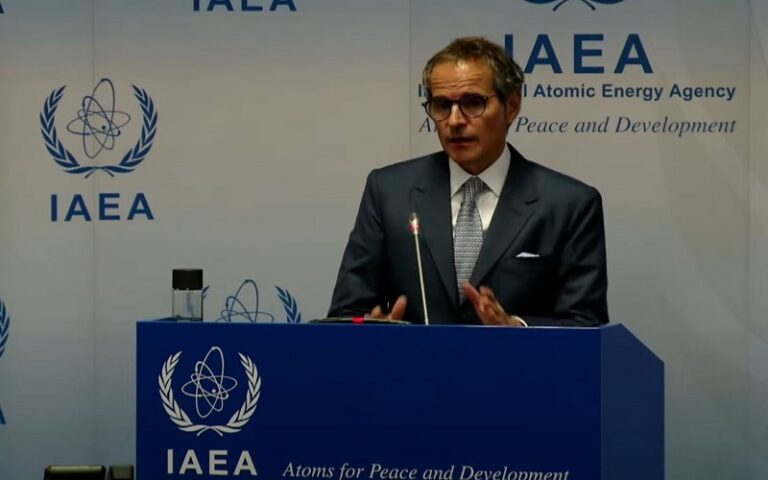
The Director General of the United Nations’ International Atomic Energy Agency (IAEA) states that Iran’s room for maneuver in its nuclear program is shrinking, and Iran must urgently find ways to resolve this issue.
On Wednesday, November 12, Rafael Grossi told Agence France-Presse on the sidelines of the “COP 29” meeting in Baku that the Iranian government needs to understand that international conditions are becoming increasingly tense, reducing its room for maneuver. He emphasized the necessity of finding diplomatic solutions.
On the eve of his trip to Iran, he clarified that the IAEA is allowed to conduct inspections in Iran but requires more extensive observations. He added that, given the scope, depth, and ambition of Iran’s nuclear program, it is essential to find ways to gain a better view of Iran’s activities.
His upcoming trip to Tehran on the following Wednesday also coincides with Donald Trump’s victory in the U.S. presidential election. During his previous presidency, Trump took a very hardline stance toward Iran’s regime, withdrew from the Joint Comprehensive Plan of Action (JCPOA), and imposed severe sanctions on the regime.
Mr. Grossi says he had a good experience working with the U.S. administration during Trump’s previous term.
A year after the U.S. withdrawal from the JCPOA in May 2018, Iran’s regime gradually began to reduce its commitments under the agreement and restricted its cooperation with the IAEA.
Mr. Grossi has repeatedly criticized Iran’s lack of cooperation in answering questions about traces of uranium found at undeclared sites, the expulsion of some IAEA inspectors from Iran, and blocking the agency’s access to surveillance camera data in Iran’s nuclear facilities, among other issues.
He has also warned about the significant increase in Iran’s 60%-enriched uranium stockpile, which is very close to the level required to produce a nuclear bomb.
According to IAEA standards, Iran possesses enough enriched uranium to produce approximately four nuclear bombs if further enriched.
Iran’s regime has long denied any plans to build a nuclear bomb, stating that it enriches uranium solely for civilian energy purposes.
Previously, Mr. Grossi commented on Iran’s lack of cooperation with the IAEA, saying that the JCPOA had become a “hollow shell.”
With the advent of President Masoud Pezeshkian’s administration, the Iranian regime has stated that it is ready to resume negotiations.
Grossi’s last visit to Iran took place in May of this year. He urged Iranian officials to address the IAEA’s concerns and to bring more transparency to its nuclear program.
Over 450 Executions in Iran Since the Start of the New Government
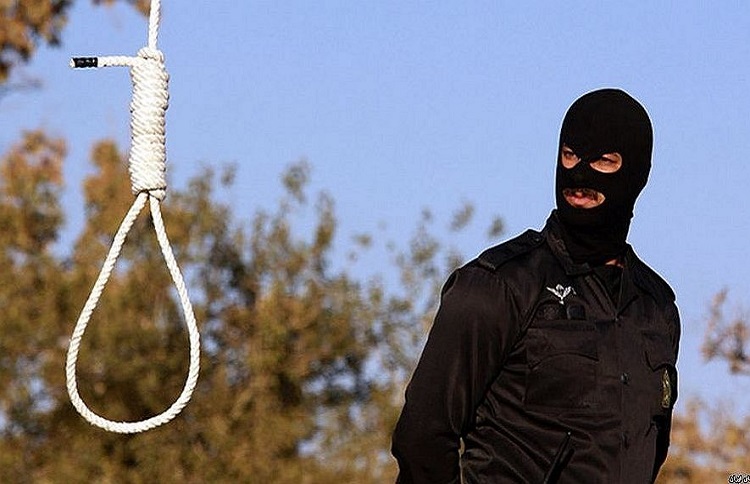
Members of the “No to Executions Tuesdays” campaign from 25 prisons in Iran, in a statement marking the campaign’s 42nd week, warned that the Iranian regime’s judiciary has recently issued execution sentences for several political prisoners and individuals accused of espionage, including Varisheh Moradi and Naser Bekrzadeh in Urmia prison, who have been sentenced to death on political charges.
The statement reads: “The heavy shadow of execution still looms over prisoners in Iran’s prisons, and the pace of executions continues intensively. Since October 22, more than 103 people, including two women, have been executed, with an average of five hangings per day.”
According to this campaign, over 450 people have been executed since the new government took office, marking this as the most significant and tragic outcome of the new administration’s actions.
The statement added that three other prisoners—Edris Ali, Azad Shojaei, and Rasoul Ahmad Mohammad—had previously been sentenced to death by the same judicial branch.
The authors of the statement warned that in Sheiban Prison in Ahvaz, four Arab prisoners—Ali Mojadam, Moein Khanfari, Mohammad Reza Moghadam, and Adnan Ghobeishavi—who were transferred to solitary confinement two weeks ago in preparation for their executions, are in extremely poor conditions.
The authors emphasized that in protest of these inhumane conditions, three of them have gone on a hunger strike, placing their lives in serious danger.
The statement declared that this campaign considers the issuing of execution sentences for women like Varisheh Moradi and Pakhshan Azizi, as well as the dozens of death sentences issued for ethnic minorities such as Kurds, Baluchis, and Arabs, along with violations of fair trial rights, as a form of hostage-taking to suppress public dissent.
On the fifth anniversary of the November 2019 uprising, the authors of this statement commemorated the over 1,500 people who lost their lives in these protests and paid tribute to the resilience of their families in seeking justice.
On November 12, members of the “No to Executions Tuesdays” campaign, in the 42nd week of the campaign, continue their hunger strike in 25 different prisons. Dastgerd Prison in Isfahan became the 25th prison to join the campaign last week.
Iran: Two Teenage Girls Commit Suicide Due to School Authorities’ Mistreatment
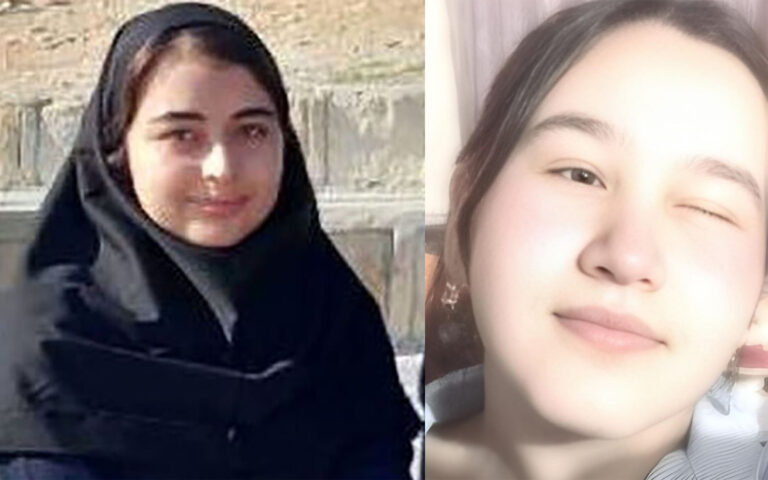
Arezoo Khavari, a 16-year-old student residing in Shahr-e Rey, was reported to have died by suicide on November 3. According to her father, she took her own life due to the strictness and behavior of school staff.
Following reports of the suicide of Arezoo Khavari, her father stated that his daughter’s actions were due to mistreatment and strictness from the school staff, especially from the principal.
In an interview with the state-run media outlet Shargh, published on Monday, November 11, he said that his daughter, after being denied entry to her class, left the school, entered a building, and then jumped from there.
According to Arezoo Khavari’s father, who lost his daughter last week, Arezo had worn jeans the day before her suicide attempt during a school trip, and on the way, she was dancing and celebrating.
He further explained to Shargh network: “Apparently, the principal got angry. The next day [Arezoo] went to school in uniform, but the principal did not let her into the class. She wanted to punish her. They told me she was wearing jeans and was dancing during the school trip.”
The father of this young girl, also told Shargh: “No one from the Ministry of Education came to investigate, nor did anyone from the school. It was as if my daughter hadn’t taken her own life because of what happened at school.”
While exact official statistics on adolescent suicides, particularly among students in Iran, are not available, in November 2021, the Ministry of Education reported an increase in student suicides and a tenfold rise in their risk level.
Following the suicide of Ainaz Karimi, a teenager from Kazerun in Fars Province, the Coordinating Council of Teachers’ Associations attributed her actions to pressures stemming from the school’s demeaning and strict treatment.
In a report from the newspaper Etemad on the details of the teenager’s suicide on October 27, Ainaz’s brother stated that “her family filed a complaint because she was expelled by the school principal.”
He added that Ainaz, after returning home still in her school uniform, hanged herself with a scarf.
According to the report, Ainaz Karimi, a 17-year-old 12th-grade student, was summoned by the school principal while in class because she had “dyed her hair and used nail polish.” She was then barred from re-entering the classroom and was threatened with expulsion by the principal.
However, a close relative of Ainaz said about the day of the incident: “That day, the principal cursed at Ainaz over disciplinary issues; her classmates told us this. The principal did not let Ainaz attend class until the end of the school day and even prevented her from going home.”
During the nationwide protests in 2022 following the death of Mahsa Amini in morality police custody, students played a significant role in the demonstrations. Schools, particularly girls’ schools, became centers of protest, and several students were killed during the suppression of these protests.
Iranian Political Prisoner Varisheh Moradi Sentenced to Death
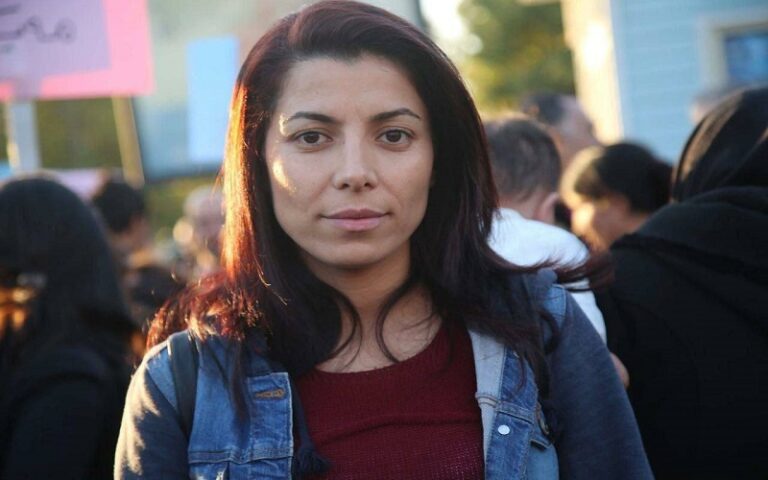
Varisheh Moradi, a political prisoner held in Evin Prison, has been sentenced to death by Judge Abolghasem Salavati on charges of “rebellion” (in the Iranian regime’s judicial terminology, this refers to someone who has risen against the Islamic ruler). She was arrested on August 1, 2023, near Sanandaj after being severely beaten, and after five months of interrogation, she was transferred to Evin Prison.
The death sentence issued against this political prisoner was communicated to her lawyers on Sunday, November 10. Varisheh Moradi’s first trial session was held on June 16 in Branch 15 of the Revolutionary Court of Tehran on charges of “rebellion” and “membership in an opposition group against the regime.” Her second trial was repeatedly canceled by Judge Salavati for various reasons but eventually took place on October 5.
On that same day, Hrana News Agency reported that Judge Salavati, in what has been assessed as a violation of defendants’ rights, did not allow any of Moradi’s lawyers to defend their client.
In August, Moradi wrote her defense statement along with a letter to the public, asking people to judge her and her activities in the light of social justice.
In part of this letter, she stated, “ISIS beheads us, and the Iranian regime hangs us.” She went on to say, “No political or legal knowledge can resolve this paradox. So let us stay awake.”
This political prisoner began a hunger strike on October 10 in protest against executions in Iran and in support of the “No to Execution” campaigns.
Sentencing of Female Political Prisoners
Since coming to power, the Iranian regime has consistently arrested, tortured, imprisoned, and executed civil and political activists critical of the government, including women. Since the start of the widespread uprising of Iranians against the regime in September 2022, the regime has intensified its suppression of civil and political activists and protesters, a trend that continues. Pakhshan Azizi, another Kurdish political prisoner and cellmate of Moradi, was sentenced to death on July 23 by Iman Afshari, head of Branch 26 of the Revolutionary Court of Tehran, on charges of “rebellion” and was given an additional four-year prison sentence for “membership in a party opposed to the Iranian regime.” Sharifeh Mohammadi, a labor activist held in Lakan Prison in Rasht, was also sentenced to death on July 4 by the Revolutionary Court of that city for “membership in the Coordinating Committee to Help Form Labor Unions” and the charge of “rebellion.” Another political prisoner, Maryam Akbari Monfared, after serving 15 years without furlough, was transferred to Tehran to serve an additional two-year sentence for “disturbing public opinion.” She was already incarcerated when this sentence was issued, a tactic the Iranian regime uses to increase pressure on political prisoners.Experts Warn About the Iran’s Inflationary “War Budget” in 2025
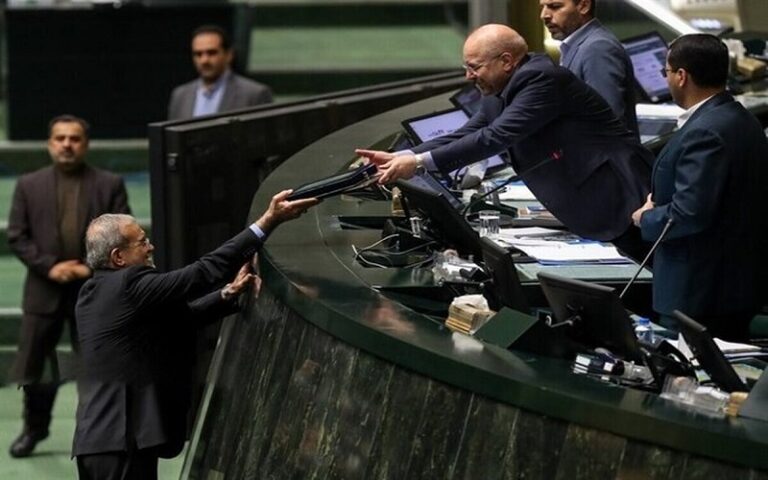
Massoud Pezeshkian, the president of Iran’s regime, has presented his first budget bill to the Majlis (parliament) since taking office. This budget, with a 200% increase in military expenditures, has been likened to a “war budget,” with its general framework approved amid exceptional economic and security circumstances for Iran.
47% of Iran’s oil export revenues are set to go directly to the armed forces, similar to the current year. This amount, totaling 5.61 quadrillion rials (approximately $8 billion), leaves the government with only 43%, equivalent to 5.09 quadrillion rials (approximately $7.271 billion).
Accordingly, activists and economic analysts note a “war footprint” in the 2024 budget. This comes as budget resources, even excluding military expenses, have faced significant deficits in recent years.
Increased Withdrawals from the National Development Fund
For 2025, about 5.4 quadrillion rials (approximately $7.714 billion) of the budget deficit is expected to be covered by borrowing from the National Development Fund.
This is the first time a government has relied so heavily on borrowing from the National Development Fund in a budget bill.
Abdolnasser Hemmati, the Minister of Economy, recently stated that they have already withdrawn funds from the National Development Fund to cover the budget deficit, with permission obtained from the regime’s Supreme Leader.
Another portion of the budget deficit is to be covered by borrowing from the capital market and issuing treasury bonds. However, the debt burden from previous governments has become so heavy that the government’s borrowing from the debt market will place additional pressure on the capital market.
Inflationary Budget
Inflation is the most likely outcome of increased borrowing in next year’s budget, as government pressure on the debt market accelerates the cycle of liquidity creation. Inflation drivers in the 2025 budget are based on two pillars: “removal of state subsidies” and “liberalization of energy prices.” Majlis members predict that the “reduction of foreign currency allocations for essential goods from $15 billion to $12 billion” in next year’s budget will drive up prices and inflation. As a result, some essential goods will be removed from the preferential currency basket.Rising Energy Carrier Prices
Government officials have made conflicting statements about raising gasoline prices. In defense of the budget bill in Majlis, Pezeshkian stated that the production cost of gasoline is 80,000 rials (about 10 cents), indirectly suggesting his interest in raising gasoline prices.Ambitious Goals for Oil Sales
In the budget bill, the government estimates oil exports at two million barrels per day. However, Iran’s oil sales have been limited by international sanctions, and the potential return of Donald Trump to office in the United States could increase international pressures on Iran’s presence in global markets.Iran’s Regime Withholds 2 Million Hectares of Land Amid Peak Housing Prices
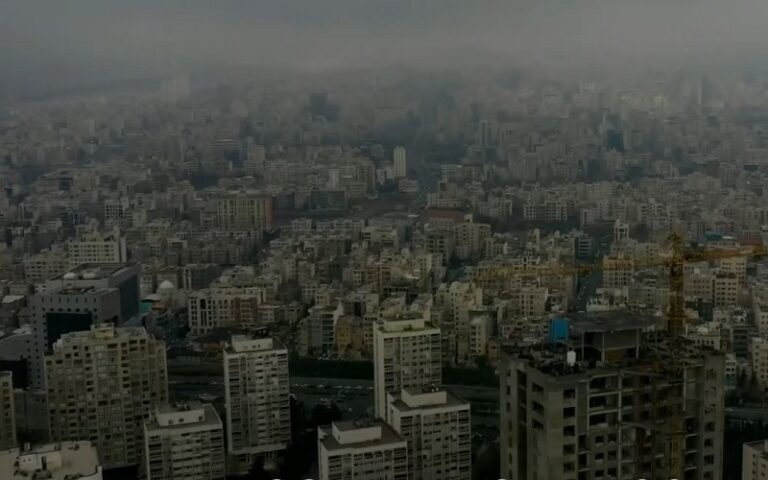
Despite the role of land scarcity in the significant cost of housing, Iran’s Ministry of Roads and Urban Development holds more than 1.8 million hectares of land.
The state-run ISNA news agency reported on Sunday, November 10: “With the release of less than six percent of the land acquired by the Ministry of Roads, the housing deficit of seven million units across the country could be resolved.”
Domestic newspapers have also highlighted this issue in their latest editions, with Quds Daily publishing a piece titled “The People’s Lands Held Under the Government’s Key” and Farhikhtegan Online reporting that “Land equivalent to 30 times the size of Tehran has been hoarded.”
Mohammad Bagher Ghalibaf, Speaker of the regime’s Majlis (parliament), also stated last week at the annual conference of the Housing Foundation of the Islamic Revolution that the National Land and Housing Organization holds twice the area of all residential land in the country in vacant land.
Land scarcity has consistently been cited as a barrier to housing development, and ISNA reported that in 2023, land accounted for more than 42% of the final cost of housing in urban centers and over 55% in Tehran.
These figures indicate a direct correlation between housing prices and land prices, suggesting that one solution to the housing crisis lies in addressing land costs.
Meanwhile, Massoud Pezeshkian, the regime’s Iran, stated during his election campaign this June that “solving the livelihood problems of the people” and “reaching the disadvantaged” are his top priorities in managing the country.
On November 4, Pezeshkian also remarked, “We are not afraid of military conflict,” but “what could bring us down are economic problems.”
At the same time, the Iranian Statistics Center reported in September that, as in the past, housing continues to account for the largest share of monthly inflation for households.
The center further reported that approximately 57% of the country’s monthly inflation in September was due to housing inflation, with housing’s share of monthly inflation rising since the beginning of the current year.
Additionally, a report from the Majlis Research Center in early November showed that, with Iran’s poverty rate solidly at over 30.1%, one-third of the country’s citizens are unable to meet their basic needs.
According to this report, Iran’s poverty rate reached 30.1% of the population in 2023, and estimates from the Majlis Research Center indicate that this rate will remain at its current level in 2024.
The center, reviewing the latest economic developments in Iran, emphasized that policymakers should avoid inaction and delays and pursue gradual reform policies to address some of the existing imbalances.
In 2018, the World Bank reported that about 420,000 people in Iran were living below the absolute poverty line. According to a 2018 report from the Majlis Research Center, between 23% and 40% of Iran’s population were living below the poverty line.
Iranian Man Sentenced to Hand Amputation on Bank Robbery Charges
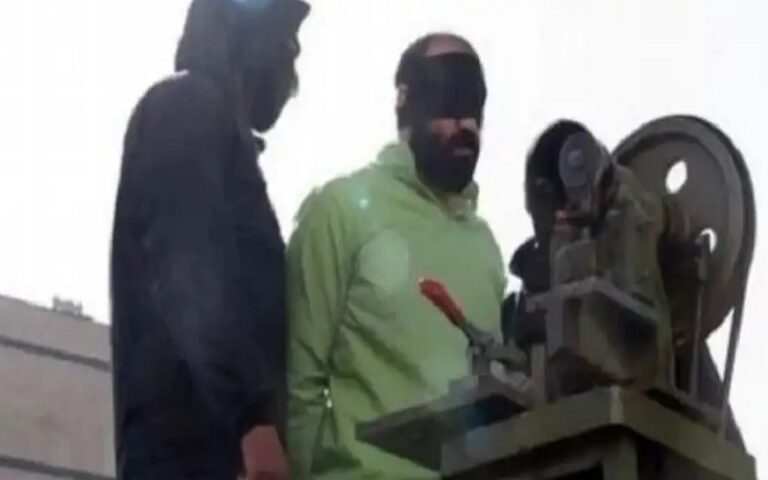
Armin and Hatef, the primary and secondary suspects in the robbery of safety deposit boxes at the University Branch of Bank Melli, were sentenced to hand amputation by the Tehran Province Criminal Court. The Supreme Court of Iran has also charged them with “corruption on earth,” which could lead to severe punishments such as the death penalty.
On November 9, the regime’s Etemad newspaper reported that Armin and Hatef, the primary and secondary suspects in the Bank Melli University Branch safety deposit box robbery, faced the charge of “corruption on earth” on November 6 from Branch 17 of the Supreme Court of Iran.
According to the report, the two were tried in mid-September by the Tehran Province Criminal Court and sentenced to hand amputation on the charge of “hudud theft” (a category of theft punishable under Islamic law).
The amputation sentences were issued despite the Iranian regime’s commitment to the International Covenant on Civil and Political Rights, which explicitly prohibits degrading and inhumane punishments. Hand amputation is considered one of these punishments.
Such punishments violate the principle of human dignity, a fundamental tenet of human rights. Iran remains one of the few countries that applies corporal punishment, including amputation, for certain crimes and has not joined the United Nations Convention Against Torture.
Iranian media reported in June that the robbers at Bank Melli’s University Branch in Tehran gained entry via a backdoor located in the building’s internal parking area. They then cut through a large safe and bypassed its code to access the safety deposit box area.
The lead defendant’s lawyer argued against the “corruption on earth” charge, stating, “Not every action that disrupts public order qualifies as corruption on earth.”
In recent months, those who lost property in the Bank Melli safety deposit box robbery have repeatedly held protests, demanding the return of their belongings.
Despite a rise in theft in Iran, robberies targeting state banks have been rare, with safety deposit box heists being even less common.
Iran Regime’s Budget Policies for Next Year Raise Concerns
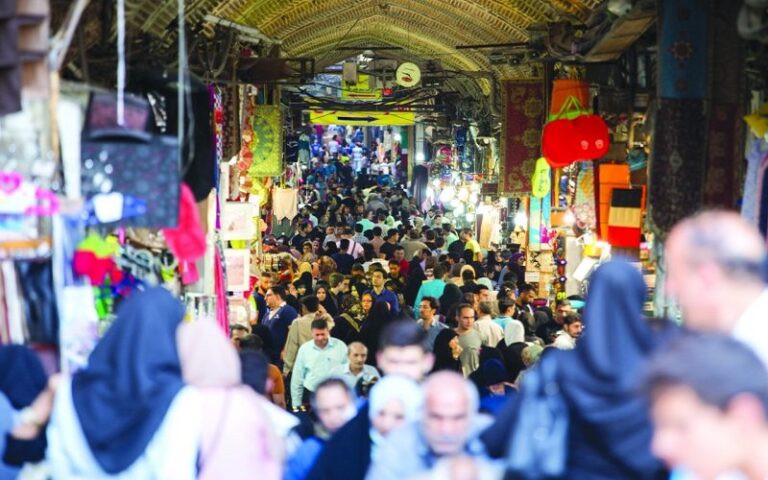
Frashad Momeni, a government-affiliated economist, expressed concern over a potential 40% increase in gasoline prices in Iran’s 2025 budget proposal, calling the overall budget policies “dangerous and worrisome.”
In an interview with the Jamaran website, this university economics professor criticized “secrecy” in the government’s framework, identifying the lack of transparency as a major flaw in next year’s budget proposal.
According to Momeni, despite warnings to the administration of Iranian regime’s president Masoud Pezeshkian about the “significant economic, social, political, and even national security costs” that would accompany a gas price increase, the Deputy Chair of the regime’s Majlis (parliament) Budget and Planning Commission recently announced that the government intends to raise gas prices by at least 40% next year.
The sudden rise in gasoline prices in November 2019 triggered widespread protests in Iran, which were met with a harsh crackdown by the regime. According to Reuters, at least 1,500 protestors were killed during the November crackdown.
Mehrdad Lahouti, Deputy Chair of Majlis Budget and Planning Commission, told the government-affiliated ILNA news agency that due to a reduction in the government’s budget for gasoline imports in next year’s budget proposal, gasoline “is very likely to become more expensive next year.”
In his remarks, Momeni criticized the $6 billion reduction in the foreign currency allocation for importing essential goods at subsidized prices in next year’s budget, noting that this action, along with reduced imports of essential goods, will drive up the prices of these items.
He described this policy as one that will simultaneously increase inflation and unemployment, resulting in widespread poverty.
ILNA has projected that next year, due to a $3 billion cut in the import budget, an inflation-adjusted increase in the preferential exchange rate, and the deregulation of energy prices—including electricity—costs will rise significantly.
Momeni criticized the economic policies in Iran since 1989 as crisis-inducing and stated that the approach to managing the nation’s economy has remained unchanged.
Referring to inequalities in cash flow distribution among Iranians, this economist noted that more than 82% of the country’s liquidity is concentrated in the hands of just 2.5% of depositors.
He also described the government’s two-phase approach to presenting budget components to Majlis as a move that “exacerbates the transparency crisis.”
Citing performance evaluation reports from the Sixth Development Plan, which covered the five-year period from 2016 to 2021, Momeni said that despite the allocation of foreign currency and rial resources “far beyond the amounts projected in the legislation,” only 9% of the plan’s goals have been achieved.
Widespread Power Outages Begin in Several Iranian Provinces

Electricity distribution companies in several provinces, including Ardabil, Kermanshah, and Razavi Khorasan, announced that power outages would be enforced across these provinces starting at 9 a.m. on Sunday, November 10. Contrary to previous reports, power outages in the capital also began today.
On Sunday, the website for Greater Tehran’s electricity distribution company published a blackout schedule.
On Saturday, November 9, domestic media reported that due to insufficient fuel for power plants, power outages would commence nationwide.
In recent days, Masoud Pezeshkian ordered a halt to mazut (heavy oil) burning in three power plants, replacing it with scheduled blackouts.
According to Abdolreza Taghavi, Chairman of Central Regional Power Production, mazut burning at the Shazand power plant was halted as the plan went into effect today.
Taghavi stated that currently, 1.8 million cubic meters of gas are allocated daily to the Shazand plant, but they are requesting a full gas quota.
On November 7, government spokesperson Fatemeh Mohajerani posted on X (formerly Twitter) that for a limited time, “scheduled blackouts” could replace “pollution production” for the general public.
In this context, Reza Sepahvand, a member of the parliamentary Energy Committee, stated on Sunday that if mazut is not burned, the only option is scheduled power and gas outages for households and industries. He added, “Apart from mazut, we have no other source to supply gas in the coming months.”
He continued, “We experienced industrial power cuts in the summer, which harmed the industry and agricultural sectors, and repeated outages created many issues for households.”
In recent days, government officials, state-affiliated media, and Pezeshkian’s supporters have been attempting not only to justify but also to praise the scheduled and nationwide blackouts, reminiscent of the 1980s, and to portray them as an achievement of the new administration.
Mohammad Jafar Qaem Panah, Pezeshkian’s executive deputy, also blamed the public for the imbalances and mazut use, suggesting that citizens should reduce home heating by a few degrees and consume less gas and electricity to mitigate blackouts.
He also attributed part of the problem to the “extremely low cost” and subsidies on energy carriers.
Hassanali Taghizadeh, Chairman of the Electricity Syndicate, warned officials in late September: “If we continue on this path, the imbalance will reach 25,000 megawatts next year.”
Taghizadeh also stated, “Don’t blame the people; don’t falsely claim that their consumption is high. The per capita electricity consumption of Iranians is 1,022 kilowatt-hours per year, compared to 2,120 kilowatt-hours in Europe. Our people consume very little electricity compared to the world, but we have a habit of blaming them.”
On Sunday, the government-affiliated Fars News Agency reported, based on data from the Ministry of Energy, that since September this year, the process of refilling liquid fuel reserves for power plants has halted, gradually reducing the reserves to one-third.
According to the report, gas supplies to power plants dropped by 30% in the first two weeks of this month compared to last year, and diesel reserves for power plants fell to less than 1.26 billion liters, placing Iran’s electricity grid on the verge of an emergency state.
In Iran, 80% of electricity is generated by thermal power plants, which rely primarily on natural gas for cleaner production without exacerbating air pollution.
In the absence of natural gas or diesel, power plants turn to mazut as an alternative.
Mazut contains high levels of sulfur and other toxic compounds, and burning it releases a large amount of particulate matter and toxic gasses.
