

The Winners and Losers of Iran’s New Gasoline Pricing Policies
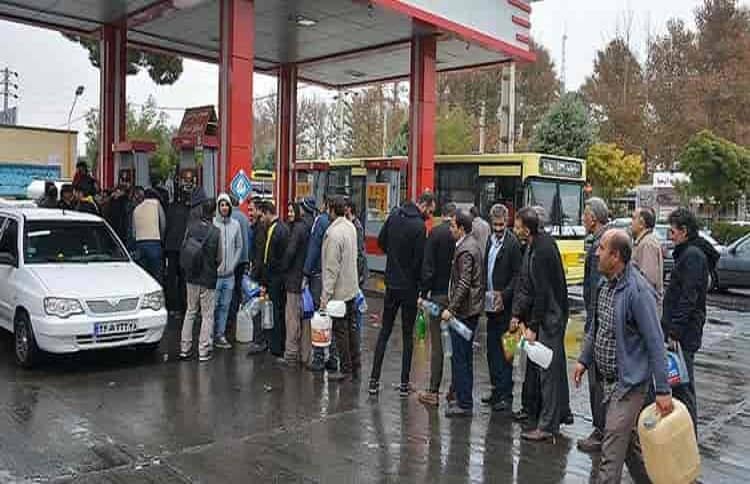
The Iranian regime has decided to liberalize the price of premium gasoline. Who are the winners and losers in this price liberalization?
Various labels such as imbalance and shortage are used, but the country is grappling with a major crisis.
The treasury is empty, and the government needs funds to cover daily operations and current expenses.
The primary issue concerning the import of premium gasoline is the source of its foreign exchange funding.
Under these circumstances, instability in the price of premium gasoline might start here and spread to other markets.
Currently, the FOB Gulf price of premium gasoline is approximately $1.2 (roughly 840,000 rials).
If imports are conducted at the free-market exchange rate, the price of premium gasoline will reach about 800,000 rials (approximately $1.4) per liter.
This means a cost of 40 million rials to fill a 50-liter tank.
This change might increase the prices of imported cars and public transportation costs.
It is worth noting that the minimum wage for a worker with two children is around 110 million rials (approximately $158).
If premium gasoline imports are conducted at the exchange rate for essential goods, the price per liter would decrease to about 610,000 rials.
This price would still be significantly higher than the subsidized price of regular gasoline.
The current price of premium gasoline is 35,000 rials (approximately $0.05). Now, the question arises: how will the price of imported premium gasoline be calculated under this policy?
Currently, 5% of the country’s gasoline is distributed as premium gasoline at a price of 35,000 rials.
The regime claims that it supplies 2 billion liters of premium gasoline annually. However, with the liberalization of imports, consumption is expected to grow due to increased availability.
Amidst this, a critical question arises currently, premium gasoline is offered at 35,000 rials, while the FOB Gulf price is $1.2.
This means that at the free-market dollar rate and FOB Gulf price, the government would need to allocate 1,530 trillion rials (approximately $2.185 billion) annually in subsidies for the 2 billion liters of premium gasoline it claims to supply.
Yet, the government claims it only pays about 200 trillion rials (approximately $285.714 million) in subsidies for premium gasoline. How can this discrepancy be explained?
This indicates that over 1,300 trillion rials (approximately $1.857 billion) in subsidies are benefiting the wealthy segment of society that uses premium gasoline.
The government of Masoud Pezeshkian claims that with the liberalization of imports, these subsidies might be removed from the budget.
In reality, the government claims it would save 200 trillion rials annually by liberalizing premium gasoline prices. However, as calculated, this figure would be 1,530 trillion rials, not 200.
Another point to consider is the inflationary effect of premium gasoline price liberalization, which is typically used by the wealthy, on the lives of lower-income groups.
Currently, the price of aviation-grade premium gasoline is 300,000 rials (approximately $0.42), and subsidies ensure airlines pay only 6,000 rials (approximately $0.008) per liter.
On average, 4 to 4.5 million liters of jet fuel are consumed daily, equivalent to 1.6 billion liters annually.
This massive subsidy placed a significant financial burden on the government, amounting to 470 trillion rials (approximately $671.428 million) annually.
Now, the government has increased the price of aviation fuel from 6,000 rials to just 66,000 rials (approximately $0.094) per liter, meaning it still provides a subsidy of 234,000 rials (approximately $0.33) per liter.
This means the government is still providing over 370 trillion rials (approximately $528.571 million) annually in subsidies for airplane fuel to the wealthier segments of society.
According to Pezeshkian the production cost of regular gasoline is 80,000 rials (approximately $0.114).
Lower-income groups benefit significantly less from gasoline subsidies compared to wealthier segments, while a substantial amount of money is extracted from their pockets through the cost of regular gasoline and transferred to the government’s coffers.
If energy subsidies, including those for gasoline, are to be reduced to bolster government revenue, this burden should be placed more on higher-income groups rather than lower-income ones.
Iranian Official Warns of Alarming Gas Consumption
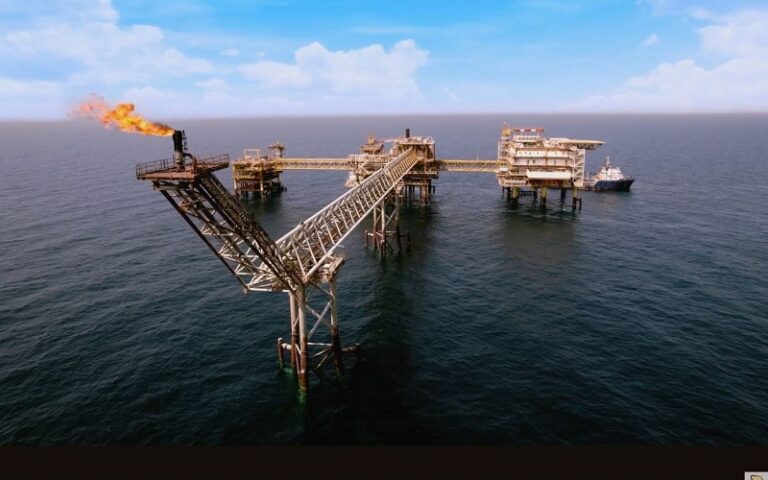
Gholamreza Koushki, head of the Gas Network Operation Control Center in Iran, announced that gas consumption in the residential and commercial sectors reached 57% of production in November. Highlighting the high levels of consumption, he issued a warning regarding gas usage. Meanwhile, the “Payam-e Ma” newspaper reported that bakeries are reverting to using diesel fuel and noted that the government aims to convert bakeries into dual-fuel systems.
Koushki emphasized that with colder weather, daily gas consumption in the residential and commercial sectors in November increased by 80 to 85 million cubic meters compared to the same period last year, which could lead to further problems.
According to Koushki, on November 15, gas consumption in the residential and commercial sectors reached 475 million cubic meters. He noted that this level of consumption was recorded in December last year.
Analysts believe that the remarks of this government official have heightened concerns about potential gas rationing for industries and households in the coming months, as imbalances in this sector are inevitable and the government has no other option but to cut gas supplies to manage consumption.
These warnings come as the Iranian regime implemented widespread blackouts across the country last week following a crisis in the supply of electricity.
In this context, Hashem Oraee, a professor at Sharif University of Technology, told the state-run ILNA news agency: “This year, the liquid fuel reserves of power plants have decreased by 45% compared to the same period last year, and they are now half of what they were last year.”
Oraee emphasized that for every one-degree drop in temperature, household gas consumption increases by 10 million cubic meters, with 70% of gas consumption directed toward the residential sector.
According to this university professor, at best, gas production was 850 million cubic meters, but it has now decreased to 800 million cubic meters per day.
This situation has also raised concerns about ensuring the bread supply, prompting the government to require bakeries to use dual-fuel equipment before the onset of winter so they can continue operating on diesel in case of gas outages.
The “Payam-e Ma” newspaper also stressed that there is no guarantee of providing the necessary fuel for bakeries. The report stated: “If the government implements the use of electric generators instead of supplying electricity from the urban grid, it must also provide the necessary diesel or gasoline for these generators as subsidized fuel for the bakeries.”
The decision to convert bakeries to diesel use due to the likelihood of widespread gas outages in the coming months is being made at a time when part of the reason for power outages in the country is a shortage of diesel. It is unclear whether the government will be able to supply the fuel needed for bakeries.
EU Preparing Shipping Sanctions Against Iran’s Regime
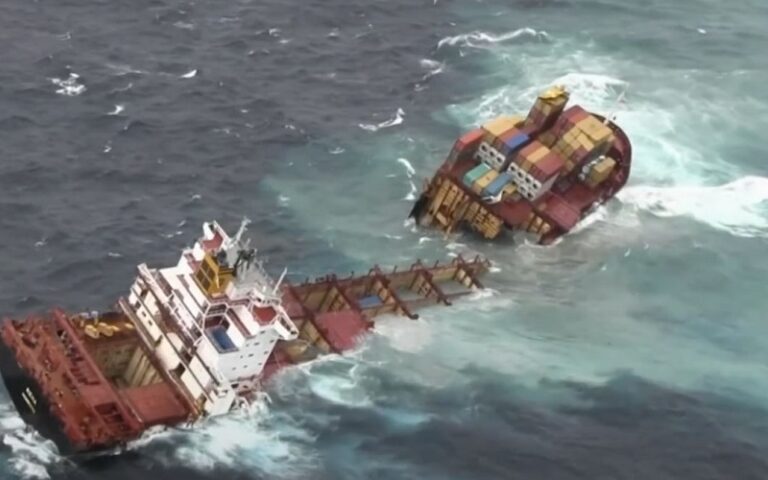
A Wall Street Journal reporter claimed that the European Union is set to sanction Iran’s shipping industry this Monday.
Laurence Norman wrote on his X (formerly Twitter) account:
“More EU Iran sanctions coming Monday over missile deliveries to Russia as previewed previously. Will include a few sectoral sanctions, including shipping.”
According to the journalist, the new EU sanctions will target various sectors, including the Islamic Republic of Iran Shipping Lines (IRISL). Among the targets of these sanctions, to be voted on Monday, November 18, is Iran’s shipping group. The EU believes this group has been involved for years in transporting military cargo. On October 14, the EU had imposed sanctions against the Iranian regime’s Deputy Defense Minister, senior members of the Islamic Revolutionary Guard Corps (IRGC), and three airlines for sending drones, missiles, and other equipment to Russia for use in the war against Ukraine. According to reports, Iran Air, Mahan Air, and Saha Airlines, as well as Seyed Hamzeh Ghalandari, Iran’s Deputy Defense Minister, were among those sanctioned. The EU stated that aircraft from these companies had “repeatedly been used to transport Iranian-made drones and related technologies to Russia,” which Russia has deployed in its “aggressive war” against Ukraine.More EU Iran sanctions coming Monday over missile deliveries to Russia as previewed previously. Will include a few sectoral sanctions, including shipping.
— laurence norman (@laurnorman) November 15, 2024
Land Monopoly and Housing Crisis in Iran: A Nation on the Brink

On November 8, Mohammad Bagher Ghalibaf, the Speaker of the Iranian regime’s Parliament, presented new information about land distribution at the “National Housing Foundation’s General Assembly.” He revealed: “The National Land and Housing Organization under the Ministry of Roads and Urban Development possesses empty lands twice the size of the total residential areas of the country.”
This information highlights that monopolization of land by government entities and land speculators is one of the largest obstacles to resolving Iran’s housing crisis. According to the latest official statistics, land accounted for 47% of the total housing costs in urban areas in 2021, rising to 70% in Tehran. Reducing land prices is the first step to solving the housing crisis, which requires dismantling land monopolies.
New statistics presented by Ghalibaf demonstrate that land availability for housing construction directly depends on the Ministry of Roads and Urban Development’s policies. He disclosed that the Ministry and the National Land and Housing Organization control 18 billion square meters of land (1,814,000 hectares).
Land hoarding by speculators has caused land prices to soar by a staggering 3,447 times over three decades. This underscores the role of these organizations in hoarding and monopolizing land rather than supplying it for housing development. According to the Statistical Center of Iran, housing now consumes 42.4% of urban household expenses nationwide, rising to 55.8% in Tehran—far above the global standard of 30%. Consequently, the time needed to own a house averages 48 years in smaller cities and 150 years in Tehran, highlighting a critical housing challenge.
Abbas Soufi, a member of the Parliament’s Construction Commission, stated that Iran currently faces a housing deficit of 7 million units. This imbalance stems partly from a 1999 High Council of Architecture and Urban Planning resolution limiting urban sprawl, which allowed land speculators and government entities to monopolize land. Over the past three decades, the price of free-market dollars has increased 366-fold, while housing prices rose 1,600-fold and land prices in Tehran surged 3,447-fold.
Land prices have risen faster than general inflation, driving unchecked increases in housing costs. Claiming a “land shortage,” the Iranian government has promoted dense urban development in major cities. This policy has forced many residents to migrate to city outskirts.
With the land controlled by the Ministry of Roads and Urban Development, Iran could create 30 cities the size of Tehran. According to territorial planning documents, 16% of the country’s area is suitable for habitation, but due to land monopolization, only 2% is designated for housing. This shows that the housing crisis stems not from a land shortage but from monopolies.
Allocating just 6% of this land for housing could accommodate 10 million families in 100-square-meter homes, permanently resolving the housing deficit. Government entities’ land hoarding has rendered many Iranians homeless, forcing some to live in graves, water pipes, rooftops, or buses.
Meanwhile, state-run media report that Tehran alone has 2 million vacant housing units, mostly owned by banks and economic holdings of government organizations.
What Did Grossi Achieve During His Visit to Tehran?
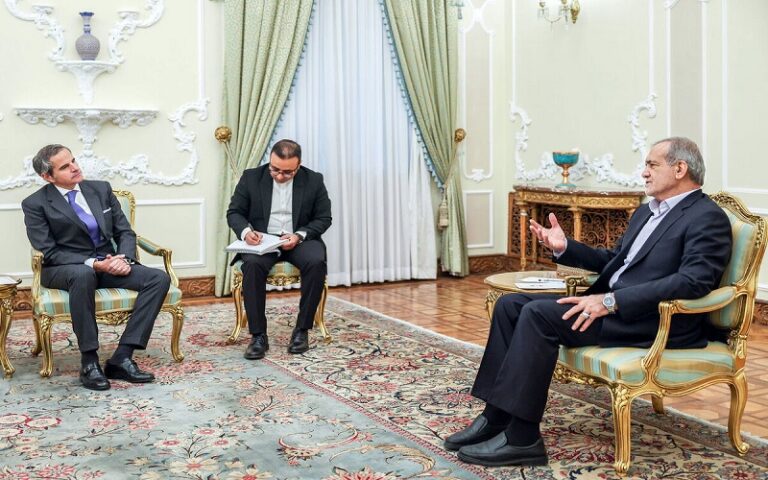
What transpired during the meeting between Rafael Grossi, Director General of the International Atomic Energy Agency (IAEA), and Massoud Pezeshkian in Tehran, and what achievements did Grossi leave with?
Massoud Pezeshkian, President of the Iranian regime, stated during his meeting with Rafael Grossi: “We declare our readiness to cooperate with the IAEA to resolve alleged ambiguities and suspicions about our peaceful nuclear activities.”
He further added: “The world has now concluded that the Iranian government seeks peace and global security.”
Pezeshkian emphasized: “Based on Khamenei’s fatwa, we have never pursued, nor will we ever pursue, nuclear weapons. Furthermore, no one is permitted to deviate from this policy.”
Rafael Grossi, in a press conference in Tehran, remarked that with current international tensions and increasingly volatile conditions, diplomacy is becoming more constrained by the day. He stated that the Iranian government’s revocation of inspectors’ appointments is not beneficial for our work.
Grossi added that in the field of verification, everything must be transparent. He added that information regarding nuclear materials, developed capabilities, and other aspects must be clearly identified. This applies not only to Iran but is standard practice for all countries.
Grossi noted that tensions are currently very high, and the Iranian government is at the center of these tensions. He stressed that as the Director General of the IAEA, he will strive to find a solution to these tensions to minimize the risk of war and prevent any hostility or conflict.
Grossi emphasized during the conference that the Iranian government’s revocation of inspectors’ appointments is unsuitable for the agency’s work. He emphasized the need for all of Iran’s nuclear activities to be under supervision. This is a globally accepted practice and essential for building trust.
Following the visit, the US State Department spokesperson responded to the promises of the Iranian regime’s president to Grossi about readiness to address ambiguities in its nuclear program, stressing that the US is waiting for concrete action from the Iranian government.
Vedant Patel, spokesperson for Joe Biden’s administration, stated on Thursday, November 14, that the United States demands behavioral changes and concrete actions from the Iranian government.
He stated that the U.S. wants to ensure that the Iranian government will never acquire nuclear weapons.
The US State Department spokesperson emphasized that the US expects real behavioral change and practical actions from the Iranian government and will not rely on gestures or promises regarding its nuclear program.
While Grossi stresses the necessity of fulfilling commitments by the Iranian government, US and European officials have also highlighted Iran’s lack of transparency in its nuclear program as a critical issue.
Meanwhile, Reuters, citing several diplomats, reported that European countries plan to issue a resolution against Iran at the upcoming IAEA Board of Governors meeting next week.
The purpose of this resolution is to pressure Iran to cooperate with this international body.
UN Fact-Finding Mission Warns About Executions in Iran
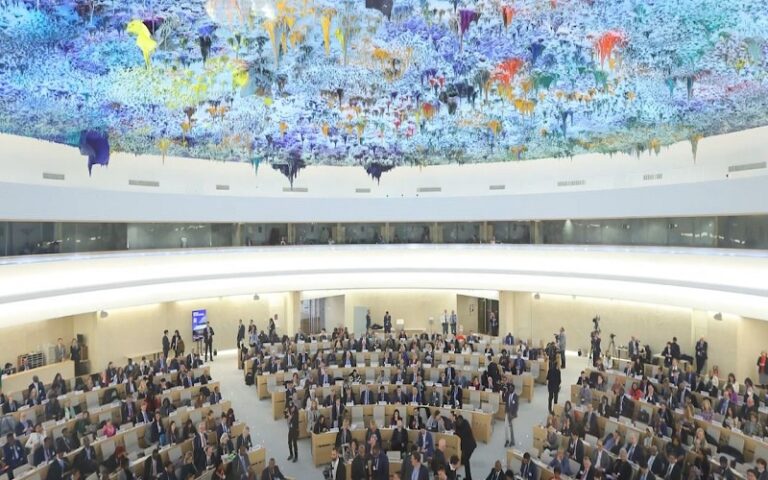
A United Nations Fact-Finding Mission has warned the Iranian government about the sharp increase in executions and called for their cessation.
The UN Fact-Finding Mission urged an immediate halt to executions and a temporary suspension of the use of the death penalty by the Iranian government.
The fact-finding mission has also called on the Iranian government to completely abolish the death penalty.
The Fact-Finding Mission, referencing the death sentence of “Varisheh Moradi” on charges of “armed rebellion against the state,” stated that the Iranian government uses executions to suppress female activists.
According to the Fact-Finding Mission, Ms. Moradi is the third woman to be sentenced to death for activism, following Pakhsan Azizi and Sharifeh Mohammadi.
Although Sharifeh Mohammadi’s death sentence was annulled in October 2024, she remains at risk of execution.
In recent days, in addition to sentencing Varisheh Moradi to death, the Iranian judiciary has issued death sentences for six individuals accused in the Ekbatan case, including Milad Armoon, Alireza Kafaei, Amir Mohammad Khosh Eghbal, Navid Najaran, Hossein Nemati, and Alireza Barmarzpour Nak.
The Independent International Fact-Finding Mission on Iran wrote on its Instagram page:
“The FFM Iran is alarmed by the sentencing to death of women activists in Iran, including Varisheh Moradi sentenced to death on charges of ‘armed rebellion.’
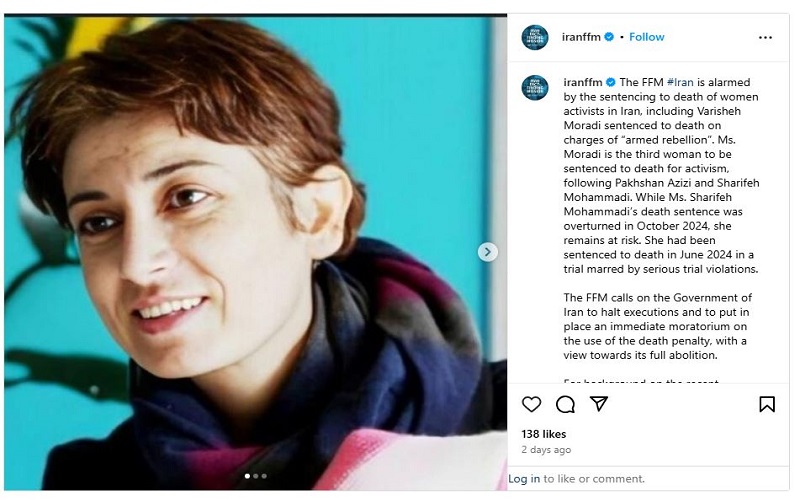 “The Fact-Finding Mission has called on the Iranian government to halt executions and immediately suspend the death penalty with the aim of complete abolition.”
On September 13, the Independent International Fact-Finding Mission on Iran also released an 11-page report on the condition of women and girls related to the 2022 protests.
The report mentions that nationwide protests in Iran began on September 16, 2022, with the unlawful death of Jina Mahsa Amini while in custody of the regime’s security forces.
The Fact-Finding Mission reiterated its call for accountability and justice for victims, especially women and girls, urging governments to adhere to their human rights commitments.
The Fact-Finding Mission called for an immediate halt to the use of the death penalty, as well as the repeal of compulsory hijab laws and policies that suppress the rights of women and girls.
The Mission is continuing its investigation into these and other incidents and will present its next report to the Human Rights Council at its 58th session in March 2025.
“The Fact-Finding Mission has called on the Iranian government to halt executions and immediately suspend the death penalty with the aim of complete abolition.”
On September 13, the Independent International Fact-Finding Mission on Iran also released an 11-page report on the condition of women and girls related to the 2022 protests.
The report mentions that nationwide protests in Iran began on September 16, 2022, with the unlawful death of Jina Mahsa Amini while in custody of the regime’s security forces.
The Fact-Finding Mission reiterated its call for accountability and justice for victims, especially women and girls, urging governments to adhere to their human rights commitments.
The Fact-Finding Mission called for an immediate halt to the use of the death penalty, as well as the repeal of compulsory hijab laws and policies that suppress the rights of women and girls.
The Mission is continuing its investigation into these and other incidents and will present its next report to the Human Rights Council at its 58th session in March 2025.
“The Fact-Finding Mission has called on the Iranian government to halt executions and immediately suspend the death penalty with the aim of complete abolition.”
On September 13, the Independent International Fact-Finding Mission on Iran also released an 11-page report on the condition of women and girls related to the 2022 protests.
The report mentions that nationwide protests in Iran began on September 16, 2022, with the unlawful death of Jina Mahsa Amini while in custody of the regime’s security forces.
The Fact-Finding Mission reiterated its call for accountability and justice for victims, especially women and girls, urging governments to adhere to their human rights commitments.
The Fact-Finding Mission called for an immediate halt to the use of the death penalty, as well as the repeal of compulsory hijab laws and policies that suppress the rights of women and girls.
The Mission is continuing its investigation into these and other incidents and will present its next report to the Human Rights Council at its 58th session in March 2025. The Anniversary of Iran’s Bloody November 2019 Protests
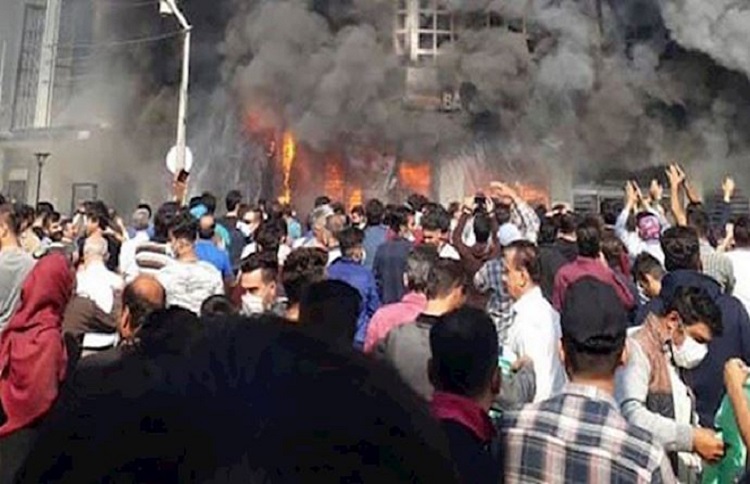
In mid-November 2019, numerous cities across Iran witnessed unprecedented protests against the regime. The demonstrations erupted following the sudden tripling of gasoline prices, and the regime’s severe crackdown resulted in the deaths of at least 1,500 protesters.
At that time, as news of the killings spread, the government shut down internet access, concealing the full extent of human rights abuses being committed by security forces.
These widespread protests, which occurred in a significant number of cities across Iran, initially responded to the sudden fuel price hike but quickly shifted to targeting the regime itself.
The death toll: A figure that was never fully disclosed.
Reported death tolls from the November 2019 protests vary widely, ranging from 200 to over 4,200 people. In June 2020, then-Interior Minister Abdolreza Rahmani Fazli stated that between 200 and 225 people were killed in the protests and acknowledged that they had died from gunfire by government forces. Just a week earlier, Amnesty International had reported at least 304 deaths and suggested that the actual death toll was likely much higher. Meanwhile, on December 23, 2019, the People’s Mojahedin Organization of Iran, the country’s largest opposition group, and later Reuters, reported 1,500 deaths in the protests, citing “three sources close to the leader’s inner circle” and “a fourth official.” According to these sources, Ali Khamenei had instructed senior officials to “do whatever it takes to stop” the protests. The death toll reported by Reuters has been accepted by much of the Iranian public, including many families of the protest victims. However, data from Iran’s Civil Registration Organization suggest that the number of casualties may be much higher. According to this data, the number of recorded deaths in November 2019 was 38,517. In the preceding month, October, it was 34,316, and in December, it was 33,615. These statistics indicate that in November, registered deaths were 4,201 higher than in October and 4,902 more than in December of that year. Some studies suggest that a pathogenic factor such as COVID-19, seasonal influenza, or natural statistical fluctuations due to unrecorded deaths cannot account for the high death toll in November 2019. Nevertheless, due to the lack of sufficient statistical data on the number of deaths across various provinces, precise comparisons to assess the death toll are not possible. Mahboubeh Ramazani, the mother of Pejman Gholipour, a young man killed on November 17 in Marlik, Karaj, said that while she was in the hospital hallway, a body was transferred to the morgue every five or ten minutes—bodies of those killed in the protests. Afterward, the young man’s family went to file a complaint at the Malard County office. An official there told Pejman’s father, “Since the night of November 17, I’ve handled 850 cases here; you won’t get anywhere with this.” In another incident, the Iranian regime carried out a large-scale massacre of protesters in Bandar Mahshahr using heavy weaponry like DShK machine guns. The regime deployed tanks to contain the situation in the city. On November 18, 2019, the IRGC fired at protesters, who sought refuge in nearby marshes to avoid the gunfire. The IRGC forces, however, fired into the marshes with DShK machine guns, killing around 100 people. The New York Times confirmed this event on December 3, 2019.Which cities were involved?
The responsible institutions in the Iranian regime have never agreed to calls for a truth-finding committee regarding the November 2019 protests. In December 2019, then-Interior Minister Abdolreza Rahmani Fazli stated in an interview with Iranian television that the protests mainly occurred in “marginalized” areas. Five provinces experienced a “special situation,” and 100 locations within Tehran also saw protests. According to Rahmani Fazli, protests occurred in 27 provinces, with Khuzestan, Isfahan, Fars, and Tehran designated as “special” due to the intensity of the protests. A few days later, Ali Darabi, deputy head of provincial affairs at the state broadcasting organization IRIB, wrote in a note published by Fars News Agency that “over 200 cities, large and small, were involved in the protests.” At least 8,600 people were arrested in 22 provinces during these protests. Many of the regime’s supporters consider the November 2019 protests a closed case. However, the families of victims seeking justice and some opponents of the Iranian regime continue to say, “November continues.”European Powers Consider A Resolution Against Iran At The IAEA Board of Governors
European powers are reportedly seeking to issue a new resolution against the Iranian regime at the upcoming International Atomic Energy Agency (IAEA) Board of Governors meeting due to Iran’s lack of cooperation with the agency, according to diplomatic sources cited by Reuters.
This report was published on November 13, coinciding with a visit to Tehran by Rafael Grossi, Director General of the IAEA.
Reuters notes that passing a new resolution could escalate tensions with Iran, as Tehran has previously retaliated against IAEA Board of Governors’ criticisms by ramping up nuclear activities and hindering IAEA inspectors.
However, if passed, this resolution would come after Donald Trump’s recent victory in the U.S. presidential election and his return to the White House, where in his first term he unilaterally canceled the nuclear agreement with Iran and enforced a maximum pressure campaign against it.
The resolution would request that the IAEA, in addition to its quarterly reports on Iran’s nuclear activities, also prepare a “comprehensive report” with more detailed information focused on issues with Tehran, including the discovery of uranium particles at undeclared sites.
“Our concerns about Iranian nuclear activity are well known. It feels a natural point to be asking the IAEA for a thorough report. That then provides a basis to deal with Iranian behaviour,” a European diplomat told Reuters.
Diplomatic sources state that the goal of such a resolution is to pressure Iran’s regime into returning to the negotiating table to accept new restrictions on its nuclear program in exchange for reduced sanctions, albeit less restrictive than those under the Joint Comprehensive Plan of Action (JCPOA).
Reuters adds that four additional diplomats have confirmed that France, the United Kingdom, and Germany are lobbying for a resolution at the IAEA Board of Governors.
Reuters adds that Western efforts to negotiate a new agreement with Iran before the JCPOA officially expires in October next year were largely based on the assumption that Kamala Harris, Trump’s opponent, would win the U.S. presidential election, as Trump has shown no inclination to negotiate with Iran’s regime.
Reuters further reports that Rafael Grossi is reluctant to provide a comprehensive report, as he is currently involved in diplomatic efforts to compel Iran to explain the presence of uranium particles and to convince Tehran to allow greater IAEA oversight of its nuclear activities.
Tehran is currently enriching uranium to 60% purity, close to the 90% required for an atomic bomb. According to IAEA standards, Iran has enough enriched uranium to potentially produce about four nuclear bombs if further enriched.
The Iranian regime has previously shown disregard for international laws, and all past negotiations with this regime have reached a deadlock, yet European countries continue to insist on negotiations with the regime.
Mrs. Maryam Rajavi, the elected president of the National Council of Resistance of Iran (NCRI), the largest opposition group to the Iranian regime, has emphasized the need to invoke the “snapback” mechanism under UN Security Council Resolution 2231 and to reactivate UN Security Council resolutions related to the regime’s nuclear projects.
She added that it is imperative to place the clerical regime under Chapter VII of the UN Charter and to designate the Islamic Revolutionary Guard Corps (IRGC) as a terrorist organization.
Iran: Nearly 31,000 Dead From Air Pollution in 2023
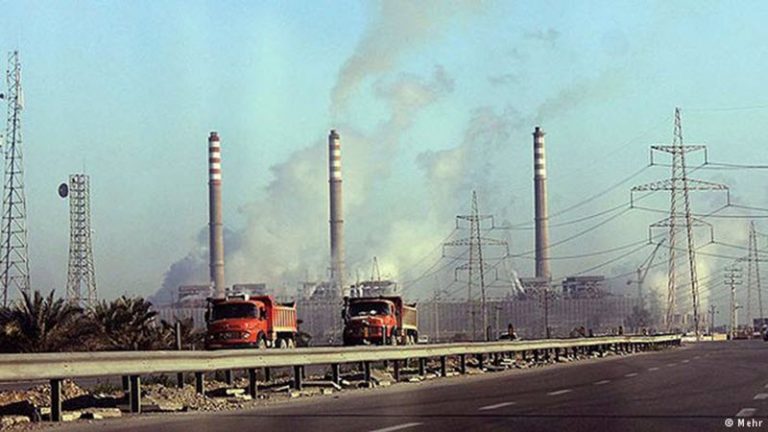
Government-affiliated media in Iran are highlighting air pollution death statistics in an effort to create a “political achievement” for regime president Masoud Pezeshkian in his initiative to ban mazut burning. However, data show that power plant reserves of mazut and diesel have drastically declined, and mazut burning is not the main cause of air pollution-related deaths.
Abbas Shahsouni, head of the Air Health and Climate Change group in the Ministry of Health, reported 30,690 deaths due to air pollution in 2023. This number was over 26,000 in 2022.
Shahsouni explained that since 2017, the Ministry of Health’s Air Health and Climate Change group has been responsible for compiling statistics on deaths and damages from air pollution. According to information previously provided by this center in press briefings, the estimated number of premature deaths due to air pollution in 2019 was around 41,700.
These Ministry of Health statistics are usually collected in selected cities. The figures Shahsouni reported for 2023 are based on surveys conducted in 57 cities with a population of nearly 48 million people.
Shahsouni noted that mazut burning has not been an issue in Tehran, while pollution from mazut occurs more in cities like Isfahan and Arak.
Pezeshkian has no mazut to burn
Burning mazut in power plants is a major factor in air pollution, but other sources of air pollution also exist. State media is attempting to present Pezeshkian’s ban on mazut burning as an achievement and a step toward protecting public health. The reality, however, is that there is no mazut available for burning, just as there is a shortage of diesel and gas. According to statistics from the National Iranian Oil Products Distribution Company, combined mazut and diesel reserves in power plants nationwide decreased by 36% in September 2024 compared to the previous September. On Sunday, November 11, Fars News Agency reported, based on data from the Ministry of Energy, that since September this year, the process of refilling liquid fuel reserves in power plants has stopped, and these reserves have gradually decreased to one-third of their previous level. According to this report, gas supplies to power plants by the end of October were down 30% from 2023, and diesel reserves in power plants dropped to below 1.26 billion liters, placing Iran’s electrical grid on the brink of a critical emergency. On Wednesday, November 13, Pezeshkian, responding to a question about planned power outages, said: “Since our gas reserves are low and we may face challenges in winter, we are forced to adjust power plant reserves to avoid issues.”Internet Censorship in Iran Has Turned Into a Billion-Dollar Business For State Actors

Majid Ansari, the legal deputy of President Pezeshkian, stated that high profits from VPN sellers hinder efforts to lift internet censorship.
Majid Ansari did not provide further details about these sellers’ identities or methods of gaining influence, nor did he clarify whether Pezeshkian’s administration has any plans to counter these groups.
Regime’s officials have stated that lifting internet filtering still requires approval from the Supreme Council of Cyberspace.
In parallel to Majid Ansari’s remarks, Ali Rabiei, Pezeshkian’s social advisor, mentioned in a post on X that filtering causes an annual loss of one billion dollars to the public and criticized the policy as ineffective.
Before Ansari’s statements, two members of parliament had also pointed out the financial interests of those supporting filtering.
Javad Nikbin and Gholamreza Nouri stated that some filtering policy advocates are involved in VPN sales themselves.
In response to these claims, the Minister of Communications called for a judicial investigation into the matter.
Before the elections, Iran’s regime President Pezeshkian promised users on X that “the government will stand firm against filtering and pressures.”
While Pezeshkian’s administration has raised hopes by promising to lift filtering, the Minister of Communications postponed this issue to a later date on October 13.
It is evident that entities such as the Islamic Revolutionary Guard Corps (IRGC), the Execution of Imam Khomeini’s Order Headquarters, and the Foundation of the Oppressed, involved in telecommunications and internet affairs, are primary players in this monopoly.
Although regime officials attribute the failure to lift filtering to VPN mafia obstruction, statements from some non-administrative officials indicate other obstacles, including decisions at higher regime levels, also play a role.
Mehrdad Lahouti, a parliament member loyal to Khamenei, described lifting censorship as a security issue that, according to him, is largely unrelated to Pezeshkian.
According to Lahouti, a specific group now monopolizes VPN sales, profiting heavily from it.
Reports from regime-linked institutions indicate that 80% of internet users across various age groups use VPNs.
Approximately 30% of citizens spend 1.5 million rials (about $2.14) monthly on VPNs.
The Iranian regime uses the internet as a tool for repression and profit. In past popular uprisings, such as those in November 2019 and September 2022 following the death of Mahsa Amini, the regime severely restricted or, at times, completely cut off citizens’ internet access to prevent the spread of protests.
