

Oil Stolen Directly from A Refinery Pipeline in Iran “Over Several Years”

On Tuesday, October 29, Malek Shariati, a Member of Majlis (Parliament) Energy Commission, revealed in a television program that oil has been stolen directly from beneath a refinery pipeline in Iran.
He did not specify the name of the refinery or the exact duration of the theft. According to Shariati, refinery officials “for several years” were unaware that a branch had been tapped under the pipeline, allowing oil to be siphoned off.
Criticizing the lack of adequate oversight, Shariati questioned, “Why did the person responsible for monitoring the pipeline from start to finish not detect this?” He emphasized that a careful examination of the refinery’s input could have easily prevented this theft.
The MP noted that the cost of this theft comes “out of the public’s pocket” and added that the theft was ultimately discovered by law enforcement. The main motivation behind thefts from oil, diesel, and gasoline pipelines in Iran is described as the “difference between domestic and regional oil product prices.”
Canada Declares Iran’s Regime As Major Cybersecurity Threat to National Security
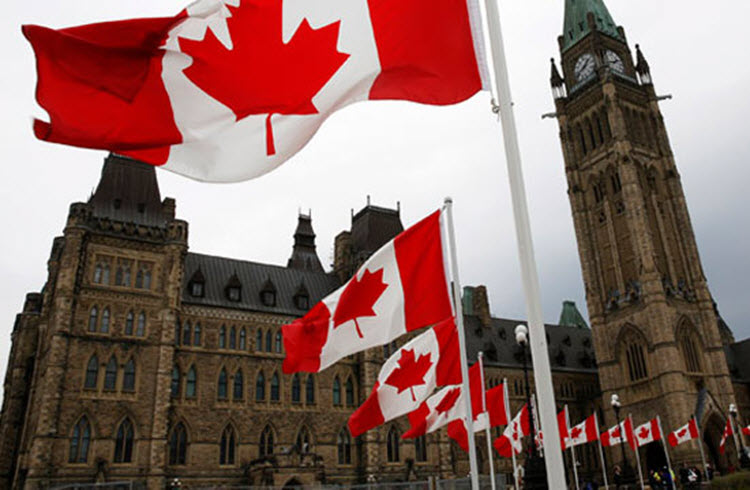
On Wednesday, October 30, the Canadian government released a new assessment identifying Iran’s regime, along with Russia and China, as a major cybersecurity threat to national security, warning that Iran’s digital influence has extended beyond the Middle East to target Western countries.
According to the Canadian government’s new assessment, the Iranian regime’s ongoing efforts to track and monitor regime opponents through the internet have created an escalating cybersecurity challenge for Canada and its allies.
Canada’s National Cybersecurity Threat Assessment indicates that actors affiliated with Iran’s regime have used high-profile events, such as the downing of Flight 752 in Tehran, as themes in phishing campaigns targeting the Iranian diaspora and Canadian officials. These campaigns have targeted key sectors, including aerospace, defense, and telecommunications, to achieve intelligence goals.
In recent years, Iran’s regime has become a major player in global cyber warfare, executing more complex attacks against its regional and international adversaries. Over the past decade, Iran’s regime has expanded its cyber capabilities, with government-backed groups targeting various sectors, including government, finance, energy, and media, in the region and the West.
According to Canada’s National Cybersecurity Threat Assessment for 2025, Iran’s regime has used its ongoing cyber conflicts with Israel to bolster its espionage tactics and aggressive cyberattacks, now employing these methods against Western targets.
Canadian intelligence officials state that although Canada may not be the primary focus of Iran’s cyber activities, regime-affiliated actors likely have access to computer networks in Canada, including critical infrastructure.
In recent weeks, major technology companies like Google, Microsoft, and Meta have reported malicious cyber activities linked to Iran’s regime, warning that these efforts may intensify and could even incite violence against political figures to create unrest and influence the upcoming elections in the United States.
The Microsoft Threat Analysis Center (MTAC), in research related to the U.S. elections published last week, stated that Iran’s regime is preparing to undertake additional influence operations.
The report indicates that Iranian groups tasked with targeting the U.S. elections may attempt—just as they have in the past—to conduct influence operations in the pre- and post-election periods via cyber infiltration efforts initiated weeks or even months in advance.
British Soldier On Trial for Having Ties with Iran’s Revolutionary Guard
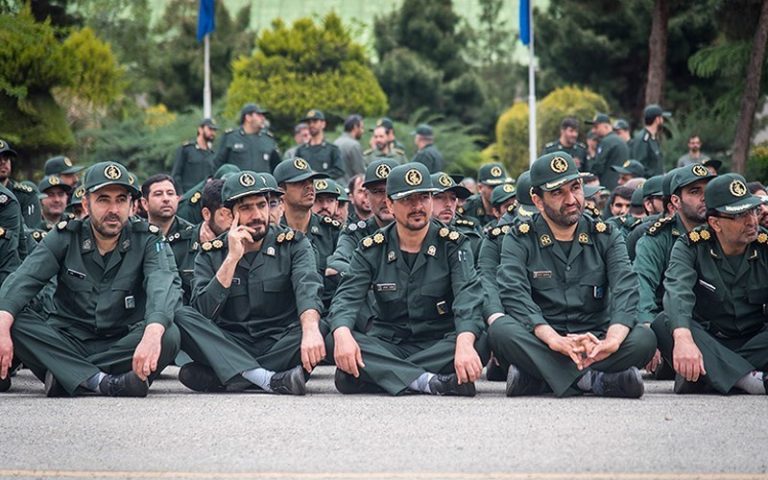
Daniel Abed Khalife, a former British Army soldier “accused of terrorism” and “intelligence ties with Iran,” denied the charges against him in court on Wednesday, October 30.
The former British soldier is accused of sending sensitive information to individuals linked to the IRGC and of planting fake bombs in a military barracks.
Daniel Abed Khalife allegedly collected sensitive information between May 2019 and January 2022, prosecutor Mark Heywood told jurors at the start of the trial at London’s Woolwich Crown Court.
The 23-year-old former soldier escaped from prison for a week in September 2023 but was recaptured.
Daniel Abed Khalife, who was discharged from the British Army in May 2023 following the revelation of his links to the IRGC, also allegedly attempted to plant “fake bombs” at a British military base.
British prosecutors say he received $1,500 from IRGC-linked individuals and, a week later, sent an email to the MI6 foreign intelligence service expressing a desire to work as a double agent.
Reuters reports that his lawyer, Gul Nawaz Hussain, asked him in court whether he or his family supports the Iranian government.
Khalife, whose mother was born in Iran, replied not having ever met anyone living outside of Iran who doesn’t have hostility toward the Iranian regime. He said his mother despises the Tehran regime and that he and his family are against the Iranian regime.
Khalife also commented on his visit to Iran, saying that he hated it and thought it was a horrible place.
He described his plan as one of spreading false information to advance British national security interests, adding that He knows this scheme may seem a bit strange.
Five Prisoners Executed In Iran’s Ghezel Hesar Prison
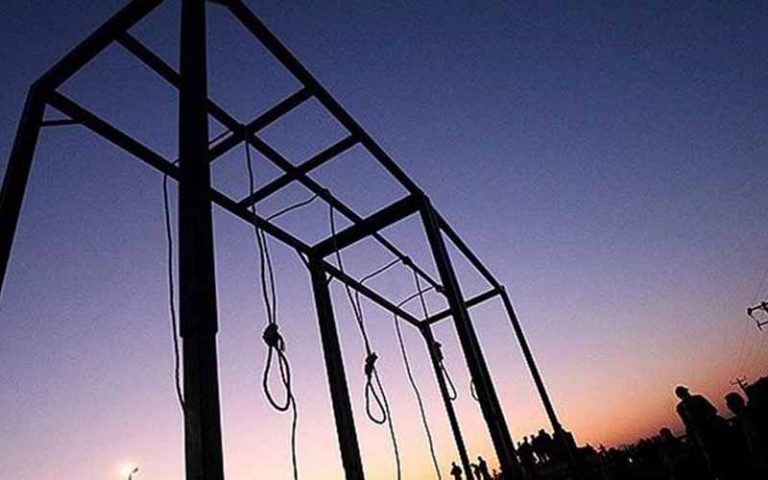
Human rights media outlets report the execution of five prisoners, including an Afghan national, at Ghezel Hesar and Jiroft prisons in the early hours of Wednesday, October 30.
According to the Human Rights Activists News Agency (HRAHA), among the four prisoners executed in Ghezel Hesar Prison in Karaj, two were sentenced to death on drug-related charges, and the other two for “enmity against God through armed robbery.”
The Iran Human Rights Organization previously reported that at least eight prisoners sentenced to death in Ghezel Hesar Prison had been moved to solitary confinement as of Monday, October 28, and their families had been called to the prison for a final visit.
The execution of prisoners convicted on drug-related charges in Iran has sharply and consistently increased over the past four years, with execution statistics for 2023 showing an 84% rise compared to the previous year.
A prisoner convicted of “premeditated murder” was also executed on Wednesday, October 30, in Jiroft Prison, Kerman Province.
According to human rights media, in recent days at least five other prisoners were executed on charges such as “premeditated murder” in Zanjan, Isfahan, Karaj, and Ahvaz.
Meanwhile, coinciding with the 40th week of the “No to Executions Tuesdays” campaign, a group of families of death-row inmates gathered in front of the regime’s Majlis (parliament) on Tuesday, October 29.
In the published videos, the demonstrators, mostly women, chanted “Don’t execute!” demanding a halt to executions.
According to Amnesty International, the Iranian regime was responsible for 74% of recorded executions worldwide last year.
Salaries of Iranian Pensioners Increased by Equivalent of Four Loaves of Bread
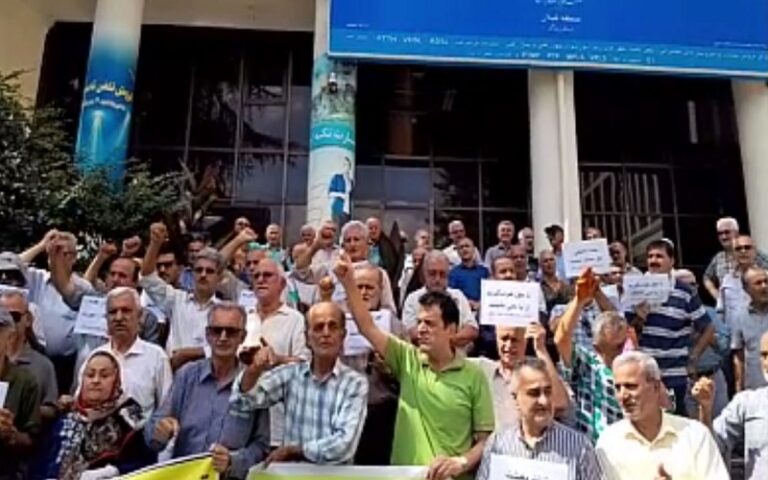
While officials from Iran’s Budget and Planning Organization have announced that, with the issuance of new pension equalization rulings, an average increase of 15 to 20 million rials (approximately $21.6 to $29) has been added to pensioners’ salaries, some pensioners report raises of less than 10 million rials (around $14.4).
A retiree from the Postal Company, earning about 80 million rials (roughly $116), shared his new statement with the state-run ILNA news agency, showing a salary increase of only 430,000 rials (about $0.62).
He stated that, after months of promises and publicity, his salary increase was just 430,000 rials, equivalent to the cost of four loaves of bread.
Reports indicate that the salary increases for the lowest-paid national pensioners have been minimal, often not reaching even 1 million rials (about $1.50). Pensioners feel that the equalization plan has done little to improve their livelihood.
Some pensioners believe that the formula for salary equalization was improperly implemented or contained calculation errors, leading to dissatisfaction, widespread protests, and pensioners’ union gatherings.
In another report, the Strategic and Coordinating Council of Agricultural Jihad Pensioners issued a statement declaring that it would support any protests organized by pensioners’ advocacy groups.
The council emphasized that the National Pension Fund should hold a meeting similar to that held on September 19, 2020, with pensioners’ representatives and the Plan and Budget Organization. Should these demands not be met within 24 hours before the protest, Agricultural Jihad pensioners will be encouraged to join the gatherings of trusted groups.
Reports indicate that with the issuance of amended rulings in October 2024, the pensions of some retirees increased to a certain extent, while others saw a reduction. This disparity has led to a new wave of pensioners’ protests and increased demands.
The Iranian Regime Increases Military Budget By 200%
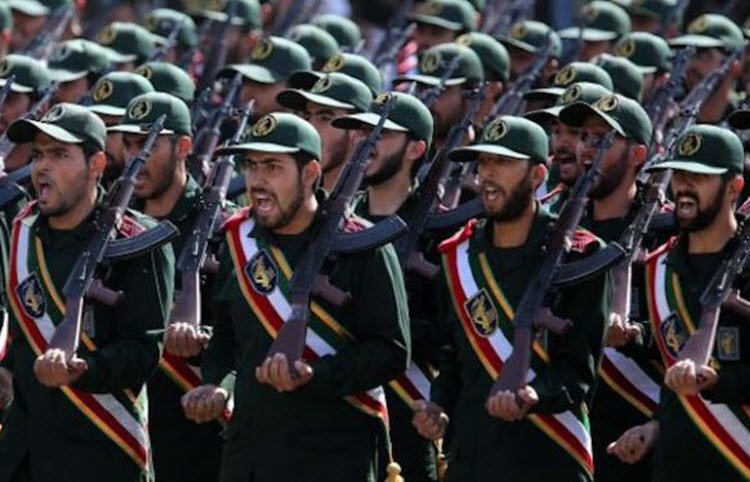
Massoud Pezeshkian, the president of the Iranian regime, has called for a “200 percent” increase in the military budget in his first budget proposal since taking office.
Fatemeh Mohajerani, the government spokesperson, stated in a press conference on Tuesday, October 29, that “the doubling of the budget is to strengthen the country’s defense capabilities.”
Pezeshkian’s government spokesperson did not specify the total amount allocated for the 2025 military budget.
The official, non-confidential segment of Iran’s military budget
The military budget that various Iranian administrations include in the budget bill and present to parliament constitutes the official and disclosed funds allocated to the armed forces and the Ministry of Defense and Armed Forces Logistics. It does not cover classified budget items, with a large portion of the military budget going to the Islamic Revolutionary Guard Corps (IRGC).
Iran’s 2024 military budget was officially announced at approximately 4.7 quadrillion rials (around $16.49 billion at the official exchange rate and $6.8 billion at the free market rate), accounting for one-sixth of the entire year’s budget. Later, the parliament, at the request of Ebrahim Raisi‘s administration, approved an additional allocation of over 1.32 quadrillion rials (around $4.63 billion at the official rate and $1.92 billion at the free market rate) in crude oil for the armed forces to sell and supplement their budget.
Iran is the only government globally that officially allows its armed forces to participate in selling the nation’s natural resources and directly acquire a portion of them.
It is notable that these dollars are provided to military organizations at the official rate, while ordinary citizens must obtain dollars from the free market.
Iran’s military budget in international reports
Due to a lack of financial transparency and the presence of multiple military institutions in Iran, various international financial bodies, such as the Stockholm International Peace Research Institute (SIPRI) and the International Monetary Fund (IMF) in Washington, have continually attempted to approximate Iran’s actual military budget. However, these global organizations have never succeeded in providing a definitive report.
For example, SIPRI estimated Iran’s military budget at $10.3 billion in 2023.
According to reports, Iran’s 2024 military budget, based on an official exchange rate of 285,000 rials per dollar (while the free market rate currently hovers around 685,500 rials per dollar), was equivalent to $25.3 billion, reflecting a 21 percent increase from the previous year.
Based on details released so far from Iran’s upcoming budget bill, it is estimated that 47 percent of the country’s oil export revenues will again be directly allocated to the armed forces, as it was this year. This amount equates to 5.61 quadrillion rials (approximately $19.68 billion at the official exchange rate and $8.18 billion at the free market rate), while the government’s own share of these resources is only 43 percent, or around 5.09 quadrillion rials.
Beyond the country’s oil resources allocated directly to the armed forces for sale, Iran’s National Development Fund has consistently served as an accessible source to meet the government’s urgent needs, preventing it from succumbing to severe economic and military crises.
During his three years in office and in the few months since Pezeshkian’s administration began, the Iranian government has repeatedly emphasized its access to National Development Fund resources based on the approval of the regime’s Supreme Leader Ali Khamenei and has expressed gratitude for his “benevolence.”
Pezeshkian’s administration stated that it inherited a relatively empty treasury from its deceased predecessor and still lacks funds to pay wheat farmers and meet nurses’ demands, with some needs met through withdrawals from the National Development Fund.
Amid Iran’s dire economic and livelihood conditions this year—characterized by continued capital flight, persistent inflation, and a declining stock market—evidence suggests that the Iranian regime has not refrained from using secret budgets for its security operations abroad, particularly to provide financial and military support to its proxy groups.
EU Condemns Execution of Jamshid Sharmahd, Weighs Actions Against Iran’s Regime
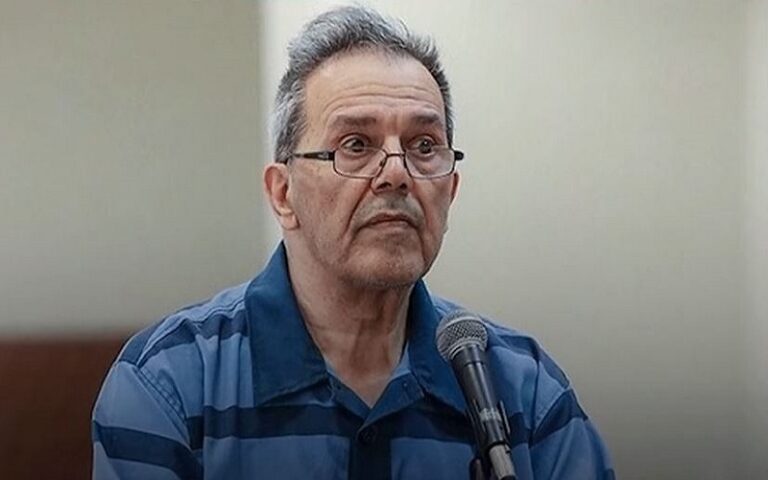
The announcement of the execution of Jamshid Sharmahd, an Iranian-German political prisoner under the Iranian regime, on Monday, October 28, has sparked widespread domestic and international reactions.
A few hours after Germany summoned its ambassador from Tehran in protest of Jamshid Sharmahd’s execution, the European Union also issued a strongly worded statement condemning the killing of this Iranian-German citizen and announced plans to pursue targeted and significant actions against the Iranian regime.
In its statement, the EU did not specify details of these actions but called on the Iranian regime to end its “troubling” practice of detaining foreign and dual nationals to gain political leverage.
The statement described capital punishment as a “cruel and inhumane” punishment and, noting the significant increase in executions in Iran over the past and current year, urged the Iranian regime to end the use of the death penalty.
Abbas Araghchi, the Iranian regime’s Foreign Minister, responded to Germany’s protest over Sharmahd’s execution by calling him a “terrorist” and stated that no terrorist is immune in Iran, even if supported by Germany. He added that a German passport does not grant immunity to anyone.
Amnesty International declared that Sharmahd’s arbitrary execution by Iranian authorities is yet another egregious and blatant violation of the right to life. Amnesty noted that the use of the death penalty is appalling under any circumstance and wrote that the arbitrary execution of Sharmahd following a grossly unfair trial, coupled with the relentless oppression inflicted on him and his family by Iranian officials, is even more horrific.
Sharmahd, 67, who had previously resided in the United States, was kidnapped by Iranian regime agents on August 1, 2020, during a trip from Germany to India after a three-day layover in Dubai. He was subsequently transferred to Iran and sentenced to death.
Many citizens, political and civil activists, and families seeking justice have also described the execution of Jamshid Sharmahd as a state-sponsored murder and have condemned it in the strongest terms. Additionally, they have referred to Sharmahd’s killing as yet another instance of the Iranian regime’s retaliation against its people following recent attacks by Israel.
Ariane Tabatabai’s New Position at the Pentagon Reduces Her Security Clearance
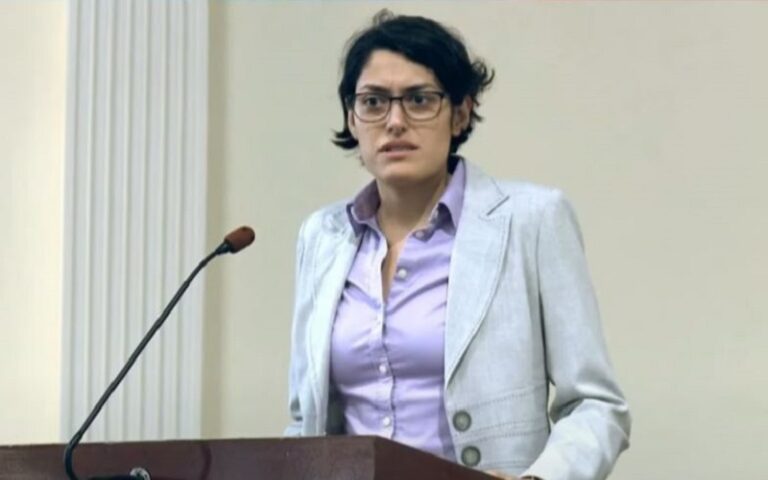
On Monday, October 28, the Free Press website reported that Ariane Tabatabai, who previously served as Chief of Staff to the U.S. Deputy Secretary of Defense, has taken on a new role in the department, significantly reducing her access to classified U.S. military information and programs.
According to the report, the U.S. Department of Defense recently transferred Tabatabai to her new position quietly. Previously working in the “Office of Special Operations and Low-Intensity Conflict” (SO/LIC) at the Pentagon, she will now serve as the “Deputy Assistant Secretary of Defense for Education and Force Training.”
Tabatabai’s name had previously been linked to an Iranian regime influence network within the U.S.
In early 2014, Iran’s Ministry of Foreign Affairs formed a group of analysts and researchers abroad under the “Iran Experts Initiative,” utilizing this network for years to expand the Iranian regime’s soft power and enhance its influence on the international stage.
Three of Robert Malley’s aides, the suspended U.S. Special Envoy for Iran, including Ariane Tabatabai, reportedly maintained close and unconventional ties with the Iranian regime.
In addition to Tabatabai, Ali Vaez and Dina Esfandiary are members of the network guided by Iran’s Ministry of Foreign Affairs, with records of their exchanges with Iranian diplomats having been exposed.
Malley’s security clearance was suspended in April 2023, and he was placed on unpaid leave.
According to several former U.S. Department of Defense officials who spoke to the Free Press, Tabatabai’s new role provides her with much less access to classified military information and programs.
The report added that, on paper, Tabatabai’s appointment as Deputy Assistant Secretary of Defense for Education and Force Training does not constitute a promotion, as she was previously a Chief of Staff and is now serving as a Deputy Assistant Secretary.
Another member of the Pentagon’s Office of Special Operations and Low-Intensity Conflict told the Free Press that Tabatabai’s previous role was among the most sensitive positions in the entire U.S. government.
The anonymous source added: “I cannot underscore: The things SO/LIC… are doing are more sensitive than what the CIA is doing.”
Recently, before Israel’s attack on the Iranian regime on the morning of October 26, the leak of several Pentagon documents regarding the Israeli military’s plan for this operation made headlines.
Several news outlets at that time reported that Tabatabai was involved in leaking this information, although the report was not officially confirmed by either the U.S. or Israel.
Following these reports, the U.S. Department of Defense emphasized that no evidence has emerged regarding the potential role of a Pentagon official in leaking details of Israel’s plan.
Iran’s Regime Still Pursuing the Assassination of Mike Pompeo
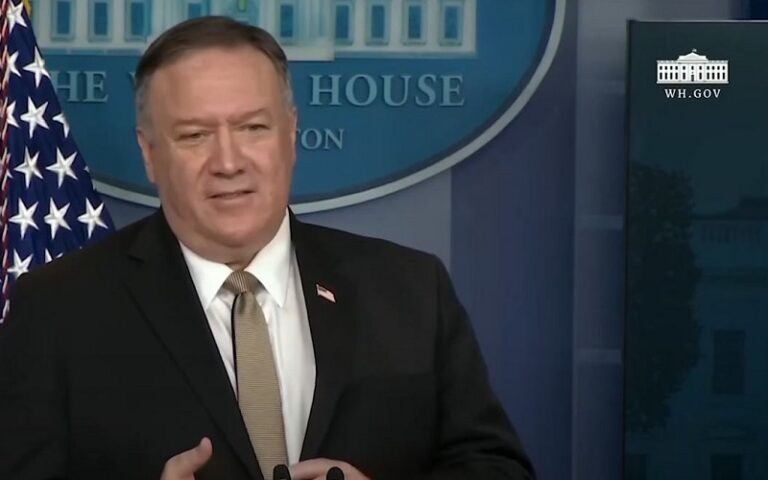
The U.S. Department of State has informed Congress through a confidential and non-public memo that the Iranian regime is actively plotting to assassinate two senior officials of the Donald Trump administration, including Mike Pompeo, the former U.S. Secretary of State, according to a new report by Washington Free Beacon.
The publication, emphasizing that it had seen the State Department’s confidential memo, added that this memo was sent to Congressional leaders last week.
According to the Washington Free Beacon report, the memo given to Congressional leaders states that Pompeo and Brian Hook, the former U.S. Special Representative for Iran, continue to face “serious and credible” threats from a foreign nation.
This memo was presented to Congressional leaders amid intense competition in the U.S. presidential elections, and at a time when numerous reports have emerged regarding the Iranian regime’s efforts to assassinate Donald Trump.
As reported by the Washington Free Beacon, Tehran’s assassination plots first surfaced in January 2022, when the publication reported that Congress was informed of threats against Brian Hook’s life. Shortly after, it became apparent that Pompeo was also a target due to his role in isolating the Iranian regime during his tenure as Secretary of State.
The Washington Free Beacon further stated that since January 2021, this is the twentieth time that Congress has been informed of credible threats against Brian Hook, a key architect of the Trump administration’s maximum pressure campaign on the Iranian regime. According to the Beacon, Congress has also been notified 17 times of similar threats against Mike Pompeo.
Mike Pompeo, Brian Hook, and John Bolton, the former National Security Advisor to the White House, are all under U.S. government protection due to these threats.
In May, the FBI announced that it was actively pursuing an Iranian regime intelligence agent planning to assassinate Pompeo and other American officials. This individual, identified as Majid Dastjiani Farahani, is reportedly recruiting individuals for operations in the United States, including the targeted assassination of current and former U.S. government officials.
In September, Matthew Olsen, the U.S. Assistant Attorney General, told Politico: The Iranian government has made it clear that it is determined to avenge the death of Qassem Soleimani against former officials involved in his killing.
The Washington Free Beacon then noted remarks by Hossein Mousavian, a former member of the Iranian regime’s nuclear negotiation team who now works as a Middle East security and nuclear policy expert at Princeton University. In a documentary produced by the IRGC in 2022, Mousavian promoted threats against Brian Hook, the U.S. Special Representative for Iran.
In the 72-hour documentary, Mousavian stated: “I went to America, and an American told me that Brian Hook’s wife cannot sleep. She cries and trembles. She told Brian: They will kill you. Hook is complicit in Haj Qassem’s death, and that is why they are so afraid and trembling.” Qassem Soleimani was the head of the terrorist IRGC Quds Force. He was eliminated in a U.S. drone strike in Iraq in January 2020.
Iran: Cyrus Day and the Closed Gates of Pasargadae
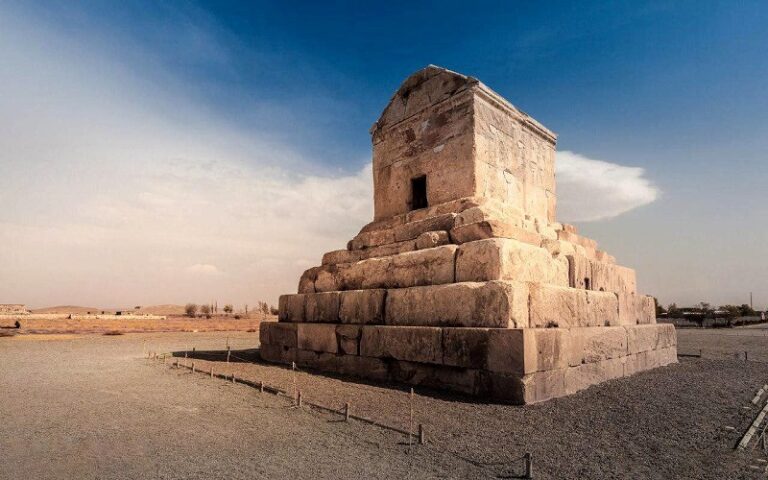
Since 2016, following the gathering of thousands of people at Pasargadae to participate in the Cyrus Day commemorations, the Iranian regime’s State Security Forces have blocked the roads leading to his tomb each year.
Iranian state media report that for several consecutive years, the gates of Pasargadae and Persepolis have been closed to enthusiasts and domestic tourists on “Cyrus Day.”
Since October 25, police and security forces have been stationed at Cyrus’s tomb, setting up barriers along the roads leading to it.
Excavation work has also begun on the road leading to Persepolis, and tomorrow, although neither Persepolis nor Pasargadae are officially closed, the roads to these two major historical and tourist sites will be blocked.
Despite the restrictions for Iranian citizens, foreign tour groups entering Iran are allowed to visit Pasargadae and Persepolis until October 30.
The newspaper “Payam-e Ma” also announced on Sunday that on October 28, the staff at the World Heritage site of Pasargadae could take leave, as no one is permitted to enter the site.
The newspaper reported: “For several days, local businesses have had to close. Pasargadae is going dormant, and its tourism is shutting down.”
Since 2016, the State Security Forces have been blocking the roads leading to Cyrus’s tomb each year following the gathering of thousands of people at Pasargadae for Cyrus Day commemorations.
That year, a group of attendees chanted slogans against the Iranian regime.
Following the event, the Shiraz prosecutor announced the arrest of the organizers and the initiation of “legal proceedings” against them.
A Babylonian clay tablet records that Cyrus, the Persian emperor, entered Babylon on October 28, and upon conquering the city, freed the Jews who had been enslaved.
The symbol of this event is the Cyrus Cylinder, commissioned by Cyrus, and it is regarded as the first charter of human rights.
