

Currency and Oil Markets Disrupted After Israel’s Attack Against Iran’s Regime
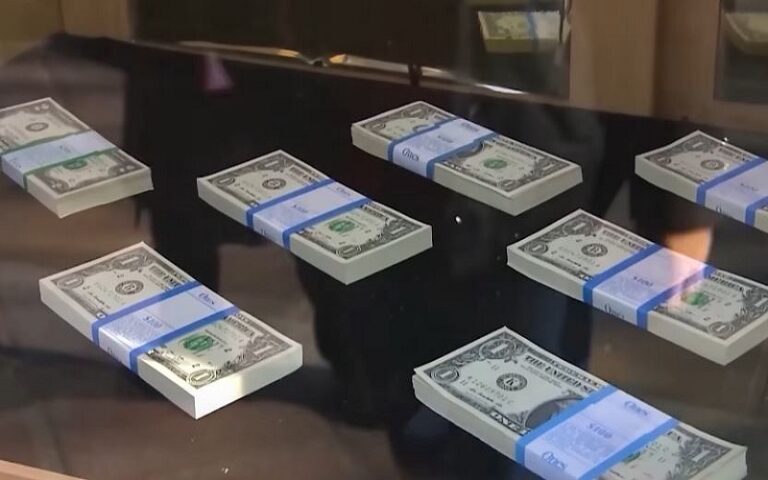
After concerns about Israel attacking Iran’s energy facilities subsided, Iran’s stock index showed consecutive growth, while global oil prices fell by 6%. However, the dollar’s exchange rate against the rial has remained at a high level.
Following Iran’s large-scale missile attack on Israel on October 1, the U.S. dollar exchange rate in Iran’s open market quickly surged from 600,000 rials to 690,000 rials.
Prior to Israel’s attack, there were concerns about Iran’s energy and nuclear infrastructure being targeted. However, after Israel’s limited military strikes, the dollar’s rate briefly dropped to 657,500 rials but quickly reversed and began rising again over the past two days.
On Monday evening, October 28, the dollar was trading at 675,500 rials.
Massoud Pezeshkian’s administration and the Central Bank have not explained why, despite the diminished threat of potential attacks on the country’s energy infrastructure, the dollar exchange rate continues to climb.
Meanwhile, on Monday, a spokesperson for the regime’s Plan and Budget Organization claimed that essential goods will continue to be imported at a rate of 285,000 rials per dollar next year.
This claim was made despite the fact that the 2025 budget bill explicitly states that the exchange rate for essential goods will gradually increase compared to 2024 in line with the inflation rate.
Simply put, given this year’s 33% inflation rate and the forecast of over 30% inflation for next year (according to official regime statistics, though, the real rate is higher), the preferential dollar rate in 2025 will be at least 370,000 rials.
Despite the dollar’s resilience in Iran’s currency market, the Tehran stock exchange index, which had declined after Iran’s missile strikes on Israel, has surged by 80,000 points over the past three days, reaching 2,050,000 points. However, this is still 80,000 points below its level on the day before Iran’s October 1 missile attack on Israel.
On Monday, the first trading day in global oil markets, oil prices dropped by 6%, with the Brent Crude index trading below $72, exactly matching its price on the day before Iran’s missile attack on Israel.
Iranian Teachers Disqualified From Work For “Having a Mustache”
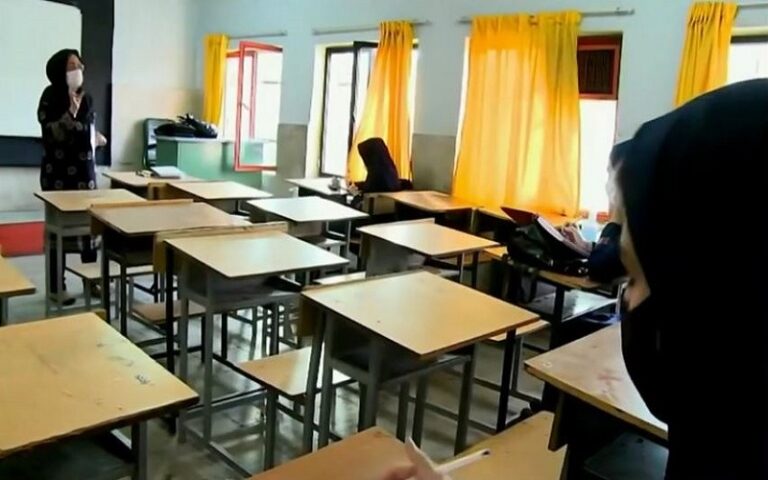
In ongoing protests over the selection process for student-teachers and candidates in Iran’s Ministry of Education, some applicants report being rejected based on non-professional reasons, such as reading philosophy books, their style of dress, having a mustache, wearing nail polish, missing prayers, or having minimal attendance at Friday prayers or rallies.
Having interactions with classmates of the opposite sex, liking Instagram pages, not wearing the chador, and visible hair are other reasons cited that have led to these individuals being denied education or teaching positions.
The Shargh news website, run by the regime, reported on Sunday, October 27, in a piece titled “Unprofessional Selection,” that several applicants and student-teachers have protested the Ministry of Education’s selection process, though their grievances have gone unanswered.
Strange Reasons for Rejection in the Selection Process
One rejected candidate stated that this year, “Code Six,” an unexplained addition to the Teacher Recruitment Exam, was introduced and led to their disqualification. Another candidate explained to Shargh that they were rejected under “Code 19,” which pertains to political issues, dress code, hijab, not participating in elections, and liking Instagram pages. “Many candidates were told they were disqualified due to Code 19. I was rejected for the same reason.” Mohammad Heydari-Verjani, former secretary of the Islamic Association at Rajaei Teacher Training University, said that a student was told during the selection process, “Because of your mustache style, you have a Marxist appearance in our opinion, and you are disqualified.” According to Heydari, a female student studying at Sari University was rejected on the first day of selection because she once crossed from the women’s section to the men’s section for a university association program. In its report, Shargh described the rejection of an Isfahani student for reading philosophy books as the most bizarre action taken in the selection process. Citing Heydari, the report stated that the student was told, “You read philosophy books, and in our view, people who read too many books have psychological issues,” leading to their expulsion with “psychological problems” noted in their record. A teacher with 18 years of experience, who has faced selection issues multiple times, told Shargh, “In the Education Ministry’s selection process, interviewers and experts start probing the candidate’s religious and political beliefs from the very beginning.” This teacher noted that during the hiring phase, candidates are evaluated on things like the type of pants they wear, the length of their shirt sleeves, liking posts on social media, performing daily prayers, the number of prayer units (rak’ahs) and supplications, and participation in rallies and religious events. “This certainly does not suffice to assess their capability.” He added, “Sometimes in the selection process, even attire in family gatherings is questioned. No reasonable standard accepts such inquiries for employment.” The teacher pointed to questions of belief during selection, stating, “Beyond belief-related issues, interviewers sometimes insist so strongly on candidates expressing certain political inclinations that out of fear of saying something contrary to their political views, individuals may falsely declare insincere political tendencies.” In January, the Coordinating Council of Teacher Trade Unions reported that around 3,000 to 6,000 candidates were rejected on political and religious grounds in Iran’s Education Ministry recruitment exams in 2023. Alireza Kazemi, the Education Minister under regime President Massoud Pezeshkian, said on September 9 that “sensitivity” must be shown in the recruitment of teachers and school administrators and that “all teachers should possess precise scientific and moral profiles.” Since the autumn of 2022, following the nationwide uprising that year, dozens of teachers have been suspended or permanently dismissed by the Ministry of Education’s Disciplinary Board for professional activities and support of revolutionary movements.Iran’s Regime Will Not Meet Projected Oil Revenues This Year or Next
Iran’s regime Majlis (parliament) Research Center reports that during the first four months of this year (March 21 to July 22), the government’s oil revenue budget faced a deficit, and the revenue target set by the government in the 2025 budget bill for oil exports is unlikely to be achieved.
In next year’s budget bill, the government has set oil and gas export revenue at 5,090 trillion tomans (approximately $7.7 billion based on the free-market rate of 660,000 rials per dollar).
The government projects daily oil exports of 1.85 million barrels for the coming year, with 1.25 million barrels valued at 5,090 trillion rials allocated to the government, 550,000 barrels valued at 6,870 trillion rials (about $10.4 billion) set aside for the armed forces and specific programs, and 50,000 barrels designated to meet commitments under Article 12.
The reason why the government’s oil export volume is more than double that of the armed forces but generates less revenue is that a portion of the government’s foreign exchange revenue from oil exports is allocated for importing essential goods at a lower rate. Meanwhile, the exchange rate for euros derived from oil sales for the armed forces is set above 500,000 rials.
The Majlis Research Center, noting an 18% shortfall in the government’s oil budget for the first four months of this year, has projected that 18% of next year’s oil budget is also unlikely to be realized.
According to this center’s estimates, the government has set next year’s oil export price at $63 per barrel, but this figure may only reach $60. “The government expects daily oil exports of 1.25 million barrels (excluding allocations for the armed forces and specific programs) for itself, but actual achievement may be only 1.1 million barrels. The government also projects 16 billion cubic meters of gas exports, though the actual figure may only reach 12 billion cubic meters,” the report by the Majlis Research Center reads.
Iran’s gas exports last year also amounted to just 12 billion cubic meters, and it is unclear why the government has projected 16 billion cubic meters for next year given the increasing gas shortfall.
The daily export target of 1.85 million barrels set by the government and armed forces contrasts with tanker-tracking company data, which shows that Iran’s oil exports this year have averaged 1.5 million barrels per day.
In the 2025 budget bill, the National Development Fund’s share of the country’s oil exports is set at 48%, with 20% allocated to the fund and 28%—valued at 5,410 trillion rials (around $8.19 billion)—to be borrowed by the government.
50,000 Nurses Unemployed in Iran
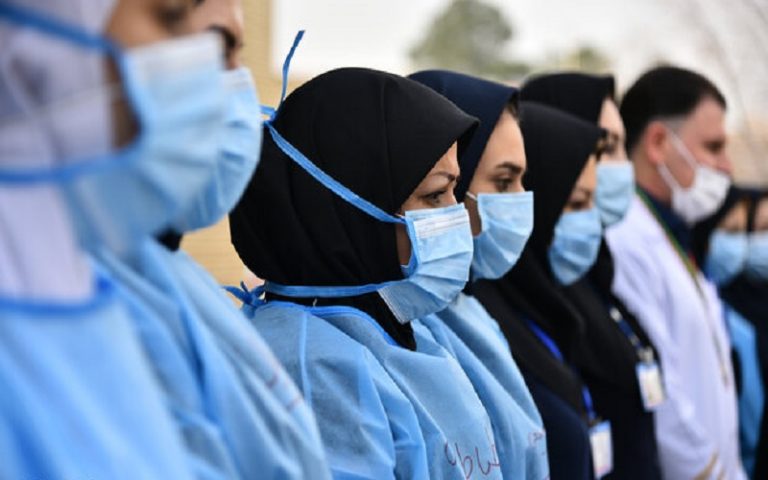
With 50,000 nurses reportedly unemployed in Iran despite a shortage of healthcare personnel, Mohammad Sharifi Moghaddam, Secretary-General of Iran’s Nurses’ Home, stated, “Unless we fix the infrastructure, hiring is like pouring water into a sieve.”
Sharifi Moghaddam told the state-affiliated newspaper Shargh that nurses are currently emigrating, leaving their jobs, or switching to other professions.
According to this labor official, the Ministry of Health also acknowledges that new hires often leave within a month or two due to low income.
Sharifi Moghaddam also criticized healthcare management, stating, “Everyone says there’s no budget. In fact, there is a budget, but unfortunately, it’s spent elsewhere and on other groups within the healthcare system.”
Previously, Ahmad Nejatian, head of the Iranian Nursing Organization, had stated that “standards and metrics related to human resources” in the healthcare sector are very low.
In an interview with the state-run ISNA news agency, Nejatian warned that to compensate for the staffing shortage, “nurses are forced into mandatory overtime,” but “their compensation does not match the services provided and the hardship of the work.”
In August, the worsening issues facing nurses led to an extended nationwide strike, during which hundreds of nurses and medical staff in public hospitals held protests and strikes across at least 16 provinces in Iran, emphasizing their demands for fair labor and economic conditions. These actions continued into September.
One-Third of Iranians Deprived of Basic Needs
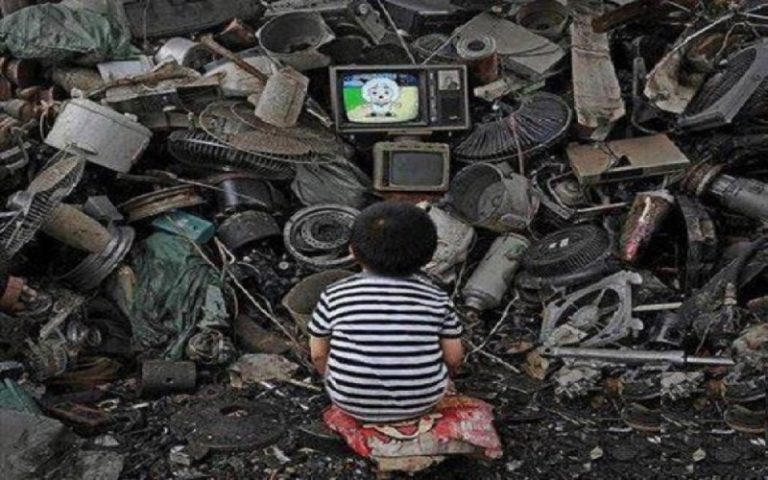
A report from Iran’s Majlis (Parliament) Research Center shows that, with the poverty rate stabilized above 30.1%, one-third of the nation’s citizens are unable to meet their basic needs.
According to the report, Iran’s poverty rate reached 30.1% of the population in 2023, and projections from the Majlis Research Center indicate this rate will remain at the current level in 2024.
The poverty rate in Iran has risen significantly since 2018, reaching 31% in 2019. Over the past five years, this rate has only dropped below 30% once, in 2022, by a margin of just 0.3%.
Experts note that due to the relative stability of poverty rates over the past few years, it can be concluded that the 30% poverty rate in Iran has become entrenched.
The stabilization of the poverty rate implies that the percentage of the population living below the poverty line remains steady, with no immediate improvement in their living conditions.
The latest findings from the Majlis Research Center indicate that the poverty gap (the income disparity of the poor relative to the poverty line) in Iran has reached 0.28.
This index, which measures the income gap of the poor relative to the poverty line, reflects the likelihood of escaping poverty. Essentially, the wider the poverty gap, the lower the chances for the poor to escape poverty.
These statistics indicate that while economic growth is typically a key remedy for rising poverty, Iran’s poverty rate has grown despite a 4.5% economic growth in 2023.
A look at poverty indicators shows the poverty gap decreased slightly from 0.28 in 2022 to 0.27 in 2023. In other words, in 2022, the poor earned on average about 72% of the poverty line income, which rose to 73% in 2023.
In effect, using the 2023 poverty line, the poor have slightly higher incomes than in 2022; however, this marginal income increase has not been sufficient to alleviate poverty or reduce the poverty rate.
Reasons for the Spread of Poverty in Iran
Experts believe the main causes of poverty expansion in Iran are macroeconomic instability and persistently high inflation.
Statistics show that over the past decade, sustained high inflation has significantly eroded the economic power of the population annually, leading to a rise in the impoverished population.
The main reason behind the rise in poverty in Iran, despite economic growth, is the high contribution of oil to economic growth, meaning that economic growth in Iran is not inclusive.
In other words, Iran’s economic growth in 2023 has not been inclusive, and the lower-income deciles have not benefited from this growth.
According to Iran’s Central Bank data, Iran’s economic growth in 2023 was 4.5% including oil, and 3.6% excluding oil.
The Research Center’s report on the rise in Iran’s poverty rate indicates that the government’s support policies in recent years have been unsuccessful, with the cost of fulfilling subsidy commitments becoming a heavy burden on the budget.
The Center, reviewing the latest developments in Iran’s economy, emphasized that policymakers should avoid inaction and delays, instead pursuing gradual reform policies to address some of the existing imbalances.
The Research Center stresses the need for appropriate solutions to tackle energy imbalances, banking imbalances, budget deficits, and price stabilization policies.
In 2018, the World Bank announced that approximately 420,000 Iranians were living below the absolute poverty line. Additionally, according to the Research Center’s 2018 report, between 23% and 40% of Iran’s total population lives below the poverty line.
It is worth noting that these government statistics are not entirely reliable, as the Iranian regime often attempts to portray conditions as better than they are. However, official statistics can still provide a basis for comparison.
Following Israel’s Attack, Iran’s Regime Entities Have Halted Currency Exchanges
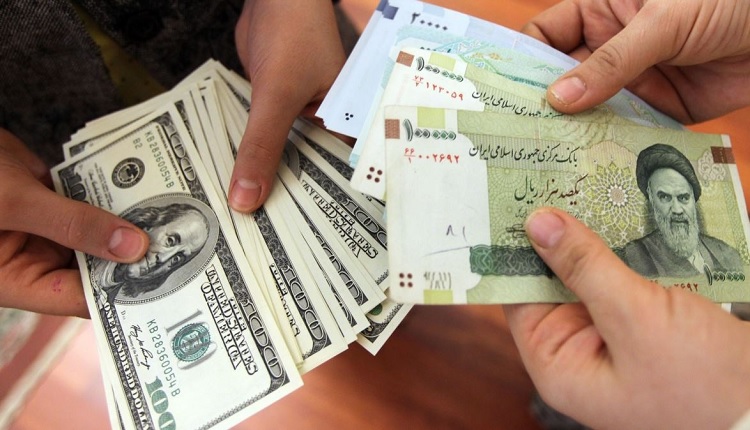
Following Israel’s attack, Iran’s security agencies halted currency exchanges in the market through various measures to prevent a sharp rise in exchange rates. Security officials have summoned and threatened the owners of major exchange offices.
Reports indicate that in another move, the operation of all currency pricing information websites has also been halted, and security agencies have generated news in government media to create a narrative of declining exchange rates.
According to currency traders in Tehran, they have been barred from any activity or transactions. Many traders have received phone threats from security agencies about detention and license revocation, resulting in a complete halt of currency transactions in the market.
Reports indicate that in recent days, the price of the U.S. dollar had surpassed 690,000 rials due to concerns over an Israeli attack, but after the attacks, security agencies acted to control the market by suspending transactions.
In the early hours of Saturday, October 26, Israel launched extensive attacks on military targets in Iran. According to the Israeli military, these attacks were a response to the Iranian regime’s missile strikes on Israel on October 1. They were carried out in multiple waves involving more than 100 fighter jets.
Meanwhile, state-run media attempted to downplay these attacks, emphasizing that oil and petrochemical facilities were not targeted.
The free-market dollar rate, which until last year had been stabilized through government supply pressure, has fluctuated in recent months due to war-related news. Consequently, any current exchange rate may be temporary under these volatile conditions.
The Tehran Stock Exchange has also seen consistent declines in recent weeks amid concerns about possible military strikes on Iran’s oil facilities. Although the main index saw a slight increase today, Iran’s capital market has not surpassed the two-million-point threshold and continues to be impacted by Iran’s structural economic issues. Notably, Iran’s inclusion in the FATF blacklist, along with North Korea and Myanmar, has recently been extended.
Half of Iran’s Oil Revenue Goes to Brokers and Middlemen
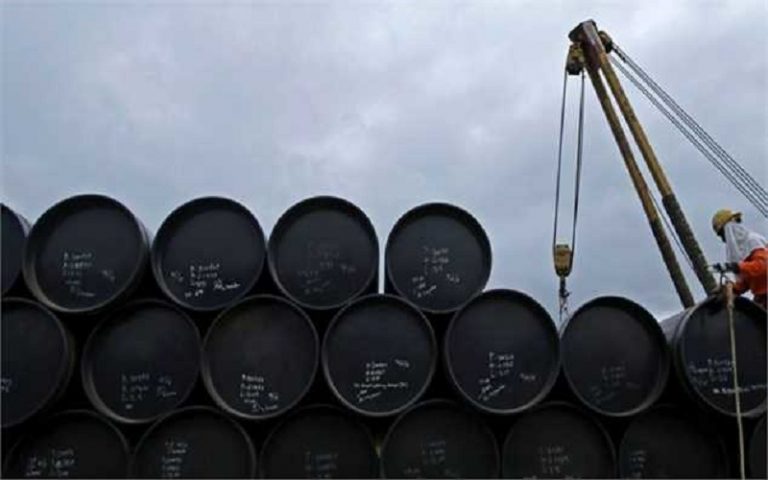
Before the imposition of strict U.S. sanctions in May 2011, Iran exported approximately three million barrels of oil daily. With the onset of the Obama administration’s sanctions, this figure dropped below one million barrels by February 2012. Following the implementation of the nuclear agreement in 2015, Iran’s oil exports rose to around three million barrels per day, but after Trump withdrew from the JCPOA, exports plummeted sharply, reaching only 190,000 barrels in winter 2019.
When Biden took office in 2020, Iran’s oil exports increased again, surpassing two million barrels per day by summer 2023. Concurrently, Biden’s policies to reduce sanction pressures helped Iran.
Floating Storage and Oil Maintenance Costs
The Iranian regime needs to extract oil continuously without having suitable technology. Iran’s competitors, like Saudi Arabia, can shut down oil wells without issue, but due to deteriorating wells and lack of investment, Iran is forced to keep extracting. When produced oil remains unsold, the regime uses oil tankers as storage. The cost for these floating storage facilities reaches $15,000 to $20,000 daily.Extensive Discounts on Oil Sales
During the presidency of Ebrahim Raisi, which coincided with the Biden administration in the U.S., oil exports increased but were accompanied by significant discounts. Majid Ansari announced that Iran offers discounts of $15 to $30 per barrel. These discounts are given to intermediary companies trusted by the Iranian regime, averaging $20 per barrel.Iran’s Five-Step Oil Sales Process
- $20 to $30 Discount: Brokers, primarily securing buyers for Iran in China, offer a $20 to $30 discount to them.
- Illegal Oil Transfer: At sea, far from ports, oil is transferred from one tanker to another, using software techniques to obscure its origin. The transfer and documentation cost is $5 to $7 per barrel.
- Shipping to Ports in East Asia and Suez: The oil network sends shipments to ports such as Malaysia or the Suez Canal, costing $10 per barrel.
- At this point, about $35 to $45 has been deducted from an $80-per-barrel price. For Iran to use these funds, the regime must produce documentation and launder the money by converting it into other currencies. To achieve this, Tehran relies on a network of exchange offices linked to a vast network of dual-national Iranians across the globe. According to an Economist report, at least 200 dual-national Iranians work for this network in Europe. These exchange offices charge high conversion rates. According to Iran International sources, of the remaining $30 to $40, around $10 to $15 is deducted by brokers and the money-laundering network. What reaches the Iranian regime is less than half of the oil’s actual value, with more than half divided among buyers as discounts, brokers as handling fees, and currency conversion rates.
- Barter with Goods: In some cases, oil is not directly converted into currency; instead, goods from China are imported into Iran in exchange for oil.
One Barrel Out of Every Three Belongs to the Armed Forces
According to Iran’s 2024 budget law, the country’s armed forces own one-third of the nation’s oil production. In the 2024 budget, 6.215 billion euros were allocated to the armed forces, compared to three billion euros in 2023. Thus, 33% of the country’s total oil revenue for 2024 will be allocated to the armed forces.Leaked Documents on Oil Discounts
Leaked documents from “Thunder Desert,” a company affiliated with Iran’s Ministry of Defense, reveal oil transaction discounts of up to $25 per barrel. These discounts were offered to front companies in the UAE. For example, in a $114 million deal, approximately $2.7 million in discounts were provided. In a letter dated March 7, 2023, larger oil purchases received further incremental discounts in five stages, averaging $16 per barrel.Sanction Evasion Costs and Brokers’ Share
According to statistics, the cost of circumventing sanctions and providing discounts averages around $40 per barrel. The Iranian regime’s parliament estimated that in 2024, Iran will sell 1.055 million barrels of oil per day at an average price of $70 per barrel. This means that in 2024, roughly half of the oil revenue, approximately $13.5 billion, will go to brokers and companies affiliated with the Iranian regime.Iranian Regime’s Interference in U.S. Elections

Reuters reported that a hacker group affiliated with the Iranian regime, accused of hacking into Donald Trump’s campaign emails, has ultimately managed to facilitate the release of these stolen materials.
In recent weeks, hackers began widely distributing Trump campaign emails to a Democratic political activist, who published a collection of them on their committee’s website and forwarded them to independent journalists.
These emails include internal communications from Trump’s campaign with advisors and foreign allies, addressing various issues related to the 2024 election.
According to Reuters, by tracking this hacker group’s activities, the media has obtained a new view of the Iranian regime’s meddling efforts in U.S. elections.
This report indicates that despite allegations raised by the U.S. Department of Justice in September regarding its involvement in this intrusion, the Iranian regime continues to interfere in American elections.
According to these allegations, a hacker group affiliated with the Iranian regime, known as Mint Sandstorm, successfully stole the passwords of Trump campaign staff in May and June.
On Wednesday, October 23, Microsoft reported increased activity by another hacker group affiliated with the IRGC, known as Cotton Sandstorm, which has a history of meddling in U.S. elections.
Trump Campaign’s Reaction
Earlier this month, Trump’s campaign responded to the hack, stating that this operation was carried out to disrupt the 2024 presidential election and to create chaos in the democratic process. The Trump campaign emphasized that any journalist who republishes these stolen documents serves America’s enemies.Iran’s Objective in These Exposures
Senior U.S. intelligence and security officials believe that the Iranian regime’s efforts in this election cycle aim to weaken Trump, who, as president in 2020, ordered the killing of Qassem Soleimani, commander of the IRGC’s Quds Force. So far, the published revelations have had no significant impact on the overall trajectory of Trump’s campaign.Increasing Imbalance Between Gas Production and Consumption in Iran
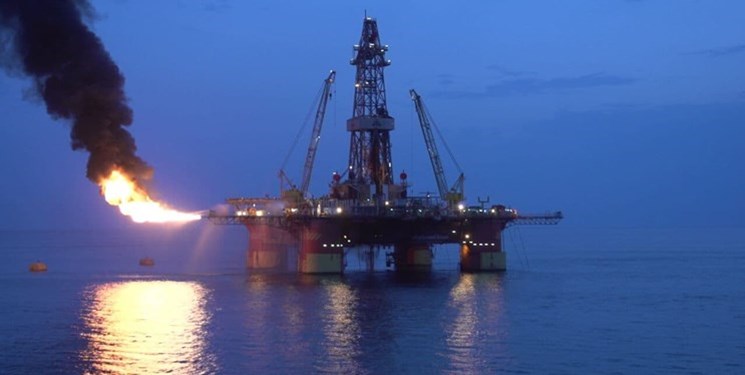
Reza Sepah Vand, a member of the Iranian regime’s Majlis (parliament) Energy Commission, highlighted various issues resulting from mismanagement, warning that the imbalance between natural gas production and consumption in Iran “is continuously increasing.”
On Thursday, October 24, in an interview with ILNA news agency, Sepah Vand announced that “the pressure in the South Pars gas field has decreased, making gas extraction more difficult, and some resources have encountered problems.”
Meanwhile, experts have been warning for over a decade about this issue and the need to increase the pressure in the wells of this field.
This Majlis member added that gas waste and leakage in the national gas network is “very high” and that “on the other hand, excessive consumption has increased, and therefore, the imbalance is constantly rising.”
In recent days, the regime’s official news agency, IRNA, also reported that a National Development Fund report reflects the sharp increase in the gas imbalance along with declining production.
This report states that with the current production and consumption trend, gas supply will begin to decline next year.
According to reports, 75% of the gas for residential areas and the commercial and industrial sectors in Iran is currently supplied by the South Pars gas field. Modernization and upgrading of this main supplier’s equipment have been overdue for years, resulting in pressure drops.
IRNA, citing government reports, writes that “alarming forecasts indicate that if this production and demand trend continues, by 2041, the pressure drop in South Pars reservoirs and increased consumption will create an imbalance of approximately 1,000 million cubic meters per day.”
These new warnings from the Energy Commission member about the consequences of declining reservoir pressure in the South Pars field come after the Iranian Oil Ministry, under President Ebrahim Raisi’s administration, signed a $20 billion contract in early 2024 with domestic companies to build compression platforms in this field.
The signing of this contract to construct, install, and commission 14 compression platforms was carried out despite the fact that the need for such platforms had been identified over a decade ago, with negotiations between the Oil Ministry and various companies lasting at least eight years.
Alongside the signing of the $20 billion contract, then-Iranian Oil Minister Javad Owji stated that at least $80 billion in investment would be required to increase production by 50%.
The Majlis Research Center had previously estimated in a report that by 2041, Iran’s total natural gas supply would be less than 898 million cubic meters per day. In the same report, daily consumption in 2041 was projected to be around 1,411 million cubic meters. Based on this, the country would face a daily shortage of 512 million cubic meters of natural gas.
On Thursday, Sepah Vand also warned about “excessive” gasoline consumption, which has forced the country to import the product from abroad and called for better management and optimization of gasoline usage.
This regime’s Majlis’ member considered measures like combating fuel smuggling, requiring car manufacturers to produce fuel-efficient vehicles, and making the automobile market competitive through licenses for the private sector as necessary steps before any gasoline price increase. This essentially points to extensive mismanagement in various aspects of energy production, distribution, and consumption in Iran.
Iranian Political Prisoner Varisheh Moradi in Critical Conditions on 16 Day of Hunger Strike

The health of Varisheh Moradi, a member of the Free Women’s Society of Eastern Kurdistan, worsened on the 16th day of her hunger strike.
In the past 16 days, Ms. Moradi has experienced severe weight loss, low blood pressure, migraines, and joint and back pain, putting her in a critical state.
Accordingly, it has been reported that Evin Prison medical staff have described her continuing hunger strike as dangerous and have urged her to end it.
News and human rights sources reported on Thursday, October 11, that the political prisoner stated her hunger strike was in protest against the increase in executions in Iran, as well as in response to the uncertainties and deprivations imposed on her, calling it an “indefinite hunger strike.”
Varisheh Moradi, a political prisoner, is being held on charges of baghi (a term under Iranian regime laws that refers to someone who opposes the Islamic ruler and stands against him) due to her association with one of the regime’s opposition parties.
Her first court session was held on June 17 in Branch 15 of the Islamic Revolutionary Court, presided over by Judge Abolqasem Salavati, with her defense attorneys present. The second session took place on October 6.
Ms. Moradi was arrested by Iranian regime intelligence agents on August 1, 2023, in the suburbs of Sanandaj, western Iran, and subsequently transferred to Tehran.
In January 2024, after completing her interrogation period, she was moved from Ward 209 of the notorious Evin Prison to the women’s ward.
Ms. Moradi spent five out of her six months in detention in solitary confinement in the intelligence detention centers of Sanandaj and Ward 209 of Evin Prison in Tehran.
