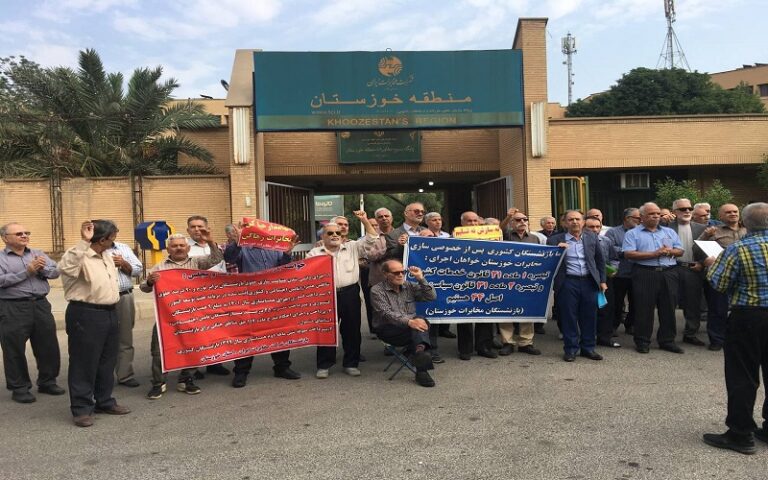
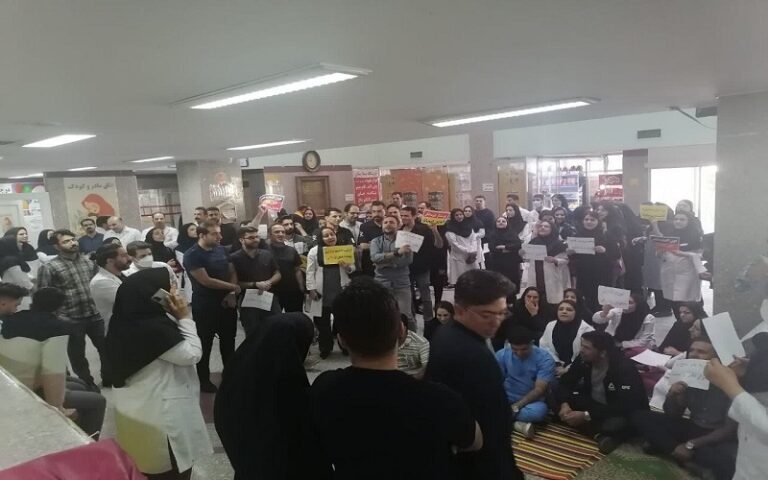
A group of retirees from Iran’s Telecommunication Company continued their economic protests on Monday, November 4, organizing gatherings across several provinces, including East Azerbaijan, Gilan, Khuzestan, Kermanshah, and Isfahan. Simultaneously, protests by nurses resumed. These protests took place at least in the cities of Tabriz, Rasht, Ahvaz, Kermanshah, and Isfahan on Monday. During the weekly gathering of telecommunications retirees in Tabriz, protesters held signs demanding their claims be addressed, chanting: “Lying officials, what happened to your promises?” Retired protesters in Rasht also chanted, “We don’t want an indifferent minister.”Retirees in Ahvaz protested with slogans like “Shareholder, have some shame, give up the company” and “Lying shareholder, where are your promises?”In Kermanshah, protesters chanted, “Neither cold nor heat can stop us,” and “Half pay, that’s what we’ll get if we remain silent.”Telecom retirees in Isfahan also shouted, “Neither Parliament nor the government cares about the people.” The weekly protests of telecommunications retirees have been ongoing for months. Reasons include the lack of updates to welfare benefits in 2022 and 2023, management’s disregard for a 2010 legislation, issues with supplementary insurance, and unpaid claims from previous years not adjusted to current rates. Alongside the weekly protests of telecom retirees, economic protests by nurses also resumed, with healthcare staff gathering in areas such as Zanjan and Yazd. Protesting nurses in Zanjan called for solidarity among their colleagues, chanting, “Nurses, shout for your rights.”In Yazd, protesters chanted, “If we don’t get our rights, we won’t work our shift.”Worsening issues for nurses in July of this year led to a sustained national strike, during which hundreds of nurses and healthcare staff in state hospitals began protests and strikes across at least 16 provinces in Iran, continuing until September, emphasizing their professional and economic demands. The continuation of the nurses’ strikes led to security crackdowns and the arrest of several nurses. In response, on August 29, the U.S. Department of State and the International Council of Nurses (ICN) expressed concern over the “unjust detention and sentencing” of protesting nurses in Iran. The expansion of sectoral protests across various groups, including retirees, workers in multiple industries, teachers, individuals who lost savings, and healthcare workers, reflects rising economic hardships in Iran and the perceived inattention of regime officials to these issues.
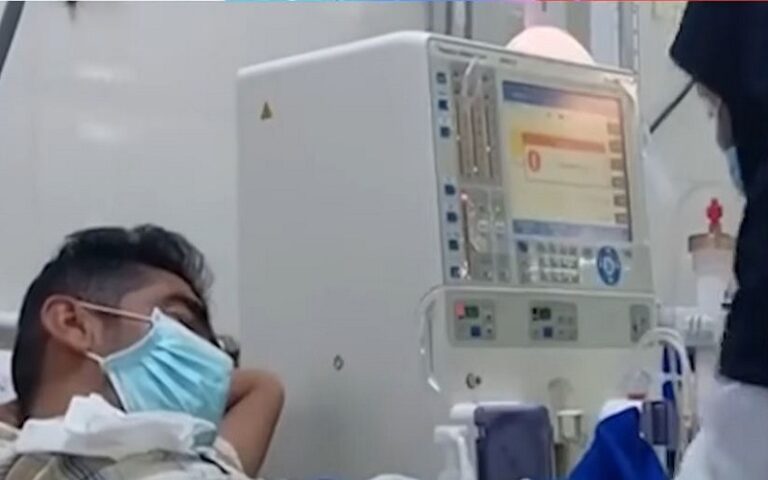
The Health Commission of Iran Regime’s Majlis (Parliament) confirmed that 70 dialysis patients have died in Iran due to medication contaminated with aluminum. According to Salman Es’haghi, the commission’s spokesperson, not only has no serious legal action been taken against the producer of this solution in the past three months, but the company has also been given another order to produce the medication.Es’haghi did not name the manufacturing company, but independent reports indicate that Samen Pharmaceutical Company, affiliated with financial institutions of the Iranian regime, is the producer of these toxic solutions.The Majlis member explained that initial reports cited the deaths of 10 to 12 dialysis patients in the cities of Mashhad and Isfahan, which later rose to 50. It is now confirmed that 70 people have lost their lives.According to Es’haghi, the initial discussion of dialysis patient deaths centered on the use of “substandard medication.” Later, it was suggested that the medication might have been contaminated with aluminum, and investigations revealed that the company had been “negligent” in this regard.He mentioned that the commission’s investigation has been ongoing for over three months, and the judiciary should have taken serious actions. However, the same company has again been asked to continue producing the medication.Following this Majlis member’s statements, the public relations office of the Food and Drug Administration released a statement saying, “Currently, only one domestic company is responsible for producing this critical medication, but this does not mean that quality or standards are being overlooked.”Earlier, on June 12, the Food and Drug Administration announced it had received “initial reports indicating some issues and complications following the use of peritoneal dialysis solutions produced by Samen Pharmaceutical Company.”According to Ham-Mihan newspaper, the main shareholders of this company, in order of their stake, include Astan Quds Razavi with around 70 percent, the Pension Fund with approximately 26 percent, and Hakim Pharmaceutical Company with four percent. Astan Quds Razavi is one of the entities under the supervision of Ali Khamenei, the Supreme Leader of Iran’s regime, and has faced recent reports of corruption in other sectors as well.The contaminated batch of peritoneal dialysis solutions was distributed from January 2024 and claimed dozens of lives by May.According to Salman Es’haghi, 800,000 patients in Iran rely on peritoneal dialysis for treatment.Dialysis patients who used this aluminum-contaminated solution died after experiencing neurological, infectious, seizure-related, and coma symptoms.
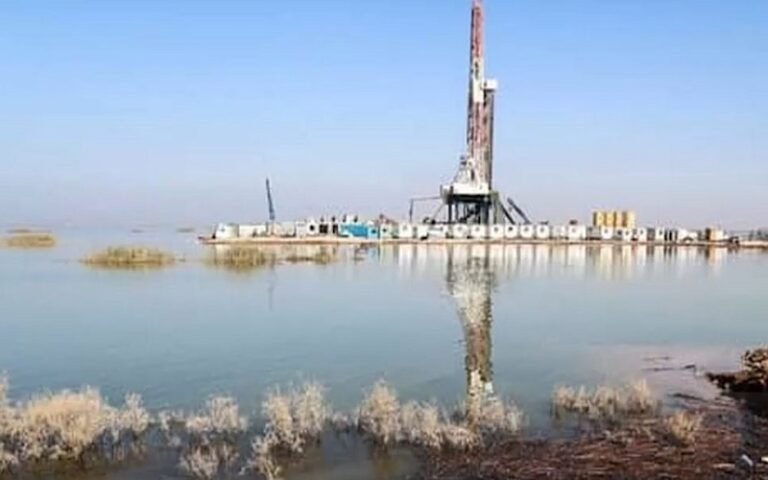
New drilling operations and road widening in the Yaran oil field within the Hawizeh Marshes, launched without authorization from Iran’s Environmental Protection Organization and with only approval from the Khuzestan Province Security Council, have been identified as a serious threat to the marsh’s ecosystem and migratory species.According to Payam-e-Ma newspaper, new oil well drilling in the Yaran field has commenced without approval from the Environmental Protection Organization.The report states that in a session of the Khuzestan Provincial Security Council on September 7, during the final days of the former governor’s tenure, these drilling permits were issued without environmental assessments. The projects were implemented in collaboration with an oil contractor and the Khuzestan Governor’s Office.The transboundary Hawizeh Marshes, the last remnant of Mesopotamian marshlands, span over 300,000 hectares, with one-third located in Iran and two-thirds in Iraq. This marshland holds significant ecological value, particularly as a habitat for thousands of migratory birds, including flamingos.According to Ahmadreza Lahijanzadeh, Deputy for Marine and Wetland Environmental Protection in Khuzestan, in 2008, more than 7,000 hectares of the Hawizeh wetlands were allocated to the Oil Ministry for the first time. With approval from the Supreme National Security Council, large sections of the wetland were drained to facilitate cheaper oil extraction by Chinese firms.He cited the blocking of the Shatt Al-Ali bridge and the draining of pools 3, 4, and 5 in 2010 as major damages to the Hawizeh Marshes, stating, “These actions turned the marshland bed into a dust source in Khuzestan.”
The Yaran Oil Field
The Yaran oil field (North and South), covering around 110 square kilometers west of the Azadegan oil field within the Hawizeh Marshes, is under the jurisdiction of the Azadegan field. Its first exploratory well was drilled in 2009.The northern part of the Yaran oil field contains 22 wells, while the southern part has 18 wells. Infrastructure projects, including pipelines and transport facilities, have also been implemented.To date, the Azadegan field, authorized for only 75 oil wells, has drilled over 300 wells in the Hawizeh Marshes. Reports indicate that oil executives plan to add another 420 wells in this area.
Evading Environmental Assessment
Lahijanzadeh stressed that the Oil Ministry must present a comprehensive plan for marshland conservation and conduct Environmental Management Plans (EMP) before any new development in the Yaran field. However, drilling has commenced without these assessments, and oil companies have recently communicated with the Environmental Protection Organization to exclude environmental assessments for these wells.The Hawizeh Marshes, with their rich diversity of plant and animal species, remain a top environmental concern for activists in Iran.Preservation and monitoring of this marshland are considered public rights, and any encroachment not only violates environmental rights but also contravenes the principles of public rights in Iran.
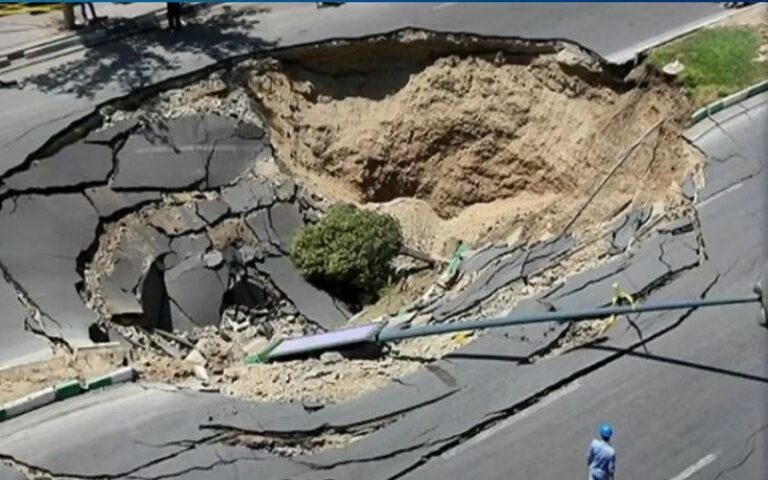
Ali Beitollahi, the head of the Earthquake Department at the Center for Roads, Housing, and Urban Development Research, announced that “multiple ground subsidence incidents in Tehran” have resulted in four fatalities. Among them, two people died in the ground collapse at “Meydan-e Qiyam” and two others lost their lives in a similar incident in the Shahran area.According to the state-run newspaper Etemad on Sunday, November 3, Beitollahi reported that “a firefighter and a worker” were buried under a pile of soil in the ground subsidence incident at Tehran’s Meydan-e Qiyam, while two others died in a similar accident in Shahran.According to UNESCO’s definition, “ground subsidence” refers to the “collapse or settlement of the ground’s surface,” which occurs on a large scale for various reasons.The official noted that despite the heightened risk of ground subsidence in recent years, “no budget has been allocated for assessing this risk or for preventive and control measures.”He attributed the primary causes of ground subsidence in the capital to the “numerous abandoned qanats (underground aqueducts) beneath Tehran” and “erosion caused by high-pressure leakage from drinking water pipes.” He stated that according to existing maps, “approximately 600 kilometers of abandoned qanats have been identified,” and that “an equivalent length of unidentified qanats also exists in Tehran, posing a latent threat.”He further pointed out that “the recent subsidence at Vanak Square, the collapse on the north side of Enqelab Square, and the subsidence on Molavi Street opposite Akbarabadi Hospital were caused by high-pressure water leakage from drinking water pipes.” He explained: “This leakage causes subsurface erosion and creates cavities underground, which can collapse under traffic and environmental vibrations, potentially forming hazardous sinkholes in the ground and on roads.”Beitollahi warned that “human casualties would be very high if a subsidence occurred during peak traffic hours in District One.”Previously, Beitollahi had warned of the intensifying phenomenon of ground subsidence, stating that all provinces in Iran are facing this danger and that “we have only five to ten years left to save our cities and villages.”Beitollahi highlighted Tehran Province’s top ranking in subsidence rates, stating, “The subsidence mass in Tehran Province stretches over 60 kilometers in length and 35 kilometers in width, with close to 3 million people residing in this subsidence zone.”In June, Masoumeh Amigh-Pei, head of the Precise Leveling and Radar Interferometry Department at Iran’s Mapping Organization, stated that a comprehensive ground subsidence database had been developed, revealing that the extent of ground subsidence has reached 16 of Iran’s major cities, with 800 cities falling within the subsidence zone.According to several critical experts, misguided policies, lack of adequate planning, and mismanagement of water resources by the Iranian regime are major contributors to ground subsidence and the environmental crisis in Iran.
In a statement, the National Council of Resistance of Iran (NCRI) accused the Iranian regime’s Ministry of Intelligence of “intensifying the arrests of MEK supporters and their families” in an effort to “prevent” social protests and uprisings against the government.The statement noted that in mid-September, death sentences were issued for three MEK supporters, the largest opposition group to the Iranian regime. Additionally, on October 6, seven other detainees went on trial on charges of “rebellion and membership in the MEK.” It added that many supporters of this political group “have mostly been arrested and interrogated since [Masoud] Pezeshkian took office.”In the laws of the Iranian regime, “rebellion” refers to those who oppose the government and engage in armed struggle against it, for which the punishment is death.According to this statement, the names of some of the detainees include: “Hojjat Alizadeh, 57, in Yazd prison; Kosar Dehbanzadeh, 33, in the women’s ward of Shiraz prison; Mohammad Ali Tandaro, 31, in Evin prison; Rasoul Sadati, 63, Taghi Mahmoudi, 62, and Sasan Nouri, 37, in Qaemshahr prison; Amin Farahani Kasmaei, 45, in Lakan prison in Rasht; Nira Behnoodi, 53, in the women’s ward of Evin prison; Hossein Sheibani, 37, in Isfahan; Karim Khoshesteh, 61, in Lakan prison in Rasht; Sajjad Pakoush, 36, from Yasuj; and Parisa Kamali, 40, in Isfahan prison.”The NCRI stated that the names and details of the detainees have been submitted to international bodies.Earlier, the Iranian regime had issued death sentences for three political prisoners affiliated with the MEK: Behrouz Ehsani Islam-Lo, Mehdi Hassani, and Mohammad Javad Vafa’i Thani. Behrouz Ehsani, 70, who suffers from multiple illnesses, asserted that after 22 months of uncertainty, the Iranian regime’s judiciary “issued a death sentence for him without any evidence.”It is worth noting that in the summer of 1988, the Iranian regime executed around 30,000 members and supporters of the MEK within a short period.
Ahmad Nejatian, head of Iran’s Nursing Organization, noted that 1,500 nurses left their jobs over the past year and 500 emigrated. Meanwhile, nurses’ protests continue in Iran, and as Nurse’s Day approaches, a group of nurses has launched a campaign called “Black Ribbon.”As part of ongoing street protests by healthcare staff, nurses in the cities of Fasa, Mashhad, and Yazd held a protest rally on Saturday, November 2.Emergency personnel from Mashhad participating in the protests highlighted that staff burnout has led to an increase in patient deaths.In an interview with regime’s Tasnim News Agency, affiliated with the IRGC, Nejatian noted that while Iran has 240,000 nurses, there should be at least 1.8 nurses per hospital bed. However, the national average is 0.9, meaning there is less than one nurse per hospital bed in Iran.Referring to the emigration of 500 nurses over the past year, Nejatian discussed the factors contributing to job abandonment and emigration among nurses. He stated, “With staff shortages, we impose mandatory overtime on nurses. Additionally, due to staffing issues, nurses are unable to retire after 25 years of service under the law governing hard and hazardous occupations. Together, these factors create a chain of consequences that lead to nurses’ dissatisfaction and resignations.”
The Black Ribbon Campaign
Images posted on social media show a group of nurses participating in the “Black Ribbon” campaign, wearing black armbands and wristbands to demand that their professional and economic demands be addressed.The Black Ribbon CampaignThe website of the Free Union of Iranian Workers reported that the nurses’ protest, marked by wearing black ribbons during shifts, continues. It wrote, “Nurses have been threatened to remove these black ribbons or their shifts will not be counted.”Elsewhere, Nejatian stated that nurses’ overtime pay should be at least 1 million rials (approximately $1.42) per hour.He stressed that overtime pay below this level would not meet the needs of the healthcare system or the nurses.Previously, on October 27, the Coordinating Council of Nurses’ Protests warned Iranian regime officials that if nurses’ demands were not addressed, they would respond decisively and in unison.The union attributed the consequences of this issue to the authorities, stating that reducing nurses’ demands to small payments would only fuel the flames of protest.Nurses and other healthcare workers in Iran have repeatedly held rallies, sit-ins, and strikes over the past years in protest of the lack of response to their demands.In one of the most recent instances, beginning on August 5, nurses in various cities across Iran went on strike and held protests for over a month in approximately 50 cities and 70 hospitals.In a September 2 interview, Nejatian stated that the average annual emigration rate of nurses has doubled from 2021 to 2023, noting that this trend is increasing.
The nursing sector in Iran is currently grappling with intensifying challenges, including staff shortages, high work pressures, and low wages. This has sparked a wave of protests and demands for enhanced professional and living conditions.Currently, around 220,000 nurses work in Iran’s medical facilities, expressing frustration over insufficient pay and inadequate benefits. Despite approximately 20,000 trained nurses remaining unemployed, authorities have been unable to address staffing shortages, further increasing the workload on active nurses.Legislation regarding nurses’ rights, such as the right to retirement after twenty years of service, paid annual leave, and increased compensation, remains unimplemented. This neglect of promised rights has only heightened discontent among Iran’s nursing workforce.Given these difficult circumstances, many nurses are opting to migrate to Gulf countries, Europe, Australia, Canada, and the United States in search of better opportunities. Those who remain in Iran continue to protest daily, garnering significant support from the community. This collective action reflects a strong desire to bring about positive changes in the health system.On November 2, major protest gatherings were held in the cities of Mashhad and Yazd, where nurses and other medical staff from various hospitals united to voice their demands. Key demands highlighted by the protesters include:
Implementation of Nursing Services Pricing Law: Establishing a clear law to determine fees for nursing services, especially for pre-hospital emergency care, with financial backing from the Ministry of Health and insurance companies, as these services are currently offered free of charge.
Increased Compensation for Emergency Nurses: Should an independent compensation package remain unapproved, protesters demand an increase in emergency nurses’ compensation by at least four times the current level, factoring in workload intensity, population density, and challenging work conditions.
Reduced Retirement Age and Increased Hardship Points: Under the “hard and strenuous” job category, they are demanding a reduction in retirement age for emergency workers, along with an increase in hardship points from 1,500 to 3,000 as previously announced.
Enhanced Productivity for Emergency Workers: Full application of the Productivity Improvement Law to pre-hospital emergency staff, aligning with its implementation for laboratory and night clinic staff.
Special Allowance at Triple the Basic Salary: Allocation of a special allowance, amounting to three times the basic salary, for nursing staff from the national budget, to be included in employment contracts.
Full Implementation of Additional Benefits and Welfare: Enforcing directives for additional benefits and welfare packages for Ministry of Health and emergency staff, without requiring approval from governing boards, in line with other government employees.
Improvement of National Emergency Organizational Structure: Revamping the organizational structure of the national emergency services and granting broader decision-making powers to pre-hospital emergency managers. Additionally, allocating a separate budget for provincial emergency centers to prevent fund transfers by university boards.
Dedicated Budget for Ambulance Purchase and Maintenance: Allocating a separate budget for 2025 to acquire new ambulances and maintain the aging fleet, which currently relies on private revenue and sometimes personal funding, putting the lives of medical staff and patients at risk.
Amending the Nursing System Organization’s Charter: Amending the nursing organization’s charter to allocate at least one seat for emergency nurses on provincial boards and three seats on the national nursing system council.
Replacement of Ineffective Administrators: Replacing underperforming emergency department managers and their deputies at hospitals and health centers nationwide, as their inefficacy in addressing nurses’ demands has contributed to the accumulation and delay of unresolved issues.
These protests underscore a deep-seated frustration within Iran’s healthcare workforce, particularly amid mounting work pressures and the physically and mentally demanding nature of their jobs. They also highlight a significant gap between healthcare staff and sector leadership, indicating an urgent need to reconsider management policies and structures to ensure efficient and stable operations in the healthcare sector.
In Iran, the flu vaccine shortage this winter is raising serious public health concerns. State media reports indicate that approximately 3 to 4 million high-risk Iranians are being deprived of access to the vaccine. Meanwhile, various types of flu vaccines are circulating on the black market, with prices reaching up to 12 million rials—several times the standard cost.This shortage brings back memories of the COVID-19 vaccine crisis that plagued the country at the height of the pandemic, highlighting severe shortcomings in Iran’s healthcare system. During that period, delays and ineffective policies in vaccine procurement and quarantine measures led to a sharp rise in death rates, placing Iran among the countries with the highest mortality rates. Today, the lack of flu vaccines escalates the risk, particularly for vulnerable groups, in the absence of effective policies to secure public health needs.Although flu vaccines are available on the black market, the authorities’ failure to regulate distribution and control prices underscores the government’s inability to safeguard citizens’ health, which some see as a form of “silent killing” due to random policies and administrative corruption.According to the state-run Alef website, the black market emerged as soon as winter approached and demand for the vaccine rose. ISNA news agency also reports complaints from local officials about vaccine shortages, with the head of the Infectious Diseases Department at Yazd University of Medical Sciences noting that the province’s vaccine allocation is insufficient to meet the needs of high-risk groups, forcing some to turn to the black market.This situation highlights the dominance of factions linked to the Islamic Revolutionary Guard Corps (IRGC) over the pharmaceutical industry, where these entities use their influence to advance financial interests at the expense of citizens’ health. The pharmaceutical sector is controlled by figures and groups close to Supreme Leader Ali Khamenei, enabling them to reap substantial profits by monopolizing production, distribution, and even resources intended to support the healthcare sector.This control became evident during the COVID-19 pandemic, when authorities insisted on supporting local vaccine production while restricting the import of internationally recognized vaccines like Pfizer and Moderna. Billions of tomans were allocated to support companies closely associated with the ruling circles. Meanwhile, the ban on foreign vaccines led to a worrying increase in death rates in a health crisis that could have been mitigated if international vaccines had been permitted.Instead of focusing on improving public health and protecting citizens’ lives, officials exploited the crisis for personal gain. Reports indicate that influential figures in the pharmaceutical sector, connected to regime supreme leader Ali Khamenei, see this industry as a source of wealth, disregarding their duty to safeguard the health of the Iranian people.
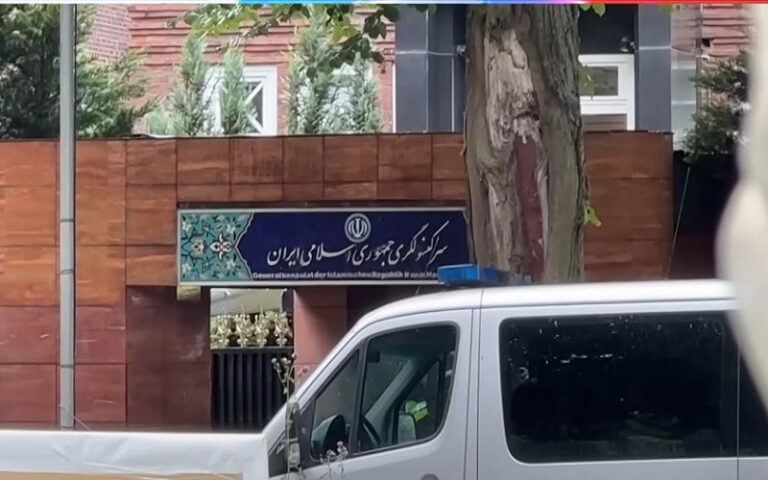
Germany ordered the closure of all Iranian regime consulates in response to the execution of Jamshid Sharmahd, an Iranian-German citizen.On Thursday, October 31, German Foreign Minister Annalena Baerbock ordered the closure of Iranian consulates in Frankfurt, Hamburg, and Munich, leaving only the Iranian regime’s embassy in Berlin operational.Ms. Baerbock stated in New York that her country’s relations with Iran had reached their lowest point following Mr. Sharmahd’s execution.She added that the killing of Jamshid Sharmahd, a dual Iranian-German citizen, indicates that Iran’s unjust regime continues its “brutal” behavior.The German foreign minister also stated that Iran’s regime understands primarily the language of extortion, threats, and violence and we have repeatedly and clearly informed Iran that the execution of a German citizen would have serious consequences.On October 29, after her strong condemnation of Sharmahd’s execution, Ms. Baerbock recalled Germany’s ambassador from Iran, and the German Foreign Ministry announced the following day that the ambassador had left Iranian territory.On October 28, the Iranian judiciary announced the execution of Jamshid Sharmahd on charges of “planning multiple terrorist operations,” one of which allegedly included the “bombing of the Seyed al-Shohada Mosque in Shiraz” on April 12, 2008.Ms. Baerbock had previously stated that Jamshid Sharmahd’s execution once again highlighted the inhumane nature of the government in Tehran, which uses capital punishment against its youth, its people, and foreign citizens.Josep Borrell, the European Union’s High Representative for Foreign Affairs, also strongly condemned Jamshid Sharmahd’s execution on October 29 and indicated that the EU is considering measures in response.Iran’s regime has a long record of detaining and imprisoning dual nationals and opponents residing outside Iran.
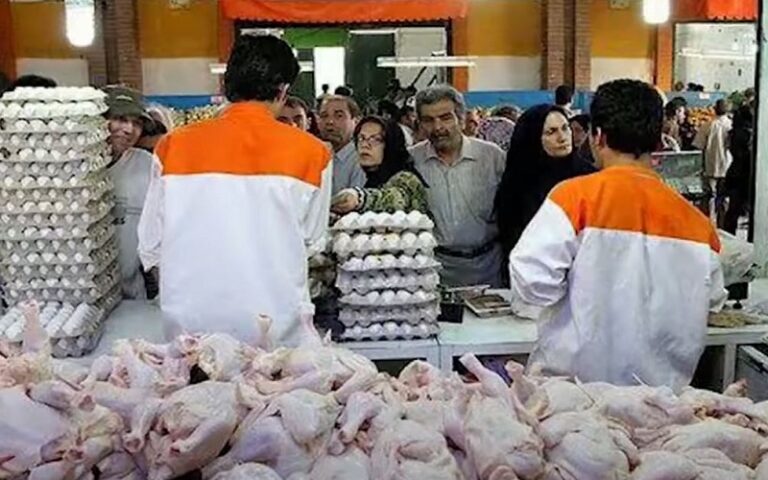
Naser Nabi Pour, the regime’s chairman of the Poultry Union, has warned that the prices of chicken and eggs will see a significant increase next year.In a report on rising prices of certain food items, including eggs and chicken, Didbaniran website quoted market activists stating that due to rising costs of feed and veterinary medications essential for poultry farming, an increase in the market price of these products is imminent.In this context, Naser Nabi Pour told the website that the recent significant rise in foreign currency exchange rates will begin affecting the prices of chicken and eggs in approximately six months.Didbaniran reported concerns that the increase in the subsidized exchange rate in the spring of 2025, along with the long-term impact of recent fluctuations in the free-market dollar rate, will raise the prices of essential goods such as chicken and eggs.Ali Ebrahimi, the director of Iran’s National Union of Meat Poultry Farmers also told Didbaniran that with the increase in the dollar rate in the free market, the national currency’s value drops, potentially fueling the smuggling of chicken and eggs.Ebrahimi added, “Currently, the price of chicken per kilogram in Iran’s neighboring countries ranges between $2 to $2.20, or approximately 1.4 to 1.5 million rials, whereas in the Iranian market, the price is under 800,000 rials. This price gap already encourages smuggling of chicken to neighboring countries through various methods.”These warnings come as, in recent days, Iran’s Statistical Center published food inflation data for October, indicating that the “milk, cheese, and eggs” category led in one-month inflation.Accordingly, for the month in question, the “milk, cheese, and eggs” category recorded a monthly inflation rate of 4.7 percent, leading to food price increases, while inflation in the “bread and grains” category was 3.7 percent.Reports indicate that the Iranian regime, by pursuing a policy of unifying exchange rates, aims to align the government-set currency rate with the free-market rate, which will impact the final prices of imported goods.The government also intends to increase the rate of 285,000 rials per dollar for essential goods, which will drive up the prices of food items, including meat and chicken, in the coming year.Analysts believe that these government decisions, combined with currency fluctuations and inflationary pressures, will ultimately lead to a sharp rise in prices.