

Near-Complete Halt to Shipping Through the Strait of Hormuz
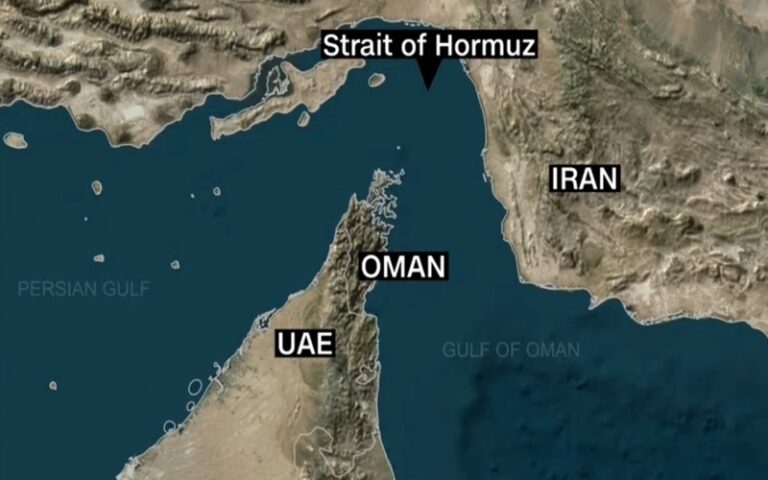
Bloomberg, citing vessel-tracking data, reported that maritime traffic through the Strait of Hormuz came to an almost complete halt during the early hours of Tuesday, July 14.
An analysis of Automatic Identification System (AIS) data shows that the number of vessels whose positions and movements were visible has dropped sharply. Some ships have also switched off their tracking systems due to heightened security risks. As a result, publicly available data do not necessarily reflect all vessel movements.
The disruption follows attacks on oil tankers, the resumption of reciprocal attacks between Iran’s regime and the United States, and the increased risks associated with transiting the Strait of Hormuz. Data from Kpler, a maritime analytics company, also show that tanker traffic has fallen to its lowest level in about two months, with only six oil tankers passing through the strait on Sunday.
129th Week of ‘No To Executions Tuesdays’ Campaign in 58 Prisons Across Iran
The “No To Executions Tuesdays” campaign has warned about the rising number of executions in Iran and called for urgent action to prevent the execution of non-political prisoners on death row at Ghezel Hesar Prison, as well as support for political prisoners sentenced to death, particularly those arrested during the January 2026 protests.
In the 129th week of the “No To Executions Tuesdays” campaign, political prisoners in 58 prisons across Iran held a hunger strike on Tuesday, July 14, once again expressing their opposition to the continued issuance and implementation of death sentences. Over the past two years, the campaign has become one of the broadest, most sustained, and most influential protest movements inside Iran’s prisons. Despite security pressure, threats, communication restrictions, and punitive measures, it continues its activities, with more prisoners joining every week.
The full statement issued during the 129th week of the “No To Executions Tuesdays” campaign is as follows:
Continuation of the “No To Executions Tuesdays” campaign in 58 prisons during its 129th week.
Borujen Prison joins the campaign
Call to save the lives of non-political prisoners on death row in Ghezel Hesar Prison and warning over the escalation of death sentences against political prisoners. Two years after Masoud Pezeshkian, the appointed president of Iran’s regime, took office, the number of executions has risen alarmingly, with at least 3,888 people executed so far. According to reports, a 52-year-old female prisoner was hanged at Adel Abad Prison in Shiraz last week. As this campaign of executions and repression continues, harsh sentences and death penalties are being imposed on prisoners, particularly those arrested during the January 2026 uprising. In addition to the dozens already executed in connection with the uprising, more than 100 other political prisoners whose names have been made public are currently under death sentences. According to the latest reports, the following death sentences have been issued for 12 prisoners in the case known as the “Alikhani Square Case” in Isfahan: Alireza Sepahi, born in 2001, sentenced to death four times. Abolfazl Sepahi, born in 2003, sentenced to death three times. Alireza Raeisi, born in 2004, sentenced to death twice. Ghaem Hosseini, born in 2005, sentenced to death twice. Gol Mohammad Mohammadi, born in 2002, an Afghan citizen, sentenced to death twice. Amirhossein Safari, born in 1998, sentenced to death. Amirhossein Maleki, born in 2006, sentenced to death. Ali Dashti, born in 2006, sentenced to death. Amirhossein Ebrahimi Analoujeh, born in 2006, sentenced to death. Shervin Bagherian, born in 2007, sentenced to death. Erfan Esfandiari, born in 2007, sentenced to death. Abolfazl Ebrahimi, born in 2007, sentenced to death. Three of these political prisoners were children under the Convention on the Rights of the Child at the time of their arrest. In another repressive and misogynistic action, on Sunday, July 12, guards at Evin Prison attacked the women’s political ward and cracked down on female prisoners protesting the overcrowding of the ward. According to information received by the campaign, since Monday, July 13, prisoners in Unit 2 of Ghezel Hesar Prison have been protesting and holding a hunger strike in response to the transfer of six fellow inmates to solitary confinement for execution. It should be noted that last August, 1,500 prisoners in this unit held a week-long strike in protest against the execution of fellow inmates. Their action succeeded in halting the executions of prisoners convicted on drug-related charges at the prison, and prison authorities promised to reconsider those executions. An unequal struggle is underway inside Iran’s prisons. Iran’s regime resorts to executions to prevent popular protests while simultaneously using external conflict to justify domestic repression. In response, prisoners and members of the “No To Executions Tuesdays” campaign have held hunger strikes and protests every Tuesday for 129 consecutive weeks against the crime that Iran’s regime carries out daily in its prisons, remaining steadfast throughout this struggle. This week, a group of prisoners at Borujen Prison in South Khorasan Province also joined the “No To Executions Tuesdays” campaign. Campaign members warn of the imminent execution of prisoners at Ghezel Hesar Prison and call on everyone to be the voice of those sentenced to death in connection with the January uprising. Prisoners participating in the “No To Executions Tuesdays” campaign are on hunger strike on Tuesday, July 14, during the campaign’s 129th week in 58 prisons across the country.UK Designates Iran Regime’s IRGC as a Terrorist Organization
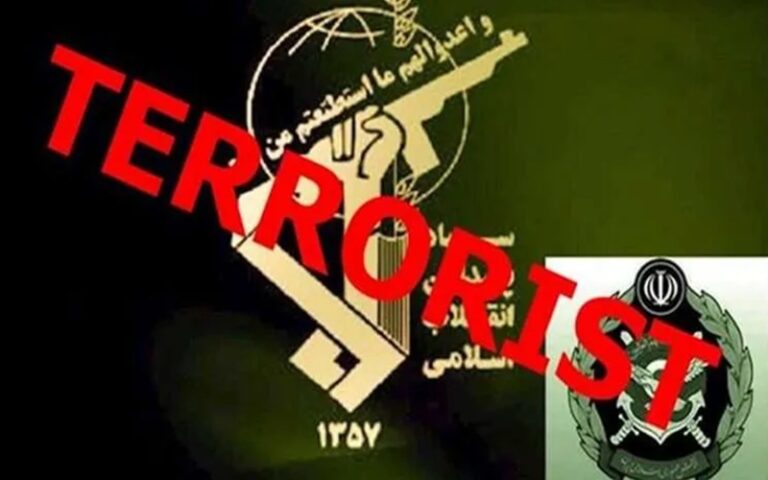
The British government has designated the Islamic Revolutionary Guard Corps (IRGC) of the Iranian regime as a terrorist organization. If the decision receives final approval from the UK Parliament, any membership in the IRGC, participation in its activities or meetings, and even displaying its symbols or insignia in public places will become a criminal offense.
The British government has designated the Islamic Revolutionary Guard Corps (IRGC) of the Iranian regime as a terrorist organization, a decision that, if finally approved by the UK Parliament, will make any membership, activity, participation in its meetings, or even displaying the IRGC’s symbols and insignia in public places a criminal offense.
IRGC Announces Closure of Strait of Hormuz After Firing on a ShipThe decision was announced on Monday, July 13, by the UK’s Labour government. In addition to the IRGC, it also includes the group “Harakat Ashab al-Yamin al-Islamiyah,” which the British government considers to be linked to the Iranian regime.
Starmer: We will take action against individuals affiliated with these groups
UK Prime Minister Keir Starmer, announcing the decision, stressed that the IRGC had been designated as a terrorist organization because of threats to life, intimidation, and hostile activities on British soil. He said the new powers would facilitate the prosecution and imprisonment of individuals operating in the UK on behalf of these groups. Angela Eagle, the UK’s Minister for Border Security and Asylum, also said in a statement that the British government had identified IRGC-related activities, including threats to life, intimidation, and hostile actions within the UK, and that this decision was made on that basis.Broader powers for police and security agencies
Under the new regulations, membership in the IRGC, attendance at its gatherings, promoting it, or displaying its insignia in public places will constitute a criminal offense. British police and intelligence agencies will also receive broader powers to counter the activities and networks affiliated with these groups within the country. The British government said that “Harakat Ashab al-Yamin al-Islamiyah” has claimed responsibility for several attacks targeting sites associated with Jewish and Israeli communities, as well as Persian-language media outlets, including the burning of four ambulances in March of this year.Mrs. Maryam Rajavi welcomes the British government’s decision
Mrs. Maryam Rajavi, the President-elect of the National Council of Resistance of Iran (NCRI), welcomed the British government’s decision to designate the IRGC as a terrorist organization. While describing the decision as overdue, she called it a necessary step toward ensuring peace, stability, and security in the region and around the world. She also thanked members of the UK House of Commons and House of Lords, particularly members of the British Committees for a Free Iran, for their decades-long efforts to expose the role of the IRGC and to advocate for its designation as a terrorist organization. Mrs. Rajavi stressed that the Iranian Resistance has from the outset identified the IRGC as the main instrument of domestic repression and the export of crisis and terrorism by the Iranian regime, and has consistently emphasized the need for its designation as a terrorist organization.Background to London’s decision
The British government’s decision still requires parliamentary approval. However, if finalized, all forms of support, cooperation, or promotion of the IRGC will become illegal in the United Kingdom. The move follows a series of measures taken by London against activities attributed to the Iranian regime.Expansion of the list of countries taking action against the IRGC
With this decision, the United Kingdom joins the countries and organizations that have designated the IRGC as a terrorist organization or subjected it to the most severe sanctions. The United States, Canada, Australia, Argentina, Paraguay, Ecuador, Ukraine, as well as the European Union, have previously implemented extensive measures against the IRGC.Why Is Iran’s Regime Violating the Ceasefire with the U.S.?
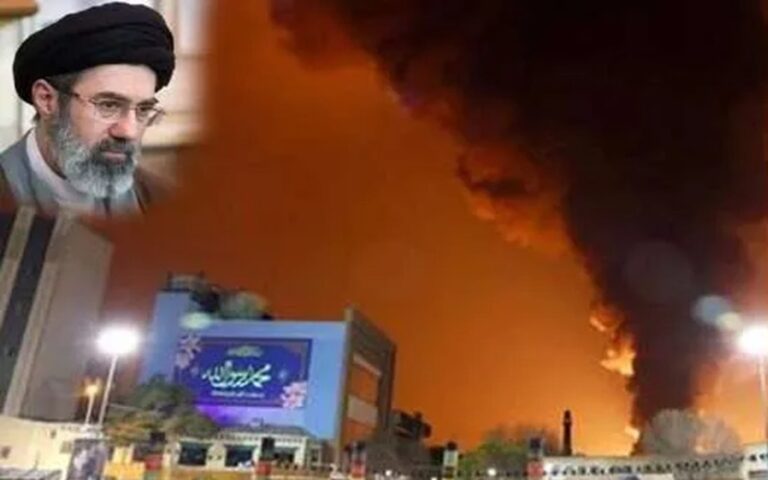
Mojtaba Khamenei, the Iranian Regime’s supreme leader, said in a message on Saturday, July 11, that revenge for the killing of his father, Ali Khamenei, “will certainly” be taken.
The new Supreme Leader of Iran’s regime, who has not appeared in public since his appointment, wrote in his statement about those responsible for the attack on the Supreme Leader’s residence on February 28: “These criminals, whose names from top to bottom are all on record, will take to their graves the unfulfilled wish of dying peacefully in their beds.”
It was clear that Mojtaba Khamenei’s message, besides serving a domestic purpose by boosting the morale of forces left without a leader, also set the direction of the regime’s foreign policy. That is why, only hours later, the Islamic Revolutionary Guard Corps (IRGC) attacked a ship in the Strait of Hormuz and declared the strait closed in defiance of U.S. President Donald Trump’s ultimatum. In practice, a new war has begun.
Trace of Mojtaba Khamenei in A Multi-Hundred-Million-Euro Deal in ViennaSo far, it appears that the hardline faction of the regime associated with Mojtaba Khamenei has seized the initiative from the rival faction represented by Mohammad Bagher Ghalibaf, the Speaker of the Majlis (parliament), and Masoud Pezeshkian, the regime’s president. This outcome could also be anticipated from the statements and slogans heard during Ali Khamenei’s funeral. Fars News Agency, affiliated with the IRGC, wrote regarding recent developments: “The enemy is trying to divert the people’s anger over the crimes of America and Israel toward officials and domestic forces in order to create division.” It called on the public to direct their anger toward the main enemy and preserve unity. Mahmoud Nabavian, deputy chairman of the Majlis National Security Commission, described the previous negotiations as a form of war that, because of optimism and deception by the enemy, turned victories into defeats and left behind a bitter experience. A few days earlier, the regime also demonstrated its effort to create a barrier against a popular uprising by attacking three ships, despite Mojtaba Khamenei having no justification or pretext for this escalation.
The main question is: Why is Mojtaba Khamenei seeking to ignite a war?
Why did he undermine the agreement by starting this war? Is the regime unaware of the economic and social consequences, the naval blockade, and potential U.S. retaliatory strikes? To understand why Mojtaba Khamenei, like his father, is pursuing war, it is necessary to understand the current situation of his regime. – Mojtaba Khamenei makes decisions based on the principle of “preserving the regime” or “ensuring its survival.” By this standard, he accepts the costs of war to keep the regime in power. He believes the regime will not be overthrown by a foreign war and that it is the people who will bear the burden of its consequences. – The destruction and hardships caused by war increase the suffering of the people. In this way, the regime sinks the population deeper into their daily problems, making the central issue for many people—the overthrow of the regime—less prominent. – Mojtaba Khamenei believes the only threat to his survival is an organized armed force. Therefore, he seeks to unite his loyalists around two principal slogans: domestically, “Death to the Monafeqin (the People’s Mojahedin Organization of Iran, PMOI/MEK),” and internationally, “Death to America.” Abandoning either slogan would, in his view, amount to signing the regime’s death warrant. – During the brief period following the ceasefire and the atmosphere of negotiations and agreement, Mojtaba Khamenei witnessed escalating factional conflict within the regime, growing public readiness for protests, and an expansion of the activities of the Resistance Units. The continuation of these developments threatens the regime’s foundations. It is clear to him that without war and escalation, he cannot preserve the regime’s balance or consolidate his new position as Supreme Leader. – Therefore, it appears that Mojtaba Khamenei and the ruling faction have concluded that they must be prepared for another war under any circumstances.Where does Mojtaba Khamenei’s miscalculation lie?
First: He believes that mobilizing crowds into the streets and staging his father’s funeral procession has intimidated the United States and the West. Second: He believes that this display has intimidated and discouraged Iranian society and that, at least for a time, people will refrain from rising up. Third: He believed that divisions within the Western camp, particularly between the United States and Europe, would provide him with breathing room. However, all indications suggest that the international community is moving toward a global consensus against the illegitimate regime of the Supreme Leader. Fourth: Khamenei knows that the only force capable of overthrowing his regime is the Iranian people and the Iranian Resistance. He believes that the extensive demonization campaign carried out against opposition groups such as the National Council of Resistance of Iran (NCRI) will prevent Western governments from ever supporting regime change or the Iranian opposition’s proposed alternative.U.S. Conducts New Wave of Strikes Against Iran’s Regime, IRGC Attacks Bahrain, Kuwait, Jordan
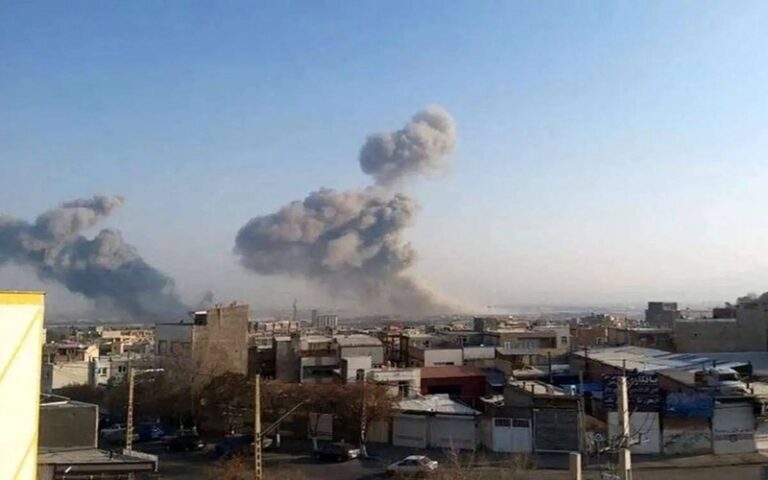
As the United States completed its latest wave of attacks against the Iranian regime, the Islamic Revolutionary Guard Corps (IRGC) announced attacks on Bahrain, Kuwait, and Jordan.
Hours after the United States completed a new wave of strikes against military targets belonging to the Iranian regime, the Islamic Revolutionary Guard Corps (IRGC) announced that it had targeted U.S. bases in Jordan, Bahrain, and Kuwait in several phases using missiles and drones. At the same time, the U.S. Central Command (CENTCOM) announced the completion of its operation against dozens of military targets inside Iran.
— U.S. Central Command (@CENTCOM) July 13, 2026The military confrontation between the United States and the Iranian regime entered a new phase early Monday. Hours after the United States launched and completed a new wave of strikes against Iranian military positions, the IRGC announced that it had carried out several phases of retaliatory operations against U.S. military bases in Jordan, Bahrain, and Kuwait. U.S. officials have not yet confirmed or denied these claims. The U.S. Central Command (CENTCOM) announced on the social media platform X that the latest wave of offensive strikes against military targets in Iran had concluded and that U.S. forces had struck dozens of targets across the country using precision-guided munitions.
Ship Traffic Through Strait of Hormuz Falls to Lowest Level in WeeksCENTCOM said that, for the first time, the operation simultaneously employed fighter aircraft, naval vessels, aerial drones, and one-way attack maritime drones. According to the command, the targets included the Iranian regime’s air defense systems, coastal radar installations, missile and drone capabilities, and fast attack boats. In response, the IRGC announced that it had carried out its retaliatory operation in three phases against U.S. targets in the region. In its first statement, the IRGC’s public relations office said the U.S. attack on the Iranian regime’s coastal positions came after the IRGC Navy had intercepted two ships, accusing them of disabling tracking systems and traveling along an “illegal route” in the Strait of Hormuz. The IRGC said that in the first phase of its response it targeted and “destroyed” “several large missile storage facilities and fuel depots” at Prince Hassan Air Base in Jordan with missiles and drones. In its second statement, the IRGC said its Aerospace Force had targeted and “destroyed” helicopter maintenance facilities, a hangar for a “P-8” electronic warfare aircraft, and a drone command-and-control center at Sheikh Isa Air Base in Bahrain. In its third statement, the IRGC claimed it had “completely destroyed” fuel storage facilities and a Patriot air defense system at Ali Al Salem Air Base in Kuwait, as well as an “FPS” strategic radar system at Ahmad Al Jaber Air Base in Kuwait. The IRGC concluded its statement by declaring: “The Strait of Hormuz is our land,” and said it would not allow the U.S. military “to continue its illegal interference there from the other side of the world.” Minutes later, the public relations office of the Iranian regime’s army also announced in a statement that, hours earlier, in response to the U.S. attacks, it had struck the U.S. military’s “troop deployment areas, air defense and missile systems, shelters, and support facilities” in Kuwait. Earlier, Nour News, a news outlet affiliated with the Iranian regime’s Supreme National Security Council, reported the start of “large-scale missile and drone attacks” against U.S. bases and naval vessels. According to Nour News, the attacks were launched from missile bases in western and central Iran and targeted locations that had been identified following the repositioning of U.S. forces over the past 48 hours. Officials of the Iranian regime had previously reported U.S. strikes on locations in the provinces of Khuzestan, Hormozgan, Bushehr, and Markazi. CENTCOM had stated that the objective of the operation was to reduce the Iranian regime’s capability to attack commercial shipping and to ensure freedom of navigation through the Strait of Hormuz. As reciprocal attacks continue and both sides make new claims, the military confrontation between the United States and the Iranian regime has entered a phase that extends beyond Iranian territory and now encompasses U.S. military bases in several Arab countries along the Persian Gulf.
Ship Traffic Through Strait of Hormuz Falls to Lowest Level in Weeks
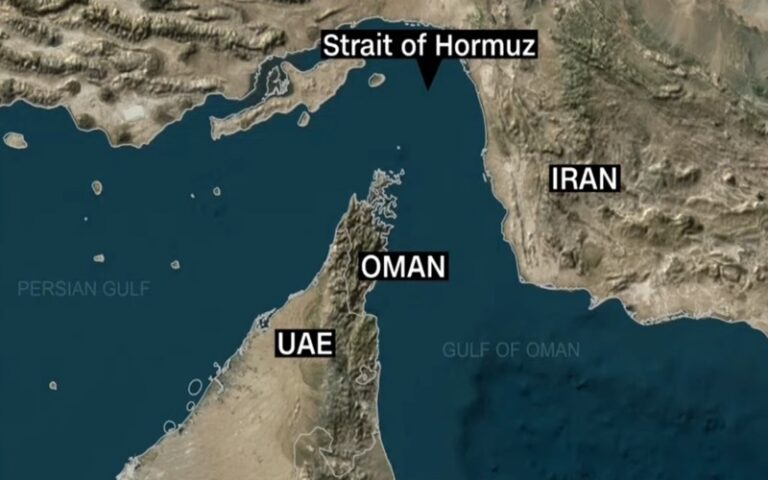
Shipping data show that the number of vessels transiting the Strait of Hormuz on Sunday fell to its lowest level in recent weeks. At the same time, the resumption of attacks between the United States and the Iranian regime, along with strikes targeting ships in the Middle East, has heightened concerns over maritime safety.
Reuters reported on Monday, July 13, that according to vessel-tracking data from Kpler, only six ships transited the Strait of Hormuz on July 12, the lowest number recorded in the past five weeks.
IRGC Announces Closure of Strait of Hormuz After Firing on a ShipAmong the tankers leaving the strait was the very large crude carrier (VLCC) Humanity, carrying 2 million barrels of Iranian oil. Another tanker, Captain Andreas, also exited the Strait of Hormuz carrying about 500,000 barrels of refined petroleum products from Kuwait. According to the data, three empty oil tankers also entered the Persian Gulf to load crude oil. Most tankers switched off their identification transmitters while transiting the Strait of Hormuz. Over the weekend, no liquefied natural gas (LNG) tanker whose entry into the Strait of Hormuz was visible in vessel-tracking data was recorded. According to Kpler data, a tanker operated by the Abu Dhabi National Oil Company (ADNOC) exited the Strait of Hormuz between July 10 and July 12. The vessel is en route to Dahej Port in India.
Rising Concerns Over Maritime Security
As the latest round of U.S. strikes began, Iranian officials reported projectile impacts at locations in the provinces of Hormozgan, Markazi, Khuzestan, and Bushehr. The U.S. Central Command (CENTCOM) announced that on July 12, U.S. forces carried out another wave of attacks against the Iranian regime, striking dozens of targets at multiple locations using precision-guided munitions. CENTCOM said the objective of the strikes was to reduce the Iranian regime’s capability to attack commercial vessels in the Strait of Hormuz. U.S. President Donald Trump said in an interview with NBC’s Meet the Press on July 12 that the Strait of Hormuz remains open to commercial shipping. The remarks came as the United States and the Iranian regime continue exchanging attacks, raising concerns about maritime safety along one of the world’s most important oil shipping routes. The Iranian regime had previously announced that it had closed the Strait of Hormuz after a vessel transited through an unauthorized route and was targeted. On July 13, the Islamic Revolutionary Guard Corps (IRGC) announced that its navy had disabled the systems of two vessels the previous night and intercepted them in the Strait of Hormuz.Protests Expand Across Iranian Cities, From Retirees and Workers to Students and Bakers
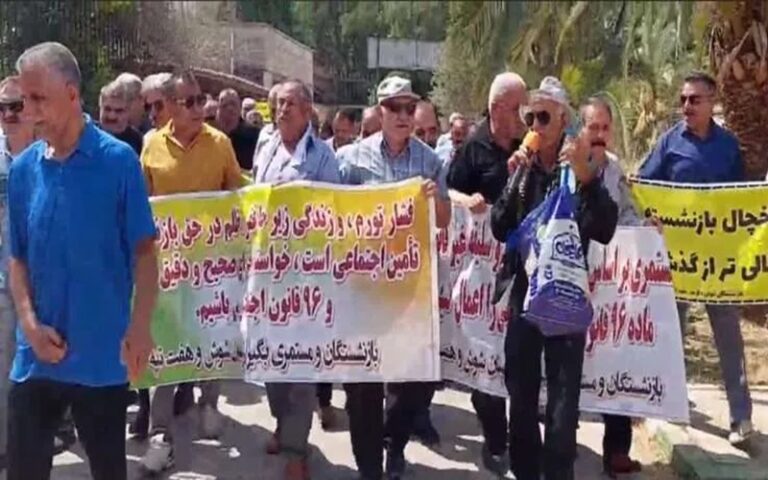
As the livelihood crisis, inflation, rising prices, and economic discontent continued to deepen, cities across Iran witnessed protests and rallies on Sunday, July 12, involving various groups including retirees, workers, drivers, students, bakers, and people who lost money in fraud schemes. In most of these gatherings, protesters emphasized labor and livelihood demands while voicing opposition to poverty, discrimination, corruption, repression, and the authorities’ disregard for their concerns.
Kermanshah; Social Security Retirees Protest Poverty and Discrimination
A group of Social Security retirees and pension recipients in Kermanshah held a protest, demanding the immediate fulfillment of their livelihood and healthcare-related demands. The protesters chanted slogans including “Enough warmongering, our tables are empty,” “Inflation, high prices, no to war and destruction,” “The streets are the stronghold of working people,” “Imprisoned workers must be freed,” and “Imprisoned teachers must be freed,” expressing their dissatisfaction with the current situation.Protest Gatherings by Retirees and Steel Workers in IranThe retirees identified the full implementation of Article 96 of Iran’s Social Security Law, pension equalization, payment of overdue benefits, free healthcare, settlement of the government’s debts to the Social Security Organization and transferring the organization’s management to representatives of workers and retirees as their main demands. During the rally, a retired woman criticized the failure to implement promised pension increases, the suspension of survivors’ benefits, and unpaid entitlements. She also criticized the availability of financial resources for propaganda and alleged managerial corruption within Shasta, the Social Security Investment Company.
Tehran; Heavy Vehicle Drivers and Victims of Tabriz Companies Protest
In Tehran, heavy vehicle drivers who purchased trucks from the companies Ayan Tejarat, Maral Tejarat, and Kalaye Momtaz Iranian gathered to protest the companies’ failure to deliver the vehicles. Pointing to corruption and inefficiency in Iran’s Ministry of Industry, Mine and Trade and other responsible institutions, the protesters demanded the immediate resolution of their contracts. At the same time, people who said they had lost money through three Tabriz-based companies held a protest demanding action on their legal cases. They said that despite filing complaints against the managers of Ayan, Elyal, and Momtaz, proceedings at the Tabriz Prosecutor’s Office have been delayed and remain unclear. The gathering featured the slogan, “Enough promises, our tables are empty.” Also in the capital, a group of retirees protested deteriorating living conditions and declining purchasing power, demanding pension increases in line with the cost of living.Damghan; Strike by Tazareh Coal Mine Workers
Workers at the Tazareh coal mine, operated by the Alborz Sharghi Coal Company in Damghan, went on strike and staged a protest. The miners cited unpaid wages, unpaid insurance contributions, overdue payments, and disregard for workers’ rights as their main grievances.Gilan; Retirees Protest While Calling for Prisoners’ Release
Retirees in Gilan also took to the streets alongside protesters in other cities across Iran. Participants chanted slogans including “Imprisoned teachers must be freed,” “Imprisoned workers must be freed,” “No to executions,” “Oppression and injustice have driven us to the streets,” and “With these empty tables, we continue to protest,” calling for the release of imprisoned protesters, a halt to executions, and action on livelihood demands.Ahvaz; Demand for Free Healthcare
Social Security retirees in Ahvaz gathered outside the local Social Security office to demand the implementation of their right to free healthcare. The protesters stressed, “Free healthcare is our undeniable right,” while protesting rising medical costs and reduced insurance coverage.Shiraz; Medical Students Protest Food Quality
A group of students at Shiraz University of Medical Sciences placed their meal trays on the ground in protest against the poor quality of dormitory food. Through this protest, the students demanded that university officials address welfare services and improve the quality of dormitory meals.Alborz Province; Bakers Demand Bread Price Revision
A group of bakers in Alborz Province also held a protest over the economic crisis, rising production costs, and the unchanged official price of bread. Their key demands included adjusting bread prices in line with inflation, increasing subsidized flour allocations, compensating production costs, regular payment of government subsidies, and reforming the flour quota allocation system.Shush; Retirees March in Temperatures Above 50°C
Despite temperatures exceeding 50°C, Social Security retirees in Shush marched and held a protest. Participants chanted slogans including “Inflation, high prices, no to war and destruction,” “The streets are the stronghold of working people,” “Retirees, rise up to end discrimination,” “Neither the government nor the Majlis (parliament) cares about the people,” “We will not stop until we get our rights,” and “Livelihood and dignity are our undeniable rights,” protesting poverty, discrimination, high prices, low wages, the privatization of healthcare services, and the authorities’ indifference.A Common Demand Among Protesters; Bread, Justice, and Freedom
The common theme of Sunday’s protests was opposition to worsening living conditions, inflation, corruption, discrimination, and restrictions on civil liberties. At many of the rallies, protesters repeatedly chanted, “Only in the streets can we win our rights,” emphasizing demands including higher wages, curbing inflation, job creation, rent controls, free education and healthcare, the right to protest and strike, the release of prisoners, combating corruption, and achieving social justice.IRGC Announces Closure of Strait of Hormuz After Firing on a Ship
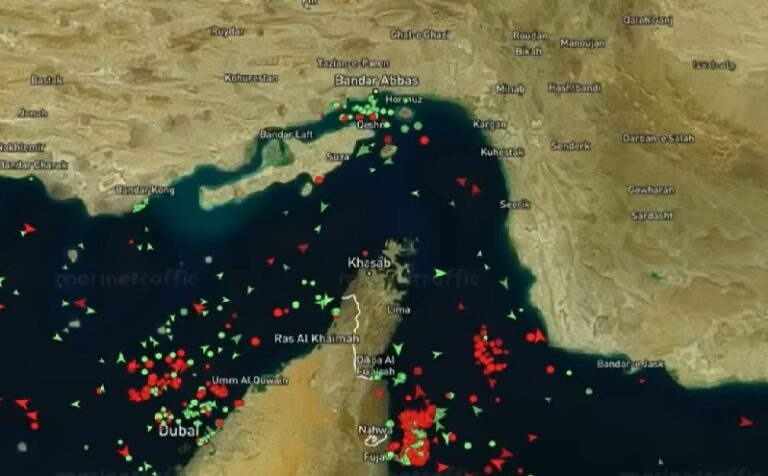
While the United States had demanded that the Iranian regime confirm that the Strait of Hormuz would remain open, Iranian state-run media reported that the Islamic Revolutionary Guard Corps (IRGC) Navy announced the closure of the strategic waterway after firing on a ship in the Persian Gulf.
Reuters also reported, citing the IRGC Navy, that a vessel which the IRGC claimed was attempting to transit the Strait of Hormuz through an “unauthorized route” was stopped with warning shots after allegedly ignoring repeated warnings.
Third Round of U.S. Strikes Against Iran’s Regime After IRGC Closes Strait Of HormuzIn a statement, the IRGC claimed that several vessels, “incited by foreign powers,” had attempted to travel outside designated shipping lanes and had ignored issued warnings. The statement also claimed that one of the vessels had endangered maritime security by turning off its identification systems and was therefore targeted with warning fire. The statement further said that, due to what the IRGC described as “insecurity caused by the unlawful intervention of foreign powers,” the Strait of Hormuz will remain closed until further notice and until what it called “U.S. interference in the region” comes to an end. It added that no vessel will be permitted to pass through the waterway. The IRGC also warned that if the United States or other parties use the incident as a pretext for new military action, the Iranian regime will respond with greater force and will attack additional U.S. military targets in the region.
Third Round of U.S. Strikes Against Iran’s Regime After IRGC Closes Strait Of Hormuz
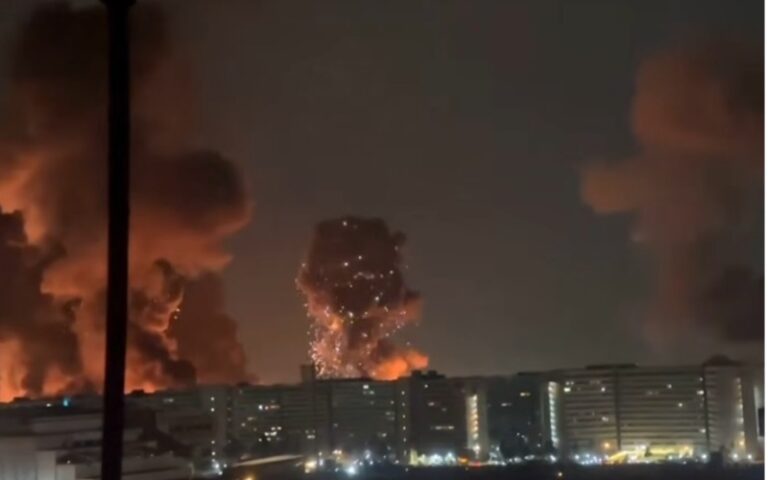
The United States Central Command (CENTCOM) announced that U.S. forces have launched the third round of strikes against the Iranian regime this week following an attack by the Islamic Revolutionary Guard Corps (IRGC) on the Cyprus-flagged container ship M/V GFS Galaxy in the Strait of Hormuz.
— U.S. Central Command (@CENTCOM) July 12, 2026CENTCOM said in its statement that the vessel caught fire during the attack and sustained heavy damage to its engine room. It also said that one civilian crew member is missing, leaving the ship unable to continue its voyage.
U.S. Military Attacks More Than 90 Targets in IranThe U.S. Central Command emphasized that the operation is intended to reduce the Iranian regime’s ability to attack commercial shipping and ensure freedom of navigation through the Strait of Hormuz. It added that the operation will continue under the orders of the Commander-in-Chief of the U.S. Armed Forces. U.S. Secretary of Defense Pete Hegseth wrote in a post on X minutes after the new operation began: “Iran made a poor choice. Now they pay.”
In response, Iranian state-run media reported that cruise missiles and suicide drones had been launched toward the U.S. naval fleet in the Gulf of Oman, and that more than 10 ballistic missiles had also targeted U.S. bases in Jordan. Following these attacks, Jordan activated its air defense systems. State-run news agencies also reported hearing explosions in Kuwait, Bahrain, the United Arab Emirates, and Qatar. CENTCOM further announced that U.S. forces used precision-guided munitions to strike approximately 140 military targets belonging to the Iranian regime. The targets included missile and drone bases, naval facilities, ammunition depots, and communications networks. According to the U.S. military, the strikes began after IRGC forces attacked two vessels transiting the Strait of Hormuz on Saturday night. The U.S. military said that one of the vessels, which was sailing under the Cypriot flag, caught fire as a result of the IRGC attack. State-run media also reported airstrikes in various parts of Iran, including Kerman, Dezful, Izeh, Mahshahr, Abadan, Bandar Jask, Sirik, Bandar Deylam, Kangan, Qeshm, Chabahar, Hendijan, Bandar Dayyer, and Asaluyeh. CENTCOM announced this morning that the third round of military operations against Iranian regime targets had been completed successfully.Iran made a poor choice. Now they pay. https://t.co/8m4fEfgrXv
— Pete Hegseth (@PeteHegseth) July 11, 2026
Protest Gatherings by Retirees and Steel Workers in Iran
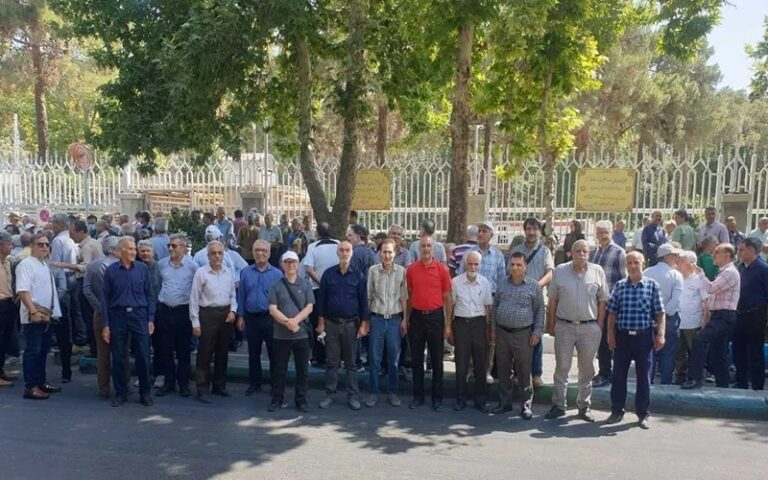
On Saturday, July 11, a group of buyers holding purchase vouchers for vehicles from the Iranian automaker Saipa gathered outside the company’s customer service building in Tehran to protest the prolonged delay in the delivery of the vehicles they had ordered.
The protesters said that despite paying the full purchase price for their vehicles, months had passed—and in some cases more than one year beyond the promised delivery date—yet Saipa had still failed to fulfill its commitments. Criticizing the automaker’s performance, they demanded the immediate delivery of their vehicles and accountability from officials for the lengthy delays. The demonstrators also criticized the responsible authorities for ignoring buyers’ demands and leaving people’s investments in limbo.
At the same time in Isfahan, a group of retired steel workers gathered outside the governor’s office to protest the incomplete implementation of the pension adjustment plan following the transfer of the Steel Pension Fund. Pointing out that four months of the year had already passed, they demanded the full and proper implementation of pension adjustments and the settlement of their outstanding claims.
On the same day, retired employees of the Telecommunications Company of Iran also held a protest outside the Isfahan governor’s office. The protesters criticized the management of the Telecommunications Company of Iran, the Execution of Imam Khomeini’s Order (EIKO), and the Etemad-e Mobin Consortium, accusing them of ignoring their professional and livelihood-related demands and calling for their grievances to be addressed immediately.
