

U.S. Treasury Targets Khamenei-Linked Financial Network
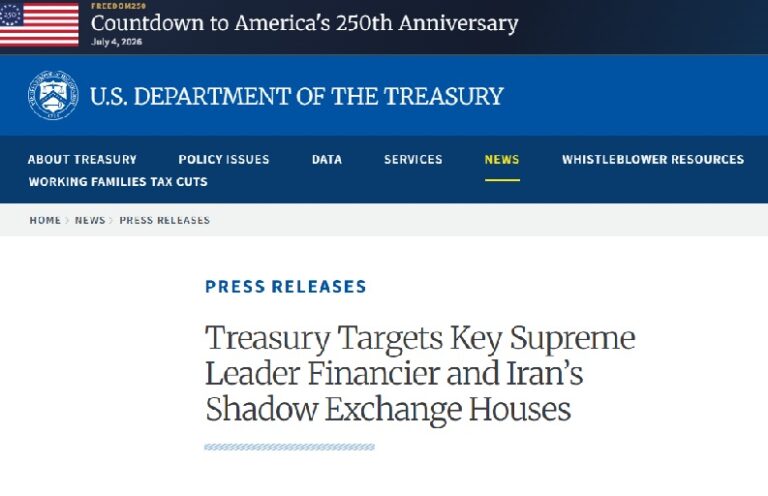
The U.S. Department of the Treasury sanctioned Ali Ansari, an individual linked to a network of exchange houses and affiliated companies.
In its latest action, the U.S. Department of the Treasury sanctioned a network of exchange houses and commercial companies affiliated with Mojtaba Khamenei, the new leader of Iran’s regime.
The U.S. Department of the Treasury announced that it has added eight individuals and six companies to its Specially Designated Nationals and Blocked Persons (SDN) sanctions list. Among those sanctioned is Ali Ansari, who was identified in the official announcement as being linked to Mojtaba Khamenei and the Islamic Revolutionary Guard Corps (IRGC).
Sanctioned individuals: Shokufeh Rostam Abadi, Ali Ansari, Mohammad Darbani, Ali Asghar Khandan, Mohsen Khandan, Ahmad Navai Lavasani, Amir Navai Lavasani, and Zahra Sarshari.
The sanctioned companies and exchange houses are registered in Iran, the United Arab Emirates, Hong Kong, and Saint Kitts and Nevis. They include Lavasani & Partners Exchange, Mohammad Darbani & Partners Exchange, Mohsen Khandan & Partners Exchange, and Smart Global Limited. The Treasury Department’s Office of Foreign Assets Control (OFAC) also issued General License Y to authorize the wind-down of transactions related to Smart Global.
Sharp Increase in Bread Prices in Iran
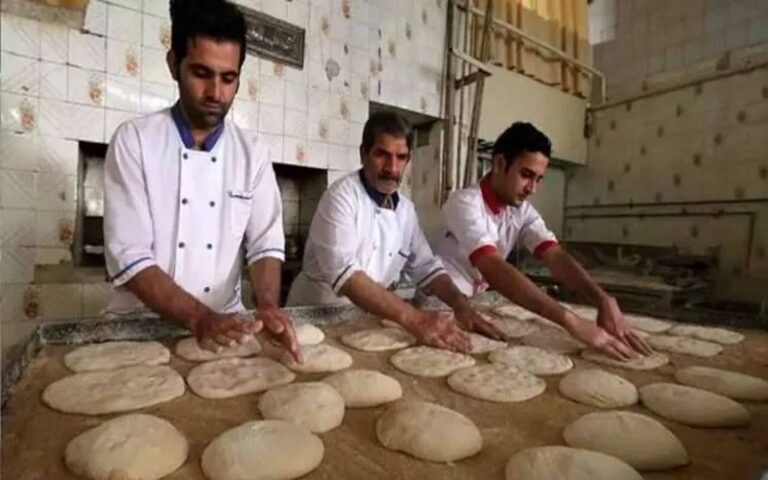
For years in Iran, it was commonly said that even if people could no longer afford meat, chicken, dairy products, or fruit, at least bread—the staple of the country’s food basket—would never disappear from their tables. Today, however, even that assumption is collapsing.
Official reports by the Statistical Center of Iran show that food inflation in recent years has forced households to sharply reduce their consumption of red meat, dairy products, fruit, and even rice. According to the data, consumption of these items has fallen by an average of about 50% in recent years, with bread becoming the primary substitute for meeting calorie needs. (State-run Donya-ye Eqtesad newspaper)
Bread Prices Rise Again in Tehran; Fresh Pressure on Household BudgetsYear-on-year inflation for bread and cereals reached approximately 81.8% in July 2025, according to the Statistical Center of Iran. Some reports have stated that bread prices in Tehran have increased by as much as 52%. Overall food inflation has, during certain periods, exceeded 100%, and even reached 110% to 134% in some months. These figures indicate that bread—once the cheapest source of calories—is now directly placing additional pressure on the poorest segments of society. In contrast, the Iranian regime attributes the price increases primarily to higher production costs, rising wages for bakery workers, and increased energy prices. Officials from the Plan and Budget Organization have also emphasized that the government can no longer afford to fully subsidize bread, as the financial burden of the program has risen significantly. However, many economists argue that shifting these costs onto consumers, at a time when household purchasing power has sharply declined, will only deepen the country’s cost-of-living crisis. Structural Causes and Social Consequences. Field reports from the first days following the implementation of the new prices indicate widespread confusion among bakeries and growing tensions between customers and sellers. Beyond being an economic issue, the situation has had a direct impact on social stability and people’s sense of economic security. The increase in bread prices cannot be examined separately from Iran’s broader economic and political conditions. Chronic inflation, the sharp depreciation of the rial, persistent budget deficits, and the allocation of resources to military and nuclear projects have significantly limited the government’s room for maneuver. Many economists warn that this trend is unsustainable and that food prices have nearly doubled in recent years.
U.S. Officials Call for Iran’s Regime to Publicly Declare an End to Attacks on Ships in Strait of Hormuz

Reuters reported that senior U.S. officials said on Friday, July 10, that Washington has asked Iran’s regime to formally and publicly commit to ending attacks on ships in the Strait of Hormuz and to ensure that all shipping lanes through the international waterway remain open to vessels without tolls or restrictions.
Speaking to a group of reporters during a conference call, the officials described the recent talks between the two sides as constructive.
Oil Tanker Attacked Near the Strait of HormuzOne U.S. official said: “What we’re demanding is that the Iranians issue a public statement that acknowledges all channels of the Strait of Hormuz are open and they’re not shooting at ships anymore. They’re either going to give us that statement or we’re not having a good outcome for them.” Another senior U.S. official said that Iran’s regime had informed Washington that the recent attacks on ships in the Strait of Hormuz were carried out by “an errant part of their system.” Another U.S. official also claimed that a power struggle is underway within Iran’s ruling establishment between hardline and pragmatic factions, and that these internal divisions have affected decision-making. The remarks came after attacks on three ships earlier this week prompted U.S. President Donald Trump to order military strikes against targets in Iran and declare that the ceasefire established between the two countries in June had come to an end. Reuters reported that Washington is now insisting on a public guarantee from Iran’s regime to ensure maritime security and preserve freedom of navigation through the Strait of Hormuz.
Water Shortages in Iran Have Become a Chronic Crisis, and Alarm Bells Are Ringing
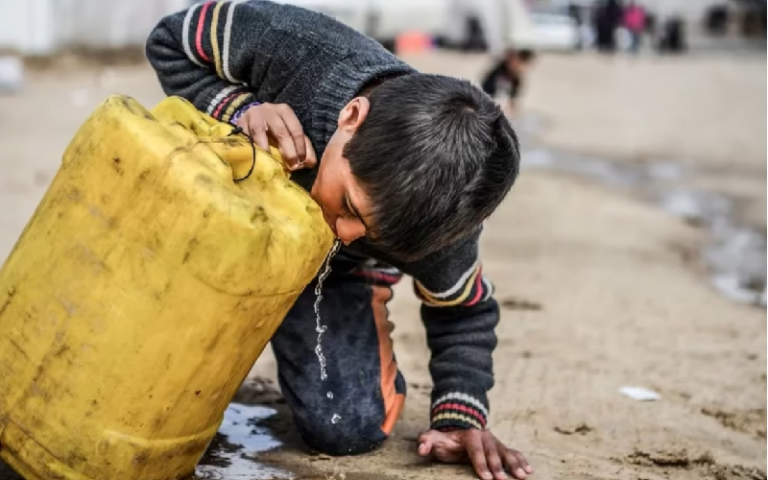
Statements by Iranian regime officials at the beginning of the summer indicate that water stress has spread across most of the country’s provinces, with the situation particularly alarming in Tehran.
Under these circumstances, experts say that short-term measures such as water conservation or water transfer projects may ease some of the current pressure, but they are insufficient on their own to address the full scale of the crisis.
Water stress in 58 cities across 23 provinces.
Hashem Amini, chairman of the National Water and Wastewater Engineering Company, said that 58 cities in 23 provinces are currently experiencing water resource stress. The water crisis has become so severe that even Iran’s mountainous provinces are experiencing water stress. For example, Lorestan Province, despite being one of Iran’s wettest provinces and the source of many rivers, is facing water shortages due to both natural and managerial factors. Rama Habibi, deputy director for protection and operations at the Tehran Regional Water Company, recently told the state-run ILNA news agency that population growth is the greatest challenge to Tehran’s water supply. He said, “Without securing sustainable water resources, no additional population should be added to the capital.” According to him, about 45% of Tehran’s water supply currently comes from groundwater and 55% from surface water.Tehran’s Subsidence and Drying Wetlands Reveal New Dimensions of Iran’s Water CrisisThe water crisis in Tehran is largely the result of uncontrolled urban development. The city’s ecological capacity has been ignored. Tehran has a large population, and water consumption is correspondingly high. While drought may have intensified the crisis, it is not the primary cause. Poor governance, excessive centralization, and development without regard for ecological limits are among the key factors that have led to the current situation. Water consumption patterns in Tehran differ significantly from those in the rest of the country. Agricultural water use in Tehran Province is well below the national average, while urban water consumption is considerably higher. Excessive reliance on groundwater has also made the region increasingly unsustainable and poses a major risk.
How much are the people to blame?
Iran’s regime has long urged citizens to conserve water, but household consumption accounts for only a small share of the country’s total water use. Fatemeh Mohajerani, spokesperson for the government of Iranian regime president Masoud Pezeshkian, recently said at a press conference regarding the government’s efforts to address the water crisis: “The government has implemented measures such as restrictions, including allocating water based on agricultural patterns, distributing water according to production models, and prioritizing drinking water. These are among the policies the government has pursued over the past two years.” However, she once again shifted the responsibility to the public, saying that “per capita water consumption should be reduced to 130 liters per person. At present, in some areas, per capita consumption exceeds 250 liters per person, which is approximately two to two and a half times the global standard.”The government’s flawed solutions to the crisis.
Alongside managing existing resources, the regime has also launched new projects. These include transferring water from the highlands of Tonekabon and operating the second Taleghan water transfer pipeline to increase the capital’s water resilience. The methods adopted to secure water supplies in recent years have consistently been temporary fixes. Iranian regime officials have failed to pursue logical and sustainable solutions, making governance a critical issue in addressing the crisis. Cloud seeding is another approach that can only have a limited effect under very specific conditions, when humidity is high and suitable cloud formations exist. It is therefore not considered a practical long-term solution.The continuing land subsidence crisis.
Iran’s water crisis is the worsening problem of land subsidence. The deputy director for protection and operations at the Tehran Regional Water Company told the state-run ILNA news agency that the highest rate of land subsidence has been recorded in the Varamin area. He added that more than 5,700 illegal wells have been sealed over the past two years, but this has failed to halt the subsidence. To stop land subsidence and prevent further depletion of groundwater resources, closing legal and illegal wells alone is not sufficient. Conditions must also be created to allow aquifers to recharge. In Tehran, construction, asphalt paving, concrete surfaces, highways, and urban expansion have all increased significantly. As a result, the ground has become increasingly impermeable, groundwater extraction exceeds natural recharge, and this imbalance has lowered groundwater levels, leading to land subsidence. Overall, the statements made by officials and experts indicate that Iran’s water crisis is no longer merely a temporary or seasonal challenge. It has become a structural and multidimensional problem tied to patterns of urban development, groundwater management, and climate change. Most importantly, the Iranian regime’s mismanagement has brought the country’s water crisis dangerously close to a point of no return.Continued Human Rights Violations In Iran: Security Forces Open Fire On People Celebrating Khamenei’s Death
As the Iranian regime staged the funeral of Ali Khamenei four months after his death, human rights media reported that regime security forces opened fire on crowds celebrating the death of the dictator.
The human rights organization Hengaw reported on Wednesday, July 8, that during street celebrations following the announcement of the death of the Iranian regime’s supreme leader, regime forces opened fire on people in several cities across Iran, killing several civilians.
Iran’s July 9 Student Uprising Mark 27th AnniversaryHengaw reported that it has identified two of those killed during that period. According to the report, Nahal Ghalandari from Khorramabad and Faezeh Afshari from Semirom in Isfahan Province were two women who were killed by direct gunfire from regime forces on February 28 and 29 during celebrations following the announcement of Khamenei’s death. At the same time, the legal advocacy group Dadban announced that 12 people arrested during the January protests in Isfahan have been sentenced to death in a case known as the “Alikhani Square” case. According to Dadban, the sentences were upheld by Iran’s Supreme Court on July 5, and the cases have been referred to the Enforcement of Judgments Branch of the Revolutionary Court in Isfahan for implementation. The case was opened after four members of the regime’s Basij paramilitary force were killed during the January 2026 protests in Alikhani Square. A total of 59 people were arrested in connection with the case. Twenty-three of those arrested, despite reportedly having no involvement in the incident, were sentenced to prison terms ranging from five to 10 years. All those sentenced to death in the case are under the age of 30. The Human Rights Center of Iran also reported on Wednesday that more than 14 days after the arrest of Saeed Hassani, a Baha’i resident of Shiraz, there is still no information about his whereabouts, physical condition, or circumstances of detention. Mr. Hassani was arrested on June 23 by security agents at his workplace in Shiraz, who reportedly used violence and beat him before transferring him to an undisclosed location. He had previously been arrested by the same security agency in 2016 and spent more than two months in detention. Meanwhile, Hengaw reported that as part of a new wave of arrests targeting citizens and activists, Mamosta Abubakr Yousefi and Younes Mousapour were arrested by agents of the Ministry of Intelligence on Sunday, July 5, and transferred to the agency’s detention center in Urmia. According to Hengaw’s sources, regime forces used severe physical violence and degrading treatment while arresting the two men. No information is available regarding the reasons for their arrest, the charges against them, or their health, and judicial authorities have refused to respond to inquiries from their families. HRANA, the news agency of the Human Rights Activists News Agency (HRANA), also reported that political prisoner Abbas Vahedian Shahroudi, who suffers from psoriasis, lung and gum infections, diabetes, high blood pressure, and high cholesterol, has been denied specialized medical care. Prison authorities have prevented his transfer to medical facilities outside the prison. Shahroudi, a writer and civil activist, is imprisoned in Vakilabad Prison in Mashhad. Mahmoud Taravat-Ravari, an attorney, announced in an Instagram post that the detention of three imprisoned lawyers—Elham Zeraatpisheh, Bahar Sahraeian, and Astareh Ansari—has continued for two months.
Iran’s July 9 Student Uprising Mark 27th Anniversary
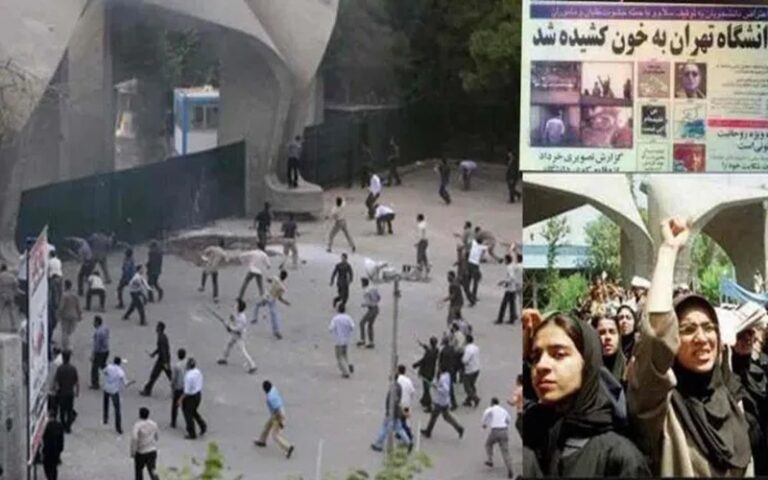
Twenty-seven years have passed since July 9, 1999, when the Iranian regime’s official security forces and paramilitary groups loyal to Ali Khamenei, the former supreme leader of the Iranian regime, attacked the Tehran University dormitories and violently crushed peaceful student protests.
In the early hours after midnight on July 9, 1999, a large number of students at the Amirabad student dormitory in Tehran held an anti-government demonstration and chanted slogans against the regime’s repression.
Shortly afterward, special anti-riot units surrounded the area and stormed the student dormitories using tear gas, batons, and firearms. They brutally beat and assaulted the students.
Now, on July 9, Ali Khamenei is being buried—the man whose decrees extinguished proved that the Iranian regime is not reformable. July 9, 1999, has repeatedly been described by journalists and student and civil activists as a turning point in the Iranian people’s struggle against dictatorship.
The brutality of Khamenei’s plainclothes agents reached the point that they threw protesting students from the upper floors of the Amirabad dormitory. This savage act resulted in the deaths and injuries of a number of students.
In the Iranian regime’s official narrative, the student protests over restrictions on press freedom, which began after the closure of the newspaper Salam in July 1999, are referred to as the “July 9 Sedition” and are blamed on the “enemy.” Ali Khamenei personally promoted this narrative in several speeches. In his first speech on July 12, 1999, he described the suppression of the students and the bloody assault on the Tehran University dormitories as “a very grave mistake and an improper act,” saying his heart had been “wounded.” However, elsewhere in the same speech, he told the students, “Be vigilant against the enemy and do not fail to identify strangers who infiltrate everywhere disguised as insiders. See the hidden hands.”
Many student activists, journalists, and witnesses to the events of July 9 and the ensuing crackdown have emphasized Khamenei’s direct role. Throughout his rule over Iran, critics and opponents repeatedly questioned him about his responsibility for the events, a question he never answered until his death. Instead, he consistently blamed the “enemy,” portraying July 9, like other protests during his authoritarian rule, as another foreign conspiracy.
Following the massacre of political prisoners in the summer of 1988, the Iranian regime succeeded in suppressing public protests for a period of time.
The suppression of the student uprising, following the rise of Mohammad Khatami to the presidency in June 1997, was an attempt by the ruling establishment to contain the country’s increasingly explosive social atmosphere.
With the passage of time, it has become clear that this was a futile attempt to portray a dictatorship under the banner of “reform” as a modern democracy.
During this period, whenever the regime could not tolerate dissenting views, it also continued the physical elimination of its opponents, culminating in what became known as the 1998 chain murders.
As usual, the Iranian regime refused to release the final number of those killed and injured. However, substantial evidence indicates that at least seven people were killed during the crackdown.
Ezzatollah Ebrahimnejad, Fereshteh Alizadeh, and Saeed Zeinali are among those whose deaths or fatal disappearances have been documented.
The uprising spread to 17 cities across Iran. In Tabriz, one student was killed, dozens were injured, and hundreds of other students were arrested.
In the following days, the demonstrations reached a new peak as hundreds of thousands of young people and Tehran residents joined the protests.
The role of the current speaker of Iran’s parliament and the official overseeing negotiations with the United States in suppressing the opposition.
One of the most notorious figures identified for his role in suppressing the student uprising is Mohammad Bagher Ghalibaf, the current speaker of the Iranian regime’s parliament.
At the time, as commander of the Islamic Revolutionary Guard Corps (IRGC) Air Force, he played a key role in suppressing the students and attacking the Tehran University dormitories.
He himself said: “I was the commander of the IRGC Air Force. There are photos of me on a 1000cc motorcycle carrying a stick, alongside Hossein Khaleghi. I stood in the streets to clear the streets. Wherever it is necessary for us to come into the streets and use clubs, we are among those who wield the clubs. And we are proud of it.”
This uprising demonstrated that all factions within the ruling religious dictatorship are fundamentally the same. There are no genuine reformists or moderates among the ruling factions. Nevertheless, after Mohammad Khatami came to power and was portrayed as a reformist figure, Western countries expanded their political and commercial relations with the Iranian regime.
The result of this engagement with the Iranian regime was the repression and deaths of hundreds of people in Iran.
U.S. Military Attacks More Than 90 Targets in Iran
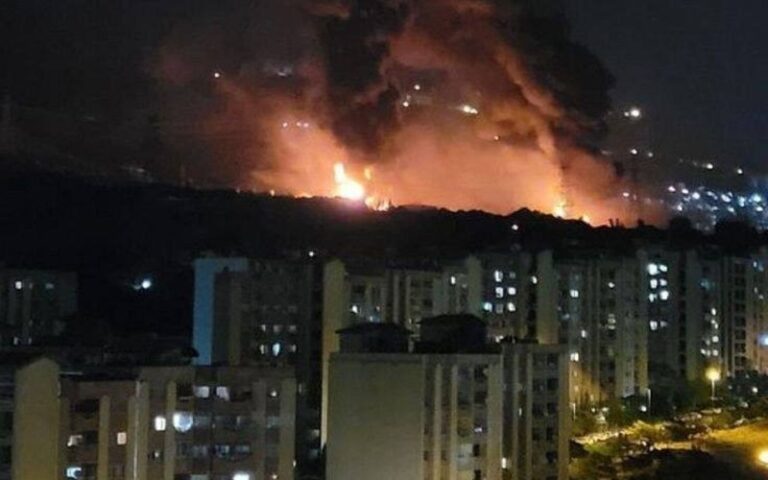
The United States Central Command (CENTCOM) said in a statement that on Wednesday evening, U.S. forces struck about 90 military targets belonging to the Iranian regime.
According to the CENTCOM statement, the targets included air defense systems, coastal surveillance equipment, missile and drone storage sites, naval capabilities, and military logistics infrastructure along Iran’s coastline.
— U.S. Central Command (@CENTCOM) July 9, 2026CENTCOM added that the latest strikes followed the successful execution of offensive operations against the Iranian regime on Tuesday evening.
US and Iranian Regime Exchange Escalating Military StrikesIn those strikes, CENTCOM forces also targeted about 80 military objectives belonging to the Iranian regime, including more than 60 small boats operated by the Islamic Revolutionary Guard Corps (IRGC). According to CENTCOM, the attacks were intended to impose heavy costs on the Iranian regime for violating the ceasefire by attacking three commercial vessels transiting the Strait of Hormuz. CENTCOM emphasized that the latest strikes further degraded the Iranian regime’s ability to attack commercial vessels and innocent civilian mariners in the Strait of Hormuz. It added that U.S. forces remain vigilant, possess overwhelming combat capability, and are prepared to carry out any operations ordered by the Commander-in-Chief. At the same time, military and political authorities in Kuwait and Bahrain announced early Thursday, July 9, that they had intercepted missile and drone attacks, saying the two countries’ air defense systems had repelled the assaults. Shortly before that, the IRGC claimed it had attacked two U.S. bases in Kuwait and two U.S. bases in Bahrain. According to the IRGC statement, forces of the Iranian regime attacked the U.S. bases at Camp Arifjan and Ali Al Salem in Kuwait, as well as Juffair and Sheikh Isa in Bahrain. The IRGC said in a statement that the attacks were carried out in response to strikes on various locations across the country and threatened that if the United States continued its attacks against the Iranian regime, it would also target other U.S. bases in the region. Shipping data show that following the Iranian regime’s latest attacks on vessels and the second consecutive day of U.S. strikes against military targets in southern Iran, maritime traffic through the Strait of Hormuz has nearly come to a halt. U.S. President Donald Trump, during a meeting with the President of Ukraine on Wednesday, July 8, on the sidelines of the NATO summit in Ankara, expressed anger over what he described as the Iranian regime officials’ failure to honor their commitments and said he believed any agreement with the Iranian regime would not be durable.
Amnesty International Challenges Silence Over the Iranian Regime’s Crimes
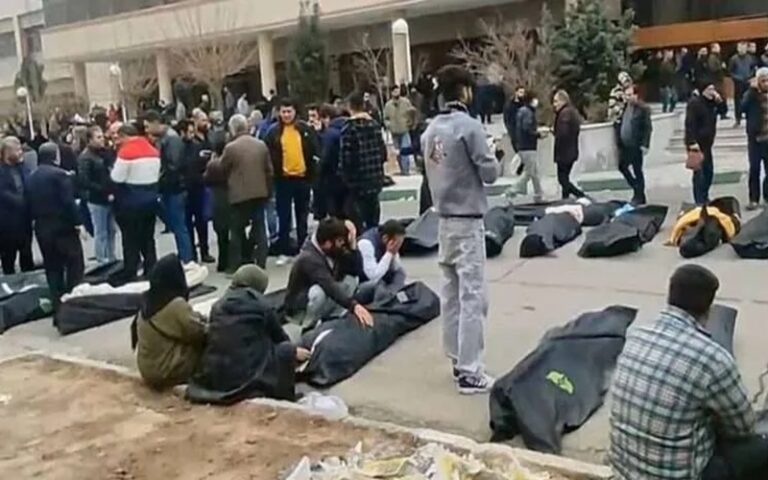
The bloody crackdown on the January protests in Iran remains unaddressed, and Amnesty International has warned that the continued impunity enjoyed by those responsible is paving the way for further crimes and even broader repression in Iran.
Six months after the bloody suppression of the nationwide January 2026 protests in Iran, Amnesty International said in a statement that, given the complete lack of prospects for justice inside Iran, pursuing accountability for the victims through international criminal justice mechanisms must be treated as an urgent and non-negotiable priority.
Diana Eltahawy, Amnesty International’s Deputy Regional Director for the Middle East and North Africa, said in the statement released on Wednesday, July 8, that six months after thousands of women, men, and children were killed by Iranian security forces in just two days, the international community’s failure to take meaningful steps toward justice is indefensible.
Iran’s ‘No To Executions Tuesdays’ campaign Enters Its 128th WeekShe warned that continued inaction would perpetuate the cycle of deadly repression, in which victims’ families are denied justice while perpetrators, protected by impunity, become emboldened to commit further crimes.
Warning Against Ignoring Human Rights
Amnesty International also urged governments not to use diplomatic negotiations and engagement between the United States and Iran as a pretext for ignoring Iran’s human rights crisis. According to the organization, officials of the Iranian regime have paid no price for their widespread and unlawful use of lethal force against protesters, and this impunity has increased the risk of further bloody crackdowns. Amnesty International reiterated that because perpetrators of human rights violations in Iran enjoy structural impunity, the only path to justice is through international mechanisms. The organization called on United Nations member states to prioritize Iran’s human rights crisis, support the establishment of an independent international mechanism to investigate these crimes, and urge the UN Security Council to refer Iran’s case to the International Criminal Court. The organization also recalled that Amnesty International’s Secretary General warned last month that any agreement resulting only in a temporary halt to hostilities while ignoring human rights could become a cover for continued impunity and repression. According to Amnesty International’s statement, the so-called Islamabad Memorandum of Understanding between Iran’s regime and the United States can only lay the foundation for lasting peace if it places the protection of human rights, accountability for violations of international law, reparations for victims, and guarantees of non-repetition at its core. The nationwide protests began on December 28, 2025, following the collapse of the rial’s value, rising inflation, a worsening cost-of-living crisis, and widespread dissatisfaction with the government’s performance. They quickly spread to cities across the country. In addition to economic demands, protesters called for freedom, human dignity, democracy, and an end to the rule of the Iranian regime. According to Amnesty International, Iran’s regime used lethal force on an unprecedented scale to suppress the protests while simultaneously imposing widespread internet shutdowns, creating an environment of complete impunity for those responsible. Iran’s regime Supreme National Security Council has put the death toll from the protests at 3,117. However, Mai Sato, the United Nations Special Rapporteur on the situation of human rights in Iran, previously stated that the number of those killed had exceeded 5,000. Amnesty International also said that after the protests ended, the Iranian regime sought to silence all dissent through mass arrests, enforced disappearances, bans on public gatherings, pressure on victims’ families, and death sentences against protesters and political opponents. The organization added that following U.S. and Israeli strikes on Iran on February 28, 2026, the crackdown on dissidents intensified under the pretext of “wartime conditions.” At least 44 people have been executed in politically motivated cases, while many others remain at risk of execution. Mai Sato, the United Nations Special Rapporteur on the situation of human rights in Iran, also warned on July 1 that the human rights situation in Iran had already been critical even before the war, and that any final agreement failing to address this issue would risk a return to previous conditions—or an even worse deterioration.Iranian Regime’s Iraqi Proxy Groups in the Trap of Arrest and the Law
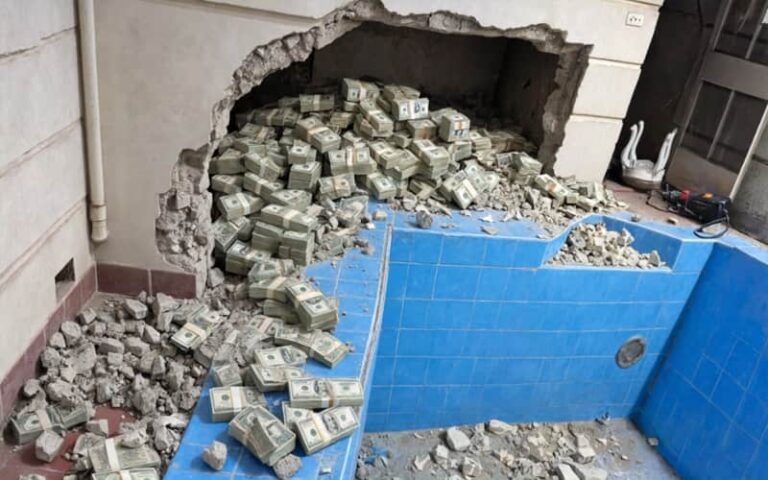
Following the arrest of one of the Iranian regime’s proxy operatives in Iraq, who had also been sanctioned by the United States, a large amount of cash was discovered and confiscated from his house. He was involved in money laundering and facilitating the smuggling of the Iranian regime’s sanctioned oil.
Proxy groups were one of the lines and bastions that the Iranian regime had created over the past decades to protect itself. Former regime supreme leader Ali Khamenei, through Qasem Soleimani, created, armed, and supplied proxy group allies in various countries over several decades.
Iraq Sets September 30 as Deadline for Disarmament of Iranian Regime-Backed Militia GroupsKhamenei, whose corpse-carrying carnival is being witnessed in Iranian cities these days, had repeatedly and openly declared that if the regime does not set its defenses in countries like Syria, Iraq, Yemen, Palestine, and Lebanon, it would have to fight the enemy in the streets of Iranian cities. This slogan might have been useful for the Iranian regime until before 2017, but when the first widespread protests swept the streets of Iran and the Iranian people chanted “Our enemy is right here, they lie that it’s America,” it turned into a useless tool. It took a few years for the ineffectiveness of this strategy and tactic to prove itself more prominently. The internal protests of 2019 and 2022 were part of this process. But the turning point began after Hamas’s attack on Israel on October 7, 2023. The People’s Mojahedin Organization of Iran, the Iranian Resistance Movement, which seeks regime change in Iran, had been declaring to the international community for decades that “the head of the snake is in Tehran,” but the West, which was in a sweet sleep and a mirage of finding moderates and moderation in Iran, closed its eyes to this reality. Until the danger did not just reach their ears, but a heavy blow struck their heads.
The Iranian Regime’s Proxy Groups, the Body and Tail of the Snake
This meant that the proxy groups involved in terrorism in Middle Eastern countries were the body and tail of the snake. However, the West, pursuing a policy of appeasement, did not have much interest or function to confront these proxy groups. But when the surprise blow was delivered to one of the West’s allies, after a while, the main issue, namely “the head of the snake is in Tehran,” inevitably came to the West’s table. Following the October 7 attack, the Iranian regime’s proxy groups received crushing blows one after another. Some like Assad regime in Syria were destroyed, and some like Hamas and Hezbollah received backbreaking blows. The Yemeni Houthis also received effective blows in the meantime. However, Iraq and the Iranian regime’s proxy groups in this country were on the sidelines of the attacks and blows in this process, just as the Pakistani Zainabiyoun and the Afghan Fatemiyoun were on the sidelines. It can be said that currently, the focus of the West and regional governments is on two countries and the Iranian regime’s proxy groups in them: Hezbollah in Lebanon, and the Popular Mobilization Forces (Hashd al-Shaabi) and other Iranian regime proxy groups in Iraq. Following the October 7 attack, the Iranian regime’s funding, arming, and manning of its proxy groups in regional countries continued. When the West somewhat blocked the Iranian regime’s overt and cover paths for financing proxy groups, the tactic changed. Gold replaced cash. The examples discovered at Beirut Airport bear witness to this. Now, new news is arriving from Iraq. After Nouri al-Maliki, the Iranian regime’s operative for the premiership of Iraq, was sidelined due to U.S. opposition, Ali Faleh al-Zaidi took the prime ministerial seat.Confronting the Iranian Regime’s Operatives and Terror Financiers
Under U.S. pressure, the confrontation against the Iranian regime’s Iraqi proxy groups—which were being attacked during the recent two wars, as well as before and after them—came under pressure. The pressures were of various types: military attacks, disarmament efforts, arrests, preventing the financing of terrorism, sanctions, etc. On Sunday, June 28, 2026, media reported that the Iraqi Deputy Minister of Oil, Ali Maaraj al-Bahadli, was arrested at his home in the upscale Zayouna neighborhood of Baghdad. The charge at that time was not completely clear. However, it had previously been rumored that Maaraj was accused of helping the Iranian regime’s proxy groups in Iraq that were engaged in oil smuggling. Asharq Al-Awsat reported on July 1, 2026, that the Supreme Judicial Council of Iraq announced that in the first stage, 11 million U.S. dollars and 4 billion Iraqi dinars (an amount exceeding 3 million U.S. dollars) were confiscated from Ali Maaraj al-Bahadli. Images published after his arrest indicated that bags of cash hidden inside the walls of his home were pulled out and confiscated by security forces. The council also stated that while this amount of money and several properties belonging to Maaraj al-Bahadli have been seized and confiscated, the investigation is in its early stages and will continue. After the fall of the former Iraqi regime, Maaraj al-Bahadli entered an important sector of the Iraqi oil industry with the help of the Iranian regime, becoming the CEO and Chairman of the Board of Directors of the Missan Oil Company. His activities were not limited only to the oil industry. He was an individual who, while climbing the steps of his career ladder, also climbed the political ladder with the help of the Iranian regime.From Climbing Step-by-Step to Free Fall
From 2014, with the support of the “State of Law” coalition, the Iranian regime-backed coalition led by al-Maliki, Maaraj al-Bahadli entered the Iraqi Parliament and reached the position of head of the parliament’s important Oil and Energy Committee. A position that opened his way for financing through the oil industry and for the future plans of the mullahs in Tehran. He then colluded with another prime minister supported by the Iranian regime, Mohammed Shia’ al-Sudani, and played an important role in building Sudani’s “Construction and Development” coalition. Part of this role included the financing that had accrued to him through the oil industry and its smuggling. With the support of the Iranian regime and his reciprocal assistance to the Iranian regime-backed proxy groups, Maaraj al-Bahadli climbed the ladder of progress up to the threshold of being nominated for the Iraqi Ministry of Oil. But just as a ladder has steps of progress, it may also have steps of descent or fall, at a time when Maaraj al-Bahadli was spending the oil money of his own country, Iraq, on the desires and goals of the Iranian regime. His fall began when the U.S. Treasury, in May 2026, sanctioned and listed Ali Maaraj al-Bahadli under Executive Order 13902. Al-Bahadli was accused by the United States of being involved in forging certificates of origin for exported oil, blending Iraqi oil with the Iranian regime’s oil and exporting it under the name of Iraqi oil, and assisting in smuggling and facilitating the export of the Iranian regime’s sanctioned oil. Among other charges brought against Maaraj al-Bahadli is the financial support of certain Iranian regime proxy groups such as “Asa’ib Ahl al-Haq” and individuals supported by the Iranian regime such as “Salim Ahmad Said.”Khamenei’s Wandering Corpse, the Hidden Son, and the Fate of Proxy Groups
The arrest of Ali Maaraj al-Bahadli, following the detention of another deputy minister of oil of Iraq, Adnan al-Jumaili—who is also recognized as one of the Iranian regime’s proxy operatives—indicates that confronting the Iranian regime’s Iraqi proxy groups is the capture of another bastion among those bastions that Khamenei saw as a dam blocking his imaginary enemies from reaching Tehran. But now, Khamenei’s son Mojtaba, who has been appointed as the new supreme leader, out of fear of their real internal enemies, namely the people of Iran, does not even dare to appear over his dam-less, 4-month-old, graveless father’s corpse. While fear and panic have cast their shadow over the leaders of the Iranian regime in Tehran, and no water is warmed for them from the bastion of their proxy groups, Ali Faleh al-Zaidi, the Prime Minister of Iraq, in another move following the arrest of Ali Maaraj al-Bahadli, drove a nail into the coffin of the Iranian regime. On July 4, 2026, he announced that his government has designated a significant reward for individuals who identify persons involved in corruption through the acquisition of public property via illegal methods. The experience of more than the past two decades in Iraq has proven that just like in Iran, wherever there has been talk of corruption and embezzlement, the Iranian regime’s proxy groups or its operatives have always been at the front of the line. Now, however, when the issue of confronting corruption and disarming proxy groups in Iraq has intensified, they are trying to project themselves at the back of the line! But this is a futile effort.Ultimately, Khamenei the father and his proxy groups
Just as Khamenei the father—whom these groups could not fight for and protect in the streets of neighboring countries, and who was killed in the heart of Tehran—now these groups are also being brought to trial in the heart of their own countries. This is a war that is moving forward in parallel: in Iran between the people of Iran and the Iranian regime, and for the people of regional countries with the proxy groups spawned by the Iranian regime. History has always shown whom victory belongs to.U.S. Treasury Revokes License Allowing Iranian Regime Oil and Petrochemical Sales
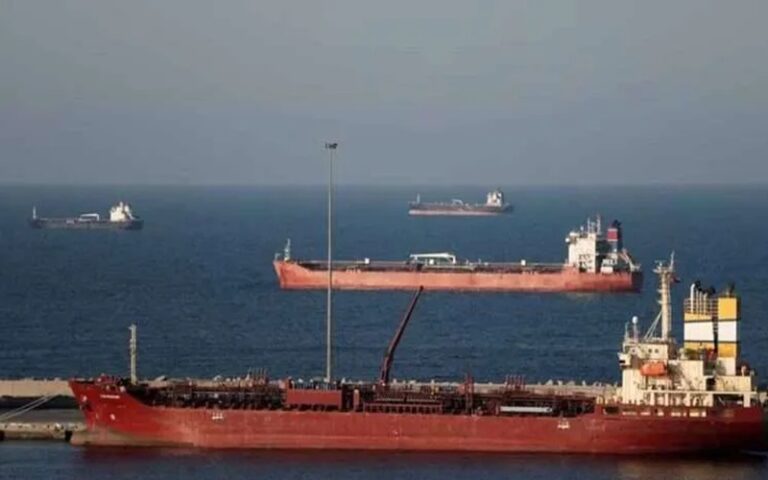
The U.S. Department of the Treasury announced on Tuesday, July 7, that it had revoked the general license covering the sale of the Iranian regime’s crude oil, petroleum products, and petrochemical products. The decision followed recent attacks on several oil tankers in the Strait of Hormuz, attacks that Washington has attributed to the Iranian regime and warned would have consequences.
Reuters and Agence France-Presse (AFP), citing a U.S. official, reported that the U.S. government had revoked the license that had allowed the Iranian regime to sell oil. The official stressed that the regime’s actions in the Strait of Hormuz were “completely unacceptable” and would face serious consequences.
Iranian Regime Moves to Resume Oil Sales to JapanThe move comes as the United Kingdom Maritime Trade Operations (UKMTO) organization has reported that three oil tankers were attacked in the waters of the Strait of Hormuz and surrounding areas in recent days. U.S. officials have said that preliminary findings indicate the Iranian regime was involved in the attacks, although no group has claimed responsibility and the Iranian regime has not responded to the allegations. According to the reports, on July 6, two oil tankers—one carrying Saudi Arabian crude oil and the other transporting Qatari liquefied natural gas (LNG)—were attacked. One day later, a third tanker in the same area was struck by a projectile, incidents that have once again challenged the security of one of the world’s most important energy transit routes. Despite these tensions, the U.S. official emphasized that Washington continues to keep the diplomatic path open and that American negotiators are working in good faith to reach a final agreement with the Iranian regime. However, the official warned that the recent attacks could undermine the fragile understanding between the two sides and place the negotiations at serious risk. The revocation comes as easing restrictions on oil exports had been one of the most significant economic incentives in negotiations between the United States and the Iranian regime. With the U.S. Treasury’s latest decision, economic pressure on the Iranian regime has once again increased. Oil exports remain the Iranian regime’s most important source of foreign currency revenue. Despite U.S. sanctions, the regime has continued to export much of its oil in recent years, particularly to China. According to observers, revoking the license for oil and petrochemical sales could place additional pressure on the regime’s financial resources and further limit its ability to finance domestic expenditures and regional activities.
