Annual 500,000 Abortions in Iran

Mohsen Zakerian, the head of the Nafas Foundation, has announced the latest statistics on abortion in Iran, stating that there are 500,000 cases per year. He also mentioned that 90 to 93 percent of these abortions are performed by married couples in official and permanent marriages. Analysts attribute the main cause of this to the country’s economic conditions and severe inflation. According to the semiofficial ILNA news agency, Zakerian emphasized in a meeting of the Markazi Province Administrative Council that based on the available statistics nationwide, approximately 1,000 abortions are performed daily. The reasons cited by Zakerian for abortion include economic, cultural, legal, psychological, social, and religious issues. This level of abortion is taking place in the country while all responsible authorities in this field, including the Ministry of Health, have been instructed by the Supreme Leader of the Iranian regime, Ali Khamenei, to prioritize population growth. Based on this, the Ministry of Health announced the launch of the ” Abortion Patrol” in April of this year. In Iran, with the adoption of the law known as the “Support for Family and Youth Population,” numerous obstacles have been created for doctors and medical centers regarding abortion, and security and judicial measures, including the sealing of clinics or revocation of medical licenses, have been taken in this regard. Nevertheless, according to this government official, an estimated 500,000 abortions occur annually, a phenomenon that should be traced back to economic issues and the lack of a clear vision of the country’s economic and political future. Statistics show that in 2008, the unemployment rate exceeded 35 percent and the inflation rate was 25.4 percent. By autumn 2023, these figures had reached a 45 percent inflation rate and an unemployment rate exceeding 52 percent.

Kurdish Political Prisoner Farhad Salimi Executed in Iran

Simultaneously with the widespread civil efforts to stop the execution of Mohammad Ghobadlou, one of the detainees of last year’s nationwide protests in Iran, which was ultimately carried out today, Tuesday, January 23, news sources have reported the execution of Farhad Salimi, a Kurdish political prisoner. According to a report by Hengaw on Tuesday, January 23, the execution order of Farhad Salimi, a Kurdish prisoner from the city of Saqqez in Kurdistan province, was implemented in Karaj’s Ghezel Hesar prison. Farhad Salimi was on a hunger strike for three weeks before his execution. Farhad’s family waited for two days to have their final visit with him, but the regime’s authorities did not allow them to meet him. Earlier, an international human rights organization had issued a warning that Farhad Salimi, a prisoner, was at risk of execution. On Sunday, January 21, he was transferred to solitary confinement in Ghezel Hesar prison in Alborz province and was in “imminent danger of execution.” Concerns about the execution of Salim had increased in recent days following the executions of Qasem Abesteh, Ayoub Karimi, and Davood Abdollahi, three other Kurdish prisoners who were executed in separate cases over the past three months. Amnesty International emphasized in a statement on January 22 that the trials of these prisoners have been severely unfair and accompanied by torture and other ill-treatment. Farhad Salimi and six other defendants in this case were sentenced to death by Branch 28 of the Tehran Revolutionary Court, presided over by Judge Mohammad Moghiseh, in March 2016. Anwar Khodari, Kamran Sheikhi, Farhad Salimi, Qasem Abesteh, Khosrow Besharat, Ayoub Karimi, and Davood Abdollahi were seven defendants who were collectively sentenced to death, and until today, three of them have been executed. Amnesty International states that the authorities of the Iranian regime use the death penalty as a tool to suppress protesters, opponents, and minorities, while simultaneously restricting the access of ethnic and religious minorities to education, employment, and political positions.

Iran: Political Prisoner Mohammad Ghobadlou Executed in Ghezel Hesar Prison

On the morning of Tuesday, January 23, the official media outlet of the Iranian regime’s judiciary announced the execution of Mohammad Ghobadlou, a 23-year-old political prisoner and participant in the nationwide protests of 2022. Despite protests from his defense lawyers and human rights activists, the execution was carried out. According to the Mizan News Agency, the criminal court’s verdict of capital punishment against Mohammad Ghobadlou for the killing of a State Security officer was confirmed by the Supreme Court of the country and subsequently executed. The execution took place despite objections from Amir Raeisian, Ghobadlou’s defense lawyer, who deemed it “unlawful.” Amir Raeisian had emphasized that Mohammad Ghobadlou was entitled to a fair retrial at this stage, and therefore, the execution of the death sentence “has no legal authorization and is undoubtedly considered murder.” The regime’s judiciary had informed Ghobadlou’s lawyer just one day before the execution that the verdict had been referred to the enforcement department and was scheduled to be carried out on Tuesday. On Monday, January 22, Mrs. Maryam Rajavi, the President-elect of the National Council of Resistance of Iran, issued a message on X network: I earnestly urge all my fellow citizens, especially the youth in Tehran and Alborz, to protest against the unjust verdict condemning imprisoned protester, #MohammadGhobadlou, and Sunni political prisoner Farhad Salimi to execution. Both have been transferred to solitary cells, placing them at imminent risk of execution. Mohammad Ghobadlou faced accusations of fatally striking a police officer with his car during the 2022 protests in Iran. Despite his consistent denial and the presentation of evidence supporting his innocence, he was implicated in the incident. Following the news of a potential execution for Mohammad Ghobadlou, his family and numerous concerned citizens gathered in front of Ghezel Hesar prison on Monday night. Their hope was to at least delay the execution, which typically occurs with the morning call to prayer just before sunrise. Shortly after sunrise, Mizan News, the regime’s Judiciary outlet, announced the execution of Ghobadlou. A brief video clip circulated on X, depicting Ghobadlou’s mother at the prison gate, passionately shouting at the guards, expressing, “You have taken the life of my beloved Mohammad, who had taken to the streets on behalf of all the young people.”

The Fall of Iran’s Middle Class and the Rise of Rent-Seeking Mafia

One of the indicators of the growth and development of any country is the expansion and prosperity of the middle class. The existence of a thriving middle class in any society is a key driver of economic growth and development. Governments that have properly protected and supported the middle class have been able to guide the country’s economy on the path of growth and development. The spread of poverty, lack of development, and destruction of Iran’s middle class are pushing society towards polarization. There is a prosperous class that emerges through government control and utilizes the wealth that belongs to the general public, while the second class is impoverished. The Iranian regime is rapidly exploiting natural resources such as oil, gas, water, and land in the country. The middle class, which has emerged through national growth and development, is being pulled towards a decline in wealth, power, and income due to the regime’s policies that stunt national production. As a result, the middle class is gradually merging with the lower classes, polarizing the society between a wealthy class of elites who benefit from the government’s resources and a growing impoverished class.

Rapid Decline of the Middle Class

International economic institutions’ assessments indicate that individuals belonging to the middle class are those who spend at least $12 per day (based on purchasing power parity in 2017). These individuals can be found even in developing regions such as Asia and Africa, enjoying independent homes, sufficient income, adequate health standards, the ability to afford education for their children, stable employment, and a fair amount of leisure. According to published statistics, Iran’s middle class, which once constituted 60% of the population in the 2000s, has gradually declined until the 2010s. In recent years, the intensity of this decline has accelerated. “The middle class in Iran is shrinking each year, joining the ranks of the lower class. The current number of the economic middle class in Iran is approximately 23 million people, constituting only around 29.4% of the country’s population. However, these official figures may the actual size of the middle class,” according to a report by Arman daily on October 24, 2023.

The Steep Fall of the Middle Class

The economic crisis and extremely high inflation rates (reportedly around 70%) have driven the middle class towards impoverishment at an accelerated pace. This poses a serious threat to the Iranian regime. “The deepening poverty and decline of the middle class, representing the largest segment of society, can jeopardize the stability of the political system,” according to a May 31, 2023, report by the state-run Ettelaat newspaper. On November 11, 2023, Arman daily quoted sociologist Taqi Azad Armaki as saying, “The current situation is such that we have the upper class and the lower class, and the middle class has once again returned to the lower stratum. In these circumstances, we witness the importance of the wealthy and the rulers. Large industries belong to the government (state capitalism) and they run major economic sectors, such as the automotive and petrochemical industries, the higher education system, the healthcare system, and other industries.” Iran ranks among the most corrupt countries according to the Transparency International Corruption Perceptions Index. In 2017, Iran ranked 130th in terms of government corruption, but by 2020, it had dropped to 149th place. In the following years, the depth and institutionalization of this corruption became so prominent that Mahmoud Jamsaz, a government-linked economist, stated, “The main issue in Iran’s economy today is not the exchange rate, but rather the rent-seeking and corruption that has been created through it, shaping a speculative economy” according to the Etemad newspaper posted on January 27, 2021. Today, rent seekers and corrupt government elements have seized even more domains. The state-run Islamic Republican (Jomhuri-ye Eslami) newspaper wrote on December 11, 2023, “Iran is not governed by a government and ruling system; it is governed by a mafia. The mafia is stronger than the governments and officials. When the mafia takes control of a country, corruption and bribery, authoritarianism, economic exploitation, infiltration into institutions, violence and intimidation, undermining democratic processes, nepotism, and more become evident. The Islamic Republic possesses all these characteristics.” With a brief look at this situation, it can be inferred that in the not-so-distant future, the middle class will disappear. However, the people of Iran seize every opportunity to express their protests and grievances.    

5 IRGC Members Killed In Syria Strike

0
On January 20, Reuters news agency reported that in an attack on a building in Damascus, four members of the Islamic Revolutionary Guard Corps (IRGC), including the head of IRGC Quds Force intelligence unit, were killed. In this regard, the public relations department of the IRGC also announced in a statement the killing of “four military advisers of the Islamic Republic” in today’s attack on Damascus. The Telegram channel Saberin News, affiliated with the IRGC in Iran, reported the killing of Sadegh Omidzadeh, the deputy intelligence officer of the Quds Force of the IRGC, along with four other IRGC members named Ali Aghazadeh, Hossein Mohammadi, Saeed Karimi and Mohammad Amin Samadi. An official of an Iran-backed group in the Middle East also told the Associated Press that this building was used by IRGC officials and added that “Israeli missiles” completely destroyed the building. Prior to this, Reuters had reported, citing sources in the Regional Coalition Supporting Syria, that a senior official of the IRGC was killed in an airstrike today on a building in Damascus, which Syrian media attributed to Israel.
5 IRGC Members Killed In Syria Strike
5 IRGC Members Killed in Syria Strike.
This source said that this multi-story building was used by Iranian advisers supporting the Syrian government and was completely demolished. A video published in the media shows a large plume of smoke rising in the “Al-Mazzeh” neighborhood. Syrian state media referred to this attack as an “Israeli aggression.” Earlier, on January 8, six informed sources told Reuters that Israel had launched an unprecedented wave of deadly attacks in Syria, targeting trucks, infrastructure, and individuals involved in the transfer of Iranian regime weapons to its proxy forces in the region. These sources, including a Syrian army intelligence officer and a commander of the regional coalition supporting Damascus, said that Israel had changed its strategy after the October 7 attacks by Hamas. According to these sources, although Israel has been attacking targets related to the Iranian regime in Syria for years, it is now carrying out more deadly and frequent airstrikes on air defense systems and arms transfers in Syria. Nasser Kanaani, the spokesperson for the Iranian Ministry of Foreign Affairs, reacted to the killing of four Quds Force in Damascus due to airstrikes. He attributed these attacks to Israel and called them a “repeated violation of the sovereignty and territorial integrity of Syria and an escalation of aggressive and provocative attacks on various targets” in the country. The Iranian regime has launched attacks on Iraq, Syria, and Pakistan in the past week. Kanaani also threatened that Iran considers its “reciprocal right to respond to organized terrorism” by Israel “reserved for itself at the appropriate time and place.”

Sharp Increase in Suicide Rate in Iran’s Medical Community

0
The repercussions of professional and economic issues within the medical community in Iran continue to persist. Following extensive emigration within this profession, the suicide rate in the medical community has now increased fivefold, resulting in at least 13 suicides leading to death among the resident population in Iran annually. According to the regime’s Khabaronline website, quoting Nima Shahriarpoor, an emergency medicine specialist at Baharloo Hospital, “The high volume of work, numerous responsibilities, low salary, and lack of job security are factors that discourage a resident from continuing their activities and make them feel disheartened.” According to Shahriarpoor, suicides among residents have now become more of a “crisis,” and on average, 13 suicides leading to death occur annually among the 14,000-resident population in the country. Referring to a study conducted by the Medical Association of the University of Tehran, this emergency medicine specialist stated that, according to this study, in a community of 204 residents, more than 93 percent of them, or 188 individuals, experienced “burnout” or occupational fatigue and entertained thoughts of suicide. The economic and social conditions of the healthcare workforce in Iran are such that according to the statistics of the “Migration Observatory,” 74 percent of doctors and nurses had the intention to migrate from the country until the summer of 2022. In this regard, statistics indicate that 4,000 physicians have migrated from Iran in the past year. The migration wave of healthcare professionals in Iran has also attracted the attention of international organizations. According to the latest report of the World Health Organization, despite having 8,000 Iranian surgeons in the United States, Iran ranks seventh in terms of physicians with different nationalities as a destination. Critics believe that instead of addressing the professional and economic issues within the healthcare workforce to reduce suicide rates and emigration, the government is taking provocative actions. According to many activists in this field, it seems that the government deliberately seeks to provoke the current healthcare workforce and empty universities of those interested in this field. Critics refer to a new directive issued by the government, according to which the Ministry of Health, on January 14, conditioned the continuation of education on the provision of a deposit to prevent the emigration of residents. Consequently, some individuals were prevented from pursuing their education due to the lack of a deposit. This means that the regime is effectively taking the medical workers as hostages and forcing them to pledge to work under harsh conditions for a long time. Based on this, the media reported that the candidates accepted in the nationwide examination of 2023 are required to deposit property-based bonds. This is happening while on January 15, Ali Jafarian, the former president of Tehran University of Medical Sciences, announced in an interview the continued trend of the migration wave of medical and healthcare professionals from Iran to other countries and stated that one of the consequences of this trend was the vacancy of “800 positions” in this year’s residency examination. Low income, high expenses and inflation, existing social inequalities, the need for professional advancement, lack or shortage of welfare facilities, lack of job security and safety and various social and political restrictions are among the motivating factors for physicians to consider suicide and emigration.

Grossi: Iran Holding IAEA “Hostage” on Nuclear Program

0
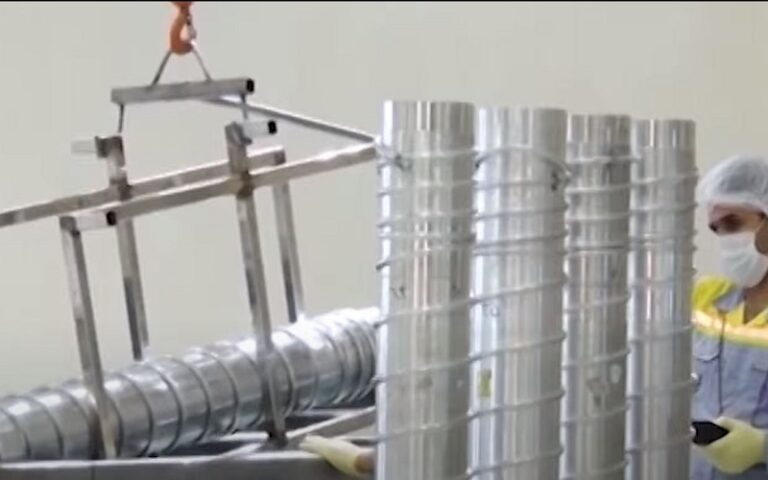
During the World Economic Forum in Davos, an alarming disclosure was made by Rafael Grossi, the Director General of the International Atomic Energy Agency (IAEA), regarding Iran’s uncooperative stance towards the agency. Grossi expressed his grave concern, emphasizing that the agency felt it was being held “hostage” amidst Iran’s ongoing disputes with Western nations. He cited as an example Iran’s denying inspectors access to nuclear sites because of their nationalities. Rafael Grossi, by criticizing the “rejection of inspectors” by Iran due to their nationality, added: “Iran hardly cooperates with the International Atomic Energy Agency. The situation is very frustrating; they limit cooperation in a very unprecedented way.” He emphasized the need for visibility commensurate with Iran’s ambitious nuclear goals. Despite Tehran’s consistent denial of any intention to produce nuclear weapons, the agency has been faced with the challenge of monitoring Iran’s expanding nuclear program. He added, “When there’s something that France, the UK or the United States says that they don’t like, it is as if they were taking the IAEA hostage to their political disputes with others. This is unacceptable for us.” Iran reduced the pace of its uranium enrichment last year as informal talks with the United States commenced. However, in late 2023, the regime resumed and accelerated its enrichment activities once again. “The Iranians are accumulating [uranium]. They say it is for civilian purposes, but we haven’t seen much of that in use. It is, in fact, being stored. We have to divide carefully activities that may have future implications,” Grossi said on Iran’s lack of transparency and failure to provide clear explanations on crucial matters. Grossi reiterated his commitment to a diplomatic solution and said, “Diplomacy, diplomacy, diplomacy, this is what we need. We need to continue talking, we need to prevent the situation deteriorating to a degree where it would be impossible to retrieve it.” This is the latest of a series of recent warnings about the Iranian regime’s nuclear program. In an interview with the English-language newspaper The National published on January 16, Grossi said that Iran is “galloping ahead” with its program of enriching uranium at a high level. “Iran is the only non-nuclear weapon state, which is enriching uranium at this very, very high level – very close to weapons grade.” According to the agency, the amount of 60% enrichment by Iran, which had previously decreased to 3 kilograms per month, has increased again. The International Atomic Energy Agency confirmed that Iran had increased the production of 60% enriched hexafluoride uranium to approximately 9 kilograms per month at the Fordow and Natanz sites since the end of November 2023. The United States, France, Germany, and the United Kingdom condemned Iran’s acceleration of the speed and quantity of enriched uranium in a joint statement. Mohammad Eslami, the head of the Atomic Energy Organization of Iran, referred to the reactions to the IAEA report as “media frenzy” aimed at “diverting public attention” from Gaza.

Pakistan Launches Attacks On Iranian Soil, Killing 9

0
On January 18, a Pakistani security official told CNN that the country has targeted seven points inside Iran in retaliatory attacks. Reuters news agency, citing a statement from the Pakistani Ministry of Foreign Affairs, reported that Pakistan has targeted separatist militants through a series of coordinated and precise military attacks on Iranian soil, killing a number of terrorists. The ministry described the objective of the attacks as ensuring the security and national interests of Pakistan while fully respecting the sovereignty and territorial integrity of Iran. On the other hand, news agencies in Iran reported on Thursday morning, citing Alireza Marhamati, the security and law enforcement deputy of Sistan and Baluchestan Governorate, that in the missile attack from Pakistan on the area of Saravan County, nine people were killed, including two men, three women, and four children. According to Marhamati, they were non-Iranian. Minister of Interior Ahmad Vahidi confirmed these figures and emphasized that the victims were non-Iranian as well. Marhamati also told the Young Journalists Club that several missiles from Pakistan hit a border village in Saravan. “An explosion also occurred near Saravan County, but we have had no casualties there,” Marhamati added. Photos posted on social media confirm that civilians were killed in the attacks. Users also reported that the civilians were locals and the victims included women and children. Meanwhile, Naser Kanaani, the spokesperson for the Iranian Ministry of Foreign Affairs, while “condemning” Pakistan’s actions, stated that the chargé d’affaires of the Pakistani Embassy in Tehran will be summoned to the Ministry of Foreign Affairs. An informed source, in an interview with the Iranian regime’s state TV, strongly condemned these attacks and said that the Iranian government demands an immediate explanation from Pakistani authorities regarding this incident. Shortly before Iranian authorities confirmed the attacks on Iranian soil, a page affiliated with the Pakistani army on X posted a message announcing that the terrorist bases in Sistan and Baluchestan, Iran, had been targeted, causing heavy damage. Saravan is located in Sistan and Baluchestan, 347 kilometers southeast of the province’s capital, Zahedan, and is adjacent to Pakistan. These attacks took place two days after the missile and drone attack by the Islamic Revolutionary Guard Corps on Pakistani soil, claiming to target positions of the armed group Jaish ul-Adl in that country. In a statement on January 16, the Pakistani government condemned Iran’s attack on its territory and announced that two innocent children were killed and three girls were injured in the attack. Pakistan also recalled its ambassador from Tehran as a protest and canceled all meetings between high-ranking officials of Pakistan and Iranian authorities. On Wednesday, January 17, the Public Relations Office of the Quds Base in southeastern Iran’s Islamic Revolutionary Guard Corps announced in a statement the killing of one of its members named Hossein Ali Javdanfar due to gunfire in Sistan and Baluchestan Province. The Quds Base of the Revolutionary Guards introduced Hossein Ali Javdanfar as one of the “cultural experts of the Quds Base” with an “administrative mission” to “follow up on cultural activities” during his trip to Saravan County. The Haalvash website, which covers news related to Sistan and Baluchestan, referred to the killed member of the Revolutionary Guards as the “deputy of the Saravan Quds Base” who was killed by armed individuals on the Saravan-Khash route. So far, no individual or group has claimed responsibility for these attacks. The Iranian regime resorts to terrorist activities in the region as a cover-up for its internal problems. These terrorist acts are mostly carried out by proxy groups of the Iranian regime, such as the Houthis and Hezbollah. After the October 7 attack and the ensuing war in Gaza, the Iranian regime has intensified such actions, and in recent weeks, it has conducted attacks in northern Iraq and Pakistan, resulting in the killing of non-combatants. In all cases, civilians are caught in the crossfire of the regime’s warmongering activities in the region.

Pakistan to Bar Entry to Iran’s Ambassador Following Missile Attack

0
The Pakistani Ministry of Foreign Affairs announced on Wednesday, January 17, that it has summoned Iran’s representative in Islamabad following a missile attack by Iran on Pakistani territory, which resulted in the death of two children. The ministry stated that the Iranian ambassador has been summoned for the “unjustified violation” of Pakistan’s airspace. The ministry stated that the violation of Pakistan’s sovereignty is completely unacceptable and may have serious consequences. According to the latest reports, the Pakistani Ministry of Foreign Affairs, in its first statement, announced on the same day that Pakistan has summoned its ambassador from Iran and is preventing the return of the Tehran ambassador to Islamabad. However, users on online platforms reported explosions in the Balochistan province in western Pakistan, which shares a 1,000 km border with Iran. Pakistani media mentioned the city of Panjgur. Iran’s state-run news agency, Nour News, reported on social media that this attack targeted two important headquarters of the “Justice Army (Jaish ul-Adl)” group in the neighboring country. It was stated that these headquarters had been destroyed by missiles and drones. The Jaish ul-Adl movement confirmed the drone and missile attack on its own positions through a statement. The Pakistani Ministry of Foreign Affairs stated on Thursday that the unlawful actions of Iran are particularly concerning because there are multiple communication channels between the two countries. The statement mentioned that such unilateral actions are not compatible with the spirit of good neighborly relations and can severely undermine bilateral trust. The Islamic Revolutionary Guard Corps (IRGC) had previously bombed locations in Iraq and Syria. The IRGC claimed to have destroyed a Mossad spy service “command center” on the outskirts of Erbil, the capital of the autonomous Kurdistan Region of Iraq. The target, however, was a civilian home and resulted in the death of civilians. In addition, the regime claimed to have fired rockets at the meeting place of forces of the Islamic State (ISIS) in Syria. Mohammed Shia al-Sudani, the Prime Minister of Iraq, described the IRGC’s attack on Erbil as a clear hostile act against Iraq. The Iraqi Ministry of Foreign Affairs issued an official statement on Tuesday, January 16, complaining to the United Nations Security Council and the United Nations about the missile attack by the Iranian regime, which targeted civilian individuals in the city of Erbil and resulted in the loss of innocent lives, injuries to other individuals, and damage to public and private property. Masrour Barzani, the Prime Minister of the Kurdistan Region of Iraq, described the missile attack on Erbil as unjustifiable and expressed his concern about the killing and injury of at least 10 innocent civilians. Amir Saeed Iravani, the Ambassador and Permanent Representative of the Iranian regime to the United Nations, wrote a letter to the UN Secretary-General and the French Ambassador as the rotating President of the Security Council, stating that a spy center used by anti-Iranian terrorist groups affiliated with the Israeli regime was targeted in Erbil, the Kurdistan Region of Iraq. The regime claimed that the facility has been used as a base for intelligence and sabotage operations against Iran. Iraqi authorities have rejected these claims by the regime and have formed a committee to prove the falsehood of the Islamic Republic’s allegations. According to the latest reports, Masrour Barzani, has canceled his meeting with Hossein Amir-Abdollahian, the Iranian regime’s Foreign Minister, at the World Economic Forum in Davos, Switzerland, in protest against the missile attacks by Iran on the city of Erbil in the Kurdistan Region of Iraq.

Iran’s Pharmacies Nearing Bankruptcy Due to New Government Regulation

0
According to Shahram Kalantari, the head of the Iranian Pharmacists Association, the uncontrolled increase in the establishment of new pharmacies has pushed older pharmacies to the brink of bankruptcy. Experts attribute this phenomenon to the commercialization and the dominance of economic aspects over the therapeutic function in this profession. Kalantari emphasized that the uncontrolled increase in the number of pharmacies by 30% in one year has put pressure on the economy of older pharmacies. This has led to some older pharmacies reaching the verge of bankruptcy, while others have attracted investors or changed their profession. The commercial outlook on this profession is evident in the dispersion of pharmacies. According to Kalantari, in some provinces, there is one pharmacy for every 11,000 people, while in certain areas in the northern part of Tehran, there is one pharmacy for every 1,500 people. The regime’s Mehr News Agency confirmed the commercialization of pharmacies in a report published on December 22, 2023, stating, “The reckless issuance of pharmacy establishment licenses in the past year has led pharmacies to turn to the sale of cosmetics, hygiene products, and supplements in order to avoid bankruptcy.” Statistics also show that after the implementation of the new regulations for establishing pharmacies, between 250 to 300 pharmacies are established monthly in the country. Based on these statistics, Mehr stated that the number of pharmacies has increased by 30 to 40 percent in different provinces over the past two years. One criticism of the pharmacy establishment system is the elimination of geographical distance and the removal of the monopoly on issuing establishment licenses. Critics argue that this has led to competition among pharmacies, despite the fact that according to the rules of the Medical Council, medical institutions such as pharmacies do not have the right to compete with each other. On the other hand, supporters of this new policy believe that the existence of a competitive environment and the elimination of monopolies will lead to increased access for people to their pharmaceutical and healthcare needs, as well as an improvement in the quality of goods and services provided by pharmacies. This comes at a time when in the past year or two, the crisis of drug shortages and the uncontrolled increase in drug prices have put Iranian families in a healthcare and medication crisis.