

“Red Alert” for Oil Investments in Iran
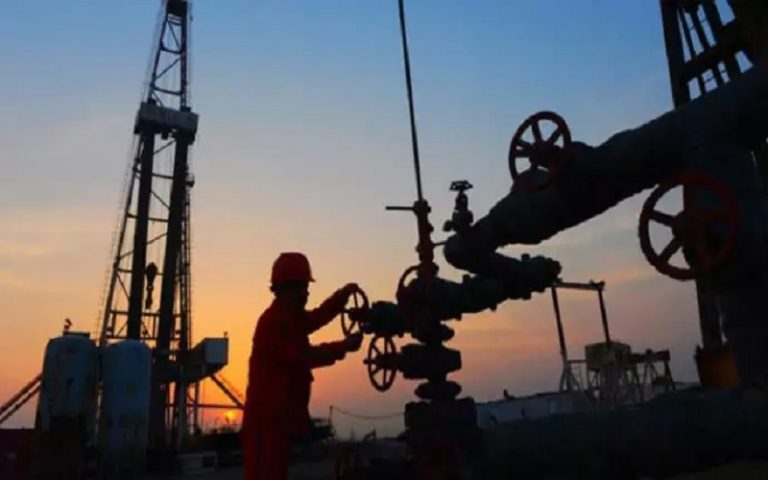
Arash Najafi, head of the Energy Commission of the Iran Chamber of Commerce, reported a “red alert” for oil investments in the country due to the lack of foreign investment.
On Tuesday, June 25, Najafi told ILNA News Agency that no direct investment with its own capital is being made, adding: “All investors, considering their financial capabilities, enter projects through banks. Foreign banks, regardless of the sanctions issue, refrain from investing because Iran is on the Financial Action Task Force (FATF) blacklist.”
Iran’s status concerning the FATF has been raised several times in the debates of presidential candidates of the Iranian regime, with some candidates criticizing Iran’s presence on the blacklist and the prevention of passing laws to join it.
The Iranian Chamber of Commerce official further stated that investors do not enter projects when they cannot obtain the necessary guarantees.
Najafi did not disclose the amount of oil investments, but Ebrahim Raisi’s government has allocated only $3 billion for oil investment this year.
In the first session of the Economic Council chaired by Mohammad Mokhber, the acting president of the Iranian regime, in late May, an “emergency plan” to increase Iran’s daily crude oil production to “4 million barrels” with a $3 billion foreign investment was approved.
According to a report by the Parliament Research Center, annual oil investment in Iran during the 2000s was over $18 billion, but in the early 2010s, this figure dropped to $7 billion and has fallen to $3 billion since 2018.
The last major foreign investment in Iran’s oil sector was related to the South Azadegan field, which the China National Petroleum Corporation (CNPC) signed in 2009. Despite Iran pre-selling the oil produced from the Azadegan field to this Chinese company, the project was abandoned halfway.
The contract was valued at $1.76 billion, and Iran settled the principal and interest owed to the Chinese company by delivering oil produced from this field.
According to reports from the Iranian Ministry of Oil and the U.S. Energy Information Administration, 80% of Iran’s active oil fields are in the second half of their lifecycle, and their production decreases by 8 to 12 percent annually.
Iran needs annual investments of over $20 billion to maintain its oil production levels.
The Iranian regime has temporarily managed to prevent a sharp decline in oil production by drilling more wells, but it faces extensive delays in developing new fields.
The approved $3 billion investment for 2024 comes as the International Energy Agency estimates that $570 billion will be invested in global oil and gas fields this year, which is 9 percent more than last year.
Iran has the second-largest gas reserves and the fourth-largest oil reserves in the world, but its share of global oil investments is only half a percent.
Why Iran’s Governments Can’t Fulfill Their Responsibilities
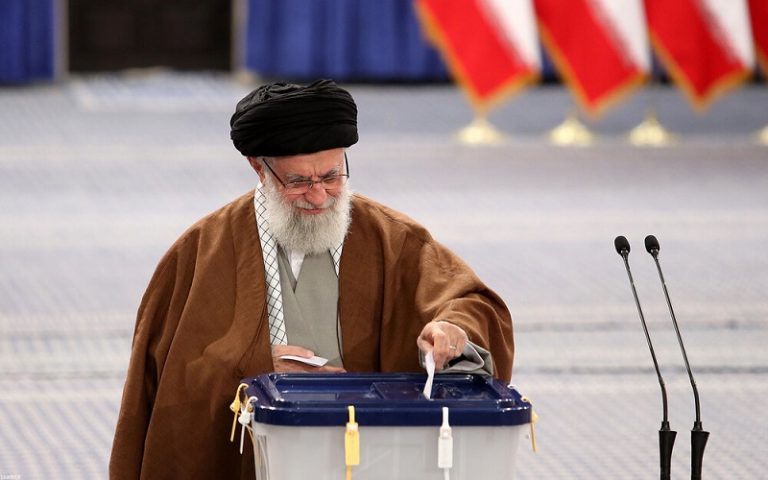
Hossein Raghfar, an economist in Iran, in analyzing the campaign slogans of candidates favored by the Guardian Council for succeeding regime president Ebrahim Raisi, highlighted the limitations of the president’s powers in the Iranian constitution. He stated that there are two governments in Iran’s ruling system: one that “has weapons and force” and whose actions affect people’s livelihoods, and another that “has no power.”
In an interview with the website Didban Iran published on June 25, Raghfar pointed to the limitations of “the powers within the president’s authority and the government formed by the cabinet.” Emphasizing the insignificance of appointing Raisi’s successor on the current situation, he said, “Right now, we have two governments. One is very powerful, and it has the resources. The actions it takes have a significant impact on the economy, livelihoods, and people’s lives, and it is accountable to no one. The other government has no resources and is held accountable, even though it lacks the necessary capability to fulfill the responsibilities entrusted to it.”
This economist, speaking about the campaign promises of candidates favored by the Guardian Council for the presidency, emphasized that the slogan of unifying the exchange rate given by the government candidates means “bringing the dollar to 2 million rials.”
This university economics professor also emphasized that the likelihood of restoring public trust in the stock market “is impossible” and “the revival of the stock market under the current economic conditions in the country is not feasible.” He added, “In these 12 years, every year has been named after production, but every year it has gotten worse because we have not adhered to the requirements of domestic production.”
According to him, “Adhering to the requirements of production” means that “banks should serve production, while banks are giving loans for importing cars” because “they are partners in it themselves,” and “their capital turnover happens in these areas” to “compensate for their resource deficits this way.”
Raghfar also added that “the government is in the pockets of powerful institutions” and “a significant part of the country’s economy is under the control of these powerful institutions, and then the government has to be accountable.”
Referring to the current Minister of Education’s statements that “99 percent of the budget” is only “spent on paying salaries,” he added, “A government that does not have the money to manage its own education system” “has no possibility of development at all,” and “the reason is that the country’s resources are spent elsewhere.”
The statements of this economist come as on the eve of the process to appoint Ebrahim Raisi’s successor, the emphasis on the injustice of government officials and the boycott of what critics call the “election circus” have become one of the central slogans in recent livelihood protests in Iran, with protesters saying, “We have not seen justice, we will no longer vote.”
The expansion of protests by various groups, including retirees, workers from different industries, teachers, those who lost their savings, and nurses and healthcare workers, indicates increasing livelihood problems in Iran and the indifference of Iranian regime officials.
Meanwhile, the Iranian regime spends the people’s financial resources on interventions and warmongering throughout the Middle East.
US Sanctions Money-Laundering Network of Iran’s IRGC Ministry of Defense
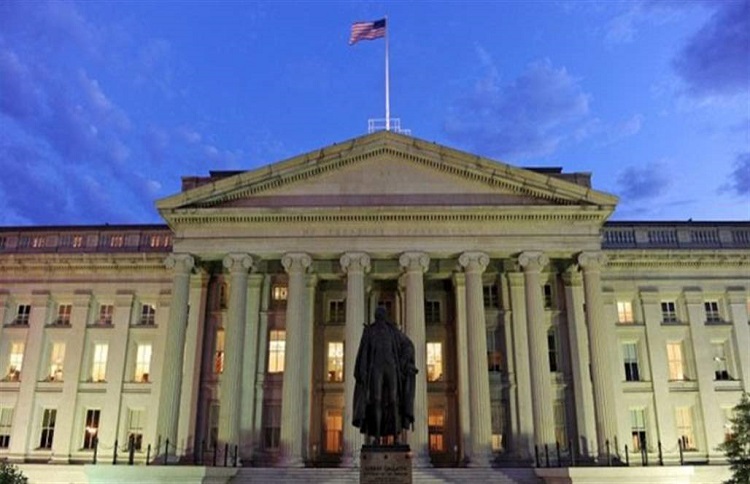
The United States imposed sanctions on nearly 50 entities and individuals on Tuesday, June 25, who are accused of transferring billions of dollars in favor of the Iranian regime’s armed forces.
According to the U.S. Department of the Treasury website, the department stated in a press release that those sanctioned are part of a “shadow banking network” used by Iran’s Ministry of Defense and Armed Forces Logistics and the Islamic Revolutionary Guard Corps (IRGC).
Both the Ministry of Defense and the IRGC are under U.S. sanctions.
The U.S. Treasury said that this network helped Iran’s Ministry of Defense and the IRGC access the international financial system and process the equivalent of billions of dollars since 2020.
Wally Adeyemo, the U.S. Deputy Secretary of the Treasury, said in a statement that the United States is taking action against a broad shadow banking system that Iran’s armed forces use to launder billions of dollars in oil revenues and other illicit income.
The US treasury added that those targeted on Tuesday constitute a “shadow banking network” used by Iran’s Ministry of Defense and Armed Forces Logistics (MODAFL) and Islamic Revolutionary Guard Corps (IRGC), both of which are under U.S. sanctions.
According to Reuters, the U.S. Treasury’s action on Tuesday targeted dozens of front companies in Turkey, the United Arab Emirates, Hong Kong, the Marshall Islands, and Iran.
The imposed sanctions block any assets these companies have in the United States and generally prohibit U.S. citizens from doing business with them.
Meanwhile, those who engage in specific transactions with them also risk future sanctions.
Iran: Prisoners Sentenced to “265 Years in Jail and Over 5,000 Lashes” Over Evin Prison Fire Incident
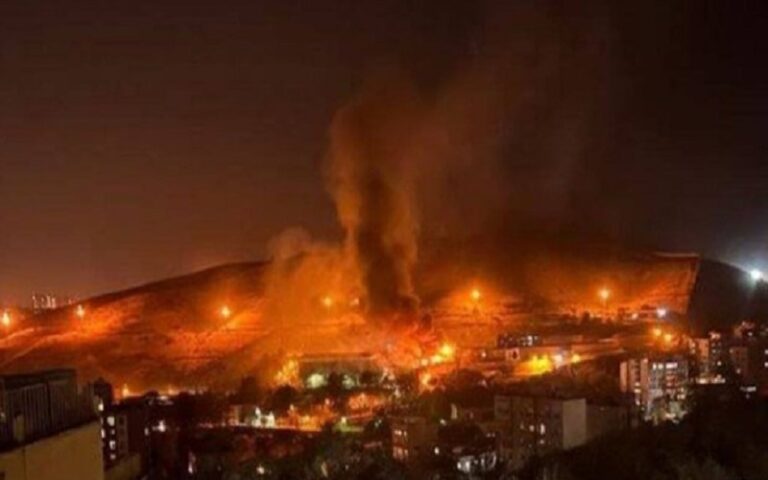
A human rights organization reported that the judiciary of Iran’s regime sentenced the accused in the “Evin Prison fire” case to a total of “265 years” in prison and “over 5,000 lashes.”
The Human Rights Activists News Agency (HRANA) reported on Monday, June 24, that Branch 1148 of the Tehran Criminal Court sentenced 40 defendants in the 2022 Evin Prison fire case to “imprisonment, lashes, and blood money.”
These prisoners, who faced charges following the Evin Prison fire on the night of October 15, 2022, are currently serving sentences related to previous cases in Greater Tehran and Ghezel Hesar prisons.
The fire at Evin Prison occurred amid heightened tensions in the prison in Tehran during the nationwide protests of 2022. During this fire, sounds of gunfire and explosions were heard, resulting in several prisoners being injured and killed.
According to this report, the 40 defendants faced charges including “destruction of property, disrupting prison order, defiance and disobedience of officials’ orders, and manslaughter.” For these charges, they were collectively sentenced to “265 years of imprisonment, 5,032 lashes, blood money, and expulsion from Iran.”
This human rights organization detailed the court verdict from June 18, stating that the defendants “Majid Roshan-Nejad, Loqman Amin-Pour, Meysam Dehban-Zadeh, Sina Mirzaei, Mohammad Sobhan Moazen-Zadeh, Ayoub Emami-Zadeh, Ahmad Reza Kounani, Sasan Zamani, Mohammad Garavand, Saeed Khodapour, and Alireza Vali” were each sentenced for “property destruction” to “six years in prison and 74 lashes,” for “disrupting prison order” to “16 months in prison and 74 lashes,” and for “defiance and disobedience of officials’ orders” to “16 months in prison.”
Additionally, “Mohammad Hossein Moradian, Masoud Hossein-Zadeh, Reza Haji, Nima Mohammadi, Alireza Eslami, Amir Hossein Yusefvand, Meysam Moradian, Sobhan Hayat-Pour, Reza Salman-Zadeh, and Mohammad Hossein Mousavi” were each sentenced to “five years in prison and 74 lashes,” for “destruction of property,” “one year in prison and 74 lashes” for “disrupting prison order,” and “one year in prison.” for “defiance and disobedience of officials’ orders.”
Furthermore, two other defendants in this case, “Nima Mohammadi and Alireza Eslami,” whose citizenship status is not specified in the report, were additionally sentenced to “expulsion from Iran.”
According to a previous HRANA report, the judge rejected the lawyers of these defendants and, during the court session on June 18, expelled Ramin Safarnia, the lawyer who represented several of the defendants, from the courtroom, opting only to accept written defenses from the defendants.
Purmohammadi: “30 Committees” Decided on the 1988 Executions in Iran
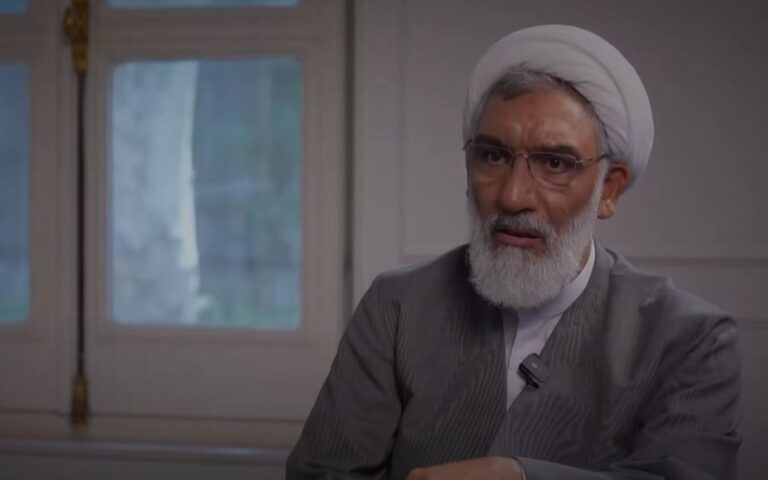
In a recent interview, Mostafa Pourmohammadi, a candidate in the 14th presidential election of the Iranian regime, referred to his role in the execution of political prisoners in the 1980s, calling these executions a “project of the Islamic Republic” and “the regime’s difficult moments.”
Pourmohammadi, one of the main members of the execution committee known as the “Death Committee” in the summer of 1988, emphasized in an online program released on Sunday, June 23, that only those who were members of the People’s Mujahedin Organization of Iran (PMOI/MEK) and “fought against the people” were given death sentences by various responsible committees.
In the months of August and September 1988, nearly 30,000 political and ideological prisoners, mainly members of the PMOI, were executed in Iranian prisons.
These prisoners were handed over to execution squads by the order of then–regime supreme leader Ruhollah Khomeini and were subsequently buried in mostly unmarked graves in Khavaran Cemetery in southeast Tehran.
Pourmohammadi, who was the representative of the Ministry of Intelligence in Evin Prison at the time, along with Hossein Ali Nayeri (the Sharia judge), Morteza Eshraghi (then Tehran’s prosecutor), and Ebrahim Raisi (then deputy prosecutor and later president of the Iranian regime who was killed in a helicopter crash on May 19, 2024), met with Hossein Ali Montazeri, the then deputy leader of the regime.
According to an audio file released from this meeting, Montazeri referred to the 1988 massacre as a historical crime and said: “In my opinion, the greatest crime committed in the Islamic Republic, from the beginning of the revolution until now, has been carried out by you. In the future, you will be remembered as criminals in history.”
In another part of the interview, Pourmohammadi, referring to the fact that the 1980s were very different from today, claimed: “The people were our supporters, they were of the same mind as us, and in fact, the people’s demands were more radical and they called for harsher sentences.”
He pointed out that during the executions, “30 committees” were active in Iran, each with three to five members, and said that he “was not responsible for this work and was not part of the security team.”
Regarding his involvement and invitation to these committees, he claimed that at that time, he was invited and told to “control things a bit to prevent radicalism.”
Mostafa Pourmohammadi continued: “If the officials of the regime at that time had today’s experiences, they would have made arrangements to significantly reduce the margins of this action.”
However, he emphasized that “decisive and serious action certainly has its consequences.”
This presidential candidate also stated in a television program on June 14 that the PMOI intended to form a “government” after Operation Eternal Light, with the participation of those he called “prisoners and others and their supporters.”
Human rights activists say that the Iranian regime executed these prisoners without any legal process and that they had no new charges in their files. Many of these prisoners had completed their sentences or were serving their terms. However, the Death Committee, in trials lasting a few minutes and with a few questions, directly sent them to the execution squads simply for refusing to disown their support for the PMOI.
Ebrahim Raisi had previously called these executions an act of “defending human rights.” It is worth noting that Pourmohammadi himself has also defended the 1988 massacre on several occasions and has expressed his desire to “settle scores” with the remaining members of the PMOI.
None of the perpetrators and commanders of this massacre were tried. Hamid Nouri, a former deputy prosecutor of Gohardasht Prison, was arrested in Sweden in November 2019 for involvement in the execution of political prisoners in the 1980s and was sentenced to life imprisonment after trial. However, on the evening of Saturday, June 14, Hamid Nouri was welcomed by Iranian officials at Mehrabad Airport in Tehran after being exchanged for Johan Flodros and Saeed Azizi, two Swedish citizens held hostage by Iran’s regime.
Amnesty International also issued a statement on this matter and strongly condemned this action.
The Consequences of High Food Prices in Iran

According to a report by the state-run Donyay-e-Eghtesad website, which also reviews and publishes economic and livelihood statistics, 52% of the minimum wage of a four-person Iranian household in May 2024 was spent on food. A year ago, this share was higher, around 58%.
In both cases, Iranian households spend more than half of their income on food, which, compared to global and even regional averages, indicates the poor state of Iranian wage earners and the overall economy of Iran.
Ernst Engel, a 19th-century German statistician and economist, proposed a theory that has consistently been confirmed in practice: household income and food expenditure have an inverse relationship. As household income increases, the share spent on food decreases, even if more food is consumed. Conversely, the poorer a household, the larger the share of its income spent on food.
John Maynard Keynes referred to Engel’s Law in his theory of the “Marginal Propensity to Consume and Save,” stating that the wealthy always consume a smaller portion of their income and therefore do not significantly increase demand in the macroeconomy (“The General Theory of Employment, Interest, and Money,” 1936).
Milton Friedman, the 1976 Nobel Prize-winning economist, expanded Engel’s Law with the hypothesis that households consume based on their expected long-term income, rather than their current income (“A Theory of the Consumption Function”). The works of Keynes and Friedman, with two different economic perspectives, along with those of many other economists, show that Engel’s Law regarding the relationship between income and food expenditure is fundamental and insightful for understanding citizens’ consumption behavior and government economic policies.
The cost of food for Iranian households compared to developed and developing countries
In countries with advanced market-based economies, households spend a smaller percentage of their income on food compared to households in developing countries, and as a result, they have more purchasing power for other goods. Iranian households spend a larger share of their income on food compared to households in other developing countries such as Nigeria and Kenya. In Middle Eastern countries, the share of household income spent on food ranges from 13% to 20%, whereas in Iran it is over 50%. Sanctions are not the reason for this backwardness; it is the government’s command economy that has hindered Iran’s growth and development even before the sanctions and from its very inception. In the past 50 years, the economic growth of most Middle Eastern countries has surpassed that of Iran: Qatar by more than 20 times, Oman by 17 times, Saudi Arabia by 5 times, and even Iraq by nearly 4 times.Consequences of the high share of food in Iranian household expenses
With more than 50% of their income spent on food, Iranian households are forced to buy and consume less or cheaper, lower-quality food; for instance, the share of many foods such as meat and dairy products on Iranian tables has decreased. The Statistical Center of Iran provided a report on food expenses, estimating that the “food basket” of Iranian households provides 1,930 kilocalories, whereas the necessary amount is 2,500 kilocalories. The increasing share of food expenses prevents Iranian households from optimally meeting other living needs such as housing, healthcare, and education. Malnutrition particularly impacts the physical and cognitive development of children severely. School dropout rates among children also add to their malnutrition issues. According to the Majlis Research Center, one-third of students have been forced to drop out of school. The outlook is also bleak. Food prices continue to rise, further burdening Iranian household expenses. During Ebrahim Raisi’s two and a half years in office, the inflation rate has consistently been above 30% and often over 40%. In May 2024, the Statistical Center of Iran estimated the monthly, not annual, growth rate of onion prices at around 30%, and Tejarat News newspaper reported that the price of onions increased by 1,233% during Ebrahim Raisi’s presidency. Iranians have repeatedly taken to the streets in protest against rising food prices since the Qajar era, a hundred years ago. During the Islamic Republic era, people have also frequently taken to the streets to protest high prices; for example, in January 2018, during Hassan Rouhani’s presidency, there were protests in various cities in Iran against rising prices, which were suppressed. The November 2019 protests were also rooted in rising gasoline prices and were severely suppressed. In May 2022, during Ebrahim Raisi’s presidency, people took to the streets and stores in protest against the Market Regulation Headquarters’ announcement about the price increases of chicken, eggs, and dairy products for “price adjustment and alignment.” In any case, since there is no prospect of reducing inflation and the share of food expenses, it is not unlikely that high prices will once again drive people to the streets.Maryam Akbari Monfared Faces New Case Ahead of End of Prison Sentence
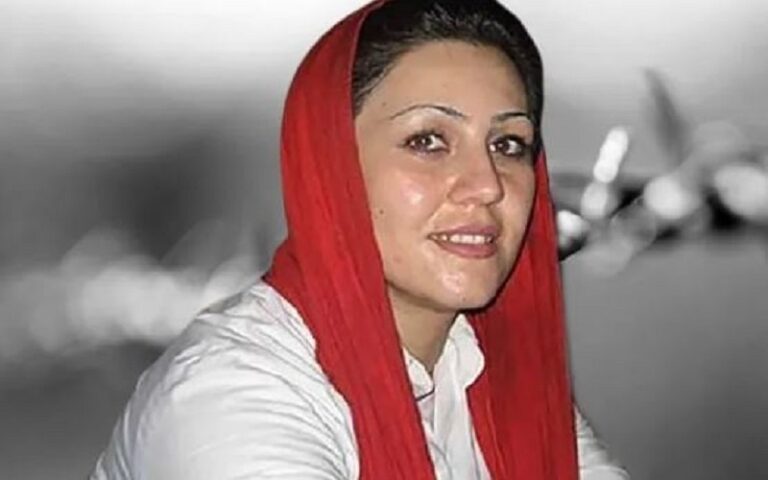
The lawyer of Maryam Akbari Monfared, a political prisoner whose siblings were executed by Iran’s regime and who had previously been sentenced to 15 years in prison, says Iranian regime officials have opened a new case against her a few months before the end of her sentence.
According to Akbari Monfared’s lawyer, this prisoner has not been granted a single day of leave during this period.
Hossein Taj told the news site Shargh: “In October 2024, Ms. Akbari Monfared’s 15-year prison sentence in the first case will end. During this time, she has not been granted a single day of leave. Ms. Akbari Monfared has also been sentenced to two years in prison in another case. Recently, a new case has been formed against her based on a request from the Headquarters for the Follow-up and Supervision of Cases Related to Article 49 of the Constitution.”
Hossein Taj added: “In the claims made by this headquarter, allegations have been made against Ms. Akbari Monfared’s family and relatives. This headquarters has requested the seizure and acquisition of the Akbari Monfared family’s assets and those of her relatives for the benefit of the ‘Executive Headquarters of Imam’s Directive.’ This case has been referred to Branch 6 of the Revolutionary Court, which is specifically responsible for cases related to Article 49 of the Constitution. The trial date for this case has not yet been determined, and only a monitoring date has been set for August.”
He says, according to current laws in the Iranian regime, “Punishment should only be applied to the individual and not extend to their relatives.”
It has previously been reported multiple times that Iranian regime officials have opened new cases against political prisoners nearing the end of their sentences to extend their prison terms.
In September 2023, it was reported that the Semnan Criminal Court sentenced Maryam Akbari Monfared to an additional two years of “ta’zir” imprisonment and a fine of 150 million rials for “spreading lies in cyberspace” in a new case.
Maryam Akbari Monfared, born in 1975, is married and has three children. She was arrested on December 31, 2009, following the protests that year, and Judge Abolqasem Salavati in Branch 15 of the Islamic Revolutionary Court of Tehran sentenced her to 15 years of imprisonment.
The court charged this political prisoner with “supporting the People’s Mojahedin Organization of Iran.”
Three brothers and one sister of Maryam Akbari Monfared, all supporters of Mojaheding, were executed in the 1980s.
More Than 17,500 Oil Workers on Strike in Over 75 Sites Across Iran
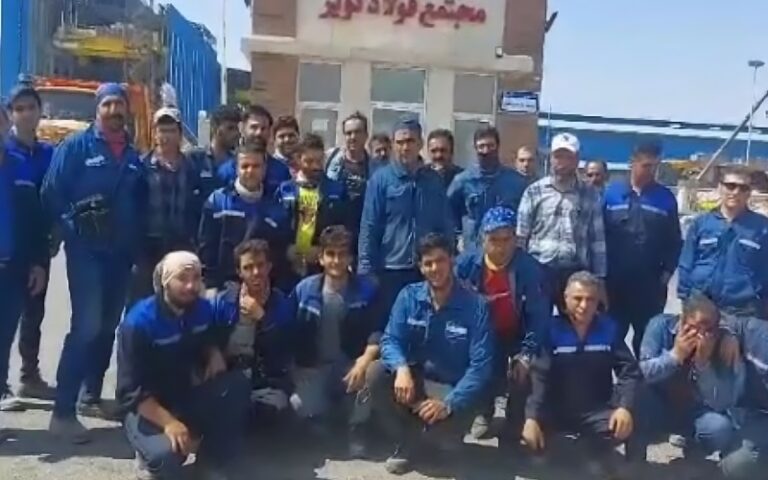
A labor organization announced that “more than 17,500 oil project workers in over 75 contracting companies” in various regions are on a full strike.
The Council for Organizing Protests of Contract Oil Workers (Third Party) wrote on June 22, noting the start of the project workers’ strike from June 19: “Eliminating contractors, increasing wages, and also 14 days of work and 14 days of rest” are the main demands of the striking workers.
The striking workers have also emphasized the necessity of improving dormitory conditions, working conditions, and workplace safety.
The regime’s ILNA news agency also wrote on Saturday: “With the arrival of summer, a new wave of protests by project workers and continuous projects in the south of the country in the oil, gas, and third-party sectors has begun, with the main demand being the consideration of changing work times and eliminating contractors.”
According to this report, the new protest campaign of the striking workers, under the slogan “All workers’ tables are the same” and named “14-14,” has started in refineries, petrochemicals, and other oil and gas centers and third-party sectors, and these workers went home after handing over their tools.
Meanwhile, according to ILNA, with the publication of the news of the project workers’ protest campaign, Alireza Mirghafari, a member of the board of directors of the Supreme Association of Labor Unions, reported the sending of threatening text messages in support of contractors to the active protesting workers.
In recent years, project workers have repeatedly gone on strike in protest of their living conditions. Additionally, the number of labor protests such as strikes and gatherings in various regions of Iran has been on the rise over the past few years. These protests have mainly been due to unpaid wages, low wages, layoffs from factories and companies, and privatization.
Meanwhile, the Etemad newspaper wrote in a report on Thursday, June 20, that “an examination of labor protests over the past 27 months, from March 2022 to June 2024, shows that during this period, thousands of coal, copper, iron ore, and chromium miners in the provinces of Kerman, Mazandaran, Yazd, Razavi Khorasan, South Khorasan, and Semnan have demanded their legal rights in gatherings that lasted from a few hours to several days and weeks.”
Amidst the propaganda for the sham elections, the regime’s selected candidates are busy giving deceitful and repetitive promises, but workers and retirees, away from this clamor and indifferent to it, are busy protesting and striking to obtain their rights. This shows that Iranian workers have no hope of improving their situation by participating in elections.
It is worth noting that in the Iranian government, no independent labor unions or syndicates are allowed to operate, and the regime prevents workers’ protests and strikes by any means possible. The other so-called unions are under the regime’s control. Employers of oil and petrochemical companies, all of which are affiliated with government institutions such as the Islamic Revolutionary Guard Corps (IRGC), threaten and fire workers.
Contract workers, despite working in these projects for years, do not receive any rights, and sometimes their meager wages are delayed for months. It should be noted that working in oil and gas fields is extremely difficult and exhausting, and workers are forced to work in temperatures exceeding 50 degrees Celsius for up to 12 hours.
Economic Erosion Under Iran’s Despotic Leaders

Iran’s history has shown that oil in the hands of despotic and anti-development rulers has turned into a curse. Oil revenue has led to corruption, the extravagance of rulers, military adventurism, and regional destabilization. An example of this is the Iranian regime’s adventurism in Lebanon and Iraq, with the most recent example being the October 7 attack.
The class gap among the people of Iran is widening daily, and the regime has no solution other than to continue on this path.
Experts say that squandering such underground resources and human capital requires a skill that only the Iranian regime seems to possess.
The state-run Jahan-e-Sanat wrote on January 24, 2024, “The Iranian economy is not in good condition in terms of decision-making structures and the costs of managing the economic environment of the country. Under such circumstances, it can be said with bitterness and dissatisfaction that Iran’s economy has lost its geoeconomic playing cards. Indeed, it takes a lot of skill for a country with this level of geographical capacities and natural and human resources to have practically no share in the global economy! Nevertheless, due to the country’s movement towards industrial, economic, human, and geopolitical erosion, there must be an immediate fundamental review of all economic governance procedures in the country.”
The Iranian regime, in addition to suppressing the Iranian people and exporting instability to the region, has caused the loss of exploitation of many unique geographical opportunities. According to a study on corridors passing through Iran, “Iran is continuously and serially being excluded from East-to-West land, rail, sea, and air transport corridor projects, and major energy transmission lines are being drawn along routes far from Iran’s borders with the presence of new players.”
This is while, due to a lack of necessary investment in oil resources, the Iranian regime will soon be forced to import oil and gas.
“Iran, due to severe imbalance in various sectors of its energy economy, has lost the ability to be present as a player in the fuel carriers market, not as a determining or medium power, but even as a small and ordinary player, and has transformed from a major exporter to an importer of gas, electricity, gasoline, and diesel,” Jahan-e-Sanat added.
Most economists acknowledge that due to the low rate of physical fixed capital formation in the last 12 years, depreciation has outpaced investment in the country, and the country is on the path of infrastructure erosion. On the other hand, the continuous decline of the clerical regime’s social capital has led not just to the migration of elite forces but to their escape from the country.
A January 23 report by the Ham-Mihan daily states, “Our country has faced a reduction in investment in the oil and gas sector for many years, and the urgent need of the country’s oil and gas industry to reach an acceptable condition (not even a desirable one) is approximately 200 billion dollars. Recent years’ experience clearly shows that attention to oil has been solely from the perspective of ‘financial returns,’ and this instrumental view has led to the neglect of long-term planning for the continued exploitation of Iran’s oil industry capabilities through investment in infrastructure activities.”
The issue of reduced investment in the country’s macroeconomy has reached a critical state.
“The vice president of the Tehran Chamber of Commerce stated that the most important issue in the country today is ‘investment,’ and said: In the 2010s, the investment rate in the country decreased to the point that in the final years of this decade and the early 2020s, the depreciation rate surpassed the investment rate” according to the ILNA news agency on June 12.
With the death of its former president Ebrahim Raisi, the regime is busy staging the election show and has no concern for the future of the Iranian people; otherwise, economists have been warning for years about what the super crisis of stagflation and the accumulation of imbalances in the macroeconomy will bring to the existence of Iran, especially if the global transition from fossil fuels, the pension fund crisis, energy imbalances, environmental issues and water tension, the exacerbation of the class gap, infrastructure decay, and financial constraints are taken into account.
Explaining the super crises and serious challenges of Iran’s economy, economist Vahid Shaqaqi Shahri told Etemad newspaper on June 11: “Since 2018, the growth of depreciation compensation costs has outpaced investment growth, which sends a warning signal to Iran’s economy, indicating that Iran’s economy has entered the phase of infrastructure erosion.”
Shaqaqi considers the financial resource constraints and the exacerbation of infrastructure decay in Iran’s economy due to lack of investment over recent decades as a massive crisis for Iran, which requires at least 500 billion dollars over the 2020s to compensate for.
Iran Needs to Import $2bn Gasoline This Year
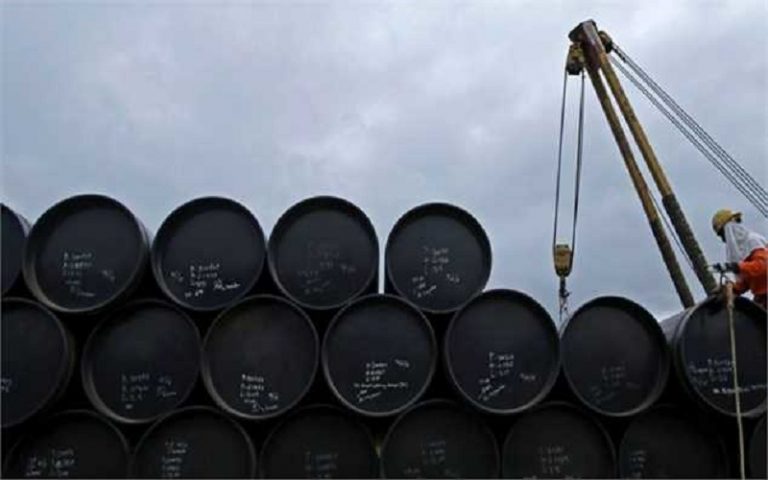
Gholamreza Dehghan Nasrabadi, a member of the Iranian regime’s Parliament, announced a deepening energy imbalance in Iran and claimed that the country needs to import two billion dollars of gasoline this year.
Dehghan Nasrabadi said on Friday, June 22: “It is estimated that this year we will have over two billion dollars in gasoline imports, which is approximately equivalent to building a refinery with a capacity of 100,000 barrels per day.”
Since last year, Iran has faced a gasoline shortage due to the government’s inability to build new oil refineries.
An official document from the Ministry of Oil shows that last year, the production of gasoline by the country’s refineries grew by only 1.5%, while the country’s gasoline consumption increased by 10.5%.
The large increase in gasoline consumption was due to the entry of one million inefficient and domestically produced cars into the market.
To compensate for this deficit, the government has mixed significant amounts of petrochemical and chemical substances into the gasoline produced by refineries; the combination of chemical substances in the country’s gasoline has increased by 280% over the past three years.
In fact, according to the Ministry of Oil’s document, last year the production of gasoline by the country’s refineries reached slightly over 97 million liters per day. However, the government mixed a huge volume of aromatic, chemical, and petrochemical-produced gasoline with regular gasoline, raising the volume of gasoline delivered to fuel stations to more than 111 million liters per day.
The country’s gasoline consumption was also above 115 million liters, with the remaining deficit being covered by imports or exchanging mazut for gasoline.
Data from the Ministry of Oil’s document shows that only one-quarter of the country’s produced gasoline meets Euro 4 and Euro 5 standards.
Dehghan Nasrabadi also warned that Iran will face a diesel shortage this year.
According to the aforementioned official document, Iran’s diesel shortage also began last year; in 2023, there was a daily shortage of 1.5 million liters of diesel in the country, which was supplied through imports.
Iran is also facing a significant gas shortage in winter and a notable electricity imbalance in summer.
Recently, the Deputy Minister of Industry, Mine, and Trade announced in a letter to the Minister that starting from the beginning of summer, electricity delivery to the steel and cement industries will be halved.
Iran’s steel industry needs 5,500 megawatts, and the cement industry needs 1,000 megawatts of electricity.
Iran’s electricity losses in the outdated transmission and distribution network are equivalent to the steel industry’s electricity consumption. By modernizing it, a large part of the electricity shortage can be compensated, but no specific action has been taken in this regard over the past two decades.
In terms of gas losses, Iran ranks second in the world after Russia. Dehghan Nasrabadi also mentioned that annually, about 18.5 billion cubic meters of associated gas is flared in the country. Assuming an export price of 30 cents per cubic meter for Iranian gas, this results in an annual loss of over 5.5 billion dollars to the country.
These statistics also align with reports from the World Bank and the International Energy Agency.
To prevent flaring, Iran needs only a 5-billion-dollar investment, but this has not been done over the past two decades.
Dehghan Nasrabadi continued by saying that the issue of energy imbalance has two major consequences and risks for the country; first, the country’s energy security is endangered, and second, the production of the country’s industries decreases, resulting in reduced foreign exchange earnings and increased foreign exchange spending.
