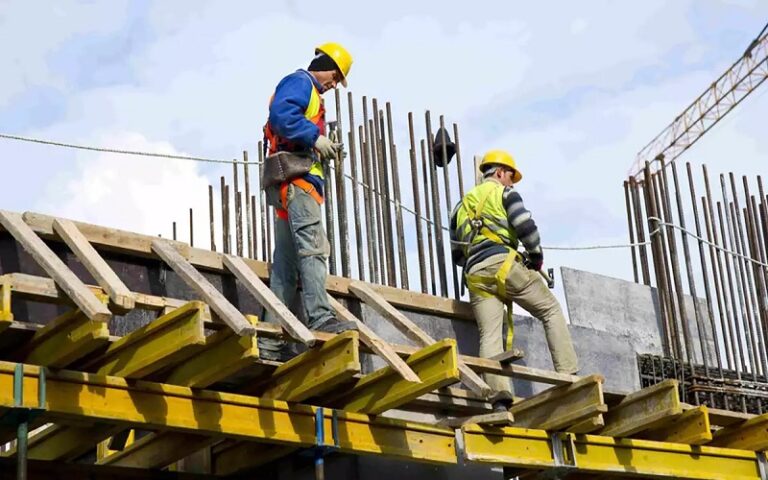
A labor activist for Iranian construction workers criticized the working conditions of construction workers, stating that their insurance has faced serious obstacles and has been halted.
He also mentioned that construction workers are not entitled to early retirement benefits, and even if they are insured, their lives and health are at risk.
According to the regime’s ILNA news agency, Mohammadzadeh, a labor activist for construction workers in Kermanshah, stated that while construction work is one of the most difficult and hazardous jobs, accounting for more than half of the country’s work-related accidents, it is not considered a hard and hazardous occupation by law.
This labor activist emphasized that a construction worker, after 30 or 40 years of paying for insurance, cannot retire due to occasional interruptions in their insurance. He stressed, “In fact, this worker has to keep working as long as they are alive.”
In continuation of the anti-labor actions of Iran’s regime, the Ministry of Labor, issued a directive on June 16, eliminating the possibility of early retirement for workers.
On May 29, the Ministry of Cooperatives, Labor, and Social Welfare, by issuing directive No. 57, clarified the situation for contract workers and placed all responsibility on the contractor.
According to this directive, the main employer has no responsibility. With the implementation of this directive, a worker who has had contracts with several different contractors during their employment at a single workshop may remain indefinitely delayed in early retirement.
Mohammadzadeh, the labor activist, reported that in many provinces of the country, not a single new worker has been insured in recent years.
He stated that construction workers “often become old and incapacitated but do not retire,” and in an interview with ILNA, he emphasized, “They are forced to quit working due to old age and illness without receiving a single rial of retirement pension.”
Earlier, in January 2024, Akbar Shokat, head of the Association of Construction Workers’ Trade Unions, said, “The insurance of about 300,000 people has been cut off in the past three years.”
He emphasized, “No new workers are being insured, and about 500,000 people are waiting for insurance.”
In May 2024, Ali Ziaei, head of the Crime Scene Investigation Group of the National Forensic Organization, reported the deaths of 2,115 workers and the injury of 27,000 workers due to work-related accidents in 2023.
Ziaei stated that falling from heights has always accounted for the largest share of work-related accident fatalities. He added that last year, 983 victims of workplace accidents lost their lives due to falls from heights, accounting for 46.5% of the total fatalities.
Following this, ILNA news agency, in a report criticizing the “statistical cover-up by the Ministry of Labor,” wrote that these statistics mean the death of 5.79 workers every day of the year.
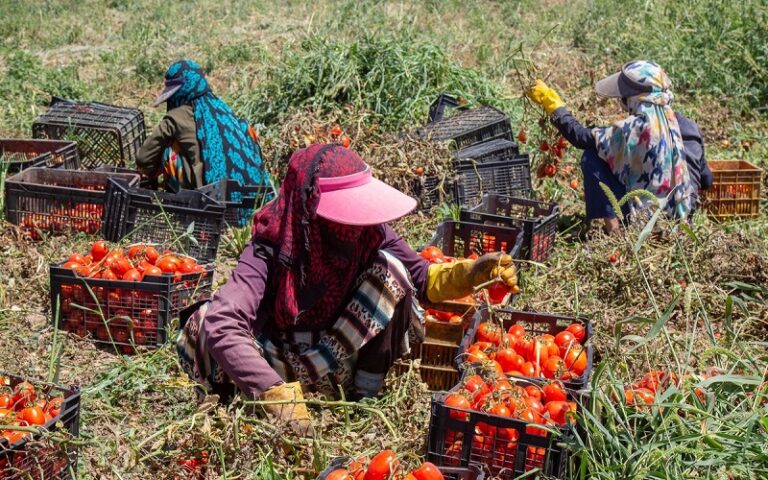
Female farm workers in Khuzestan, southwest Iran, work on a daily wage basis without insurance and with the lowest wages. Some of these women, even at 80 years of age, have been forced to work in the agricultural fields for the past 60 years.
On Saturday, June 15, the regime’s Etemad newspaper reported on the lives and work of female farm workers in Khuzestan province.
They work in the agricultural fields, from young to old and of various ages, in the 40- to 50-degree Celsius heat of Khuzestan without any shade or cool water, and many times they have suffered from heat stroke due to working in high temperatures, requiring medical attention and hospitalization.
One of them is an 80-year-old woman who has been working without insurance for 60 years. According to Etemad, if she had insurance, she would have retired twice by now based on her work experience.
Another woman started working in tomato picking and agriculture at the age of 13. Now, at 40 years old, due to the unemployment of her husband and sons and her daughter’s schooling, she still works out of necessity to make a living and earn an income.
Female workers in Iran face many problems and inequalities, including limited job choices, low wages, workforce downsizing, and poor working conditions.
Despite 42 years since the adoption and implementation of the “Convention on the Elimination of All Forms of Discrimination Against Women” and about 10 years since the adoption of the “2030 Agenda for Sustainable Development,” the Iranian regime has refused to join these two global treaties.
Fatal Accidents for Female Workers
In recent years, numerous reports have been published about the deaths of female tomato-picking workers on their way to work in the southern provinces of Iran.
Female farm workers in Khuzestan province have repeatedly heard news of accidents and the deaths of women on the roads of this province.
Mohammad Mali, a media activist, told Etemad, “Every day, several thousand women travel in this way on unsafe, very narrow, non-standard, and unmarked roads, and they experience accidents, but no one hears about it. Because these women have no voice at all.”
Physical and bodily injuries due to poor work safety conditions in Iran threaten the lives of many workers daily. Ali Ziaei, head of the Crime Scene Investigation Group of the National Forensic Organization, reported in May 2024 that 2,115 workers died and 27,000 were injured due to work-related accidents in 2023.
The state-run ILNA news agency, in a report criticizing the “statistical cover-up by the Ministry of Labor,” wrote that these statistics mean the death of about five workers every day.
Khuzestani female farm workers, who are willing to endure low incomes, the hardship of the road, and agricultural work, face many problems in their lives.
Etemad wrote that the daily working hours are about 11 to 12 hours, and working in unsuitable conditions and environments also causes physical problems for these women.
One of these women told Etemad, “Many of us suffer from herniated discs in our backs and necks because of this work. Some others have developed kidney diseases due to excessive heat and dehydration.”
Most of these women sometimes work in two shifts and may travel the same route twice. If the farm is too far away, they do not return to the village, and the whole group stays there.
They told Etemad that when it comes time to receive their wages, they face excuses from the employers. Some do not have money, and others make full payment of wages conditional on the complete sale of the produce, and if the produce is not sold, they do not get paid at all.
Who Hears the Voices of Thousands of Khuzestani Female Workers?
In another article, Etemad wrote that according to statistics, Khuzestan has more than 35,000 female heads of households, a significant portion of whom work on agricultural lands.
The newspaper wrote that unofficial sources indicate that this number is even higher. According to this report, Dezful county alone has more than 5,000 female workers in the agricultural sector.
They work in labor groups, ranging from teenage girls to elderly women in their 70s, to earn just 200,000 rials (about $3) per day.
Social security insurance experts say that farmer insurance is inexpensive, but according to the law, women cannot be insured as workers. While according to Etemad, female farmers work alongside men but receive only 60% of men’s wages.
According to statistics announced by the financial institutions of the Social Security Research Organization, women comprised 80% of uninsured employees in 2017. On May 23, the Statistical Center of Iran released a summary of the 2023 labor force survey and wrote that during this period, only 3,907,036 women were employed.
Iran and Sweden, with Oman’s mediation, exchanged several imprisoned citizens, resulting in the release of Hamid Nouri, a former deputy prosecutor, in exchange for the release of Johan Floderus and Saeed Azizi, two Swedish hostages held by Iran’s regime. Nouri was then sent to Tehran.
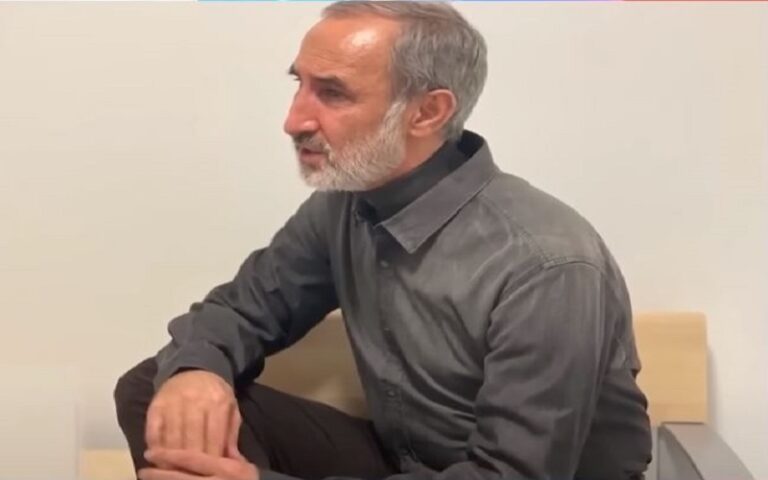
On Saturday, June 15, after his release and arrival in Iran, Hamid Nouri emphasized that he is “Hamid Abbasi,” a pseudonym he used as a deputy prosecutor at Gohardasht Prison during the executions of political prisoners in 1988.
A few hours earlier, the deputy for international affairs of the Iranian judiciary announced that Hamid Nouri, who had been tried and imprisoned in Sweden, was released and would return to Iran.
Kazem Gharibabadi stated on social media on Saturday that Nouri’s arrest in Sweden since 2019 was “illegal” and wrote that the former deputy prosecutor “will return to the country in a few hours.”
Simultaneously, Oman’s official news agency reported that, through the country’s mediation, Iran and Sweden had agreed to the mutual release of detained citizens in both countries.
The news agency announced that the prisoners of both countries “were transferred from Tehran and Stockholm to Muscat today to be returned.”
Minutes after the release of this report, the Swedish Prime Minister also announced that two imprisoned Swedish citizens in Iran had been released and would soon return to their families. These two Swedish citizens have been identified as Saeed Azizi and Johan Floderus.
Hamid Nouri, 62, was arrested on November 9, 2019, at Stockholm Airport upon arriving on a direct flight from Iran, based on complaints by human rights activists and opponents of the Iranian government to the Swedish police.
The Swedish prosecutor’s complaint against Hamid Nouri was based on evidence related to the secret massacre of several thousand political prisoners in the summer of 1988 in the prisons of the Iranian regime.
During the executions in the summer of 1988, Hamid Nouri, under the pseudonym “Hamid Abbasi,” was a deputy prosecutor at Gohardasht Prison. However, he and his lawyers had differing statements in court regarding this.
The Swedish prosecutor’s office charged Hamid Nouri based on the principle of universal jurisdiction, which examines crimes regardless of where they were committed. Swedish judicial authorities tried him on this basis.
In a case that took 93 sessions in the Swedish judiciary, at least 60 plaintiffs and witnesses and 12 experts in Islamic jurisprudence and international law spoke about Hamid Nouri’s case.
At the end of a lengthy trial, a court in Sweden sentenced him to life imprisonment in July 2022 for “gross violations of international humanitarian law and murder.”
An appeals court also upheld the life imprisonment sentence for Mr. Nouri on December 19.
In March 2024, the Supreme Court of Sweden announced that it would not review Hamid Nouri’s appeal against his life imprisonment sentence for participating in the massacre of political prisoners in the summer of 1988, thereby upholding his life sentence.
Reactions to Hamid Nouri’s Release
The National Council of Resistance of Iran, in a statement, called Hamid Nouri’s release “shameful and unjustifiable” and stated that this action reassures the Islamic Republic that it can return its agents through “hostage-taking.”
Kenneth Lewis, a lawyer who represented several plaintiffs in Hamid Nouri’s trial, said that his clients were not consulted before the release of the former Iranian deputy prosecutor and added that he was “shocked and devastated” by the release.
He told Reuters that this is a blatant insult to the entire judicial system and everyone who participated in the trial sessions.
The lawyer also noted that his clients sympathize with the Swedish government’s efforts to bring back its citizens but said that Hamid Nouri’s release was “completely disproportionate.”
Ursula von der Leyen, President of the European Commission, also welcomed the release of the two Swedish citizens from “Iran’s unjust detention” and congratulated the Swedish government for its efforts to secure
In recent months, the violence of the Iranian regime’s border guards against Kurdish kolbar (porter)has increased, and in May alone, six kolbars were killed.
Kolbars are individuals who carry goods and merchandise from neighboring countries into Iran. Due to the difficult routes, these loads are carried on their backs, and each kolbar receives a very small amount that barely sustains their survival. This work is very common in the border areas of Iran because the Iranian regime does not provide any facilities or jobs for the youth in these regions, and instead, the share of the people in these areas is the bullets of the regime’s security forces.
Most of these individuals are found in the western and southeastern regions of Iran.
The issue of “illegal” import and export of goods in Iran is not limited to a specific border or region. According to the officials of the Iranian regime, smuggling of goods occurs not only through illegal borders but also through official gates, docks, and even airports. The type and volume of smuggling depend on many factors. It is unclear what the share of Kurdish border kolbars in the volume of smuggled goods is, but officials have often described it as “insignificant.” Nevertheless, it is evident that they, along with Baluchi fuel carriers, bear the highest human cost of “goods smuggling.”
However, the Iranian regime and the Islamic Revolutionary Guard Corps (IRGC) are considered some of the largest smugglers of drugs, oil, and other goods both inside and outside Iran. And they are never held to account for their smuggling activities.
According to human rights networks, in recent months, the level of violence by the Iranian regime’s border guards against kolbars and traders has increased significantly.
The Kurdistan Human Rights Network reported that in just the three months of March, April, and May, 17 kolbars were killed in the border areas of Iran and Iraq from gunfire by the Iranian regime’s border guards, and dozens of people, including several child kolbars, were injured.
The shooting of kolbars and border traders by Iranian border guards is not a new occurrence. Over the past two decades, the rate of shooting by the Iranian regime’s forces towards kolbars and border traders has increased significantly.
Ahmed Shaheed, the former UN Special Rapporteur on Human Rights in Iran, described the killing of kulbars by the Iranian regime as “systematic” in 2013. He stated in his report that the agents shoot kulbars without any warning, a practice that continues to this day, as confirmed by human rights networks.
Many of the individuals engaged in kolbar activities are educated people who cannot find any jobs.
According to a report by Kolbar News, in 2023, at least 44 kolbars were killed, of which 31 kolbars lost their lives due to shootings by the police and border guards.
In recent years, kolbars of all ages have been seen, including children as young as 14 or 15, women who are heads of households, and the elderly. The only response of the Iranian regime to these individuals is bullets, a regime that itself is one of the largest smugglers.
The Iranian Minister of Economic Affairs and Finance stated that the government’s tax revenues have reached 8,000 trillion rials, equivalent to $13.5 billion. According to Ehsan Khandouzi, the Tax Organization achieved 108% of the projected revenue for 2022, setting a new record in the country’s tax collection history.
Khandouzi did not mention the annual growth rate of tax revenues but said the government had 4,700 trillion rials in tax revenues last year, indicating significant growth.
Oil exports are considered the main source of budget revenue for Iran, which is still under sanctions by the United States.
Although Tehran sells approximately 1.3 million barrels per day to China, it is unclear how much cash it receives in return due to international sanctions.
Since 2023, the government has exerted significant pressure to raise taxes and increase their collection. Over the past three years, budget tax revenues have increased by more than 162%.
The government’s goal for the current fiscal year is to collect over 13,000 trillion rials in tax revenue, reflecting a 62% increase from the previous fiscal year. These figures indicate a 326% increase in tax revenues compared to 2021.
As a result, the share of tax revenues in the government’s budget has increased from 25% to 53% during this period. Iran’s government tax revenues have increased by 326% since Ebrahim Raisi became president in 2021.
The surge in tax revenues during Raisi’s presidency, from July 2021 to May 2024, coincided with an increase in poverty among Iranian citizens.
According to the United Nations Food and Agriculture Organization (FAO), per capita meat consumption decreased by one-third between 2020 and 2023.
Why is the government increasing taxes?
Before the US sanctions against Iran in 2018, about 40% of the government budget relied on oil revenues, but due to oil sanctions, this amount has decreased to 21% this year.
The Iranian government has projected total domestic sales and export revenues from oil and gas in the budget to be 6,414 trillion rials which is about half of the tax revenues or approximately $11 billion at the current exchange rate.
Officially, the government’s budget share is less than 50% of oil export revenues. Of the total oil dollars, 14.5% is allocated to the National Iranian Oil Company, 2.5% to deprived areas, and the rest to the National Development Fund.
In recent years, the government has also used the National Development Fund’s share of oil revenues to cover its budget deficit. Despite this, the government budget still faces a 30% deficit each year because oil revenues are much lower than the pre-sanctions period.
OPEC has not yet released its annual report for 2023, but Iranian customs statistics show that the country’s oil export revenue was $37 billion in the previous fiscal year.
The actual cash revenue from crude oil exports to China remains a secret. Many observers believe that the Iranian regime directly uses its oil revenues. Accordingly, part of the regime’s export revenues is kept in China to be used later for paying the costs of importing goods to Iran. Another reason for the increase in tax revenues is inflation.
According to estimates by the International Monetary Fund (IMF), Iran’s annual inflation rate has averaged over 42% since 2020.
Therefore, even considering the inflation rate, the Iranian government should have increased taxes by a maximum of 160%, not 326%.
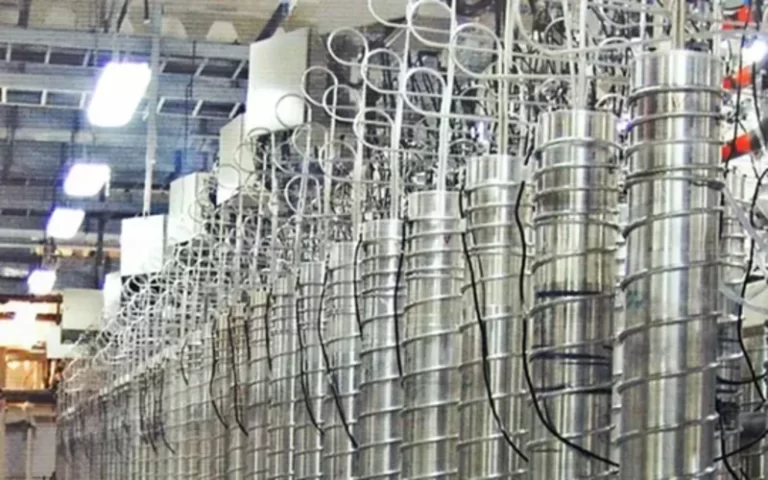
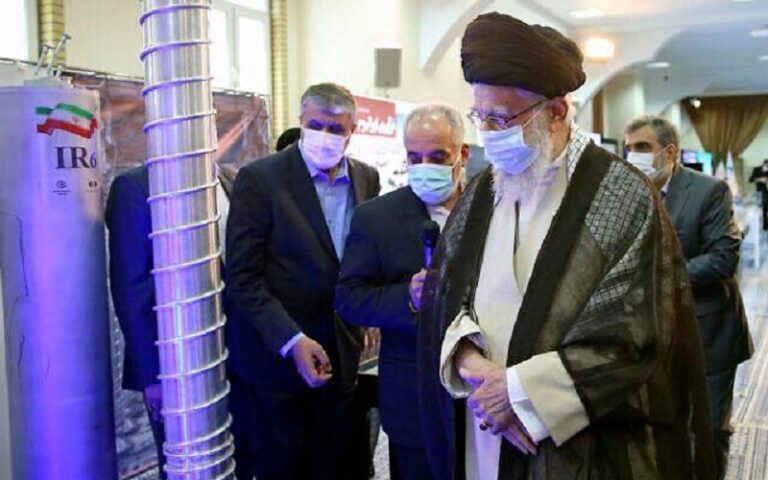
Reuters, citing a confidential report from the International Atomic Energy Agency (IAEA) seen by the news agency, wrote that the Iran’s regime informed the IAEA on June 10 and 11 that it would install eight cascades, each consisting of 174 IR-6 centrifuges, within three to four weeks at the Fordow facility.
According to the report, the IAEA confirmed on June 11 that the Iranian regime had completed the installation of IR-6 centrifuges in two cascades at Fordow and that installation in four other cascades was ongoing.
The confidential report on the Iranian regime’s nuclear program has been sent to the members of the organization.
The report also indicates that Iran, in a letter to the IAEA on June 11, announced its intention to install 18 cascades of IR-2m centrifuges at the underground Natanz enrichment facility.
According to Reuters, the Iranian regime has not specified the timing for this activity at Natanz.
Tehran’s new move comes a few days after the Board of Governors passed a resolution proposed by Britain, France, and Germany, known as the E3, on the Iranian regime’s nuclear program with 20 votes in favor, 12 abstentions, and two votes against.
The resolution calls on the Iranian regime to improve its cooperation with the IAEA and lift the ban on the entry of “experienced inspectors” from the agency.
On September 17, 2023, the Iranian regime revoked the licenses of a group of IAEA inspectors to operate in Iran.
Mohammad Eslami, head of the Atomic Energy Organization of Iran, defended Tehran’s decision in October 2023, stating that the reason for this action was the inspectors’ political maneuvering.
Earlier, on June 12, Reuters, citing five IAEA diplomats, reported that the Iranian regime had increased its uranium enrichment capacity at Fordow and Natanz in response to the Board of Governors’ resolution.
Amir Saeid Iravani, Iran’s ambassador and permanent representative to the United Nations, criticized the Board of Governors’ action on June 6, stating that Tehran has adhered to its commitments under the Non-Proliferation Treaty of nuclear weapons (NPT).
In a letter to the UN Security Council, Iravani wrote: “The claim that Iran’s nuclear program has reached a critical and irreversible point, along with claims that Iran’s peaceful nuclear activities pose a threat to international peace and security, are completely false and baseless.”
Ali Shamkhani, political advisor to the Supreme Leader of Iran, Ali Khamenei, and a member of the Expediency Discernment Council, also called Britain, France, and Germany “misguided” on June 1 and threatened that Tehran would give a “serious and effective response” to their proposed resolution.
Some media outlets in Iran had previously reported that the responsibility for the regime’s nuclear negotiations had been assigned to Shamkhani.
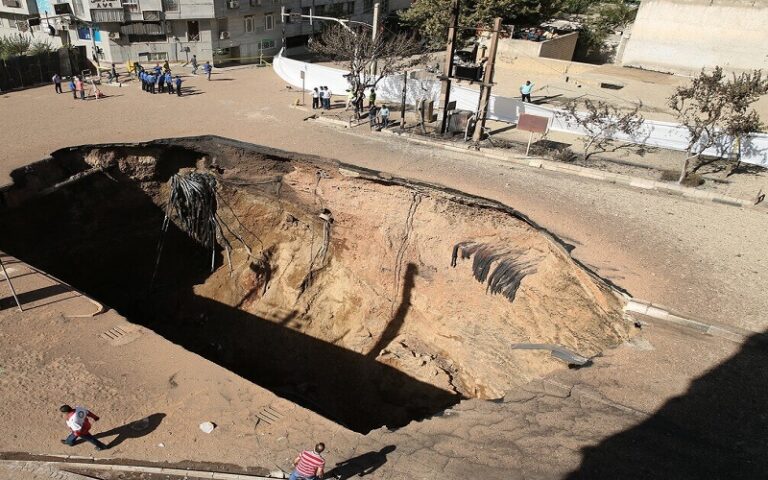
An Iranian regime official warned that the rate of land subsidence in Razavi Khorasan Province, eastern Iran, is 20 centimeters per year, and the subsidence has now reached “northwest of Mashhad.”
According to the state-run news agency ILNA, Ali Beitollahi, the secretary of the National Task Force on Earthquakes and Ground Displacement, stated that based on “studies” on the subsidence situation in Razavi Khorasan Province, “the subsidence areas in this province are five times larger than the subsidence areas in Isfahan.”
He said that currently, this province “holds the national record for the extent of subsidence areas” and warned that if human-induced subsidence continues at this rate, “the entire area of Mashhad will also be affected.”
Previously, Masoumeh Amighpey, the head of the Precise Leveling and Radar Interferometry Department of the National Cartographic Center of Iran, mentioned the creation of a comprehensive database on land subsidence and stated that the range of land subsidence has infiltrated 16 metropolitan areas in Iran, with 800 cities also located in subsidence zones.
According to Iranian media, during a webinar, she identified the worst risk of land subsidence as the threat to food security and explained that land subsidence causes soil loss and rapidly destroys agricultural lands, such as the Varamin plain, where some areas are no longer suitable for farming.
Salinization of groundwater, creation of sinkholes, and surface fissures are among the consequences of land subsidence, leading to devastating environmental damage.
According to this government official, the provinces of Semnan, Qazvin, Tehran, Alborz, Razavi Khorasan, and Kerman are in a critical situation regarding land subsidence.
Meanwhile, the director of the Earthquake and Risk Management Department at the Road, Housing, and Urban Development Research Center of Iran announced that of the 63 globally registered sites, 27 are at risk of land subsidence. Additionally, 16 centers and 18 active oil storage facilities are located in subsidence areas.
According to several critical experts, misguided policies, lack of proper planning, and mismanagement by the Iranian regime in the water sector are significant factors contributing to land subsidence and the environmental crisis in Iran.
Reuters news agency reported on Wednesday, June 12, citing diplomats, that the Iranian regime has expanded its uranium enrichment capacity at two of its underground sites in response to a resolution by the Board of Governors of the International Atomic Energy Agency (IAEA).
On June 5, the IAEA Board of Governors passed a resolution calling on the Iranian regime to “immediately” answer the questions from IAEA inspectors about the origin of uranium particles found at its undeclared sites.
The Iranian regime has previously responded to IAEA Board of Governors’ resolutions and following the passage of the previous resolution in 2022, it increased its uranium enrichment level to 60%, which is close to the level required for producing nuclear weapons.
Five diplomats, who requested anonymity, told Reuters that this time the Iranian regime intends to install more centrifuge cascades, uranium enrichment devices, at one of its underground facilities.
Three of these diplomats added that IAEA inspectors monitoring Iran’s progress are scheduled to present a report to IAEA member countries on Thursday regarding this matter.
Reuters, citing these diplomats, wrote that it is unclear why the scale of Iran’s response was less than expected, but “perhaps they are waiting for the new administration to take office.”
However, these diplomats said it is necessary to wait for the IAEA report to see a more detailed account of the expansion of enrichment capacity in Iran.
The IAEA Board of Governors’ resolution against Iran was passed on June 5 with 20 votes in favor. Additionally, two countries, China and Russia, opposed it, and 12 countries abstained.
The resolution considers the presence of experienced IAEA inspectors to monitor Iran’s nuclear activities to be “vital” and calls on Iran to lift the ban on these inspectors.
Officials from the Iranian regime’s Ministry of Foreign Affairs called the adoption of this resolution an “unconstructive” action. The spokesperson for the Iranian Atomic Energy Organization also stated that they would not yield to pressure.
The Iranian Ministry of Foreign Affairs stated that it is committed to continuing technical cooperation with the IAEA “within the framework of its international rights and obligations under the Non-Proliferation Treaty and the Safeguards Agreement.”
According to the Iranian Ministry of Foreign Affairs, the issuance of this resolution “has no impact on the determination to continue the peaceful use of nuclear energy” in accordance with the country’s rights under relevant international treaties.
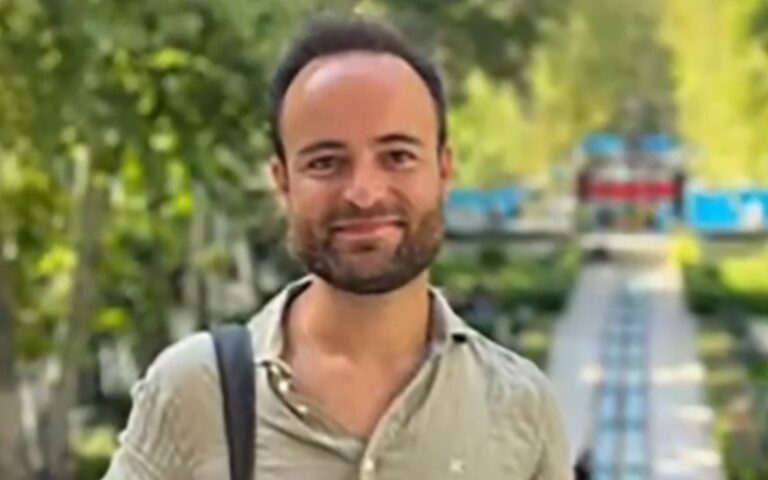
Louis Arnaud, a French citizen imprisoned in Iran who had been sentenced to five years on security charges, returned to Paris on Thursday after being released from prison.
According to images broadcast on French television, Louis Arnaud, tired but smiling, disembarked from a small plane at Le Bourget Airport in the suburbs of Paris, shook hands with Stéphane Séjourné, the French Foreign Minister, and then embraced his parents.
Holding hands with his relatives, Arnaud entered a private room at the airport, away from the cameras.
Stéphane Séjourné expressed happiness over the return of the French hostage.
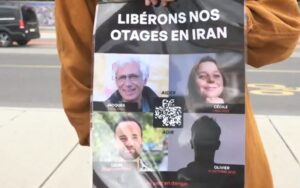
He added that our diplomatic service is still working to free three other French citizens: Jacques Paris, Cécile Kohler, and a man known only as Olivier, who are being held in Iranian prisons.
Arnaud, a 36-year-old consultant, began a world tour in July 2022, which brought him to Iran.
His mother, Sylvie, said a few months ago that it was a country he had long wished to visit because of its rich history and hospitable people.
But on September 28, 2022, he was arrested along with other Europeans accused of participating in protests over the death of Mahsa Amini in the custody of the Morality Police.
While Arnaud’s companions were soon released, he was held in prison until his November sentencing on charges of propaganda and harming Iran’s national security.
French President Emmanuel Macron on Wednesday, June 12, thanked Oman for its mediation and all those who played a role in Louis Arnaud’s release.
Louis Arnaud est libre. Il sera demain en France après une trop longue incarcération en Iran.
Je remercie nos amis omanais et tous ceux qui ont œuvré à cette issue heureuse.
Ce soir, je pense aussi à Cécile, Jacques et Olivier. J'appelle l'Iran à les libérer sans délai.
The French President also called on the Iranian regime to unconditionally release the other French citizens imprisoned in Iran.
4 French citizens imprisoned in Iran
Cécile Kohler, a teacher and union activist, and her partner Jacques Paris, who had traveled to Iran on tourist visas, were arrested in Iran on May 1, 2022.
Earlier, Bernard Phelan, a 64-year-old French-Irish citizen, and Benjamin Brière, a 38-year-old French tourist, both detained in Vakilabad Prison in Mashhad, were released on May 11, 2024.
Fariba Adelkhah, an Iranian-French researcher who had been released last winter but had been barred from leaving the country for months, was finally able to leave Iran and return to France.
Tehran has long used hostage-taking as a major component of its foreign policy to pressure its counterparts to give it concessions.
Human rights activists have consistently condemned this “hostage-taking” policy of the Iranian regime, calling these detentions “arbitrary.”
In its latest report on the global economic situation, the World Bank states that Iran’s GDP has been higher in recent years due to increased oil exports. However, this year and in the coming years, it will follow a downward trend.
According to this report, published on Wednesday, June 12, Iran’s GDP grew by 5% last year, but it is expected to decrease to 3.2% this year, 2.7% next year, and 2.4% in 2026.
The International Monetary Fund (IMF) had previously published a similar assessment of the deceleration in Iran’s GDP growth.
The World Bank attributes Iran’s 5% economic growth in 2023 to the country’s exemption from the OPEC oil production cut agreement, which led to increased oil exports and production, along with a relative improvement in the service sector.
Reports from Iran’s Central Bank and the Statistical Center of Iran also indicate that the relatively high economic growth last year was due to a 21% increase in the oil sector and a 17% increase in government spending (at constant 2011 prices).
Data from the commodity information company Kpler shows that Iran’s oil exports reached 1.5 million barrels in mid-winter last year, which is 50% more than the same period in 2022. However, there has been no growth since then.
OPEC statistics indicate that from the beginning of the current Iranian year (March 21), Iran’s daily oil production reached 3.207 million barrels, which is 23% more than last March. However, it has only grown by 20,000 barrels since then.
According to the World Bank, Iran’s economic growth is expected to be only 3.2% in 2024, but this growth is also facing challenges such as sanctions, global oil demand, and domestic energy shortages.
Iran faces severe power shortages in the summer, forcing power cuts in the industrial sector, which affects the country’s industrial production.
In winter, the country also faces a severe gas deficit, and the government restricts gas supply to the cement, steel, and petrochemical sectors.
The annual loss due to electricity and gas outages in Iran’s industrial sector is estimated to be around $5-$8 billion.
The World Bank also predicts that global economic growth this year will be around 2.6%, which is unchanged from last year, and will be around 2.7% for the next two years.