

Oil Workers on Strike in Multiple Regions Across Iran
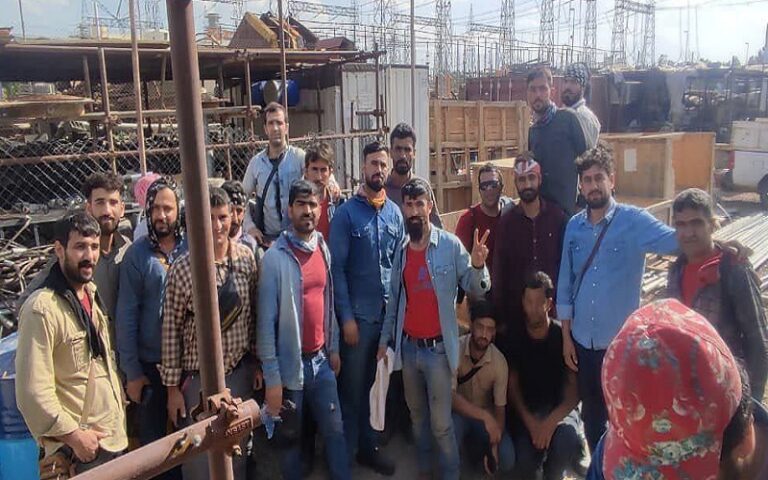
Two labor organizations reported on Thursday, June 20, that a number of project workers from several companies in oil regions have gone on strike. Some reports have stated that the number of striking workers is at least 3,000.
The Council of Organizing Informal Oil Workers noted that the project workers had previously announced they would start protests if their demands were not met by June 20. It wrote, “Contractual project workers at Dasht Abbas, Samin, and Darbast Bandon Zamani Company went on strike on Wednesday, June 19, demanding higher wages and a schedule of 14 days of work followed by 14 days of rest.”
The Council for Organizing Protests of Oil Contract Workers also reported that workers employed by a contracting company at the Salman Farsi Petrochemical Plant went on strike on Thursday, demanding higher wages and a 14-day work and 14-day rest schedule.
The received reports indicate the formation of protest cells in other project sectors.
This labor organization emphasized that an important demand of the project workers, like us third-party workers, is the elimination of contractors and added, “There should be no difference in the wage and living conditions of workers who work for oil, gas, and petrochemical companies.”
The Council of Organizing Informal Oil Workers (third-party workers or those working with specific contracts for oil companies) declared that “there should be equal pay and equal working conditions for the same work” and wrote, “It is the right of all of us third-party, temporary, volume, daily wage, specific contract, contractual, and project workers to enjoy all the job benefits of the oil industry like the official workers.”
Meanwhile, reports from Telegram channels of some labor organizations and retirees indicate that project workers from 30 companies in refineries, petrochemicals, and other oil, gas, and power plant centers, mainly in southern Iran, went home after handing in their tools.
According to this report, more than 3,000 workers have joined the campaign so far.
Project (contract) workers have gone on strike several times in recent years to protest their living conditions. Additionally, the number of labor protests, such as strikes and gatherings, has been on the rise in various parts of Iran in recent years. These protests have mainly been directed at the non-payment of wages on time, low wages, layoffs from factories and companies, and privatization.
Meanwhile, the regime’s Etemad newspaper reported on Thursday that “an examination of labor protests over the past 27 months from March 2022 to June 2024 shows that during this period, thousands of coal, copper, iron ore, and chrome mine workers in the provinces of Kerman, Mazandaran, Yazd, Razavi Khorasan, South Khorasan, and Semnan have demanded their legal rights in gatherings that lasted from a few hours to several days and weeks.”
According to this report, “while out of the 12 protest gatherings of mine workers in these 27 months, the common focus of 10 protest gatherings was the increase in wages and several months’ delay in wage payments. In these protests, the line of coal mine workers has been much longer, and it seems that the ground for the violation of the rights of underground mine workers is more extensive.”
Iran-Backed Houthis Sink Second Commercial Ship in the Red Sea
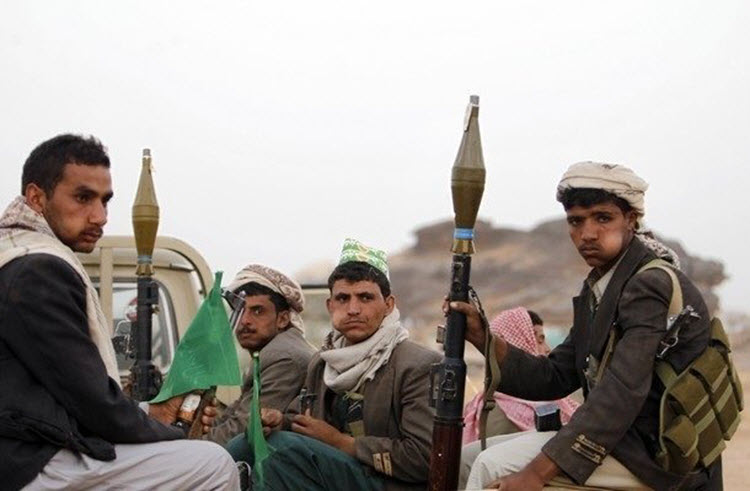
On Wednesday, June 19, the world’s top shipping companies released a joint statement after the sinking of a second ship in the Red Sea, calling for immediate actions to stop Yemeni Houthis’ attacks on commercial ships in the Red Sea and the Gulf of Aden.
The Greek-owned cargo ship Tutor was attacked by Iran-backed Houthis last week, and observers confirmed its sinking on Wednesday. This is the second commercial ship to sink due to Houthi attacks in the region. The Houthis have also seized another ship and its crew.
The Houthis began their drone and missile attacks on ships in the Gulf of Aden and the Red Sea in November, claiming solidarity with the people of Gaza. Three sailors have been killed in these Houthi attacks.
Sabrina Singh, the Deputy Pentagon Press Secretary, reported on Tuesday, June 18, that the Houthis have carried out about 190 attacks since they began their assaults.
The world’s top shipping companies said in their joint statement that it is deplorable that innocent seafarers are being attacked while simply performing their duties, transporting energy, food, and clothing to various parts of the world.
Reuters, citing informed sources, reported that the Tutor ship was hit by a missile and a remotely controlled boat filled with explosives.
International naval forces have been deployed in the region to provide defensive support to ships still navigating the Red Sea, but Houthi attacks have significantly increased.
Reuters also reported, citing sources in the insurance industry, that there are growing concerns about the Houthis’ use of unmanned assault boats.
Munro Anderson, head of operations at maritime war risk and insurance specialist Vessel Protect, also told that the Houthis, who carried out five attacks in May, have conducted ten attacks so far in June.
Informed sources in the insurance industry said that the additional war risk premium, which is paid when ships pass through the Red Sea, has recently been around 0.7% of the value of a ship, down from about 1% earlier this year.
They added that with the sinking of the second ship and the potential damages resulting from it, the increased insurance rates are likely to remain stable, adding hundreds of thousands of dollars in additional costs to the voyages of ships passing through the Red Sea and the Gulf of Aden.
Stephen Cotton, the general secretary of the International Transport Workers’ Federation, said that ships should change their routes towards South Africa. This is the best way to protect the seafarers.
He added that they also welcome proper escort and protection of the ships by naval forces, as this measure reduces the risks of ships being hit.
Arrest of Suspect in Shooting of Spanish Politician Supporting Iranian Opposition
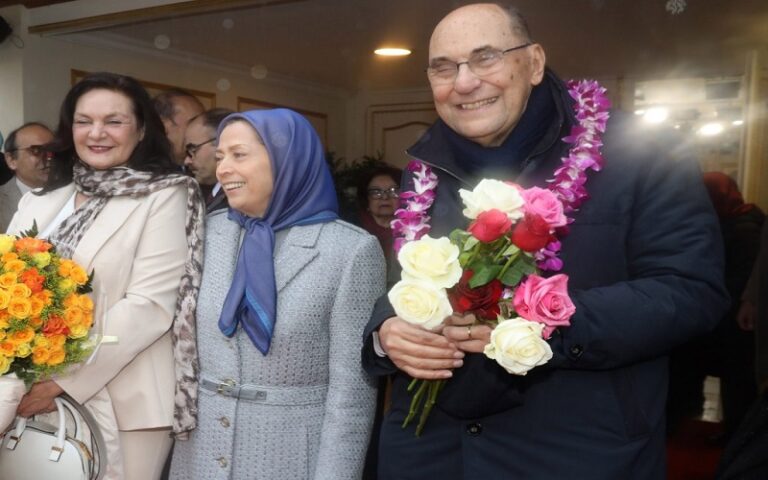
Spanish authorities announced on Wednesday, June 19, that another suspect related to the shooting of Alejo Vidal-Quadras, the former leader of the People’s Party of Catalonia, has been arrested in the Netherlands.
The suspect, a Frenchman with Tunisian citizenship, has a criminal record and, according to the Spanish police, is the sixth person to be arrested in connection with this assassination attempt. Another suspect was arrested in Colombia.
The arrest of the suspect in the Netherlands was carried out based on an international warrant issued by the Spanish court. Spanish police had identified the suspect using CCTV footage from the area.
Alejo Vidal-Quadras, who was Vice President of the European Parliament from 2009 to 2014, was attacked in Madrid in November last year. He firmly believes that the “Iranian regime” is responsible for this act.
Vidal-Quadras, who has close ties with the National Council of Resistance of Iran, has decisively said the Iranian regime is involved in this assassination attempt. He confidently states that the “Iranian regime” was behind this attack.
Alejo Vidal-Quadras was attacked in Madrid in November 2023 and strongly believes that the “Iranian regime” is responsible for this action.
Vidal-Quadras, 79, was shot while walking last November, resulting in a broken jaw and a bullet passing close to his neck and brain.
The Iranian regime had placed Vidal-Quadras and several other supporters of the Iranian resistance on the sanctions blacklist in October 2022.
Among these officials are Steve McCabe, Bob Blackman, and Theresa Villiers, members of the UK House of Commons, as well as U.S. Senator Joe Lieberman, General George William Casey, and former U.S. Secretary of State Michael Pompeo.
Canada Designates IRGC as a Terrorist Organization
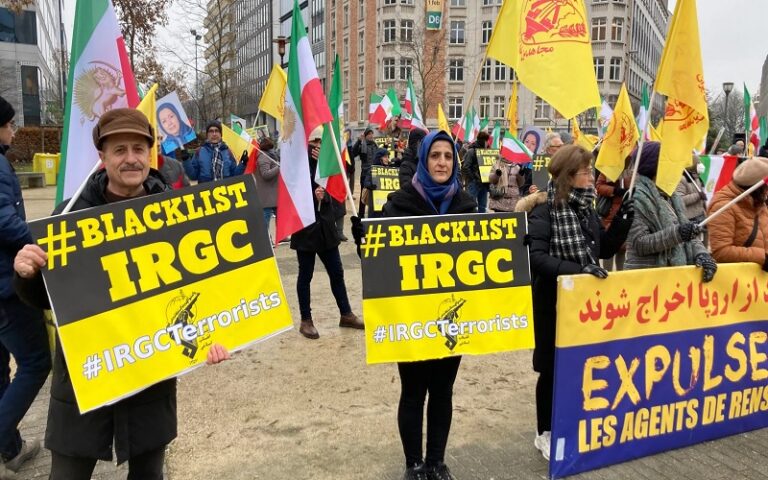
The Canadian government has officially declared the Islamic Revolutionary Guard Corps (IRGC) as a “terrorist organization” and has asked its citizens to leave Iran.
Following this action by the Canadian government, Prime Minister Justin Trudeau posted on X: “The IRGC is now listed as a terrorist group in Canada.”
According to Fars News Agency, Nasser Kanaani, the spokesperson for the Iranian Ministry of Foreign Affairs, condemned Canada’s decision and said, “This repulsive action will have no effect on the IRGC’s legitimate and deterrent power production and the increase in its level and scope of authority.”
He added, “We reserve our right to respond appropriately and reciprocally.”
Kanaani described the Canadian government’s decision as a “hostile move contrary to the accepted principles of international law, including the equality of sovereignties and non-interference in the internal affairs of states, and an example of aggression against Iran’s national sovereignty,” and strongly condemned it.
He also claimed that the IRGC is “a sovereign entity emerging from the heart of the Iranian nation.”
This claim is made despite the fact that Iranian citizens have had no say or vote in the establishment or continued activity of the IRGC, and protesting citizens have repeatedly chanted slogans such as “Basiji, IRGC, you are our ISIS” during nationwide protests.
In a press conference on Wednesday, June 19, Dominic LeBlanc, the Canadian Minister of Public Safety, said that the government had decided to designate the IRGC as a terrorist organization under criminal regulations.
He accused the Iranian regime of supporting terrorism, violating human rights “inside and outside of Iran,” and seeking to destabilize the rules-based international order.
Mr. LeBlanc told reporters that Canada uses all possible tools to combat the IRGC’s terrorist activities.
He added that the designation of the IRGC as a terrorist organization is based on very strong and convincing evidence.
The Minister of Public Safety in Justin Trudeau’s cabinet also clarified in response to the question of why it took Canada so long to take this action that the decision to designate the IRGC as a terrorist organization was made based on law and the recommendations of security organizations, not as a result of political pressures.
After the Canadian government declared the IRGC as a terrorist organization, the country’s Foreign Minister, Mélanie Joly, pointed out that Ottawa had cut diplomatic relations with Tehran years ago and advised Canadians to avoid traveling to Iran.
She added that for those currently in Iran, it is time to return home.
Mrs.Maryam Rajavi, the president-elect of the National Council of Resistance of Iran (NCRI), wrote:
“The Iranian Resistance has been advocating for this designation for years. This measure is essential in response to four decades of suppression, terrorism, and warmongering by the regime.”
Among the officials of the Iranian regime, according to Fars News Agency, Nasser Kanaani, the spokesperson for the Ministry of Foreign Affairs, condemned Canada’s decision and said, “This repulsive action will have no effect on the IRGC’s legitimate and deterrent power production and the increase in its level and scope of authority.” He added, “We reserve our right to respond appropriately and reciprocally.” Meanwhile, Kazem Gharibabadi, the Deputy for International Affairs of the Judiciary, called the Canadian government’s declaration of the IRGC as a terrorist organization “hostile” and condemned it on the social media platform X. Opposition parties to Justin Trudeau’s government intensified their calls to add the IRGC to the list of terrorist organizations following the Iranian regime’s airstrike on Israel. In October 2022, Ottawa clarified that such an action might “unfairly” lead to the arrest of those Iranians in Canada who had been forced to serve in this force and have now fled the country and come to Canada. Canada had previously listed the Quds Force, the IRGC’s external branch, as a terrorist group. Ottawa also cut its diplomatic relations with Tehran in 2012. On Wednesday, Canada’s CBC TV reported that when a group is listed as a terrorist organization, the country’s police can charge anyone who financially or materially supports this group, and banks can also freeze their assets.Canada's designation of the #IRGC as a terrorist entity is a commendable step, deserving congratulations to the parliament and government of #Canada.
— Maryam Rajavi (@Maryam_Rajavi) June 19, 2024
The Iranian Resistance has been advocating for this designation for years. This measure is essential in response to four decades… pic.twitter.com/ihFFWrgYwK
Iranian Workers Continue Protests Due to Unemployment and Unpaid Wages
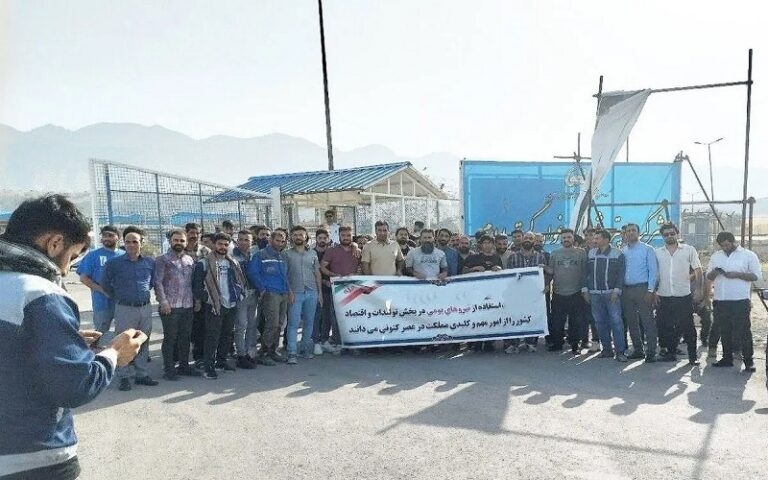
The workers of the old Darougar factory in Tehran, which was handed over to the public sector last year to prevent its closure, say they have about “four months of unpaid wages and seven months of unpaid insurance” and have repeatedly protested in the factory yard.
According to the state news agency ILNA, a Darougar worker reported on Wednesday, June 19, that due to the protest over arrears, “yesterday morning, one of the factory’s production workers with at least 20 years of experience was denied entry to his workplace by the employer’s order.”
This labor activist said that the workers of this factory are being threatened with dismissal and added that in recent months, several workers who had “asked some officials for help due to livelihood problems caused by not receiving wages” were dismissed.
The old Darougar factory was once one of the major producers of detergents and hygiene products in the Middle East and employed over 1,800 workers. However, according to this labor activist, “the number of workers has now dropped to 42.”
Last year, the Darougar factory was threatened with closure due to managerial incompetence and a lack of raw materials for production, and it finally survived by being transferred from the private sector to the “Industrial Support Board” in August 2023 and reducing its workforce.
Regarding the shutdown of Darougar factory’s production lines, this labor activist said that “the factory’s production activity has reached a minimum” and added that “currently, out of two production lines for shampoo and dishwashing liquid, only one line is operational due to a lack of raw materials.”
Expressing concern about the possibility of non-renewal of workers’ contracts, he said, “In total, 42 workers in the Darougar Tehran complex are employed in production, security, guarding, and administrative sectors, and all workers’ contracts will expire at the end of this month.”
In another news report, a labor activist in Chovar County, Ilam province, reported on the continuation of protests by laid-off workers in the “Arghawan Gostar Petrochemical Project” in Ilam. This protest began early last week.
This labor activist reported that some project workers in Arghawan Gostar Petrochemical “became unemployed with the end of the contractor’s contract, and the trend of unemployment continues for other workers.”
Last week, several laid-off workers from the Arghawan Gostar Petrochemical Project in Ilam gathered in front of the entrance gate of this complex.
These workers, most of whom worked in connections, installation, and equipment sectors, became unemployed with the completion of the project.
The labor activist from Chovar emphasized that after years of effort in this project, “it is the right of local workers” to be prioritized for employment after the operation of the Arghavan Gosar Petrochemical Project in Ilam.
The history of petrochemical workers’ protests in recent years has led to violence and worker suicides, with six instances of economic suicides occurring in the past two years alone at the Chovar Petrochemical Plant.
At Least 9 Killed in Fire at Hospital in Iran’s Rasht
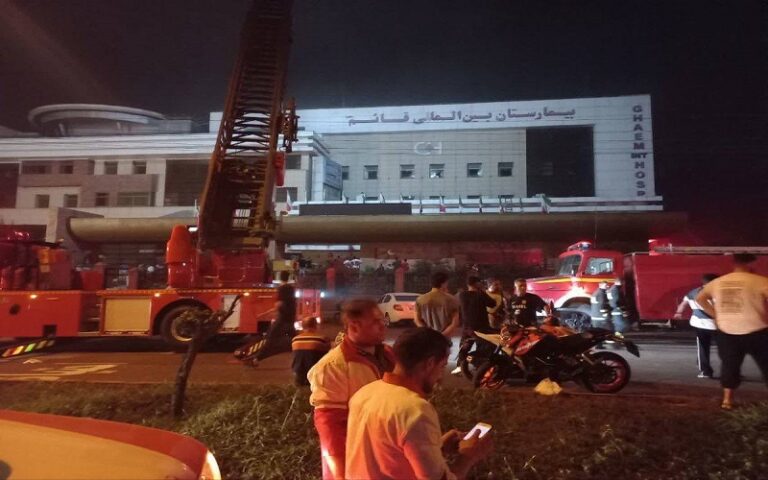
Reports from Iranian news agencies indicate that at least nine people lost their lives in a fire at the private Qaem Hospital in Rasht.
This 250-bed hospital caught fire at 1:13 AM on Tuesday, June 18.
Sadegh Niaraki, the Chief Justice of Gilan Province, told Iranian state television that following the incident, eight people who were hospitalized in the ICU lost their lives, and 120 injured were also admitted to other medical centers.
Hours later, it was announced that the death toll had increased to nine.
Mohammad Taghi Ashoobi, the President of Gilan University of Medical Sciences, stated that about 140 patients were hospitalized at the time of the fire.
The head of the Rasht Fire and Safety Services Organization also mentioned that the fire started from the basement but did not refer to the cause of the incident.
On November 3, 2023, 36 people lost their lives in a fire at the “First Step to Liberation” addiction rehab center in the city of Langarud, Gilan Province.
On January 5, the Gandhi Hospital in Tehran also burned down. The CEO of the Tehran Fire Department told ISNA news agency that “if a thousandth of the damage caused to this hospital had been spent on safety, this incident would not have occurred on such a scale.”
The Iranian regime has a long history of not adhering to safety regulations in buildings, and fires and collapses of buildings in Iran claim many lives annually. In December 2016, the Plasco Building in Tehran caught fire and subsequently collapsed, resulting in at least 25 deaths.
On May 23, 2022, the Metropol Building in Abadan collapsed while still under construction. The cause of the collapse was the lack of safety measures and security checks by the municipality. In this incident, 43 people lost their lives.
Amnesty International: Hamid Nouri’s Release a “Staggering Blow” to Survivors, Families of 1988 Massacre
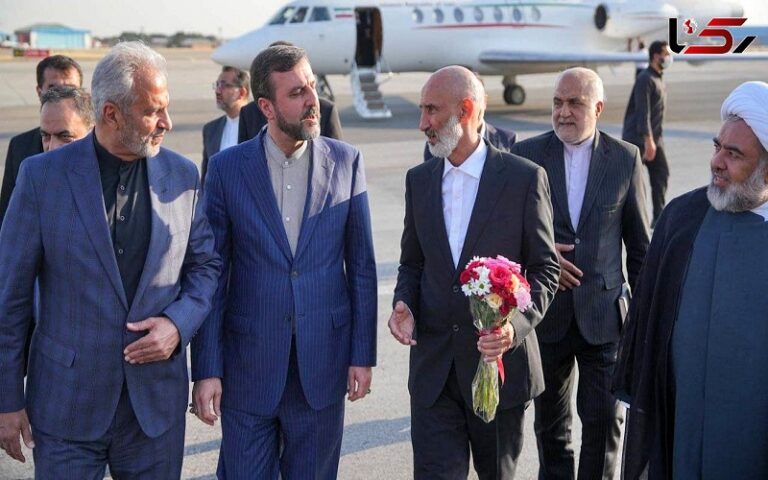
In a statement, Amnesty International described the “shocking release” of Hamid Nouri, a former deputy prosecutor of Gohardasht Prison, who was sentenced to life imprisonment by the Supreme Court of Sweden for his involvement in the execution of thousands of political prisoners in Iran in 1988, as a “staggering blow” to the survivors and families of the victims.
In this statement, released on Tuesday, June 18, Amnesty International warned that the prisoner exchange between the Iranian regime and Sweden would fuel a “crisis of impunity” in the Iranian regime.
According to this human rights organization, the decision of the Swedish government not only emboldens Iranian regime officials to commit more crimes under international law, including “hostage-taking, without fear of consequences,” but also undermines the “right to justice” and raises concerns about the Swedish government’s commitment to international law.
Amnesty International emphasized that the conditions of Hamid Nouri’s pardon by the Swedish government and his return to Iran are evidence of the organization’s previous concerns that Iranian regime officials take Swedish citizens hostage for prisoner-swap deals.
Amnesty International also pointed to the danger of the execution of Ahmadreza Djalali, a Swedish-Iranian citizen who remains arbitrarily detained by the Iranian regime, especially given the ongoing and worrying executions in Iran, and has called on Swedish authorities to immediately take all actions for his release and return home.
Ahmadreza Djalali went to Tehran in the spring of 2016 at the invitation of Tehran University for a lecture and was arrested. Iranian regime judicial authorities have sentenced him to death on spying charges.
In an audio file, this Iranian-Swedish doctor told the Swedish Prime Minister that “you left me with the great danger of execution in Evin Prison. You did not fight either for my situation or for the annulment of my death sentence.”
In its statement, Amnesty International also reiterated its calls on Swedish authorities to “criminally investigate all Iranian officials suspected of criminal responsibility for the crimes under international law and human rights violations committed against Ahmadreza Djalali, including torture, on the basis of the principles of universal jurisdiction and passive personality jurisdiction.”
In part of its statement, Amnesty International pointed to the continuation of the “systemic impunity” crisis concerning the commission of crimes and serious human rights violations by Iranian regime officials and the lack of criminal prosecution of them according to international standards.
According to this human rights organization, as a result of this crisis, not even a single Iranian regime official has been investigated concerning the massacre of political prisoners in 1988, let alone tried and punished.
Amnesty International stated that the verdict against Hamid Nouri in Sweden, issued after three decades of efforts by survivors and the families of victims, was the first time that an Iranian regime official was held accountable in this regard.
The organization added that those seeking justice and truth are now “horrified” by the message that the prisoner exchange sends to Iranian regime officials that their crimes will go unpunished.
In continuation of its statement, Amnesty International has called on all governments to prosecute all former and current Iranian regime officials involved in crimes against humanity and other crimes under international law.
Hamid Nouri, a former deputy prosecutor of Gohardasht Prison, was sentenced to life imprisonment by the Supreme Court of Sweden for his involvement in the execution of thousands of political prisoners in the 1980s. This is the highest punishment under Swedish law. This verdict was issued after more than 90 court sessions with the presence of plaintiffs and witnesses, including members and supporters of the People’s Mojahedin Organization of Iran (PMOI/MEK), who constitute the main victims of the 1988 massacre of more than 30,000 political prisoners in Iran.
The release of Hamid Nouri and his return to Iran sparked a wave of public outrage from Iranian resistance and widespread reactions from political and human rights figures.
Mrs. Maryam Rajavi the president-elect of the NCRI said: All prisoners, torture survivors, plaintiffs, families of the massacre victims, and the entire Iranian nation strongly condemn the release of Hamid Noury. They neither forgive nor forget.
IAEA: Iran’s Regime Capable of Producing Latest Generation of Centrifuges
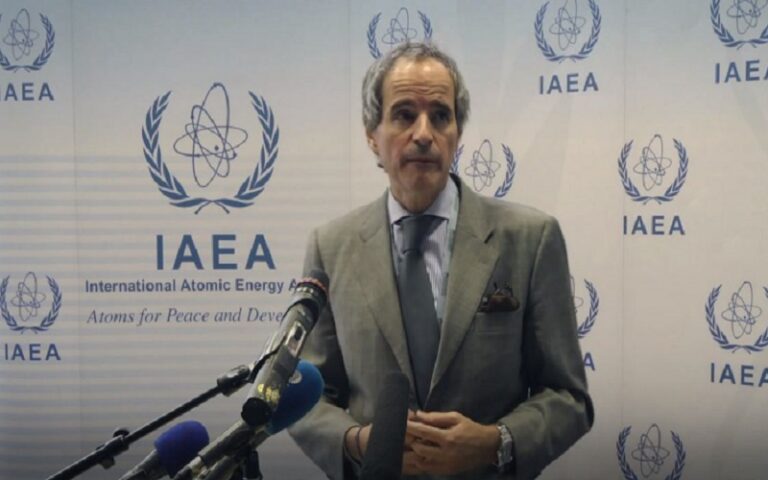
Rafael Grossi, the Director General of the International Atomic Energy Agency (IAEA) announced that since the signing of the JCPOA in 2015, Tehran’s nuclear program has significantly developed. According to Rafael Grossi, the Iranian regime is capable of producing the latest generation of centrifuges, building new facilities, and taking actions far beyond these.
In an interview with the Russian newspaper Izvestia published on Monday, June 17, Grossi emphasized that the Iranian regime is not considered a completely reliable actor on the international stage and the world is suspicious of Tehran’s nuclear activities.
His remarks come a few days after the Board of Governors approved a resolution proposed by Britain, France, and Germany, known as the Troika, regarding Tehran’s nuclear program with 20 votes in favor, 12 abstentions, and 2 votes against.
The resolution calls on the Iranian regime to improve its cooperation with the IAEA and lift the ban on the entry of “experienced inspectors” from the Agency.
On September 17, 2023, the Iranian regime revoked the permits of a group of IAEA inspectors operating in Iran.
In continuation of his interview with Izvestia, Grossi, while acknowledging the statements of Iranian officials regarding the high number of IAEA inspections of Iranian nuclear facilities, said there are convincing reasons for this.
He added that the IAEA does not follow an anti-Iran policy. “We are not saying that Iran should not use its technological skills and capabilities. Not at all. We are simply saying that the necessary access [for IAEA inspectors] to [Iranian nuclear facilities] will benefit both parties,” he said.
Earlier, Reuters, citing a confidential IAEA report, wrote that on June 9 and 10, the Iranian regime informed the Agency that it would install eight cascades, each containing 174 IR-6 centrifuges, within three to four weeks at the Fordow facility.
This action by Tehran was taken in response to the recent resolution by the Board of Governors.
Grossi: The JCPOA has lost its meaning
In his interview with Izvestia, Grossi emphasized the necessity of returning to diplomacy to resolve the Iranian nuclear issue and simultaneously warned that the JCPOA now exists only on paper and has no meaning. “Nobody applies it, nobody follows it.
According to the IAEA Director General, efforts were made to revive the JCPOA in Vienna, but unfortunately, despite being relatively close to success, they failed for reasons unknown to him.
The European Union wrote in a statement on June 4 that ensuring the Iranian regime does not acquire nuclear weapons is one of the Union’s main security priorities.
The statement expressed regret that Iran has not taken the necessary decisions to return to its nuclear commitments under the JCPOA.
Ali Khamenei, the leader of the Iranian regime, emphasized the continuation of the Iranian regime’s nuclear program on April 24 and considered the sanctions as a means for “flourishing talents” and the emergence of “domestic capacities.”
Morality Police Continues to Patrol the Streets of Iran
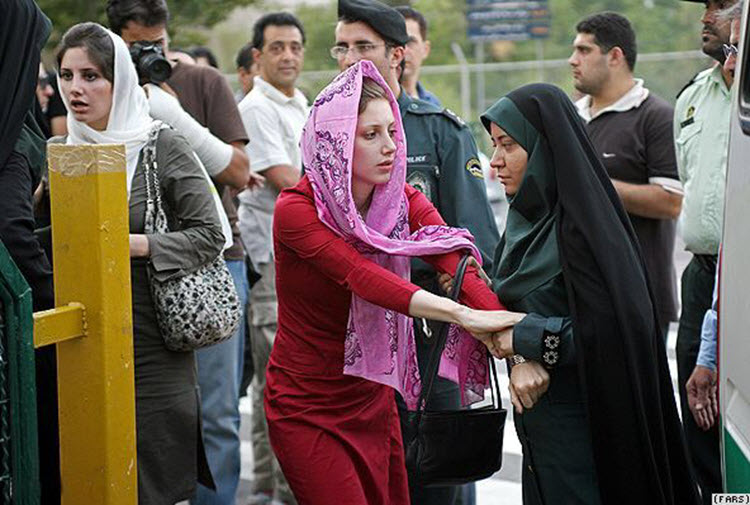
The broadcast of violent arrests of two women by the Morality Police on Sunday, June 16, on social media has brought the suppression of women under the pretext of mandatory hijab to the forefront of discussions among social media users. This coincides while the candidates of the upcoming presidential elections are avoiding responsibility and their history of supporting the Morality Police and hijab enforcers.
In videos circulating on social media, Iranian women in Tehran are seen being violently taken into police vans by the Morality Police.
These images quickly spread among social media users, sparking their anger and protests against what they see as an “election show.”
The issue of the Morality Police has become a central topic in the debate among the three candidates vying for the presidency, to the extent that it has led to revelations and accusations among government insiders.
Mohammad Fazeli, a sociologist close to the government faction, indirectly criticized Alireza Zakani for avoiding defending the necessity of hijab enforcers (those who admonish or arrest women deemed improperly veiled in metro stations). In the Ham-Mihan newspaper, he asks: “If the majority of Iranians support the Morality Police, mandatory hijab, and the Noor Plan, as proponents of these policies claim, why do principlist candidates not openly defend the Morality Police to increase their votes? They know their claims are baseless.”
Meanwhile, Mashregh News, a website close to the principlists, exposed Masoud Pezeshkian’s alignment with Ali Motahari in questioning then-President Mahmoud Ahmadinejad about the Morality Police. It writes: “For instance, Masoud Pezeshkian signed a petition in 2011 questioning why the chastity and hijab plan had not been implemented. This former parliament member later stated that hijab is law and must be enforced.”
Yesterday, during the presence of the reformist-supported candidate at a student meeting, the Islamic Association of Students at Sharif University of Technology issued a statement addressing Masoud Pezeshkian, saying, “We are tired of your daily colorful deceptions.”
On June 17, during Masoud Pezeshkian’s campaign appearance among students, the secretary of the Islamic Association at Sharif University addressed this government-endorsed candidate, saying, “You see yourself as a doctor who has come to give artificial respiration to the lifeless body of democracy; whereas this body is on its way not to the treatment room, but to the cemetery.”
Iran’s Water Resources Enough for Only 50 million People, Even with Rainfall
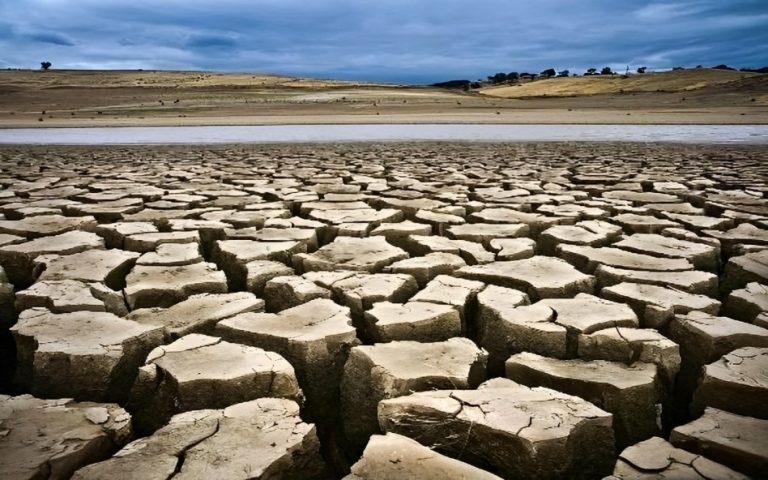
Mohammad Jafar Nazem Al-Sadat, head of the Center for Atmospheric and Oceanic Sciences Research at Shiraz University, says that even if the average rainfall in the country returns to normal levels, Iran’s water resources will only suffice for “between 40 to 50 million people.”
On Sunday, June 9, Mohammad Jafar Nazem Al-Sadat, mentioned that some provinces of Iran experienced near-normal rainfall this year and told the ILNA News Agency: “Approaching the average rainfall is for a situation where the country’s population was between 40 to 50 million, and now with double the population, even if the rainfall is within normal ranges, it is not sufficient.”
This atmospheric sciences researcher further stated: “Currently, water reserves in Iran are depleted and there is no water for storage, and in this situation, if in a season like this spring some provinces experience near-normal rainfall, it does not mean that this amount can compensate for the shortages.”
He then explained that the number of drought periods in Fars province is higher than wet periods and said: “We are constantly facing water stress, and subsidence means the end of the soil’s water absorption capacity.”
Iran has been struggling with severe water shortages and the resulting environmental crises for over a decade.
The insufficiency of water resources for about half of Iran’s population is being discussed while two senior officials of the Islamic Revolutionary Guard Corps (IRGC) called for an increase in Iran’s population during a speech at the “Youthfulness of Population Conference” on Saturday, June 8.
Hossein Salami, Commander-in-Chief of the IRGC, said at this conference: “If the population growth rate does not become exponential, the society will age, and an aging society is doomed to perish.”
Additionally, Mohammad Reza Naqdi, another official of this military-security institution, criticized Iranian citizens’ reluctance to marry and have children and stated: “Population decline is the most important issue in the country, and we are facing a very serious threat today.”
Ali Khamenei, the Iranian regime supreme leader, initiated the population growth project in the early 2010s, with keywords such as “population increase,” “childbearing,” and “youthfulness”; keywords that, after a decade, have been incorporated into Iran’s laws and financial documents.
Khamenei describes “population increase” as one of the tools of the country’s power and seeks to achieve a population of 150 million people.
In the 2023 budget law, at least 108.99 trillion rials (approximately $181.65 million) in direct credits have been allocated for the “population project.”
This amount is about seven times the central credits of the Ministry of Science, about four times the budget of the Ministry of Labor, Cooperation, and Social Welfare, nearly twice the credits of the Ministry of Agriculture Jihad, and three times the total credits of the Environmental Protection Organization.
