

Purchasing Power of Iranian Workers Halved in Past Year
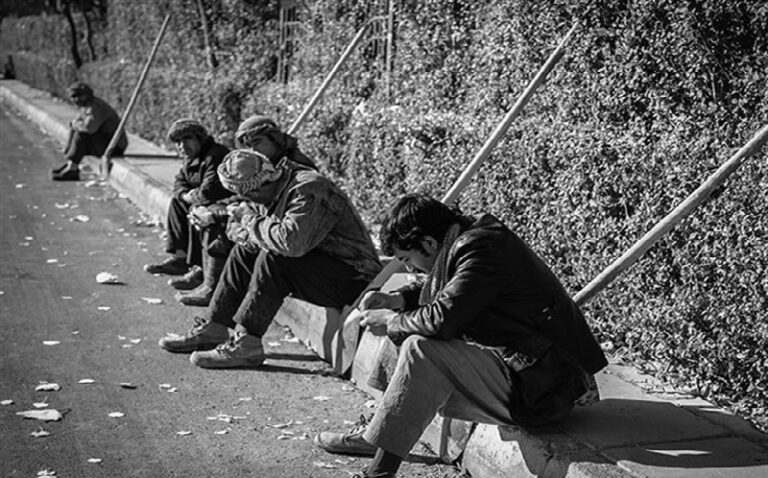
According to the state-run Etemad newspaper, the “minimum wage” for 2023, which started with a minimum of 50% inflation, only grew by 20% compared to last year.
This trend has led to the real wages of workers being halved from the beginning of the year until now.
Etemad newspaper reported on Sunday, January 14, that the “daily minimum wage” for the working class has reached about 1.77 million rials (approximately $3.35) for this year, which is significantly lower than the purchasing power of a wide range of goods and most food items in Iran.
Based on this, the daily income figure of 1.77 million rials for 2024 is likely to increase by about 20% and will be slightly over 2 million rials (approximately $3.8) per day. However, due to the inflation gap between this year and the next, this new figure will be even further from the value of a basket of minimum food items.
On Saturday, January 13, the regime’s Donya-ye Eqtesad newspaper discussed the increase in the cost of food items (caused by inflation) and its impact on workers’ monthly wages. It stated that a worker who is the head of a four-person household would have to spend about 65% of their income to provide a minimal basket of food items.
Etemad newspaper asked the question, “Why are food items important, and why should the government reconsider the minimum wage for the coming year?” It stated that after the high inflation of food items caused by the elimination of preferential exchange rates, a significant portion of the income of lower-income groups was spent on food expenses. This is why statistical reports have different “inflation importance coefficients” for different income groups.
Meanwhile, on December 26, 2023, the state-run Ham-Mihan newspaper reported that “the purchasing power of workers with the minimum wage has decreased by more than 65% since 2016 and has fallen below half.” It also stated that “the real minimum wage for workers this year has reached the lowest level in the past 28 years.”
On January 7, Hossein Goodarzi, a member of the regime’s Majlis (parliament), addressed the regime’s president, Ebrahim Raisi in a public session and said, “People will not tolerate over 40% inflation and increasing prices of food and living items, especially the price of meat at 600,000 tomans per kilogram.” He asked him to take action as soon as possible.
On January 9, Iranian media reported an “increase in the poverty index” in 14 provinces compared to the same period last year during the autumn of this year. According to this report, Chaharmahal and Bakhtiari province had the highest level of poverty, while Tehran province had the lowest level.
17% Increase in School Dropouts in Iran
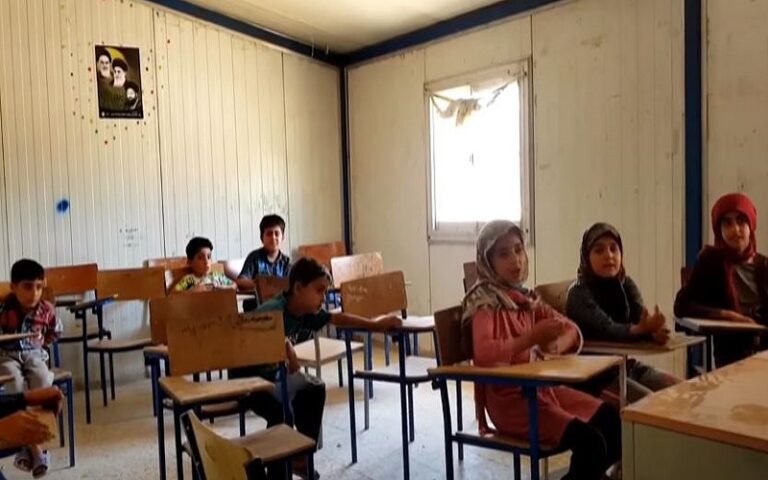
The regime’s Tejarat News website reported a 17% increase in school dropouts in the previous academic year compared to the 2015-2016 academic year. Tejarat News, citing the regime’s Majlis (parliament) Research Center, wrote that over 911,000 individuals dropped out of school in the past academic year.
The report emphasized that more than 279,000 individuals also discontinued their education during this period.
The report reads in part that more than 279,000 individuals also dropped out of school during this time period.
These statistics were released at a time when, according to published statistics from the Statistical Center of Iran, nearly 930,000 students dropped out of elementary, middle, and high schools during the academic year.
Based on these figures, more than 175,000 elementary school students, 198,000 middle school students, and 557,000 high school students have discontinued their education.
The Statistical Center of the Iranian regime had also announced in October 2023 that at least “556,000 young Iranians” are forced to drop out of school” before entering high school due to reasons primarily related to “poverty and deprivation.”
A review of inflation statistics shows that inflation in Iran was around 10% in 2016 and 2017, but it rose to over 27% in 2018.
In 2019, inflation reached 35%, and in 2020 it exceeded 36%. In 2021, inflation surpassed the 46% mark, and in 2022, the country’s inflation rate remained above 46%.
These statistics are derived from official reports of the Iranian regime. The Iranian regime has a long history of manipulating statistics, and the actual figures are much higher.
Hundreds of Buildings in Tehran at Risk of Fire
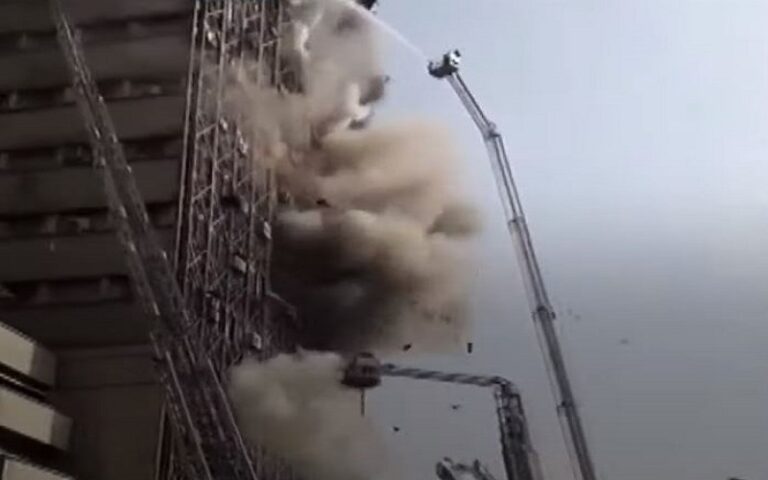
According to Ghodratollah Mohammadi, the CEO of the Tehran Fire Department and Municipal Services, “50 percent of the government buildings” in the capital do not have the organization’s approval.
On Thursday, January 11, in an interview on Tehran Radio and Television, Mohammadi stated that there are “75 high-risk buildings in terms of fire” in the metropolis that have not yet been secured.
He further mentioned that the number of these buildings has decreased from 129 to 75 in the past year and a half, and legal cases have been filed for these 75 buildings listed as high-risk.
After the Attorney General’s Office of Iran published a list of 129 “high-risk” buildings in Tehran despite the opposition of the municipality, a member of the Tehran City Council stated in June 2023 that the list included “very high-risk” buildings, and there are about 11,000 high-risk buildings in Tehran.
The member of the Tehran City Council also confirmed the existence of a “legal deficiency” in this regard and stated that now that the judiciary has intervened as the “public prosecutor,” the fate of unsafe buildings must be determined.
The issue of neglecting unsafe buildings in the capital has been raised for years, and after the Plasco Building fire incident, several lists of unsafe and at-risk structures in Tehran have been compiled, which have been the subject of controversy and debate regarding their publication and details.
In the same context, a member of the Tehran City Council reported that the government of regime president Ebrahim Raisi considered some firefighting budget items as “luxury goods” and eliminated them.
At the same time, Hamzeh Shakib, the head of the Iran Construction Engineering Organization (ICEO), stated that over 1,000 unsafe buildings with more than 12 stories in Tehran have been identified that are susceptible to fires.
Shakib stated in a press conference on July 24, 2023, that eight organizations, including ICEO, have identified these buildings, which “require special maintenance.”
Mehdi Babaei, the Chairman of the Safety and Crisis Committee of the Tehran City Council, stated in June 2023 to the semiofficial ILNA news agency that after issuing warnings to these buildings, the municipality should ask the judiciary to “cut off the building’s utilities and seal it.”
The head of ICEO also stated in his press conference: “Based on the lessons learned from the Plasco incident, we proposed providing the three-dimensional plans of these buildings to the fire department and analyzing the building’s collapse mechanism so that the fire department’s response and reaction can be improved during emergencies.”
However, he added that ICEO does not have oversight over government buildings and its focus is on private construction and structures.
Shakib also mentioned the lifespan of buildings in Iran, saying, “Currently, the average lifespan of buildings in Iran is between 30 to 40 years, while in the world, this number is between 75 to 100 years.”
He emphasized the recent devastating earthquakes, including the one in Kermanshah province, stating, “The reality is that if an earthquake occurs, governments no longer have the ability to compensate for the damages.”
The issue of neglecting unsafe buildings in the capital has been raised for years, and after the Plasco Building fire incident, several lists of unsafe and at-risk structures in Tehran have been compiled, which have been the subject of controversy and debate regarding their publication and details.
US Air Force Targets Iran-Backed Houthis in Yemen
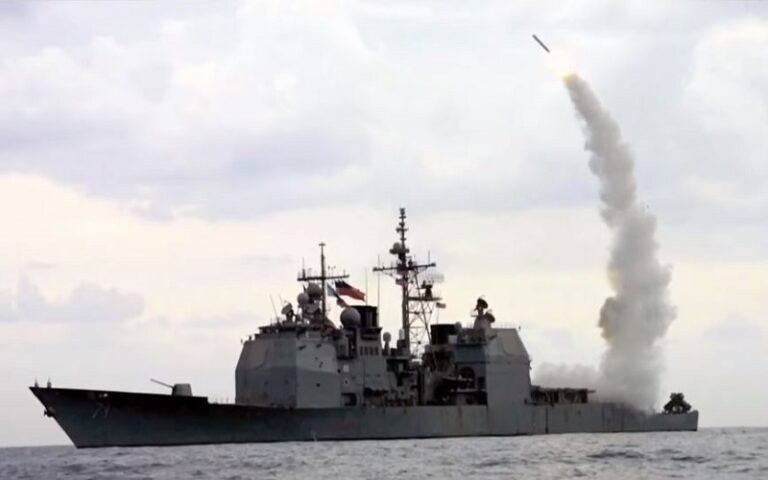
On Friday, January 12, US officials announced that US and British forces targeted the positions of the Iran-backed Houthi group in Yemen in early morning attacks.
According to the Associated Press, the forces of the two countries launched a retaliatory and extensive attack using Tomahawk missiles and fighter jets, bombarding Houthi positions.
In this regard, the commander of US Air Force Central Command stated that in the attack, over 60 targets were targeted in 16 regions in Yemen, including command and control positions, ammunition depots, missile launch systems, and radar systems.
The Houthis have been launching drones and missiles at commercial shipping vessels in the Red Sea for weeks, many of which have been intercepted and shot down by US Navy ships in the area. Their drones and missiles are provided by Iran’s regime, and they have been acting as a terror arm for the Revolutionary Guards.
Reuters also reported that a Houthi group official confirmed attacks in Sanaa, the capital of Yemen, as well as in the cities of Saada and Dhamar, and in the Al Hodeidah province.
Eyewitnesses also told Reuters that the United States and Britain targeted a military base near Sanaa Airport, a military position near Taiz Airport, a Houthi naval base in Hodeidah, and military positions in the Hajjah province.
US President Joe Biden declared the objective of the attacks on Houthi positions as ensuring “freedom of navigation in one of the world’s most vital waterways” and added, “These strikes are in direct response to unprecedented Houthi attacks against international maritime vessels in the Red Sea.”
“Operation Prosperity Guardian—a coalition of more than 20 nations committed to defending international shipping and deterring Houthi attacks in the Red Sea,” the US president added.
In the meantime, the Iranian regime has condemned the attack on its proxy group in Yemen.
Lebanon’s Hezbollah, another Iranian proxy group in the Middle East, has also condemned the US and British attacks on the Houthis.
Russia has called for an immediate meeting of the United Nations Security Council. The country, along with China and two other countries, abstained from voting on the US-proposed resolution in the United Nations Security Council on January 10.
After the adoption of this resolution, John Kirby, Coordinator for Strategic Communications at the National Security Council in the White House said that the text of the resolution explicitly calls on the Houthis to stop these attacks and emphasizes the need for the Security Council to support the safe passage of commercial shipping and the safe transit of vessels through the Red Sea.
Mr. Kirby added that the United States is not seeking a confrontation and is calling for the safe and secure passage of commercial vessels through the Red Sea. However, if this matter is not achieved, it will consult with its partners on the necessary actions.
Hours before the strike on Thursday, Pentagon spokesman Maj. Gen. Pat Ryder said Iran “has a role to play” in getting the Houthis to stop their “reckless, dangerous, and illegal activity.” If they did not, he said, “there will be consequences.”
Antony Blinken, the US Secretary of State, also warned the Houthis and the Iranian regime on Thursday that the continuous attacks by Houthi rebels under the support of the Islamic Republic of Iran on commercial shipping lines in the Red Sea will have “consequences.”
Iran’s Regime Seizes Oil Tanker in Gulf of Oman
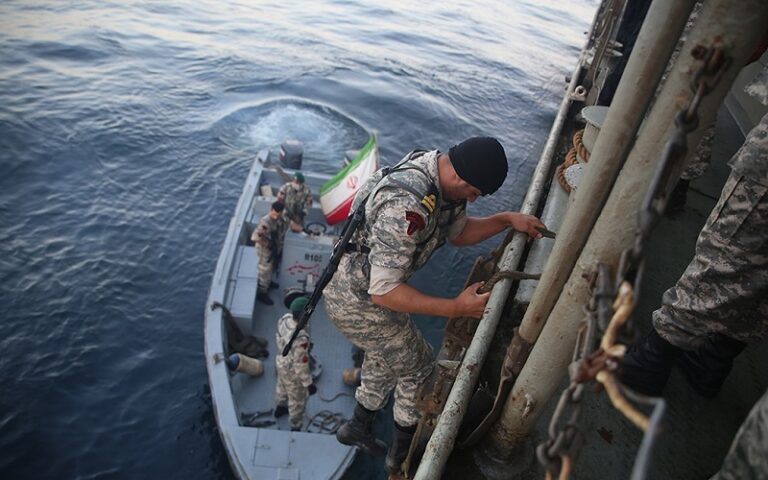
The Navy of the Iranian regime army announced that it had seized the oil tanker St. Nicholas in the Gulf of Oman.
On January 11, the Navy’s public relations department stated that the seizure of this vessel was carried out “in retaliation for the theft of an Iranian oil shipment” by the United States.
According to the Tasnim News Agency, which is affiliated with the Revolutionary Guards, the Navy’s public relations department stated that the new name of this oil tanker is Suez Rajan. The mentioned oil tanker was seized in May 2023 pursuant of Washington’s sanctions against the regime.
The Navy stated that it had seized the St. Nicholas in retaliation for the theft of Iranian oil by the United States and that it would transfer it to Iranian ports “for delivery to judicial authorities.”
The United Kingdom Maritime Trade Operations (UKMTO) had previously reported in a tweet that this vessel was targeted by “four to five armed men” wearing military uniforms and black masks, while it was approximately 50 nautical miles (about 92 kilometers) east of the coast of Oman, near the Sohar Port.
The Greek shipping company Empire Navigation confirmed this news. It is reported that the crew of this oil tanker, which was sailing under the flag of the Marshall Islands, consists of 19 sailors from the Philippines and one Greek national.
This vessel had loaded cargo in the port of Basra and was heading towards the Suez Canal and then to the port city of Aliaga in Turkey.
The company Empire Navigation stated that all contact with St. Nicholas has been lost. The ship’s safety officer reported hearing unidentified voices on the ship, and after that, further attempts to contact the ship were unsuccessful.
Ambrey, a British maritime security company, has announced that the tracking system of the oil tanker was turned off when it was heading towards the Iranian port of Jask. According to Ambrey, six men wearing military uniforms boarded the ship.
According to reports, this mentioned oil tanker was involved in oil smuggling for Iran last year. Due to the violation of US sanctions against Iran, the US Navy seized this oil tanker, and then it was renamed Suez Rajan.
At that time, the United States accused the Revolutionary Guards of intending to smuggle oil to China using this oil tanker and seized 980,000 barrels of oil. After the crude oil was unloaded, the ship was renamed St. Nicholas.
Since the beginning of the war in Gaza, Iranian-supported Houthi rebels have carried out at least 26 attacks on commercial shipping lines in the Red Sea, leading to unprecedented maritime tensions in the region.
On Wednesday January 10, US Secretary of State Antony Blinken warned that the ongoing attacks by Houthi rebels backed by the Iranian regime on commercial shipping lines in the Red Sea will have “consequences.”
Meanwhile, on Wednesday, the United Nations Security Council demanded that the Houthi rebels in Yemen, who are supported by the Iranian regime, immediately cease attacks on ships in the Red Sea and defended the United States-led coalition’s response to protect the ships.
Attacks by Iran-backed militias on maritime targets in the Red Sea have disrupted shipping in the region, causing a major threat to global trade.
Iranian Political Prisoner Mir Yousef Younesi Sentenced to 5 Years in Jail
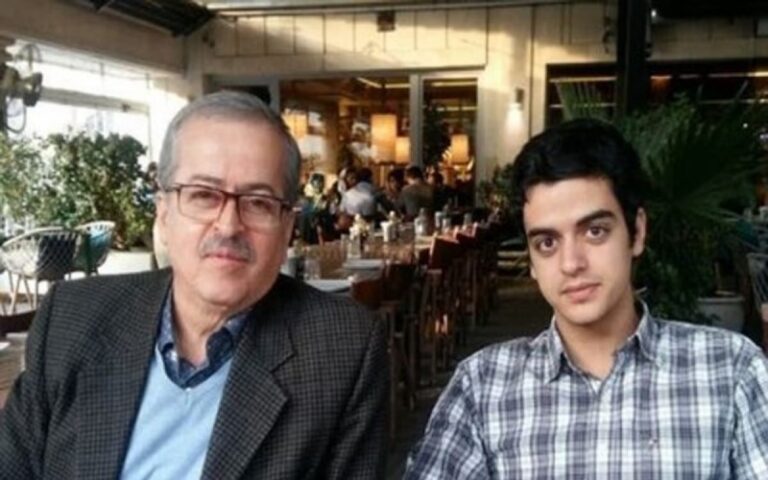
According to Reza Younesi, the brother of student and political prisoner Ali Younesi, the Revolutionary Court of Tehran has sentenced their father, Mir Yousef Younesi, to five years of imprisonment after more than a year of temporary detention.
Reza Younesi mentioned on the evening of Tuesday, January 9, on the social network platform X, that his father did not obtain permission to attend the court due to his refusal to wear prison attire.
Reza Younesi stated that the judge in this court was Iman Afshari, who, by insulting his father, “practically did not allow him to defend himself through his lawyers.” The lawyers of the case have objected to the Ministry of Intelligence’s failure to present documents, but the judge issued the sentence against Mir Yousef Younesi based on the “reports of the officers,” rejecting the objection. Reza Younesi considered the formation of a judicial case against his father as “revenge seeking” by the Ministry of Intelligence and stated that the court has issued an identical sentence of five years in prison for him and the main defendant and prime suspect in the case who is outside Iran. The prime suspect, whom Reza Younesi refers to by the abbreviation “B,” was released from prison after a short detention, but the temporary detention of Mir Yousef Younesi, contrary to the regime’s own laws, continues after more than a year. The Ministry of Intelligence had accused Mir Yousef Younesi of “financial connection with the Mujahideen-e-Khalq organization (MEK/PMOI).” Mir Yousef Younesi’s son had previously stated that his father was detained for paying 130 million rials (approximately $255) to a person who had been arrested, claiming that he had deposited the money for one of the protesters. Although Mir Yousef Younesi has repeatedly denied making such a payment and no document has been presented regarding the transfer of this amount to the mentioned individual, a case was still filed against him. On the other hand, he told the interrogators that he is an employee of a company that engages in commercial transactions with various individuals every month. Prior to Mir Yousef Younesi, his other son, Ali Younesi, a computer engineering student at Sharif University and a winner of the silver medal in the National Astronomy Olympiad in 2016 and the gold medal in the National Astronomy Olympiad in 2017, was arrested and imprisoned. Sharif University is considered as the nation’s most prestigious and leading institution for science, technology, engineering, and mathematics fields. In April 2020, Ali Younesi, along with Amirhossein Moradi, who was also a physics student at Sharif University and won the silver medal in the National Astronomy Olympiad in 2017, were arrested and each sentenced to 16 years in prison. This sentence, 10 years of which are enforceable, was confirmed directly in the appeals court. These two Olympiad students have been accused of “corruption on earth,” “propaganda against the system,” and “collusion and cooperation with the aim of acting against national security.”حكم "دادگاه انقلاب": پنج سال حبس تعزيرى براى #ميريوسف_يونسی
— Reza Younesi رضا يونسى (@RezaYounesi) January 9, 2024
به دليل امتناع از پوشيدن لباس زندان، وی به جلسه دادگاه برده نشد، موضوعی که باعث عصبانیت "قاضی" ایمان افشاری شد و وی با توهینهایی -که لایق خودش و رهبرش و نظامشان است- نسبت به پدرم، عملا اجازه دفاع به وکلا نداد.
۱/۳ https://t.co/9QZXq7iy2z
3 Hezbollah Members Killed In Israel Strike In South Lebanon
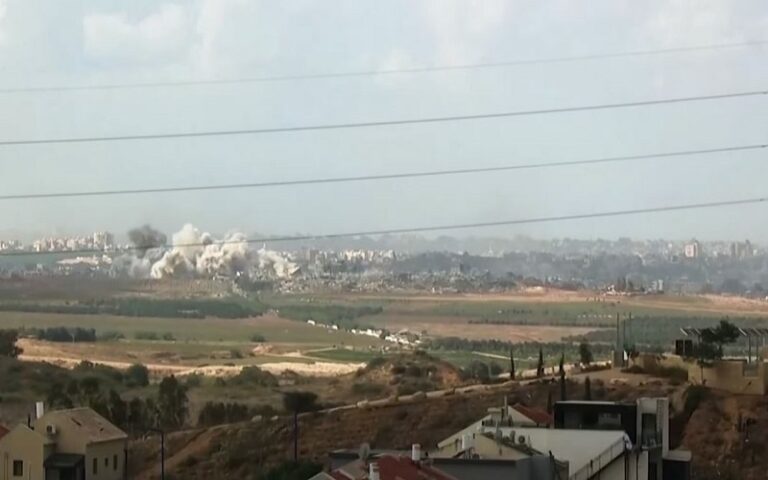
According to Reuters, on Tuesday, January 9, three Hezbollah members were killed in an Israeli attack on a vehicle in Ghandouriyeh, a municipality in the Bint Jbeil District in southern Lebanon.
Reuters mentioned that no information has been communicated about the identities of these three individuals.
On Monday, January 8, Wissam (Jawad) al-Tawil, a senior Hezbollah commander, was killed in an Israeli airstrike on southern Lebanon.
Tawil had recently been appointed as a “field commander” for Hezbollah and played a pivotal role in the organization’s operations in southern Lebanon. It is said that he was the commander responsible for a missile attack on the Maroun airbase in northern Israel.
Israeli Foreign Minister Israel Katz claimed responsibility for the attack on this senior Hezbollah commander. This action contradicts the usual practice of Tel Aviv authorities, who often remain silent in response to attacks attributed to Israel.
Israeli media reported on January 9 that prior to the start of Tawil’s funeral procession, a vehicle near the residence of this Hezbollah commander was targeted.
Lebanese sources identified Israel as responsible for this attack.
The Times of Israel reported that this attack has resulted in casualties.
In recent days, there has been an escalation of mutual firing between Israel and Hezbollah following an alleged drone attack attributed to Tel Aviv in the Shia-populated suburb of Dahiyeh in Beirut and the killing of Saleh al-Arouri, the deputy head of Hamas.
On January 9, Hezbollah announced that in response to the killings of al-Arouri and Tawil, it targeted an Israeli military base in the city of Safed with a drone.
Reuters reported that this marks the first time since the start of the ongoing Middle East conflict in October that Hezbollah has attacked Safed, located in northern Israel.
Safed is situated 14 kilometers from the Lebanese border.
Haaretz newspaper reported that after a “hostile” target penetrated Israeli airspace in the north, sirens were sounded in the area.
According to the report, this is the seventh time on January 9 that sirens have been heard in northern Israel.
Tensions between Lebanon and Israel are escalating while Antony Blinken, the US Secretary of State, is visiting the region and has arrived in Israel for meetings with senior officials.
Reuters reported that the Middle East conflict, the reduction of tensions in the region, and the future of the Gaza Strip are among the main topics of Blinken’s discussions in Israel.
Prior to his departure for Israel, the US Secretary of State warned, “The current conflict can easily expand and cause more suffering and insecurity.”
However, recent events show that Iran’s proxies only tone down their aggressions when met with a firm response. So far, the regime has only made bold claims about responding to attacks on its proxies, but its track record shows that it rarely responds when hit hard.
US Shuts Off Iran’s Route To Bypass Sanctions Through Iraq

Ali Shariati, a member of the Chamber of Commerce, stated that the United States has told Iraqi bank officials that the issue of bypassing the sanctions by Iranian traders must come to an end.
In an interview with the regime’s Entekhab website, Shariati emphasized that the circulation of Iraqi dollars in the economy and the bypassing of sanctions by “semi-governmental traders” of Iran through the transfer of Iraqi tar via swap has prompted the United States to intervene in this matter.
Shariati also commented on the new directive of the Iraqi government regarding the prohibition of financial transactions with Iran for banks and exchange offices. He stated that this event has been happening for several months now and its punitive measures have become more serious since January 1st.
Regarding the impact of restrictions on Iranian traders, this member of the Chamber of Commerce said, “Now, if you are a merchant in Dubai and you do business with Iraq, the Iraqi customer’s currency that they give you is the cheap currency of 1,320 dinars, but for Iran, since we do not have the SWIFT system, we have been excluded from this system. As a result, we cannot take advantage of the opportunity of Iraqi government dollars.”
Shariati claimed that the process of imposing restrictions on dollar transactions in Iraq involved summoning all the heads of Iraqi banks to Istanbul a few months ago, where they were told by the Americans that this issue of bypassing the sanctions needed to be resolved. The Iraqis did not take the matter seriously, and the Americans put pressure on them by “stepping dollar hose,” causing a halt. The supply shortage led to an increase in the price of the dollar in Iraq. According to this member of the Chamber of Commerce of Iran, “The dollar went from 1,440 dinars to 1,600 and even 1,700 dinars from April. The people of Iraq demanded that the issue be resolved, which led to protests.”
Shariati continued his account and said, “They have been giving Iraqi citizens government currency at airports for several months. The Iraqi government’s currency is 1,320 dinars per dollar. The government [of Iraq] encouraged traders to submit their purchase documents to the government. When approved, it goes into the allocation queue, and the customer’s payment is made within two weeks.”
On January 2, Iranian media reported on a new decision in Iraq that created an obstacle in Iran’s access to the dollar. According to these reports, the Central Bank of Iraq, with a new currency law, prohibited official exchange offices and banks in the country from any currency exchange with five countries, including Iran, in order to make it impossible for Iran’s regime to obtain dollars through legal channels in this country.
Shariati also commented on the increase in Iraqi trade with Iran, saying, “An Iraqi who wants to return a Turkish trader’s money and an Iranian trader’s money to Iran must have more money and Iranian goods are about 18% more expensive compared to goods purchased from Turkey and China. In this situation, either I, as an Iranian trader, say it doesn’t matter to me and I want dollars, or the Iraqi says I will buy goods from Turkey and pay less. As a result, Iranian traders are suffering serious losses, and our traders are offering a 15% discount to Iraqi traders. In the meantime, some people are seeking the destruction of the dollar.”
In February 2022, reports were published indicating that the United States had been restricting Iraq’s access to its dollars, which are held in the Federal Reserve Bank, for several months in order to prevent the smuggling of dollars to Iran.
At the same time, Iraqi authorities announced that the United States was trying to eliminate “rampant money laundering for the benefit of Iran and Syria.”
Experts predict that with the new currency restrictions in Iraq, the supply and distribution of foreign currency in Iran will face even more difficulties. This could further destabilize the foreign exchange market and accelerate the pace of inflation in the coming months.
Senior Hezbollah Commander Killed in Israeli Strike on Southern Lebanon
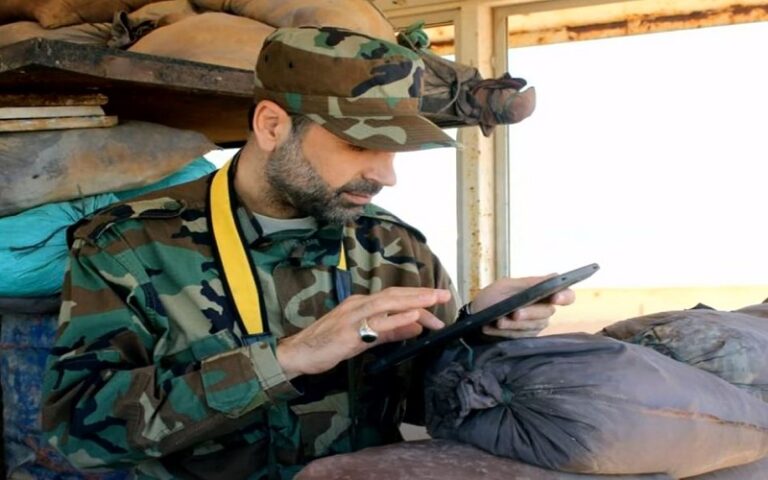
A senior commander of the Iran-backed Hezbollah was killed in an Israeli strike in southern Lebanon.
Citing three security sources, Reuters announced on January 8 that the killed Hezbollah commander is Wissam al-Tawil, the deputy of one of the units of the Radwan forces.
According to these security sources, Tawil and another member of Hezbollah were killed on January 8 after their vehicle was targeted in the village of Majdal Selm in Lebanon.
According to Reuters, one of these security sources described the attack as “very painful,” and another source predicted that “everything will now be set ablaze.”
Hassan Nasrallah, the Secretary-General of Hezbollah, had warned Israel in two televised speeches last week not to “launch a full-scale war against Lebanon.”
Since the border clashes began after Hamas’ attack on Israel on October 7, more than 130 Hezbollah fighters have been killed in southern Lebanon, and another 19 have been killed in Syria.
Since October 8, 2023, Hezbollah has been launching attacks on Israeli military bases and positions near the northern border of Lebanon, while Israel has been targeting the positions of this Iranian-backed paramilitary group in response.
Tensions between Hezbollah and Israel have escalated following the killing of Saleh al-Arouri, the deputy leader of Hamas, in an Israeli attack in Beirut. On January 6, Hezbollah announced the firing of 62 missiles towards the Israeli aerial surveillance base in Mount Meron as an “initial response” to al-Arouri’s killing.
On Sunday, January 7, the Israeli army warned of the occurrence of another “war” with Hezbollah, stating that Hezbollah had targeted an air traffic control base in northern Israel.
The United States, Canada, the United Kingdom, the European Union, Japan, Israel, and several other countries have designated Hamas as a terrorist organization.
Iran-backed militias have been flaring up tensions in the Middle East since the beginning of the war in Gaza. In the past months, Iran’s proxy forces have attacked hundreds of targets in the region. In addition to Hezbollah, the Hashd al-Shabi in Iraq and Houthis in Yemen have played a key role in undermining security in the region. The Houthis in particular have been attacking vessels in the Red Sea, threatening global trade.
More Than 850 Executions in Iran in 2023
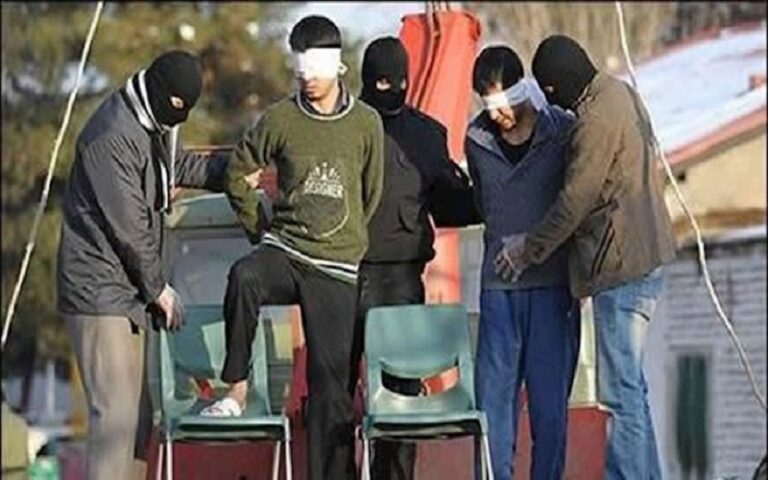
Iran has put behind one of its worst years in terms of executions, with at least 864 prisoners put to death, according to to reports from the People’s Mojahedin Organization of Iran (PMOI/MEK). This marks a 34% increase from the previous year and the highest in the past eight years.
Indeed, the death penalty is considered one of the most severe forms of punishment, and it has been abolished or significantly restricted in over 170 countries worldwide. Only around 30 countries still actively use the death penalty. Unfortunately, the Iranian regime consistently remains at the forefront of these countries that continue to implement capital punishment. Julia Duchrow, the Deputy Secretary General, Amnesty International (Germany), has stated regarding executions in Iran, “The leader of Iran is responsible for 65% of the executions carried out worldwide last year.”
The trend of executions continued to escalate throughout 2023, with more than 36% of the executions (313 cases) taking place in the last three months of the year, coinciding with the war in Gaza, which the regime has been using as a smokescreen to ratchet up human rights abuses at home.
The executions have been especially harsh toward ethnic minorities. Among the victims, 191 individuals, or more than 22%, are from the most oppressed and marginalized Baluch citizens.
Notably, among the executed were eight juvenile offenders who were under 18 at the time of committing the crime. Seven executions were shockingly carried out in public.
Also on January 1, 2024, five prisoners were executed in Karaj Central Prison.
On January 4, two prisoners were hanged in Ardabil, and one in Hamedan, while three others were hanged in Ardabil Central Prison in the previous ways. On Tuesday, January 2, the government news agency IRNA reported the execution of nine prisoners in Ardabil.
Six protesters were executed in 2023 and two in December 2022. The eight protesters were sentenced to death and hanged after unfair trials, solely for their participation in the protests.
The Iranian judiciary had issued death sentences for over 100 people who took part in the 2022-2023 protests. Some of the protesters are still in a state of uncertainty, while others remain under the shadow of the death sentences.
In 2023, the death sentences of 693 prisoners were carried out secretly without any media coverage. Most of the data on executions is obtained through independent media and through communication with inside the prison.
Since January 2023, the death sentences of 26 female prisoners have been executed in Iranian regime prisons, showing a 37% growth compared to the previous year.
In the previous year, Iran became the largest executioner of women in the world by executing at least 16 women in 2022. According to Amnesty International’s report in 2022, a total of 24 women were executed worldwide, 16 of which belonged to Iran. In 2023, the regime broke its own record.
