Iran: “Reformist” Admits to Regime’s 43 Years of Financial Failures

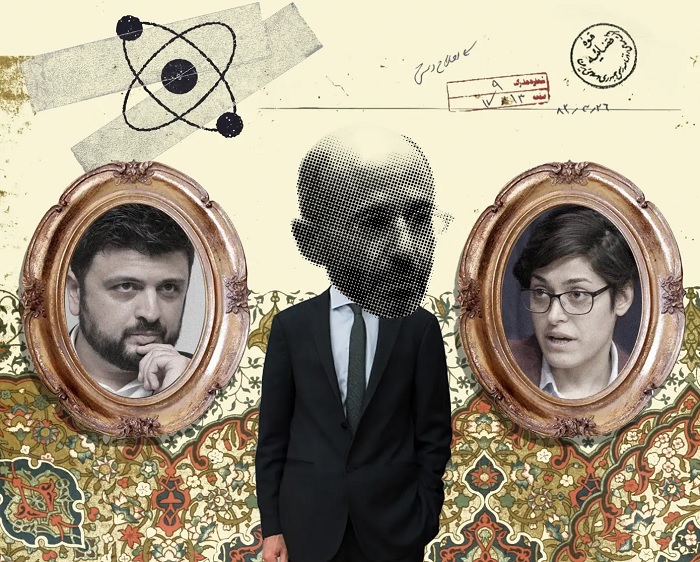
Speaking to the semiofficial Ruidad 24 website, ‘reformist’ Mehdi Pazoki criticized Kayhan daily’s piece about financial dilemmas, arguing, “Instead of dealing arbitrarily, handle it scientifically.” Kayhan is the mouthpiece of the regime’s Supreme Leader Ali Khamenei. Since May, the Iranian regime’s president Ebrahim Raisi made a series of decisions under the banner of ‘economic surgery’. The surgery, however, has shrunk people’s food baskets more than ever. In a televised interview on May 11, Raisi’s interior minister Ahmad Vahidi declared that several food staple prices would soar, saying, “The cost of chicken, egg, dairy, and cooking oil will [increase] according to the reforming plan.” The Iranian government has removed subsidies, prompting public protests across the country. In response, authorities have mercilessly quelled demonstrations with teargas, birdshot, and even live ammo. Security forces murdered at least five people and detained many more. It appears that public protests have ignited political rivalries. Observers believe this shows that the cruel crackdown on defenseless people has failed, and the continuation of public grievances has disappointed some authorities with oppressive measures. Kayhan wrote, “If the people pay for economic reforms, they will receive subsidies.” Pazoki responded by stating, “Kayhan’s thinking is outdated and fundamentally wrong. Had the people known in 1979 that ‘Kayhan mentality’ would rule the country, they would not have revolted.” Raisi’s allies are claiming that citizens are receiving compensation for removing subsidies. Pazoki added, “Unfortunately, financial assistance has yet to be objectivized in Iran, and we are only distributing money.” He also admitted to the extension of poverty across society and the country’s vulnerable economy, stating, “According to official statistics in March, we are paying subsidies to more than 95 percent of the population, while we should try to make the economy healthy again.” He further stated, “[Officials] irrationally and uneconomically say we increased prices but will pay the difference as a subsidy. We may only control inflation via exercising monetary discipline in the banking system, financial discipline in the budget bill, and administrative discipline across the country.” Pazoki also challenged the Raisi cabinet’s claims about increasing prices for a limited number of goods, saying, “These people either don’t live in society or don’t understand. Of course, I believe that they do not understand, and we suffer from ignorance. They have not felt that the prices of hundreds of items have been raised.” In another quote, he admitted that the regime has auctioned national resources for political advantage. He said, “The foreign policy is in service of the country’s development and progress in all developed countries. However, the economy depends on foreign policies, leading to the greatest damages to Iran’s economy.” Pazoki slammed Raisi’s foreign policies, particularly regarding the nuclear deal, stating, “This government ignores the country’s interests. They did not send [former deputy foreign minister Abbas] Araghchi, a principlist loyal to the Supreme Leader to negotiations. Instead, they have sent [Ali Bagheri Kani], who opposes the deal and does not understand English.” He added, “Had the government been smart, it would have established relations with the rest of the world. Why can’t officials realize that joining the Financial Action Task Force organization is in our favor? Why are their close allies, China and Russia, the FATF permanent members? But they avoid joining while we are supposed only to be an associate member?” Aside from his political views, Pazoki has highlighted a precise fact about the Raisi cabinet, concluding, “All of these are due to several inexperienced people taking the reins of power. They suddenly traveled outside and took government posts. They did not care about national interests.”

Iran’s Universities Lost Their Credibility Due to the Regime’s Policies

Almost everything in Iran has been influenced in some way by the Iranian regime’s medieval ideology. One of the main areas that have suffered the most is the country’s education system and its universities. Since the inception of this regime, it has shown its enmity with higher education, universities, and students. As the regime’s founder Ruhollah Khomeini once said, the main cause of all major problems in the country is rooted in the universities. When he started his so-called cultural revolution, he closed the universities for several years and eliminated many of the country’s intellectuals. Now after 40 years, we are still witnessing the destructive effects of such a policy. Iranian universities are being removed from the world rankings. The QS ranking is one of the most reliable international ranking systems that is conducted annually in England. Among the criteria for this ranking is the reputation of the university; the level of education; the number of citations to the articles and content produced by the university, and its access to international scientific indexes; the number of scholarships; and even the number of students enrolled. According to the latest QS World University Rankings for 2023, none of Iran’s six major universities (Sanati Sharif, Amirkabir Industrial, Tehran, Elm and Sanat, Shiraz, and Beheshti) has been able to get anywhere near the top of the table in this ranking, in a global comparison of around 1,422 universities worldwide. In addition, none of the names of Iran’s university cities are included in the list of 120 student-friendly cities in the world. The highest-ranking institution was the Sharif University of Technology which reached the rank of 380, the Amir Kabir University of Technology ranked at 443, Tehran’s rank went from 501 to 510, Science and Technology of Iran dropped nine ranks from 531 to 540, Shiraz dropped from 751 to 800, and finally Beheshti University had the furthest drop from 1001 to 1200. Students’ livelihood and economic problems, the repressive environment of the university which kills the motivation for any progress in professors and students, the political and social challenges of the society that distorts the focus and perseverance of students and professors on progress and effort, the weakness and obsolescence of the educational system, and the backwardness of educational resources from the latest global scientific changes are the major reasons for the current situation. The decline in the quality of education in 35 universities and institutions of higher education across Iran has made even Iraqi students shy away from enrolling. State news confirmed that the Iraqi government has removed 35 Iranian universities and educational institutions from its list of foreign higher education institutions. Iraq’s Ministry of Higher Education stated that the degrees of these universities and higher education centers are not approved by the Iraqi government due to the decline in educational quality. According to the state-run website Fararu, in a meeting with the Iraqi ambassador to Iran, the regime’s deputy minister of science in international affairs ridiculously claimed that the removal of 35 Iranian universities and educational institutions from the list of foreign higher education institutions approved by the Iraqi government, “is because many of the scientific productions of these universities are in the fields of humanities, they are not highly ranked in the Times and Shanghai rankings.” Contrary to the opinion of this regime official, more than half of the removed centers are specialized technical, engineering, or medical universities, whose field of activity and educational category have nothing to do with humanities.

Iran Regime’s $60 Billion Expenses but Zero Percent Growth

The constant behavior of the Iranian regime is looting, impoverishing, and ruining the country. Sometimes, parts of this disaster have been exposed by the regime’s media. In an interview on July 3 with the state-run broadcaster about the collapse of the country’s economy, Massoud Mir Kazemi, the regime’s head of Planning and Budget Organization, said, “The size of the economy has shrunk in the past years, and it is not advisable to continue with this situation. A fundamental revision should be made in the formulation of plans.” He ridiculously claimed that the government’s economic apparatus, “does not move according to the plans made and all this has caused the decline of macroeconomic indicators.” Apart from wasting 60 billion dollars, taken from the country’s development fund with the permission of the Supreme Leader, Kazemi admits that although “535 trillion rials of principal and interest of bonds were paid, the amount of investment reached minus 4.6%, was not even as much as capital depreciation.” In another part of the interview, he laid bare the catastrophic situation, saying, “If the country experiences an economic growth of 8% in six consecutive years, the size of the economy will return to 2011 after this period.” This is in a situation where the regime has no economic growth at all, and the economy is in a free fall. Following this revelation, the regime’s central bank said that until the beginning of 2022, “The amount of liquidity has reached 48,320 trillion rials, which represents a growth of 39%. Meanwhile, this index has grown by 40.6% compared to the end of 2020.” The debt of state companies and institutions to the central bank during this period was equivalent to 132.2 trillion and 46.4 trillion rials, respectively, each of which faced a growth of 14.8 and 36.1 percent. At the end of March 2022, the debt of banks and credit institutions to the central bank had reached 146.2 trillion rials with a growth of 24.9%. The amount of debt of specialized banks to the central bank is reported to be 49.2 trillion rials, which has increased by 9.7% compared to the end of 2020. In a new confession, published by the state-run daily Khabar Online on July 3, about the corruption in the regime, Abdonnaser Hemmati, the regime’s former governor of the Central Bank said, “Despite the announcement of the tripling of oil revenues in 2021, the monetary base growth was 32% and equal to 145 trillion rials. But in fact, part of government financing was through indirect borrowing from the central bank.” Examining the record of nearly one year of Raisi’s government shows that none of society’s classes can make ends meet and nearly all of them are living below the poverty line. Eliminating the dependence of basic goods on the exchange rate, reducing the budget deficit and liquidity, lowering the exchange rate, building four million housing units, creating one million jobs, and controlling inflation were all hollow promises that Raisi had made after his ascension to the presidency. What is worse is that the regime has added at least 12% to the official inflation rate by clumsily removing the preferred currency, which of course favors itself. On July 3, in a surprising twist, the state-run daily Donya-e Eghtesad confessed that some of the regime’s officials had decided to leave the country due to the critical economic situation and corruption. They wrote, “Shortly after receiving the Pledge Medal, they were accused of embezzling billions and fled the country to Canada to escape from justice.”

New Coronavirus Wave Sweeps Iran

During the past week, Iranian citizens are facing a sharp increase in the number of new Covid-19 patients and those hospitalized due to the viral disease. The provinces of Tehran, Khorasan Razavi, and Khuzestan have had the lion’s share in these figures. According to the Health Ministry’s stats, the death toll has now become two-digit. On July 10, the Health Ministry declared, “At least 10 coronavirus patients lost their lives on Sunday. Since yesterday, 2,375 new Covid-19 patients were identified across the country based on the definitive diagnostic criteria, 296 of whom were hospitalized.” However, according to health officials’ previous remarks, the real figure is much higher in Iran. In an interview with the state-run daily Vatan-e Emruz on April 28, 2020, Dr. Mohammad Reza Mahboubfar, a member of the National Covid-19 Task Force, said, “The current Covid-19 numbers are twenty times what is being announced by the Health Ministry.” Since May 4, the Health Ministry has been declaring the Covid-19 fatalities with one-digit numbers. Ebrahim Raisi’s cabinet touted it as a glorious achievement. However, the government continues to lay the blame on people for disobedience to health protocols.

Health Officials Conceal Real Statistics

The Health Ministry has refused to declare the official number of hospitalized coronavirus patients. However, it had been announced that nearly 400 people are in critical condition and have been placed in ICU sections. This number has tripled in recent weeks. Officials from the Medical Sciences University are warning about a heavy wave in the coming weeks. The Ahvaz Medical Sciences University deputy dean said, “We are facing a sharp increase in the number of coronavirus patients. A heavy coronavirus wave and mass infection are not unexpected with this trend.” In its July 10 statement, the Iranian opposition group, the People’s Mojahedin Organization of Iran (PMOI/MEK), declared the number of hospitalized patients in Gilan had increased by 350 percent. This number in South Khorasan, Khuzestan, and Khorasan Razavi has reached 400,100, and 97 percent, respectively. The coronavirus resurgence is thought to be accompanied by severe socioeconomic consequences. More than four million workers have been laid off since the pandemic began in December 2019. In the years since, many citizens, particularly low-income classes, have lost their entire properties and saved whatever little money they have for treating their loved ones. The regime’s indifference to the situation has added insult to the injury of millions of people. Observers believe that the regime’s Supreme Leader Ali Khamenei exploited the deadly virus as a human shield as the anti-establishment protests have severely shaken his grip on power. Notably, Khamenei described the pandemic as a “blessing” in March 2020. He also banned the import of reliable Covid-19 vaccines in January 2021, leading to more casualties.

Appeasing Iran Regime’s Terrorism, Instant Profits at the Cost of Lives

The Iranian regime’s diplomat-terrorist Assadollah Assadi, who tried to blow up the Resistance’s annual conference in France in 2018, threatened the Belgian police about the consequences of being trialed during his interrogation before he ever stepped foot in the court. He stated that the regime’s foreign proxies around the world ‘will not remain silent’ and that the Western countries will face the consequences of any trial. As judicial systems in Western countries are essentially independent, they are less influenced by appeasement policies. Therefore, they did not pay any attention to his threats, and he was prosecuted. This was the first time that one of the regime’s diplomats was prosecuted and sentenced to 20 years in prison. Assadi’s crime was so obvious that no one could ignore its dangerous and catastrophic consequences and circumvent justice. Any attempt to do so would have created a big scandal for the Belgian government, exacting a high political and moral price. Assadi refused to appeal against the court’s verdict because he knew that he had no chance to escape justice. It turned out that the prolongation of the trial process would reveal more sensitive information about the terrorist activities by the regime’s diplomatic apparatus. The grounds for that ‘next opportunity, for which the regime was waiting, were already being planned before the final verdict. A treaty to ‘swap’ prisoners with the regime was signed in maximum secrecy and had been ‘sandwiched’ between two trade issues with two other countries in the bill proposed for passage to the Belgian Chamber of Representatives. This way, the Iranian regime would be able to take back its diplomat terrorist. Reacting to the shameful deal, the Iranian Resistance started a global campaign, which quickly attracted the support of many dignitaries around the world. As a result, the bill, which was supposed to be approved in silence, without any statement of concern or was subjected to two days of intense debate by the Belgian Parliament’s Foreign Relations Committee. The presentation of the bill to the parliament was postponed to Thursday, July 14. Obviously, keeping silent in the face of such cases will only encourage the Iranian regime to expand its terror acts. Therefore, the case of swapping Assadi will have dire consequences moving forward because it sets a dangerous precedent, encouraging other countries to do the same. Endangering the lives of Iranian refugees in Europe and America will also endanger the lives of the citizens of these countries too, something that appeasers have been ignoring for more than four decades.

Forty Percent of Iran’s Mines Shut Down

Official statistics for the mining sector in Iran have shown a sharp drop in financial indicators, as well as a significant recession. According to experts, the country possesses at least 43 billion tons of discovered mineral reserves, but at present, nearly 40 percent of the country’s mines have been shut down. On July 10, the Iran Kargar [Workers] website wrote, “The shutdown and recession began in the last decade and has continued. In the past decade, the growth rate of the country’s mines has constantly been negative or close to zero.” The website added, “Iran’s mining sector is dire despite its potential capacities. At the time, the country ranks 10th among the world’s 15 leading countries in a diversity of mineral reserves.” For the first time, Bahram Shakuri, a member of the mining sector’s delegation in the chamber of commerce, revealed that 40 percent of the country’s mines are now closed. Speaking with the semiofficial Fararu website, he also pointed to the officials’ failure to lift international sanctions despite their previous promises. He stated, “The active part [of the mining sector] has become half-dead and does not work with its entire capacity due to the increase in sanctions. The mineral industry is one of the sectors that could be replaced by the petroleum industry if it received adequate support. However, abandoning the projects prevents this goal from being realized.”

Unreasonable Pressure on Contractors

The Iranian regime routinely imposes unreasonable pressure on contractors for further revenue, forcing many contracting companies to abandon their activities, leading to the shutdown of many mines across the country. The shutdown of these mines has caused the unemployment of not only the miners but other relevant employees like engineers, transformation workers, etc. In recent months, miners have repeatedly protested the Iranian regime’s destructive policies, demanding that officials allocate ample budgets to allow for the reopening of mines so that they can resume their activities, but their requests have been disregarded. Sajjad Gharghi, the Mine Commission deputy chair of the Tehran chamber of commerce, said, “Currently, we have around 12,000 licenses for mines exploitation. However, there are only 5,600 active mines, based on the Industry, Mines, and Trade Ministry’s official stats.”

Equipment Depreciation and Mining Operations Reduction

Gharghi also admitted that the regime’s laws and export duties are uneconomical. He also pointed to equipment depreciation as one of the main reasons for uneconomic exploitation, stating, “One of the main challenges in the mining sector is that 80 percent of mineral operations are carried out through equipment. However, this fleet suffers from an extreme shortage in equipment, and in-use equipment is too depreciated and out of work.” Over the past 43 years, the Iranian authorities’ policies have led to catastrophic results in the country’s mining sector. In addition to the mines’ miserable conditions, the fate and living conditions of thousands of miners and their families remain unclear. Meanwhile, the government has left the fate of the industry ambiguous by allocating thousands of mines to the “private sector”—which is dominated by officials’ children or relatives beyond the law. Observers believe that the incompetency of Ebrahim Raisi cabinet’s in addressing miners’ essential needs poses another major challenge for the entire theocracy.

Belgium: A Deal, A Destiny

On July 6, the Foreign Relations Committee of Belgium’s lower chamber voted for a treaty with the Iranian regime to exchange ‘sentenced prisoners.’ The treaty had already been signed on March 11, but it was kept secret until June 30, then hastily pushed through the parliament for approval. The treaty faced severe objections, both from inside Belgium and abroad. Almost all of the objectors agreed that the ‘treaty’ had been designed to secure the release of the convicted and imprisoned Iranian terrorist Assadollah Assadi, the former third counselor of Iran’s embassy in Vienna, Austria. In February 2021, a court in Antwerp sentenced Assadi to 20 years in jail for masterminding a bomb plot against the Iranian opposition, the National Council of Resistance of Iran (NCRI), and their gathering near Paris in June 2018. Farzin Hashemi, the deputy chair of the NCRI Foreign AffairsCommittee, stated, “If he had succeeded, hundreds would have been killed.” Iranian dissidents, the potential victims of Assadi’s plot, have repeatedly held protest rallies in Brussels, Stockholm, London, Oslo, Aarhus, and Malmo, as well as many cities in the United States and Canada over the past week. They called the treaty a ‘shameful deal’ and demanded that Belgian authorities keep Assadi in jail. Iranians around the world reminded Belgian lawmakers of the treatment received by several terrorists who were repatriated to Iran in recent years, stating that “All of them received a hero’s welcome by the regime.” On July 5, hundreds of NCRI members and supporters chanted outside Prime Minister Alexander De Croo’s office, saying, “Don’t free terrorist Assadi.” The Iranians were not alone in concerns over the treaty. Many Belgian lawmakers voiced their protest against the ‘Iran deal’ as well. Opposition lawmaker Michael Freilich stated, “This is an erosion of the legal system. Iran has publicly made it clear that they don’t see Assadi as a terrorist but as a diplomat. He will be freed as soon as he steps foot on Iranian soil.” Iranian-born lawmaker Darya Safai, who personally experienced life in an Iranian prison, said, “Black day for Belgium. Undermining our security to give in to blackmail from the mullahs. This deal makes Belgium a safe haven for terrorists. The government should be ashamed. Can those who voted for Iran Deal still look in the mirror?” Opposition leader Peter De Roover said, “The Iran deal intended to release the convicted terrorist, approved in committee. ‘A turning point to undermine international justice’ as 12 European ministers wrote to the House in one of the numerous pleas.” Many transatlantic dignitaries joined the campaign titled “Don’t Free Terrorists,” including former International Criminal Court judge Chris van den Wyngaert, the U.S. Senate Foreign Relations Committee Chair Bob Menendez; U.S. Senators Ted Cruz and Marco Rubio; former U.S. Justice Minister Michael Mukasey; former UK House of Commons speakers John Bercow and Baroness Boothroyd; several former European foreign ministers, such as Italian FM Giulio Terzi; and even the 2018 Nobel laureate in Physics and chief scientist of the James Webb Space Telescope program, Prof. John Mather. The Belgian government, mainly Justice Minister Vincent Van Quickenborne, has ignored the warnings about dealing with the world’s state-sponsor of terrorism. On July 5, pointing to dozens of Europeans taken hostage in Iran, he told MPs, “Lives are at stake if the bill is not approved.” It is apparent that the government is putting the lives of many innocent people—even inside Belgium—at risk because the mullahs have proven that they do not recognize borders. Weakness and concessions only inspire them to take more hostages in order to gain more concessions, including the return of the convicted terrorists to Iran. Paradoxically, the Iranian Judiciary spokesperson has declared that two French nationals have recently been subjected to legal proceedings in Iran, charged with “acting against Iran’s national security.” The Islamic Revolutionary Guard Corps (IRGC) claimed it detained Giles Whitaker, the deputy head of mission at the British Embassy in Tehran, and several other foreign nationals. The Foreign Office rejected that claim, saying Whitaker had left Iran in December. Indeed, Europe is on a course to counter state-backed terrorism or succumb to it, feigning ignorance for further unreasonable privileges. Belgium has seemingly chosen the latter, but its counterpart, the Iranian regime, will never be satisfied. Read More:

Iran’s New Piracy and Blackmail

Iranian Regime’s Policy, Starving the Poor

The inflation rate in Iran in June was like an earthquake for the Iranian people, with many of them now facing empty fridges. After two decades of wasting the country’s wealth in Hassan Rouhani and Mahmoud Ahmadinejad’s governments, Ebrahim Raisi’s turn is to put more pressure on the people by increasing the cost of living. No one in Iran dares to speak about development and progress because these days, around 90 percent of society is struggling to buy staple foods such as bread while obtaining foodstuffs such as fruits, vegetables, and meat has become all but a dream. A recent report from the regime’s Statistics Center shows that in June of this year, the monthly inflation rate for the poorest decile of the country was more than twice the highest income decile. The reason is apparent: the Iranian regime’s merciless, so-called ‘economic surgery.’ On June 22, the ILNA news agency reported, “According to the Statistics Center, the prices of goods and services of the first decile increased by 19.5 percent from May to June, while the average price increase for the tenth decile (the richest ) is less than 8.4 percent.” This agency added, “The price of consumer goods and services for the first 10 percent of the country’s low-income group has increased by 64 percent over the past year, and the price growth rate for the highest-income decile has been 49 percent during the same period.” In other words, the regime has created a class gap that is now impossible to close. The Statistics Center’s report shows that the price of food consumed by the first decile of the poor has increased by an average of 31 percent in June compared to the previous month, while the inflation for food rate for the wealthiest decile in June was less than 22.3 percent. According to the surveys of the Statistics Center, in November 2019, the monthly inflation rate for the first decile was 8.5 percent. However, by June of this year, it has reached 19.5 percent. This trend was also repeated for the second to the ninth deciles. The monthly inflation rate for these deciles has been recorded to be 10 to 18 percent. In comparison, the monthly inflation rate in the 10th decile only reached eight percent, having previously reached around 10 percent in October 2020. By observing the price of food consumed by the middle and lower classes, the question that occupies the mind of any observer is how can people survive with their meager incomes and the increase in the prices of goods? A look at the current food prices shows the catastrophic situation of people’s livelihoods. On June 22, the state-run website Momtaz News reported, “The price of one kilogram of chicken is 64,000 rials,  a 30-piece egg pack is 98,000 rials, and 810 grams of consumer oil  is 69,800 rials.” It wrote, “4.5 kilograms of solid oil tin will increase to 400,000 rials, and 16 kilograms of solid oil tin will increase to 1,1 million rials. The same holds true for dairy products. The price of 1.5 percent fat pasteurized milk has increased by 19,000 rials.” The rapid increase in food prices has annihilated the welfare of millions. The same day, the state-run daily Donya-e Eghtesad wrote, “Research shows that the trend of increasing poverty in the 2000s has gone upwards and encompassing 23 million people in 2020 up from 12.5 million people in 2011. An increase in inflation in these deciles can aggravate this damage.” The situation has reached such a critical state that some of the regime’s media are reporting about the situation in fear of the Iranian people’s fury, with the hope to escape from the people’s revenge.

Iranian Regime’s Head of Prisons Organization Confesses to the Catastrophic Situation of Iran’s Prisons

It is no secret that the Iranian regime’s prisons are some of the worst in the world, with catastrophic and unbelievable conditions, condemned many times by international human rights organizations. Prisoners are suffering from psychological and physical pressure in these prisons, some of which were built more than 50 years ago and as a result, the buildings are extremely outdated and a danger to the health of the prisoners. On August 25, 2021, a report about the situation and torture of prisoners in Iran, said the following, “Methods of torture in Iran documented by Amnesty International over the past years include floggings, electric shocks, mock executions, waterboarding, sexual violence, suspension, force-feeding of chemical substances, and deliberate deprivation of medical care.” In Iran, people often say that you enter the regime’s prisons as an ordinary prisoner and leave as a criminal or an addict. The next issue, of which there is clear evidence, is the regime’s lies about complying with international human rights norms as the country’s prisons are grossly overcrowded. Recently, in a series of revelations, the Iranian opposition group, the National Council Resistance of Iran (NCRI), shed light on overcrowding in Iranian prisons. On May 14, in a statement entitled, “The appalling and inhumane situation in the prisons of the clerical regime 100 photos of suppressive prison authorities in 23 provinces,” the NCRI wrote, “For example, as can be seen in the document, the ‘nominal capacity’ of Tabriz Prison is 1,500, but the ‘number of beds’ is 2,660, and the ‘number of prisoners’ is 3,788, which is over 2.5 times the ‘nominal capacity’. In one of the prisons in Sanandaj, the ‘nominal capacity’ is 290, the ‘number of beds’ is 651, and the ‘number of prisoners’ is 978, i.e., 3.37 times the ‘nominal capacity’”. It added, “In several cases, the regime judiciary document deliberately does not state ‘nominal capacity,’ ‘number of beds,’ or ‘number of prisoners.’ For example, in the Evin and Ghezel Hesar prisons in Tehran, the ‘number of prisoners’ is left empty. The ‘nominal capacity’ of Karaj Prison is also not shown, while the number of beds is 2,150, and the ‘number of prisoners’ is 7,800, which is 3.6 times more than the number of beds. As a result, prisoners struggle with another painful phenomenon called sleep deprivation.” Following the NCRI’s revelations, the regime’s head of the prison organization, Gholam-Ali Mohammadi, was forced to confess to the catastrophic and inhumane situation in Iran’s prisons in an interview. The Moderator asked him, “Dr. Mohammadi, what is the current situation of our prisons if we want to have an overview in terms of population density in prisons, what are our conditions now?” Mohammadi replied, “The density of the criminal population in the prisons of the Islamic Republic of Iran is not at the desired level now. Because in any case, we are facing an increase in the density of the criminal population. Therefore, policies to reduce the criminal population have been approved.” He added, “That is if we did not face the density of the criminal population, the highest level of decision-making in the system, which is the Expediency Council, would not have approved the policies related to reducing the criminal population of prisons. If we had not faced this density, this issue would not have been addressed in the Judicial Transformation Document.” Mohammadi further stated, “There are several other prisons, which are typically old and dilapidated in the cities that we could not renovate. In these old prisons, the container (prison) and the population do not fit together. And if we speak about the issue of the criminal population density, our instance for that is those old prisons in which the number of prisoners is much more than their nominal capacity.” Recently, in an unprecedented and illuminating revelation, the human rights center “No to prison, No to execution (Javanehha) reported about the inhuman conditions in the regime Sheiban Prison. According to this human rights center, the collection of this information has been made possible by the efforts of people from inside Iran, and they are seeking to reveal the names and details of all those who torture prisoners in Iran’s prisons. The Ahvaz Sheiban Prison, also known as ‘Ahvaz Central Prison’ and ‘Ahvaz Vocational Training Complex’, is located on the 12th kilometer of Ahvaz-Masjed Soleiman Road. The capacity of Sheiban prison is about 3,200 people. But most of the time, the number of prisoners in this prison is more than its capacity and sometimes it increases up to 4,500 people.

Iranian Regime and the Humiliating Failure of the Nuclear Talks

The nuclear talks and their ups and downs have become an endless series of stalemates in recent years. As we are approaching the final parts of these discussions, it should be noted that the crises that the Iranian regime is facing these days have reached a turning point and it is clear that their nuclear ambitions will not cure any of their pains. Following the inconclusive indirect negotiations in Doha on June 28 and 29, between the Iranian regime and the US government, moderated by Enrique Mora, the representative of the European Union, the regime’s media is broadcasting contrary positions on this round of talks. The state-run news agency ILNA wrote, “The adviser to Iran’s nuclear-negotiating team said the Doha talks had not failed. Mohammad Marandi, one of the advisers to the regime’s nuclear-negotiating team, stressed that the Doha talks had not failed, saying ‘we do not take the media statements of Washington officials seriously’.” “Speaking to Al-Mayadin, he added that talks on the remaining controversial issues in Vienna had not failed and that the process would continue. Negotiations with a positive solution were not expected to end in just two days. The Americans must provide guarantees that we are seeking and ensure that they do not stab us in the back like in the past.” In an article published by the state-run news agency Fars, the mouthpiece of the regime’s supreme leader Ali Khamenei and the managing director of Kayhan, Hossein Shariatmadari, said, “The U.S. in Qatar is the same as of in Vienna” and added, “Iran’s negotiations with the 4 + 1 which took place in Vienna, were halted because of the U.S. government’s objections to the lifting of the sanctions and its refusal to present credible assurances on fulfilling its obligations.” He went on to claim that “the United States and its European allies need and pursue ‘fruitless negotiations’ to preoccupy our country with its harmful consequences such as controlling the price of currency and gold, creating price turmoil and dozens of other upheavals caused by these ups and downs in our country’s economy.” This ridiculous claim about the regime’s economic turmoil was even mocked by the regime’s own media. On June 25, the state-run daily Jomhouri Eslami wrote, “Let us analyze the sad story of inflation in two periods. In the previous government (inflation) was a sign of westernism, lack of management, and even indifferences, but today it has become a subject of the divine test. By interpreting it, an objection will be considered as opposing the will of God.” Kayhan’s editor-in-chief Hossein Shariatmadari complained about the US government’s positions, saying, “Now look at the report by Robert Mali, the US Special Representative for Iran, which was submitted to the US Senate Foreign Relations Committee on June 27. As can be seen, Mali explicitly states that we will never lift sanctions.” On June 29, the state-run news agency Tasnim admitted to the failure and wrote, “The two-day talks in Doha are over, but the deadlock between us and the United States has not yet been broken. Washington is still reluctant to offer guarantees. What prevented the talks from coming to fruition was the US insistence on the text of its draft proposal in Vienna, which has no guarantees for Iran’s economic interests.” In a tweet on June 30, Enrique Mora wrote, “Two intense days of proximity talks in Doha on JCPOA. Unfortunately, not yet the progress the EU team and coordinator had hoped-for.” As one of the main reasons for the stalemate of the negotiations, some international media outlets wrote that the regime has raised old issues that have been resolved and some other issues that are new but have nothing to do with the nuclear deal. Earlier, the US government had stated that it will not negotiate any new cases that are not relevant to the JCPOA. The regime’s insistence shows that they have the lower hand and are practically begging for some cases that are vital for their survival.