

Iranian Teachers Still in Crisis As the World Celebrates Teachers’ Day
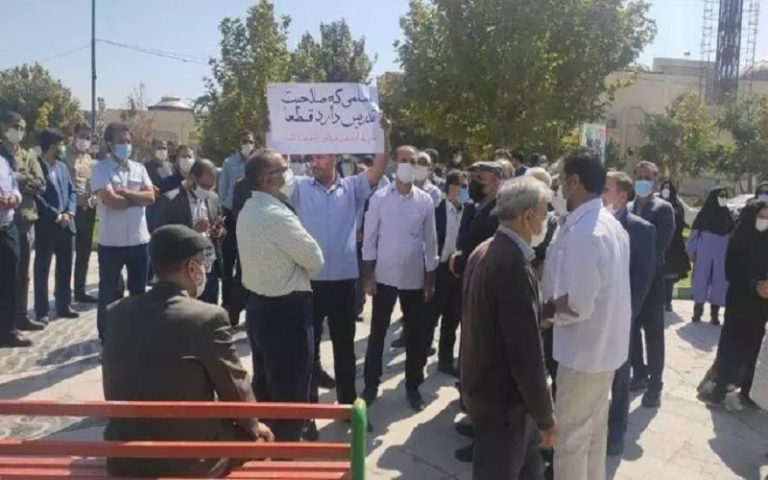
As the world celebrated Teachers’ Day on October 5, to honor teachers and their work in educating the young generations, Iranian teachers are still struggling with unemployment, lack of wages, and poor living conditions. At a time when the younger generation of Iranians need guidance and education, their teachers are left struggling to make ends meet due to the corrupt nature of the Iranian regime.
Protests have been ongoing for the past few years as the teachers fight against the regime for the support they need, including higher salaries and better living conditions, despite security and judicial crackdowns and severe repression of the demonstrations. Several prominent teachers’ rights activists have been given long prison sentences for taking part in peaceful protests to defend their colleagues’ rights.
Activists believe that, given the poverty line set by independent economists, Iran’s teachers are practically living below the poverty line. Public schools are run with people’s money, and the quality of education there is inadequate.
Due to the poverty faced by these teachers, three teachers, Hassan Chenarani, Gholamabbas Yahyapour, and Amin Kianpour have committed suicide in the past two months.
High School math teacher, Amin Kianpour, aged 43, set himself on fire on June 27 outside the Judiciary building in Isfahan as he protested a court ruling to evict him from his home. Due to the severity of the burns, he later lost his life.
Gholamabbas Yahyapour, also a math teacher, from Fars’s province, hanged himself on September 15 due to the poverty he was living under. He had requested a 50 million toman ($2,000) bank loan but could not afford to pay the deposit of 5 million tomans (less than $200) to receive it. Three days after Yahyapour’s death, the suicide of Hassan Chenarani, a teacher from Neishabour, was reported by the Iranian Teachers’ Trade Association.
As the start of the new school year neared, teachers in Iran resumed holding successive nationwide protests throughout September. The teachers’ protests have spread to 40 cities in 20 provinces across the country.
Despite the teachers in Iran protesting to fight for their legitimate rights and demands, the only response from the regime has been to give them false hope that the problems will be resolved, all the while repressing the peaceful demonstrations and arresting activists.
Numerous teacher trade unionists have been subjected to harassment, arbitrary arrests, and detentions, as well as unfair trials and lengthy prison sentences, all at the hands of Iranian authorities. Among the people currently imprisoned for exercising their rights to protest peacefully are Esmail Abdi, Mohammad Hossein Sepehri, Hashem Khastar, Nahid Fath’alian, Nosrat Beheshti, Yaghoub Yazdani, Mohammad Reza Ramezanzadeh, Hossein Hassankhani, Mehdi Fathi, Aziz Ghasemzadeh, and Zeinab Hamrang.
History teacher, Mehdi Fathi is a trade union activist from Fars’s province. Security forces violently arrested him on September 14 and detained him in prison, following years of harassment by the authorities for his involvement in union activities. Despite suffering from a heart condition, he has been denied access to medical treatment and has only been able to briefly contact his family once since his arrest.
In an article on International Teachers’ Day, The State-run daily Arman October 6, pointed to the deplorable conditions of Iran’s Teacher and wrote:
“Contrary to the support emphasized by the UNESCO, Iran’s teachers, this year and despite the coronavirus conditions, are still busy with the old pains of livelihood, dignity, lack of educational and professional justice, deprived of the impact of their professional views on policy-making, etc.
“In addition to the security perspective to their demands and protests of cultural scholars, these problems have increased the gap between a large segment of teachers and those involved.
“An example of this traumatic security view to the annoyance of the culturalists, is the detention of their activists in the past few weeks, including Aziz Qasemzadeh, Gholamreza Gholami in Shiraz, and Yaghoub Yazdani in North Khorasan. Arrests for completely guild protests against the failure to properly implement the ranking bill and their primitive demands.”
Iran’s Environment Cannot Bear Any More Mistakes
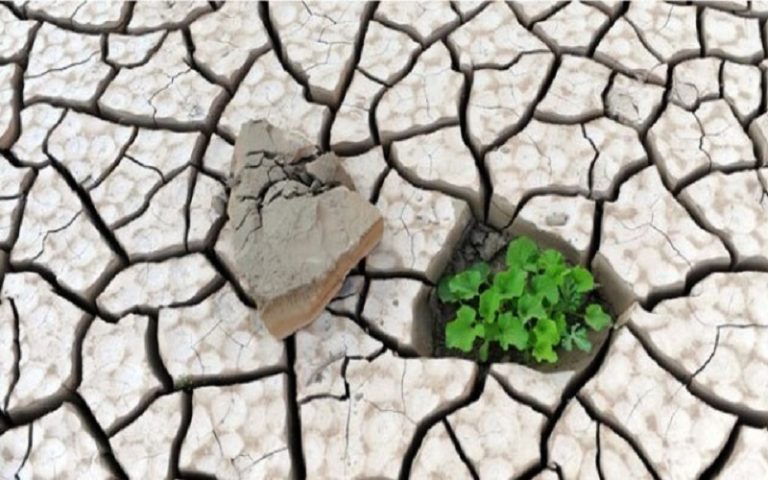
While Iran’s environment can no longer tolerate any mistake and mismanagement and is in an extremely critical situation and many experts say that if this trend continues many regions of the country will become uninhabitable, with a two-month delay the regime has appointed Ali Selajgeh, as the new head of the Environmental Protection Organization.
The question is, how much motivation, knowledge, and of course power does this organization have to protect the country’s environment under new management?
In recent years, Iran has been grappling with several environmental problems, from climate change and global warming to floods and fires in forests, like other places in the world.
But the difference is that contrary to other countries, the regime does not care about the situation in Iran, and in the four main components of the environment – water, ground, air, and biodiversity – the country is in a critical situation.
Iran has the highest soil erosion rate in the world, according to a 2018 UN report. One-twelfth of the total global soil erosion occurs in Iran.
However, not all of Iran’s environmental problems end with this case: drought, lack of water resources, land subsidence, air pollution, dust, habitat destruction, land-use change, forest, and grassland fires are just some of several environmental challenges that can change the fate of the inhabitants of Iran and lead to many political, social and economic tensions, something that we have witnessed in the past months and years many times, protests which occur mainly in high populated areas, from Isfahan to Ahvaz and elsewhere.
Ironically, the regime claims that the root of these problems and the following protests are the crises created by foreign enemies, while when the situation is becoming more critical many of the regime’s elements suggest the rule to put these senseless jokes away and find a solution for this danger.
Many state-run dailies know the reason for this delay because of the pressure from the regime’s different mafia factions from political to economic. Mafia factions and cartels were concerned that their benefits would be overshadowed by a new decision.
Currently, 304 cities of Iran are experiencing water stress, among them 101 are in a red situation and are struggling with their water supply.
More than 80% of the country’s wetlands lack water or are in severely critical condition, and wetlands in the south of the country, Bakhtegan Lake, Jazmurian, and Gavkhooni have been victims of indiscriminate dam construction and development.
But as mentioned above, the country’s environment doesn’t just suffer from water stress. Soil erosion and its consequences are also a major obstacle to the country’s development. Experts have also announced the country’s average rate of special erosion from 16 to 25 tons per hectare per year. However, the average global statistics are 6 tons, and it takes at least 700 years to form a centimeter of soil.
Land subsidence is another warning that experts have called a ‘quiet time bomb.’ According to the head of the National Surveying Organization, 29 of the country’s 31 provinces are at risk of land subsidence.
Forests and wetlands fires are also other important issues that we’ve seen more than ever in recent years, due to the regime’s carelessness.
According to the Parliamentary Research Center and according to the statistics of the last 20 years of the Forests Organization, 30,000 fires have occurred in the forests and rangelands of the country, destroying more than 280,000 hectares of forests and grasslands.
In other words, Iran has lost 14,000 hectares of forests and grasslands annually in wildfires alone. But in addition to water, soil, fire disasters, air pollution from particulate matter and ozone to sandstorms is also a serious and breathtaking crisis that directly affects people’s health.
Many experts believe that tackling air problems in Iran requires the environmental organization’s management ability to deal with the country’s non-standard and outdated factories, automakers, and petrochemical companies. This is something that has not happened in the last 42 years since the mullahs took power.
Khamenei and His Rule in Fear of Mounting Protests
The supreme leader of the Iranian regime, Ali Khamenei addressed security officials in a speech on Sunday, warning them about ‘the hard threat of the enemies’ and the ‘enemy within’, and stressed that all security forces, including the Revolutionary Guards (IRGC) and the State Security Forces (SSF), must be prepared to act as a shield against these threats.
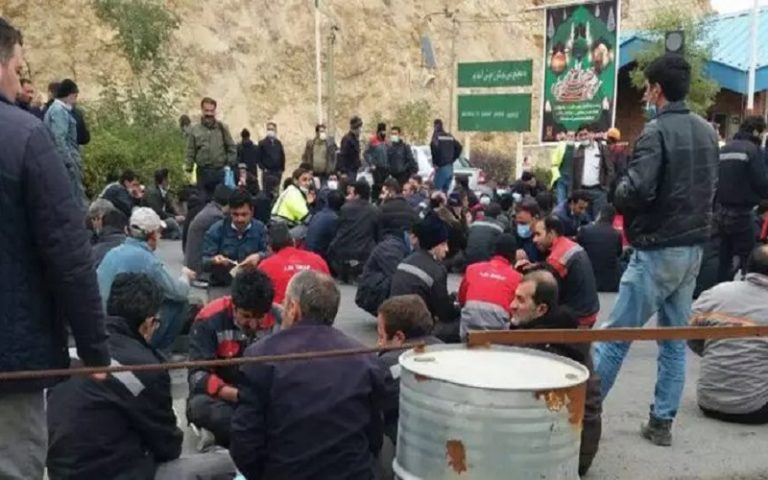
The regime’s fear of enemies within is ever-growing, especially as widespread rallies continue to take place across Iran to protest the destructive policies of the regime. Recent protests have involved teachers, pensioners, and other workers, who have all raised their outrage at the recent social and economic crises.
In Tehran, teachers held a large rally in front of the Majlis (parliament). Similar protests were held in Isfahan, Shiraz, Ahvaz, Zanjan, Kerman, and other cities.
Iranian teachers began their protests as the new academic year began as many are struggling with unemployment and low wages, leaving much living below the poverty line. Despite the protests taking place for several months, government officials are still yet to satisfy the demands of protesters.
Other protests, featuring hordes of pensioners and retired government employees, took place in Tehran, Ahvaz, Isfahan, Rasht, Kermanshah, Khorram Abad, Mashhad, and Qazvin for the same reasons.
These kinds of protests movements are happening across Iran every day and involve all segments of society. And every day, the protests are growing and number, which is causing much concern for regime leaders and officials.
As previous protests, notably the 2019 uprising, have brought the regime to the brink of collapsing, it is no wonder that Khamenei is worried about the threat of future protests bringing down the regime entirely. Other regime officials also share his concerns, including a commander of the IRGC forces based in Qazvin. He said, “The conflict has been transferred from beyond our borders to within our home.”
This is fear is even expressed by the regime’s main official. Ahmad Khatami one of the regime’s clerics in his latest speech showed the regime’s frustration as he said: “The capital of this system and revolution is the people, the enemies are attacking this revolution. They try to show the country messy. They are showing Iran somehow in the foreign cyberspace, that who is listening to it thinks that tomorrow the system will collapse.”
Then about the people’s boycott of the recent presidential election which makes clear why the regime is forced to interfere in other countries, he said as an excuse for the regime’s failure: “That 48% of the people who came, I don’t compare it with 98%, but with those conditions, it was an epic. There was the coronavirus, and the people were right to fear the coronavirus.”
The regime is notorious for exporting terrorism across the Middle East as a way of maintaining order in Iran, but as the crises continue at home due to the regime’s corruption, the mullahs are slowly losing their grip on power. They are making it worse for themselves when the simple solution is to address the problems faced by the Iranian people, instead of trying to repress them.
But Khamenei, who has been the regime’s unchallenged and undisputed leader since 1989, knows full well that corruption and violence are the foundations on which his regime has been built.
Khamenei understands that if he diverts away from these foundations, that will spell the end of the regime, so his only solution has been to continue to suppress the citizens of Iran with force. The appointment of Ebrahim Raisi as the new regime president has only further established Khamenei’s plan to consolidate power to protect what is left of the fragile regime. Raisi is well known for his role in the 1988 massacre which saw the mass murders of 30,000 political prisoners.
Today, the people of Iran have nothing to lose and thus nothing to fear. They are returning to the streets every day despite the heavy presence of security forces, despite the regime’s constant threats to arrest and harass protesters, and despite the unbridled spread of the coronavirus, exacerbated by the regime’s criminal policies.
Iran, a Country Without Hope for the Future
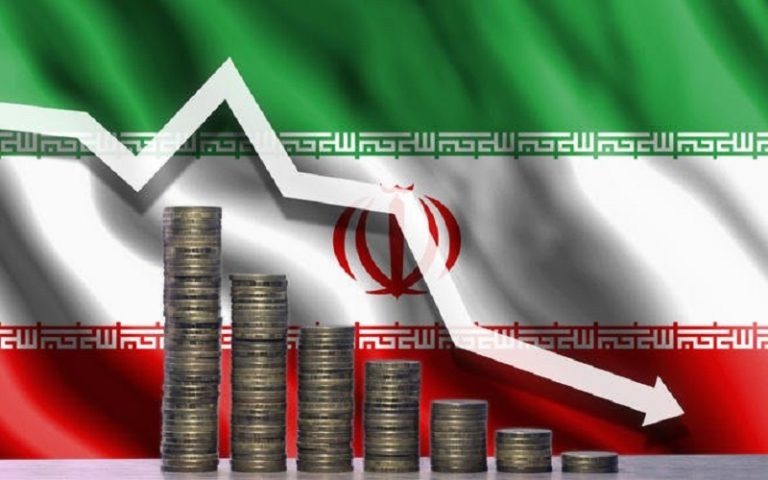
In a new report, the Iranian Chamber of Commerce Research Center has examined the state of Iran’s economy over the past 10 years and answered the question of why, despite the government’s claims that all the measures have been taken, the Iranian economy has not recovered.
Mohamad Ghasemi, the head of this research center, answering this question said: (ISNA, September 9, 2021)
- “First, Iran’s domestic and foreign policy does not serve to solve economic issues. If we say that economics is a priority, all political power, both at home and internationally, should serve the economy, but it is not. So, unfortunately, we have to say in our speeches that the economy is only the first issue of the country.”
- “Unfortunately, there is no scientific perspective for managing economic issues in the country. If you ask members of the Expediency Discernment Council, Parliament, or the government how economic problems will be solved, they have scattered and traditional views on these issues.
- About the third reason for the current situation, he counted the dispersion of economic policy-making power in the country and said: “In our country, it is unclear who is responsible for the fiscal, monetary or foreign exchange policymaking. All of this is scattered in a variety of high councils and institutions.”
- He considered the fourth reason with a look at oil revenues and added: “The answer to this question should be clear: what are we going to do with the oil revenues if the sanctions are lifted? Now, during the sanctions, what we do with oil revenues is to supply basic goods and, to some extent, supply raw materials for production.
Uproar Over the Execution of an Innocent Prisoner
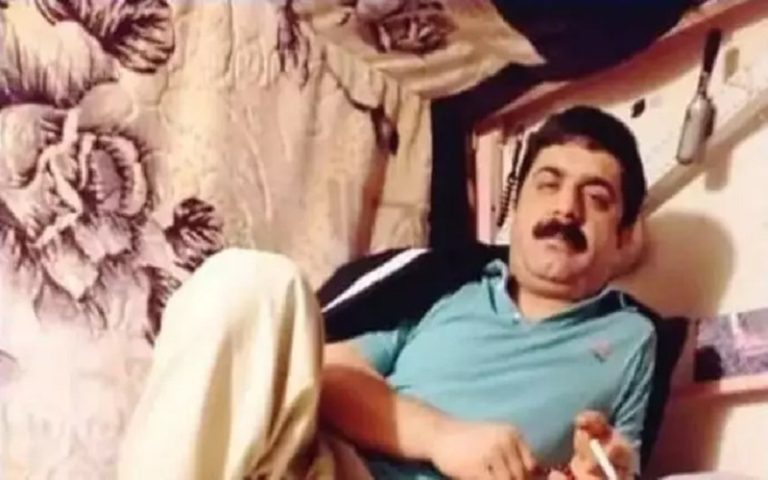
Despite being acquitted of his charges, Abbas-Gholi Salehi, aged 42, was executed last Wednesday by the Iranian regime at Dastgerd prison in Isfahan just a day after an immediate court ruling sentenced him to death following a 20-year prison sentence.
Salehi’s family were informed of his pending execution following the ruling on Tuesday and that evening, a large group of local people gathered outside of the prison to call for the sentence to be revoked. His family was warned by regime authorities to remain silent, who threatened to bring about false charges against Salehi’s brother who is currently imprisoned.
In order to create a sense of fear among the public, the Iranian regime is known to randomly execute ordinary prisoners. Numerous accounts have highlighted that regime authorities often torture prisoners and force them to confess to crimes that they haven’t committed.
Contrary to the regime’s desire, however, Salehi’s execution was met not with fear but with public outrage. On Thursday, a large group of people in Yazdanshahr, Isfahan province, gathered to commemorate Salehi while singing songs and chanting slogans about revenge.
In fear of the situation, the regime, a few hours after Abbas-Gholi Salehi’s execution, arrested his brother, and his father was asked to disperse people from the front of the prison and told them that whatever happens next, they will be guilty.
The regime’s officials forced his family to execute the funeral on the same day. However, due to resistance from Abbasgholi Salehi’s family and locals, the ceremony was held on Thursday with the participation of a large number of Yazdanshahr people in Isfahan.
In this regard, a resident of Yazdanshahr said:
‘The ceremony was traditionally held in a march and mourning ceremony. Despite the regime’s threats, the people participated in a large scale that showed another view of dissatisfaction with the regime.’
With the social and economic crises faced by Iranian citizens at the moment, it is no wonder that they are becoming increasingly restive. The impending threat of another nationwide uprising has the regime worried, and they have been trying a number of tactics to try and quell the outrage and keep the population in check, from beating and humiliating youths in the streets to the executions of political and ordinary prisoners.
The regime’s eagerness to quell any potential uprisings is not surprising, considering the members of the new government cabinet, including the regime’s new president Ebrahim Raisi, who is responsible for a number of crimes against humanity. The regime’s supreme leader, Ali Khamenei, has had a hand in appointing ministers with appalling criminal histories to high positions of power within the regime in order for him to maintain a firm grip on controlling the public unrest.
The Speaker of the Majlis (parliament), Mohammad Bagher Ghalibaf, was formerly a commander under the Revolutionary Guards (IRGC) who have been highly involved in cracking down on protesters in recent years. Another official, the Chief of Judiciary, Gholam-Hossein Mohseni Ejei is currently blacklisted for his past human rights violations towards protesters and political dissidents.
The execution of Salehi is the latest manifestation of the regime’s desperation to maintain control over an 80-million strong population that no longer wants it.
Salehi’s execution in Isfahan after 20 years shows the cruelty of the clerical regime that cannot continue its rule for even one a day without torture and executions.
It appears, however, that the regime’s method of repressing society’s outrage is becoming less effective considering the rallies that took place before and after Salehi’s execution, with protesters standing their ground and calling the regime out on their wrongdoings.
Just last week, a large group of people from Ilam held a demonstration outside of Fashafuyeh prison in Tehran to protest the murder of youth from their province who had been killed at the prison under torture.
The people of Iran, who have nothing to lose but their miseries under the rule of the mullahs, are no longer afraid of the regime and its brutal security forces. And every single execution adds to their ire and outrage and their desire to topple this regime.
Iranians Are Facing the Worst Fall in Purchasing Power in History
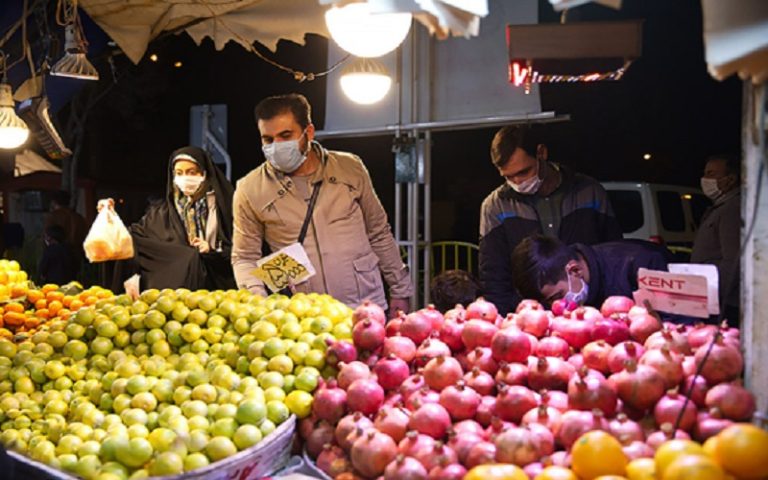
The largest drop in food purchasing power in Iran’s history has been reported. According to annual statistics, the volume of the loss of purchasing power of Iranian households has reached its highest level in 2021.
If during the years of the Iran-Iraq war people faced a shortage of goods to supply their food, this year the famine situation has been imposed on households not by a shortage of goods but by high prices and disproportionate wages to inflation. The economist Ehsan Soltani used the term “imposed famine” to describe the effects of this fall.
Citing the national average in the last two years, incomes and salaries have increased by 30 percent, and the inflation rate has risen above 50 percent, which means that the income of families has fallen behind inflation above 50 percent.
For four years now, food prices have been on an increasing circuit, and the ratio of food growth to wage growth has been much higher. This is the first time that this is happening in Iran.
In the history of Iran, food price growth to wage growth has lasted just for a year, and each time in the following year, food prices have become relatively stable and there has been purchasing power for it. But now, for the first time in four consecutive years, food prices have continued to grow far more than wage growth, and this tragedy has created the biggest fall in household purchasing power.
Also, according to data from the Statistical Center, the food inflation rate of the three low-income deciles reached above 60 percent this September, unprecedented in the last four decades.
Meanwhile, the first decile of income has suffered less inflation than low-income deciles, the edible inflation rate of low-income deciles is above 61 percent, and inflation imposed on the poor is currently 4 units higher than high-income ones.
Last year, at the same time, the inflation rate of low-income deciles was 21 percent, and the difference was less than one percent from the inflation rate of the high-income deciles.
With the sharp decline in the purchasing power of Iranian families, red meat, rice, and beans, etc. are removed from the basket of many households, and the head of the supermarket union announced the closure of about 20 percent of supermarkets because of the expensive food.
After the growth in the price of common foods such as meat, rice, and beans, low-income households inevitably have removed these goods from their list of purchases and have opted for alternative commodities.
However, with government policies and decision-makers and the elimination of government currency from items such as rice, sugar, and food inputs, alternative commodities were not spared from expensiveness.
For example, the price of bread was held steady in 2018 and 2019, but this year suddenly it increased more than three times.
The most important culprit in these costs and lack of protectionist policies is the government’s corrupt relationship with large private and rent-seeking enterprises.
Oil, gas, electricity, and water, which are among the public assets, are given to private enterprises and rent-seeking companies at very low prices, who are making billions of profits.
According to calculations last year, the annual net profit of 20 large private enterprises was equivalent to the total budget deficit of the government.
Meanwhile, only through the increase in the price of minerals, water, electricity, and gas of industrial and government-private enterprises, 500 trillion tomans of income will be generated, which can be directed towards financing welfare protection policies and strengthening the purchasing power of households.
Iran’s Government Sends People’s Needed Oxygen to Iraq
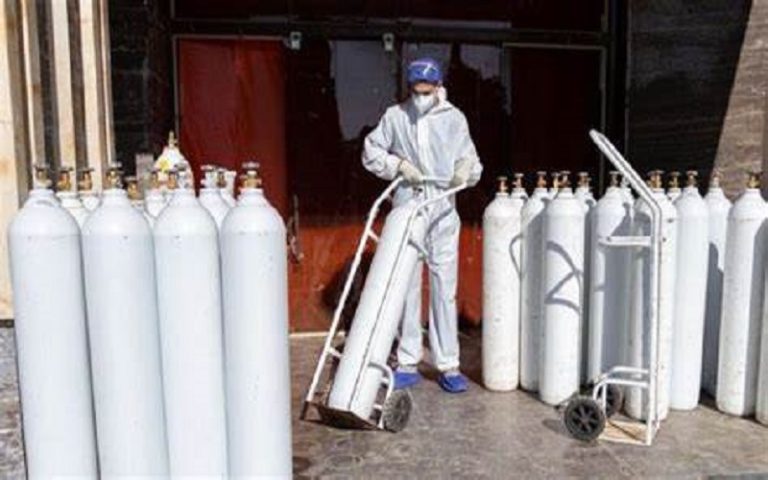
On September 21, 2021, Iran’s health minister made an unprecedented confession about the death of coronavirus patients and the lack of oxygen in the country.
On this subject, the state-run news agency SNN quoting the health minister wrote:
“The daily deaths of 600 and 700 people are catastrophic. I went to nine provinces, and I’ve seen all their ICUs. The situation is catastrophic. The most important issue for coronavirus patients was maintenance and oxygen which were catastrophic when I went to Imam Reza Hospital, more than 80% of the patients were intubated (dangerous and dying coronavirus patients who are intubated in their trachea).”
When reading these sentences someone can think that the regime’s health minister is concerned about the situation and the lack of medicine and oxygen, but he is the minister of a government which in such a situation is exporting the country’s much-needed oxygen to Iraq.
Basra Health Department announced the arrival of 60-ton shipments of the Iranian regime’s donated oxygen to Basra to meet the needs of coronavirus patients in health institutions.
Iraqi media also reported on the efforts of the Iranian consulate in Basra, the general efforts of the regime, the Hashd al-Shaabi, the Basra Health Department, and the representative of Khamenei’s office to send liquid oxygen tankers to Basra.
This comes after the Iranian people died in hospitals because of the lack of oxygen.
In appreciation of sending the oxygen needed for coronavirus patients from Iran to Basra, Basra’s Health Director Abbas Khalaf Tamimi said in a television interview:
“I thank the Islamic Republic and its consulate in Basra, the governor of Khuzestan, and the Hashd al-Shaabi for the arrival of the first shipment of liquid oxygen to Basra hospitals. Some of these shipments are also shipped to Helleh province.
“This is not a strange news story for the Islamic Republic. I cannot thank them enough, and I expect them to send more oxygen shipments to Basra. We receive 60 tons of oxygen per day or a day in between from the Islamic Republic, and tomorrow, inshallah, 100 tons more will come.
“We need a high level of discipline in this work and the Iranian side is cooperating very well with us. This cooperation is not limited to today, but in the coming days, our brothers at the Iranian consulate will cooperate in this regard. They inform the governor of Khuzestan to cooperate with government parties and with the high organization over the coming months by the end of the year.” (Al-Ahd TV, August 4, 2021)
ISNA approved this event and wrote: “The Islamic Republic of Iran has sent tankers carrying liquid oxygen to Iraq for patient use across the Shalamcheh border, Basra crisis committee announced Saturday.” (August 16, 2021)
Asaad al-Idani, chairman of the committee and governor of Basra, said in a statement: “We have coordinated with the governor of Khuzestan regarding the arrival of three tankers carrying liquid oxygen through the Shalamcheh border, and this oxygen will be sent to hospitals where coronavirus patients are hospitalized.”
The state-run news agency IRNA about the critical situation in Iran’s hospitals and the lack of oxygen wrote:
“Due to the high number of hospitalization of patients in southwestern Khuzestan hospitals and high humidity of air, hospital oxygen maker devices do not meet the needs of patients and we are faced with a severe shortage of oxygen capsules due to the sultry air the oxygen maker machine of Taleghani Hospital of Abadan and Valiasr Hospital in Khorramshahr are disabled, and more than 200 capsules of oxygen is needed to provide oxygen for patients. Now 20 cities in Khuzestan including Abadan, Khorramshahr, and Shadegan are in the red situation, three are orange cities and four are yellow cities.” (September 5, 2021)
About oxygen shortages in hospitals in South Khorasan province, Tasnim news agency wrote: “Lack of oxygen in medical centers and hospitals in North Khorasan has been evident due to the outbreak of the fifth peak of coronavirus and the peak of the presence of coronavirus patients in different wards.” (Tasnim, September 3, 2021)
In this regard, Hamshahri newspaper wrote on August 30, 2021: “Eight provinces of Gilan, Isfahan, North Khorasan, Hamedan, Khorasan Razavi, Chaharmahal and Bakhtiari, Kermanshah and Qom are facing oxygen shortages, which has caused additional pressure on patients and medical staff.”
The lack of oxygen and its devices is so high that numerous people have been waging oxygen therapy campaigns to collect cash and supply oxygen devices in Iran.
Iran’s President and His Mirage of Returning Blocked Currencies
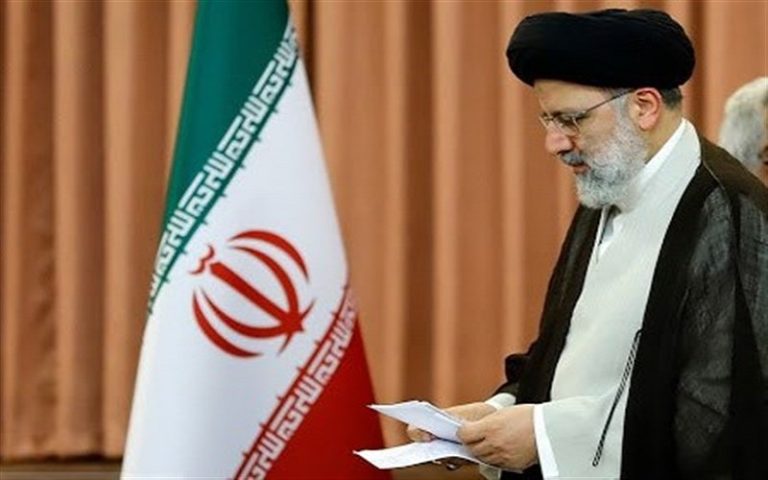
Iran regime’s president Ebrahim Raisi with a new order to the country’s national bank added a new fact to his case of incompetence and his inability in directing and running a government, especially in the field of the country’s struggling economy.
Last Sunday at the tenth meeting of the Government’s Economic Coordination Headquarters, Raisi obliged the Central Bank to return foreign exchange resources to the country, which may have the least relativity with the central bank’s job description in the current situation, because the country’s foreign exchange resources have been affected by sanctions for several years, and obviously the regime’s Ministry of Foreign Affairs should be obliged to lift sanctions to solve this problem.
Nevertheless, it remains to be seen whether such an order, in a strict way to the head of the Central Bank, can it be a solution to return foreign exchange resources to the country. And it remains to be seen whether the president’s orders can overcome the problems of the country’s foreign exchange resources.
This order was given by Raisi emphasizing the need to stabilize the market and take preventive measures of currency fluctuations, which is mainly due to the regime’s wasting of resources in corrupt and terror activities and the sanctions raised by them.
Iran’s foreign exchange resources are not available to the Central Bank to return them. There are two types of foreign exchange resources, one is foreign exchange resources that are available to international organizations and banks and have been seized because of sanctions, these organizations and banks are still not allowed to return Iran’s foreign exchange resources.
Recently, the U.S. allowed South Korea to give Iran’s regime $7 billion of its foreign exchange reserves in the form of goods. The U.S. government even specified the goods that should be from Samsung and LG brands. The rest of the currencies currently seized are not in the scope of the central bank’s work and authority to return them.
There are other foreign exchange resources, which are the currencies that some of the regime’s elements have taken from the Central Bank under the pretext of importing, some of these currencies have entered the country in the form of commodities, and others have neither been imported into the form of goods nor returned to the Central Bank, which is one of the worst and hidden corruption cases in Iran.
The executive grounds for returning foreign exchange resources to Iran are not provided for the regime at all. On blocked foreign exchange resources, the biggest problem is that it is tied to the JCPOA, which until now the regime did not accept to return to the negotiations while facing with higher demands, that each of them will be the rope around its neck.
And on the other side, no bank will work with the Iranian regime until it solves its FATF issue and its affiliated conventions such as the CF and Palermo are ratified in parliament and formally announced that they have been accepted, i.e. And until Iran’s financial transactions are not transparent and the issue of countering terrorism financing that Westerns believe is not signed, there will no progress in this field for the regime.
This means that even if Iran’s regime is allowed to export, they cannot use the international banking system because it relies on a new JCPOA to be signed and the FATF approved, which means that Iran’s financial transactions must be transparent.
If Iran’s financial transactions are not transparent, international banks fear that a case originating from money laundering or terrorism will be subject to U.S. sanctions, so no bank will take that risk.
Therefore, the hope that even if the JCPOA is signed will create an opening is a false hope, the United States will not remove all the regime’s sanctions and will keep 500 sanctions as its previously said, which are related to the regime’s cases such as its terrorism and human rights violations.
Finally, addressing the central bank to return the regime’s foreign currency resources is not an economic challenge but a political, therefore Raisi’s order to the central to return them is just propaganda for internal purposes to cover up its weakness.
Swiss Court Ruling Halts the Closure of Dr. Rajavi’s Assassination Investigation
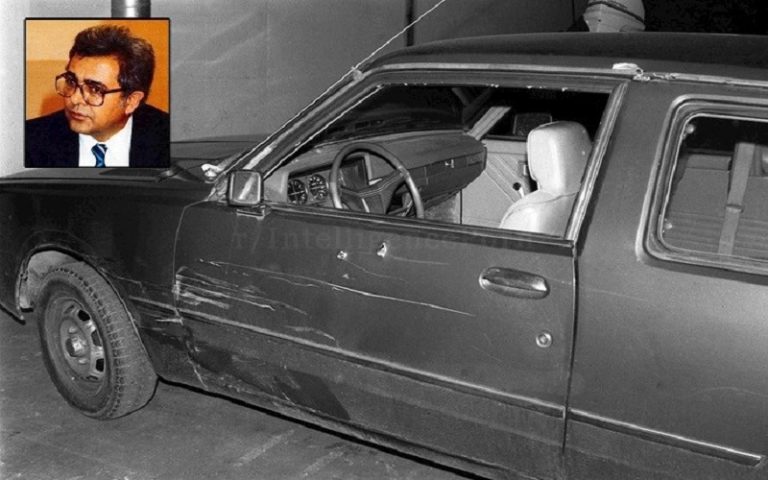
The Swiss Federal Criminal Court issued a ruling on September 23 which has halted the closure of the investigation of the assassination of Dr. Kazem Rajavi that took place in Switzerland in 1990. Under the statute of limitations of murder, the case was set to close last year after 30 years, following an announcement from the public prosecutor for the Swiss canton of Vaud.
The reconsideration has come after Iranian opposition attorneys have argued in court that Dr. Rajavi’s death could be attributed to a case of genocide, as his assassination came just two years after the 1988 massacre, which saw the mass murders of 30,000 political prisoners at the hands of the Iranian regime.
Dr. Rajavi was near his home in Geneva in 1990 when he was gunned down by a 13-member hit squad that had been organized by regime officials. At the time, he had been working as a representative for the National Council of Resistance of Iran (NCRI) to Switzerland. Despite the men involved in his assassination being identified soon after, they fled back to Iran and no authorities have been able to execute warrants for their arrest since.
The assassination of Dr. Rajavi was carried out in accordance with the same fatwa which underlay the 1988 massacre – one in which then-Supreme Leader Ruhollah Khomeini declared that all members and supporters of the Mujahedin-e Khalq (MEK) were guilty of “enmity against God” and should therefore be executed without delay.
As the fatwa issued by Khomeini specifically named the MEK, and those who were in opposition to the regime’s fundamentalist interpretation of Islam, attorneys for the Iranian opposition have argued that Dr. Rajavi’s death can be linked to other assassinations in the same era which signify that the regime was trying to destroy the Iranian Resistance movement.
In a conference in August, participants highlighted that the prosecutions of regime officials could take place in the International Criminal Court on the principle of universal jurisdiction. Two experts who were present for the conference, Professor Eric David from the University of Brussels and British human rights lawyer Geoffrey Robertson, both made statements that the atrocities committed at the 1988 massacre fit the criteria to be labeled as acts of genocide.
That expression of impunity was reinforced at the international level by the presence of a European delegation at Raisi’s inauguration, in the wake of widespread calls for him to be isolated, delegitimized, and ultimately prosecuted for genocide.
Western governments’ methods of appeasing the regime instead of holding them accountable for their crimes against humanity have only reinforced the sense of impunity that the regime has. However, the Swiss court’s decision to halt the closure of the investigation into Dr. Rajavi’s murder seems to be a step in the right direction to finally uncloak the regime’s impunity.
President-elect of the NCRI, Maryam Rajavi has described the court’s decisions as a ‘historic turning point’ and a ‘necessary step in countering the unbridled terrorism of the clerical regime’.
She warned the international community that recent events involving the regime, show that they have not changed how they operate in the past 30 years since the atrocities that they caused in the late 80s and early 90s. In reference to the 2018 bomb plot of an NCRI rally in Paris, and the brutal crackdown of the 2019 uprising in Iran she said, “Terrorism and repression are inherent and indispensable to the ruling religious tyranny.”
These incidents make it clear that as well as defining the regime’s current presidential administration, the legacy of the 1988 massacre represents persistent threats both to the Iranian people and to global security.
Iran’s DANA Contract, Corruption, and Damage to the People
The UAE energy company DANA Gas announced on September 28, 2021, that an international arbitral tribunal has ruled that the Iranian government pay a $607.5 million fine to the company.
This dispute is related to a 25-year gas purchase agreement between DANA Gas Company, a subsidiary of Crescent Petroleum, and the regime’s National Iranian Oil Company. DANA Gas says the gas was never delivered.
The damages, which followed a ruling in Dana’s favor in 2014, relating to the first eight and a half years of the 25-year agreement, which was due to begin in 2005. DANA Gas said in a statement that the last hearing of the much bigger claim for the remaining 16.5 years was scheduled for October next year in Paris and that a decision on the case would be made in 2023.
The Crescent contract is a contract signed between The National Iranian Oil Company (NIOC) and Crescent Inc. during Mohammad Khatami’s government, during the Oil Ministry of Bijan Namdar Zanganeh, initial negotiations began in 1997 and eventually led to the signing of the joint memorandum of understanding in 2001.
After reviewing the regulatory bodies, determined that the price of Iranian gas exports was very low and nearly to be gratis. A lawsuit has also been filed for violators of this contract in Iran but without any progress, as many of the violators are high-ranked people of the ruling body.
High-damaging and tainted contracts such as Crescent, Total, Acetate Oil, etc. have often involved bribes, for example, Total is accused of giving $30 million in bribes to a team headed by Mehdi Hashemi during the Zanganeh Ministry in Khatami’s government.
Total was therefore sentenced in a French court to a fine of 500,000 euros. Despite this dark past, another contract was re-signed with Total under Rouhani’s administration, which ended only in the presentation of the South Pars reservoir’s secret information to Total and Total’s subsequent break, while the French company is simultaneously operating extensively in the Qatari part of this large reservoir and has now gained access to Iran’s valuable information about South Pars.
The then President Hassan Rouhani, in 2002 as the secretary of the Supreme National Security Council, in a letter addressing the head of the government at the time (Khatami), described the action of the Minister of Petroleum (Zanganeh) in concluding a contract with the Emirati company Crescent outside the framework of the law, through ‘intermediaries’ and facing many negative effects for the country.
In that letter, Rouhani stressed, ‘Signing a long gas contract with an unreliable company that, according to reports received from the Oil Ministry, has performed poorly over the past years, and with the disregard for Iran’s rights about the Mubarak oil field, is a repetition of the bitter experience that we have been through for many years.
‘The price and contractual terms negotiated are very low and unpopular compared to the region. The Crescent deal is likely to have long-term negative economic impacts on the country’s gas market and will not have any political benefits. Since about a year ago, I have raised questions from the oil minister about the Crescent contract, which despite your order, no response has been received. The contract has been signed through intermediaries and lack of direct governmental communication with an invalid company.’
Then surprising in his presidency Hassan Rouhani appointed Bijan Zanganeh as the minister of oil. With a case of the elimination of the fuel card for four years during this management, period destroyed transparency and intensified the consumption (smuggling) of 20 million liters of gasoline per day, considering 100 billion tomans of smuggling per day, pouring 144 trillion tomans out of people’s pockets into the throats of government’s affiliated smugglers working for the IRGC.
After that, the regime’s shocking decision to suddenly triple the price of gasoline occurred in November 2019, which ended with the November 2019 protests with 1500 protesters killed by government forces.
There were many margins around this contract, including in 2013 a bi-national Iranian living in Britain named Abbas Yazdanpanah Yazdi, who was a friend of Mehdi Hashemi, son of Rafsanjani, was abducted shortly before testifying in the Crescent case in Dubai. And then killed. The prosecutor of the Dubai Criminal Court announced that Yazdanpanah had given evidence about the Crescent contract to the Hague Tribunal shortly before his abduction via internet call.
According to a video released by Iran’s principlist faction, Abbas Yazdanpanah had released the names of those involved in the mafia case, adding that a company called Jabal, represented by Mehdi Hashemi, was formed, seeking a stake in oil contracts with multinational corporations.
According to the evidence, Mehdi Hashemi was one of the initial negotiators of the contract for the sale of gas to Crescent but was later marginalized and did not play a role in the final signing of the contract.
Now, a few years later, it seems that not only none of these government officials have done any good for the Iranian people, but today the Iranian people must pay the price for theft, bribery, and incompetence of the officials by paying heavy compensation. At the same time, the Iranian people are struggling to make ends meet under the burden of poverty, high prices, and inflation.
