

Rouhani’s COVID Lie
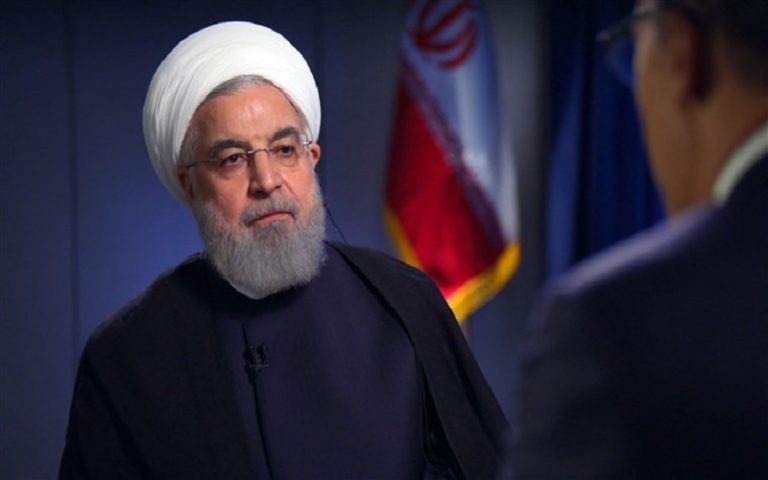
The coronavirus pandemic in Iran rages on, killing far more people than necessary, and all because the mullahs failed to take the appropriate measures at any stage. Yet still, the mullahs, including President Hassan Rouhani, continue to lie about the pandemic to justify their inaction regarding lockdowns and vaccinations.
It’s not that Rouhani and the rest of the officials are unaware of the national demand for free and effective vaccines, which have already been rolled about to vast swathes of the adult population in many countries, but they have certainly created a rod for their own backs about it over the past few months.
They’d already refused to buy any vaccines in January, but Supreme Leader Ali Khamenei banned the Pfizer and Moderna vaccines, which meant that shipments sent over by a charity were wasted. He claimed that the pharmaceutical countries wanted to test the drugs on Iranians, even though both were already being administered to the general public in the US and UK, with President Joe Biden and Queen Elizabeth having already been vaccinated. Then, Rouhani spoke about a domestic vaccine that would be available at some point in the next two years and was laughed off by medical experts.
So, what now? Well, the government seems to be more aware that a failure to vaccinate the population could increase the people’s anger and lead to protests that would sweep them from power, so they’ve backtracked a little and Rouhani even said that “the first vaccine is the best” as if there was a choice of vaccines for the public.
One might question how much he believes in what he says when neighbouring countries began their vaccination process at the start of 2021 when Rouhani questioned vaccine effectiveness, and the government has still failed to import World Health Organisation-approved vaccines. One might even wonder if the vaccines will reach Iranians when even the state-run Arman daily reports that the officials are allowing “mafias” to import the vaccines in a likely embezzlement scam.
Food and Drug Organization spokesperson Kianoush Jahanpour said on May 2: “Four-dollar vaccines are sold at $50, and $10 vaccines are imported at $25-70… Many companies that import vaccines do not work in the field of vaccines at all.”
The state-run Aftab-e Yazd daily wrote that the vaccines are being “monopolized” and that the country faces a “phenomenon called ‘vaccine smuggling’”.
And even worse, now you can find the vaccine on the black market. The state-rund daily Donya-e-Eghtesad on May 11 wrote: “The vaccine is available on the black market, but it is not clear whether this vaccine is real or not, the customer must trust and pay a thousand euros for the Russian vaccine.
According to this report and quoted by the pharmacists of the Nasser Khosrow street, it is said that the Chinese vaccine will be available in 10 days.
“Iran has 8,574 kilometers of border with 7 countries, and this has caused everything that is offered to the European market, the United States or even the Far East to be available in the Iranian market 48 hours later.
“According to field observations, the price of two doses of Russian vaccine in Iran is one thousand euros and they do not accept its equivalent in Rials. There is no guarantee as to whether this vaccine is genuine or not.”
The Iranian Resistance wrote: “The reality is that people are losing their lives during the Covid-19 fourth wave, and there are no vaccines. The private sector, rather the Revolutionary Guards (IRGC) front companies and state-linked mafias, are about to import Covid-19 vaccines, sell them in the free market. In other words, trade vaccine with Iranian people’s blood.”
Iran Regime’s Blackmail for JCPOA Negotiations
These days around the Iranian nuclear program, all eyes are on Vienna, a city where direct or indirect negotiations are being held between Iran and the United States, along with major world powers. The Iranian government is seeking to revive the 2015 nuclear agreement (JCPOA) at any price.
Iran’s hardliners are pretending that the negotiations are not by the orders of the regime’s supreme leader Ali Khamenei. But Iran experts say Khamenei himself is directing the entire nuclear projects, including all events and negotiations around this case.
Because for his regime this is one of the two wings of the continuation of its existence, beside its support of global terrorism which is aligned with its internal repression.
This became clear when the regime’s supreme leader stamped this fact, after the revelation of the regime’s foreign minister Mohammad Javad Zarif tape and warned him and the entire government: “Foreign policy is not set by the foreign ministry anywhere in the world. All over the world, it is up to the superiors and high-ranking officials to make the decisions. Of course, the foreign ministry is also involved. But it is just the executor.”
Defending the regime’s global terrorism and the killed Quds Force commander Qassem Soleimani, which is the main tool for its harmful actions overboard, he added: “The Quds Force is the biggest factor in preventing passive diplomacy in West Asia. Man feels sorry when he hears these (attacking the foreign minister Javad Zarif).”
He continued: “Some of these speeches are repetitions of American speeches. Americans have been deeply saddened by the Islamic Republic’s influence for years. They were angry about Martyr Soleimani because of this and because of this he was martyred.”
The question here is why we are repeating this facts and speeches again. The truth is that the Iranian regime since the US President Joe Biden’s presidency has committed more than 200 hundred attacks against the US troops mainly in Iraq and Afghanistan with the help of its proxy forces.
And it seems that these attacks are intensifying after the new round of the JCPOA negotiations. And as we know, over the last 40 years this regime has solved every of its crises with its terror lever, to impose its demands and goals.
Below is a partial list of the regime’s latest attacks against the US troops and bases in Iraq fulfilled by its proxy groups, reported by the regime’s media. The amazing thing is that many times even further the Iraqi media and other international media, the regime’s media have reported these attacks.
State-run daily Khabar Fori, May 8: “Some news sources reported on Saturday morning that a rocket attack has hit the US base in Ain al-Assad in Iraq’s Anbar province. The base is home to US terrorist forces, and initial reports indicate that a missile warning siren sounded at the base. News sources reported that the C-RAM and Patriot missile defense systems recently installed at the base failed to intercept and destroy the rockets.”
State-run website Karg News Agency, May 5: “Following the rocket attack on the Ain al-Assad base in western Iraq, US forces took unprecedented security measures at the base. Ain al-Assad air base in Iraq, where US forces are based, was targeted by a missile yesterday.”
IRNA news agency, May 4: “Iraqi sources reported that the Iraqi Ain al-Assad base was targeted by several rockets an hour ago. Yesterday, Balad base was attacked with 10 rockets. An hour ago, an explosion took place in the American military equipment loading area on the Kuwaiti border, which, according to published images, caused extensive damage to the occupiers’ equipment.”
IRNA, May 4: “Iraqi news sources reported an attack on a US military logistics convoy on the road leading to Iraq’s occupied Ain al-Assad base.
“According to IRNA on Thursday night, this attack with a developed bomb was against a convoy carrying US missiles and military equipment. Saberin News wrote that the group of Ashab al-Kahf claimed responsibility for the attack. Attacks on US military convoys in Iraq have intensified in recent weeks, with some Iraqi anti-occupation groups announcing they will continue their attacks as long as their country is under US occupation.”
ISNA news agency, May 4: “The Iraqi army’s security unit affiliated with the Iraqi army by issuing a statement that four Katyusha rockets hit the Balad air base and announced the operation of identifying its terrorist elements.”
ISNA news agency, May 3: “Iraqi security sources reported on Sunday night that two rockets had been fired at a US military base near Baghdad International Airport.”
Mehr news agency, May 2: “News sources reported Sunday evening that a rocket had hit a US military base near Baghdad airport. According to the report, the ‘Victoria’ military base near Baghdad airport, where the American occupying forces are present, was hit by several rockets. At least three rockets are said to have hit the Victoria military base.”
Fars news agency, April 28: “An unnamed Iraqi group claimed responsibility for a drone strike on Balad Air Base, 64 km north of Baghdad. According to the Saberin News Telegram Channel, the statement said: ‘In the name of the Lord of the Mojahedin and with the blessing of the birth of our Master Imam Hassan Mojtaba, peace be upon him, the American military branch stationed at Balad Air Force Base was recently targeted by a drone.’”
Mashregh News, April 23: “News sources announced that at least 3 rocket missiles hit American Victoria base near Baghdad airport in the Iraqi capital.”
Iran Press news agency, April 18: “Some Iraqi sources reported that two people were wounded in a rocket attack on Balad Air Base, a US military base in Iraq’s Salah al-Din province. In the past few days, more than 20 US logistics convoys have been attacked in various parts of Iraq, including the US base near Erbil Airport and the Ain al-Assad base in Anbar province. US convoys and military bases in Iraq have been targeted several times in recent months.”
Mehr news agency, April 16: “News sources reported that the Ain al-Assad air base in Iraq’s Anbar province was targeted.
The Saber News Channel, which broadcasts military news about the US occupation of Iraq, reported that the base had been targeted by three UAVs.”
State-run website Khabar Fori, April 15: “According to Iraqi sources, the ‘Ain al-Assad’ base, the base of the American occupying forces in the Iraqi province of Al-Anbar, has been targeted by rockets.”
State-run news agency IRNA, April 9: “According to IRNA, following the increase in threats regarding the targeting of American bases in Iraq, in addition to the full readiness of the occupiers; The Iraqi security forces have also increased their level of monitoring and preparedness.
“The Nas news agency close to the Iraqi government reported: following the efforts of the Iraqi security forces with field monitoring and intensification of intelligence efforts, one of the patrols at 20:00 on Thursday night in the ‘Al-Jazeera’ area of Al-Anbar province saw a suspicious vehicle that it was a short distance from the road east of the Ain al-Assad base.
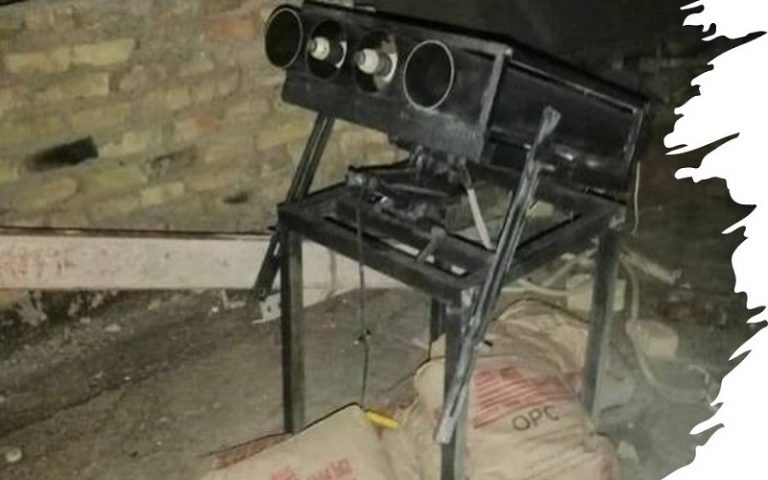
“According to the Iraqi security headquarters, the security patrol searched the vehicle and found a launcher and 24 missiles, then an engineering unit was called to the scene to neutralize and deactivate the missiles.”
Fars new agency, April 7: “A US military logistics convoy was targeted in western Iraq. The Saberin News channel reported Wednesday that the convoy was targeted in the area between Salah al-Din and Al-Anbar provinces. This is the fourth US military logistics convoy to be targeted.”
Nasir News, April 4: “Attack on a US military support convoy in Diwaniyah, Iraq. The attack on the US support convoy in Diwaniyah province was claimed by the armed group ‘Ashab al-Kahf’, but no group has claimed responsibility for the rocket attack on Balad base as of this writing.”
IRNA news agency, March 18: “A newly formed Iraqi group that announced its existence last night (Wednesday) claimed responsibility for two attacks on military support convoys of the occupying US army and the ‘Ain al-Assad’ base. The Iraqi group, dubbed the ‘Khyber Brigade’, today (Thursday) issued a short statement and video of its attacks, claiming responsibility for the recent attacks on a convoy and US military base on Iraqi soil.”
The Faulty Cycle of Iran’s Social Security and Poor Situation of Workers and Retirees
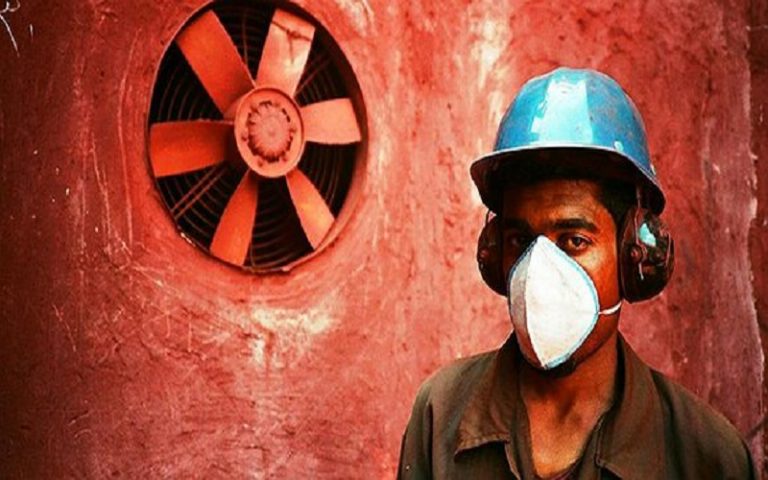
Workers in Iran have experienced difficult living conditions in recent years. Low purchasing power in the face of staggering inflation, declining wage earners’ living standards, and loss of employment opportunities are the main indicators of the hardships of workers and wage earners. In such a situation, why should a worker in Iran hope that the situation will improve with the presidential election and the coming to power of a new government?
Experience has showed that nothing will change, and the general relations of the economy must change at a level beyond the government in order for the situation to improve. Which means that the extreme corruption in Iran’s government must be solved.
The situation of the labor force can be defined and read in the context of a set of economic variables, and if these variables are not corrected, there is no hope for lasting reform. The economy has long been in a state of decline and recession. ‘Recession’ is equivalent to reducing investment and employment and reducing the level of production of enterprises and affects factors of production, including labor. The first effect is rising unemployment and wage problems, which is why wages have long been ‘undesirable.’
TRecession is worse and deadlier for the poor than the rich, and inflation is the killer of wage earners. The combination of these factors leads to economic and livelihood losses for workers. Iran is involved with the coronavirus for more than a year and a half. And corruption has become one of the main pillars in Iran’s economy, without any hope of change.
For this reason, the ’employment focus’ has distanced itself from the economic goals of governments. Governments have not talked about meaningful job creation for years. These issues have piled up and the situation has reached the position which we are witnessing today. Correcting this situation is not so simple and even more impossible.
The fact is that the Statistics Center of Iran does not provide accurate statistics. We do not have accurate information on the components that affect the life and livelihood of the working class. Inflation statistics are a small part of it. We do not have accurate statistics on labor market components such as the exact unemployment rate and the employment rate of workers.
All we know is: Unemployment insurance and unemployment insurance claimants have increased significantly. So, Iran’s economy needs sustainable and fruitful changes to solve macroeconomic problems related to national production, employment, and domestic investment.
The workforce is affected by these variables; Both employees and retirees, and of course the reduction in the employment rate, will also harm the Social Security Organization, as the organization’s inputs will be greatly reduced, and this will exacerbate the crisis in the organization.
When the Social Security Organization is harmed, retirees are harmed again because their insurance and medical obligations are disrupted. This vicious cycle continues, and wage earners suffer again and again.
Iran’s economy has become a sick economy. While the government is insisting on the continuation of its nuclear program, so paralleling to this the sanctions are continuing and has increased the expenses but reduced the income, meaning that the government had to pay rent to meet the basic needs.
So, the government lost from both expensive imports and cheap exports, and between these, Iran’s rule is not at an economic winning position and is losing day by day its benefits, which is the reason of it begging for the JCPOA (Iran nuclear deal) negotiations.
For two or three years, with inflation of 35% and 40%, the low-income classes, female-headed households, minimum and sub-minimum waged workers, and the unemployed were exposed to severe cultural, economic, and social damage. These injuries have been comprehensive and efficient.
Workers were forced to live on salaries approved by the Supreme Labor Council, which have nothing to do with the inflated living incomes, resulting in problems in all sectors, including housing, treatment, education and even food, and are to cut from their living costs day by day.
And an important point about Iran: wherever we have had rampant inflation, we have seen the poor get poorer and the rich get richer. Inflation seems to act as a reversal flow of the economic shift from the poor to the rich, increasing the Gini coefficient. Of course, lately we no longer know what the Gini coefficient in Iran really is and how much inequality we have.
We are just sure that inequality has increased month by month and year by year, which is a very serious and significant alarm for the rule in Iran who is fearing people’s upcoming escalation and protests against the government, like the gasoline price hike in November 2019.
Lies About an Industrial Boom in Iran
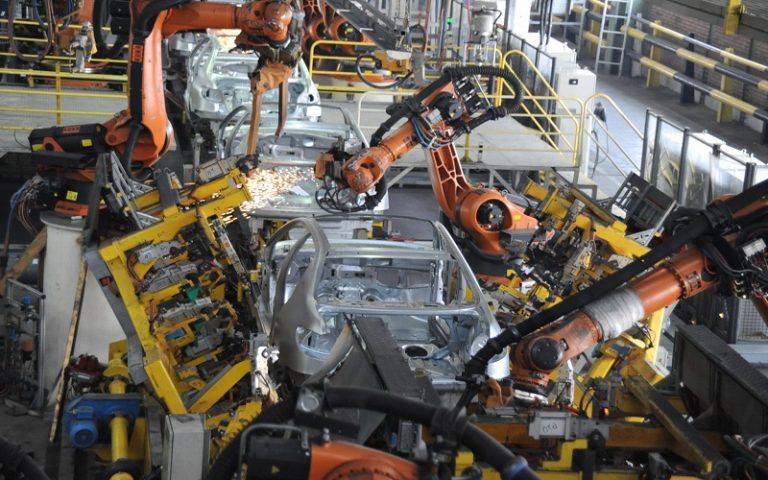
In a ridiculous manner, Iran’s Minister of Industry, Mines and Trade said that the country witnessed seven percent industrial growth, while even the most developed countries in the world did not claim such a thing, especially at a time when the coronavirus epidemic has hurt many industries.
Now the question is, while we are witnessing a very low economic growth and the dollar price which is now 24,000 tomans, which is a large figure for Iran’s stressed industries, how can the regime’s government and especially its minister can make such a claim. It should be noted that previously the regime’s supreme leader Ali Khamenei claimed that Iran is ranked 18th in the table of the developed countries which led to many ridicules on the social media.
Below is an interview with the title, ‘95% of people are not able to increase consumption’ and published by the state-run news agency ILNA about this subject with an economic expert of the regime Ehsan Soltani.
Q: “Is it possible to extract positive growth in the field of industry from the economic conditions of Iran?
A: “We must first keep in mind that the irrational increase in the exchange rate is done to protect the interests of rent-seeking enterprises. The figures I refer to here are based on exporting countries. In 2011, we had $56 billion in imports of food, raw materials and intermediates and capital goods. Only $32 billion of that was industrial raw materials.
“Sanctions have been easing ever since, but before the start of the raise of the exchange rate, that figure reached $48 billion, of which $25 billion is industrial raw materials. In 2019, the import of food, raw materials, intermediate goods, and capital reached $30 billion, and the share of raw materials decreased from $25 billion to $15 billion.
“Definitely this statistic has decreased in 2020 as well. According to the statistics we obtained, in 2020, compared to 2017, the import of raw materials and industrial parts has halved. So, what has happened is that the volume of Iran’s industrial production has decreased in three years, but some give statistics that Iran’s industrial production has increased by 7% in the first nine months of last year!”
About the people’s decrease in purchase power, he added:
“On the other hand, we are seeing an increase in stock because people do not have the purchasing power. This means that consumption is not increasing. According to statistics, 2.98 million tons of steel ingots were traded on the stock exchange from November 3, 2020 to April 3, 2021, i.e., a period of five months, of which 1.67 million tons were traded and the rest were not sold. This means there was a reduction in the volume of transactions.
“These statistics show that what has happened in the Iranian economy is a significant reduction in the level of purchasing power. On the other hand, exports have not grown, and workers’ wages have not increased in line with rising prices.”
Q: “The Ministry of Industry, Mines and Trade claims that it was able to save at least 1,500 stagnant industrial units in 2020 and even exceeded its previous pointed target. What is your impression?
A: “The central bank does not publish statistics and publishes a set of general and selected statistics. If an official or the central bank claims that a 7% increase in the industrial growth rate has occurred and they are on their word and defend it, announce the production growth statistics in each of the industry sub-sectors so that I can see and believe that growth has taken place. Otherwise, it is easy to claim.”
About the corruption in all sectors of the government, he added:
Q: “Economic experts consider the behavior of rent-seeking enterprises as one of the obstacles to the formation of production in Iran. Like the case you mentioned in the context of the exchange rate, but it seems that the issue is beyond the distribution of hundreds of thousands of billions of tomans of foreign exchange rents among upstream industries.
A: “Yes, economic power is in their hands. At the moment, the price of currency should go down, but why is it always going up despite the temporary cuts? Private-Government and Government companies and upstream industries are preventing the exchange rate from falling under the pretext of defending production, But which production?
“From 1978 until now, the value of the rial is one four thousandth lower. In fact, every 6 Tomans (dollar) has reached 24,000 Tomans. That is, it has increased 4,000 times. On the other hand, the value of 24,000 Tomans in 2021 is one-fifth or one-fourth of 1978. While the real price of the dollar is 10,000 tomans.
“From 1961 to 2021, that is, within 60 years, the growth of non-oil exports and the growth of industrial GDP occurred for periods when the dollar exchange rate was stable. Its examples are from ‘66 to ‘76, and from ‘99 to 2001. Even if it was because of the price of oil, it happened anyway. But why is Iran’s industrial production not increasing?”
And about the hopeless situation of industrial entities and their dark fate, the interviewer added:
Q: “In the seven years and a few months that have passed since the 11th government, there has been a lot of talk about increasing the working capital of production and industrial units, but many of these units could not survive after a few injections of liquidity and gave up their lands and production tools to the creditors. Why is it that injecting liquidity does not meet the growing needs of the industry?
A: “We know that the circulation of capital has doubled over the past year. That is, this increase in circulation capital is not responsive to the dying industry. Suppose a plastic manufacturer has previously bought petrochemicals in a 2 to 3 months payment deadlines, and also sells this period to bring back the petrochemical’s money, but now the price of raw materials has increased six times and the working capital of units is multiplied but does not meet the costs.
“On the other hand, the total banking network facility has fallen and has halved in the last three years based on the dollar rate. On the other hand, the price of selling raw materials and intermediate goods is halved, which is closer to the purchasing power of the people, but the government’s statistics are not coordinated with the level of people’s purchasing power.”
And finally, about the government’s disorganization, the interviewer added:
Q: “Why does the industrial growth referred to do not have specific and detailed executive mechanisms?
A: “Those who say that seven percent growth has taken place must explain what the mechanism for achieving this growth has been. I can say that for 10 years, the growth rate of our capital formation has been lower every year than the previous year.
“Is it possible to extract production boom from the decrease of this rate? This is not magic! What technological masterpiece has occurred to witness industrial growth? A province branch of the Industry, Mines and Trade ministry, at the beginning of the year, claimed and estimated that they will revive 50 industrial units this year. These statistics are then aggregated from province to province at the end of the year, and at the end of the year the Ministry of Industry, Mines and Trade reports that, for example, 1,500 units have been rehabilitated.”
Iran’s People Looted by the Government’s ETF Funds
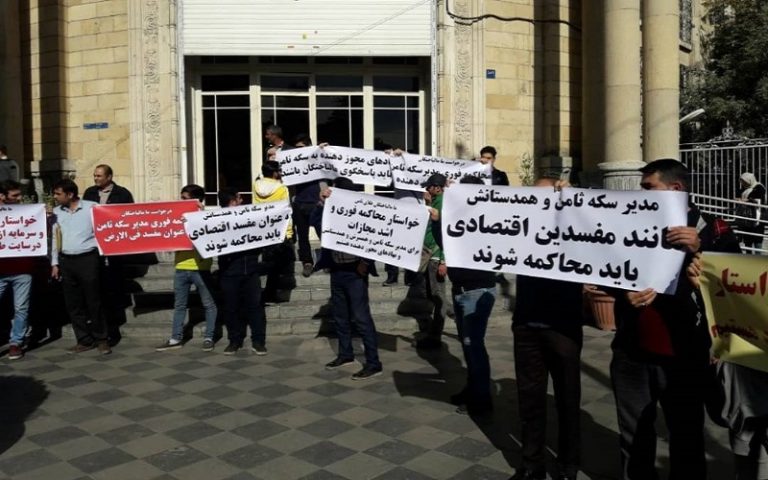
The bright future envisioned in Iran for ETFs, or state-owned investment funds, was nothing more than a mirage like other capital market shares, and the situation has reached a point where funds that were supposed to bring justice to the people and be profitable are at a loss, that the buyers of this fund have been included in the list of credit losers and it is a question of how to compensate their losses.
The rise of the capital market was close to the peak, when Iran’s looting government promised to offer three government funds in the form of ETFs, and it was decided that the first fund should be in the form of banking and insurance, the second should in the form of refining and the third fund should be in the form of car and metal funds.
The government planned to market the rest of its stake in some banks, insurance companies, refineries, automobile, and steel companies, thereby transferring its shares to the public. These funds were given to the people with a 20 to 30 percent discount, and any Iranian with a national identity number could be able to buy them.
In this regard, the first fund called Dara Yekom was launched in early summer of last year and was comparable on the third of July. In fact, through this transfer, the Ministry of Economic Affairs and Finance, on behalf of the Government the regime, transferred its remaining shares in Mellat Banks, Trade and Export of Iran, and Alborz Insurance and Amin Reliance.
More than four million people participated in the underwriting of the fund. The fund, which was in line with the rising days of the capital market, had a significant return and went up to 200 percent profit.
Profitability of the Dara Yekom was to such an extent, that even with a significant drop in the overall stock index from two million units to 1.1 million units, the fund is still in profit.
Accordingly, the price of each unit of the Dara Yekom on the day of release was 10,000tomans and each unit of this fund was more than 13.500 tomans on May 2, 2021.
But the fate of the Palayashi Yekom (First Refinery fund) was quite different from that of the Dara Yekom. The Passion and excitement about the Dara Yekom were still high were the government decided to offer the Palayeshi Fund (the remaining government shares in the four refineries in Tehran, Tabriz, Isfahan, and Bandar Abbas).
This time, the Ministry of Oil was the other side of the story, and the supply of the Palayeshi fund started with the disagreement between the Ministry of Oil and the Ministry of Economy and became an excuse for the market to collapse. The fund was launched, but at the same time the market collapsed.
So the price of each unit of this fund reached 5000 Tomans, which is half the price of the starting day of its offer. These days, the sales queues of this fund are still persisting, and each unit of this fund is priced at 7,000 Tomans.
Now the situation has reached a point where the Securities and Exchange Commission has decided to compensate the people who bought the ETF in order to revive the market and perhaps restore public confidence in the stock market.
But this is just an illusion because the people’s money has been lost and mostly extracted by the government’s officials and brokers. Usually, people do not expect to lose money in dealing with the government, and on the other hand, the government, like any other publisher, must support the stock it has offered for up to a year so that the share price does not fall below the daily price.
Iran’s Government Fears a ‘Second Field’
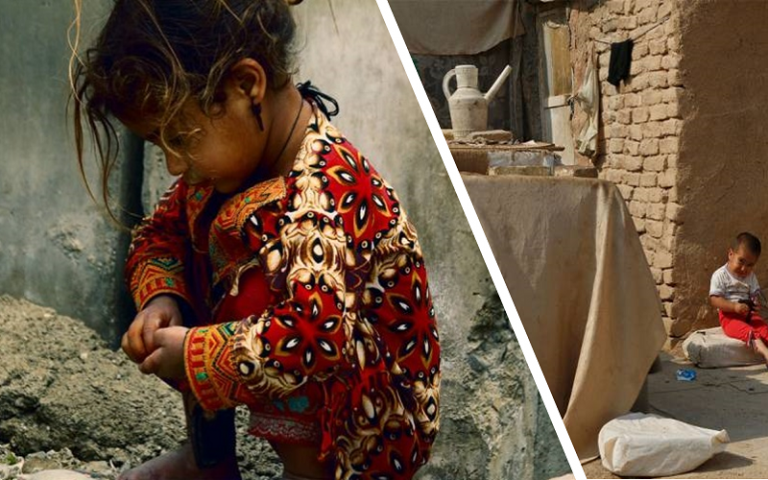
Social exclusion is the process in which individuals are blocked from the various rights, opportunities and resources that are normally available to members of a different group, and which are fundamental to social integration and observance of human rights within that particular group, like housing, employment, healthcare, civic engagement, and democratic participation.
The outcome of social exclusion is that affected individuals or communities are prevented from participating fully in the economic, social, and political life of the society in which they live.
In Iran this has become an extreme disaster and a ticking bomb. The expansion of this is directly related to the increase in land, housing and rent prices in the country.
Marginalization in Iran grew greatly due to the imbalance of urban areas. The lack of balance in urban areas leads to the polarization of cities. When rising prices in real estate and other living essentials occur, people move to the marginal points of large cities, due to their financial capability, so that the opportunity of a living for this people is not eliminated. The marginalization in Iran faces the least number of services and infrastructure.
Marginalization is very common in metropolitan areas and the population of marginalized people in Iran is very high. Lack of water resources, living along rivers, successive droughts, natural disasters, floods and earthquakes, the destruction of homes, lack of security, especially in border cities, are some of the reasons for migrating to booming cities. But the most important reason is the government’s corruption and mismanagement of the country, which has thrown more than half of the population under the poverty line. Living facilities on the outskirts of Iran are very scarce and in a deplorable state.
In an interview published by the state-run website Faraz News, the Managing Director of Welfare, Services and Social Participation Organization of Tehran Municipality about the situation in Tehran and around this city said:
“The root of many social harms is migration to big cities, especially Tehran.”
In this article, Vali Ismaili the deputy chairman of the parliament’s social commission said: “Certainly, the lack of facilities and the lack of unbalanced growth and development has led to the marginalization of provincial capitals today, especially Tehran, and the current policy cannot answer these problems. Marginalization does not have good result, and the result of marginalization is the problems that we refer to them as social harms.”
Seyed Malek Hosseini, Managing Director of the Welfare, Services and Social Participation Organization of Tehran Municipality, said: “The gap created is not only in this city and we should know that there is a gap between the center and the periphery in other provinces between the center of the province and the surrounding cities too, but this difference is much greater due to the imbalance of Tehran’s population with the size of the area to live.”
He added: “Interestingly is that five percent of the residential area of Tehran is in a dilapidated area, and in this five percent, more than 15 percent of its population live there, which means more than 1.2 million people. And the facilities are not well distributed. And we certainly have certain problems in the field of social harms.”
Hosseini about the municipality’s budget said that they are not receiving any budget from the government and said: “We have a serious legal challenge that decision-makers and legislators must address.”
Finally, he warned the government: “If the immigration problem is not solved, it seems that we are ready to contain the broken dam with a bucket in hand, which is not an answer.” (Faraz News, May 2, 2021)
In another article published by the state-run website Shoma News written by Ali Heydari, Member and Vice Chairman of the Board of Directors of the Social Security Organization, about the latest events around the newly-revealed audio tape of Iran’s Foreign Minister Mohammad Javad Zarif, aiming and speaking about the two expressions “Field” (Strategical action outside the country) and “Diplomacy” (Foreign affairs) he warned the government that this should not be the only one concern, and there is a more serious and worried concern which he called a “second field” (the society) and added:
“It is very clear that poverty (food, education, insurance, housing, etc.) and inequality or even feeling them, unemployment, social harm, lack of minimum living, inability to meet basic needs, severe decline in purchasing power, etc. can affect the roles and functions of government and diplomacy and the field. However, when the executive forces (the executive branch and the collective heads of diplomacy) and the military forces (the field) face and fight outside the borders, they should be secure from their back and behind the front.
“Lack of a comprehensive and multi-layered centralized system of social security and failure to meet the basic needs of people in general and target groups and strata in particular, and especially uncertainty about the future and the fate of livelihood, health etc. the head of family and individuals under his tutelage, he can create the ground for special and occasional recruitment of enemies inside the country, which leads to espionage, sabotage, security leaks, etc., and on a more general level, it can lead to public recruitment by enemies and decreased social capital and social trust or lead to protests, riots and social unrest.”
“What has happened in practice, despite the fact that in the past, different governments have not been able to achieve full success in fulfilling this inherent duty and legal mission, and unfortunately the problem of poverty, inequality, social harm, social anomalies, unemployment, educational poverty (deprivation of education), residential poverty (lack of adequate real estate or rented housing), food poverty and malnutrition, insurance poverty (lack of basic insurance coverage for pensions and unemployment, etc.) have not been eradicated in the country and sometimes we are facing obvious and gross poverty.”
Warning about the marginalization and ticking areas around the cities which according to him number around 2020 regions in Iran, he added:
“This shortcoming which means not eradicating poverty, inequality, deprivation and social harm in certain neighborhoods of cities, and regions that during different periods and from different perspectives and according to the view of the executive body which prepares the reports are recognized under different titles such as slums, deprived, marginalized, informal settlements, vulnerable, high-risk, out-of-bounds, worn-out area, historical area, etc., which in any case, the obvious feature of these neighborhoods is the occurrence of severe figures of poverty and harm, and they are a source for the harmed people and, unfortunately, the gathering of mighty and poor and the downtrodden, harmed people who are scattered in such neighborhoods, many residents over the are trapped in poverty and harm, and more tragically, poverty and harm in these families become generational and cyclical, and we experience a cycle of regression of fall to lower levels.” (Shoma News, May 3, 2021)
Iran Expats Call for UN Investigation of 1988 Massacre
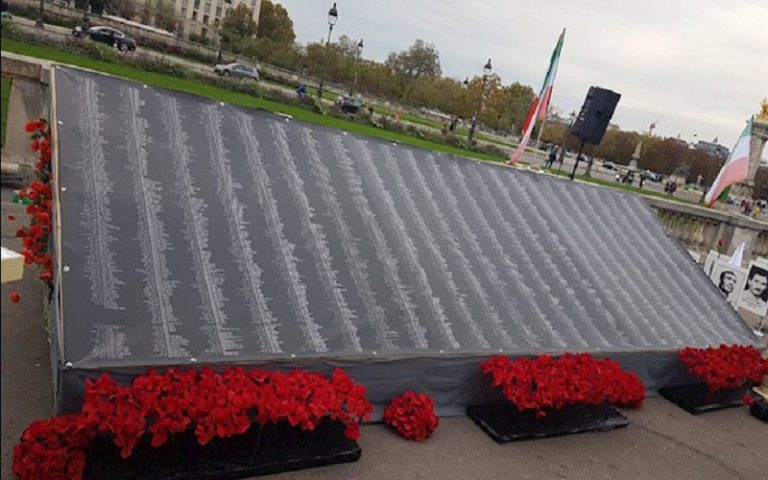
Iranian expatriates have written United Nations Secretary-General Antonio Guterres to once again urge the international organisation to investigate the 1988 massacre of political prisoners, following reports of the authorities latest efforts to destroy the mass grave in Tehran’s Khavaran Cemetery where some of the victims lie.
The letter reads: “The Iranian public and all human rights defenders expect the United Nations, particularly the UN Security Council, to launch an investigation into the massacre of political prisoners and summon the perpetrators of this heinous crime before the International Court of Justice.”
It points out that the government has already “destroyed or damaged” mass graves of the 1988 victims in cities like Ahvaz, Tabriz, and Mashhad, even concreting over the gravesites and building parks, roads, and commercial property. It further advises that the destruction of graves and suppression of public discourse is an ongoing crime against humanity because it psychologically (and sometimes physically) tortures survivors and victims’ relatives.
The signatories are relatives of those slaughtered for their membership in the opposition group the People’s Mojahedin Organization of Iran (PMOI/MEK). Following a fatwa from then-supreme leader Ruhollah Khomeini, MEK members held on political charges were brought before “death commissions” and given one-minute trials where they were asked if they still supported the MEK. If they said yes, as almost all did, then they were sent to the gallows.
It was an effort to destroy the group, which were and still are the most prominent and widely supported critics of the theocracy in Iran, but it did not work because the Iranian people believe in democracy, not authoritarianism, so they overwhelmingly support the MEK.
That’s why the 2017 and 2019 protests against the ruling system echoed calls long made by the MEK about how regime change is needed because the ruling theocracy will not change internally. Even the authorities have since admitted that the protests are linked to support for the MEK and this terrifies the mullahs. It’s why they ordered a crackdown that resulted in 1,500 protesters being shot dead in the streets in November 2019, while thousands more were injured and arrested.
Iran’s critics have long pointed to the crackdowns on protesters as evidence that the government believes it has impunity for domestic human rights violations, as a result of a lack of international action regarding the 1988 massacre. While the international community is now taking small steps to hold Tehran accountable, the destruction of these graves could prevent anyone from being brought to justice.
That’s why the UN must step in and investigate now before it is too late.
In addition to these event, at the initiative of the International Committee for Justice for the Victims of the 1988 Massacre in Iran, more than 150 former UN officials, international experts and reputable non-governmental organizations wrote a letter to the UN Secretary-General, Prosecutor of the International Criminal Court, High Commissioner for Human Rights, President of the Human Rights Council, Members of the Human Rights Council and the Third Committee of the General Assembly and UN rapporteurs, and called for the establishment of an international commission of inquiry into the 1988 massacre of political prisoners. In an inhumane fatwa, Khomeini (the founder of the Islamic Republic of Iran) ordered the massacre of all Mojahedin (MEK) prisoners at any stage of their judicial file.
The signatories called on the High Commissioner for Human Rights, Michelle Bachelet (former President of Chile), to support the establishment of a fact-finding commission.
The signatories called on the UN Human Rights Council to end the impunity for criminals in Iran by setting up a fact-finding commission on large-scale extrajudicial executions and enforced disappearances.
Nearly 70m Iranians Can’t Afford Rice
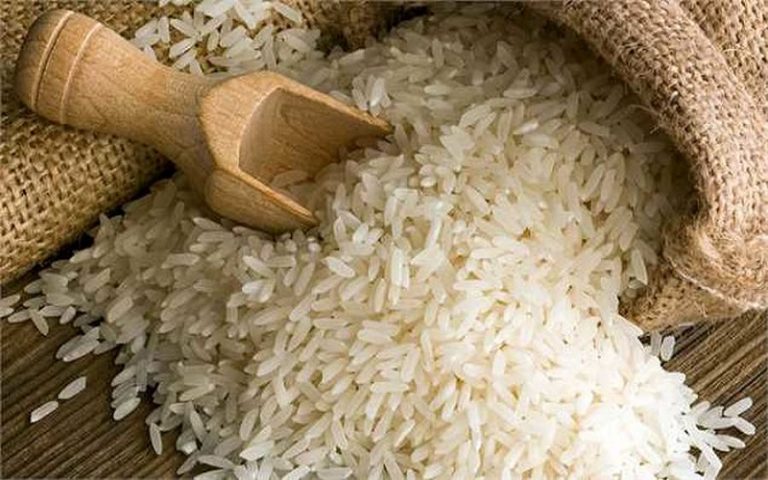
Nearly 70 million people in Iran cannot afford rice following price increases, according to the secretary of the Rice Importers Association, which is terrible for nutrition because nothing is taking its place.
This is the case for 67 million Iranians in the middle, working, and impoverished classes, according to the state-run Shahrvand Online website, which did not mention that 80% of Iranians live below the poverty line.
In an interview with Shahrvand Online on Monday, the secretary said: “At a time that the price of protein products such as meat, poultry, and eggs is also not good, the reduction of rice consumption is not good at all. Climate changes and the possible decline in the current year can render conditions worse than they already are, and with rice becoming even more expensive, it might disappear from the people’s diet at an even faster rate.”
And Donya-e-Eghtesad on May 5, 2021, wrote: “Rice prices have risen in recent weeks. As field studies show, one of the main reasons for this increase in the market is the deposition of 100,000 tons of this product in the country’s ports and customs. This price fluctuation has mostly affected Iranian rice, which has no result other than the shrink of the people’s table. Due to the lack of supply, Iranian rice has undergone changes that have nothing to do with household income.”
It is easy predictable that in the ocean of Iran’s government’s corruption everything is possible as the state-run news agency ISNA said about the reason of this event: “Rice sellers conspire to store rice and do not sell it to increase its price, which must be dealt with.” (ISNA, April 19, 2021)
But the truth is that in a corrupted government nothing is dealt with.
How much has rice gone up?
Well, foreign rice, which is popular amongst the middle and working classes because it is cheaper than Iranian rice, used to be 80,000 rials per kilogram, compared with 260,000-300,000 rials per kilogram for Iranian rice, according to the RIA secretary.
The state-run Eghtesad News website, also publishing on Monday, which has these costs listed as an average of 103,000 rials per kilogram for foreign rice and 239,000 rials per kilogram for Iranian rice, explained that foreign rice now costs 245,000 rials per kilogram, which is a 137% increase compared to this time last year, while the cost of Iranian rice increased to 354,000 rials per kilogram. The outlet said that sometimes the cost of rice is as much as 435,000 rials per kilogram.
The increase in price is partly down to the pandemic’s knock-on effect on the economy but more widely is related to Tehran’s failed economic policies that have increased inflation and tanked the rial’s value.
The Iranian Resistance wrote: “This large price increase happens at a time that most of the Iranian population is already living under the poverty line and are struggling to procure their most basic needs. The poverty line for many areas of the country has surpassed 10 million rials per month. Meanwhile, many worker families earn no more than 2.5 million rials and are hard-pressed to put food on their families’ tables.”
The dire and falling economic conditions resulted in protests in various cities across the country by many different groups – pensioners, farmers, workers, and government employees – over the past few weeks.
The Confusing Clutter of the JCPOA and Iran’s Hasty Begging

For the Iranian government and its officials, the Vienna negotiations about a new Joint Comprehensive Plan of Action (JCPOA), known commonly as the 2015 Iran nuclear deal or Iran deal, seem to have no result other than more disputes among officials.
Iran’s President Hassan Rouhani said about the negotiations: “You see, in the nuclear issue, he (Iran’s supreme leader Ali Khamenei) has announced the framework. He has specified it, and we are acting according to the same framework.” (State TV, April 28, 2021)
Abbas Araghchi, political deputy at Iran’s Ministry of Foreign Affairs, expressed optimism about the talks without saying what they have achieved so far, but others mainly the principlists within the clerical establishment, have contradicted him, saying that the government has achieved nothing.
Rouhani sees the JCPOA negotiations as the only solution to escape from all the regime’s crises, so he and his government are doing anything to revive the JCPOA: “Everyone should know that without a relationship with the world, progress cannot be made, and a country cannot be built.” (President.ir, April 26, 2021)
Angry about the government’s ‘begging’, one of the regime’s MPs Mahmoud Nabavian said: “Mr. Rouhani and Mr. [Foreign Minister Mohammad Javad] Zarif, answer this logical question, you honestly tell the people of Iran how many times you have brought the step-by-step plan to the Supreme National Security Council and it has been rejected. Why do you bring the step-by-step plan?” (State TV Ofogh channel, April 22, 2021)
A member of Khamenei’s faction expressed his pessimism about the lifting of all the sanctions and said: “I do not see the sanctions being lifted, and if the nuclear-related are lifted, the same issues will continue with another label, including the missile debate, including the Yemen debate.” (Jam-e-Jam, April 22, 2021)
And the state-run website Rahbord-e-Moaser desperate about the result of the JCPOA’s negotiations said: “The fact of the matter is that the United States has very little legal maneuvering power in the process of returning to the JPCOA.
“The White House, on the other hand, clearly knows that ‘reviving the JCPOA’ and ‘retaining some of the sanctions’ are not legally and technically compatible. White House officials have therefore sought to ‘segregate sanctions’ with the aim of achieving a ‘useless return to JCPOA’ feature.
“Obviously, the claim of the US State Department officials has no legal basis. The Democrats now have a relative majority in the US Congress (Senate and House of Representatives), and beyond that, Biden himself can lift sanctions against the Islamic Republic of Iran, citing his special powers.
“However, Robert Malley and other US officials now based in Vienna have sent a message to Iran and the P4 + 1 that the new US president must be accountable to Republicans and even some of his democratic party members in the process of returning to the JCPOA. Biden cannot therefore put on the agenda an ‘absolute return to the JCPOA,’ but Iran must return to its ‘full commitments’ in the nuclear deal.
“Undoubtedly, what is happening in Vienna today is the revealing point of the ‘Western instrumental view to the JCPOA’. This instrumental view has shown itself in various titles and excuses since 2016 (when the JCPOA was implemented). It is not clear why some currents insist that Washington is seeking to ‘repent of its past’ and ‘return to the JCPOA which is deformed’!
“The segregation of sanctions against Iran by US State Department officials is the first broken brick in the formal process of ‘reviving the JCPOA’, which makes the future of the nuclear deal a hundred times more ambiguous than it already is. This ‘ridiculous and illegal division’ should not be accepted by our country, because it will leave the United States free to ‘play with the titles of sanctions’ now and in the future. This is exactly what the United States and the European Troika have been looking for, for months.” (State-run website Rahbord-e-Moaser, April 30, 2021)
This short text shows that many inside the regime are desperate and see no bright future with or without the JCPOA.
Fearing the consequences of the upcoming presidential election which by the regime’s bad luck coincides with the window of opportunity to revive the nuclear deal, a state-run daily said:
“In the run-up to Iran’s presidential election, the United States is trying to manage the psychological climate in such a way that it can impose a bad deal on Iran while interfering and influencing the election results. The US targeting is due to the fact that it is likely that some in Iran, due to the short-term need and in the run-up to the elections, will again make decisions based on the dangerous rule of ‘any agreement is better than no agreement’.
“Such a view of negotiation and haste in concluding it, due to neglection of the important dimensions and details of the lifting of sanctions, will narrow the window of Iran’s economic benefit from any outcome.” (Resalat, April 28, 2021)
It is very clear that Rouhani’s efforts for a hasty agreement are due to the deadlock and the incurable situation in the illusion that this agreement can save the entire regime from the blade of public hatred.
April Human Rights Report for Iran
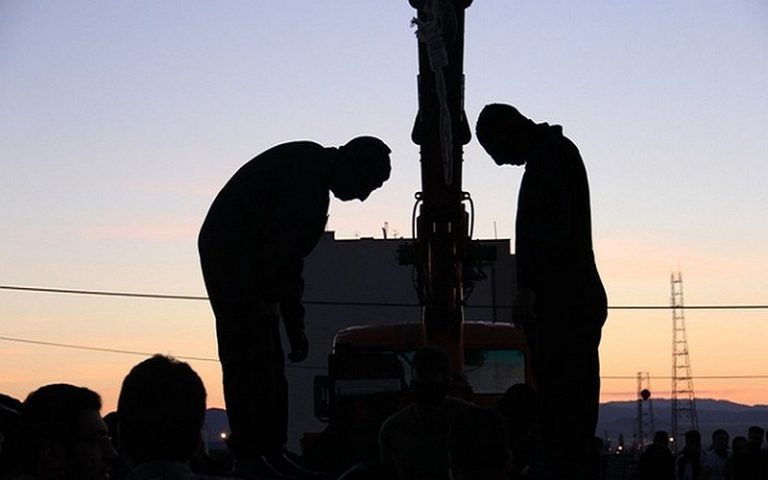
At the end of every month, Iran Human Rights Monitor puts together a report on the human rights situation in Iran. We’ve condensed the findings into this article, but the full report is always important to read, even if it’s hard.
Over April, the officials have continued executions, torture, corporal punishment, the suppression of marginalised groups, and the cover-up surrounding the 1988 massacre of 30,000 political prisoners. Let’s look at those in more detail.
Executions
At least 25 people were executed in Iran in April; 14 for drug-related offences, even though that isn’t a capital crime under international law, and two for charges unknown, which raises speculation about their crimes. Meanwhile, two prisoners – Yusef Mehrdad and Seyyed Sadrollah Fazeli Zare – were sentenced to death for “insulting the prophet”.Arbitrary killings
On a related note, at least five people were killed by the police without arrest or trial, while 11 were injured. The security forces have a long history of this and there are daily reports of border porters being killed or injured. Torture and cruel and unusual punishment The Iranian Judiciary handed out 15 or more flogging sentences, mainly to ethnic minorities and student activists. Meanwhile, two women, including cyber activist Zohreh Sarv, were lashed. Additionally, state security forces punished 34 men for attending the fire festival by parading them through the streets to humiliate them.Discrimination
The authorities increased pressure on religious minorities throughout April, including:- Arresting three Christian converts – Esmael Narimanpour, Mohammad Ali Torabi, and Alireza Varak Shah –and searching their homes
- Sentencing Christian convert Hamed Ashouri to 10 months of prison
- Arresting over 36 Baha’i citizens
- Expelling Isfahan University student Sina Shakib for his Baha’i faith
- Raiding the homes of many Baha’i citizens
- Denying the Baha’i community the ability to bury their dead in Khavaran cemetery unless they bury them on top of the mass grave of political prisoners from 1988
