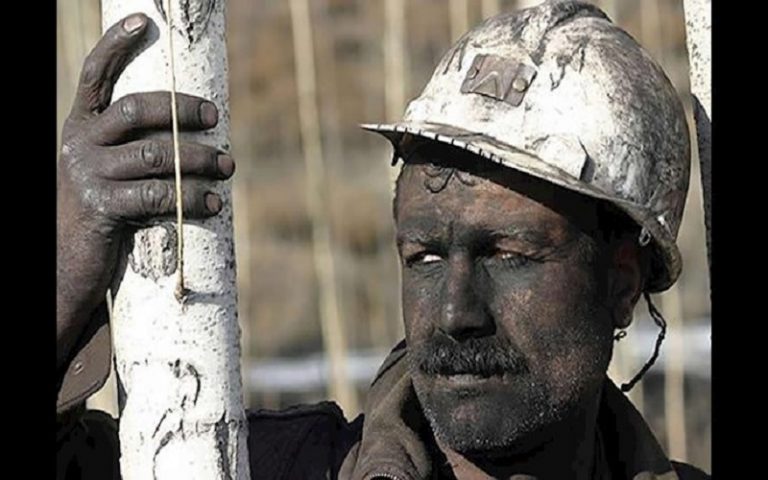
The Iranian government is built on the suppression of the working class, so its legitimacy must be measured by how this group is feeling and they feel it’s time for regime change.
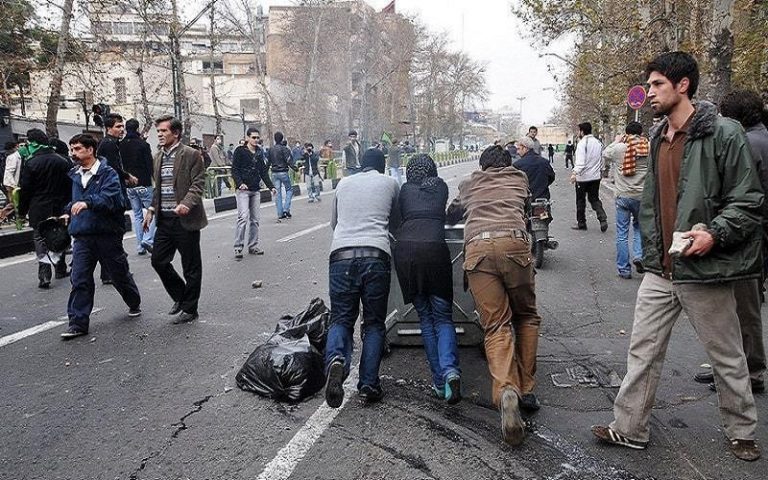
On May 1, which is International Workers’ Day, workers took to the streets in protest and made it clear how they felt about the upcoming presidential election with the overarching chants of “We will not vote, we’ve heard too many lies” and “Every worker must boycott the elections”.
Here are some of the other common slogans that were spread all across the country this weekend:
[The government] is lying that our enemy is America, our enemy is right here
We will only get our rights in the streets
Arise workers, destroy the palace of the tyrant
Freedom, justice, livelihood, the right of the whole nation
Death to the oppressor, peace to the worker
Worker! Worker! Speak out and demand your rights
How long will we hear lies and deceit? We will not back down
The enemy of the workers is this corrupt government
If one [government-involved] embezzlement is reduced, our problems will be solved
No nation has seen this much injustice
The insurance organization betrays [worker] and the parliament supports it
Shame on our national TV
It’s no wonder that Iranian workers feel this way. After all, the authorities’ corrupt policies have plundered the Iranian people repeatedly over the past 40 years, which is why the people rose up in nationwide protests in 2017 and 2019.
The government is eager to keep the populace calm ahead of the elections, to get as many of them to vote as possible, because even if it won’t make a difference to the lives of Iranians, it will legitimise the ruling theocracy on the world stage. These protests threaten the authorities’ hope for a high voter turnout, especially when the same slogans are being chanted by other groups as well, including retirees and defrauded investors.
The Farhikhtegan daily newspaper wrote Sunday: “A 43-per cent decrease in purchasing power, a 123-year wait to buy a house in Tehran, and a rise in workers’ consumer prices of up to 500 per cent… Do not think that these four characteristics, which indicate the workers’ hard living conditions, apply to a class with a population of two or three million. According to statistics and Article 2 of the Labor Law, at least 15 million of the working population can be called workers.”
The Arman state-daily on May 2, 2021 about the workers poverty said: “Despite the fact that the Central Bank states that the poverty line is 10 million Tomans this year, the basic wages of workers will be set at 2 million 650 thousand Tomans after the whole bargaining by the representatives of workers and employers, which is 400% away from the declared minimums.”
Protests are increasing in size and scale in Iran, leading many in the ruling system and in the opposition to speculate that a new uprising is coming. Indeed, this is something that the government has feared since the first nationwide protests broke out in December 2017, but despite attempts to quell the protests, the people have continued their acts of defiance as part of a campaign for regime change, even throughout the pandemic, although understandably tempered.
In March, opposition leader Maryam Rajavi said that lower levels of protest would not last long, even though the government had hoped that a failure to control the pandemic would stop any uprising from taking place and ensure their continued power. (This despite the officials having more than enough money to help the people through the pandemic, if only officials would stop lining their pockets or supporting terrorists.)
The recent protests
People from every walk of life have come out to protest in the streets over the authorities’ economic policies, which have been damaging to ordinary people, especially during the pandemic. Here is just a small snapshot of those who’ve protested en-masse in 2021:
Pensioners, over not being paid enough to get by on
investors, over a government scheme that essentially allowed insider to fleece the people
rural farmers, over how the regime’s private sector connections resulted in farmers’ rights being marginalised
The Iranian Resistance wrote: “The past year’s relative lull in activity suggests that the pandemic was the only thing that could provide the regime with any cover from public outrage. But the ongoing pensioner protests and the new demonstrations from investors, farmers, and other groups suggest that this effect is running its course. Now, with the Iranian regime’s sham presidential election looming, the expressions of economic grievance are beginning to take on broader political messaging, much like they did at the beginning of 2018.”
The protesters have been echoing calls by the Resistance for a boycott of the elections to show that the ruling theocracy is illegitimate. The Resistance Units are publicising that call across the country by putting up posters of Rajavi and graffiti featuring slogans denouncing the elections and arguing that the authorities cannot bring an end to the problems it caused.
The most popular slogan is “My vote is for regime change”, which was making the rounds in February 2020 ahead of the parliamentary elections that the Resistance also called for a boycott of. Those elections had the lowest voter turnout in Iran’s history.
Iranians are suffering the fourth wave of the coronavirus pandemic, even as many countries are coming out the other side with mass vaccinations, due to the ineptitude of the mullahs.
Not only are the people facing one of the highest death tolls in the world, but the health crisis has exacerbated the existing economic crisis and increased the number of Iranians living in poverty.
Even the state-run media is acknowledging this, with the Arman daily writing Sunday that “the working class is being crushed under the pressure of economic and livelihood problems”, including a “tsunami” of unemployment.
They wrote: “today [workers are] grappling with numerous livelihood problems and the unemployment. Because no one heard their voices at the beginning of the pandemic, due to [the officials] wrong policies in adjusting salaries with inflation, working incidents, etc.”
The paper admits that “hundreds of thousands of workers” have lost their jobs because of the pandemic, while “tens of thousands” of hourly-wage staff in the service sector were deprived of even “the minimum unemployment insurance benefits”. Some companies even made their employees take unpaid leave during the pandemic. And none of this takes into account the “7 million unknown workers” that labour activists say are working without being officially registered, which means that they are denied any sort of benefit or protection.
It said that 60% of Iranians were in poverty prior to the pandemic and that this has increased because the authorities failed to take the necessary steps to protect the people.
Arman daily wrote: “Currently, the food poverty line is 670,000 tomans per person. If you consider a family of three with the minimum wage, many working families are below the poverty line or at the border of the food poverty line.”
Meanwhile, the Mostaghel daily wrote on Monday that the coronavirus situation in Iran is so bad that people can’t even be admitted to the hospital
Mostaghel wrote: “Wealthy countries were able to declare serious lockdown, developed support schemes. On the contrary, in backward countries, slogans, destructive competition, depth of dictatorship, managerial incompetence, corruption, concealment of facts, and discrimination developed to the point that private hospitals and clinics openly refused to admit patients with medical, security, social services, and even supplementary insurance.”
It further warned officials that another uprising is on the horizon, with the possibility that this could see the ruling system thrown from power, especially now that Iran is so isolated on the international stage.
The paper wrote: “The one-dimensional view of danger should not blind our eyes to other dangers. We should not overlook the danger of discontent and revolt of the people.”
One of the main news in Iran last week was the leaked audio file from the regime’s foreign minister Mohammad Javad Zarif, who frankly discussed the behind-the-scenes maneuvers by the regime.
This file has stirred hot debates in the ruling body, many of the officials especially from the Zarif’s rival faction the regime’s principlists called him a traitor and asked for his trial.
As the regime is trapped between the upcoming presidential election and its nuclear case, many experts said that the revelation of this tape is because of the supreme leader’s decision to expunge the so-called reformist faction in the hope to get rid of them and have the possibility to deal with the social consequences of the election, because the regime as many of them are saying no longer has the capacity to tolerate two crises.
But as it shows this was a huge mistake and has big security and strategical consequences for the regime, which are not ending even after a week, since the revelation of this tape.
The state-run website Tabnak about this security and strategical mistake on May 2, 2021 wrote: “The introduction of the words ‘diplomacy’ and ‘field’ (referring to the regime’s interference outside the country) into the country’s political literature and the formation of a sharp confrontation between the two are considered to be the most important outcome of the publication of this audio file from a hostile medium (referring to Iran International).”
About the regime’s two main challenges, it added: “According to many experts, the release of this file coincides with the intensive holding of the Vienna talks and also on the eve of the formation of the electoral atmosphere in the country, is to disrupt Iran’s important nuclear deal with major world powers.
“On the one hand, the incomplete publication of this interview in the midst of negotiations to revive the Joint Comprehensive Plan of Action, known commonly as the Iran nuclear deal or Iran deal (JCPOA) with the aim of activating JCPOA’s staunch opponents inside the country to confront some politicians with the diplomacy team and bobtailing the negotiations, and the creation of the dual of the ‘field’ and ‘diplomacy’ can be considered as the main action against national interest and made this hypothesis more prominent than other hypotheses.
“On the other hand, since gaining power at any cost, even if it undermines national interests, has infiltrated the country’s political arena, the simultaneous publication of this file on the eve of the most important political and social event of the Islamic Republic is followed by two goals; disappointing of the people about the outcome of the ballot box and the induction of its ineffectiveness in decision-making processes, and it is not unexpected that part of the political current will benefit from the reduction of popular participation at the ballot box in order to gain power.”
“But certainly, regardless of whether the release of the audio file of the head of the country’s diplomatic apparatus was done in order to achieve any of the aforementioned goals, the main loser in this field is the national interests of the Islamic Republic of Iran. Because achieving any of the goals behind this destructive action – whether the goal is to reduce participation or to thwart the JCPOA negotiations – will mean nothing more than slaughtering the national interests of the country.” (Tabnak, May 2, 2021)
Another state-run website Quds Online has showed the regime’s fear about these two main concerns very clearly. In an article entitled “A strategic mistake and its consequences” on May 2, 2021, it attacked Zarif and wrote:
“This bitter event has two aspects to consider. Firstly, how this audio file become public and secondly, the strategic mistake of the Minister of foreign affairs, which is more important than the first one.
“Doesn’t Mr. Zarif know that these remarks during the nuclear talks, which are aimed at lifting sanctions, will weaken Iran’s relations with its strategic allies such as Russia? Wouldn’t a ruthless expression against the strategy of resistance (referring to the regime’s meddling in the Middle East) be a pretext for the enemy to exploit from it?
“The evidence for this claim is exactly [former US Secretary of State Mike] Pompeo’s tweet. He wrote: ‘Our Administration’s exquisite strike on Qasem Soleimani had a massive impact on Iran and the Middle East. You don’t have to take my word for it. Ask @JZarif.’
“In fact, Zarif’s multi-hour interview sent a message of discord on the home front and the conflict between ‘field’ and ‘diplomacy.’ Unfortunately, Zarif speaks against the basic principles of foreign policy and national security.
“Bipolarization or shaping false dichotomies is the scenario of the pro-Western current in the run-up to the elections. This approach was first introduced with the dichotomies wheel of economy-centrifuge in the 2013 election. Over the years, government officials have repeatedly evoked dichotomies such as negotiation and war, interaction and confrontation in society to avoid accountability.
“From this point of view, Zarif’s remarks are exactly the desired spark of the pro-Western current for the polarization of the field and diplomacy in society. That is, the false dualization of the wheel of livelihood and the wheel of resistance in the 2021 elections.” (State-run website Quds Online, May 2, 2021)
There many like these two articles speaking about this event and its consequences but what important is that they all are pointing to the two main regime’s concerns, the upcoming election and the nuclear deal negotiations which can each be the first spark of protests of a starving nation, which does not care about any of them.
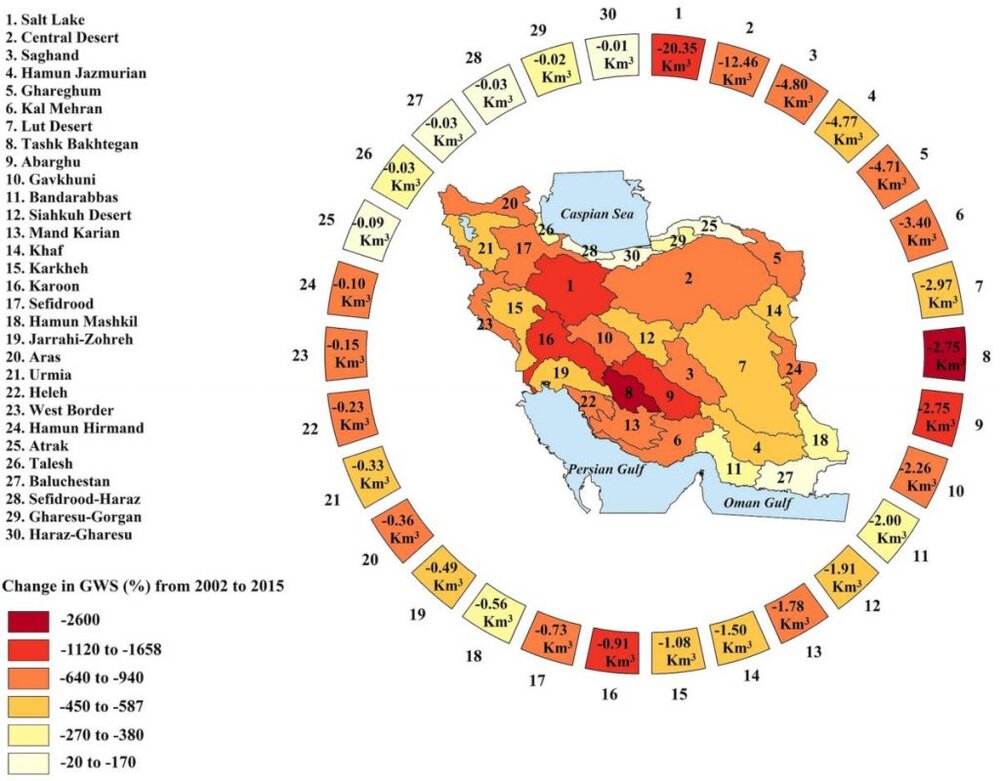
A new comprehensive statistical study about the use of groundwater by Iran’s government has determined the situation of 30 basins in the country and concluded that from 2002 to 2015, more than 74 billion cubic meters of groundwater aquifers have been extracted in Iran.
This statistic is unprecedented, especially when considering that the total reservoirs of all dams in the country have a capacity of about 50 billion cubic meters. In other words, in the last 14 years, 22 billion cubic meters more than the capacity of all dam reservoirs have been extracted from the country’s underground sources.
This statistic shows that the government in Iran pays no attention to the ecological potential of the land, and the continuation of this trend has caused a very worrying phenomenon of land subsidence in the country.
Groundwater depletion (in km3) during 2002–2015 across major basins in Iran. In the outer circle, basins are ordered based on their total depletion in groundwater storage in km3 from the largest to the smallest. Shades of color show relative changes in groundwater storage in % during the study period (This figure is created using ArcGIS 10.8). (Source: Scientific Reports, Anthropogenic drought dominates groundwater depletion in Iran, Published on April 28, 2021)
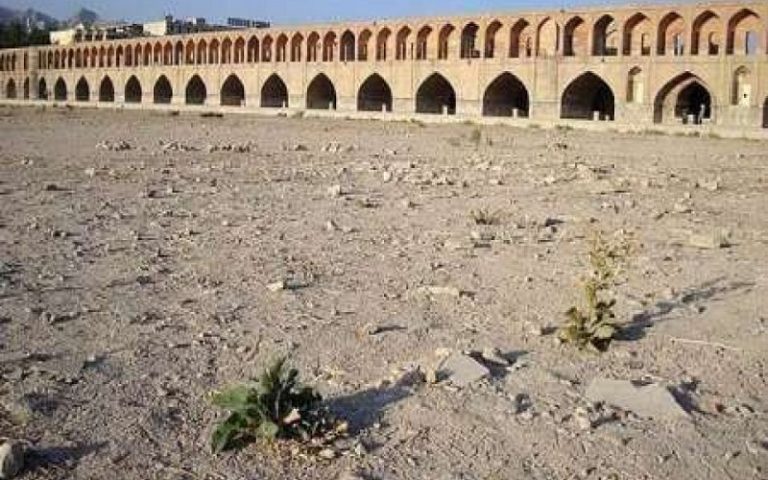
Now Iran holds the record for ground subsidence on the planet. Land subsidence is a phenomenon that, when it occurs on a plain, turns the area into a dead plain and takes at least 50,000 years to regain resilience. It may take several thousand years to compensate for a 14-year catastrophe in Iran’s groundwater resources.
Therefore, the situation of Iran’s groundwater resources is very dangerous, and if this catastrophe is not addressed quickly, the future generations of this land may live on a dead land, thanks to the negligence of the current regime in Iran.
Mohamad Darvish, an environment expert, said about a solution for this catastrophe: “In the first place, the dependence of livelihoods on water and soil resources must be reduced and governments must move towards the extraction of clean energy, including wind and solar energy. In the Sixth Five-Year Plan, the government was required to provide 5,000 megawatts of electricity from new energy sources. If this important thing is done, the pressure on thermal power plants, which is one of the main factors of water consumption in our country, will be reduced.”
He added: “With the money generated from the sale of clean energy to the eastern neighbor, the water needed can be supplied from Helmand to alleviate the crisis that is now plaguing the east of the country; It is also necessary to provide conditions for the country’s specialized forces to move towards the production of secondary products and to prevent the sale of raw materials, which are highly water-intensive.”
Desperate about the government’s policies that have led to the destruction of Iran’s lands, he added: “There is a lot of potential for income and development in the country, and so to speak, not all eggs should be put in one basket; A country whose average rainfall is one-third of the global average and its rainfall from year to year may change up to 80 percent, should not look to the sky alone, and we should use strategies to reduce the dependence on water and soil resources.”
About the incompetence and wrong administration of the regime’s Ministry of Power, he added: “The first condition is that water management is based on the geomorphological and morphometric facts of catchments, but unfortunately this principle was not observed and for years they managed water based on political boundaries and regional water organizations were formed. This approach was very wrong.
“For example, Karsivand rivers are in one province, Fars province, and do not have the problem of catchment areas such as Zayandehrud, which is between Chaharmahal and Isfahan provinces, but the same catastrophe occurred there as in Zayandehrud, Lake Urmia and Khuzestan; Therefore, in order to realize the management of water basins, political will must have an ecological understanding.”
And the clerical establishment with an underdeveloped system lacks such a system. Finally in a recent article in the journal Nature, three Iranian researchers living in North America exposed the worrying condition of Iran’s groundwater resources.
Samaneh Ashraf, Ali Nazemi and Amir AghaKouchak, in an article published on April 28 in the journal ‘Scientific Reports’ published by the Nature Group, analyzed the situation of Iran’s groundwater aquifers over a 14-year period from 2002 to 2015 and wrote:
“The impact of depletion in Iran’s groundwater reserves is already manifested by extreme overdrafts in ~ 77% of Iran’s land area, a growing soil salinity across the entire country, and increasing frequency and extent of land subsidence in Iran’s planes. While meteorological/hydrological droughts act as triggers and intensify the rate of depletion in country-wide groundwater storage, basin-scale groundwater depletions in Iran are mainly caused by extensive human water withdrawals. We warn that continuation of unsustainable groundwater management in Iran can lead to potentially irreversible impacts on land and environment, threatening country’s water, food, socio-economic security.”
“Under the table”, “tea money”, “share of children” and “cookies” are expressions that are used by Iran’s government offices for “bribery.”
In the mullahs’ system, one of the most corrupt in the world, corruption and bribery is one of the main tools of its officials to loot and collect money and wealth from the people in quid pro quo for their demands from the government.
Before the mullahs took the power in Iran, bribery was considered a shameful and immoral act, and only a few were doing it in secrecy, and if one day their secret was revealed, they would be severely punished and could no longer continue their life as a normal person and were faced with the hatred of the people and became infamous. But now it has become part of a series of ordinary and extraordinarily ordinary acts.
In this way, many officials have acquired great wealth for themselves and their children and live the rest of their lives with complete well-being and affluence.
How the amount of bribe is determined for each task is a complex one in which several factors play. The degree of flexibility and bargaining power of the sides of the task. The financial situation of the bribe-giver and the bribe-taker, as well as the greed, need and risk-taking of the bribe-giver and the bribe-taker can be among the factors determining the sum of each bribe.
Major bribery figures reach up to one billion tomans. Contracts that are concluded for various services and projects or the purchase of goods required by the bureaucracy, and the payment of bribes affects the finalization of these contracts and on a large scale can lead to increased costs and lead to national losses and damages.
The use of valid foreign currencies such as the dollar and the euro are also common in the method of paying bribes in cash.
Among non-cash bribes, the use of gold coins (Bahar Azadi or Imami coins) is the most common method of paying bribes, and its amount starts from one gold coin and can reach 25 coins.
But in the non-cash method, bribery covers a wide range of items. In this method, anything from buying home appliances such as refrigerators to naming plots of land, donating sheep, buying an iPhone mobile phone, handmade carpets, and spices, and saffron, are common among non-cash bribes for advancing work in various departments and agencies.
Lack of social justice and unfair distribution of wealth is one of the psychological causes of bribery, which has become an unreachable desire.
To the extent that the health, integrity, and systemic and public oversight of the administrative hierarchy are reduced, and unhealthiness prevails, and the phenomenon of bribery is not dealt with decisively and legally, the possibility of bribery spreading to lower levels will be much greater.
Also, when a government pays no attention to development and progress of the country, we will automatically see a serious evasion of the law, and bribery will spread dramatically. So, the government in Iran has reached a stage that nothing can be achieved without lies.
A government that violates morality will destroy the country’s social and economic health. Social and economic inequalities create the phenomenon of welfare and consumerism in higher classes which are mostly the government officials and their relatives. With the rise of consumerism, when spending exceeds one’s income, so he/she is forced to solve his/her problems in any way.
On the other hand, when we see a person with mediation and brokerage passes one hundred years overnight without any education which in Iran is the mirror of all the officials and a professional who has worked hard for years and is still in financial trouble, this system automatically encourages people to resort to bribery.
Adding to drought and water shortage, now the low guaranteed purchase price of wheat by the government has caused Iran’s wheat farmers in Fars province to no longer be able to continue farming. The staggering high prices of input and the low guaranteed purchase price of wheat (5000 tomans per kilo) by the government have destroyed the business of these farmers.
Fars province is one of the important centers of agricultural production, which in 2019, was ranked second in Iran in wheat and barley production.
This province with an area of 122,608 km and 36 cities has a variety of climates and this has led to diversity in the production of agricultural products in this province.
The current situation of agriculture in Fars is not good, low rainfall, astronomical prices of agricultural inputs and animal feed and the low guaranteed purchase price of wheat, which is announced at 5 thousand tomans per kilogram, has destroyed their production and lives so they are forced to sell their fields to ranchers, because of the current price of the wheat, they are even not able to pay the cultivation costs and will become losers.
A wheat farmer in the central part of Zarrin Dasht, Fars, in an interview with the state-run news agency Mehr, while complaining about the government’s action in setting a low guaranteed purchase price of wheat, said: “Why does the government not care about the agricultural sector? Does the current price meet the costs of the farmers?”
This rate is not appropriate with the staggering costs of production, because the farmers are stuck in all their costs.
This wheat farmer, while criticizing the government’s policies in pricing the guaranteed purchase of wheat, stated: “Is the answer to the slogan of supporting production that farmers are forced to feed their lush wheat fields to livestock to prevent further losses? These measures cause the instability of production and the lack of self-sufficiency of the country in the field of agricultural products.”
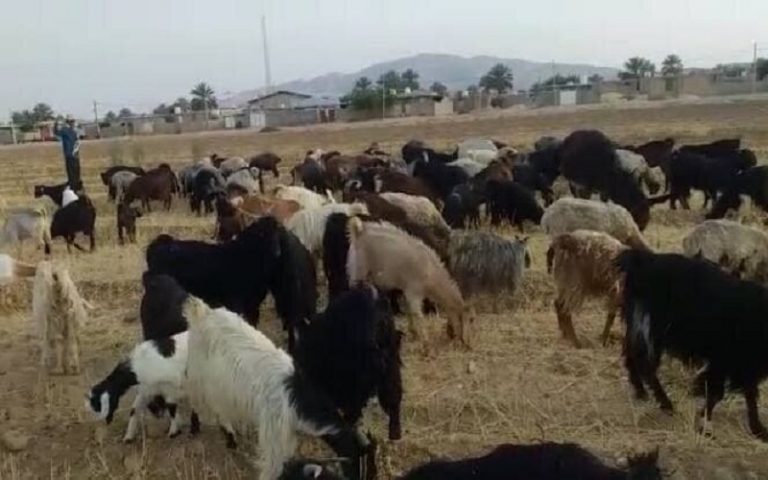
What should a farmer who has no way of earning a living and a rancher who cannot afford to buy animal feed do? Who is responsible for the situation of the farmers who are auctioning their products and the ranchers who sell their sheep on credit in the form of a one-year check due to their inability to buy animal feed?
All this is due to the exchange rate fluctuations, the cost of wheat production in the country has increased unbridled, to the point that, according to wheat farmers, the price of pesticides in the agricultural sector has increased nine times, the price of seeds and fertilizers has increased unprecedentedly. The cost of agricultural machinery and mechanization has also skyrocketed.
According to detailed studies, with the 9-fold increase in the price of phosphate and nitrogen fertilizers and the increase in transportation, collection, mechanization, and lack of liquidity in the hands of farmers, the final days of these hard-working strata has started.
As a result, more than 20 percent of farmers’ green wheat crops have been sold to ranchers for grazing, which is destroying the wheat supply of the country.
Due to the low value of the Rial against the dollar, the price of wheat is more than 8,000 Tomans in neighbor countries, which certainly creates the ground for smuggling for the brokers of the government, mostly working for Iran’s Revolutionary Guards (IRGC).
With the current population, the country needs 14 million tons of wheat per year, which means that the country can cover only about 50 percent of this amount, and the remaining 50 percent must be imported at an exorbitant price.
The Strategic Agricultural Products Pricing Council, which is responsible for determining the guaranteed purchase of agricultural products, including wheat, did not pay attention to this issue, and the government shirked from its responsibility and abandoned farmers alone with their problem.
It is predicted that this year Iran will face a serious problem to ensure food security (wheat), and if the government is indifferent to announcing the real price of wheat in the next crop year, Iran will face the problem of farmers not cultivating wheat, and an intensification in poverty and starvation of the society’s lower classes.
Iran’s government often commits action that are so stupefacient and unique, that no one can believe them. And the truth about the corruption in this government are so bitter that no one can ignore them.
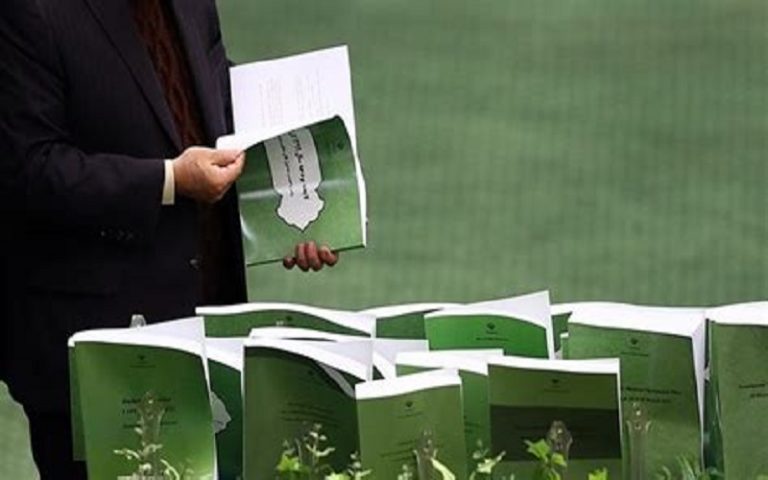
In recent days, one shocking news was the manipulation of the parliamentary approvals about the government’s annual budget, which was approved by the parliament.
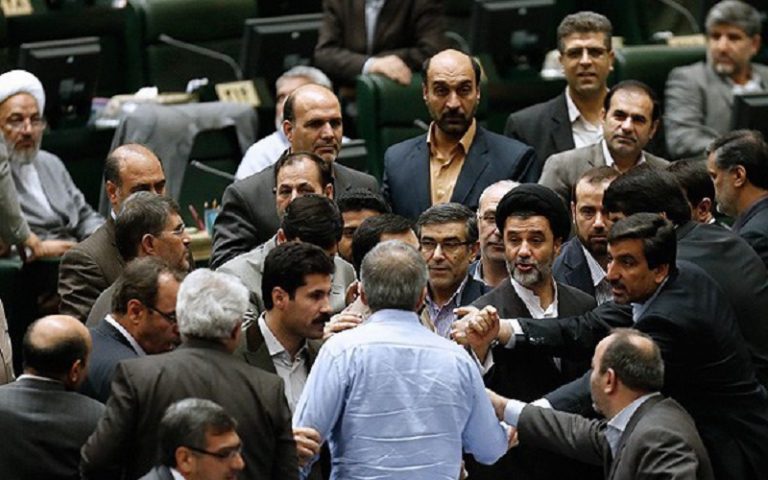
The situation was so severe that numerous officials demanded the resignation of the parliament speaker Mohamad Bagher Ghalibaf and his gang inside this mafia organization in the regime.
Last year after the rejection of the main parts of the budget bill, this bill was returned to the government. After month of disputes and discussions between the government’s different factions finally it was approved with many changes, while in the budget bill they consider and transmit about 53 trillion tomans to Iran’s Revolutionary Guard (IRGC). So, the budget bill was approved, and the situation calmed down.
In a letter to the regime’s president Hassan Rouhani, Ghalibaf asked the government the desired and fundamental changes in favor of the supreme leader Ali Khamenei, and now it has become what the purpose of this demands was. Then it was notified to the government.
But as it becomes clear at the same time the manipulation of the budget bill started, so that what the regime’s gangs could not achieve from the footnotes of the budget and the law articles, in secrecy they started to gain their benefits with the manipulation of the spreadsheets and the numbers, to have enough money for their future plans, which are mainly in favor of the IRGC.
The Budget Consolidation Commission, chaired by Elias Naderan, a member of Ghalibaf’s gang, started this mess in regime’s parliament.
Ghalibaf and his entourage deliberately passed a bill that did not include the relevant tables so that they could manipulate it in secret.
“On the same day, March 16, it was stated that the members of the parliament, while voting on the final amendments to the single article, had warned against the non-submission of tables by the Joint Commission; However, this matter was not taken into consideration by the chair at the time of the meeting and caused the budget bill to be voted on without informing the deputies about the dimension of the tables and the amount (money) of the rows, especially in the expenses section.” (State-run daily Aftab, April 25, 2021)
“In a letter to the speaker, more than 100 lawmakers claimed that the figures in the budget tables and some notes had changed dramatically after the parliament passed the bill, calling it a new record in disobeying the bylaws and creating rent-seeking for several people. And asked for the action of the speaker of the parliament in this regard.” (State-run daily Iran, April 25, 2021)
The head of the Article 90 Commission also wrote in another message, that with the coordination of Ghalibaf, “extensive shifts in budget figures have taken place after public approval,” and with this, “large rents are given to certain groups.”
In another part of the letter of the members of the parliament, it is stated: “It is even more unfortunate that these tables have been changed many times until about a month later, that is, until April 10, and surprisingly, the tables have been announced in the parliament 25 days after the approval of the budget.
“And unfortunately, according to documentary news, these changes are not limited to the figures of the tables, but even include general changes in the notes and tables within them and corrections of paragraphs based on the demands of the Guardian Council, all by the chairman and one or two members.
“All this has been done by the chairman of the Joint Commission and one or two members of the commission and friends from outside the parliament without the knowledge of even the members of the Joint Commission.” (State-run daily Hamshahri, April 24, 2021)
As Mohammad Mohajeri, a member of Rouhani’s media team, has said, the changes made in the approvals of the parliament are about 200 cases. However, this decision has been notified to the government and is considered a done deal.
One of the state-run dailies related this scandal to two of Ghlibaf’s close people and wrote: “Jamaleddin Aberoumand, Assistant to the Speaker of the Parliament for Development and Progress and, Elias Naderan, the head of the Joint Commission, changed hundreds of billions of Tomans in the budget without informing the deputies.” (State-run daily Etemad, April 25, 2021)
Evidence shows that the government of Rouhani was not dissatisfied with the transfer of hidden funds in the budget approvals. And in short, the government’s program and budget organization were benefiting from this corruption too. Their silence after this scandal confirms this.
Iran’s officials thought that the change of government in the United States promised to change Iran’s economic outlook. Most analysts speculated that Joe Biden would return to the Joint Comprehensive Plan of Action (JCPOA), known commonly as the 2015 Iran nuclear deal when he entered the White House, but this did not happen.
The process of a US return to JCPOA, like many optimistic predictions, did not happen, and now Iran’s government is grappling with its corrupted and dead economy.
The questions that form in the public mind are how much will the economic situation improve?
In July 1988, UN Security Council Resolution 598 was issued that brought about a ceasefire in the eight-year Iran-Iraq war. The war that had put Iran’s economy in the worst possible condition came to an end, and the government’s efforts to accelerate economic recovery led to a sharp 66 percent drop in the value of the dollar, and many traders and currency holders whose businesses were tied to the dollar suffered huge losses overnight, so much so that the statistics of the suicide rate were horrific.
In the next agreement between Iran’s regime and the world powers in 2016, the dollar experienced a price reduction of about 15 percent.
Now the question is, which of the experienced patterns will occur in the forthcoming agreement?
The regime’s President Hassan Rouhani announced a few months ago that the dollar will reach 15,000 tomans by the end of 2020. He hoped for the release of the regime’s blocked financial resources in South Korea and Iraq, which did not happen so that the dollar would fluctuate slightly in the region of 24,000 and 25,000 tomans.
The government has also closed this year’s budget with the 11,500 tomans for each US dollar, and it seems that it has seen its optimistic forecast of the results of the lifting of sanctions in the budget. In fact, what the regime’s government intends is a reduction of more than fifty percent in the price of currency, which, although it strengthens the monetary base, but will repeat the tragedy of 1988.
At the end of 2019, Rouhani himself repeatedly invited people to invest in the stock market with great emphasis and unparalleled confidence.
After months of widespread protests against the government, and the people’s miff with parliamentary ballot boxes showed the people’s frustration with the government and a comprehensive invitation to the stock market, leaned desperate people watching their capital lost to the stock market.
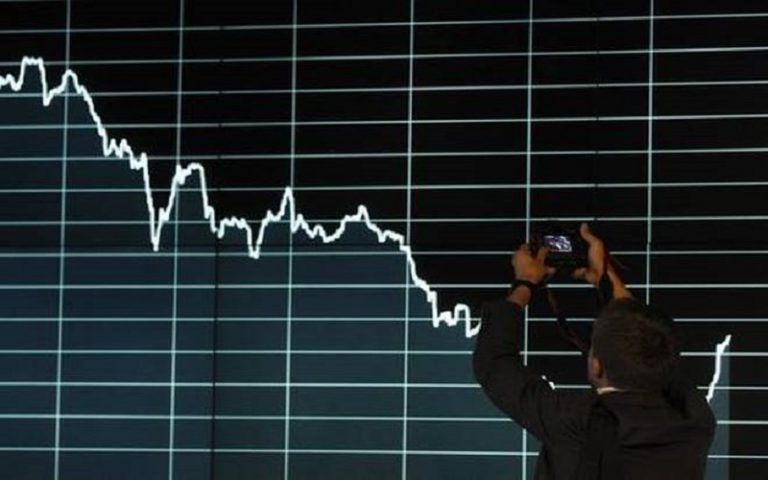
The stock market codes increased one hundred percent and a huge amount of capital went to the securities market, and the indices of this market experienced a positive trend, sometimes incalculable, for a few months, then the stock market bubble burst and the indices began to fall and continue to do so.
The stock market continues its negative trend while the regime’s Minister of Economy and Finance recently admitted that the government has compensated its budget deficit by intervening in the stock market.
The capital market as well as Iran’s economy, however, has so far been indifferent to international developments and has continued to decline, regardless of the process taking place in Vienna, which was the hope of the regime.
In a report the regime’s Chamber Research Center wrote:
“Iran’s economy has weakened since US secondary sanctions were imposed due to declining oil exports and investment. In addition, the Covid-19 epidemic has disrupted activities. As a result, the rial will remain weak and inflation will remain high. If the sanctions are gradually lifted, Iran’s economic growth is projected at 4.3 percent in 2021 and 8.2 percent in 2022.”
In addition, Iran’s heavy dependence on hydrocarbons has put the regime’s economy in a very vulnerable position. There are other risks, including numerous trade barriers, monopolies, and legal bans on foreign participation in some areas, strict labor laws, extreme corruption within the regime, and weak rule of law, as well as the dominance of regime’s forces and individuals and officials in important industries such as banking that threaten economic stability. Iran’s operational risk index score has the bad score 42.8 out of 100, which ranks Iran 12th out of 18 Middle Eastern countries, higher than the major war-torn countries such as Yemen, Iraq, and Syria.
A weak banking sector, inefficiency of the legal environment as a challenge for foreign investment, and the strong presence of the government in the economy are among the weaknesses of the country’s economy. These weaknesses have caused the inflation crisis in Iran to continue, regardless of the international situation.
The conclusion is that the regime’s dreams about the JCPOA and changes in the economic situation are just illusions, while the main cause of this situation is not international sanctions, but corruption and theft by the regime, which has left Iran’s economy without a strong base.
The infighting amongst the Iranian factions is intensifying as the presidential election draws near and state media outlets are warning that these divisions could further push the people into protests that might bring down the entire system.
On Wednesday, the Etemad daily compared the elections to a tsunami, indicating that the authorities will not see the danger until it is too late and called on them to try and settle the waves to “avoid a political tsunami”. The paper then compared increased social hatred of the ruling system to water building up behind a dam, with the reservoir filled completely by election night, and then being destroyed soon after.
This should not be surprising. Over the past four years, the Iranian people have held three major protests that rejected the false hardliner/moderate dichotomy, chanting “reformists, hardliner, the game is over”, because there is no real difference between the two factions when it comes to oppression of and stealing from the people. Already, this led to the lowest turnout since the 1979 revolution in the last parliamentary elections.
Even the Sharq daily has admitted that so-called reformist candidates will fail in this election, rejecting Mostafa Tajzadeh’s claims that the current system can be changed through elections by stating that no president would be able to make those sweeping changes because the system itself prevents it, not least because Supreme Leader Ali Khamenei actually selects the candidates.
The paper acknowledged that the public’s expectations have increased and that revolution, rather than reform, is the only way to meet the demands of the people.
One thing is for sure, the mullahs’ disastrous policies have led to economic and social crises, which caused this restive atmosphere in the country.
The Arman daily wrote: “The economic pressure has infuriated the people. The government, instead of providing support packages, forgiving taxes and duties, and lowering the prices of basic goods, is seeking to raise taxes, making goods, electricity, and water more expensive. While people are under heavy economic pressure, organizations and economic complexes [are] above the law, which has been collecting property and assets under different names for four decades, do not pay taxes, do not audit. They are supposed to help the oppressed. But when and how?”
While Hamdeli warned that social consequences should be a bigger concern for a low turnout at the polls than political consequences, saying that people are frustrated with the situation and want to improve it.


 And the clerical establishment with an underdeveloped system lacks such a system. Finally in a recent article in the journal Nature, three Iranian researchers living in North America exposed the worrying condition of Iran’s groundwater resources.
Samaneh Ashraf, Ali Nazemi and Amir AghaKouchak, in an article published on April 28 in the journal ‘Scientific Reports’ published by the Nature Group, analyzed the situation of Iran’s groundwater aquifers over a 14-year period from 2002 to 2015 and wrote:
“The impact of depletion in Iran’s groundwater reserves is already manifested by extreme overdrafts in ~ 77% of Iran’s land area, a growing soil salinity across the entire country, and increasing frequency and extent of land subsidence in Iran’s planes. While meteorological/hydrological droughts act as triggers and intensify the rate of depletion in country-wide groundwater storage, basin-scale groundwater depletions in Iran are mainly caused by extensive human water withdrawals. We warn that continuation of unsustainable groundwater management in Iran can lead to potentially irreversible impacts on land and environment, threatening country’s water, food, socio-economic security.”
And the clerical establishment with an underdeveloped system lacks such a system. Finally in a recent article in the journal Nature, three Iranian researchers living in North America exposed the worrying condition of Iran’s groundwater resources.
Samaneh Ashraf, Ali Nazemi and Amir AghaKouchak, in an article published on April 28 in the journal ‘Scientific Reports’ published by the Nature Group, analyzed the situation of Iran’s groundwater aquifers over a 14-year period from 2002 to 2015 and wrote:
“The impact of depletion in Iran’s groundwater reserves is already manifested by extreme overdrafts in ~ 77% of Iran’s land area, a growing soil salinity across the entire country, and increasing frequency and extent of land subsidence in Iran’s planes. While meteorological/hydrological droughts act as triggers and intensify the rate of depletion in country-wide groundwater storage, basin-scale groundwater depletions in Iran are mainly caused by extensive human water withdrawals. We warn that continuation of unsustainable groundwater management in Iran can lead to potentially irreversible impacts on land and environment, threatening country’s water, food, socio-economic security.” 
 Due to the low value of the Rial against the dollar, the price of wheat is more than 8,000 Tomans in neighbor countries, which certainly creates the ground for smuggling for the brokers of the government, mostly working for Iran’s Revolutionary Guards (IRGC).
With the current population, the country needs 14 million tons of wheat per year, which means that the country can cover only about 50 percent of this amount, and the remaining 50 percent must be imported at an exorbitant price.
The Strategic Agricultural Products Pricing Council, which is responsible for determining the guaranteed purchase of agricultural products, including wheat, did not pay attention to this issue, and the government shirked from its responsibility and abandoned farmers alone with their problem.
It is predicted that this year Iran will face a serious problem to ensure food security (wheat), and if the government is indifferent to announcing the real price of wheat in the next crop year, Iran will face the problem of farmers not cultivating wheat, and an intensification in poverty and starvation of the society’s lower classes.
Due to the low value of the Rial against the dollar, the price of wheat is more than 8,000 Tomans in neighbor countries, which certainly creates the ground for smuggling for the brokers of the government, mostly working for Iran’s Revolutionary Guards (IRGC).
With the current population, the country needs 14 million tons of wheat per year, which means that the country can cover only about 50 percent of this amount, and the remaining 50 percent must be imported at an exorbitant price.
The Strategic Agricultural Products Pricing Council, which is responsible for determining the guaranteed purchase of agricultural products, including wheat, did not pay attention to this issue, and the government shirked from its responsibility and abandoned farmers alone with their problem.
It is predicted that this year Iran will face a serious problem to ensure food security (wheat), and if the government is indifferent to announcing the real price of wheat in the next crop year, Iran will face the problem of farmers not cultivating wheat, and an intensification in poverty and starvation of the society’s lower classes.