


Women’s Participation in Politics, The Economy, and Education in Iran
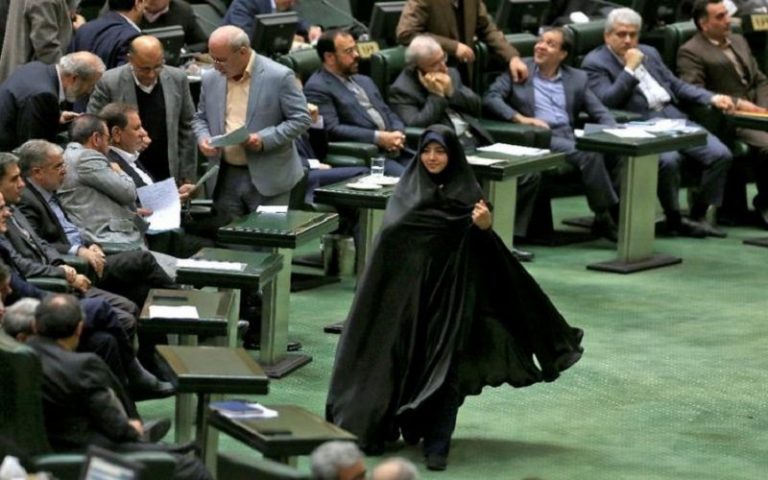
The United Nations Commission on the Status of Women held its 65th meeting in March with the theme of “women’s full and effective participation and decision-making in public life”.
With that in mind, we wanted to look at how this applies to Iran; a country ruled by a religious dictatorship that has relegated women to second-class citizens and spent 42 years enacting laws to strip them of their rights.
Well, the World Economic Forum ranked Iran above only the Congo, Iraq, Pakistan, Syria, and Yemen in its most recent report on the gender gap, which is unsurprising when you consider that the system in Iran is deliberately set up to marginalize women.
Women in politics
Despite the high numbers of women who enter and succeed in higher education, it should be shocking that their participation in politics is so low, but that’s what happens when there are so many barriers. You cannot find a single woman in the highly influential roles of:- Supreme Leader
- President
- Vice President
- Judiciary Chief
- Expediency Council
- Guardian Council
- Friday prayers Imam
- Press Secretary
- Chief of staff
- Provincial Governors
- Provincial mayors
Women in economics
All of the 35 biggest banks in Iran are run by men, while there’s just one woman on the boards of directors of banks out of a total membership of 173. Meanwhile, only one of the top 104 companies in Iran is run by a woman. Further down the economic scale, women are much less likely to be employed than men even before the pandemic, but thing got worse afterwards because women are also more likely to hold service-based and less-stable jobs.Women’s in universities
Given the high graduation rate for women, it should be surprising that women are much less likely to end up in decision making positions at universities, but alas out of 123 public universities only two presidents are women, while out of 320 faculties only six have a female manager.Us Passes House Resolution in Favour of Iranian People
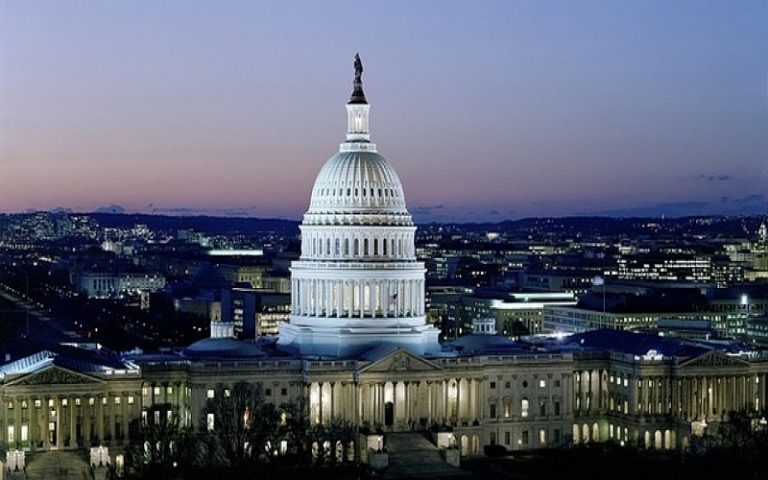
The Organization of Iranian American Communities (OIAC) held a press conference Tuesday on a resolution on Iran introduced to the House of Representatives.
H.Res. 118, which has 225 co-sponsors from both sides of the aisle, shows “support for the Iranian people’s desire for a democratic, secular, and nonnuclear Republic of Iran” and condemns the “violations of human rights and state-sponsored terrorism by the Iranian Government”.
It doesn’t mention the Joint Comprehensive Plan of Action (JCPOA) but does imply that US policy on Iran has for too long been focused almost exclusively on the nuclear program and should broaden its scope to include human rights and terrorism, as well as imposing sanctions for violations.
The resolution mentions the two nationwide protests in Iran in the past three years, which included sections of the mullahs’ base, highlighting how this was a rejection of the ruling system as a whole, with no distinction between the hardliner and moderate factions that are heavily promoted by Iran apologists.
It also says that the Iranian people are in line with the “ten-point plan” by opposition President Maryam Rajavi, which supports “the universal right to vote, free elections, and a market economy,” as well as advocating “gender, religious, and ethnic equality, a foreign policy based on peaceful coexistence, and a non-nuclear Iran”.
The resolution cites two prior House resolutions; one about the human rights violations seen at recent protests and one about the 1988 massacre of 30,000 political prisoners, which is one of the worst crimes against humanity since the Second World War. It further calls attention to the fact that the government is so desperate to destroy its opposition that it will even conduct terrorist activities in other countries, including the US and France. The 2018 Paris plot, which targeted a Free Iran rally, was recently the subject of a court trial that resulted in Iranian diplomat Assahdollah Assadi getting sentenced to 20 years in prison.
H.Res. 118 states that the US has not avoided these plots. In 2018, two Iranian nationals were arrested for spying on opposition activists with the intent of staging attacks, while the resolution also condemns “past and present Iranian state-sponsored terrorist attacks against United States citizens and officials”.
It urged the US to work with its allies to “hold Iran accountable [and] prevent the malign activities of the Iranian diplomatic missions, with the goal of closing them down”, as well as increasing pressure on Iran over domestic human rights abuses.
The resolution said that the US House of Representatives “stands with the people of Iran who are continuing to hold legitimate and peaceful protests against an oppressive and corrupt regime; and recognizes the rights of the Iranian people and their struggle to establish a democratic, secular, and nonnuclear Republic of Iran”.
The Death of Books in Iran

After the mullahs took power in Iran in 1979, one of the main challenges of the country’s people became the culture, and the conflict of Iran’s very old and rich culture with the fundamental mullah’s culture.
From the outset, the rulers tried to destroy and change all the people’s traditions. The authorities started to destroy the Culture, Art, and Literature, and prevent any free thinking which is contrary to the mullahs’ thought.
One of the most pervasive and eloquent examples is the figure of millions brain drain from Iran. Another example is the breathtaking censorship of books and the press and, in parallel, the deprivation of writers and authors, subsequently, their killing. Especially in the serial killings of during a period from 1988-98, were many intellectuals who had been critical to this regime disappeared and were murdered.
The regime’s Ministry of Islamic Guidance main job is to censor and prevent any opposite script, speech, or picture. In Iran there exist no free and private outlet and TV or cinema, and all of them belong to the government.
However, Article 19 of the Universal Declaration of Human Rights said: “Everyone has the right to freedom of opinion and expression; this right includes freedom to hold opinions without interference and to seek, receive and impart information and ideas through any media and regardless of frontiers.”
Per capita reading in Iran has reached 13 minutes a day – including reading newspapers and the Quran. According to UN experts, it will take a light year for Iran’s community to reach the lowest per capita reading rate of the European countries.
This dark situation has founded its way even to the publications and books of the government. And its outlets are describing the government’s publishers as “famous bankrupt capitalists.” And the book circulation in Iran has 300 books in a year.
The situation is so dramatic that one the of the state-run the Arman daily on April 20, 2021 in an article entitled, “Why is the blade of censorship becoming sharper?” wrote:
“For several months now, the Ministry of Culture and Islamic Guidance has been cracking down on publishers’ books. Books are either unauthorized or so mutilate that the publisher refuses to publish them. Those publishers who have spent their entire lives and money publishing paper books have become known as bankrupt capitalists.”
Then speaking about the goals of this censorship it added: “Maybe with the victory of this sharp censorship’s blade, it is a favor to the ruling faction in the parliament and so on.”
Comparing this situation with Iran’s neighbors, the paper added: “The paper publishing industry in Iran is not as valuable to political agents as it is in Afghanistan and Iraq; because there is no book auditing and censorship in these countries.”
It can be seen that in Iran, the root of every political, economic, social, cultural, and artistic issue is the medieval thought of the mullahs’ rule. An anti-historical, anti-humanitarian and anti-Iranian thought of the Velayat-e Faqih (supreme religious rule).
Water Protests in Iran
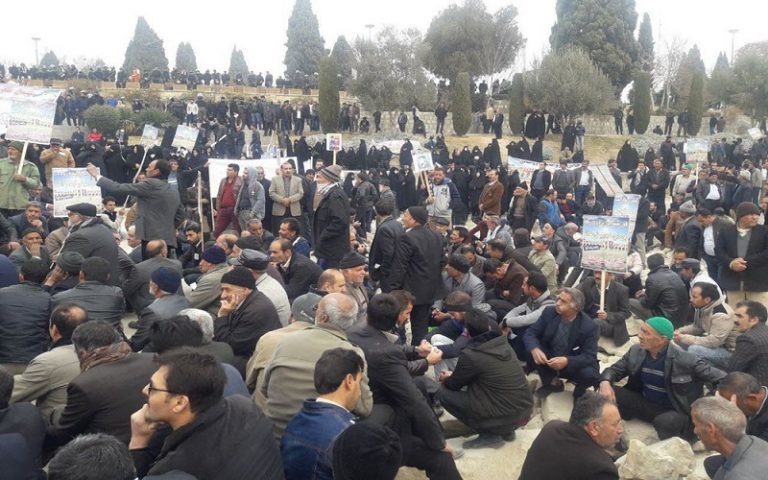
Zayanderud river in Iran has dried up, thanks to the government’s policies, negatively affecting the ecosystem and the lives of local people.
Due to this, farmers in Isfahan have held protests in recent days to demand their water rights; the latest of many. A farmer, identified as Seyed Morteza, told Mehr News that provincial officials have said water will be distributed in May, although nothing is known about the time, duration, or volume of the water supply.
He said: “We should prepare the land to cultivate. We must provide suitable seeds and fertilizer, but no one is responsible for us. We are left undecided and have no income with these economic conditions.”
Of course, farmers aren’t the only ones suffering because the flawed water distribution policy is harmful to the local ecosystem, with thousands of fish dying every time the Zayanderud river dries up, which affects not only the immediate food supply but also the animals higher on the food scale.
Mehr News wrote: “Even though MPs promised to follow up on farmers’ problems during a visit to the east of Isfahan last month, so far, no results have been obtained from this meeting for the livelihood and determination of farmers’ duties and demands.”
So where has the water gone? Well, because of the officials’ history of redistributing water for the private accommodation of officials’ affiliates and industrial projects of the Revolutionary Guards (IRGC), many believe that this might be the case. A farmer said that there is no need to drain the Beheshtabad tunnel or the Persian Gulf, but rather just to end the practice of illegal pumping.
A local official, Hesam Nazari said: “The Ben-Brojen Plan, which incorporated providing a huge water supply to large industrial factories and using the water for other areas and many decisions that resulted from mismanagement has made the people angry.”
As the crisis deepens, Mehr is warning of the danger posed to the entire system by these protests, saying that “the wound of the Zayanderud river has reopened following the drought” because farmers have not been able to cultivate their crops since October and the provincial officials have failed to address any of their concerns regarding livelihood issues and water rights.
Mehr wrote: “The silence, recklessness, and indifference of the government to save the challenging Zayanderud have frustrated the most oppressed people that are making their living from farming. Wrong policies are now exacerbating the social, economic, and environmental consequences.”
Iran Election Turnout Predicted At Just 25%
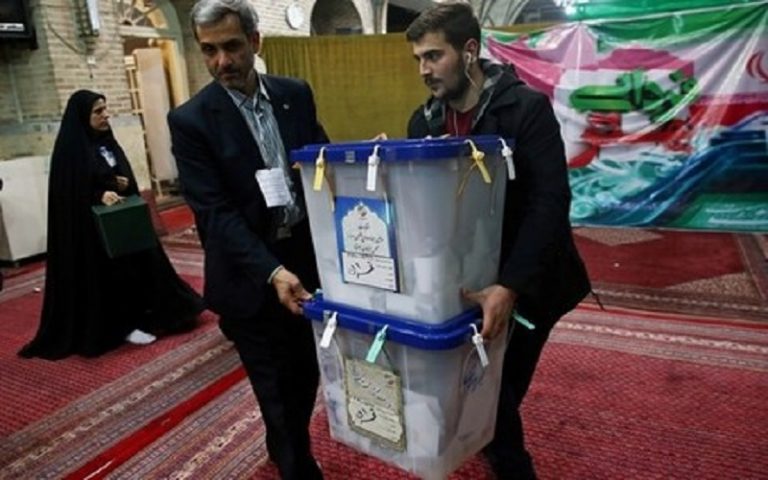
The Iranian government is terrified of what will happen in the June presidential elections, predicting a minuscule 25% turnout because of how many people have no faith in the ruling system whatsoever. Just one month from registration day, the regime also doesn’t have a serious candidate, with the military figures already in the running deemed not efficient enough to solve the growing crises in Iran.
Many officials (and 220 MPs who signed a letter to the effect) are hoping that Judiciary Chief Ebrahim Raisi, who served on the death committees during the 1988 massacre of political prisoners, will run and unite many behind him. This would leave the Judiciary post open but likely only to someone made in his mould. Raisi even appears to have the backing of Supreme Leader Ali Khamenei, who previously urged Raisi to run in 2017 and who dissuaded the grandson of the clerical system’s founder Ruhollah Khomeini from running this year.
It seems that the only people allowed to run are those with ties to the repressive apparatus; although in fairness, that not that different to every other year because the candidates must swear loyalty to the Supreme Leader. But they are also worried that the options to vote for are not exactly going to encourage people to vote, especially given the still-out-of-control pandemic and the campaign by the Iranian resistance to boycott the elections and show how illegitimate the ruling theocracy is.
The public has taken that message on board, with many at protests chanting, “we have seen no justice and we will not vote”, to show their distaste for the mullahs, who cannot even begin to fix the people’s problems. Thus, the mullahs and state-run media are getting worried, warning that this could be terrible for the entire system as more and more sectors abandon it.
Interior Minister Abdolreza Rahmani Fazli said: “The political and social atmosphere of the society and public opinion has not yet shown any particular sensitivity and reaction for the elections.”
While former MP Mahmoud Sadeghi described the “election atmosphere” as cold with the best hope being 25% participation.
The Iranian opposition said: “The regime clearly cannot cope with the status quo. The power struggle between various factions, a predicted low election turnout of 25 per cent, and no nomination of serious candidates are the regime’s major obstacles for the upcoming election. No matter what path the regime chooses, it will certainly be a turning point.”
In Iran, ‘the Rich Enjoy High Inflation’
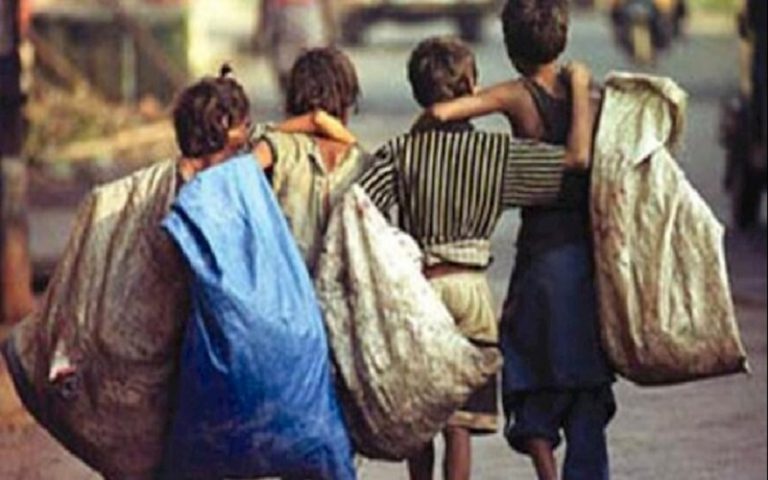
Under the current rule in Iran, the rich enjoy inflation, a phrase used by government outlets about inflation in Iranian society.
On April 6, these media outlets admitted that all over the world, when inflation occurs, inflation first and foremost targets the rich with high incomes. But in Iran, this law is the opposite.
The Etemad daily wrote: “A person who has several companies and cars in Iran becomes richer every day with the increase of inflation, and the burden of inflation will again fall on the low-income deciles of the society.”
In Iran such rich people are none other than the elements of government factions and their affiliates.
Etemad added: “The average economic growth during these years was zero and our seven deciles of income suffered the most in terms of economic challenges, and it can be said that in these difficult conditions, only the upper deciles of the society became rich.”
The Khabar Online outlet in an article entitled, ‘Our rich enjoy high inflation’, quoting a government economist wrote: “Who in Iran, except the rich who have connections, rents and large collateral, can access large loans? Considering 40 percent inflation and 18 percent interest rate on loans, if a person receives a billion tomans loan, receiving the same loan will include 22 percent interest for this person.” (Khabar Online daily, April 6)
Explaining the cause of the situation, this expert added: “There is no wealth tax or income tax in Iran, and this also causes the growth of inflation to end in favor of the rich. A person who has several companies, houses and inflation in Iran becomes richer every day with the increase of inflation and the burden of inflation will again fall on the shoulders of the low-income deciles of the society.”
He then made a simple comparison and said: “In countries where the tax system works properly, the pressure is on the rich and they have to pay high tax rates, but in Iran there is no income and wealth tax and our rich enjoy high inflation, while the banking system and subsidies are available to the rich. Because they use cheap energy carriers for their homes and cars.” (Khabar Online daily, April 6)
Poor people are suffering under the heavy burden of inflation while state media report a staggering increase in inflation in recent days.
The Donya-e-Eghtesad daily on April 22, 2021 wrote: “With the publication of this statistic, the first picture of the increase in the consumer price index was recorded this year. In April 2021 monthly inflation, point-to-point inflation, and average inflation, have recorded three points.
“According to these statistics, the first month of spring has been associated with relatively high inflation and has experienced a significant increase in the consumer price index. The announced statistics also show an average inflation of 38.9 percent.”
And the State TV News Channel reported: “In all three inflation indices, the monthly, the point-to-point, and yearly rates increased in April 2021. This means that the beginning of 2021 was accompanied by a 50 percent increase in the cost of Iranian households compared to the previous year.”
If the ’50 percent increase in household spending over the previous year’ is taken into account, it means that more people are below the poverty line because incomes are not enough to cover the exorbitant costs of living.
According to the state media, this unbridled inflation has caused 9 deciles of the society to live a hard life under the burden of poverty and high prices, and specifically, while the poverty line is 10 million Tomans, according to the regime‘s own experts, a family of three or four has a maximum wage of 3 million. This is at a time when many people are unemployed and have no income at all.
In return, the rich take the looted money out of the country and deposit it in their accounts in foreign banks, and some of them invest in buying and selling houses and villas abroad.
Iran Joins UN Commission on the Status of Women
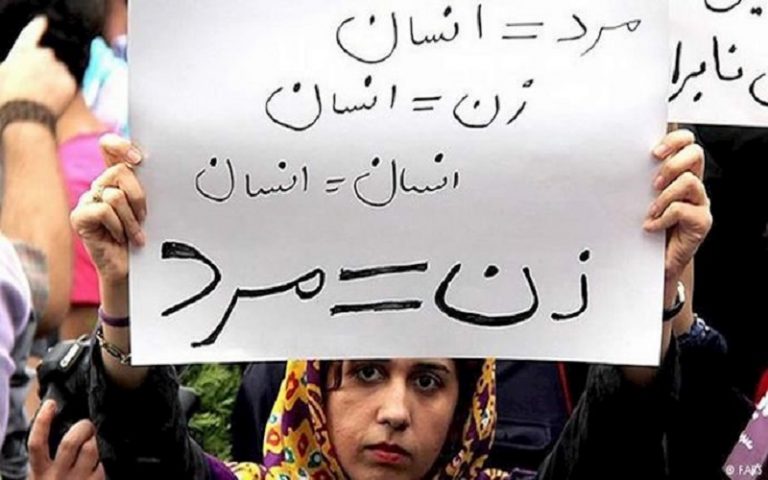
These days beside the news about the coronavirus, wars, and poverty another news surprised the entire civilized world.
‘The Islamic republic of Iran is becoming a member of the UN’s Commission on Women.’ This unbelievable act which has its roots in pollical issues has shocked many people around the world.
And this is while the United Nations in its report of March 19, 2021 on the ‘Situation of human rights in the Islamic Republic of Iran’ about the situation of the women in Iran wrote:
“Notwithstanding these improvements, the Special Rapporteur remains deeply concerned at the persistent discrimination against women and girls in public and private life, enshrined in the Constitution of the Islamic Republic of Iran and within law and practice. Articles 20 and 21 of the Constitution guarantee equal protection of men and women before the law and the State’s undertaking to secure women’s rights. However, the provision of these rights is subject to “the Islamic criteria”, which have been implemented by the authorities in a manner that violates and undermines women’s dignity and fundamental human rights, including the right to equality and non-discrimination, as established in the State’s international human rights obligations. The Government stated that the Islamic criteria were defined and could be updated according to societal needs.
“Concern is expressed that the legal age for a girl to marry in the Islamic Republic of Iran is 13 years, with even younger girls allowed to marry paternal and judicial consent… Failure to increase the marriage age undermines measures aimed at protecting women and girls from domestic violence and negatively affects education and employment prospects.
“The criminal justice system discriminates between men and women regarding payment of diya (blood money). The Penal Code states that the amount of diya paid as compensation for a female victim is half that of a male (art. 550).
“…The State effectively devalues the worth of a woman’s life to half that of a man, and consequently makes women more vulnerable to crime.”
Nonetheless, there is much more, which is beyond the scope of this short text, but these excerpts are enough to imagine what is going on Iran and among the women living in that country.
Dissidents and Iran watchers are asking why is the United Nations discrediting itself and its commissions? Why are they ignoring their own report?
Hillel Neuer, Executive Director of United Nations Watch, in this tweet on 21 April 2021 wrote: “No joke: UN elects Iranian regime to top women’s rights body. Electing Ayatollah Khamenei’s Islamic Republic of Iran to protect women’s rights is like making an arsonist into the town fire chief.”
This is an accurate description of this event. Because the basis of the growing fundamentalism today, at least in the Middle East, whose main feature is its anti-woman nature, is derived from the ideology of the founder of the Islamic Republic.
The amazing thing is that the main duty of this is commission is Improving gender equality and women’s empowerment.
“Imagine the model of ‘gender equality’ which is implemented in Iran becomes worldwide through the United Nations and this specialized commission. What a paradise the world would become”, an Iranian opposition website stated sarcastically. Here is what it would entail:
- In line with gender equality, all schools in the world must segregate gender.
- All prestigious universities in the world should work in two separate shifts for men and women.
- All buses in Washington, Paris and London should have a gender separation wall and women should sit in the back.
- All metros in the world must allocate most of its wagons to the men and only the last wagon should belong to the women.
- In the direction of gender equality, the chador should be obligatory as a superior hijab for all women in the world. The police of all countries are obliged to set up ‘Enjoining good and forbidding wrong’ inspections, and, of course, arrest unveiled women while preserving their human dignity.
- For the sake of gender equality, all fathers in the world should give their daughters half of their sons’ inheritance.
- Let all the female politicians of the world respectfully step aside and give their place to the young male forces.
- To preserve the dignity of women, all women’s commissions in the countries’ parliaments should be renamed to the Family Commission (Iran has no women commission, instead the regime is calling it the family commission), and men should be elected spokespersons for these commissions.
- Allow girls to enter only in certain female university disciplines. Do not allow women to suffer ‘oppression’ by enrolling in men’s and unnecessary fields. All these universities can follow the example of Al-Zahra University of Tehran. Male professors should not be allowed in female student classes and vice versa.
Iran Disappointed With Nuclear Negotiations, Concerned About an Uprising by the Starving People
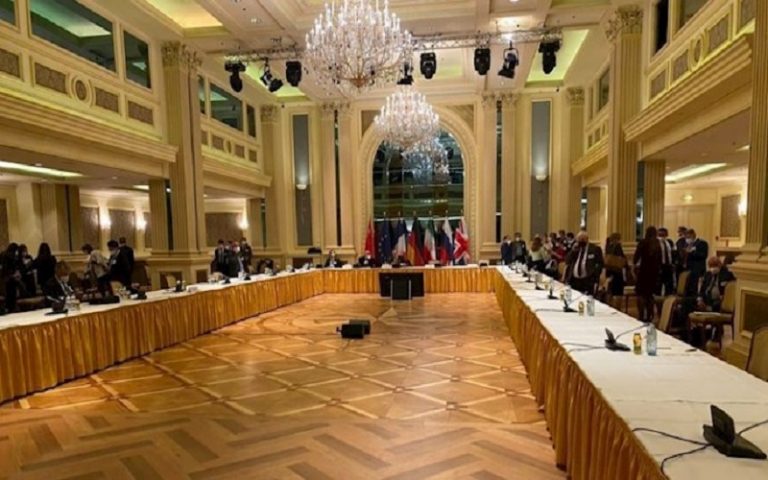
Iran’s supreme leader Ali Khamenei who was for a time silent about the negotiations over the Joint Comprehensive Plan of Action (JCPOA), or the 2015 nuclear deal, broke his silence and said points about the negotiations that experts see as a sign of his despair and frustration with the negotiations.
But why, while he said that the suggestions in the negotiations of the world powers are humiliating and he cannot tolerate any erosive negotiations, is begging for this too?
The answer should be searched in the stagnation of his regime and his fear of an uprising by the starving population. It is worth to mention the speeches of the officials about this deadlock to see its real dimension.
As Khamenei said with frustration and despair: “It is not that the United States wants to negotiate until it accepts a right word. No, it wants to negotiate in order to impose a false word. The offers they make are often arrogant and humiliating offers that cannot even be looked at.” (State TV Channel One, April 14, 2021)
Then this frustration effected the other officials too. Mohamad Vaezi, Chief of Staff to the regime’s president Hassan Rouhani, about these humiliating negotiations said: “The new US administration had announced that the maximum pressure of the Trump administration had failed, and it did not accept that policy. In practice, maintaining the sanctions means that it is following the same path.” (State-run website Iran Press, April 14, 2021)
One of the elements of Khamenei factions explained the US’s goals as pulling the regime step by step to the “successive agreements to contain and limit Iran’s power altogether.”
This government affiliate added: “They want stronger agreement. That means that they want these stronger agreements, to take more concessions in non-nuclear areas.” (State TV Channel Two, April 14, 2021)
Abbas Araghchi, Spokesperson for the Ministry of Foreign Affairs of the regime, depressed and angry about the Europeans positions said: “The Natanz incident is not something that can be easily overlooked. We expect the opposing countries in the JCPOA to condemn this incident, not only did they not do it right, but they also even added items to their list around sanctions.” (State TV News Channel, April 15, 2021)
Rouhani completed this current of frustration hold his begging bowl toward the US government and said: “The Americans should live up to their commitments and lift the embargo.” (State TV News Channel, April 15, 2021)
Meanwhile, state media fear the hungry and furious population.
The Jahan-e-Sanat daily fearing a social explosion wrote: “In these deplorable economic conditions, and in order to be safe from the consequences of the periodic and, of course, fungal protests, as well as from the consequences of the country’s starving uprising, a heroic softness is desperately needed.” (State-run daily Jahan-e-Sanat, April 15, 2021)
In the lexicon of the Iranian leadership this ‘heroic softness’ means taking another poison chalice and accepting the demands of the world powers.
Because the United States intends, to impose “the same previous maximalist demands with new deception”, and “how does a Europe that itself has imposed sanctions on eight individuals and institutions at the same time as the negotiations, want and can mediate the lifting of US sanctions.” (Kayhan, April 18, 2021)
Another concern of Khamenei’s faction is that even if the regime accepts those demands, it is still subject to sanctions, because the US government cannot lift all sanctions, especially those imposed by Congress. While the US the other parties of the JCPOA negotiations are not accepting the same conditions of the 2015 JCPOA. And are searching for a new one to put the regime’s missile arsenal and middle east activities in that agreement.
The state-run website Siasat Rooz on April 18 wrote: “The Biden administration says it is seeking a ‘longer and stronger’ deal than the 2015 nuclear deal, which would include fundamental changes in Iran’s support for militants in Iraq, Syria, Lebanon and Yemen and a limit on the number and range of Iranian missiles.
“Iran and the United States are in dispute over which sanctions should be lifted. Iran wants to return to the time before [Donald] Trump entered the White House. The United States is reluctant to lift all the Trump-era sanctions, in part because the Trump administration has deliberately linked many of the sanctions to the fight against terrorism, which are difficult to lift.”
Kayhan on April 19 wrote: “The goal of the United States and Europe is to turn the negotiations over the JCPOA into an erosive one. And in the first stage, ‘without lifting sanctions’, to return to the JCPOA, and in the next stage, it will impose its maximalist demands to make Iran’s nuclear restrictions permanent and to attach our missile capability and regional power to the JCPOA text.”
And Siasat-e-Rooz on April 19 wrote: “The Vienna talks are a waste of time, given that they are irrelevant because of the existence of the JCPOA, and given that the Supreme Leader of the Revolution has also warned the Vienna talks becomes erosional, now the Vienna meetings are now on that path.
“Accepting the continuation of negotiations by Iran, while knowing that the United States and Europe have no incentive to lift sanctions, is not the right strategy to revive the JCPOA. The lifting of economic sanctions on Iran has now become a dream that some still dream of.”
Critical Situation in Iran’s Province of Khuzestan
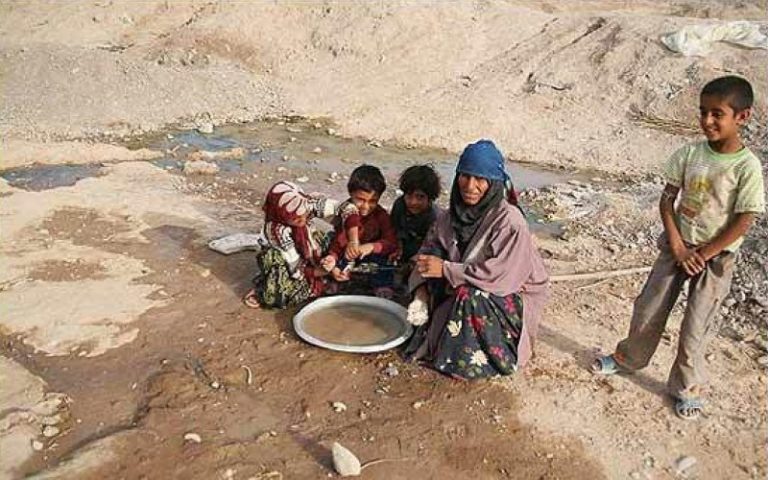
First of all, Iran’s impoverished province of Khuzestan needs to have a development program in accordance with its geographical, cultural and social potentials. In Khuzestan, the government should think about the education and the development of its people which it has forgoten after the end of the Iran-Iraq war.
The pains and disadvantages of Khuzestan are many and innumerable. Crying and showing only ‘sympathy’ with this injured province body is useless. If the problem of Khuzestan was to be solved with the government’s fake budget, industries, agriculture, industry, etc., promises, it would have become heaven by now, but this did not happen.
Khuzestan has been one of the firsts in many industries and resources in the country, but these firsts did not cause all-round growth and excellence in the province. Because along with material development, the human, social and cultural dimensions have always been ignored. And the people of this province are one of the most isolated and deprived in the country, just because of being an Arab Sunni minority.
And now, if the intention to carry out reforms and real growth and development is considered, it is very difficult to do so because many resources such as water, environment, soil, etc. have been destroyed and in many cases have reached a critical and irreversible level.
Today, the situation of education, even at its basic levels, is not in a good condition in many parts of the province. Over the years, some of the misconceptions of the people of this land have not been corrected and the positive cases have not been strengthened by the government. The spirit of development of its people is not supported and instead it has been weakened by the government, and an industry such as oil has only led to their deprivation because all its benefits are stolen by the government.
In the years after the war, because of the regime’s wrong policies, the favorable social aspect of Khuzestan, which indicated brotherhood, friendliness, kindness, and self-sacrifice, has changed and moved towards divergence. Many investors outside the province are reluctant to invest in the province’s economy. Many natives of the province have either migrated or are migrating, and in this migration, not only the issue of dust and water are the reasons, but it should be said that cultural repression and poverty in many areas of the social life in this province are the cause and motivation of these migrations.
Comparing the indicators of development in the province with other provinces of the country, it becomes clear that the province is lagging in many ways, and compensating for this backwardness requires planning, effort, and leaving matters in the hands of skilled people, which the government is not interested.
With political games and phony support, the government is trying to cure the pains of this province, without any success. Only attracting budget and credit will not work for the government, because at the same time, many of its officials and brokers are looting this province and thinking of gaining more benefits and enhancing their power from these credits.
And, as in previous years, they will hurt the province with their various lootings and benefiting, taking the money and capital of this province with themselves to the capital, and just paying attention to their own welfare and livelihood, and deriding the people of this province and taking only political and social gestures that they are caring about the interests of these poor and weak people.
If the government of Iran would just care about the development of Khuzestan’s people, this province would see progress, otherwise, as in previous years, the people are forced to leave this province. And now this is not happening and most of its people are vagrant, around the metropoles of the country.
Khuzestan today has problems even in small and primitive matters such as waste collection even in its good neighborhoods of the city. It has problems in matters such as maintaining public transportation such as buses and its stations, and you rarely see well working stations in the provincial capital which is Ahvaz. And the final comment is that this province is still at the start of its development after 40 years of clerical rule.
