


By Jubin Katiraie
Internet censorship in Iran has been increasing. In the first few years of the 21st century, Iran experienced a great surge in Internet usage. As of 2018, Iran has an estimate Internet penetration rate of between 64% to 69% out of a population of about 82 million.
According to a new report by Freedom House. Authorities “handed down harsh prison sentences to online journalists and other users and continued to block access to independent news sites and a number of social media and communication platforms.”
#Iran‘s Internet Shutdown.
Regime’s authorities heavily restricted the internet in an attempt to quell the anti-regime protests but the Iranian people have been evading the censorship through the use of virtual private networks (VPNs).https://t.co/cx8v3PHWUz #IranProtests pic.twitter.com/c5AUe0M1Ii— NCRI-FAC (@iran_policy) January 10, 2018
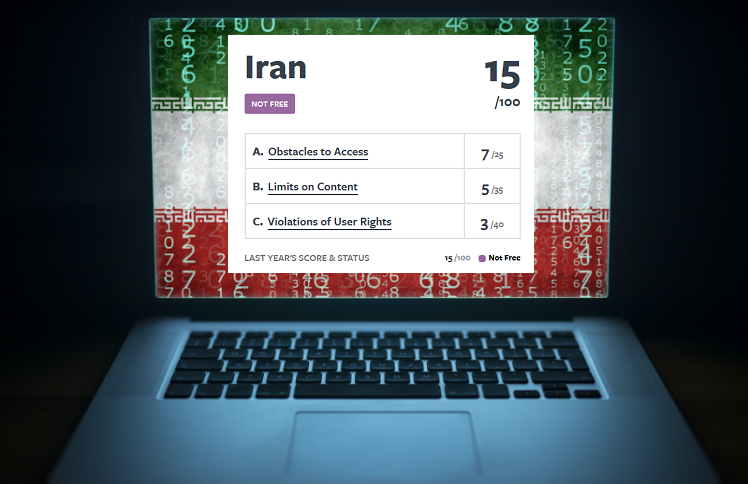
Freedom House gave each country a numerical score from 100 (the freest) to 0 (the least free). Iran was designated “not free” because it received a score of 15 out of 100 for its level of internet and digital freedom. Iran received the same score during the 2017-2018 reporting period. The 2018-2019 score was based on three areas that Freedom House tracked:
- 7 out of 25 points for obstacles to access
- 5 out of 35 points for limits on content
- 3 out of 40 points for violations of user rights.
The report noted that Iranian authorities have a 42,000-strong army of volunteers who monitor online speech. Key internet controls used by the regime included:
- Social media or communications platforms blocked
- Political, social, or religious content blocked
- Pro-government commentators manipulate online discussions
- Blogger or ICT user arrested, imprisoned, or in prolonged detention for political or social content
- Blogger or ICT user physically attacked or killed (including in custody)
- Technical attacks against government critics or human rights organization
Key Developments
- Unlike previous years, no internet shutdowns were reported during the coverage period. However, the state maintains significant control over the internet backbone, allowing the government to throttle foreign connection speeds at politically sensitive times
- Several harsh prison sentences were handed down during the reporting period in retaliation for online activities.
- State-sponsored malware attacks have targeted a range of minority groups and activists located within and outside Iran, according to a May 2019 report from the Center for Human Rights in Iran
Obstacles to Access
Internet penetration rates have improved in recent years, and connectivity in rural areas has increased. The Supreme Council of the Cultural Revolution announced in May 2019 that the National Information Network (SHOMA), an initiative meant to improve access across the country, was over three-quarters finished.
Limits on Content
Significant restrictions on content have been in place since 2009. Major international platforms like Facebook and Twitter remained blocked during the coverage period, as was Telegram. Censorship decisions remained highly politicized, with both conservative and reformist news sites facing censorship for failure to adhere to strict guidelines on coverage of sensitive political, social, and international issues. Self-censorship is pervasive, and overt digital activism is fairly limited.
Authorities restrict access to tens of thousands of websites, particularly those of international news services, the political opposition, ethnic and religious minority groups, and human rights organizations.
Twitter, Facebook, and YouTube are all blocked, in addition to major blog-hosting platforms like WordPress, Blogspot, and Blogger.
Violations of User Rights
There have been no changes to legal restrictions on internet freedom, and several harsh prison sentences were handed down during the coverage period in retaliation for online activities, including a 26-year sentence. State-sponsored malware attacks have targeted a range of minority groups and activists located within and outside Iran.


