Iranian Workers’ Wages Have Fallen By 261% In Less Than Ten Years

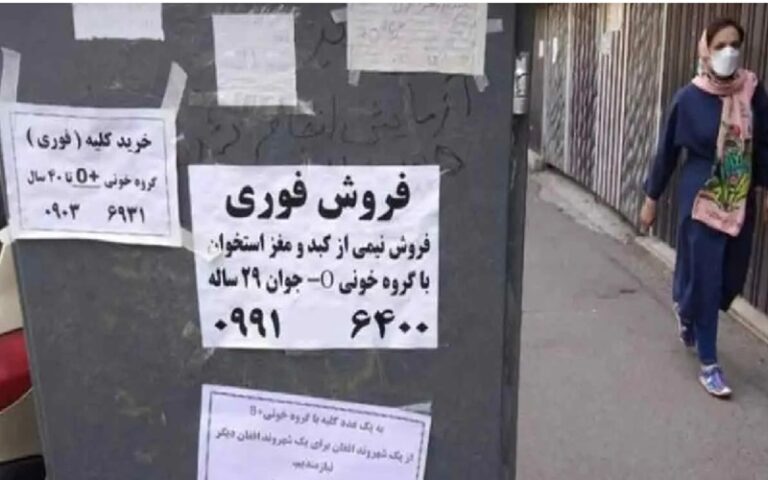
The state-run ILNA news agency reported that Iranian workers’ wages have experienced an unprecedented 261% decline in less than ten years. In its report on Tuesday, October 7, ILNA wrote: “The base wage of $238 in 2016 has dropped to $91. In other words, the real wage this year is only 0.38 of what workers received in 2016.” According to ILNA, in March 2016, the U.S. dollar traded at around 3,400 tomans on the open market, and the minimum monthly wage for workers covered by the labor law (excluding benefits such as seniority pay, child allowance, and food subsidies) was 812,000 tomans.
Only 50,000 Construction Workers in Iran Have Been Insured Over the Past Five Years
Therefore, in March 2016, the minimum wage for workers under the labor law, without benefits, amounted to $238, and with benefits, it reached about $300 or slightly more. The news agency added that amid currency shocks, the devaluation of the national currency, and wage suppression policies, while the value of the dollar has surged 33.5 times, the minimum wage approved by the Supreme Labor Council has risen only about tenfold—from 812,000 tomans in 2016 to roughly 10.4 million tomans this year. The report emphasized that “accordingly, the minimum wage for workers this year, excluding side benefits, is only $91; even when including general benefits, it may reach around $110.” According to reports and statements from labor activists—including members of pro-government labor organizations—workers’ purchasing power has drastically declined. In this regard, Somayeh Golpour, head of the Association of Labor Guilds—a labor organization approved by Iran’s regime—stated on March 11, 2025, that workers’ purchasing power has fallen by 190% compared to thirteen years ago. According to two clauses in Article 41 of the labor law, the monthly minimum wage for workers must be determined based on the inflation rate and the cost of living for a working household. However, independent labor organizations have consistently stated that the Supreme Labor Council ignores the second clause in its wage decisions.

Workers’ wages only cover 5 to 6 days of monthly expenses

According to the report, independent calculations of the living basket for working families—based on realistic food requirements and a table of basic meals prepared by labor activist Faramarz Tofighi—show that the minimum wage of 15.1 million tomans (about $130) for an average 3.3-member family covers only 12.43% of basic living costs, barely enough for five to six days of expenses each month.
Runaway Inflation and Soaring Prices of Essential Goods Have Brought Workers’ Livelihoods to a Dead End
Under these circumstances, Ahmad Meydari, the regime’s minister of labor, cooperatives, and social welfare, has rejected proposals to raise workers’ wages three times in recent weeks. Meanwhile, Malek Hosseini, deputy minister for entrepreneurship and employment, told the state-run Tasnim News Agency on October 4 that the minimum wage this year “was set above the inflation rate,” claiming that the ministry “does not intervene in wages beyond the minimum level.” At the same time, Tasnim News Agency reported on the vast gap between the minimum wage and the monthly cost of living—over 50 million tomans (500 million rials, about $435)—noting that “many workers have not received their wages on time for months, and these delays have caused serious disruptions in their daily lives.” The report stated that paying rent or housing installments, medical expenses, basic household needs, and even transportation costs have become major challenges. Economic experts note that delayed wages reduce purchasing power and increase financial pressure on working families, ultimately leading to declining living standards and rising poverty. As economic hardship worsens, workers’ protests have expanded significantly in recent years. These protests have continued despite increased security and judicial crackdowns by Iran’s regime against workers and wage earners.

Building Owned By Iranian Regime Oil Company Seized in London

Iranian media have reported that the National Iranian Oil Company (NIOC) lost its appeal in court and failed to prevent the transfer of a high-value building in central London as part of a $2.4 billion arbitration award owed to the Emirati company Crescent Petroleum. According to these reports, the British Court of Appeal upheld a previous ruling that the property had been unlawfully transferred to a trust to keep it out of the reach of creditors. So far, Crescent Petroleum has managed to recover part of the damages related to the Crescent contract through foreign court rulings. On April 18, 2024, a British court ordered the seizure of this NIOC-owned building, valued at £100 million ($125 million), located in central London. The building, known as NIOC House, is located near the British Parliament and Westminster Abbey and had been owned by Iran for about fifty years. Iranian domestic media reported that Crescent Petroleum argued the transfer of the building was intended to prevent creditors from accessing it and therefore filed a complaint with the court. According to these reports, the initial court had ruled in favor of Crescent, nullifying the transfer of ownership, and on September 29, the Court of Appeal rejected NIOC’s objection and upheld the previous decision ordering the confiscation of the NIOC House building. The Crescent contract is one of the most politically contentious cases in Iran’s oil and gas industry. The contract, signed in 2002, involved the daily sale of 500 million cubic feet of sour gas from Iran’s Salman oil field to Crescent Petroleum. However, in one of the related court rulings, Iran’s regime was ordered to pay $607 million in damages to Crescent Petroleum for failing to uphold the contract.

Confiscation of NIOC assets in favor of Crescent

The National Iranian Oil Company previously maintained offices in five countries: the United Kingdom, China, Singapore, the Netherlands, and India. After the seizure of its offices in London and Rotterdam, the company no longer has any offices in Europe. Esmaeil Baghaei, spokesperson for Iran’s regime foreign ministry, described reports in February 2025 about the seizure of another NIOC building in Rotterdam, the Netherlands, as “inaccurate,” but did not clarify what actually happened to the property. According to published reports, despite NIOC’s objections, the transfer of its Rotterdam office building—worth $2.6 billion in debt repayment to Crescent Petroleum—was approved, and the building was officially transferred to the Dutch company Heuvel. The building, which had been seized under an international arbitration ruling, was sold to Heuvel on April 20, 2023, through a public auction. The state-run daily Shargh reported that NIOC had previously asked the Dutch court to annul the April 2023 auction and return ownership of the building, arguing that, as state property, it should be immune from seizure or sale under international law. In response, the auction’s winning company, Heuvel, stated that it had purchased the building in a legal auction and therefore was the rightful owner. Ultimately, the court rejected all of NIOC’s requests, including its bid to reclaim the property. The state-run Iran newspaper also reported that the seizure of the building was related to claims arising from the cancellation of the Crescent contract. The paper described the loss as the result of “political maneuvering by behind-the-scenes actors” over the cancellation of the Crescent deal.

Head Of Tehran Chamber of Guilds: 70% Of People’s Livelihoods Are Unaffected by International Events

The head of the Tehran Chamber of Guilds criticized the silence of regime leaders over rising prices, saying that up to 70% of the production and supply of goods, essential commodities, and people’s livelihoods “have nothing to do with international events.” Hamidreza Rastgar, speaking on Monday, October 6, to the state-run ILNA news agency, emphasized that these events “affect only 30% of goods,” and sometimes this effect “may be significant, moderate, or even negligible.” He said: “For example, whether or not the dollar affects the import of luxury goods has no impact on the lives of the middle class. Only a small percentage of our society, due to their economic capability, use luxury goods.”
Iran’s Carpets Industry on the Decline as Economy Continues to Spiral Down
Rastgar made these remarks in connection with the causes of rising prices in the market and ongoing debates about the impact of triggering the “snapback” mechanism on prices. Earlier, on September 30, amid Iranian media reports about the psychological impact of triggering the snapback mechanism on the economy, Masoud Pezeshkian, president of Iran’s regime, accused the United States of “using the snapback to intensify pressure on the nation and stir internal discontent.” On August 28, the United Kingdom, France, and Germany initiated a 30-day process to reimpose United Nations sanctions against Iran. The Iranian regime condemned the move. In another part of his interview with ILNA, Rastgar said regarding the price hikes: “What has happened is largely a media and psychological war, pushing people to worry about what might occur and what the snapback mechanism is actually targeting.” He added: “One of the main issues is that officials in the country are not explaining the snapback mechanism clearly and are not saying how much it could affect economic trends or how much it already has.” Rastgar also emphasized the importance of preventing rising inflation, saying: “Those who make monetary, banking, and fiscal policies must stop artificial inflation.”

Rising prices and a sharp decline in sales of essential goods

In recent days and weeks, numerous reports have been published about the uncontrolled surge in prices across Iran. The state-run Ham-Mihan daily wrote on Monday, October 6: “Alongside the rise in essential goods prices, sales of meat, chicken, fish, legumes, eggs, and dairy products in Tehran have dropped significantly compared to a year ago. Many customers now request to buy rice and legumes in very small quantities, just enough for one meal.” According to the report, some butcher shops in southern Tehran have stopped selling meat due to soaring prices and, in some cases, have faced “requests to buy chicken scraps.” Ham-Mihan added: “Data from the Ministry of Health shows that between 2006 and 2023, red meat consumption among low-income groups dropped by 40%, while bread consumption—being a cheaper source of calories—rose substantially.” This comes as the price of bread has sharply increased in recent months with the authorization of Pezeshkian’s government. In this context, labor and trade organizations have criticized the regime’s indifference, saying this trend harms the families of workers and other wage earners. Currently, the base salary for a worker covered under the labor law is around 11 million tomans (110 million rials, roughly $100) per month. Even pro-government labor associations estimate that the monthly cost of living in large cities is about 50 million tomans (500 million rials, roughly $450).

World Bank: Iran’s Economy Continues to Shrink

The World Bank has projected that Iran’s economy will contract by nearly 2% this year, with the shrinking trend expected to continue into next year. According to the latest World Bank report, released on Tuesday, October 7, the average GDP growth for the MENA-P region (Middle East, North Africa, Afghanistan, and Pakistan) is estimated at 2.8% for this year. This figure is higher than the 2.6% growth projection the World Bank made in its April report. The report states that this improvement mainly stems from stronger economic activity in the Gulf Cooperation Council (GCC) countries, following an earlier-than-expected end to oil production cuts and the expansion of non-oil sectors.
Iranian Regime Puts Iran’s Oil on Sale in China with Bigger Discounts
However, the institution warned that developing oil-exporting countries will experience a sharp decline in growth, largely due to disruptions caused by regional conflicts and reduced oil production levels. According to the report, Iran’s economy will contract by 1.7% this year and by a further 2.8% next year. In its April report, the World Bank had projected a 0.7% growth for Iran’s economy in 2026. The World Bank attributed this outlook to simultaneous declines in oil exports and non-oil activities due to intensified sanctions—including the reinstatement of United Nations sanctions—and the economic consequences of the recent 12-day war. With the end of the 30-day period set in the UN Security Council’s snapback mechanism, all previous UN sanctions against Iran’s regime were reinstated at 3:30 a.m. Tehran time on Sunday, September 28. In recent weeks, Iranian regime officials have warned of a “harsh response” to the sanctions’ reinstatement, threatening measures such as withdrawal from the Non-Proliferation Treaty (NPT) and the pursuit of a nuclear bomb. The World Bank stressed in its report that the entire region remains affected by the consequences of ongoing conflicts in Syria, Yemen, Lebanon, the West Bank, Gaza, and Afghanistan. These conflicts have triggered humanitarian crises, mass displacement, and severe economic stagnation. Overall, the institution raised its forecast for economic growth in the Middle East, North Africa, Afghanistan, and Pakistan for 2025 but revised downward its projection for the coming year.

Corporal Punishment in Iran’s School Causes Death of Student

Alireza Monadi, head of the Education and Research Commission of Iran’s regime parliament (Majlis), announced that the death of Nima Najafi, a student from the village of Sohrin in Zanjan Province, was due to corporal punishment. In a letter to Alireza Kazemi, the regime’s minister of education, Monadi wrote: “We have been informed that this middle school student died on October 1 due to cardiac arrest caused by corporal punishment and physical strain imposed by school officials.” Calling the incident “deeply tragic,” he urged the minister of education to order a thorough investigation into the matter and to report the results to the Majlis Commission on Education, Research, and Technology.
950,000 Iranian Children Deprived of Education
Monadi emphasized: “Necessary orders must be issued so that we no longer witness such tragic and heartbreaking incidents.” On October 2, the state-run Didban Iran news website, citing the student’s uncle and the school’s surveillance footage, reported that the student had been forced to run twice around the schoolyard as punishment. When he attempted to stand in line afterward, he fell to the ground after feeling unwell. He added that Nima was overweight compared to his peers, which contributed to his cardiac arrest. Emergency responders who arrived at the school found that the fourteen-year-old had lost consciousness and that his heart and lungs had stopped functioning. The corporal punishment of students in Iranian schools has a long history, and numerous reports over the years have documented such incidents. This shows that corporal punishment is not a relic of past decades but continues to occur in schools across the country. In November 2024, the state-run daily Ham-Mihan published a report titled “Education by the Whip,” revealing that corporal punishment of students continues in Iran’s schools.

Australian Government Introduces Bill to Designate IRGC As Terrorist Organization

The Australian government has introduced a bill to the House of Representatives that would allow the country to designate the Iranian regime’s Islamic Revolutionary Guard Corps (IRGC) as a terrorist organization. Australia’s Attorney General, Michelle Rowland, presented the bill to parliament on Wednesday morning, October 8. The move follows findings by the Australian Security Intelligence Organisation (ASIO) indicating that the IRGC was involved in at least two antisemitic attacks on Australian soil.
Australia Closes Embassy in Tehran and Expels Iranian Regime Ambassador
Under the provisions of the bill, the government would also be able to include foreign state institutions on the list of terrorist organizations — something that was previously not legally possible. In her address to parliament, Michelle Rowland said the bill strengthens Australia’s counterterrorism framework and creates an environment where it becomes “more difficult and dangerous for foreign actors to harm Australia and its community.” She added that this serves as a warning to any foreign government that seeks to threaten or coerce Australia through violence. According to Rowland, the evolving threats facing the country must not go unanswered, and parliament must respond firmly and in unity. She stressed that terrorism seeks to intimidate and destroy social cohesion, impacting national security, international relations, and the public’s sense of safety. She added that with the emergence of “state-sponsored terrorism” as a new factor, threats have entered a new phase. Rowland further noted that intelligence and security agencies will be granted expanded powers to confront state-sponsored terrorism, similar to those that already exist under current laws for traditional forms of terrorism.

Strikes and Labor Protests Held in Several Iranian Cities

Reports indicate that on October 7, workers at the Qeshm oil refinery construction project went on strike and held a protest over more than two months of unpaid wages, while other protest gatherings were also held in Shiraz, Eslamshahr, and Ahvaz. Workers at the 60,000-barrel-per-day refinery under construction on Qeshm Island went on strike and gathered in front of the company to protest unpaid wages dating back to July. According to this independent labor organization, about 400 refinery workers have fallen into unbearable living conditions due to unpaid wages.
Workers, Retirees, Employees, Farmers, And Drivers Hold Protest Rallies In Various Cities of Iran
Some refinery workers said that many of them do not even have bread to eat at home, and some, in worse economic situations, spoke tearfully about being unable to buy school clothes for their children. Following the strike and protest, the site supervisor of Narghan Company appeared before the workers and, showing indifference to their “miserable condition,” announced, “The manager is still in Tehran, and there will be no money for at least two more weeks,” which sparked strong objections from the workers. The workers stated that they will continue their strike until their demands are met. Meanwhile, according to the state-run ILNA news agency, employees of the Shiraz Oil Refinery held their fourth protest rally in the past two weeks. The workers said: “We have already gathered three times, but our voices have not been heard.” They added: “After the third protest, senior managers, instead of addressing our rightful demands, retaliated by disciplining several senior employees and taking back the official cars, they used for work purposes.” The nonpayment of wages and benefits, as well as labor-related problems across Iran, have led to months of protests by workers and wage earners. They have used various methods such as strikes and gatherings to demand their wages, benefits, and better working conditions. Separately, ILNA reported that a group of contract oil and gas workers sent a letter to the Administrative and Recruitment Organization, demanding the immediate implementation of the plan to regulate employment and eliminate intermediary contracting companies. In part of their joint letter, they wrote: “For years, the promise of ‘regulating contract workers’ has been on the agenda of successive governments, but unfortunately it has never been implemented. While a large portion of core government duties is performed by contract workers, this hardworking group receives the lowest pay, benefits, and job security.” The letter also mentioned the identification of more than 700,000 contract workers and stressed the need to implement the plan to regulate and change their employment status. In another report, ILNA quoted a labor source from the technical infrastructure division of Eslamshahr Railway, saying: “The wages of the project-based workers in the Eslamshahr railway infrastructure have been delayed for three months, causing many difficulties for them.” These project-based workers are employed under the supervision of the Travers Company in the Eslamshahr railway zone and several other rail regions across Iran. Also, according to social media reports, retired and active oil industry workers in Ahvaz gathered in front of the Security Department of the National Iranian South Oil Company to protest their unmet demands. They chanted slogans such as “Workers and retirees—rise up against injustice and discrimination.” Retirees from various sectors have been holding weekly protest gatherings on different days in recent years.

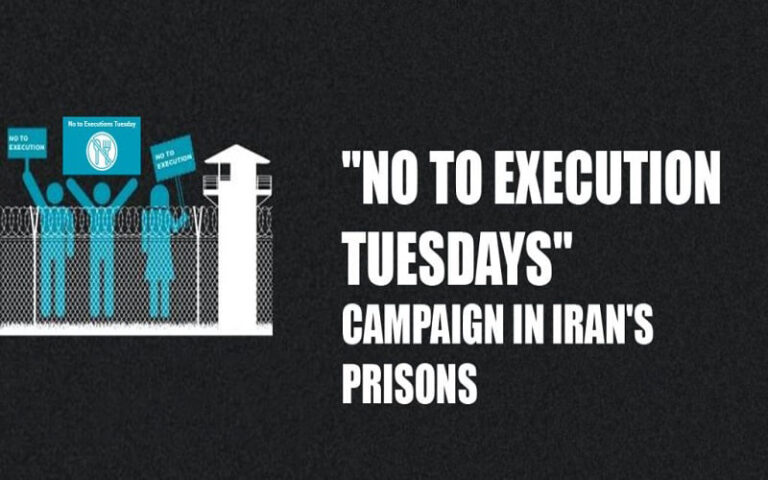
On 89th Week, ‘No to Execution Tuesdays’ Campaign Expands with Hunger Strike in 52 Iranian Prisons

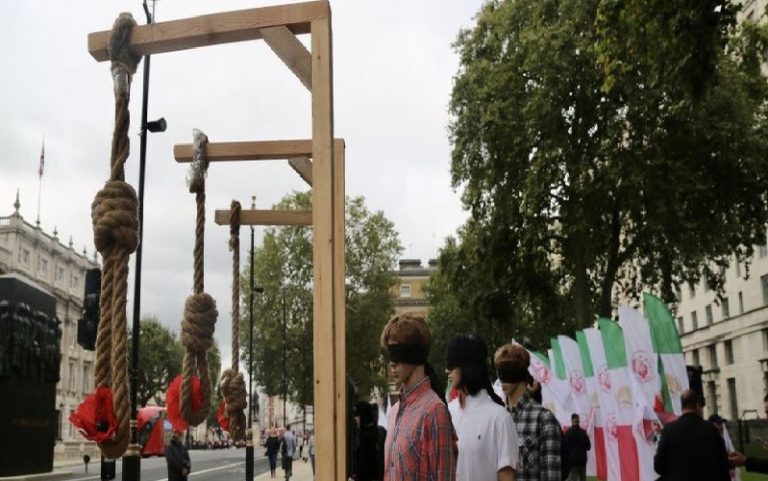
The “No to Execution Tuesdays” campaign, a prisoner-led movement inside Iran, marked its 89th consecutive week with a coordinated hunger strike across 52 prisons nationwide. This powerful act of defiance comes on the eve of the World Day Against the Death Penalty and in the face of an unprecedented wave of state-sanctioned executions by the Iranian regime. The campaign’s participants are sending a clear message that the death penalty is the regime’s primary tool of political terror to crush dissent, a sentiment that has now been adopted by protesters from all walks of life, including teachers, retirees, workers, and students.
Silent Execution of Political Prisoners in Iran: Death Under Medical Deprivation

A Regime Breaking Records in Brutality

In a statement released for its 89th week, the campaign highlighted the stark contrast between global trends and the situation in Iran. While 145 countries have abolished or ceased using the death penalty in law or practice, the statement declared that the ruling system in Iran “breaks new records in brutality and executions every day.” The horrifying statistics underscore the scale of the crisis: at least 1,695 people have been executed in the past year (since October 1, 2024), with 957 of those hangings taking place since March 21, 2025, the beginning of the new Persian calendar year. The statement acknowledges that the true figures are likely much higher. The campaign honored the memory of seven political prisoners executed just days earlier on Saturday, October 4: six Arab compatriots—Ali Mojadam, Mohammadreza Moghadam, Moein Khanfari, Habib Deris, Adnan Ghobeishavi, and Seyed Salem Mousavi—and one Kurdish compatriot, Saman Mohammadi Khiareh. The statement also noted that on the same day, the regime’s Supreme Court upheld the death sentence for political prisoner Mohammad Javad Vafaei-Sani for the third time.

The Death Penalty as a Tool of Political Terror

The campaign’s statement analyzes the regime’s motives, asserting that the death penalty in Iran is not a tool for justice but rather “an instrument for intimidation and creating terror in a society that is on the verge of explosion.” According to the regime’s logic, every protest and every protester must be met with the threat of execution and imprisonment. It is for this reason, the statement argues, that “No to Execution” has become a unifying slogan for all segments of Iranian society.

A Call to Conscience and a Tribute to Teachers

Coinciding with World Teachers’ Day, the statement also paid tribute to martyred teachers like Samad Behrangi and Farzad Kamangar, who “taught lessons of freedom and equality in Iran’s history and ultimately sacrificed their lives for that cause.” The campaign concludes with an urgent appeal to all “awakened consciences—civil activists, writers, artists, teachers, retirees, and workers—to raise their voices louder against execution.” The goal, the statement affirms, is to “take away the main tool of repression and suffocation from the hands of this execution-based government,” thereby paving the way for justice and freedom.

Beijing And Tehran Trade Car Parts for Copper and Zinc to Bypass Sanctions, according to Bloomberg

Bloomberg News reported that Chinese companies are trading car parts for Iranian metals such as copper and zinc — part of a new barter mechanism between Beijing and Tehran designed to circumvent Western sanctions. On Monday, October 6, Bloomberg reported that car parts manufactured by companies in China’s Anhui province — including Chery and Tongling — are shipped to Iran in semi-assembled form, while China receives industrial metals from Iran in return. According to the report, this barter is part of a complex network in which cars are exchanged for metals or even agricultural products such as cashews — a system designed to evade restrictions imposed by U.S. sanctions.
United States Imposes New Sanctions On 18 Individuals and Entities Linked to Iran’s Regime
Bloomberg added that Chery Automobile does not trade directly with Iran; instead, it sells parts and technology to another company in Anhui province, which then exports the semi-assembled cars to Iran. The report, citing informed sources, noted that U.S. and European sanctions against Iran target individuals and companies that use dollar or euro. Therefore, Chinese companies can legally trade with Iran as long as transactions are conducted in rials or yuan, without violating sanctions. Under Chinese law, trade with Iran remains legal. China’s Foreign Ministry told Bloomberg that it was unaware of such trade but stated that Beijing has always opposed illegal unilateral sanctions on principle. In its IPO prospectus in Hong Kong, Chery announced that it would end its cooperation with Iran and Cuba by the end of 2024 and intends to minimize its operations in Russia by 2027.

Criticism of Chinese cars in Iran

The import of Chinese cars to Iran comes amid prior criticism from several lawmakers and trade officials. In July 2023, Lotfollah Siahkali, then a member of Iran’s regime parliament (Majlis), protested the high prices of Chinese cars in Iran, saying: “The Chinese cars sold in Iran have a real value of 3 to 3.5 billion rials, but they are imported at 7.5 to 8 billion rials and sold in the market for 30 billion rials.” Currently, one U.S. dollar trades for about 1.12 million rials in Iran’s currency market. Earlier, Mehdi Dadfar, secretary of the Association of Car Importers, criticized the ban on car imports and the resulting dominance of Chinese vehicles and parts in Iran’s market. He said: “They worked very hard to block imports so that global brands wouldn’t enter the market — and they turned us into one of China’s provinces. Even in China’s own auto shows, you don’t see this many Chinese cars.” Kamal Hadianfar, head of Iran’s regime traffic police, also previously criticized domestic automakers for their dependence on foreign parts, saying: “Someone should ask our car manufacturers why they import parts from China.”

Foreign Ministry Spokesperson: Tehran Has No Plans for Talks with West For Now

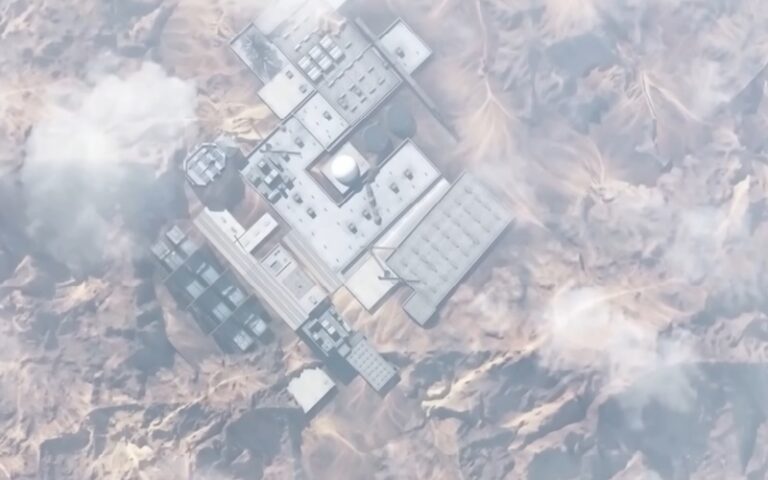
Ismail Baqaei, spokesperson for the Iranian regime’s Foreign Ministry, once again criticized the European Troika (France, Germany, and the United Kingdom) for triggering the “snapback” mechanism and reimposing United Nations sanctions, declaring that Iran’s regime currently has “no plans” to negotiate over its nuclear program. On Monday, October 6, Baqaei said in his press conference that the decision by France, Germany, and the United Kingdom “was not based on rational calculation but rather a stubborn act to fulfill the United States’ demand without considering their own interests and priorities.” He added that by activating the snapback mechanism, “the European Troika proved that diplomacy in this manner is not fruitful with them.” Baqaei also stressed that if diplomacy serves “Iran’s interests,” the regime “will not hesitate to use it.” On October 5, U.S. President Donald Trump warned that if Iran’s regime seeks to restart its nuclear program, the United States will “deal with that too.” In recent weeks, several media outlets and think tanks, citing satellite imagery, have reported that activity continues at the underground “Kolang Gazla” facility, where Iran’s regime is conducting extensive construction near the Natanz nuclear site.

Turkey’s reimposition of sanctions is “illegal”

The regime’s Foreign Ministry spokesperson further stated that Tehran believes the activation of the snapback mechanism “creates no obligation for UN member states to enforce sanctions.”
Iran’s Regime Increases Activity Near Natanz Enrichment Site
Baqaei described Turkey’s move to reimpose UN Security Council sanctions on Tehran as “unnecessary and illegal,” adding: “We call on all countries, especially neighboring and friendly ones, to refrain from implementing and giving effect to this illegal decision, which has been taken without observing due procedures.” He added that Iran’s regime “firmly adheres” to its “legal position” and will not allow “illegal precedents to gain legitimacy in the Security Council.” However, he did not mention what plans the regime has to confront the reinstatement of UN sanctions. On October 1, Ankara froze the assets of numerous individuals and entities linked to Iran’s regime’s nuclear activities.
Turkey Freezes Assets of Individuals and Entities Linked to Tehran’s Nuclear Activities

No IAEA inspectors are currently present in Iran

In his press conference, the regime’s Foreign Ministry spokesperson referred to the Cairo agreement between Tehran and the International Atomic Energy Agency (IAEA), saying that in light of recent developments, the understanding “undoubtedly has no effectiveness and cannot be implemented.” Baqaei added that currently no IAEA inspectors are present in Iran, and the last inspections were at least ten days ago at the Bushehr nuclear power plant, conducted under a contract related to Russia’s involvement in the facility. He emphasized that the regime’s future engagement with the IAEA will be determined by “higher authorities,” including the regime’s Supreme National Security Council. Earlier, on September 9, Iranian regime Foreign Minister Abbas Araghchi and IAEA Director General Rafael Grossi reached an agreement in Cairo on a new framework for continued cooperation between the two sides. However, on October 5, Araghchi announced that the Cairo agreement can “no longer serve as the basis” for cooperation between Tehran and the IAEA and that a “new decision” must be made regarding the matter.