United States Imposes New Sanctions On 18 Individuals and Entities Linked to Iran’s RegimeBloomberg added that Chery Automobile does not trade directly with Iran; instead, it sells parts and technology to another company in Anhui province, which then exports the semi-assembled cars to Iran. The report, citing informed sources, noted that U.S. and European sanctions against Iran target individuals and companies that use dollar or euro. Therefore, Chinese companies can legally trade with Iran as long as transactions are conducted in rials or yuan, without violating sanctions. Under Chinese law, trade with Iran remains legal. China’s Foreign Ministry told Bloomberg that it was unaware of such trade but stated that Beijing has always opposed illegal unilateral sanctions on principle. In its IPO prospectus in Hong Kong, Chery announced that it would end its cooperation with Iran and Cuba by the end of 2024 and intends to minimize its operations in Russia by 2027.
Beijing And Tehran Trade Car Parts for Copper and Zinc to Bypass Sanctions, according to Bloomberg
Bloomberg News reported that Chinese companies are trading car parts for Iranian metals such as copper and zinc — part of a new barter mechanism between Beijing and Tehran designed to circumvent Western sanctions.
On Monday, October 6, Bloomberg reported that car parts manufactured by companies in China’s Anhui province — including Chery and Tongling — are shipped to Iran in semi-assembled form, while China receives industrial metals from Iran in return.
According to the report, this barter is part of a complex network in which cars are exchanged for metals or even agricultural products such as cashews — a system designed to evade restrictions imposed by U.S. sanctions.
Foreign Ministry Spokesperson: Tehran Has No Plans for Talks with West For Now
Ismail Baqaei, spokesperson for the Iranian regime’s Foreign Ministry, once again criticized the European Troika (France, Germany, and the United Kingdom) for triggering the “snapback” mechanism and reimposing United Nations sanctions, declaring that Iran’s regime currently has “no plans” to negotiate over its nuclear program.
On Monday, October 6, Baqaei said in his press conference that the decision by France, Germany, and the United Kingdom “was not based on rational calculation but rather a stubborn act to fulfill the United States’ demand without considering their own interests and priorities.”
He added that by activating the snapback mechanism, “the European Troika proved that diplomacy in this manner is not fruitful with them.”
Baqaei also stressed that if diplomacy serves “Iran’s interests,” the regime “will not hesitate to use it.”
On October 5, U.S. President Donald Trump warned that if Iran’s regime seeks to restart its nuclear program, the United States will “deal with that too.”
In recent weeks, several media outlets and think tanks, citing satellite imagery, have reported that activity continues at the underground “Kolang Gazla” facility, where Iran’s regime is conducting extensive construction near the Natanz nuclear site.
Turkey’s reimposition of sanctions is “illegal”
The regime’s Foreign Ministry spokesperson further stated that Tehran believes the activation of the snapback mechanism “creates no obligation for UN member states to enforce sanctions.”Iran’s Regime Increases Activity Near Natanz Enrichment SiteBaqaei described Turkey’s move to reimpose UN Security Council sanctions on Tehran as “unnecessary and illegal,” adding: “We call on all countries, especially neighboring and friendly ones, to refrain from implementing and giving effect to this illegal decision, which has been taken without observing due procedures.” He added that Iran’s regime “firmly adheres” to its “legal position” and will not allow “illegal precedents to gain legitimacy in the Security Council.” However, he did not mention what plans the regime has to confront the reinstatement of UN sanctions. On October 1, Ankara froze the assets of numerous individuals and entities linked to Iran’s regime’s nuclear activities.
Turkey Freezes Assets of Individuals and Entities Linked to Tehran’s Nuclear Activities
No IAEA inspectors are currently present in Iran
In his press conference, the regime’s Foreign Ministry spokesperson referred to the Cairo agreement between Tehran and the International Atomic Energy Agency (IAEA), saying that in light of recent developments, the understanding “undoubtedly has no effectiveness and cannot be implemented.” Baqaei added that currently no IAEA inspectors are present in Iran, and the last inspections were at least ten days ago at the Bushehr nuclear power plant, conducted under a contract related to Russia’s involvement in the facility. He emphasized that the regime’s future engagement with the IAEA will be determined by “higher authorities,” including the regime’s Supreme National Security Council. Earlier, on September 9, Iranian regime Foreign Minister Abbas Araghchi and IAEA Director General Rafael Grossi reached an agreement in Cairo on a new framework for continued cooperation between the two sides. However, on October 5, Araghchi announced that the Cairo agreement can “no longer serve as the basis” for cooperation between Tehran and the IAEA and that a “new decision” must be made regarding the matter.Regime Supreme Court Upholds Death Sentence for Political Prisoner Mohammad Javad Vafai Thani
Babak Paknia, the lawyer representing Mohammad Javad Vafai Thani, announced that despite “numerous flaws,” his client’s death sentence was confirmed by Branch 9 of the Supreme Court.
Vafai Thani was sentenced to death on charges of “corruption on earth through arson and destruction of public property.”
On Saturday, October 4, Paknia posted on X that he had corresponded with Gholamhossein Mohseni Ejei, the head of Iran’s judiciary, regarding “procedural flaws and interference by third parties” in Vafai Thani’s case.
He added, “I hope before it’s too late, his special inspectors will intervene in the matter.”
The death sentence of the 29-year-old boxer had previously been overturned several times by the Supreme Court.
89 People Convicted for Participating in Iran’s November 2019 ProtestsIn June 2024, Paknia reported that Branch 9 of the Supreme Court had “not deemed the original verdict as definitive” and, while opposing the death sentence, had referred Vafai Thani’s case to another branch for retrial. Security forces arrested Vafai Thani in April 2020 in Mashhad following the bloody November 2019 protests and transferred him to Vakilabad Prison. About two years later, in January 2021, Vafai Thani was sentenced to death by the Revolutionary Court in Mashhad. The initial death verdict was overturned by the Supreme Court after appeal, and the case was referred to a parallel branch for reconsideration. In early November 2023, Branch 2 of the Mashhad Revolutionary Court again sentenced the protesting athlete to death, but this ruling was overturned for the second time by the Supreme Court on June 7, 2024. Earlier, human rights sources reported that since his arrest, Vafai Thani had been subjected to torture to extract forced confessions.
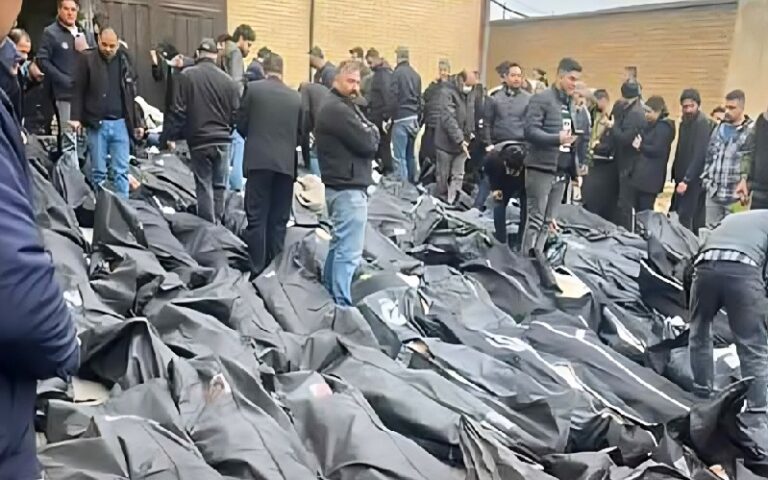
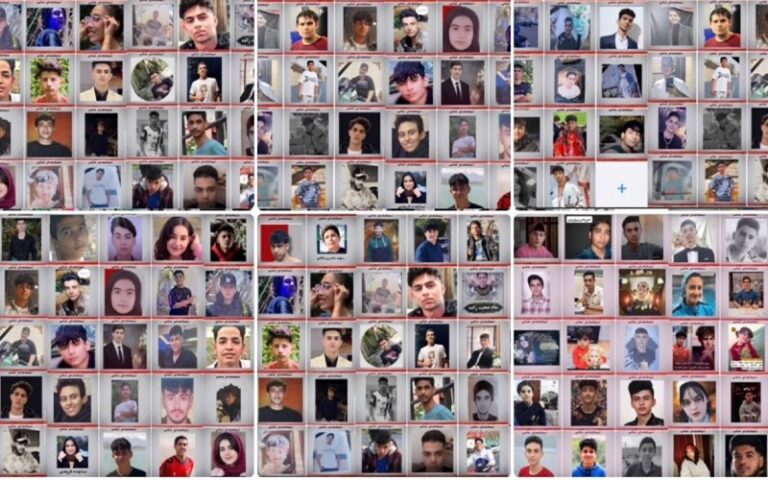
Iran: Political Prisoner Somayeh Rashidi Dies After Denial of Medical Care, Prisoners Commemorate Her LifeThe 2019 protests began on November 15, 2019, in response to a sudden hike in gasoline prices but quickly took on an anti-regime nature. Within a week, demonstrations against Iran’s regime spread across 29 provinces and hundreds of cities. At the time, some sources reported that about 1,500 people were killed during the regime’s crackdown on the protests. Security forces also arrested at least 8,600 people across different provinces. During the unfair judicial proceedings of the Iranian regime, some detainees were sentenced to long prison terms without access to a lawyer of their choice. Some detained protesters, including Vafai Thani, were sentenced to death without any credible evidence or proof recognized even by the regime’s own judicial authorities.
80% of Positions in Emergency Medicine Programs in Iran Remain Vacant
Ali Jafarian, deputy health minister of Iran’s regime, announced that more than 80% of the capacity in emergency medicine programs and one-third of anesthesiology positions at Iranian universities remain vacant and have no applicants.
On Sunday, October 5, he explained to the state-run ISNA news agency that over the past three years, based on a Ministry of Health decision, the capacity for specialized fields was supposed to increase by 12% annually. “We implemented this increase,” he said, “but since these fields have few applicants, the number of vacant seats continues to grow.”
According to Jafarian, in 2024 about 1,600 residency positions in Iranian universities remained unfilled. In the key field of anesthesiology, there are about 440 available positions, but only 110 residents were accepted, leaving 130 seats without students.
The deputy minister added that in emergency medicine, there are 400 available positions, but only 38 students were admitted. He said the same situation exists in other fields such as infectious diseases, internal medicine, and obstetrics and gynecology.
He stressed that “if we want to have specialists in different cities, we must reform the student admission process in universities.”
Concern over the shortage of physicians in Iran
The shortage of medical specialists in Iran has been repeatedly reflected in officials’ remarks and experts’ analyses in recent years, raising concerns about the future of the country’s healthcare system. The state-run Nournews website reported on September 18, citing official statistics from Iran’s Medical Council Organization, that about 29% of registered general practitioners in Iran are not practicing medicine.Iranian City Faces Shortage of Specialists in 48 Medical FieldsIn July 2025, Abbas-Ali Reyeskarmi, president of Tehran University of Medical Sciences, announced a decline in applicants for six specialized and subspecialized fields at the university, saying that “the lack of candidates in these core disciplines poses a challenge to Iran’s healthcare system.” Nournews also cited “centralization,” “geographical inequality,” and “unfair distribution of medical specialists” as other major challenges in Iran’s healthcare system. Relying on official data, it added that a significant portion—42%—of specialists are concentrated in five major cities, and in some specialties up to 60% of doctors work only in Tehran. The website also described the growing migration of general practitioners and specialists to European and North American countries as alarming, writing that “economic hardship, heavy workload, lack of job security, and uncertainty about the professional future” have caused especially young doctors to turn away from practicing in critical fields inside the country. On September 15, Shahin Akhoundzadeh, deputy minister for research and technology at the regime’s Ministry of Health, called meritocracy the most important factor in retaining talented individuals and revealed that “most of the top 100 university entrance exam scorers in medical sciences migrate because suitable employment conditions are not available in the country.”
Rising suicides among healthcare workers
In May 2024, Iraj Khosronia, president of the Iranian Society of Internal Medicine Specialists, warned health authorities about the consequences of creating difficulties for healthcare staff.Fivefold Increase in Chain Suicides in Iran’s Medical CommunityHe cited repeated suicides and the migration of doctors and nurses as consequences of the pressure imposed on the medical community. Khosronia stated that the medical community is in a state of “particular distress and turmoil,” adding that government officials and members of parliament “have not only forgotten the role of this group but have also continuously constrained healthcare workers through burdensome legislation, forcing them to either leave the medical field or emigrate.”
Iran: At Least 200 People Executed in September, Including 7 Political Prisoners
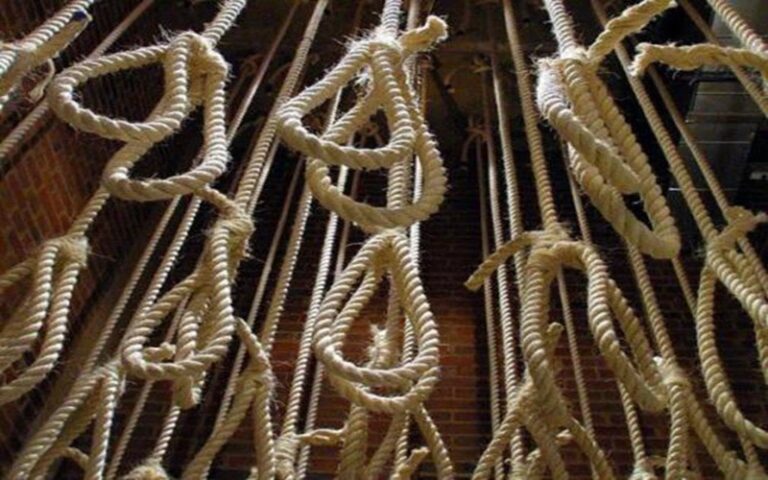
According to the National Council of Resistance of Iran (NCRI), Iran’s regime has carried out at least 200 executions in September, the highest number in 36 years.
Iran Human Rights Organization also reported on Friday, October 3, that “less than 6%” of the executions were announced in official media.
The Iran Human Rights Society also announced that 1,194 people have been executed by Iran’s regime in 2025.
These executions are unprecedented in the past 30 years.
Less than 7% of these verdicts were reported in domestic official sources.
Amnesty International also reported on September 27 that authorities of Iran’s regime executed more than 1,000 people in the first nine months of 2025—a figure representing the highest annual number of executions in the past 15 years.
According to Hengaw, at least “14 death sentences” were “carried out secretly, without notifying families and without a final visit.”
Hengaw also reported the execution of three political prisoners and two prisoners of conscience during the month and said that at least six women were executed in prisons across several provinces.
Many families and lawyers are unable to provide information due to security pressures or restricted access, and a large number of executions take place in silence or without fair trial standards.
Meanwhile, Mizan News Agency, affiliated with the judiciary of the regime, reported on Saturday, October 4, that Saman Mohammadi Khiyareh, a Kurdish political prisoner from Sanandaj, was executed. He had been imprisoned since 2009.
On the same day, Mizan News Agency reported the execution of six individuals in Khuzestan province on security-related charges. The names of these citizens were not published, placing these executions among “secret executions.”
Following the news, the Karun Human Rights Organization reported that the executed prisoners were Ali Mojdam, Moein Khanfari, Seyed Salem Mousavi, Mohammadreza Moghaddam, Adnan Alboushoukeh (Ghabishavi), and Habib Dris. They had been arrested in early 2019 and sentenced to death by the Revolutionary Court in Ahvaz.
Amnesty International had earlier issued a statement warning about the risk of their execution, emphasizing that the collective trial of these six individuals was completely unfair and that they were denied access to lawyers even during their court hearings.
Iran’s Regime Increases Activity Near Natanz Enrichment Site
The Institute for Science and International Security reported that new satellite images show the Iranian regime continues construction work at facilities located south of the Natanz uranium enrichment site, in a mountain known as Kolang. However, the precise nature of the nuclear-related activities at this facility remains unclear and is the subject of serious concern.
In its report published on Friday, October 3, the Institute added that these activities, observed since September 2025, appear to be in the final stages of construction and security reinforcement, and do not necessarily indicate an expansion or acceleration of nuclear activity.
The report emphasized that the analysis suggests these developments do not demonstrate a capability for the rapid reconstruction of damaged parts of the nuclear program.
The Washington Post also reported on Friday, September 28, citing satellite imagery and analysts’ assessments, that Iran’s regime continues to build a deeply buried military facility in the Kolang mountain area south of the Natanz nuclear site.
Turkey Freezes Assets of Individuals and Entities Linked to Tehran’s Nuclear ActivitiesThis area has drawn increased attention from observers following U.S. and Israeli attacks. The Washington Post report also emphasized that satellite imagery shows the Iranian regime has increased construction activity at the underground site in recent months. This trend suggests that the Iranian regime has not completely halted work on its nuclear weapons program and is likely cautiously rebuilding lost capacities. The project is being carried out at a site known as “Kolang Mountain,” where Iranian engineers have been tunneling into the Zagros Mountains since 2020, roughly 1.5 kilometers from Natanz. Earlier, in May 2025, the Institute for Science and International Security reported that the Iranian regime was constructing a new security perimeter with additional fencing around Kolang-Gazla mountain.
Background and Current Status
The Institute for Science and International Security, which has monitored this site since construction began in late 2020, had previously noted the depth and scale of the tunnels, the reinforced entrances, and additional security measures such as walls and fences built around the mountain. The report emphasized that as of June 2025, there was no evidence that these facilities had become operational, and recent activities confirm this assessment. According to the Institute, one reason for the absence of a direct airstrike on this site during the 12-day conflict could be this assessment, though the possibility of unconventional attacks cannot be ruled out.Eastern Entrance and Signs of Completed Excavation
The report also stated that satellite images from May to August show activity around the main eastern entrance of the tunnel—an entrance that has undergone the least stabilization work so far, with a continuous water flow suggesting possible geological problems in the area. According to the Institute, the Iranian regime is now focusing on completing this entrance. The changing shapes of the excavated soil mounds indicate that the work is aimed more at completing structures rather than expanding the tunnel.Reinforcement of 2007 Tunnel Facilities
According to the report, satellite imagery from August 10, 2025, provided by Maxar Technologies, shows that entrances to older tunnel facilities, built in 2007, have been reinforced with thick concrete and subsequently covered with soil. This measure is clearly intended to strengthen them against airstrikes or sabotage. The complex had been inactive for years but has gradually been reactivated over the past five years, with significant changes in its security fencing and the construction of new entrance extensions in the past two years. Some of these extensions may serve as storage or support facilities for tunnel operations. The report further notes that similar methods of reinforcing entrances were previously seen at the Fordow nuclear site, where, before the U.S. “Midnight Hammer” operation, air vents were protected with concrete walls. The Iranian regime’s subsequent move to add similar reinforcements at Natanz raises the question of whether it managed to transfer valuable materials—including enriched uranium stockpiles or nuclear equipment—to these facilities before the U.S. strikes. This concern intensified following June 18, 2025, satellite images showing a truck leaving the tunnel compound at around 9 a.m.Turkey Freezes Assets of Individuals and Entities Linked to Tehran’s Nuclear Activities
Turkey has frozen the assets of a large number of individuals and entities connected to the Iranian regime’s nuclear activities. This move came following the activation of the “snapback” mechanism and in coordination with United Nations sanctions aimed at pressuring Tehran over its nuclear program.
This decision, issued on Wednesday, October 1, by an executive decree from Turkish President Recep Tayyip Erdoğan, targets individuals and organizations involved in the Iranian regime’s nuclear development program, including shipping companies, energy firms, and research centers.
The move follows the reinstatement of United Nations sanctions. On Wednesday, Western powers including the United States, Canada, and the United Kingdom announced the reimposition of UN sanctions on Tehran, along with new sanctions targeting the Iranian regime’s nuclear and missile programs.
United States Imposes New Sanctions On 18 Individuals and Entities Linked to Iran’s Regime
Who is on Turkey’s blacklist?
The asset freeze in Turkey applies to individuals and companies across various sectors, including Iran’s nuclear facilities, shipping companies, energy firms, and research centers. Among the targeted entities are the Iranian regime’s Atomic Energy Organization, Bank Sepah, Bank Sepah International, the Isfahan Nuclear Fuel Research and Production Center, the Isfahan Nuclear Technology Center, the Karaj Nuclear Research Center, the Agricultural and Medical Nuclear Research Center, Iran–India Shipping Company, Novin Energy Company, Pars Tarash Company, Jaber ibn Hayan Company, Pioneer Energy Industries Company, and the Southern Iran Shipping Lines. The list of individuals whose assets have been frozen in Turkey includes Bahman Asgarpour, Mohammad Fadaei Ashiani, Abbas Rezaei Ashtiani, Haleh Bakhtiar, Morteza Behzad, Hossein Hosseini, and others. These sanctions by Turkey come as Iranian regime president Masoud Pezeshkian stated on Tuesday, September 30, that in response to the snapback mechanism and reinstatement of UN sanctions, the regime must prioritize “expanding trade with neighboring countries.”Return of sanctions following the snapback
In recent days, since the activation of the snapback mechanism, the United States and its allies have emphasized the reinstatement of United Nations sanctions. On Wednesday, October 1, Canada announced that it had reimposed United Nations sanctions against the Iranian regime following the activation of the snapback by three European countries, citing Tehran’s ongoing nuclear proliferation activities and violations of international commitments. The sanctions reimposed by Ottawa include broad bans on the export and import of nuclear, missile, and dual-use equipment; prohibitions on providing technical and financial assistance in these fields; a comprehensive arms embargo; and a ban on servicing Iranian ships. At the same time, the UK Foreign Office announced that under the snapback mechanism and reinstatement of UN sanctions, it had reapplied sanctions against 121 individuals and entities linked to the Iranian regime’s nuclear and missile programs. On Wednesday, the US Treasury Department also announced it had added 21 entities and 17 individuals linked to the Iranian regime’s weapons supply networks to its sanctions list. Even before the snapback, in July of this year, the US Treasury had announced sanctions on 22 companies and entities, including firms based in Turkey, for their role in evading sanctions and financing the Iranian regime’s oil sales in favor of the IRGC’s Quds Force.Unprecedented Surge in Foreign Exchange Rates in Iran as Result of Regime Policies
Iran’s foreign exchange market once again witnessed unprecedented turmoil, delivering a heavy blow to the regime’s fragile economy. On Wednesday, October 1, the US dollar rose to 1,142,000 rials, while the euro passed 1,341,600 rials, setting a new record. The Canadian dollar reached 838,200 rials, and the Emirati dirham climbed to 313,500 rials in the same surge. This rise in exchange rates has further plunged the rial into collapse, pushing household living conditions into a critical state. Soaring inflation, declining purchasing power, and rising living costs have placed Iranian families under unprecedented pressure.
The roots of the currency crisis: the regime’s destructive and treacherous policies
The surge in foreign exchange rates and the collapse of the rial are not random events but direct results of the regime’s ruinous policies, which critics say have stripped it of legitimacy. International sanctions, a sharp decline in oil revenues, and economic mismanagement have shaken the country’s financial foundations. Opaque monetary policies, irrational allocation of foreign currency reserves, and the absence of coherent economic planning have dragged the foreign exchange market into instability.Rising Dollar Rate and Stock Market Decline in IranMeanwhile, rising public demand for foreign currencies to safeguard assets against runaway inflation has created a vicious cycle of devaluation of the rial and uncontrolled price hikes.
Social consequences: public anger and a prelude to uprisings
The economic pressures caused by the collapse of the rial and the surge in exchange rates are not limited to livelihoods; this crisis has pushed public anger and discontent to a boiling point. The regime’s ineffective policies, which have placed the entire burden of the crisis on the people, have completely eroded public trust. Popular uprisings and widespread protests are clear signs of the downfall and deadlock of a ruling power that, many believe, has no path forward except collapse. Reform within this system, as critics say, is like “trying to fish in the arid desert”—an impossible and futile task.A future in uncertainty: a downfall beyond the economy
As long as current policies continue, the collapse of the rial and the surge in exchange rates will only remain part of a broader crisis. This trajectory has not only paralyzed Iran’s economy but also undermined the foundations of the regime. With growing protests and mounting social pressures, the path ahead for Khamenei’s rule is moving toward total overthrow. The only way out of these crises is fundamental change. For this structure, no future other than collapse is conceivable.Some Iranian Cities Can’t Afford Firefighting Uniforms
Ghodratollah Mohammadi, CEO of Tehran’s Fire Department and head of the Firefighters’ Task Force, announced that due to severe economic problems, some cities in Iran do not even have enough funds to purchase firefighting uniforms.
On Monday, September 29, Mohammadi said: “One firefighting uniform now costs 3 million rials (about $2,730). Some cities cannot even afford to buy firefighting uniforms and are really struggling to pay their [employees’] salaries.”
He called for firefighting shortages to be addressed through the national budget and added: “A large portion of firefighting equipment is imported, and customs exemptions for rescue equipment need to be considered.”
This is not the first time firefighters have protested shortages of equipment and livelihood hardships.
These problems have become particularly evident during crises such as forest fires or building accidents.
Experts say mismanagement, flawed domestic and foreign policies, and the squandering of national resources have led to much of Iran’s budget being spent on the regime’s nuclear and missile programs as well as support for proxy groups in the region, while insufficient attention is given to strengthening civilian infrastructure and public services such as firefighting.
Exhausted forces, worn-out equipment, and a shortage of 3,000 vehicles
The state-run news website Rokna, in a report marking September 29 as Firefighting and Safety Day in Iran, listed “a shortage of nearly 3,000 vehicles, outdated equipment over 25 years old, a lack of specialized personnel, and the absence of basic facilities” as the main challenges facing firefighting in the country. The report stated: “Many stations in small towns do not even have a single working fire hydrant. In industrial towns, villages, and dilapidated urban areas, a small incident can turn into a disaster, because firefighters must travel tens of kilometers with outdated vehicles to reach the scene.” Rokna warned that in the event of an earthquake similar to the devastating 2003 Bam earthquake, no city in Iran would “have the ability to cope,” and in such a situation, firefighters themselves, already facing shortages of equipment and resources, would be the first victims. The outlet also pointed to the “transfer of non-specialized personnel from other departments and high physical strain” in the firefighting profession, adding that firefighters are forced to “save lives with tired bodies and minds, under conditions where international standards are not observed.” In May, media outlets reported that one of the reasons for the slow firefighting operations at Rajaei Port was the poor state of firefighting facilities in the area, to the extent that in some cases there wasn’t even a bulldozer available to build embankments.Silent Execution of Political Prisoners in Iran: Death Under Medical Deprivation
The death of Somayeh Rashidi, a jailed laborer in Qarchak Prison in Varamin, once again highlighted the longstanding issue of medical deprivation in Iran’s prisons. Reviewing past cases shows that these deaths are not exceptional events but part of a systematic pattern that for decades has claimed the lives of political prisoners.
Prisons under Iran’s regime, since their very inception, have not merely served as places for enforcing judicial rulings but have also been used as tools for social control and silencing dissent.
Political opponents and critics, journalists, labor and religious activists, and even ordinary citizens who merely joined street protests or were convicted of other charges are kept in prisons where the conditions go far beyond deprivation of liberty.
In these prisons, the health of prisoners is not only neglected but deliberately ignored.
Medical deprivation, as part of a suppression strategy, can include delays in hospital transfers, confiscation of medicine sent by families, or restrictions on access to specialists. Under such conditions, sick prisoners are effectively exposed to a “gradual death,” which human rights literature refers to as “silent execution.”
Medical deprivation as white torture
Denying sick prisoners proper medical care goes beyond negligence or bureaucratic disorder. UN human rights experts consider this practice equivalent to torture. Sometimes prisoners must sign pledges or even give televised confessions in order to receive medical permission. Families send medicine, but it either never reaches the prisoner or arrives after long delays. This situation exposes prisoners to a slow death. They grow weaker each day as their hope for survival diminishes. In many cases, by the time permission for hospital transfer is finally granted, it is too late for treatment to be effective.Reactions and the regime’s lack of accountability
Families of the victims have repeatedly raised their voices in protest, but they are often met with threats and security pressure. International bodies, including Amnesty International and Human Rights Watch, have repeatedly issued statements, but Iran’s regime has never held any judicial or prison official accountable for these deaths. Even in cases such as Sattar Beheshti or Behnam Mahjoubi, which drew global attention, the cases were eventually closed and the officials acquitted.Somayeh Rashidi: the latest victim
The death of Somayeh Rashidi, a jailed laborer in Qarchak Prison, is a telling example. She suffered from illness for a long time, but prison authorities refused to transfer her to a hospital in time.Iran: Political Prisoner Somayeh Rashidi Dies After Denial of Medical Care, Prisoners Commemorate Her LifeOnly when her condition became critical and she fell into a coma was she transferred to a hospital. But the delayed transfer was useless, and on September 25, her death was officially announced. Human rights activists have emphasized that Rashidi’s death was not merely an “incident,” but a clear example of the policy of medical deprivation. As many describe it, she was the victim of a “deliberate slow killing.” Rashidi’s memory quickly turned into yet another symbol of structural oppression in Iran’s prisons. In the past year alone, about 30 prisoners have died in Greater Tehran Prison due to lack of doctors and medical facilities. This number is shocking on its own, but examining the details provides a fuller picture of the crisis. Ward 5 of Greater Tehran Prison is particularly in crisis. Overcrowding, lack of space, and absence of social services have forced many prisoners to live in inhumane conditions. Some do not even have beds to sleep on and spend nights on the floor or in hallways. The prison clinic lacks specialized equipment and permanent doctors, and any transfer to an outside hospital requires security permits that are often either denied or severely delayed. In just a short span between September 12 and 25, at least five other prisoners died in various prisons, including Qarchak (Varamin), Kachuei (Karaj), and Yazd. Among these victims were four women, which once again drew public attention to the plight of female prisoners. No independent supervisory body exists over prisons. A culture of impunity dominates: no guard or official fears prosecution for prisoner deaths and ultimately medical deprivation has itself become a tool of political pressure and intimidation. The death of political prisoners is not just an individual tragedy. These deaths carry broader consequences for society. The regime creates public fear, showing that even if it does not directly kill someone, it can condemn them to a slow death. These deaths are the product of a system where medical deprivation has become a tool of repression. Yet experience has shown that the deaths of these prisoners have not silenced voices but have instead strengthened symbols of resistance.