17 Prisoners Executed in Iran in One Day

According to the latest reports, the number of executions since September 23 has reached 46 prisoners. This means that more than six people are executed every day in Iran, or one prisoner every four hours. On Monday, September 29, 2025, the Iran Human Rights Society reported that 17 prisoners were executed in the prisons of Qom, Isfahan, Semnan, Yasuj, Sari, Bam, Shiraz, Khorramabad, and Malayer. Including the execution of Bahman Choobi Asl in Ghezel Hesar Prison, the total number of executed prisoners since September 23 has reached 46.

Three Executions in Qom Prison

On the morning of Monday, September 29, three prisoners were executed in Qom Prison. Their identities are as follows:
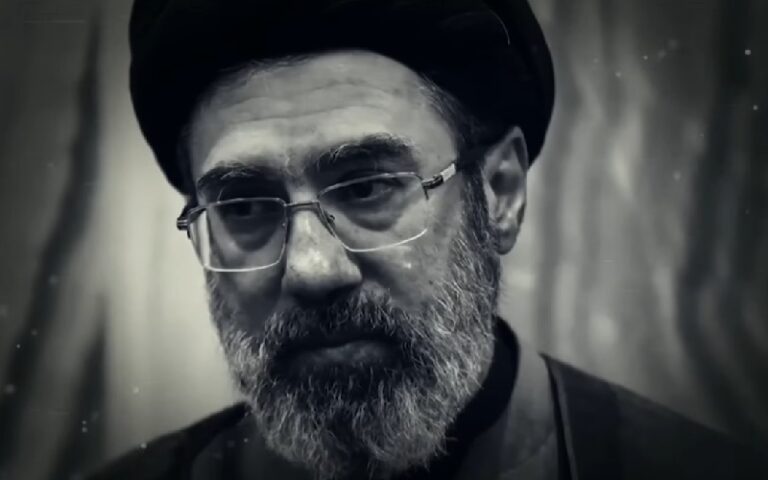
Iran’s Regime Executes Bahman Choobi Asl, Uses Gallows as Tool for Political Survival
Kamal Almasi, 38, from Saveh, who had been arrested three years ago on drug-related charges and sentenced to death. Morad Jafar Beigi, 31, from Qom, who had been arrested four years ago on drug-related charges. Samad Rezapanah, 40, from Karaj, convicted on drug-related charges.

Two Executions in Dastgerd Prison, Isfahan

At dawn on Monday, September 29, two prisoners were executed in Dastgerd Prison, Isfahan. Their identities are: Milad Kiani, from Minadasht, Falavarjan, convicted of murder. Behnam Mirahmadi, from Isfahan, convicted on drug-related charges. Execution of Yaser Bakhshi in Semnan Prison On the morning of Monday, September 29, Yaser Bakhshi was executed in Semnan Prison. He was convicted on drug-related charges. Execution of Salahuddin Aghamohammadi in Yasuj On Sunday morning, September 28, Salahuddin Aghamohammadi was executed in Yasuj Prison. He was 40 years old, a father of a young child, and a resident of Yasuj. He had been arrested four years earlier on drug-related charges and sentenced to death. Execution of Ali and Saman Samsari in Sari Prison At dawn on Sunday, September 28, Ali Samsari, 29, and Saman Samsari, 26, were executed in Sari Prison. The two prisoners, who were related, were convicted of murder in a joint case. Execution of Aziz Ghorbanifar in Bam Prison On Sunday morning, September 28, Aziz Ghorbanifar, 30, from Khonak village in Khafr county, Fars province, was executed in Bam Prison. He had previously been arrested on drug-related charges and sentenced to death.

Three Executions in Adelabad Prison, Shiraz

On Sunday morning, September 28, four prisoners were executed in Adelabad Prison, Shiraz. Their identities are: Mehran Sahraei, 30, from Isfahan, who had been arrested five years ago on murder charges and sentenced to death. Ghodrat Dehghani, from Shiraz, arrested four years ago on drug-related charges and sentenced to death. Manouchehr Shahbazi, 33, from Kazerun, arrested four years ago on murder charges. On the same day, another prisoner named Esmail Rahimitabar was also executed in Adelabad Prison, Shiraz, as previously reported by the Iran Human Rights Society. Execution of Ghodrat Nazari in Khorramabad Prison On Saturday morning, September 27, Ghodrat Nazari, 46, from Khorramabad, was executed in Khorramabad Prison. He had been arrested eight years ago on murder charges and sentenced to death. On the same day, two other prisoners named Mehdi Veysi and Younes Ahmadi were also executed in Khorramabad Prison. Execution of Mostafa Kadkhodaei in Dastgerd Prison, Isfahan On Saturday morning, September 27, Mostafa Kadkhodaei, from Kerman, was executed in Dastgerd Prison, Isfahan. He was convicted on drug-related charges. Execution of Hossein Ahmadvand and Mehran Biranvand in Malayer Prison

Two prisoners were executed in Malayer Prison

At dawn on Saturday, September 27, Mehran Biranvand was executed in Malayer Prison on murder charges. On Wednesday morning, September 24, Hossein Ahmadvand, 56, from Malayer, was executed in Malayer Prison. He had been arrested two years ago on murder charges and sentenced to death. According to the Iran Human Rights Society, the Iranian regime has executed 1,166 people in 2025.

Workers, Retirees, Employees, Farmers, And Drivers Hold Protest Rallies In Various Cities of Iran

With the Iranian regime’s continued inability to address the demands of different professional groups, a number of workers, retirees, employees, farmers, bakers, and drivers held protest gatherings in several cities across Iran. Videos posted on social media show that the official employees of the South Pars Gas Complex held a protest on Monday, September 29. The protesters objected to not receiving their full salaries and benefits. On the same day, protesting workers of the Iran National Steel Industrial Group also gathered in front of the Khuzestan provincial governor’s office. They continued their protest march—under the heavy presence of security forces—by moving toward the Ahvaz governor’s office and then the National Bank of Khuzestan headquarters. The Iran Steel workers have staged multiple protests over the past two weeks, stating that despite repeated visits and ongoing protests, they have not received any effective response from the employer or Khuzestan officials.
 Iranian Steel and Contract Workers Hold Protest Gatherings
They are demanding payment of overdue wages, the reopening of suspended production lines, and proper supplementary health insurance. The protesters also objected to the sudden and unjustified reduction of overtime pay, the cancellation of meal provisions, and the exclusion of their work from being classified as hazardous and strenuous for retirement calculations. Mounting economic pressure on workers, retirees, and pensioners has significantly increased the number of labor-related protests in recent years.

Large protest by retirees

Videos circulating on social media show that retirees in Fars province held a protest in Shiraz on Monday, September 29. Telecommunications retirees also continued their series of protests on September 29 in the cities of Isfahan, Ahvaz, Babol, Bijar, Tabriz, Tehran, Zanjan, Sanandaj, Kermanshah, Marivan, and Hamedan. These retirees protested against professional hardships and the government’s failure to implement regulations related to supplementary health insurance services. A call was also issued for a protest by military, state, social security, healthcare, telecommunications, and other pensioners in Kermanshah province on Tuesday, September 30. On September 29, owners of old and worn-out vans in Mashhad also held a protest. On the same day, a number of bakers in Isfahan staged a protest in front of the provincial governor’s office against the non-payment of bread subsidies. The protesting bakers said that no subsidies had been deposited into their accounts since July, and given the rising costs of production, it is no longer possible for them to continue operating. On September 29, a group of farmers gathered in front of the Khuzestan provincial governor’s office, protesting water shortages and the damages resulting from them.

Education Stratified with Decline in Quality of Iran’s Public Schools

The state-run Etemad daily, in a report comparing public and private schools, wrote that non-profit private schools have been successful due to recruiting experienced teachers and offering visible facilities, while public schools, on the other hand, have lost their appeal because of declining educational quality. According to Etemad, this trend has further weakened public schools and strengthened the risk of a “two-tier” education system. As a result, low-income families lose equal access to quality education, and the educational inequality gap deepens.
Educational Disaster in Iran: 70% of Students Suffering from Learning Poverty
The newspaper added that, according to the deputy minister of education, the minimum tuition for private elementary schools outside Tehran is between 192 to 530 million rials (Approximately $175 to 482). In Tehran (excluding extracurricular programs), the minimum tuition is about 300 million rials (Approximately $273) for elementary, 360 million rials (Approximately $327) for lower secondary, 370 million rials (Approximately $336) for upper secondary, and for some specialized fields up to 520 million rials (Approximately $473). Meanwhile, the minimum monthly wage of a worker with two children, including benefits, hardly reaches $180, and 60% of workers are forced to have a second job. However, the newspaper’s field report shows that some schools charge much higher fees: for example, 2.6 billion rials (Approximately $2,364) in District One (elementary), 2.05 billion rials (Approximately $1,864) in District Two, and amounts of 1.8 billion and 1.5 billion rials (Approximately $1,636 and $1,363) in other districts. In addition, in many schools’ tuition fees for the new academic year have increased by between 40% and 70%, and in some cases, schools have even exceeded the official ceiling (a maximum of 1.45 billion rials or $1,318).

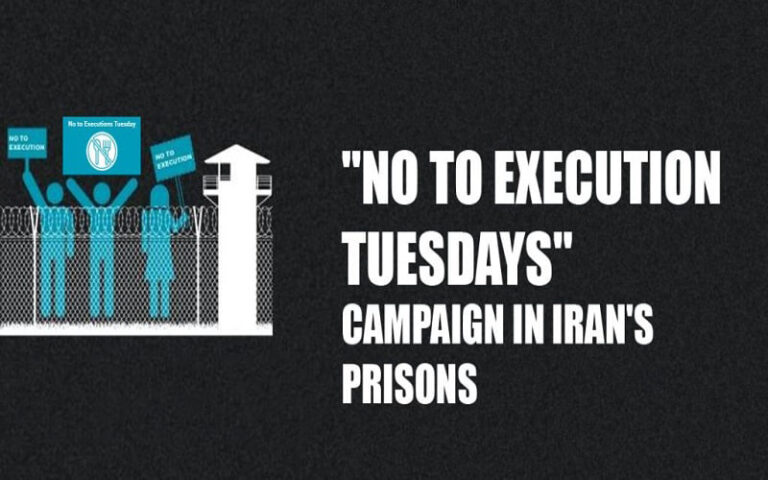
88th Week of ‘No To Execution Tuesdays’ Campaign in 52 Prisons Across Iran

0
Political prisoners in 52 prisons across Iran went on hunger strike as part of the “No To Execution Tuesdays” campaign. This protest action is aimed at opposing the massive wave of executions, the issuance of new death sentences, and demanding the abolition of the death penalty. This hunger strike comes at a time when shocking news has recently emerged from Iran’s prisons: the death of political prisoner Somayeh Rashidi in Qarchak Prison due to medical neglect, the execution of Bahman Choobi Asl on charges of espionage, the issuance of death sentences for Hamed Validi and Nima Shahi, and the confirmation of Peyman Farahavar’s death sentence. Alongside these, a United Nations report and the unprecedented figure of 871 executions in the past six months paint a horrific picture of widespread human rights violations in Iran.
Iran: Political Prisoner Somayeh Rashidi Dies After Denial of Medical Care, Prisoners Commemorate Her Life
The statement of the prisoners participating in the 88th week of the “No To Execution Tuesdays” campaign is as follows:

“The 88th week of the ‘No To Execution Tuesdays’ campaign in 52 prisons

This week we once again stand with deep sorrow and endless solidarity in memory of Somayeh Rashidi, a political prisoner who lost her life due to lack of medical care. Her tragic death is part of the policy of ‘slow-killing’ prisoners and a bitter warning about the condition of sick inmates in the country’s prisons—prisoners deprived of the most basic human rights. Members of the ‘No To Execution Tuesdays’ campaign express their heartfelt sympathy with her family and friends. “At the same time, the execution of Bahman Choobi Asl on espionage charges in a vague process on September 29, the death sentences for two political prisoners, Hamed Validi and Nima Shahi, in the Karaj Revolutionary Court, and the confirmation of Peyman Farahavar’s death sentence by the Supreme Court, all indicate the continuation of a troubling trend of repression and violence against the people of Iran and prisoners. These unjust rulings are a blatant violation of human rights and a tool of repression that must be stopped immediately. “In this regard, the position of Ms. Mai Sato, the UN Special Rapporteur on human rights in Iran, once again drew the world’s attention to the disastrous state of Iran’s prisons. The statistics—46 executions in the past week, 190 executions between August 23 and September 23, unprecedented in the past 35 years, and 871 executions in the past six months—paint a horrifying picture of the ruthless violation of human rights. “The ‘No To Execution Tuesdays’ campaign, while condemning these crimes, once again demands the immediate halt of death sentences and an end to this inhumane process. Our voice is a cry of solidarity with all prisoners trapped in oppression and injustice. As before, while thanking all campaign supporters around the world, we emphasize that the execution machine can be stopped through solidarity and unity. “Every protest against a death sentence is a step toward halting this cruel process. We call on all opponents of the death penalty to raise their voices against these inhumane rulings.” On Tuesday, September 30, 2025, members of the “No To Execution Tuesdays” campaign, in its 88th week, went on hunger strike in 52 prisons across the country.

Iran’s Regime Executes Bahman Choobi Asl, Uses Gallows as Tool for Political Survival

At dawn on Monday, September 29, the state-run Mizan news agency, affiliated with the Iranian regime’s judiciary, reported the execution of Bahman Choobi Asl in Ghezel Hesar Prison on charges of espionage. He was an employee of the Telecommunications Company. He had been arrested in 2023 on espionage charges.

Escalation of executions after the ceasefire

The execution of Bahman Choobi Asl took place amid reports showing that following the recent ceasefire between Iran’s regime and Israel, a wave of executions in Iran’s prisons has intensified. Independent sources say the regime has once again turned to the policy of “demonstrating power through the gallows” by exploiting this seemingly calm atmosphere. In recent months, dozens of prisoners have been executed in various prisons across the country, including Ghezel Hesar, Adelabad in Shiraz, and Dastgerd in Isfahan.
More Than 1000 Executions in Iran Over Past Nine Months
According to human rights activists, this sudden increase in executions is not aimed at delivering justice but at creating an atmosphere of fear and preventing social protests. The experience of recent years has shown that whenever signs of public discontent or political crises appear, the regime tries to keep society under control by raising the number of executions.

Execution as a political tool

Cases like that of Bahman Choobi Asl are only one example of the broader policy of using executions as a tool. Experts say that charges such as “espionage,” “enmity against God” (moharebeh), or “corruption on earth” are repeatedly used to instill fear and suppress society. In many cases, there is no transparency regarding the judicial process, and families are not informed of the date or location of the execution until the very last moment. This practice has not only destroyed judicial security for citizens but also shows that in Iran, execution has been transformed from a judicial instrument into a political and security tool for systematic repression. International organizations have repeatedly stressed that Iran has one of the highest execution rates in the world. According to these bodies, the continuation of such practices not only violates Iran’s international obligations but also shows that the regime has no intention of reforming its criminal laws or moving toward justice.

Outlook for the future

The execution of Bahman Choobi Asl, regardless of the specifics of his case, reflects the regime’s general policy of using the death penalty as a means of political survival. However, this policy cannot suppress protests and public anger forever. With increasing economic pressures, social inequality, and human rights violations, the people’s tolerance threshold is dropping day by day, raising the likelihood of a new wave of protests in the near future.

Iranian Regime Leadership Faces Existential Crisis Amid Nuclear Deadlock

The leaders of Iran’s regime are experiencing one of the most serious crises since the 1979 revolution. According to Reuters, this crisis is caused on the one hand by growing public discontent inside the country and on the other by the deadlock in nuclear negotiations—a situation that has further isolated and divided Iran. On September 27, the United Nations reimposed sanctions on Iran’s regime that had been suspended under the 2015 nuclear deal. This action came after the failure of intense negotiations between the Iranian regime and three European countries—Britain, France, and Germany—held in New York on the sidelines of the UN General Assembly. Four Iranian officials and two informed individuals told Reuters that without progress in the talks, Iran’s economic isolation will intensify and fuel public anger. However, they added that accepting Western demands could also deepen rifts within the ruling structure and force a retreat from the regime’s ideological belief of “never surrendering to Western pressure.”
UN Snapback Sanctions Imposed on Iran’s Regime 10 Years After JCPOA
In reaction, Abbas Goudarzi, spokesperson for the presidium of the regime’s parliament (Majlis), announced that withdrawal from the Nuclear Non-Proliferation Treaty (NPT) and pursuing the building of an atomic bomb are being considered under the supervision of the National Security Commission and in coordination with other regime institutions.

Concerns over possible Israeli attacks

The mullahs’ rule in Iran is trapped in a severe dilemma. The very existence of the regime is at risk. People can no longer endure more economic pressure or another war. These concerns have escalated with the possibility of new Israeli attacks on Iran’s nuclear facilities if nuclear diplomacy fails. In June, just one day before a new round of planned negotiations with the United States, Israeli airstrikes followed by three U.S. strikes on Iranian nuclear facilities shocked Tehran and led to a 12-day war. U.S. President Donald Trump and Israeli Prime Minister Benjamin Netanyahu have warned that if uranium enrichment resumes, they will strike Iran again.

Sanctions and doubts in Tehran

On August 28, the three European countries triggered the “snapback” mechanism and accused the Iranian regime of violating the 2015 agreement. The return of sanctions was implemented after unsuccessful attempts to delay it during the UN General Assembly. Officials of the regime have said these sanctions will push them toward adopting a tougher stance in the nuclear file. However, analysts believe the threat of Israeli strikes has tied Tehran’s hands. Nevertheless, Hossein Shariatmadari, representative of regime supreme leader Ali Khamenei in Kayhan, the regime’s main state-run daily, wrote: “Now that the officials are not willing to withdraw from the NPT, the parliament should pass a triple-urgency bill to bar the IAEA inspectors.” According to sources, disagreements among ruling elites on how to manage the crisis have increased. Some demand a tougher stance, while others warn that such an approach could accelerate the regime’s collapse. Meanwhile, with the revival of Trump’s “maximum pressure” campaign, some decision-makers in Tehran believe that “maintaining the status quo—no war, no deal, and continued negotiations—is the best option.” UN sanctions further restrict Iran’s trade. These sanctions include severe restrictions on oil exports, the banking and financial sectors, an arms embargo, a ban on uranium enrichment and reprocessing, limits on missile activities, asset freezes, and travel bans on Iranian officials.

Public anger and economic pressure

Alongside these challenges, public dissatisfaction over economic problems is also increasing. The official inflation rate is announced at about 40%, but some estimates put it at more than 50%. Domestic media have reported a sharp rise in the prices of food, housing, and public services. An elementary school teacher in Tehran told Reuters: “We are already struggling to make ends meet. More sanctions mean more economic pressure. How are we supposed to survive?” The leaders of Iran’s regime fear that this public dissatisfaction could turn into widespread protests and further weaken their position both domestically and internationally. So far, the regime has managed to avoid complete economic collapse with the help of China, its main oil buyer, but with the return of UN sanctions, the future of Iran’s oil exports and foreign trade is facing even greater uncertainty.

Runaway Inflation and Soaring Prices of Essential Goods Have Brought Workers’ Livelihoods to a Dead End

The state-run ILNA news agency, referring to the sharp rise in Iran’s inflation rate, reported that under current conditions, working-class families need a monthly income of 500 million rials to survive. On Monday, September 29, ILNA wrote that “while government officials keep preaching frugality to the people and workers, prices are rising weekly and even daily; no law or decree can stop the relentless speed of the inflation train.” The news agency added that the price of one kilogram of red meat has surpassed 10 million rials (around $10), and a family of four with a monthly income of 200 million rials (around $180) must spend nearly one-quarter of its salary just to afford one kilogram of red meat per person each month.
Warnings About a Wave of Worker Layoffs in Iran Intensify as Industrial Power Outages Continue
ILNA also pointed to the “daily” increase in dairy prices and reported that bread, described as “the simplest item on people’s tables,” had risen by about 95% in September compared to the same period in 2024. In recent weeks, runaway inflation and the rise in foreign currency exchange rates have fueled concerns over the worsening economic situation in Iran—a trend that has intensified following the activation of the snapback mechanism and the return of UN sanctions. On September 27, Iran’s Statistics Center announced that the annual inflation rate for September was 37.5%, point-to-point inflation was 45.3%, and the monthly inflation rate was 3.8%. Experts believe that the announced inflation rates, due to the weighting methods used by the Statistics Center for consumer groups, do not reflect the real market situation, and the actual level of inflation is higher than the official figures.

Criticism of the government’s opposition to raising workers’ wages

ILNA further wrote: “When food items have increased by 57.9% in September and the price of bread has nearly doubled since the beginning of the year, why has the minimum wage of workers, which is supposed to be the sole means of supporting a family, remained fixed and frozen?” The agency added that the minimum wage for workers, even including benefits, is about 200 million rials, which with an exchange rate of 110,000 rials per dollar equals about $180 per month—equivalent to just one day’s wage in countries where the hourly minimum wage is $20 to $25. Faramarz Tofighi, a labor activist, in an interview with ILNA, criticized the government of regime president Masoud Pezeshkian for opposing wage increases, saying: “We should no longer talk about point-to-point inflation; we need an index called daily inflation. But why, under these circumstances, are the labor minister and the government talking about a ban on adjusting wages?” As a result of the Iranian regime’s failed economic, domestic, and foreign policies over the past decades, rising inflation has severely impacted citizens’ lives, especially the low-income classes, while the prices of essential goods have seen unprecedented surges. Somayeh Golpour, head of the Federation of Labor Associations, warned on September 29 that due to declining purchasing power and wages being far below real inflation, having multiple jobs has become both a “habit and necessity” for most workers. She pointed to the sharp rise in housing, commuting, children’s education, food, and healthcare costs, adding that currently 60% of workers hold more than one job.

Iran’s Regime Sentences Political Prisoners to Death Under False Charges of Cooperation with Mossad

At the same time as the activation of United Nations sanctions, the Iranian regime’s judiciary used its repetitive trick of linking opposition members to Israel, sentencing two political prisoners to death and two others to a total of 26 years in prison. The head of the judiciary in Alborz Province, without naming names, announced: “The preliminary ruling in the case of a four-member spy network linked to Mossad and the Monafeqin [the regime’s derogatory term for the MEK opposition] in Karaj has been issued, and the court sentenced two defendants to death and imprisonment, and two other defendants to prison… the total prison term handed down to the defendants exceeds 26 years.” (Mizan News Agency, September 27)
Nine Months of Uncertainty for Four Political Prisoners in Iran
The names of those arrested in May 2025, one month before the 12-day war, had already been submitted by the National Council of Resistance of Iran (NCRI) to the United Nations and human rights organizations. Hamed Validi, a 45-year-old civil engineer, and Nima Shahi, a 38-year-old technical worker from Karaj, were arrested on May 13 in Tehran along with their relatives and subjected to interrogation and torture. Any claim of their connection to Mossad is outright false and reflects the regime’s desperation and its severe need to fabricate such lies against its opposition. On May 27, the Iran Human Rights Society announced that more than 20 days after the simultaneous arrest of 15-year-old Elina Validi along with her parents, Hamed Validi and Fatemeh, the Validi family still had no information about the fate or whereabouts of the teenager. Elina’s mother, Fatemeh, is being held in inhumane conditions in quarantine at Fardis Prison in Karaj and is deprived of the basic rights of a prisoner, including phone calls, family visits, and access to financial and hygienic facilities. In this regard, the National Council of Resistance of Iran (NCRI) issued a statement, in which it called on “the High Commissioner, the Human Rights Council, the United Nations Special Rapporteur on Iran, the International Fact-Finding Mission, and other human rights bodies to take immediate action to save the lives of political prisoners Hamed Validi and Nima Shahi and to refer this case to the International Fact-Finding Mission.”

New Restrictions Imposed on the Cryptocurrency Market in Iran

At the same time as the Central Bank of Iran’s regime imposed widespread restrictions on the cryptocurrency market in response to the reactivation of the snapback mechanism (triggering of UN sanctions), Tasnim News Agency, affiliated with the Islamic Revolutionary Guard Corps (IRGC), warned about the possibility of Tether freezing Iranians’ assets. This report may have been published to exert psychological pressure on investors. On Sunday, September 28, Tasnim wrote that Tether might “with intensified restrictions or stricter compliance with sanctioning regimes, put part of domestic investors’ capital at risk of being frozen.” The agency added that Tether’s data shows that so far “thousands of accounts” belonging to Iranian users have been blocked.
All Engines of Iran’s Economic Growth Have Stopped Working
It does not appear that Tasnim’s report contained new information, as the issue of blocking cryptocurrency accounts suspected of being linked to Iran has been raised for years. On September 27, just hours before the official reinstatement of UN sanctions, the Central Bank of Iran’s regime announced a new directive restricting the purchase and holding of stablecoins such as Tether. Asghar Abolhasani, the deputy governor of the Central Bank, stated that the maximum annual purchase of stablecoins for each individual or legal entity is $5,000, and users will only be allowed to hold up to $10,000 worth of stablecoins in their balance. He warned those holding more than $10,000 worth of stablecoins that they must comply with the Central Bank’s ceiling within the next month. This measure is seen as an attempt to mitigate the effects of the return of international sanctions on Iran’s economy. This comes while regime officials in recent weeks have tried to downplay the impact of the activation of the snapback mechanism on developments in Iran. On July 20, the daily bulletin of the IRGC’s political bureau, predicting the activation of the snapback mechanism, called for “psychological preparation of society” to deal with the economic shock resulting from the return of sanctions. Part of that bulletin stated: “Oversight and transparency of digital exchanges and cryptocurrencies are essential. In the absence of regulations, this sector has become a gateway for capital flight and increased currency tensions.” In recent years, Iran’s regime security and military institutions have widely entered the cryptocurrency market. On June 18, during the hack of the “Nobitex” exchange, it was revealed that at least $90 million belonging to these institutions had been wiped out. According to reports, the attackers were able to distinguish assets belonging to the regime’s affiliated networks from those of ordinary customers.

Nine Months of Uncertainty for Four Political Prisoners in Iran

In late January 2025, Bijan Kazemi, Arghavan Fallahi, Amirhossein Akbari-Monfared, and Mohammad Ali Akbari-Monfared were each separately arrested, but a common scenario by Iran’s regime security apparatus linked them together: the killing of two senior judges of the Supreme Court, Mohammad Moghiseh and Ali Razini, who were reportedly shot in their offices at the Supreme Court building by a janitor on the morning of Saturday, January 18, 2025. For over eight months, these citizens have remained in limbo without any evidence, documentation, or even confessions. Recently, Bijan Kazemi’s hunger strike forced the authorities to transfer him from a safe house in Qom to Ward 7, Hall 1 of Evin Prison.
Maryam Akbari Monfared Faces Paralysis as Iranian Regime Blocks Treatment
Bijan Kazemi, a 44-year-old citizen from Kuhdasht, had previously been arrested in his hometown in 2020 and sentenced by the Revolutionary Court to three and a half years in prison on stereotypical charges. He served two years of this sentence in Khorramabad Prison, one of Iran’s most deprived facilities, before completing the rest under electronic monitoring outside prison. On January 19, just one day after the killing of the notorious Supreme Court judges Moghiseh and Razini, Bijan was noisily arrested in Kuhdasht. Arghavan Fallahi, a 25-year-old woman, had previously been arrested along with her father and brother during the nationwide protests of 2022. She was arrested again in late January 2025. Arghavan spent more than four months in solitary confinement in Ward 241 of Evin Prison without any charges. Immediately after her arrest, her father, who has been imprisoned since 2022, was also placed in solitary confinement for renewed interrogations. This raised concerns about further fabricated cases against the father and daughter. Mohammad Ali Akbari-Monfared, father of Amirhossein and of well-known political prisoner Maryam Akbari-Monfared, is himself a former political prisoner from the 1980s. He and his family have repeatedly been harassed over the years. His daughter Maryam was arrested in 2009 on the charge of “enmity against God through membership in the People’s Mojahedin Organization of Iran (PMOI/MEK)” and sentenced to 15 years in prison. As her term neared completion, she was given an additional two years while still behind bars. Amirhossein, a 22-year-old young man, was arrested at his home in Karaj on January 19, 2025, following the killing of Razini and Moghiseh. A few days later, on January 21, his father Mohammad Ali was also arrested. Mohammad Ali, now 85 years old, has poor conditions in prison, and because he suffers from a leg disability, his son staged a hunger strike in protest at his father’s situation. According to the Iran Human Rights Society, on August 27, 2025, Amirhossein went on a hunger strike in Fashafuyeh Prison in protest of his father’s condition, as at that time his father had been transferred from prison to Shohada Tajrish Hospital. Arghavan Fallahi has been charged with assembly and collusion and propaganda against the regime. Her father remains in prison and under pressure. Authorities have denied Arghavan her psychiatric medication. She has become very thin, and prison officials have not allowed her mother to bring her any clothing, leaving her without proper clothes to wear. Regarding Bijan Kazemi, the judiciary of Iran’s regime has only two words: he will not be released. No reasons are given, nor are his family or lawyer provided with further explanations. About two months ago, his lawyer—who is not even allowed access to the case file—was told only that “further investigation is needed.” Ms. Khosravi, Bijan Kazemi’s mother, has previously written that neither Bijan himself, nor she as his mother, nor his lawyer are aware of the charges against him. This appears to be in violation of legal procedures and seems intended to give interrogators free rein for further fabricated scenarios.