

Three Former IRGC Members Expelled from US
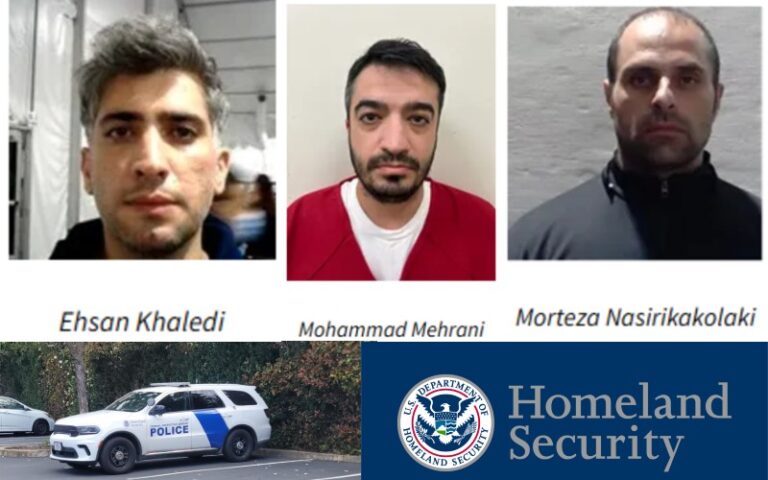
The United States Department of Homeland Security announced that it has deported three Iranian nationals suspected of terrorist activities from the country.
The United States Department of Homeland Security stated that three Iranian nationals—Ehsan Khaledi, Mohammad Mehrani, and Morteza Nasiri Kaklaki—were former members of the Iranian regime’s Islamic Revolutionary Guard Corps.
According to the department, these individuals were among 14 Iranian citizens who left the United States on Sunday aboard a deportation flight, described as the first return flight to Tehran since the start of widespread anti-regime protests in Iran and the regime’s deadly crackdown.
According to the U.S. Department of Homeland Security, Mohammad Mehrani and Ehsan Khaledi illegally entered the United States through Southern California in 2024.
It was also announced that Morteza Nasiri illegally entered the country in November 2024 after being detected by the U.S. Border Patrol near San Luis in the state of Arizona.
The White House emphasized that all those deported were subject to final and enforceable orders, meaning that a federal judge had issued rulings for their removal from the United States.
Houthis and Kataib Hezbollah Issue Threats in Support of Iran’s Regime
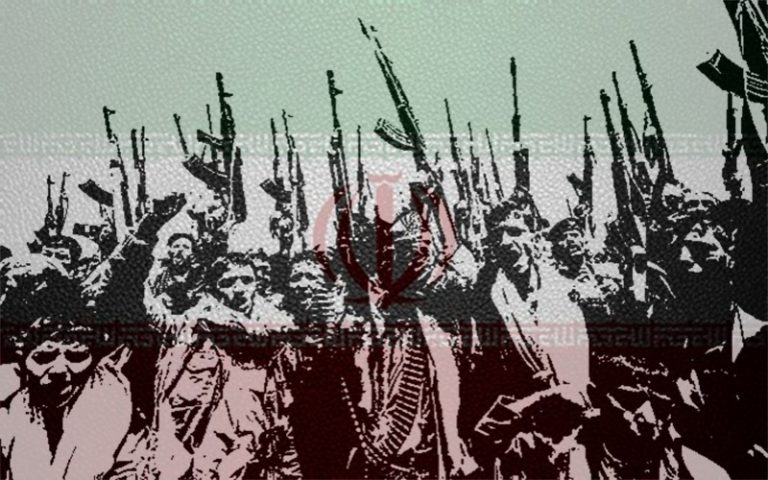
As speculation has intensified in political and media circles about the possibility of U.S. military action against the Iranian regime, Yemen’s Houthis and Iraq’s Kataib Hezbollah, two proxy groups of the Iranian regime, have adopted threatening positions and declared that they are ready to enter the conflict.
According to the Associated Press news agency, the Houthis of Yemen threatened on Monday, January 26, that they would resume their attacks on ships in the Red Sea.
The group also released images of a ship on fire and wrote in the caption: “Soon.”
The Associated Press wrote that this threat was likely issued in response to the strengthening of the U.S. military presence in the region and the increased likelihood of action against the Iranian regime.
Hezbollah Turns to Drug Trafficking in Venezuela as Support from Tehran Dries UpShortly after the start of the Hamas-Israel conflict, the Houthis began attacking international shipping in the Red Sea, the Bab al-Mandab Strait, and the Gulf of Aden, endangering maritime security in the region. The group has also repeatedly attempted to target Israeli territory. After a ceasefire was established in the Gaza war, the Houthis ended their attacks in regional waters, but they have consistently warned that they are ready to resume their destabilizing actions if deemed necessary. Reports indicate that the USS Abraham Lincoln aircraft carrier has arrived in the Middle East and has been deployed near Iran. On the other side, Esmail Baghaei, spokesperson for the Iranian regime’s Ministry of Foreign Affairs, responded to the possibility of a U.S. attack by threatening that Iran’s government would “certainly respond decisively, with full force, and comprehensively.”
Kataib Hezbollah of Iraq threatens a “large-scale war”
Abu Hussein al-Hamidawi, the secretary general of Iraq’s Kataib Hezbollah, said in a statement—echoing the positions and rhetoric of Iranian regime officials—that a battle with the Iranian regime would not be easy. He described the support of the “forces of resistance” for Iran’s regime as “necessary” and called on the “brothers in the east and west of the world” to be ready for a “large-scale war” in support of the Iranian regime. Hamidawi added that the “mujahid brothers” must prepare themselves for “one of two good outcomes, martyrdom or victory.”U.S. Designates Four Iran-Backed Proxy Groups in Iraq as Terrorist Organizations“Axis of Resistance” is the term used by officials and media of the Iranian regime to refer to armed groups supported by Tehran in the region, such as Hamas, Palestinian Islamic Jihad, Hezbollah, Iraq’s Popular Mobilization Forces (Hashd al-Shaabi), and Yemen’s Houthis. These remarks by the Iraqi militia figure about developments in Iran come as the Iranian regime has in recent weeks accused protesting citizens of links to “foreigners” and “enemies,” and has described international support for the Iranian people’s national revolution as “interference” in its internal affairs. CNN had previously reported that Kataib Hezbollah and several other Iraqi armed groups had sent their forces to Iran to assist the Iranian regime in the deadly suppression of protesters.
Iran’s Statistical Center Records Highest Inflation Rate in Its History in January
The Statistical Center of the Iranian regime reported that the highest inflation rate since the establishment of the organization was recorded in January. According to the report, point-to-point inflation reached an unprecedented 60% in this month.
Point-to-point inflation refers to the percentage change in the price index compared to the same month of the previous year.
According to this report, in January 2025, the consumer price index for households nationwide reached 469.4, showing a 7.9% increase compared to the previous month, a 60% increase compared to the same month of the previous year, and a 44.6% increase over the 12 months ending in the current month compared to the same period a year earlier.
Iran’s Point-To-Point Inflation Surpassed 52% In DecemberThe state-run Eghtesad News daily, quoting the Statistical Center of Iran, wrote that in January 2026, point-to-point inflation for households nationwide stood at 60%, meaning that households, on average, spent 60% more than in January 2025 to purchase the same “basket of goods and services.” Point-to-point inflation in January 2026 also increased by 7.4 percentage points compared to the previous month.
Monthly inflation for households nationwide
Monthly inflation refers to the percentage change in the price index compared to the previous month. In January 2026, monthly inflation for households nationwide stood at 7.9%. Monthly inflation for the major group of “food, beverages, and tobacco” was 13.7%, while for the major group of “non-food goods and services” it was 4.4%. Eghtesad News, continuing its assessment of the Statistical Center of Iran’s report, wrote that in January 2026, the annual inflation rate for households nationwide reached 44.6%, an increase of 2.4 percentage points compared to the previous month. Annual inflation refers to the percentage change in the average price index over a one-year period ending in the current month compared to the same period a year earlier. The range of annual inflation across different expenditure deciles varied from 43.5% for the tenth decile to 46.8% for the second decile. As a result, the inflation gap between deciles reached 3.3 percentage points this month, up from 2.5 percentage points in the previous month, an increase of 0.8 percentage points.Rising dollar prices amid war and repression
As fresh details of massacres and killings by the Iranian regime and the names of those killed continue to emerge from across Iran, and amid rising prospects of war and the continuation of repressive and controlling economic policies by the government, the price of the U.S. dollar on Tuesday, January 27, once again surpassed 1.45 million rials in the open market.At the same time, the stock market index recorded a one-day drop of 120,000 points, and the state-run Ta’amol daily described the situation as a “historic stock market crash.” The renewed rise in the dollar’s price comes after it had set a new record in Tehran’s open market on January 6, surpassing 1.47 million rials. Earlier, the governor of the Central Bank of the Iranian regime was replaced in an attempt to curb the rise in currency prices, but shortly after Abdolnasser Hemmati returned to the post, the price of the dollar rose by about 10%. The price of the British pound also reached about 2 million rials, while the euro rose to around 1.72 million rials.Protests by Tehran Marchants continue today, December 30.
— Iran Focus (@Iran_Focus) December 30, 2025
Marchants are on strike and a significant crowd is present at the site.
These movements have been made in response to high prices, inflation, and livelihood pressures.#IranProtests #IranEconomy pic.twitter.com/4GG6GtN0dY
Severe Internet Restrictions Continue Across Iran
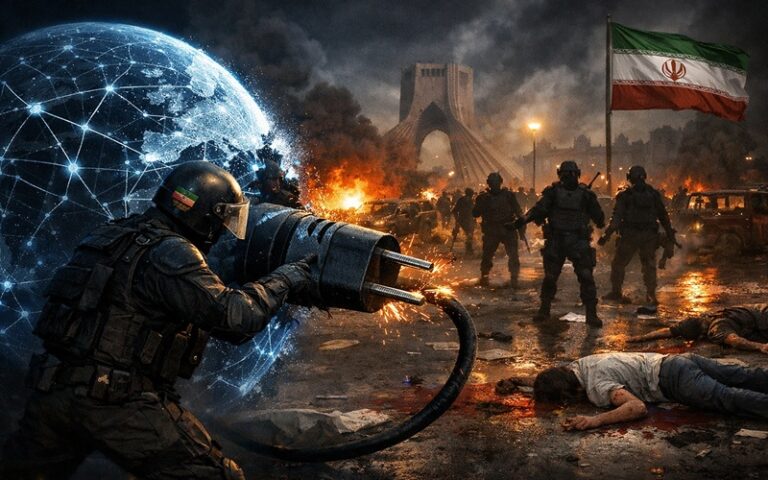
Majidreza Hariri, head of the Iran–China Chamber of Commerce, announced that the Iranian regime allows traders to use the internet for only 20 minutes per day, and only under the supervision of a monitor.
Hariri warned on Sunday, January 25, that this level of access is “by no means sufficient for the needs of traders.”
He said: “I do not have information about all chambers of commerce, but in Tehran and several provincial capitals, internet access has been enabled on a few systems inside the chambers of commerce. Traders must register in order to use the internet.”
Iran’s Regime Throttles Internet Access Amid Rising ProtestsThe head of the Iran–China Chamber of Commerce described this method of internet access as “undesirable” and added: “This amount of use is only sufficient to check a few emails.” The Iranian regime shut down the internet across Iran shortly after protests began on the evening of January 8. Since then, Iranians’ access to the outside world has been widely disrupted. Nevertheless, reports, images, and videos that have with great difficulty passed through the wall of censorship present a horrifying picture of the scale and organization of the killing of citizens. NetBlocks, an independent global internet monitoring organization, noted in a post on the social media platform X on January 27 that 20 days had passed since the internet shutdown in Iran.
In November 2025, revelations that some journalists, artists, political activists, and figures close to the government benefited from “white SIM cards” and “tiered internet”—due to rent-seeking and the granting of special privileges—sparked a wave of anger and protest among public opinion. For more than two weeks, the country has been plunged into an engineered silence, and this silence continues. Public internet access, as the main infrastructure of modern life, has been reduced to rumors and fragmented pieces of information. What remains are only government-approved channels: selected “white” networks that keep regime elements connected to one another while simultaneously cutting society off from the normal cycle of civic life. In the absence of access inside Iran, determining the number of people killed in the recent protests is impossible, but assessments report that thousands were killed in the January 2026 protests in Iran.⚠️ Update: With #Iran's internet shutdown approaching day 20, many networks are becoming visible internationally.
— NetBlocks (@netblocks) January 27, 2026
HOWEVER:
📵 No return to usual: Web still heavily filtered on a whitelist basis.
🔧 Circumvention still needed: The opening of protocols can enable new workarounds. pic.twitter.com/psHtkAWeTi
Former Hostage Slams Tehran’s Hypocrisy and Comfortable Lives of Iranian Regime Officials’ Children
Barry Rosen, the press attaché at the United States Embassy in Tehran, was held hostage for 444 days in the early years after the revolution by forces known as the “Students Following the Line of the Imam,” a group that carried out the 1979 U.S. Embassy takeover.
In a note he published on the social media platform X, he points to the direct role of Masoumeh Ebtekar, the spokesperson for the hostage-takers and a former senior official of the Iranian regime.
Rosen writes that during interrogations, Ebtekar angrily and threateningly warned the hostages that they would face trial and immediate execution.
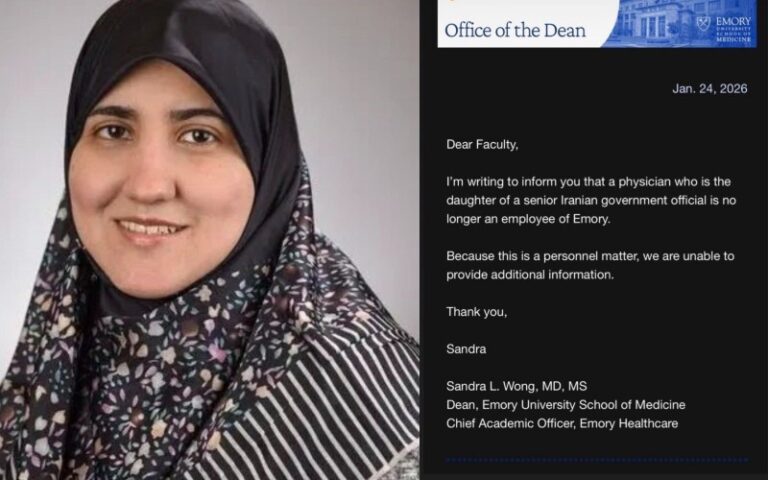
The children of officials of Ali Khamenei’s government, however, live today in a completely different situation. Rosen notes in his writing that Issa Hashemi, the son of Masoumeh Ebtekar, now lives in Los Angeles and works as an academic. This image stands in complete contrast to the anti-American slogans and violent behavior of the ruling generation. Expulsion of Ali Larijani’s daughter, one of the figures implicated in crimes of Khamenei’s government, from a university As part of these revelations, another example is also raised. Fatemeh Larijani Ardeshir, the daughter of Ali Larijani, the former secretary of Iran’s Supreme National Security Council and a senior figure of the Iranian regime, has recently been expelled from the Winship Cancer Institute of Emory University. This occurred after the U.S. Treasury Department imposed sanctions on Ali Larijani and other key figures involved in repression. Emory University has not yet confirmed a direct link between the expulsion and the sanctions.I was the press attaché at the U.S. Embassy in Tehran when I was taken hostage for 444 days by the zealous followers of Ayatollah Khomeini. During that time, the spokesperson for the hostage‑takers, Massoumeh Ebtekar—whom we called “Mary”—interrogated us with venom and publicly…
— Barry Rosen (@brosen1501) January 25, 2026
Contrary to Predictions, Protests in Iran Expanded After the 12-Day WarFor many Iranians living abroad, the issue of the children of Khamenei’s government officials is not merely an individual news item. It has become a symbol of deep injustice. While inside Iran, regime forces have killed thousands of protesters, pressured families, and even demanded money to hand over the bodies of victims, the children of those same officials live in complete safety.
The affluent lives of Khamenei government officials’ children in the land of the “enemy”
These reports show that the children of Iranian regime officials benefit from freedoms, education, and opportunities in the very countries their parents label as “enemies.” This contradiction reflects accumulated anger formed over decades of repression. The exposure of these examples has contributed to the growth of a movement aimed at revealing the ruling system’s structural hypocrisy. Each new disclosure lays this contradiction barer and raises more serious questions about accountability and justice.105th week of ‘No to Executions Tuesdays’ campaign in 56 prisons across Iran
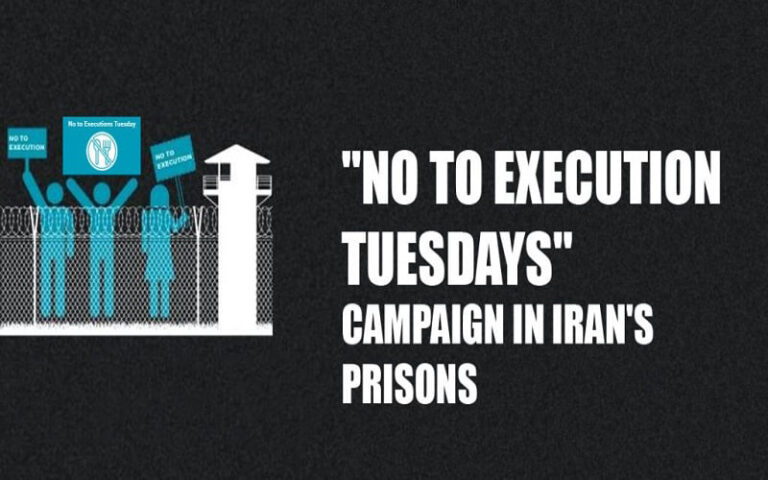
On the eve of the start of the third year of the “No to Executions Tuesdays” campaign, members of the campaign issued a statement expressing solidarity and sympathy with the families of those who lost their lives on the path to freedom, while also voicing their anger and revulsion toward the dictatorship ruling Iran. This statement was issued in the closed and repressive environment of Iran’s prisons.
The full text of the statement marking the one hundred and fifth week of the “No to Executions Tuesdays” campaign is presented below:
The continuation of the “No to Executions Tuesdays” campaign in its one hundred and fifth week in 56 different prisons, with the addition of Gorgan Prison
On the eve of entering the third year of the “No to Executions Tuesdays” campaign, while offering our most heartfelt condolences to the families of those who lost their lives on the path to freedom and to the brave people of Iran, we send thousands of salutations to those killed in the January 2026 uprising, who shook the foundations of the fascist rule. We also salute the heroic people of Iran who, in this nationwide uprising, added another golden page to the history of the Iranian people’s struggle for freedom and so terrified the ruling authorities that they resorted to a savage massacre, thereby revealing their fascist nature in the most blatant manner to Iran and the world. Now, thanks to that unjustly shed blood, not only the people of Iran but the world at large has risen in outrage, and global revulsion toward this regime has reached its peak, to the extent that Ms. Mai Sato, the United Nations Special Rapporteur, described the massacre carried out by the government as a “crime against humanity” and called for the prosecution of the heads of the velayat-e faqih system, while the European Parliament and the United Nations Human Rights Council also took unprecedented positions against this crime. During this period, the regime of repression and executions carried out more than 355 executions between December 22, 2025, and January 20, 2026, alone. In the days prior as well (since January 23), more than 50 prisoners, including two prisoners of conscience, Amanj Karevanchi and Arslan Sheikhi, have been executed. Therefore, the authorities have not only refrained from halting executions but have also extended the wave of killing and execution to the streets, hospitals, detention centers, and even people’s homes. Reports from various prisons indicate the transfer of those arrested in the streets and even the wounded to different prisons: 1. Newly constructed buildings and wards at Sheiban Prison in Ahvaz, which were intended to reduce overcrowding, have been designated as quarantine areas for hundreds of new detainees.Amnesty International met en garde contre l’exécution imminente d’un manifestant iranien #IranProtests #IranRevolution #FreeIran2026 #No2ShahNo2Mullahshttps://t.co/8b8n76lP9C
— Iran Focus (@Iran_Focus) January 23, 2026
Ghezel Hesar; a hidden quarantine for making protest prisoners disappear
2. At Karaj Central Prison, various halls have been evacuated and allocated to new arrests. 3. At Ghezel Hesar Prison, several halls have been cleared, and new prisoners along with a number of other inmates transferred from Greater Tehran Prison have been moved there to make room for new detainees. 4. Detention centers such as Meghdad are filled with arrested youths. Therefore, we, the members of the “No to Executions Tuesdays” campaign, warn against any heavy sentences imposed on those arrested in the recent protests, as well as their harassment, abuse, and killing. Warning and warning! Given the lack of official announcements of the names of those killed, arrested, and injured, it is said that the regime intends to kill many detainees and wounded individuals and transfer them to morgues such as Kahrizak and others, and then announce them as street fatalities. Accordingly, we, the imprisoned members of the “No to Executions Tuesdays” campaign, in the one hundred and fifth week in 56 prisons across the country, will go on strike on Tuesday, January 27, against execution sentences and in solidarity with the uprising of the people of Iran.The IRGC Affiliate with A 400 million Euro Empire in Europe
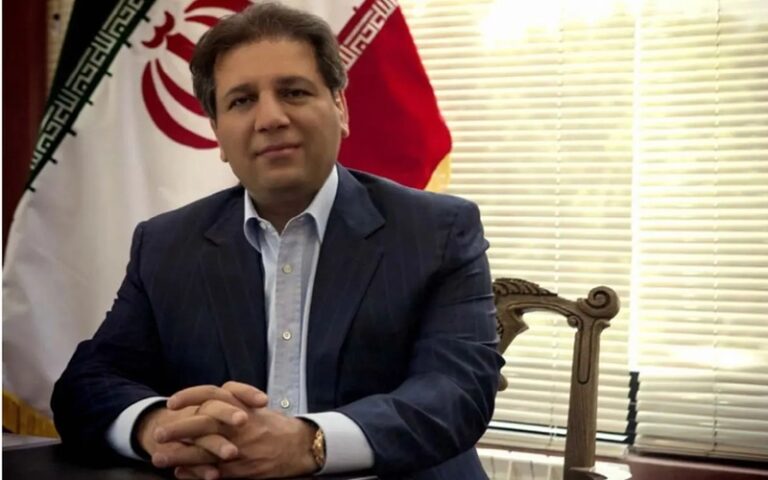
Ali Ansari, an Iranian tycoon accused of financing the Islamic Revolutionary Guard Corps (IRGC), owns a golf club in Mallorca and hotels in Frankfurt through offshore companies.
According to corporate registration documents reviewed by the Financial Times, a British newspaper, Ali Ansari—whose family founded the now-bankrupt “Ayandeh” Bank in Iran—controls a collection of luxury properties, ranging from a golf resort on the Spanish island of Mallorca to a ski hotel in Austria.
Britain, following the collapse of Ayandeh Bank in October, sanctioned Ansari for financing “hostile activities” by the IRGC, labeled him an “Iranian corrupt banker and businessman,” and froze his London property assets worth more than 150 million pounds.
German Chancellor: The Suppression of Protesters Is a Sign of the Iranian Regime’s WeaknessThe Financial Times has now identified a complex network of offshore companies stretching from Luxembourg and Saint Kitts and Nevis to Austria, Germany, and Spain, through which Ansari has amassed a vast and previously unreported portfolio of properties across Europe. Based on this, the total known value of Ansari’s property empire in Britain and Europe is estimated at around 400 million euros, a figure calculated from prices recorded in land registries and valuations listed in company accounts. Ansari, who according to Britain’s sanctions list holds passports from Iran, Saint Kitts and Nevis, and Cyprus, is not currently sanctioned by the European Union. However, these properties illustrate how businessmen close to Iran’s regime have been able to obtain lucrative assets in the West, despite extensive efforts to exclude them from Western economies.
Ansari owns two hotels in Frankfurt and a shopping center in Oberhausen, Germany.
The collapse of Ayandeh Bank late last year intensified the economic crisis, which ultimately led to protests in Iran this month—protests that reportedly left thousands dead and are considered the most severe violence since the 1979 revolution. According to European officials, the European Union is considering new sanctions against Iran ahead of a meeting of foreign ministers at the end of the month. Offshore company documents show that Ansari, through several Spanish and German holding companies, owns the Golf de Andratx and Camp de Mar complex, a 164-room luxury hotel in Mallorca that provides access to one of the Mediterranean’s most challenging golf courses. The complex is valued at 22 million euros. He also holds a stake in a luxury ski resort in the Austrian Alps called Schloss Hotel Kitzbühel. Ansari also owns two hotels in Germany: the Hilton Frankfurt City Centre and the Hilton Frankfurt Gravenbruch. Each of these hotels is held through Dutch and German holding companies and is valued at around 80 million euros.Reports and Horrific Accounts of the Massacre of Protesters and Coup-De-Grace Shots In HospitalsHe also owns, through shell companies, the Bero Oberhausen shopping center in northwestern Germany, which has been valued at 68 million euros. The recent protests in Iran began last month after a sharp collapse in the value of the national currency and a soaring surge in inflation and then evolved into broader protests against Iran’s regime. Many protesters have directed their anger at what they call structural corruption, which they say has allowed individuals close to the government to continue enriching themselves despite the sharp decline in people’s living standards. Ayandeh Bank, which was merged into a state-owned bank to protect depositors, had for years been accused by politicians and analysts of channeling financial resources into speculative activities and to individuals linked to Iran’s regime.
Iran: Widespread Deaths of the Wounded, More Than 2,000 Detainees in Lakan Prison
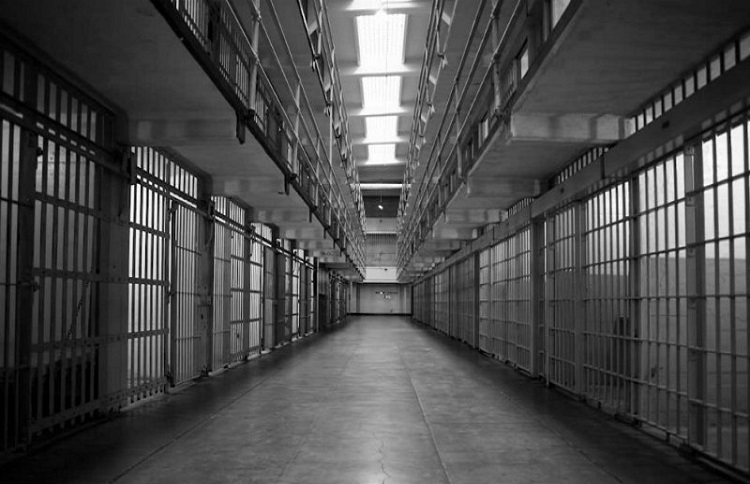
According to information received from inside Lakan Prison in the city of Rasht, in northern Iran, unusual activities began at the prison in the days leading up to the bloody killings on Thursday and Friday, January 8 and 9. Several days before these events, all inmates were gathered together, about half of the prison space was cleared of previous prisoners and separated, and at the same time a large number of security forces and members of the Islamic Revolutionary Guard Corps (IRGC), a powerful military-security force of Iran’s regime, entered the prison.
From Thursday until Sunday, all contact with the prison was completely cut off. After limited communication was restored, it became clear that dozens of gunshot-wounded individuals with severe injuries and heavy bleeding had been transferred to prison wounded people who urgently required hospital treatment but were instead brought to the prison by IRGC forces and the IRGC Intelligence Organization.
UN Special Rapporteur: Iran’s Protest Crackdown Among the Most Brutal in Modern HistoryAccording to these reports, more than half of these wounded individuals have died inside the prison due to the lack of medical care, torture, and inhumane conditions. The prison infirmary lacks even the most basic medical facilities, and no effective services have been provided even for primary measures such as administering intravenous fluids or changing dressings. It has also been reported that more than 2,000 newly detained individuals are being held in halls separate from previous prisoner halls without heating systems, without blankets, without warm clothing, and with extremely limited food. These detainees are subjected to continuous torture, and the number of those arrested is increasing daily. This information indicates that Lakan Prison in Rasht has effectively turned into a site for the deaths of the wounded and the mass repression of detainees. Families in Rasht and surrounding areas who are searching for missing loved ones are urged to go to Lakan Prison to seek information about their status. What is taking place constitutes a series of killings, torture, enforced disappearances, and widespread human rights violations, for which the security institutions and the Islamic Revolutionary Guard Corps bear direct responsibility. This report is published as an urgent warning to prevent the continuation of these crimes, and the source has been withheld for security reasons.
Latest Developments in the Iran Uprising; Italy Joins Calls for Proscribing IRGC
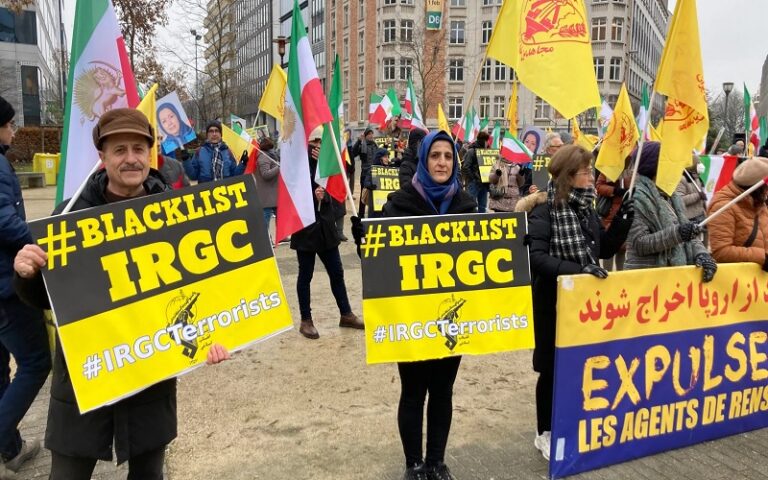
As international criticism over the crackdown in Iran intensifies, Italy has also shifted its position regarding the Islamic Revolutionary Guard Corps (IRGC), the powerful military and security force of Iran’s regime. Antonio Tajani, Italy’s foreign minister, announced that Italy will submit a proposal in Brussels this week to have the IRGC placed on the European Union’s list of terrorist organizations.
The foreign ministers of the 27 European Union member states are scheduled to meet in Brussels on Thursday to review the issue. Until now, Italy, alongside France and Spain, had been among the most prominent opponents of designating the IRGC as a terrorist organization by the EU.
IRGC Calls for ‘Psychological Preparation’ Amid Growing Fears of Snapback SanctionsThe opposition of these countries did not necessarily amount to support for the IRGC; rather, within the framework of appeasement policies, they sought to avoid completely cutting communication channels with Iran’s regime in order to preserve their commercial interests. Despite this, the European Parliament last week once again passed, by an overwhelming majority, a resolution calling on the European Council to designate the Islamic Revolutionary Guard Corps as a terrorist organization—an action reflecting mounting international political pressure on Iran’s regime.
U.S. representative to the United Nations: the killings in Iran are organized and state-driven
Mike Waltz, the United States representative to the United Nations, said on Sunday, January 25, in an interview with Fox News Sunday, that the ongoing crackdown in Iran amounts to killings backed by the government, warning that the true number of victims may be far higher than current estimates. Referring to widespread internet shutdowns, disruptions to the Starlink satellite network, and even power outages across various regions of Iran, Waltz said that what is unfolding in Iran today constitutes a full-scale state-led massacre. The U.S. representative to the United Nations further emphasized that the administration of President Donald Trump will take measured and coordinated steps in response to developments in Iran. According to him, the U.S. president will ensure that American military bases are fully protected, that Israel is safeguarded against any retaliatory actions by Iran’s regime, and that full coordination is maintained with allies and countries in the region.Bercow: the scale of the Iran uprising would not have been possible without organization
John Bercow, the former Speaker of the UK House of Commons, described the scale and intensity of the protests in Iran as unprecedented in an interview with The Washington Times, saying that the vast size, geographical spread, and intensity of the uprising owe a great deal to organization.Tehran Has Temporarily Crushed Street Protests, But the Economic Crisis ContinuesReferring to the role of organized opposition, he added that the National Council of Resistance of Iran (NCRI), a major opposition coalition, has repeatedly stressed that overthrowing a repressive government is not possible without a cohesive internal network. Bercow described this as a key distinction between the current protests and past, fragmented movements. In another part of the interview, the former Speaker of the House of Commons referred to the leadership of the National Council of Resistance and said that Maryam Rajavi provides inspiring and outstanding leadership. He said she never talks about herself, does not repeat her own name, and does not say that she must be the leader. Bercow also compared political currents claiming leadership of Iran’s future, stressing that there are fundamental differences between monarchist views and the democratic plans of the National Council of Resistance. According to him, Reza Pahlavi remains committed to the outdated concept of aristocratic monarchy and feudalism, which he described as being in clear contradiction with the democratic agenda of the organized opposition.
Tehran Has Temporarily Crushed Street Protests, But the Economic Crisis Continues
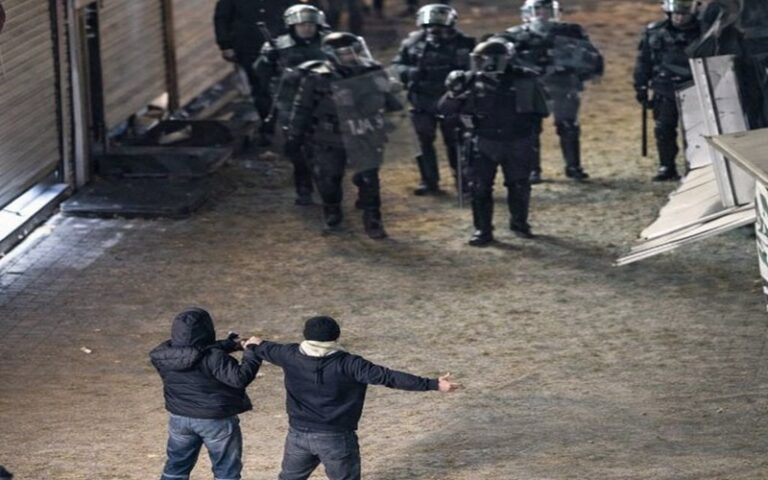
The Iranian regime may have used force to break street protests, but it has no comparable solution for an economy trapped under runaway inflation and collapsing incomes.
The January protests in Iran began after a sharp surge in foreign exchange rates, but they quickly escalated into open chants calling for the overthrow of the Iranian regime.
Many Iranians now likely personally know people who were killed on January 8 and 9.
Arrests and enforced disappearances, the exact scale of which remains unclear, have also plunged countless families into crisis and deepened fear and insecurity.
According to individuals who have recently left Iran or managed to establish internet access via Starlink, businesses across the country have either shut down or are operating at minimal capacity, a situation resulting from currency turmoil and prolonged internet shutdowns.
On one hand, customers have disappeared, and on the other, sellers are reluctant to offer goods.
According to shopkeepers, due to exchange rate volatility, they are not confident they can replace their inventory, turning even everyday transactions into a gamble. Many prefer not to sell anything at all. Even before the protests began, businesses were already under severe pressure. Data published by the state-run economic website Eco Iran show that bank lending from March to November 2025 increased by 47% compared to the same period in 2024, but 82% of loans granted to the production sector were used for “working capital,” indicating that firms borrowed not for expansion, but merely to survive.Iranian Authorities Sentence Soldier to Death for Refusing to Fire at Protesters #IranProtests #IranRevolution #FreeIran2026 #No2ShahNo2Mullahshttps://t.co/lPKXv8Ry3N
— Iran Focus (@Iran_Focus) January 20, 2026
Declining purchasing power
Shortly after the protests began, the government announced a plan aimed at compensating for the decline in purchasing power following the removal of preferential exchange rates for importing essential goods. Under this plan, low-income and middle-income individuals are to receive 10 million rials per month, an amount equivalent to about seven dollars and 50 cents, roughly equal to a single day’s wage for a construction worker. Four months of these payments were deposited in a lump sum, and recipients were told they could spend one-quarter of the amount each month to purchase 11 essential goods, including rice, cooking oil, protein products, and dairy, at government-set prices from designated stores. Meanwhile, the prices of most of these goods on the open market have continued to rise, and some items have become scarce. Most participants in a poll conducted by the state-run Khabar Online news website said the subsidy is insufficient or ineffective. One reader wrote in the website’s comments section that this assistance covers at most half of the price increase for the 11 subsidized goods, noting that rising food costs naturally drive up the price of everything from biscuits to restaurant meals, for which no compensation has been provisioned.World Bank: Iran’s Economy Continues to ShrinkMany are also concerned that the government may resort to printing money to finance the plan, a move that could further intensify inflation. Official statistics show that by November 2025, the inflation rate had exceeded 50%.
