Critical Condition of Political Prisoner Somayeh Rashidi; On the Verge of Death in Qarchak Prison

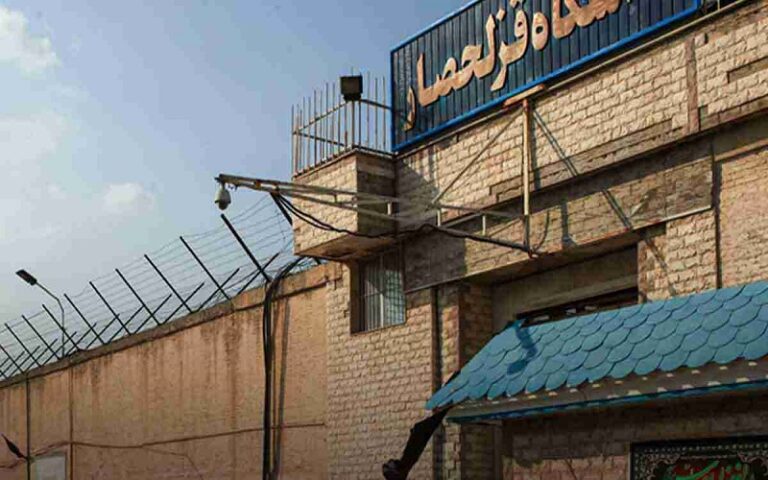
Somayeh Rashidi, a 42-year-old political prisoner, was transferred to the hospital in critical condition after several severe seizures and neglect by the authorities of Qarchak Prison in Varamin. According to informed sources, her level of consciousness has dropped to “4,” and she is in a coma. Doctors have almost lost hope for her recovery. Rashidi, who had struggled with epilepsy for years, repeatedly complained during her detention of severe headaches and sudden seizure attacks. However, the prison infirmary staff and the prison doctor dismissed her symptoms as “malingering” and denied her specialized treatment. According to one of her cellmates, “Somayeh collapsed and had seizures many times in front of other inmates, but the prison doctor told her she was faking it. Only when her condition became critical did they transfer her to the hospital, and even then with delay.”
67 Political Prisoners at Risk of Execution; At Least 110 Executed Last Month
In May 2025, Somayeh was arrested while writing slogans in Javadieh, a neighborhood in south Tehran. Immediately after her arrest, she was transferred to the Shapour Police Investigation Center, located on 15 Khordad Street in Tehran. Shapour Investigation Center is notorious as one of the most infamous police facilities in Iran.

Transfer to hospital and critical condition

On Tuesday, September 16, the seizures became so severe that authorities were forced to transfer her to Mofatteh Hospital in Varamin. Doctors at the hospital described her condition as “critical and unpredictable.” Rashidi’s family has faced severe restrictions in accessing information about her treatment and visiting her.

Arrested for writing slogans

She was initially held in Evin Prison, but after an Israeli missile strike on the prison and the mass transfer of inmates, she was moved to Qarchak Prison in Varamin. Her official charge has been announced as “propaganda against the regime.”
“Pay for Treatment” in Iran’s Notorious Qarchak Prison

Dire conditions in Qarchak Prison

Qarchak Prison is known as one of the most notorious women’s prisons in Iran. The lack of sanitary facilities, shortages of medicine, and severe overcrowding have repeatedly drawn criticism from human rights organizations. Rashidi’s cellmates have emphasized that even before her condition deteriorated, she needed help from others to carry out daily tasks.

Iran’s Regime: UN Sanctions Are Illegal and Misuse of JCPOA Dispute Resolution Mechanism

0
Shortly after the UN Security Council meeting ended, the foreign ministry of Iran’s regime called the move by three European countries to reinstate UN sanctions illegal and a misuse of the JCPOA dispute resolution mechanism and Resolution 2231. In the statement, which was published on Friday, September 19, and condemned the actions of Britain, Germany, and France, it was said: “The full responsibility for the consequences of this action, if it leads to the reinstatement of previously terminated Security Council resolutions against Iran, lies with the United States and the three European countries who, by distorting facts and making baseless claims, also pressured some non-permanent members of the Security Council to side with them.” At the same time, Saeed Iravani, Iran’s regime representative at the United Nations, told reporters after the Security Council meeting that Abbas Araghchi, the regime’s foreign minister, will hold several meetings with European counterparts during the UN General Assembly.
U.S. Sanctions 13 Shipping Companies and 8 Tankers to Counter Iran’s Regime

Iravani: “We will not accept any precondition before negotiations.”

Meanwhile, Iran’s proposed resolution at the International Atomic Energy Agency (IAEA) calling for a ban on attacks against safeguarded nuclear facilities, including Iran’s nuclear sites, was not discussed in the current General Conference session, and a decision on it was postponed until next year’s meeting.

Security Council against Iran’s regime

On Friday evening, members of the UN Security Council blocked the adoption of a resolution that was intended to extend the suspension of sanctions on Iran, with four votes in favor, two abstentions, and nine against. China, Russia, Algeria, and Pakistan were the only countries that supported Iran’s regime’s nuclear positions in this meeting. As a result, the implementation process of the snapback mechanism continues, and if no agreement is reached in the coming days, all UN sanctions will automatically be reinstated on September 28, less than two weeks from now.

Iran’s Regime Supreme National Security Council: Cooperation with IAEA Will Be Suspended

On Saturday, September 20, Iran’s regime Supreme National Security Council announced that following the move by three European countries to reinstate UN Security Council sanctions against Tehran, “in practice, the path of cooperation with the [International Atomic Energy] Agency will be suspended.” The council’s statement did not provide further details but described the activation of the “snapback” mechanism as “reckless actions by the three European countries regarding Iran’s nuclear issue.” The statement came one day after the UN Security Council voted against a resolution to lift sanctions on Iran. In Friday’s session, nine member states voted against a resolution presented by South Korea, the rotating president of the Security Council, which had called for lifting sanctions against Iran.
Iran’s Atomic Energy Organization Set Conditions For Full Resumption Of IAEA Inspections
The Security Council’s rejection means that under the snapback mechanism, sanctions against Iran over its nuclear program will automatically be reinstated on September 28. The Supreme National Security Council also announced on Friday that it had tasked the foreign ministry with continuing its consultations “to safeguard the country’s national interests” in line with the Council’s decisions. Earlier the same day, Iran’s regime president Masoud Pezeshkian declared that European countries “cannot stop us” by activating the snapback mechanism. In a speech, Pezeshkian referred to the rejection of the resolution to lift sanctions against Iran’s regime at the Security Council, saying: “Last night they held a session to bring back the snapback. Do they close the road? Minds and ideas are what either find a way or create one.” He also referred to Israeli and American attacks on Iran’s nuclear facilities during the 12-day war, saying: “They can hit Natanz and Fordow, but they forget that it is people who build Natanz and more important than Natanz, and they will continue to build.” Dorothy Shea, the U.S. Ambassador to the UN, said after Friday’s vote that while the United States voted against the resolution to lift sanctions on Iran, this move “does not prevent the possibility of real diplomacy” and that the reinstatement of sanctions against Iran “will not prevent their removal in the future through diplomacy.” Meanwhile, on September 18, French President Emmanuel Macron said in an interview, when asked whether the return of the snapback was inevitable, that he thought it was, because “the latest news we have received from the Iranians shows that they are not serious.” Iran’s regime is threatening to suspend cooperation with the International Atomic Energy Agency (IAEA), despite having reached an agreement in Egypt on September 9 with this UN watchdog to allow inspectors access to all of its nuclear facilities. Regime officials later declared that if UN sanctions return, Iran will consider cooperation with the Agency “terminated.” A few days later, Rafael Grossi, Director General of the IAEA, called on Iran’s regime to implement the framework of cooperation with the Agency. According to the latest IAEA report, Iran’s stockpile of enriched uranium had reached 440 kilograms before the war. The process of reinstating UN sanctions against Iran, known as the “snapback,” is designed to be non-vetoable within the United Nations. This process will take effect at the end of September unless the UN Security Council agrees to halt it.

Iran Stock Market and Currency Plunge After UN Sanctions Vote

One day after the UN Security Council rejected a resolution aimed at preventing the reimposition of sanctions on Iran, Tehran’s stock market dropped by more than 50,000 points, while the price of the U.S. dollar and other foreign currencies surged in the unofficial market. The resolution, proposed by South Korea in its capacity as the rotating president of the Security Council, was rejected on Friday with nine opposing votes, paving the way for the activation of the “snapback” mechanism that reinstates UN sanctions on Iran. On Saturday, September 20, Iranian media reported on the “heavy shock” of the approaching sanctions snapback deadline for Iran’s financial markets.
Tensions in Iranian and global markets following Israeli attack; sharp rise in currency and gold prices
According to these reports, on the first trading day after the resolution’s rejection, the main index of the Tehran Stock Exchange fell by 50,666 points, dropping to 2,542,000. The equal-weight index also fell by 8,891 points, dropping back to 781,000, while 13.48 trillion rials were withdrawn from the stock market by individual investors on Saturday. The state-run daily Etemad quoted experts warning that if this trend continues and the snapback mechanism is activated with UN sanctions reinstated, the main index could fall further to as low as 2,000,000. Meanwhile, by Saturday noon, the price of the U.S. dollar in Iran’s free market exceeded 1,030,000 rials. Unofficial websites tracking the free market exchange rate even showed 1,034,500 rials per U.S. dollar on Saturday.

On Saturday, the price of the euro also climbed above 1,210,000 rials.

Earlier that day, the state-run ISNA news agency quoted the head of Tehran’s Gold and Jewelry Union as saying there had been a “significant increase in prices” in the domestic gold and coin market. France, Britain, and Germany, the European parties to the JCPOA who have activated the snapback mechanism, have warned Tehran that time is running out to reach a diplomatic solution before next week’s annual UN General Assembly of world leaders. In reaction to the rejection of the sanctions-lifting resolution on Friday and the role of France, Britain, and Germany in this matter, Iran’s regime foreign ministry warned that “responsibility for this action, if it leads to the reinstatement of terminated Security Council resolutions against Iran, lies with the United States and the three European countries.” Meanwhile, Iran’s regime representative to the UN announced that regime president Masoud Pezeshkian and foreign minister Abbas Araghchi will meet with European officials in New York next week. Amir Saeed Iravani, Iran’s regime ambassador to the UN, told reporters Friday evening after the Security Council session on extending Iran sanctions that these meetings would take place during the visit of senior Iranian officials to New York. If no agreement is reached between Iran and the West in the coming days, all UN sanctions will be reinstated on September 27.

The Rise in Stationery Prices Ahead of the New School Year in Iran

Reports from media outlets in Iran indicate an unprecedented surge in stationery prices ahead of the new school year. The state-run ILNA news agency wrote on Tuesday, September 16: “The high cost of stationery, the rise in uniform prices, and mandatory payments during registration have caused complaints from students’ parents.” The agency quoted parents of students saying: “The increase in stationery prices is so severe that purchasing basic school supplies is no longer easily possible.” A mother of a student in West Azerbaijan province told the agency: “Last year, with 10 million rials (about $10), we could buy a bag, notebooks, and stationery, but this year, even with 20 million rials (about $20), I cannot meet all my child’s needs.” The state-run Moj News Agency also reported: “Even stationery purchases have become installment-based.”
950,000 Iranian Children Deprived of Education
Meanwhile, the rising cost of school uniforms has added to parents’ difficulties. According to ILNA, the price of one uniform now exceeds 10 million rials. The state-run website “Neshane Tejarat” also pointed out the surge in stationery prices, reporting that on average, stationery costs this year have risen by about 30% compared to September last year. The state-run Tasnim news agency, quoting Mohammadreza Etesami, head of the Book and Stationery Sellers’ Union in Isfahan, reported a 35% increase in the price of imported stationery and a 10% rise in domestic products. Fars News Agency, affiliated with the Islamic Revolutionary Guard Corps (IRGC), wrote in a report that middle- and low-income families are facing serious challenges in providing for their children’s needs. Referring to the rising prices of bags and shoes, the agency added: “This has forced some families to resort to buying cheaper or even second-hand items.” According to the state-run Mehr News Agency, these conditions have left stationery sellers dissatisfied with the current situation because “the high cost of stationery and school supplies, due to low purchasing power, especially among workers and low-income groups, has led to stagnation. As these sellers put it, their livelihood has been destroyed.” A father of three children in Hormozgan province told Fars News Agency: “The Ministry of Education always claims educational equality, but when families cannot afford even the most basic school needs, how is this equality achieved?” At the same time, news agencies quoted officials of Iran’s regime promising action against profiteers. However, in recent years, the rising prices of essential goods and necessities have been accompanied by official government approval. The rise in school transportation fees has also sparked protests among students’ parents. In addition, numerous reports have emerged about cash payments being demanded during student registration in public schools. This practice has also drawn protests in recent years from teacher activists and unions, who cite Article 30 of the constitution and demand free education for students.

Iran’s Atomic Energy Organization Set Conditions For Full Resumption Of IAEA Inspections

Mohammad Eslami, head of Iran’s regime Atomic Energy Organization, said in a written interview with Japan’s Kyodo News that until what he called “special precautionary measures” are carried out following Israeli and U.S. attacks on Iran’s nuclear facilities, inspections by the International Atomic Energy Agency (IAEA) cannot be fully resumed. In this interview, Eslami said the current security situation, amid the risk of future Israeli attacks, “remains similar to wartime,” and that trust in the UN’s International Atomic Energy Agency must be rebuilt. He said, “This is the first time in history that protected nuclear facilities have come under military attack,” adding: “Before inspections return to normal, special precautionary measures must be taken.”
U.S. State Department Warns to Hold Tehran Accountable if No Nuclear Deal Is Reached
On June 13, 2025, Israel launched its attacks on Iran’s regime, during which many senior military commanders and dozens of operators of the regime’s nuclear program were killed. During this war, the United States also targeted three of the regime’s main nuclear sites in Fordow, Natanz, and Isfahan. According to Kyodo News, following these attacks, Iran’s regime parliament passed a law suspending cooperation with the IAEA, effectively halting most of the agency’s inspection activities in Iran. Afterward, IAEA inspectors left Iran, while the regime openly criticized Rafael Grossi, the IAEA Director General. In this criticism, which continued months of prior attacks by regime officials, Grossi was accused of failing to protect confidential information and of yielding to Western pressure. On September 9, Rafael Grossi, IAEA Director General, and Abbas Araghchi, Iran’s regime foreign minister, reached an agreement in Cairo on a new mechanism for continued cooperation between the two sides. According to the report, the Tehran-IAEA understanding, known as the “Cairo Agreement,” establishes a practical mechanism for cooperation reflecting the “extraordinary conditions” created by the attacks on the regime’s nuclear facilities and the ongoing threats against them. On September 10, Grossi said: “The technical document covers all facilities and sites in Iran and also includes mandatory reporting on all attacked facilities, including the nuclear material contained in them.” However, in a contradictory statement, Araghchi said on September 10 that under this agreement, “no access will be given to IAEA inspectors except for the Bushehr nuclear power plant.” Subsequently, IRNA, the official news agency of the regime, wrote that the Cairo document is “not a blank check” and that the IAEA’s activities in Iran are “conditional.” In a September 13 report, IRNA wrote that if the West takes action against Iran’s regime, the agreement with the IAEA will be canceled. The Iran-IAEA agreement came after August 28, when the three European signatories of the 2015 nuclear deal (JCPOA)—France, the UK, and Germany—sent a letter to the UN Security Council triggering the 30-day snapback mechanism to reimpose UN sanctions. Eslami told Kyodo News: “With efforts to fully implement the agreement, Iran has agreed to limited internal inspections during this period, including at the Bushehr nuclear power plant, but the parliament remains cautious about possible leaks of information that could expose vulnerabilities.” He also stated that “the threats of our enemies remain,” adding: “All countries place nothing above their sovereignty and national security.” Western governments have pressured the IAEA to continue strict monitoring of the regime’s enriched uranium stockpiles. According to Kyodo News, Eslami accused Western countries of what he called “misusing the IAEA for political purposes.” He also claimed the agency had lost its independence, describing its failure to “condemn Israeli and U.S. attacks on the regime’s nuclear facilities” as “an unforgivable mistake that will be recorded in history.” Earlier, on September 12, a U.S. State Department spokesperson told Al Arabiya news channel that the United States was awaiting clarification on the details of the Tehran-IAEA agreement. He added: “It is essential to reach an agreement under which Iran abandons its ambition to build nuclear weapons and halts enrichment. Such a step would benefit the people of Iran, the region, and the world.” He stressed: “If this goal is not achieved, the United States will continue to hold Iran accountable for its actions.” The Al Arabiya report did not name the U.S. official. Iran’s regime has only until September 30 to reach an agreement with the West and prevent the return of sanctions.

U.S. Designates Four Iran-Backed Proxy Groups in Iraq as Terrorist Organizations

0
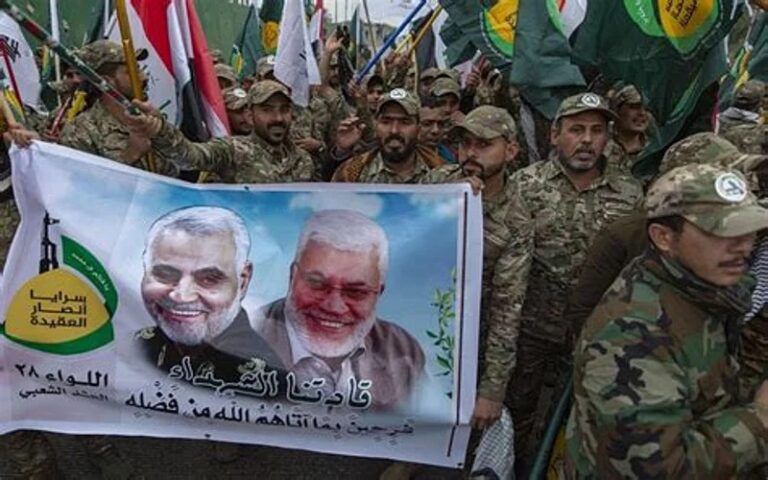
The U.S. Department of State has designated four Iran-backed militias in Iraq—Harakat al-Nujaba, Kata’ib Sayyid al-Shuhada, Harakat Ansar Allah al-Awfiya, and Kata’ib al-Imam Ali—as Foreign Terrorist Organizations (FTOs). In a statement on Wednesday, September 17, the State Department said Iran’s regime, as the “world’s largest state sponsor of terrorism,” enables these militias to plan, facilitate, or directly carry out attacks in Iraq. According to the statement, Iran-aligned groups have been involved in attacks against the U.S. Embassy in Baghdad and coalition bases and often use aliases and front organizations to conceal their involvement. The State Department said the terrorist designation is in line with U.S. President Donald Trump’s maximum pressure policy to cut off revenue to Iran’s regime, its allies, and its proxy forces.
Polish Company Sold Shahed Drone Parts to Iran
The statement added that the U.S. will continue using all available tools to protect its national security interests and to prevent “funding and resources from reaching terrorists.” In 2019, the State Department designated Harakat al-Nujaba and its Secretary General Akram al-Kaabi as Specially Designated Global Terrorists (SDGTs). According to the statement, this group, founded in 2013, has openly pledged allegiance to Iran’s regime and supreme leader Ali Khamenei and is part of the Tehran-led so-called “Axis of Resistance.” Kata’ib Sayyid al-Shuhada and its Secretary General Hashem Finjan Rahim al-Saraji were added to the SDGT list in 2023. Tehran has supported this group with training, financing, and advanced weaponry. Harakat Ansar Allah al-Awfiya and its Secretary General Haidar Mazhar Malik al-Saeedi were designated as SDGTs in 2024. This group was involved in the Iranian regime’s January 2024 drone attack on the “Tower 22” base in Jordan, which killed three U.S. service members. Kata’ib al-Imam Ali was designated in 2025, and its Secretary General Shibl al-Zaydi was designated in 2018 as SDGTs. This group acted as a financial coordinator between the IRGC Quds Force and Iraqi armed groups, helping to facilitate Iraqi investments on behalf of Qassem Soleimani, the slain commander of the Quds Force. The U.S. had previously designated Kata’ib Hezbollah and Asa’ib Ahl al-Haq as Foreign Terrorist Organizations. Designation of individuals and groups as terrorists places them under pressure and isolation, cutting off their access to the U.S. financial system and resources needed to carry out attacks. Additionally, all assets and financial interests of sanctioned individuals or groups that are in the U.S. or under the control of U.S. persons are frozen. U.S. citizens are generally prohibited from engaging in any transactions with these individuals or groups.

 Iranian Steel and Contract Workers Hold Protest Gatherings

Workers of the National Iranian Steel Industrial Group in Ahvaz and contract workers in the Pars Special Economic Energy Zone in Asaluyeh held protest gatherings in Iran. On Wednesday, September 17, workers of the National Iranian Steel Industrial Group in Ahvaz continued their labor protests for the fifth consecutive day. Contract workers in the Pars Special Economic Energy Zone in Asaluyeh also demanded the fulfillment of their labor rights on the same day. For the fifth day, workers of the National Iranian Steel Industrial Group in Ahvaz staged a protest in front of the assembly hall of the factory, demanding the fulfillment of their labor rights. They protested against the non-payment of two months’ wages, the sudden and unjustified reduction of overtime pay, the suspension of meal services, and the failure to register their work as part of the official record of employment in hazardous jobs. They also demanded access to supplementary health insurance.
Anniversary Of The 2022 Protest Movement, A Turning Point in Iran’s History
The Free Union of Iranian Workers stated that the production level at the National Iranian Steel Industrial Group has declined, workers are deeply worried about the company’s future, and they emphasized the urgent need to restart production lines and ensure transparency in the company’s management. On Tuesday, September 16, the state-run ILNA news agency reported that the company was facing “cash flow problems.” This news agency, affiliated with the “House of Workers” labor organization, quoted “an informed labor source” as saying that the National Iranian Steel Industrial Group is “operating at about 10% capacity, and it seems this problem will continue into the autumn.” After widespread worker protests against the privatization of the company between 2017 and 2018, the National Iranian Steel Industrial Group was ultimately handed over to Bank Melli Iran. Since then, workers at this major industrial complex have continued to protest over labor-related issues. Meanwhile, on Wednesday, state-run ILNA reported that the company’s CEO recently sent a letter urging workers to “be patient,” attributing the non-payment of “last month’s wages” to a “lack of liquidity.”

Protest gathering of subcontract workers in Asaluyeh

The Free Union of Iranian Workers reported that subcontract workers in the Pars Special Economic Energy Zone in Asaluyeh staged a protest demanding their labor rights. Their main demands include the elimination of subcontracting companies, equalization of wages and benefits with official employees, and the signing of direct employment contracts. According to ILNA, the protesters stressed that “eliminating subcontracting intermediaries can lead to improved working conditions, increased satisfaction, and enhanced productivity.” The report noted that tens of thousands of contract workers in the National Iranian Oil Company, who “work under severe discrimination and livelihood pressures, have for years demanded the elimination of subcontracting companies. However, the government and parliament, in cooperation with major subcontractors who are themselves oil company managers tied to regime institutions and semi-state entities benefiting from favoritism, repeatedly avoid eliminating subcontracting by making empty promises and dragging the issue into bureaucratic procedures.” In recent years, contract workers in various sectors across Iran have demanded the elimination of subcontracting companies and the signing of direct employment contracts.

U.S. Offers $10 Million Reward for Information on Three IRGC Cyber Operatives

The U.S. Department of State has offered a $10 million reward for information on three cyber operatives linked to the Islamic Revolutionary Guard Corps (IRGC), identified as Ali Aghamiri, Yaser Balaghi, and Masoud Jalili. The Federal Bureau of Investigation (FBI) announced on Wednesday, September 17, that the three are wanted in connection with malicious cyber activities linked to the IRGC. According to the FBI, the three Iranians are charged with conspiracy to obtain information from a protected computer, fraud through identity theft and false authentication, and providing material support to foreign terrorist organizations. A Washington D.C. court last September charged the three IRGC operatives with multiple cyber-related crimes and issued arrest warrants for them.
U.S. Treasury Sanctions Financial Network Supporting IRGC And Defense Ministry of Iranian Regime
The FBI added that since 2019, IRGC-attributed cyber activities have targeted individuals connected to the 2024 U.S. presidential election campaigns as well as those involved in Iran and Middle East affairs, including former and current senior government officials, senior think tank experts, journalists, and activists.

Cyberattack on Gaza ceasefire talks

On August 29, cybersecurity firm “Dream” announced that it had uncovered a sophisticated cyberattack originating from Iran. According to the company, the attack was “designed to undermine mediation processes and trust among countries” and even infiltrated the Cairo talks for a Gaza ceasefire. In this operation, hackers linked to the Iranian regime managed to breach the real email account of an employee at the Omani embassy in Paris, enabling them to send messages that closely resembled official diplomatic correspondence. The company, which develops AI platforms to protect governments and national assets, said that from this account, messages were sent to diplomatic networks containing seemingly harmless Microsoft Word files, which in fact contained advanced malware that activated when opened. In recent years, Iranian Regime has repeatedly been accused of similar activities, including a ransomware attack on a children’s hospital in New England, plots to assassinate U.S. officials on American soil, and attempts to kill an exiled Iranian dissident journalist in the U.S. On June 25, the Associated Press reported an escalation in cyberattacks by regime-linked hacker groups following U.S. strikes on Iran’s nuclear facilities, writing: “American banks, military contractors, and oil companies have been targeted in recent days.” On August 19, 2024, the FBI and U.S. intelligence agencies issued a joint statement declaring Iran’s regime responsible for recent attempts to hack the campaign headquarters of Donald Trump and the Biden-Harris ticket.

U.S. Treasury Sanctions Financial Network Supporting IRGC And Defense Ministry of Iranian Regime

0
The U.S. Treasury Department announced that it has sanctioned a network of Iranian financial intermediaries, including four individuals and 12 companies in Hong Kong and the United Arab Emirates, for their role in transferring Iran’s oil revenues to benefit the Islamic Revolutionary Guard Corps (IRGC) and the regime’s Ministry of Defense. The Office of Foreign Assets Control (OFAC) of the U.S. Treasury stated on Tuesday, September 16, that these individuals and entities used front companies and cryptocurrencies to move part of the revenues from Iran’s oil sales. According to the statement, the funds were directed to the IRGC’s Quds Force and Iran’s Ministry of Defense. The Treasury Department added that the IRGC and the Ministry of Defense used these funds to support Iran-backed militias in the region and to develop advanced weapons, including ballistic missiles and drones.
U.S. Imposes Largest Sanctions Package Against Iranian Regime’s Shipping Industry
Various reports have previously highlighted the use of cryptocurrencies by Iranian regime-linked entities to bypass international sanctions. On September 15, Israel’s National Bureau for Counter Terror Financing published a list of 187 cryptocurrency addresses linked to the IRGC. According to Elliptic, a UK-based blockchain analytics company, the listed addresses had collectively received $1.5 billion in Tether, a US dollar stablecoin.

Sanctioned Individuals and Companies

On September 16, John Hurley, the U.S. Deputy Treasury Secretary for Terrorism and Financial Intelligence, referring to the latest sanctions against Tehran, said: “Iranian entities rely on shadow banking networks to evade sanctions and move millions of dollars through the international financial system.” He stressed that Donald Trump’s administration will continue its efforts to “cut off the regime’s vital financial flows.” According to the Treasury Department, two Iranian nationals, Alireza Derakhshan and Arash Estaki Alivand, played key roles in this financial network. Between 2023 and 2025, they transferred more than $100 million in cryptocurrency from the sale of Iranian oil shipments. Alivand also acted as a financial broker with the Syrian company Al-Qatirji, identified as a main partner of the IRGC’s Quds Force in selling Iranian oil. The Treasury Department further noted that Ramin Jalalian, an Iranian money exchanger previously sanctioned for collaborating with Iran’s Ministry of Defense, remains active in this network. He manages several companies registered in the United Arab Emirates. Since returning to the White House, Donald Trump has once again put the “maximum pressure” policy against the Iranian regime on the agenda. During the 12-day war in June, U.S. fighter jets targeted Iranian regime nuclear facilities in Fordow, Natanz, and Isfahan. Even after the ceasefire in this war, the Trump administration has not reduced its pressure on the Iranian regime and continues imposing sanctions on various networks involved in evading international restrictions. Earlier, on September 11, the U.S. in its largest sanctions package against Yemen’s Houthis, targeted several financial and arms-smuggling networks backed by Tehran. Part of these sanctions targeted the Houthis’ vast oil smuggling network, which through importing Iranian petroleum products generated billions of dollars in revenue for the group.