

EU And 26 Countries Around the World Condemn the Execution of Protesters in IranSepehr Amirzadeh, who is originally from Ramhormoz in Khuzestan Province and lived in Isfahan, was arrested at his home in Isfahan on January 13. After his arrest, he was held for a period in security detention facilities before being transferred to the city’s prison for further interrogation. The full court ruling, details of the evidence used to impose the death penalty, and sufficient information about Sepehr Amirzadeh’s access to a lawyer of his choice and his opportunity to mount an effective defense have not yet been released. At the same time, clarification of the exact charge, the court branch that issued the ruling, the case evidence, and the status of any appeal is of particular importance. The Human Rights House of Iran emphasizes that providing medical care to an injured person, regardless of their identity or political views, is directly connected to the fundamental principles of medical ethics and humanitarian considerations. As a result, turning such activity into part of the evidence in a case leading to a death sentence raises very serious concerns about the safety of doctors, medical students, and emergency responders. The European Union and 26 countries issued a joint statement on Wednesday, August 12, condemning the execution of protesters in Iran and calling on the Iranian regime to end its use of the death penalty and release those who have been arbitrarily detained. The countries that signed the statement also called on the Iranian regime’s authorities to take meaningful steps to ensure respect for human rights and, instead of continuing repression, respond to the demands of the Iranian people.
Iranian Medical Student Sentenced to Death for Helping Injured Protesters

The Iranian regime’s judiciary has sentenced Sepehr Amirzadeh, a medical student and political prisoner held in Isfahan Prison, to death. Human rights sources say his assistance to injured protesters during the nationwide January protests played a significant role in the case against him.
The Human Rights Society of Iran announced on Thursday, August 13, that the details of the charges, the court’s evidence, and the full text of the death sentence against the young protester have not yet been published or made available.
However, reports indicate that the medical assistance and first aid provided by the student, who was born in 2003, to a number of injured protesters became a factor considered by government and judicial authorities during the investigation and sentencing process.
Purchasing Power of Iranian Workers at Very Low Levels
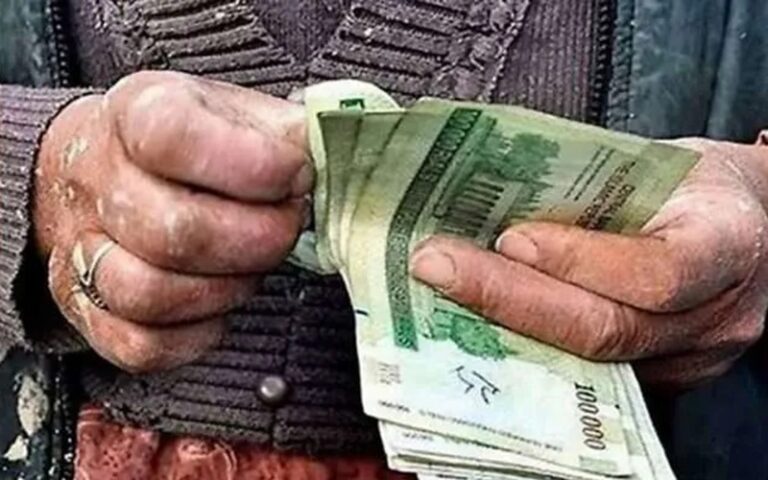
The livelihood situation of workers in Iran has entered a worrying stage. The continuous rise in the prices of essential goods has widened the gap between household income and expenses.
According to a report published by the state-run Khabar Online news website on August 9, millions of workers are waiting for a decision by Iran’s Supreme Labor Council by mid-September. Under Article 10 of the council’s resolution, it is required to review changes to the benefits of workers covered by Iran’s labor law.
Iran’s Economy in Critical Condition, Insider WarnsThis decision has become significant as living costs have risen faster than workers’ incomes. The labor community now expects the review to result in a real increase in take-home pay. However, it remains unclear how much the September decision can compensate for workers’ declining purchasing power.
Workers’ purchasing power under pressure from food inflation
Statistics published by the Statistical Center of Iran provide a clear picture of the pressure from living costs. According to the figures cited in the report, annual inflation for the food and beverages category has reached 66%. Among essential goods, some items have seen even steeper price increases. Cooking oil tops the list with 162% inflation. Bread and cereals have experienced 122% inflation, while dairy inflation has reached 99%. The consequence of this situation is not limited to reduced purchasing power. Changing consumption patterns have also become one of the results of rising prices. Households are shifting toward cheaper goods, while lower-income families are being hit the hardest.Food vouchers; fixed support against changing prices
Food vouchers are another key issue in discussions about workers’ livelihoods. According to the state-run Khabar Online report, the amount of this support has remained unchanged from January to August this year. During the same period, food prices continued to rise. As a result, the real value of this support has declined over time. Simply put, a fixed voucher amount cannot keep pace with changing market prices. The new phase of food voucher distribution also began on August 6. Nevertheless, the main issue remains the level of support and whether it matches the actual cost of a household’s food basket. For working families, purchasing power depends not only on wages. Benefits, livelihood assistance, and the cost of the household consumption basket also play decisive roles. If these components do not keep pace with inflation, nominal income increases will have only a limited effect.Can the September decision restore workers’ purchasing power?
Vahid Hajizadeh, a labor relations expert, has emphasized the importance of reviewing workers’ benefits in light of rising living costs. The main issue now is how this review will be implemented. In recent years, Iran’s economy has seen a significant gap between income growth and rising household expenses. Under such conditions, annual wage decisions do not keep pace with the speed of price increases. If food prices rise sharply over a short period, workers’ purchasing power also declines quickly. As a result, even wage increases can lose their impact without complementary mechanisms. This situation also has social consequences. Reduced purchasing power limits household consumption, and lower consumption can reduce quality of life. The continuation of this trend also places greater pressure on the middle and lower-income classes. From an economic perspective, the issue is not simply increasing a figure on a paycheck. The main challenge is preserving the real value of workers’ income against inflation. Without such an approach, the gap between wages and living costs will continue to grow. Today, workers’ purchasing power is not merely an economic indicator; it is a measure of the livelihood conditions of a large segment of society. Inflation data show that the greatest pressure has fallen on essential goods. Under these circumstances, the Supreme Labor Council’s decision in September carries particular significance. If the review of benefits fails to narrow the gap between income and expenses, livelihood pressures will continue. For workers, the issue is no longer simply higher wages. The central issue is whether income from work can provide even a minimum standard of living.Egypt And Bahrain Condemn Iranian Regime Attacks on Oil Tankers
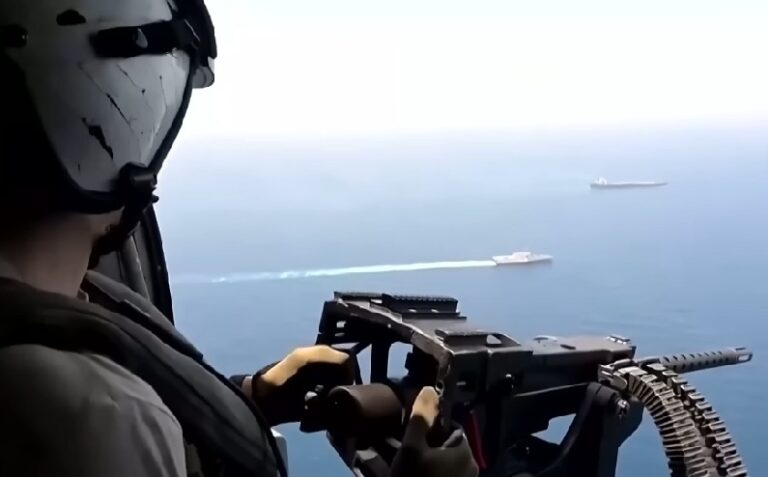
In a statement, Bahrain’s Foreign Ministry strongly condemned the Iranian regime’s attack on two United Arab Emirates oil tankers while they were passing through the Strait of Hormuz.
The statement said that the attack constituted a clear violation of international law, the United Nations Convention on the Law of the Sea, relevant UN Security Council resolutions, including Resolution 2817, and resolutions of the International Maritime Organization.
Bahrain’s Foreign Ministry also affirmed the country’s full solidarity with the United Arab Emirates and its complete support for the measures the UAE takes to protect its security, stability, and vital interests.
The ministry stressed that the security and stability of the United Arab Emirates are an inseparable part of the national security of Bahrain and the member states of the Gulf Cooperation Council.
Bahrain also called for preventing the Strait of Hormuz from being used as a tool for pressure or economic blackmail, saying this is essential for safeguarding energy security, maintaining stable food and medicine supplies, ensuring the flow of global trade, and strengthening security, stability, and prosperity in the region and around the world.
Egypt’s Foreign Ministry also issued a statement condemning the attack on two UAE vessels in the Strait of Hormuz and called for an end to all actions that threaten international maritime security.
In the statement, Egypt reaffirmed its full solidarity with the United Arab Emirates and called for an end to actions that endanger the security of ships and civilian facilities.
Cairo also stressed the need to respect international law to help reduce tensions and preserve security and stability in the region.
CENTCOM: 59 Vessels Linked to Iran Redirected
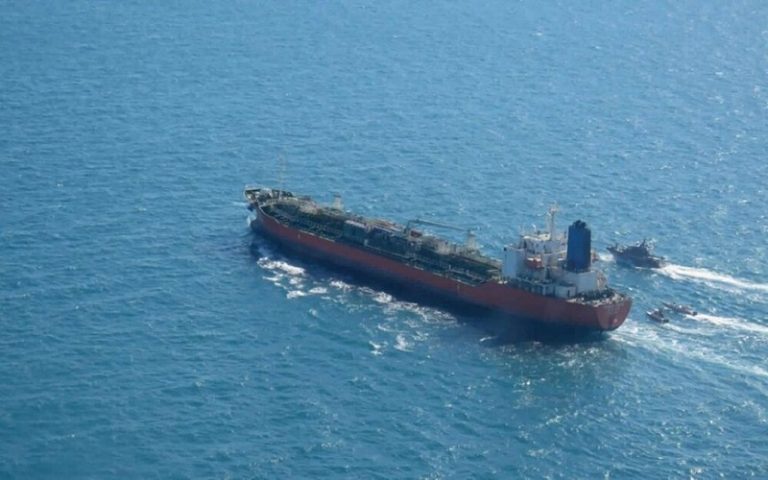
The U.S. Central Command (CENTCOM) says that as of Wednesday, August 12, U.S. forces had redirected 59 commercial vessels linked to the Iranian regime, disabled three vessels, and boarded two ships to inspect them and ensure full compliance with the blockade.
Following the resumption of attacks on ships in the Strait of Hormuz by the Islamic Revolutionary Guard Corps (IRGC), the United States resumed its naval blockade against the Iranian regime on July 14. According to tanker-tracking companies, Iran’s oil exports have come to a complete halt since the naval blockade began. President Donald Trump said in a Wednesday post on Truth Social that the U.S. naval blockade of the Iranian regime is a “steel wall” and that the regime cannot do anything to counter it.An F/A-18 fighter jet launches from the flight deck of USS George H.W. Bush (CVN 77) while the ship sails in regional waters and supports enforcement of America’s 🇺🇸 steel wall blockade against Iran. As of Aug. 12, U.S. forces have redirected 59 commercial vessels, disabled 3 and… pic.twitter.com/dH4BBshoTE
— U.S. Central Command (@CENTCOM) August 12, 2026
Oil Pollution Reaches the Shores of Persian GulfHe stressed that the United States has full control of the Strait of Hormuz and will likely maintain it. In response to Donald Trump’s message, the Persian Gulf Waterway Management Authority—operating under the supervision of the IRGC—claimed that the Strait of Hormuz remains closed and will not reopen until the Iranian regime’s conditions are accepted.
The Iranian regime has disrupted international shipping both in the Strait of Hormuz and, more recently, through its Houthi proxy forces in Yemen in the Bab el-Mandeb Strait. However, vessel traffic continues at a limited level in the Strait of Hormuz and at a high level through Bab el-Mandeb. Maritime data analytics company Kpler said in a Wednesday post on X that 14 ships passed through the Strait of Hormuz on Tuesday.Iran’s Persian Gulf Strait Authority (IRGC) : “Claims and repeated tweets by U.S. officials about reopening the Strait of Hormuz do not change reality. The strait remains blocked and will not reopen until Iran’s conditions are accepted.” pic.twitter.com/Mdat1mplJK
— DDF NEWS (@ddfmarketing1) August 12, 2026
Before the Strait of Hormuz was closed, between 120 and 150 ships passed through it each day. According to Kpler, ship traffic through Bab el-Mandeb has also increased to 40 vessels, showing little change compared with normal traffic through the waterway.Chokepoint traffic rises, risks persist
— Kpler (@Kpler) August 12, 2026
Maritime traffic increased through both the Strait of Hormuz and Bab el-Mandeb on 11 August, but higher volumes have not translated into normalisation. Hormuz crossings rose to 14, with 11 using the Iranian Unilateral Scheme and none using… pic.twitter.com/szFMq6tO4c
Oil Pollution Reaches the Shores of Persian Gulf
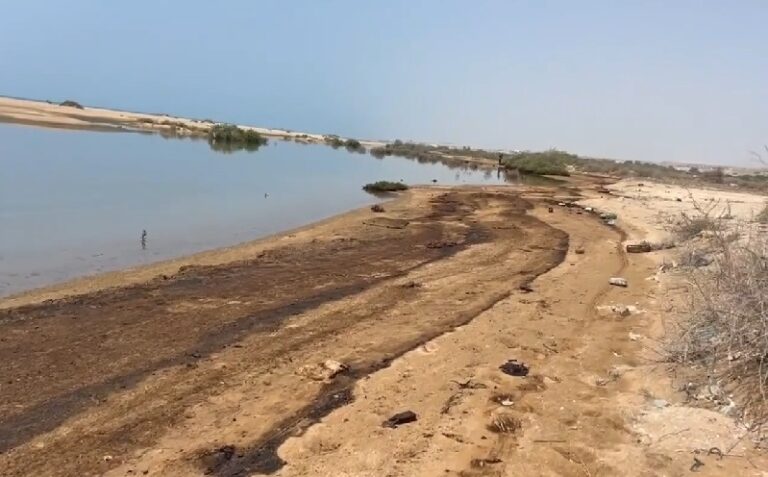
Oil pollution on the southern shores of Qeshm Island, which has also reached the island’s mangrove forests, has heightened concerns about environmental consequences on both sides of the Strait of Hormuz, as an oil leak from a stranded tanker has also reached the coast of Oman.
Officials from the Iranian regime have not yet officially announced the source of the Qeshm pollution, but Foreign Ministry spokesperson Esmaeil Baghaei says preliminary evidence indicates it originated from “a foreign bulk carrier.”
Esmaeil Baghaei, the Iranian regime’s Foreign Ministry spokesperson, said on the evening of Wednesday, August 12, that pollution had been detected at three coastal locations and across parts of the sea surface, and that it had drifted from the Persian Gulf toward the shore.
Maritime Blockade is Worse Than War, President of Iran-China Chamber of Commerce WarnsWithout naming the vessel, he said preliminary evidence suggests the pollution came from “a foreign bulk carrier” and added that all parties benefiting from commercial shipping through the Strait of Hormuz are “responsible for compensating for the environmental damage inflicted on the Persian Gulf and the Gulf of Oman.” The head of Qeshm’s Department of Natural Resources and Watershed Management said determining the exact source of the pollution depends on expert investigations and the final assessment of reports from the responsible authorities. However, the ship-tracking website TankerTrackers has claimed the pollution is most likely linked to Iran’s attack on the cargo ship Minoan Pioneer on August 3 in Omani waters, and that the oil slick subsequently drifted with the current through the Strait of Hormuz to Iran’s shores. Earlier, the state-run IRNA news agency reported that some of the oil slick had entered the mangrove forests along Qeshm’s southern coast, and that monitoring and cleanup operations had begun to prevent the pollution from spreading further. Mangrove forests are among Iran’s most important coastal ecosystems and play a vital role in preserving biodiversity, maintaining shoreline stability, and providing habitat for marine life and birds.
Oil leak reaches Oman’s coast
At the same time, Agence France-Presse reported that an oil leak from a tanker that has been stranded since June 30 after being damaged in explosions near Yemen’s coast has now reached Oman’s shores. The International Maritime Organization said it is closely monitoring the leak, while monsoon winds have delayed access to the vessel and efforts to contain the pollution. According to Omani officials, the oil slick now covers at least 390 square kilometers and has contaminated part of the coastline in the Ras Madrakah area. They also warned that the southern shores of Masirah Island may be affected. The spill threatens the Hallaniyat Marine Protected Area, which is home to valuable marine species, including rare sea turtles. Omani authorities have not yet announced the cause of the oil leak, but the British maritime security company Vanguard said the tanker had been targeted near Yemen’s coast in June. The tanker, which was carrying about one million barrels of crude oil, is reportedly part of Russia’s “shadow fleet” used to circumvent Western oil sanctions. Hormozgan’s coastline had already experienced extensive oil pollution earlier this spring. Environmental officials said at the time that the contamination resulted from an attack on the Lavan oil refinery during the 40-day war, and that oil had reached the shores of Qeshm, Larak, Hengam, and Hormuz islands.EU And 26 Countries Around the World Condemn the Execution of Protesters in Iran

On Wednesday, August 12, the European Union and 26 countries around the world issued a joint statement condemning the wave of executions of protesters in Iran. They called on the Iranian regime to immediately end its use of the death penalty and release those who have been arbitrarily detained.
According to Reuters, French Foreign Minister Jean-Noël Barrot, announcing the statement, said the signatories had called on Iranian regime officials to listen to the people’s demands and take meaningful steps to ensure respect for human rights.
The statement emphasizes the urgent need to halt executions and release those who have been arbitrarily detained. The statement comes amid growing international concern over the issuance and implementation of death sentences against detainees from recent protests in Iran.
EU Designates IRGC as Terrorist Organization Amid Escalating Repression in Iran
UN experts condemn the execution sentences against 12 young protesters
UN experts also condemned, in late July, the death sentences issued against 12 young people in connection with the January protests and called for their immediate annulment. According to UN experts, the 12 individuals were tried and sentenced to death during a single court hearing, raising concerns about compliance with fair-trial standards in cases related to the protests.Amnesty International: At least 26 protesters have been executed
Amnesty International also stated in a report published in July that, since the beginning of this year, the Iranian regime has executed at least 26 people who had been charged with various offenses in connection with the January protests. The organization emphasized that some of these sentences were issued by Revolutionary Courts, which in these cases have faced allegations of torture, the extraction of forced confessions, and serious violations of fair-trial principles.European Union: We oppose the death penalty under all circumstances
The European Union has previously condemned the increase in executions in Iran and has repeatedly emphasized that it opposes the death penalty under all circumstances. The European Union considers the death penalty incompatible with the inalienable right to life and the prohibition of cruel and inhuman treatment or punishment. The joint statement by the European Union and 26 countries around the world was issued as international pressure on the Iranian regime has increased over its suppression of protesters, arbitrary detentions, and widespread use of the death penalty in cases related to the protests. The countries that signed the statement emphasized that instead of continuing its repression, the Iranian regime must heed the people’s demands and take practical and meaningful steps to respect human rights and end executions.Executive Deputy of Iranian Regime Army Commander: More than 75% of Our Missile Capability Remains Intact
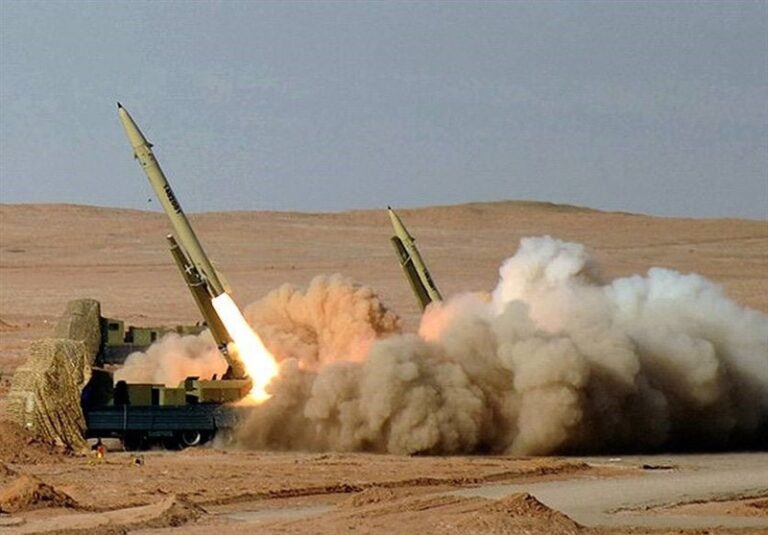
Alireza Sheikh, executive deputy of the Iranian regime’s army commander, claimed that “more than 75% remains intact and is ready for use.” Without providing details or evidence to support this claim, he added that reports from foreign intelligence agencies had also confirmed that more than three-quarters of Iran’s missile and drone capabilities remain intact.
In an interview with the state-run website Jamaran, the senior official claimed: “There has not been a moment’s pause in rebuilding power within the armed forces. Even under the current conditions, the regeneration of our defense capabilities, drones, and missiles has not stopped for a single moment.”
Iranian Regime Missile Stockpiles Are Running OutAccording to him, the Iranian regime has “changed the playing field and shifted it to other elements of national power, rendering the enemy’s defensive capabilities ineffective.” In recent weeks, reports have emerged about the Iranian regime’s efforts to rebuild its military infrastructure. Among them, The Wall Street Journal reported in late January, citing satellite imagery, that the Iranian regime had rebuilt parts of missile bases, ports, and production facilities damaged in U.S. and Israeli attacks more quickly than expected. According to the newspaper, the satellite images taken from several locations across Iran show that reconstruction work on infrastructure damaged in those attacks—from underground missile bases to industrial facilities—is continuing at a rapid pace.
Advisor to IRGC Commander: Our Doctrine Has Changed from Defensive to Offensive
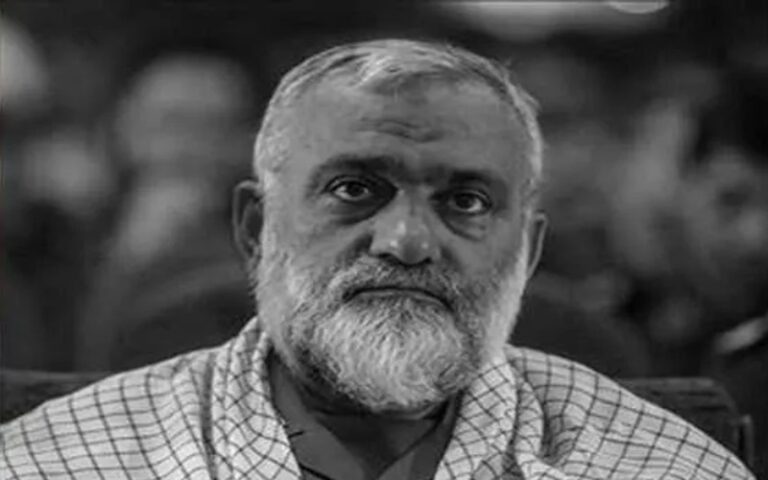
Mohammad-Reza Naqdi, adviser to the commander-in-chief of the Islamic Revolutionary Guard Corps (IRGC), announced that Iran’s regime has decided to change its military doctrine from a defensive posture to an offensive approach and that the conditions for implementing this approach are also in place.
In an interview with the Iranian regime’s state television, Naqdi, responding to the appointments issued for senior military commanders, said the decision to change the military doctrine had been made and that the new appointments had also been issued as part of preparing the armed forces to implement this policy.
Veteran War Commander Takes Over Iranian Regime Security CouncilHe emphasized that the new approach would not be limited to military capabilities and would be based on “hybrid warfare.” According to him, military and weapons capabilities must be combined with diplomacy, propaganda, economic affairs, social capacities, and other components of power, with all these elements coordinated to achieve a common goal. The adviser to the IRGC commander-in-chief also discussed the timing of the new appointments, saying that, procedurally, they differed from those in previous periods. According to him, in the past, commanders were appointed on the first day after their predecessors were killed, but this time the appointments were made after a delay. Naqdi went on to discuss the Iranian regime’s military capabilities and claimed that although the “enemy” possesses capabilities that the Iranian regime lacks, Iran’s military equipment is “completely indigenous,” which allows for rapid changes in technology and battlefield management. He also claimed that Iran’s missile and drone production capacity exceeds the amount consumed and launched.
Mohsen Rezaei: We Will Give an “Immediate and Decisive Response” to Any Aggression
As Naqdi spoke about the change in military doctrine, Mohsen Rezaei, the new secretary of the Supreme National Security Council and one of the two representatives of Iran’s regime supreme leader on the council, announced readiness for a military response to what he called “aggression.” In his first statement after taking up the position, Rezaei said that Iran’s regime would give an immediate and decisive response to “the bullying of its enemies.” He also said the goal is not merely for Iran’s regime to get through the current phase, but to emerge from it “safer, more cohesive, more powerful, and with greater capacity for progress and growth.” The latest remarks by Naqdi and Rezaei come as senior Iranian regime officials are simultaneously speaking of a shift in military posture, strengthening missile and drone capabilities, and readiness for a rapid response to external threats.Food Prices and Wage–Cost-of-Living Gap Surge for Iranian Workers
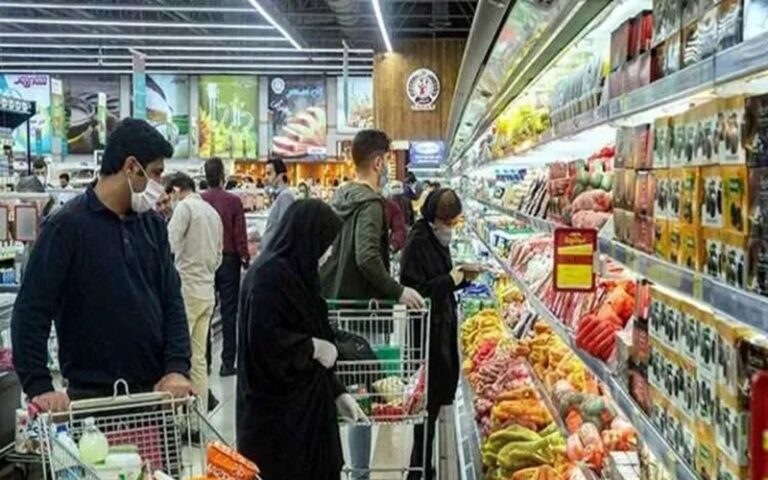
The latest statistics from the Iranian regime’s Statistical Center indicate that inflation continues to put pressure on households. This pressure is more severe in the food sector. Rising prices of essential goods have made the cost of living heavier for low-income households.
According to a report by the state-run ILNA news agency, year-on-year inflation across the country reached 87.9% in July. This means that households spent, on average, nearly 88% more to purchase a similar basket of goods and services than they did in July last year.
Fresh Warning Over Continued IRGC Attacks on Commercial ShippingMeanwhile, food products have been hit by the greatest inflationary pressure. Year-on-year inflation for food and beverages was reported at 128.1% in July.
Food Inflation; Surge in the Prices of Essential Goods
The published statistics present a troubling picture of rising food prices. The prices of oils and fats increased by 261.5% in July. Dairy products, milk, and eggs also experienced a 147.1% increase in prices. Red and white meat rose by 145.2%. The prices of bread and cereals increased by 116.7%. Fruit and dried fruit also recorded an increase of 115.4%. These figures show that inflation in the food sector is not limited to non-essential goods. For low-income households, reducing consumption or eliminating certain goods may become a way to control expenses. However, many of these items are basic necessities, making it impossible to eliminate them.The Wage–Cost-of-Living Gap for Workers
As inflation has risen, the gap between wages and living costs has also widened. The minimum wage for 2026, including benefits, has been reported at about 220 million rials (approximately $117). In contrast, independent estimates put the cost of a minimum subsistence basket at about 700 million rials (approximately $370) per month. Based on this estimate, a minimum-wage worker faces a monthly shortfall of more than 400 million rials (approximately $212). This gap has increased economic pressure on working-class households. The monthly income of a minimum-wage worker has become severely insufficient even to cover a limited portion of essential living expenses. Albert Baghzian, an economics professor at the University of Tehran, also told the state-run ILNA: “People continue to feel the increase in daily expenses.” He also warned about a possible increase in gasoline prices. According to Baghzian, “An increase in gasoline prices can raise transportation costs.” This increase could also affect the prices of goods and services through higher transportation costs. The formation of inflationary expectations could also trigger a new wave of price increases.Inflation and Additional Pressure on Livelihoods
Persistently high inflation is occurring while the incomes of many working-class households have not kept pace with the rising cost of living. The result is a widening gap between income and essential living expenses. The published food-price figures also show that the greatest pressure has fallen on goods directly connected to household food supplies. When the cost of a minimum subsistence basket is several times the minimum wage, the issue is no longer simply the rising prices of a few goods. The issue is the inability of a large segment of wage earners to cover their basic living expenses. The July 2026 statistics provide a clear picture of the inflationary pressure on household life. Inflation of 87.9%, alongside food inflation of 128.1%, has placed a heavy burden on consumers. Under such conditions, a possible increase in gasoline prices could also raise transportation costs and the prices of goods and services. The main issue now is not simply the rising price of one or several goods. Chronic inflation is directly eroding the purchasing power of wage earners and making the tables of working-class households smaller every day.Iran: No to Execution Tuesdays Campaign Marks 133rd Week
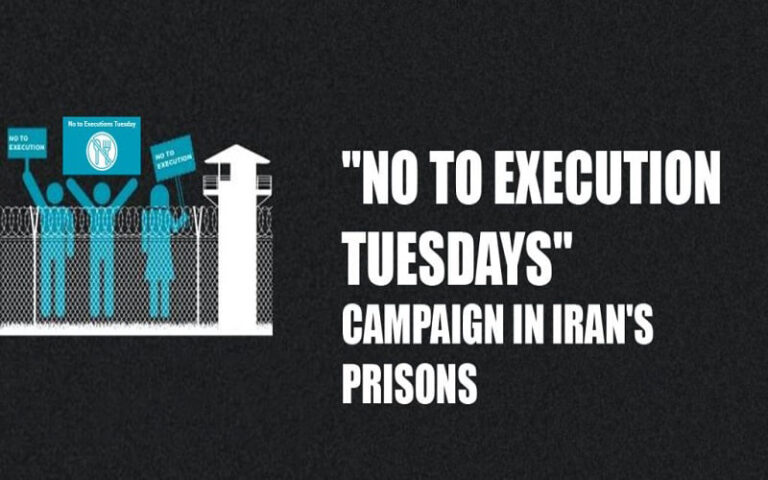
Reports indicate that on Tuesday, August 11, the No to Execution Tuesdays Campaign entered its 133rd week, with thousands of prisoners across the country going on hunger strike in 59 different prisons to protest the wave of executions. On this occasion, the prisoners participating in the campaign issued a statement and once again emphasized their demands. The text of the statement is as follows.
Continuation of the No to Execution Tuesdays Campaign in Its 133rd Week in 59 Different Prisons
The executioner regime has executed at least 342 prisoners since the beginning of the Iranian year on March 22, including 10 women, two individuals who were children at the time of their sentencing, and 37 political prisoners. Last week, two detainees from January 2026 uprising in Shiraz, Mojtaba Dehbandi and Kianoush Hamzeh’ei, were sentenced to death. The judicial proceedings against these two prisoners, like those involving many other prisoners, have been unjust and nontransparent.Volker Türk Expresses Deep Concern Over Increase in Executions in IranIran’s regime seeks through these executions to create an atmosphere of fear and terror in society in order to silence every voice of protest. During this period, we have witnessed a number of prisoners who protested against executions being transferred to solitary confinement or facing new cases being fabricated against them. On the other hand, by opening mass cases such as those involving Alikhani Square, Isfahan’s Shohada Square, Shandiz, or Esfarayen, and issuing death sentences or lengthy prison terms, they seek to intimidate society. But these tactics only multiply public anger. We, the members of the “No to Execution Tuesdays” Campaign, express our gratitude to all segments of society, including artists, who in one way or another support the “No to Execution” campaign and the families of those executed. We once again call on all honorable people of Iran from all walks of life to protest, like the retirees, at gatherings against the rampant executions and to declare their unwavering support for the No to Execution movement and the “No to Execution Tuesdays” Campaign. On Tuesday, August 11, members of the “No to Execution Tuesdays” Campaign are on hunger strike in 59 prisons across the country, marking the campaign’s 133rd week.
