

British Couple Imprisoned in Iran End Hunger Strike After Nearly Three Months
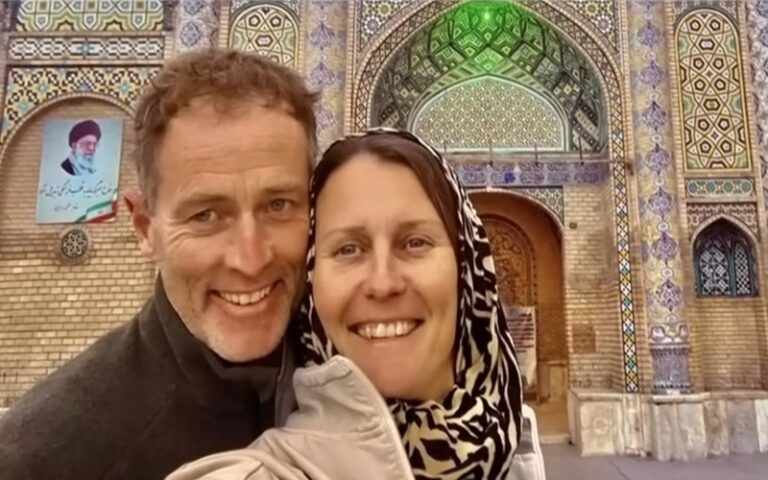
The family of Lindsay and Craig Foreman, a British couple imprisoned in Iran, announced that the two had ended their hunger strike after nearly three months in protest against their detention conditions.
According to Agence France-Presse, Craig Foreman began his hunger strike on May 9, 2026, and ended it on Sunday, August 9, after 93 days. Lindsay Foreman, who joined her husband’s hunger strike on May 18, also ended her hunger strike after 84 days. According to the family, the couple consumed only water during the final five days.
Five family members and supporters in Britain had also joined the hunger strike to draw attention to the situation of the couple and other prisoners in Iran.
Joe Bennett, Lindsay Foreman’s son, said that during the final days of the hunger strike, his mother’s blood sugar dropped sharply and she was taken to hospital.
According to the family, Lindsay and Craig were allowed to see each other for about three hours on Sunday and eat together for the first time in nearly three months. Their relatives say the couple’s physical condition improved somewhat after eating, but their recovery will remain difficult.
Lindsay and Craig Foreman, both in their early 50s, were arrested in January 2025 while traveling around the world by motorcycle and passing through Iran. In February 2026, they were each sentenced to 10 years in prison on charges of “espionage,” which both have denied.
Craig Foreman’s family announced last month that another two years had been added to his prison sentence. According to the family, the additional sentence was imposed after he spoke to the media.
United Nations human rights experts had previously expressed grave concern about the couple’s situation, warning that fair-trial guarantees may not have been respected and saying that the manner of their detention could amount to hostage-taking.
The couple had previously protested repeatedly against the poor and unhygienic conditions of their detention at Evin Prison.
How the Strait of Hormuz Crisis Impacts the Livelihoods of the Iranian People
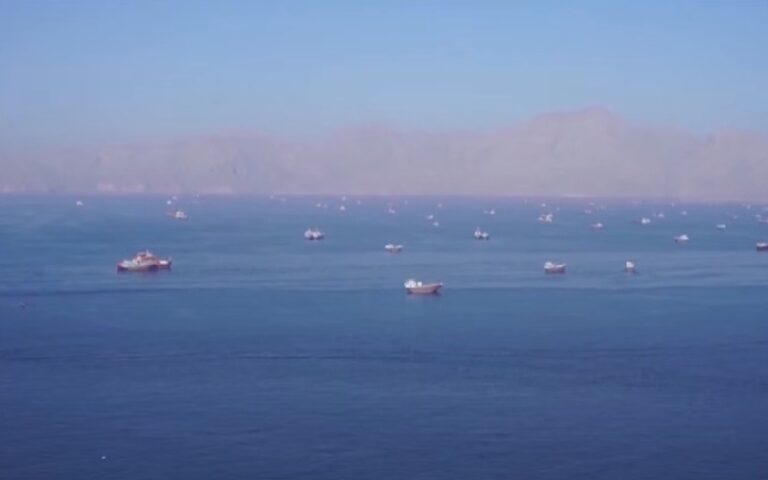
Military tensions and the Iranian regime’s blockade of the Strait of Hormuz have pushed the livelihoods of people inside Iran into a critical phase. Reckless and adventurist actions in recent months have brought numerous severe economic and security consequences for the country.
Import Crisis and the Empty Tables of the People
The closure of international shipping routes has caused a sharp decline in the arrival of essential goods and raw materials at Iranian ports. By imposing a blockade at the mouth of the Gulf, the United States has completely halted the unloading of commercial vessels. According to official reports published by the state-run Donya-e-Eqtesad on August 1, commercial shipping traffic in the region has fallen to the lowest possible level. Traffic through the Strait of Hormuz has dropped to its lowest level in recent years.40 million Iranians Below Poverty LineSevere shortages of medicines and food products have placed additional pressure on low-income segments of society. Supply shortages have pushed food inflation above 70.5%, severely eroding household purchasing power. People’s tables are shrinking every day, while currency fluctuations have made basic food supplies increasingly unstable. Disruptions around the Strait of Hormuz have multiplied the transportation costs of imported goods. The state-run Entekhab reported on July 28, citing the Central Bank, that the year-on-year inflation rate in July had exceeded 83%, while the year-on-year inflation rate for goods had reached 120%. The state-run Fararu wrote that part of this inflation stems directly from shortages of imported goods caused by disruptions in the Strait of Hormuz and maritime borders. Economic experts say that only between 25% and 30% of the country’s trade can be conducted through land borders and the Caspian Sea, and at a much higher cost.
Missile Attacks on the Persian Gulf and Insecurity in the Strait of Hormuz
Drone and missile attacks on commercial vessels and Arab countries bordering the Persian Gulf have made a vital region insecure. According to reports published by the state-run Etemad Online on August 4, attacks on ships have complicated international negotiations. These hostile actions are doubling the risk of the war expanding and of direct confrontation. The closure of the Strait of Hormuz has not only harmed global trade. Higher shipping insurance rates and the refusal of major companies to provide transit services have resulted in Iran’s complete economic isolation. Arab neighbors have also formed new defense alliances that are shifting the regional security balance against Tehran. Military adventurism has only intensified Iran’s international and regional isolation. Creating tensions in sensitive waterways such as the Strait of Hormuz has completely eliminated the country’s commercial security margin.The Enormous Costs of Missile Programs and Political Isolation
Billion-dollar investments in nuclear projects and missile development over the past 48 years have brought not the slightest prosperity to the people of Iran. The regime’s proxy groups in the region have merely consumed the country’s vast financial resources and brought no tangible benefits to the people. Analytical reports in the state-run Tejaratnews, citing the World Bank, on June 14 indicate that global and regional inflation resulting from these adventurist policies is increasing. The crisis stemming from the situation in the Strait of Hormuz has intensified pressure on the domestic market. Domestic and foreign investors, seeing the chronic insecurity, have withdrawn their capital from the country. Capital flight and severe stagnation have halted job creation for young people. Using international waterways as a means of leverage has prompted a powerful military response from global powers. This isolation is the direct result of the irrational and adventurist policies of the governing institutions. The experience of the past 48 years has demonstrated that the Iranian government lacks the capacity and will for genuine reform. Nuclear projects, missile programs, and support for proxy groups have not only failed to bring security but have destroyed the livelihoods and lives of the people. Creating crises in waterways, including the blockade of the Strait of Hormuz and confrontations with neighboring countries, demonstrates the futility of these policies as a whole. The only way out of this livelihood crisis and the danger of war is fundamental change and replacement with a democratic and secular government; a government that places people’s prosperity, peace, and livelihoods at the top of its policy priorities.Maritime Blockade is Worse Than War, President of Iran-China Chamber of Commerce Warns
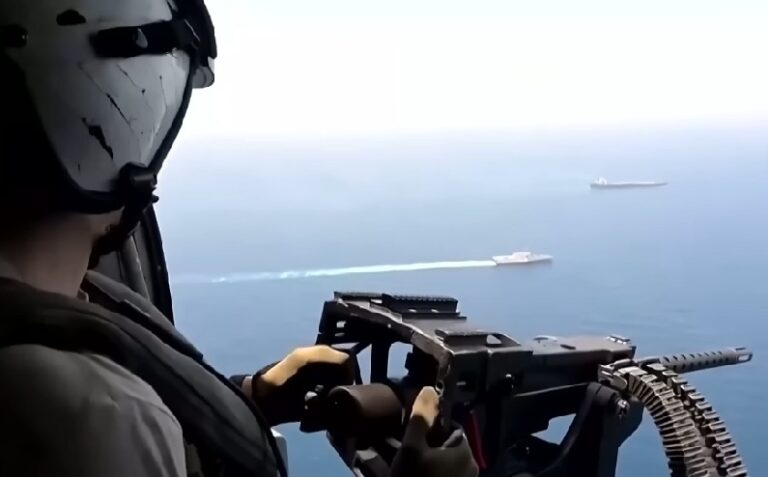
Majid-Reza Hariri, president of the Iran-China Chamber of Commerce, warned about the consequences of the continued maritime blockade of Iran, saying that the country’s economy must not become accustomed to “circumventing the blockade” and that this situation must be brought to an end by any means possible.
In an interview with the state-run Khabar Online, Hariri said: “Whether through negotiations, pleading, threats, or war, this maritime blockade must come to an end.” He emphasized that the economic consequences of the blockade could be even more severe than those of a direct war.
Iran’s Economy in Critical Condition, Insider WarnsAccording to him, more than 80% of global trade is conducted by sea, and shifting a large portion of Iran’s trade to overland routes would sharply increase the costs of imports and exports. Hariri said that transporting a container from China to Iran by sea costs about $3,000, whereas transporting the same shipment overland costs an average of about $12,000. Referring to the arrival of about 2 million containers through Iran’s southern ports each year, he estimated that continuing this situation could impose about $18 billion in additional costs on the economy. The president of the Iran-China Chamber of Commerce also warned that higher transportation costs could eliminate a large portion of the profits from Iran’s non-oil exports and make continued exports of some goods economically unviable. He described the “neither war nor peace” situation as economically debilitating for Iran and said Tehran should use diplomatic, legal, and other available means to end the blockade. Hariri ultimately said that if the United States is unwilling to end the blockade, Iran’s regime should increase the cost of continuing this policy for Washington, even if this process leads to a military confrontation.
Veteran War Commander Takes Over Iranian Regime Security Council
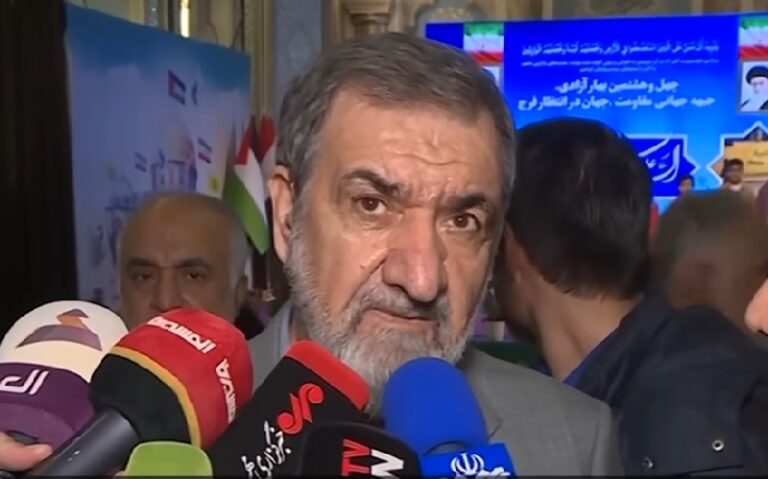
Mojtaba Khamenei, the supreme leader of the Iranian regime, appointed Mohsen Rezaei as his representative to the Supreme National Security Council on August 9, 2026. Hours later, Iranian regime president Masoud Pezeshkian appointed him secretary of the council.
Seventy-one-year-old Mohsen Rezaei was one of the founders of the IRGC Intelligence Unit before becoming commander of the Iran-Iraq War. In 1981, at the age of 27, he became commander of the Islamic Revolutionary Guard Corps (IRGC), a position he held for 16 years—the longest tenure as commander of the force.
UK Designates Iran Regime’s IRGC as a Terrorist OrganizationDuring his tenure, the IRGC’s ground, naval, and air forces were established, the Khatam al-Anbiya Headquarters was founded, and the IRGC evolved from a paramilitary force into military, security, and economic power. Rezaei’s name, however, is most closely associated with the Iran-Iraq War, from major operations to decisions whose human cost is still debated.
Karbala-4: Defeat Under the Name of Deception
The main example is Operation Karbala-4, an operation that was compromised in January 1987 and halted after heavy Iranian casualties. According to figures cited by Hossein Alaei, former commander of the IRGC Navy, a total of 17,000 Iranian forces were killed or went missing and 26,000 were wounded in Operations Karbala-4 and Karbala-5. Years later, Rezaei wrote: “Operation Karbala-4 was carried out to deceive the enemy.”From Uniform to Ballot Box
In 1997, Rezaei put aside his military uniform and served for 24 years as secretary of the Expediency Discernment Council. He also ran in four presidential elections. In 2015, Rezaei said that if the United States attacked, Iran would capture “at least 1,000 Americans” in the first week and receive “several billion dollars” for the release of each one: “Our economic problem would also be solved.” The idea that Iran could solve its economic problems by taking American soldiers hostage was for a long time a subject of ridicule and criticism.Boasts That Have Become Relevant Again
But in recent months, Rezaei’s rhetoric has been more than a reminder of his old boasts; it has become closely tied to the ongoing dispute over war and negotiations. Following the 12-day Iran-Israel war in 2025, he claimed that Iran had used only “30%” of its capabilities and had been prepared for a two-month battle: “If the war had lasted more than two months, there would be no Israel today.” He then warned that if Israel attacked again, Iran would respond “with all its might” and change its “red lines.” The Strait of Hormuz also occupies a central place in his recent positions. He has said that Donald Trump wants to become the “police of the Strait of Hormuz” and that the costs of security, insurance, and the environmental consequences of the waterway should be charged to its users. In the days leading up to his appointment as secretary of the council, he also warned: “If the blockade continues, American ships and forces will face serious dangers and casualties,” adding: “We will never allow a second corridor to be opened in the Strait of Hormuz.” In his view, the strait is “under Iran’s management,” and the patience of the armed forces also has limits. Mohammad Bagher Zolghadr, too, said only one day before leaving office that the Strait of Hormuz would not be reopened until the United States changed its behavior. Therefore, the disagreement cannot be reduced to the simple dichotomy of “Zolghadr the moderate, Rezaei the warmonger.”The Regime’s Leadership After Ali Khamenei
This reshuffle comes amid a larger vacuum left by the death of Ali Khamenei. Iran’s regime is still at war, and the political and security formation of the new leadership has not been finalized yet. To date, no new image of Mojtaba Khamenei has been released, nor has his voice been heard. If the war ends, it is unclear where internal power struggles will go and how the balance among the new supreme leader, the IRGC, the government, and parliament will change. In such circumstances, Mohsen Rezaei is an understandable choice for the regime. He is a veteran commander with a network within the IRGC, understands the language of war, and can move between the regime’s supreme leader, the government, and various factions of the hardliners. Following the killing of Ali Khamenei, Iran’s regime has entered an endless cycle of internal conflicts and infighting, and it is unclear how far this will go. But one thing is beyond dispute: the Iranian regime’s weakness in managing crises and war. It appears that the regime has no choice but to continue the war and send signals of strength, while at the same time lacking the ability to resolve its internal problems, and economic difficulties have limited the capacity and resilience of the Iranian people.Fresh Warning Over Continued IRGC Attacks on Commercial Shipping
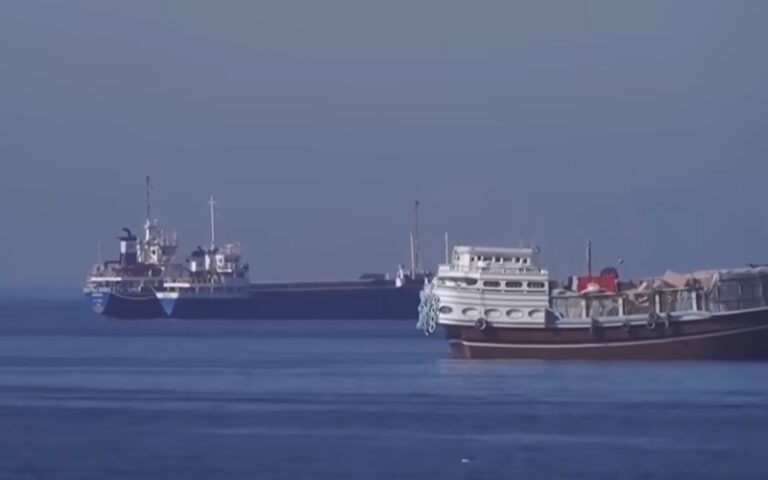
The Joint Maritime Information Center (JMIC) said that attacks and harassment by Iran’s Islamic Revolutionary Guard Corps (IRGC) against commercial shipping in the Strait of Hormuz are continuing.
According to the notice, these activities include radio contact with vessels, drone flights over them, and targeted monitoring of commercial ships.
The center wrote that such behavior indicates that Iran’s regime seeks to consolidate its presence along key routes and maintain pressure on transiting vessels. The threat level in the Middle East maritime region was assessed as “severe.”
According to the same notice, kinetic activity, including projectile impacts and near-miss explosions, has continued along Oman’s southern routes between Limah, Khasab, and Kamzar.
The notice, covering the period from March 1 to August 9, was issued by the United Kingdom Maritime Trade Operations (UKMTO), the primary authority for receiving and disseminating reports of maritime incidents in the region.
The Joint Maritime Information Center, however, is a multinational organization under Combined Maritime Forces (CMF), a U.S.-led coalition headquartered in Manama, Bahrain. The center was established in February 2024 following Houthi attacks on commercial vessels.
The Joint Maritime Information Center reported that commercial traffic through the Strait of Hormuz remains at reduced levels.
The center added that the risk of floating or uncharted mines within and near the Traffic Separation Scheme remains, and mine-risk areas remain active. Congestion at anchorages across the region was also unchanged.
The center also warned of disruptions to navigation systems and broader regional military activity.
Iranian Regime Sets New Conditions for Reopening the Strait of Hormuz
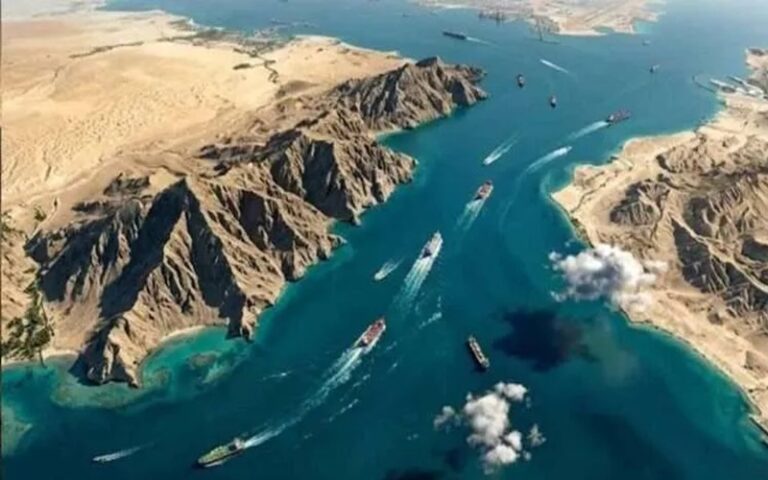
While Iranian regime officials announced progress in Iran-Oman negotiations over shipping routes through the Strait of Hormuz on Saturday, August 8, they also set out new and extensive conditions for reopening the waterway.
Mohammad Bagher Zolghadr, secretary of Iran’s Supreme National Security Council, said on Saturday that the Strait of Hormuz “will not be reopened until the United States corrects its behavior,” as he put it. He emphasized that the council would not back down from this position “whether in war or negotiations.”
Iraq: Iranian Regime Violated Commitments Regarding Strait of HormuzHe set out six conditions for reopening the strait, including an end to the war and U.S. attacks on Iran and the Iranian regime’s allies in Lebanon, Palestine, Yemen, and Iraq; an end to the naval blockade; the withdrawal of U.S. military forces from around Iran; full payment of war damages; the lifting of sanctions; and the release of Iran’s frozen assets. Zolghadr also called for an end to U.S. threats against Iran. Hours earlier, the Islamic Revolutionary Guard Corps (IRGC) spokesperson had also said that reopening the Strait of Hormuz “has essentially nothing to do with the Iran-Oman negotiations” and would take place only if the United States fully accepts “Iran’s conditions.” These positions were expressed as Iranian regime Foreign Minister Abbas Araghchi announced the same day that Iran and Oman were nearing an agreement on the “legal mechanism and management of the Strait of Hormuz.” Araghchi said Tehran and Muscat were “very close to an agreement” on determining shipping routes and were initially negotiating a temporary route that is intended to serve as the basis for the main route in the future. According to him, the military and naval forces of the two countries have also discussed the route based on existing maps. The Iranian regime’s foreign minister nevertheless stressed that an agreement with Oman would not in itself mean that the strait would be reopened, and that the matter depends on other conditions, including what Tehran calls “compensation for the violations of the Islamabad memorandum by the United States.” These positions differ significantly from assessments by U.S. officials in recent days. A U.S. official told Reuters on Friday that the Iran-Oman negotiations had made progress and that Washington expected an agreement to be reached “soon” that would allow unobstructed commercial traffic to resume through the Strait of Hormuz. The official said that if such an agreement were implemented, the United States would also lift its blockade of Iranian ports. It had previously been reported that the plan being negotiated by Iran and Oman includes establishing new shipping routes through the strait, an issue that over the past week has become one of the main focuses of diplomatic efforts to end the five-month crisis between Iran and the United States. U.S. Vice President JD Vance said on Saturday that Iran had promised Washington it would allow the flow of oil and gas through the Strait of Hormuz to return to prewar levels, but that the United States would not trust these commitments until they were implemented in practice. He said the negotiations are focused on establishing a mechanism for the safe passage of ships, including Iran’s commitment not to attack commercial vessels and to clear mines. Vance also said Iranian regime officials had told the United States they did not intend to charge fees to passing ships.
Retirees in Iran Demand Action on Their Grievances
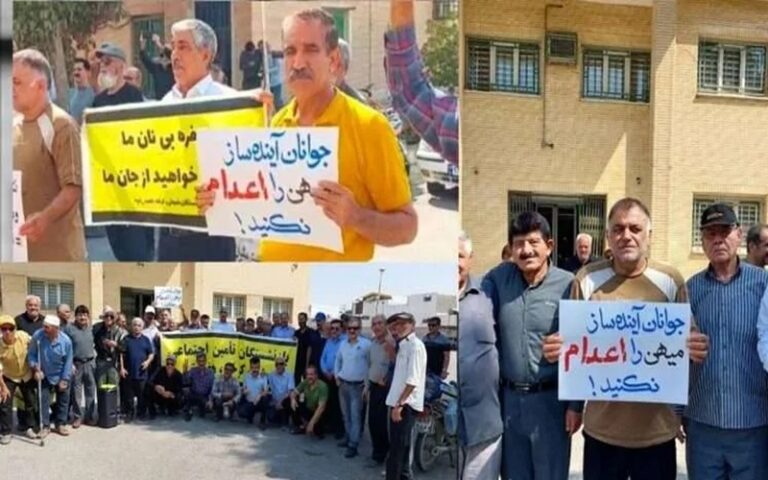
On Sunday, August 9, retirees and pensioners in several Iranian cities held street protests against dire living conditions, rising prices and inflation, discrimination, the violation of their rights, and the Iranian regime officials’ disregard for their demands.
The protests were held in the cities of Shush, Dezful, Ahvaz, Isfahan, and Kermanshah. In addition to their labor and livelihood demands, protesters chanted against corruption and plunder, warmongering, executions, and the repression of prisoners.
Shush: Protest in Temperatures Above 50°C
In Shush, Social Security retirees gathered and held a protest march outside the city’s Social Security building. The gathering took place as temperatures in Khuzestan Province had risen above 50°C.Continued Labor Protests: Telecommunications Retirees Rally in Various Iranian CitiesThe retirees protested meager wages and pensions, rising prices and inflation, poverty, the depletion of people’s household food budgets, the state of healthcare services, and the commodification of healthcare and education. They also protested corruption, plunder, and the looting of public wealth, as well as the Iranian regime officials’ disregard for people’s plight, and challenged the regime’s warmongering policies.
Dezful: Gathering Outside Social Security Office and Parliament Member’s Office
In Dezful, a group of Social Security retirees gathered outside the Social Security building and the office of a member of the Majlis (parliament) to protest their livelihood problems and labor demands. By gathering outside these offices, the protesters called for their demands to be addressed and for an end to their difficult living conditions.Isfahan: Second Consecutive Day of Steel Retirees’ Protest
In Isfahan, a group of retirees and pensioners of the Steel Pension Fund gathered outside the fund’s building for the second consecutive day. The protesters’ main demand was the full implementation of pension adjustments to bring payments into proportion. The continuation of the gathering for a second consecutive day reflects the Steel retirees’ ongoing protest over their wages and benefits.Ahvaz: Protest Against Rising Prices, Corruption, and Warmongering
In Ahvaz, Social Security retirees and pensioners gathered outside the Social Security Organization building in Khuzestan Province. The protesters objected to government corruption, warmongering, the difficulty of making ends meet, and the violation of their rights. One of the retirees’ main grievances was the four-month delay in implementing the salary increases for the Persian calendar months of Farvardin and Ordibehesht, corresponding to March 21–April 20 and April 21–May 21, respectively. They attended the gathering amid Khuzestan’s extreme heat and chanted against the policies of the Iranian regime. Among the chants by the Ahvaz retirees were: Imprisoned protesters, imprisoned workers, imprisoned teachers, must be freed! Imprisoned teachers must be freed. Imprisoned workers must be freed. Kermanshah: Protest Against Inflation, War, and Executions In Kermanshah, retirees also held a protest gathering. In addition to economic and livelihood problems, the chants addressed war, executions, human rights, the release of prisoners, and the need for solidarity against oppression and repression. Sunday’s gatherings in several cities show that retirees’ protests in Iran have gone beyond purely labor-related demands and have become a platform for expressing widespread dissatisfaction with the economic situation, corruption, warmongering, executions, and repression. Rising prices and inflation, declining purchasing power, healthcare problems, delays in payments and salary increases, and the incomplete implementation of the pension adjustment plan have been among the main issues driving these protests. Alongside these demands, chants were also heard against war and executions and in support of prisoners.Prison Guards Raid Ward 7 of Evin Prison, Intensifying Pressure on Prisoners
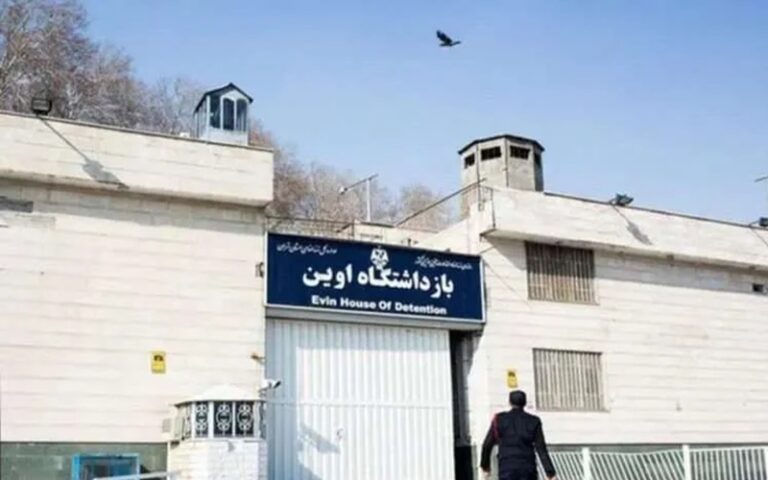
Reports indicate intensified pressure and repression against political prisoners in prisons across Iran. In the latest incident, Evin Prison guards raided Wards 3 and 4 of Ward 7 on Saturday, August 8, beating prisoners and, during the search, destroying their personal belongings and taking away some of their possessions.
The attack took place at around 11:30 a.m. According to published reports, after entering Wards 3 and 4, prison guards violently beat the prisoners and destroyed their rooms and personal belongings under the pretext of conducting a search. Following the raid, there is no information about the whereabouts or fate of four prisoners, including Ehsan Rostami and Mojtaba Taghavi in Ward 3, and Amirhossein Moradi and Hassan Amidi in Ward 4.
This is not the first raid by Evin Prison guards in recent days. On Saturday, August 1, guards also raided Ward 2 of Ward 7 and forcibly removed several prisoners from the ward after beating them, including Amirhossein Moradi, Ehsan Rostami, Pejman Toobreh Riziz, and Mojtaba Taghavi.
These actions are part of the Iranian regime’s broader policy of creating an atmosphere of fear and preventing protest and resistance inside prisons.
Continued Judicial Pressure on Political Prisoners
Meanwhile, the Iranian regime’s judiciary has announced that Parisa Kamali, a 39-year-old political prisoner, will stand trial on Monday, August 10, at the Revolutionary Court in Yazd. She was arrested in May 2024 and was subsequently sentenced by Judge Tavakoli to six years in prison on charges including “membership in the People’s Mojahedin Organization of Iran,” “acting against security,” and “destruction of public property.” In a message from prison, Kamali described the Iranian regime’s policy of executions and repression as a cause of fear and terror and emphasized that prisoners and opponents have now moved beyond the point of fear. Last year, she was also exiled to Yazd Central Prison as a punitive measure.Pressure on Masoud Jamei and His Transfer to Solitary Confinement
Reports from Sheiban Prison in Ahvaz also indicate that pressure has been exerted on political prisoner Masoud Jamei. He was reportedly transferred to solitary confinement after protesting prison conditions amid the extreme heat in Ahvaz; the cell has no cooling equipment.Political Prisoner Massoud Jamei Transferred to Solitary Confinement for TortureJamei had previously been transferred to solitary confinement in July protesting prison conditions. He was arrested in the summer of 2023 along with Farshad Etemadifar and Alireza Mardasi. In July 2025, Branch One of the Ahvaz Revolutionary Court, presided over by Judge Adibimehr, sentenced him to two death sentences and one year in prison on charges including “waging war against God,” “assembly and collusion against national security,” “membership in the People’s Mojahedin Organization,” and “propaganda against the regime.”
Severe Beating of Hamzeh Darvish at Lakan Prison in Rasht
At Lakan Prison in Rasht, Hamzeh Darvish was also reportedly severely beaten by prison personnel after exposing prison conditions. His injuries were reportedly so serious that other prisoners had to transfer him to the prison clinic on a stretcher.Jamming Devices Installed at Ghezel Hesar Prison
Meanwhile, at Ghezel Hesar Prison, following a hunger strike by approximately 1,500 prisoners, powerful “jammers,” or signal-blocking devices, have been installed in Unit 2 of the prison. Reports indicate that, in addition to cutting off or disrupting communications, these devices have caused symptoms such as dizziness, nausea, and severe physical pain among some prisoners, putting their health at risk. Taken together, these reports present a picture of intensified pressure on political prisoners and protesters in Iran’s prisons, ranging from raids and beatings at Evin Prison to transfers to solitary confinement, the issuance of harsh judicial sentences, torture, and the imposition of communications and physical restrictions in other prisons. The National Council of Resistance of Iran, while exposing these reports of pressure, called on international bodies to respond and take immediate action to save the lives of prisoners in Iran.U.S. Sanctions Cryptocurrency Exchange Network Linked to Iran’s regime
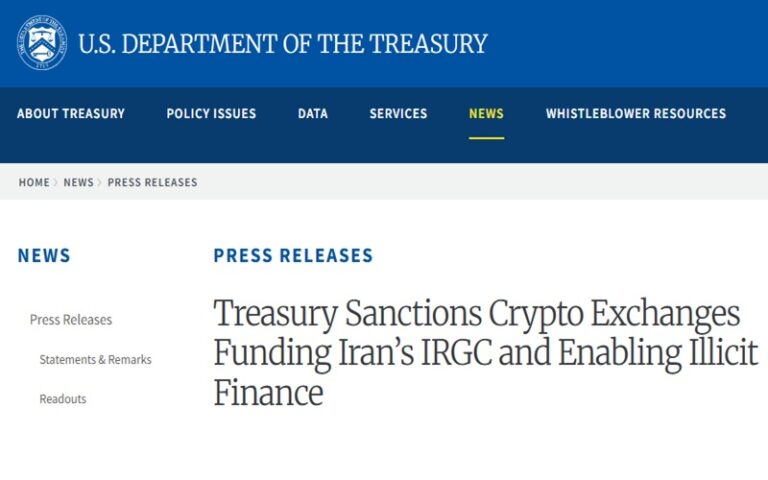
The United States sanctioned a cryptocurrency exchange network in the United Arab Emirates for allegedly assisting the Islamic Revolutionary Guard Corps (IRGC).
On Friday, August 7, the United States sanctioned a cryptocurrency exchange called Shelbit and its affiliated network, saying the exchange had transferred millions of dollars in cryptocurrency for the Islamic Revolutionary Guard Corps (IRGC) and other groups linked to the Iranian regime.
US Sanctions Global Network Supporting Mahan Air and IRGCThe U.S. Department of the Treasury also sanctioned Siavash Kayvanpour, an Iranian living abroad who founded Shelbit and a network of other companies, for allegedly providing material support to the IRGC and Nobitex, Iran’s largest cryptocurrency exchange. The United States also sanctioned Nobitex in June this year for allegedly helping the Iranian government circumvent Western sanctions. In its announcement, the U.S. Treasury Department said that SHPS Shelbit, based in the United Arab Emirates, conducts business under the name “Shelbit Exchange.” U.S. Treasury Secretary Scott Bessent also said in a statement: “Treasury will hunt down and dismantle the illicit financial networks that keep the regime afloat.” Reuters had previously reported that Shelbit, based in Dubai, had moved cryptocurrency on behalf of Iran’s central bank and had also worked with one of the world’s largest illegal online gambling networks. The exchange also transferred cryptocurrency to addresses that the Israeli government identified as linked to the IRGC. The U.S. Treasury Department said in a statement published on its website: “The Iranian regime’s willingness to allow this gambling network to operate highlights its hypocrisy and corruption..” The action by the U.S. Treasury Department’s Office of Foreign Assets Control (OFAC) came shortly after the Dubai Virtual Assets Regulatory Authority announced that Shelbit had violated regulations concerning anti-money laundering and countering the financing of terrorism. The U.S. Treasury Department says VARA took enforcement actions against Shelbit General Trading in January 2025 and July 2026, but the company has continued to operate. The U.S. State Department, in a separate report, said the Treasury Department had targeted a network of exchanges and front companies linked to the Iranian regime. The statement emphasized that the United States is taking decisive action to cut off the financial lifelines that keep the Iranian regime in power. Accordingly, the U.S. Treasury Department took action to dismantle a network of exchanges and front companies that helped Iran secretly move hundreds of millions of dollars through the international financial system. The U.S. State Department said: “Through these networks, Tehran accessed oil revenue and evaded sanctions designed to curb its destabilizing activities, laundering funds using front companies.” The United States says that by targeting the banks, exchanges, and individuals who operate and facilitate this illicit network, it is making clear that anyone who helps Iran evade sanctions will face serious consequences. The U.S. State Department described today’s Treasury Department actions as a continuation of the Trump administration’s maximum pressure policy toward Iran, which seeks to cut off the financial resources used by the regime to threaten regional stability, support terrorism, and strengthen its military capabilities.
Iran’s Regime Fabricates Cases Against Teachers and Their Resistance to Authoritarian Rule

The Iranian regime’s campaign to suppress teachers has continued following the January 2026 protests. Through arrests, imprisonment, and harsh judicial sentences, the regime has targeted teacher union activists. According to recent reports, at least 60 teachers have so far faced judicial prosecution.
The January 2026 protests, which began over deteriorating living conditions and teachers’ labor demands, quickly expanded beyond economic grievances. Teachers and activists from teachers’ trade associations were among the groups that played an active role in the demonstrations. After the protests subsided, the Iranian regime’s security and judicial institutions began prosecuting these activists.
