

Contrary to Predictions, Protests in Iran Expanded After the 12-Day WarThe report goes on to say that protesters’ slogans in cities have moved beyond economic demands and have clearly taken on a political tone. Le Monde wrote that direct confrontation with political leaders and opposition to the regional policies of the Iranian regime can be seen among the slogans, a sign of rising anger among the middle class and lower-income segments of society. The sharp decline in purchasing power, the staggering rise in food prices, and stagnant wages have put the daily lives of millions of Iranians under pressure. Under such conditions, many families have been forced to purchase basic necessities on installment plans. In the final part of the report, Le Monde does not limit the roots of the crisis solely to internal factors and also points to intensified international sanctions and the recent monetary policies of Iran’s Central Bank as contributing factors. According to the newspaper, some analysts believe these policies have benefited large exporters and institutions close to power more than importers and consumers. The report ultimately concludes that although some observers consider the immediate collapse of Iran’s political system unlikely, the depth of social discontent and the continuation of economic pressures have cast serious doubt over the country’s prospects for stability.
Bazaar Protests Expand in Iran as Economic Demands Turn Become Political
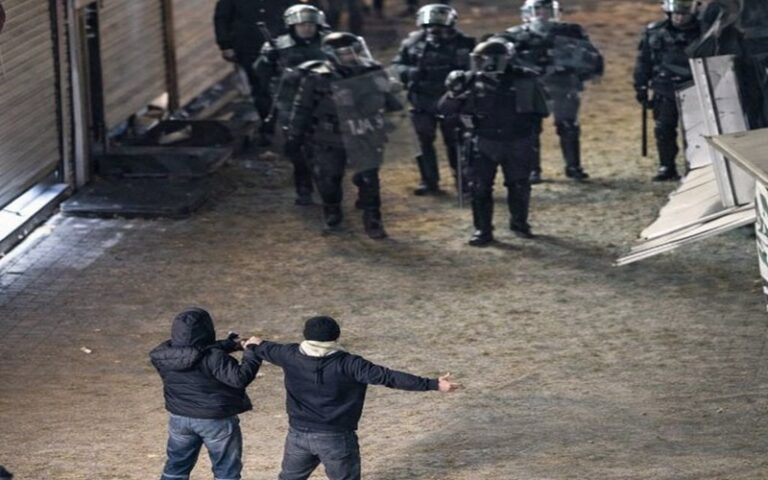
The French daily newspaper Le Monde wrote in a report that the protests that have taken shape in Iran in recent days are directly linked to the sharp decline in the value of the rial and soaring prices and have now gone beyond purely economic demands.
A distinguishing feature of this wave of protests is the active presence of bazaar merchants and segments of the core of the country’s economy, a group that usually plays a decisive role in economic and social stability.
The newspaper emphasizes that unlike previous protests, which were mostly identified with the participation of students or elite groups, this time shopkeepers and small-scale economic actors are at the forefront of the protests, a development that experts say could carry more serious consequences for the ruling authorities.
Contrary to Predictions, Protests in Iran Expanded After the 12-Day War
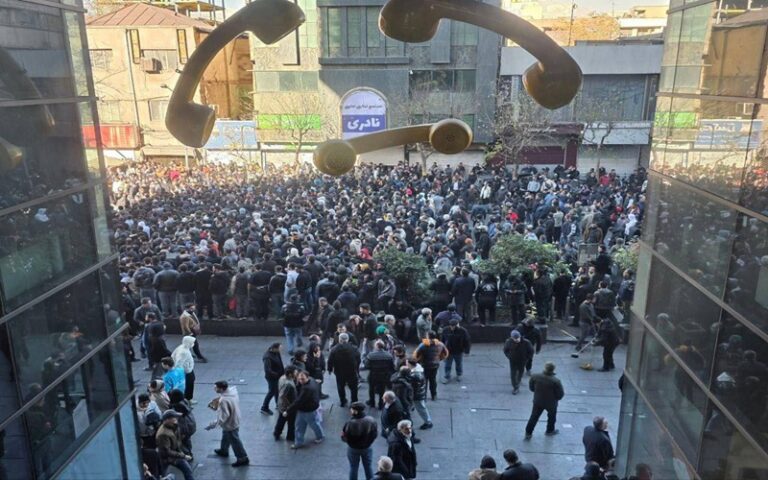
The editorial board of The Wall Street Journal, a major US daily newspaper, wrote in an article that contrary to the predictions of many experts who believed a military attack on Iran’s nuclear facilities would lead to public solidarity with the ruling authorities, recent developments have shown a different trajectory.
The article, published on the evening of Wednesday, December 31, states that only a few months after Israeli and US attacks during the 12-day war, various cities across Iran have witnessed street protests by citizens.
The protests began among shopkeepers and merchants at Tehran’s Grand Bazaar but gradually spread to other cities and social groups. Students have joined the protests, and truck and bus drivers have also expressed support.
What Happened on the Fourth Day of Protests in Iran?Economic demands are at the forefront of public discontent, including 42% inflation, a 40% decline in the value of the national currency against the dollar since the 12-day war, water shortages, and the lack of stable access to energy. Anti-government protests in Iran entered their fifth consecutive day on Thursday, January 1, 2026. In recent days, protesters have chanted slogans including “Death to the dictator,” calling for the overthrow of the Islamic Republic.
The president of Iran’s regime called for dialogue with protesters
Later in the article, The Wall Street Journal refers to protesters’ chants of “Death to the dictator” and “Neither Gaza nor Lebanon, I sacrifice my life for Iran,” noting that economic protests can easily take on a political nature. As a result, the recent unrest is dangerous for the Iranian regime because deprivation exists on a broad scale. To curb inflation, the Iranian regime removed the head of the Central Bank as the “culprit” for the current economic situation, and Masoud Pezeshkian, the president of Iran’s regime, made the unusual proposal of calling for dialogue with protesters.Trump should not be tempted by the mirage of an agreement with Iran
The editorial board of The Wall Street Journal wrote that as the scope of the protests has expanded, the regime’s repressive approach has once again intensified, with reports of a new wave of arrests and even live ammunition being used. If the protests become more widespread, there is a likelihood of increased repression. Referring to the increase in arrests and executions of citizens after the 12-day war, the newspaper added that this level of repression makes the continuation of the recent protests more striking and significant. The article states that all these developments provide an important opportunity for the United States to show its support for the people of Iran. Barack Obama made a mistake in 2009 when, due to his desire to reach a nuclear agreement with the ayatollahs, he remained silent in the face of the repression of protesters. The Wall Street Journal warned Donald Trump against being tempted by the mirage of an agreement with Tehran, writing that if the Islamic Republic truly wanted a deal, it could have returned to the negotiating table after the war. Meanwhile, the Iranian regime continues to insist on enriching uranium on Iranian soil and is rapidly rebuilding its ballistic missile capabilities, which have the ability to target Israel or US bases. According to the article, the most important action the United States can take under current conditions is the “continuation of economic pressure on the regime,” which would require enforcing oil sanctions with a seriousness at least equal to half of the measures recently applied by the United States against Venezuela. The Iranian regime has been able to partially circumvent sanctions, to the extent that its oil exports have reached new records and risen to about two million barrels per day—a figure considered 20 times Washington’s stated target and one that effectively undermines Trump’s maximum pressure campaign. None of these developments necessarily means the immediate collapse of the government, although dictatorships often appear stable until the very end. The ayatollah relies on oil revenues to maintain the loyalty of commanders and to direct the weapons of the forces toward their own people. However, Western policy toward Iran, aimed at reaching a deal at any cost, has made the Iranian regime more reckless than ever in repressing protesters. Ultimately, what will bring about the overthrow of this government will not be a foreign war, but popular force.What Happened on the Fourth Day of Protests in Iran?
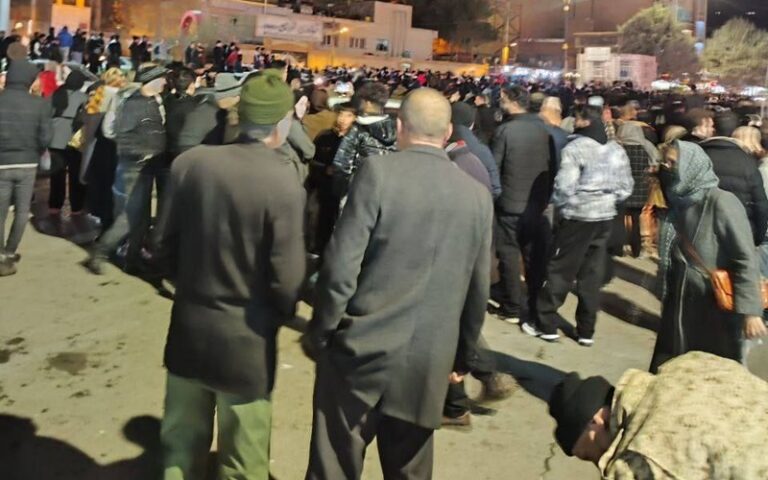
Nationwide protests by citizens continued into their fourth day on Wednesday, December 31. On this day, people gathered in the cities of Kuhdasht in Lorestan province, Isfahan, Kermanshah, and Fasa in Fars province. In some cities, security forces opened fire on citizens.
In Fasa, citizens held a protest gathering, stormed the city’s governorate building, and lit fires in the street in front of it.
Protesters in this city also chanted slogans such as “Death to the dictator” and “Death to Khamenei.”
Videos and reports published on social media indicate that repressive forces directly fired at protesting people in Fasa. At least one person was injured in the shooting.
On Wednesday afternoon, similar reports were published of regime forces firing at citizens during a protest gathering in the city of Kuhdasht.
Protesters in the city of Kermanshah also held a protest gathering on December 31 and chanted slogans such as “Death to the dictator.” In Isfahan, a gathering also took place in Naqsh-e Jahan Square.
Reports have also been published of a heavy security atmosphere and the deployment of regime forces and water cannon vehicles in various parts of Tehran, including Valiasr Street.
Call by students of Kurdistan University and Ferdowsi University of Mashhad
Reports indicate that there has been a call by a group of students from Ferdowsi University of Mashhad to hold a protest gathering on Wednesday, December 31. In part of their statement they said that they, the students of Ferdowsi University of Mashhad, are heirs to the ideals of freedom and resistance. They statement emphasized that the university is not a place for fear, and students will not be mere spectators. Protest is our right, sit-ins are our tool, and resistance is our path. The younger generation does not accept injustice and will not surrender the future at the price of fear. The students from the University of Kurdistan, while supporting the nationwide uprising of the people of Iran, have called for a protest gathering on Wednesday, December 31. While calling themselves as the children of the rugged and brave mountains of Iran, they will take to the street for their rights, freedom, and a just future. And added that they will uproot the foundations of this corrupt system. Silence in the face of oppression and corruption is no longer acceptable. Our voice will echo throughout Iran. Regime security forces tried to arrest the students in Mashhad using Irancell and Hamrah-e Aval vans Following the publication of the call by Ferdowsi University of Mashhad for a gathering, bus services on some routes were suspended.Iran: People in Fasa Rally in Front of Governor’s Office, Security Forces Open Fire on ProtestersRegime security forces have been deployed with vans disguised as those of mobile operators “Irancell” and “Hamrah-e Aval” around Janbaz Square and Park Roundabout in Mashhad to transport forces and arrest protesters. Reports indicate that the regime’s plainclothes forces are moving around the city in groups of four to five, wearing high-top sneakers—an action that, according to local sources, is intended to prevent identification and remote attacks on security vehicles.
Global reactions to the ongoing protests in Iran continue
The Persian-language account of the U.S. Department of State on X expressed concern about intimidation, violence, and the arrest of peaceful protesters and emphasized that the Islamic Republic must end the repression of the people. Germany’s Bild newspaper, in a report on the protests in Iran, described the retreat of repressive forces in the face of protesters as highly meaningful. The German newspaper wrote that images of protesters pushing back security forces are symbolically very meaningful because they reveal the weaknesses of Iran’s regime for the first time—images that are usually unimaginable in Iran. Der Spiegel magazine also referred to the causes of the protests in Iran, writing that finding a solution to the problems will not be easy and that, in the view of observers, the regime’s options are limited. Chosun Daily, one of South Korea’s oldest and most widely circulated newspapers, also addressed the protests in Iran and strikes by bazaar merchants, writing that protests that began with Iran’s economic crisis have gone beyond urban centers and spread to university environments. India Today, a major Indian media outlet, reported on the echoing of the slogan “The mullahs must go” in cities across Iran.Iran: People in Fasa Rally in Front of Governor’s Office, Security Forces Open Fire on Protesters
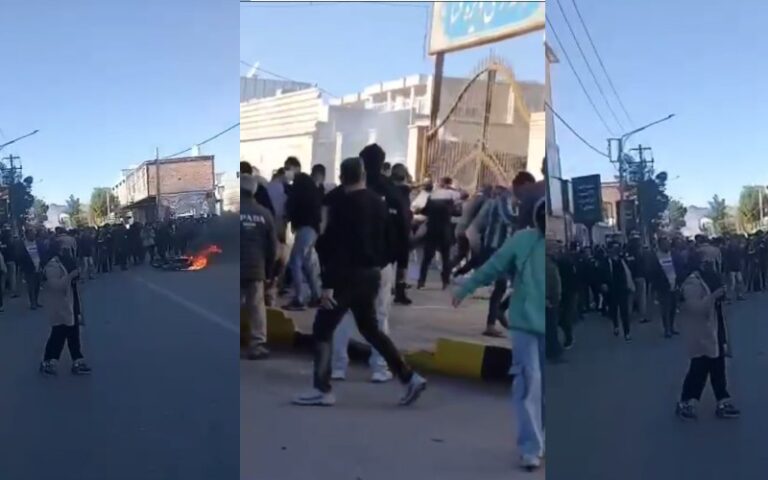
On the fourth day of nationwide protests in Iran, this morning people in Fasa County, in Fars Province, staged a large-scale protest. It is reported that Iranian regime security forces open fire on protesters.
It is said that this morning Fasa came under the control of the people; the widespread presence of citizens forced Iranian regime security forces to retreat. Also, according to reports received, people in Mashhad joined the protests at Atlas Market. The Iranian regime is attempting to control the situation by deploying military helicopters. Today’s protests continued in Tehran’s Grand Bazaar, and university students also resumed their demonstrations. At Shahid Beheshti University in Tehran, students chanted “Death to the dictator.”Today, December 31, in the continuation of the protests in Iran, people in space joined the protests and gathered in front of the governor's office.#IranProtest pic.twitter.com/mUoVl5I9bt
— Iran Focus (@Iran_Focus) December 31, 2025
Today, December 31, on the fourth day of protests in Iran, students at Beheshti University in Tehran held a protest rally and chanted "Death to the dictator."#FreeIran2025 #IranEconomy #IranProtests pic.twitter.com/QKpmAMh2uw
— Iran Focus (@Iran_Focus) December 31, 2025
Call for a gathering by University of Kurdistan students in support of the nationwide protests
The Amir Kabir Newsletter reported that a group of University of Kurdistan students, while supporting the nationwide uprising of the Iranian people, have called for a gathering on Wednesday, December 31. The call states: «We are the children of the steadfast and brave mountains of Iran’s land; we will take to the میدان for our rights, for our freedom, and for a just future. » Another part of the call states: «We rise up to uproot the foundations of this corrupt system. Silence in the face of oppression and corruption is no longer permissible. Our voice will resonate throughout all of Iran. » Amid the protests and uprising of people in Tehran and other cities, the Iranian regime announced that on Wednesday, December 31, 25 provinces will be closed. Some of these provinces include Tehran, Hamedan, Kermanshah, Yazd, Lorestan, Kurdistan, Kerman, Isfahan, Gilan, Khuzestan, and Hormozgan.Protests in Iran Spread to More Sectors and Cities on the Third Day
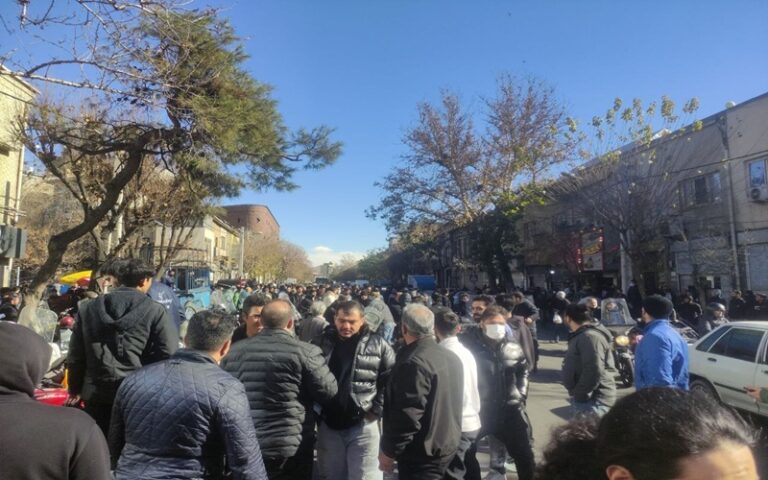
On the third day of protests by bazaar merchants in response to the dire economic situation, shopkeepers in various cities, including Tehran, Isfahan, Ahvaz, Shiraz, Kermanshah, and Najafabad, closed their shops and held protest gatherings.
Following calls issued by student organizations and activists, students in various cities across the country, including Tehran, Isfahan, and Yazd, joined the wave of protests on Tuesday, December 30.
Bazaar Protests Expand to Various Parts of Tehran and Other Cities in IranStudents at the University of Tehran, pointing to the security siege around the campus, called on citizens to move toward the University of Tehran so that students could join the public. Protesters at their gatherings chanted slogans including “Death to the dictator,” “Neither Gaza nor Lebanon, I sacrifice my life for Iran,” “Death to the principle of Velayat-e Faqih,” and “Death to this high cost of living, we will go until overthrow.” Protesting citizens in Kermanshah and on Jomhouri Street in Tehran stood their ground against repression forces and pushed the suppressors back. Students at Yazd University also chanted “Neither threats nor prison have any effect anymore” on Tuesday evening, December 30. Videos published on social media show that security forces fired tear gas and pellet bullets at protesters in Tehran’s bazaar. Special unit forces have arrested at least eleven protesting citizens in the Shoush area of Tehran. Videos published on social media show that demonstrators gathered in the streets of Kermanshah, including around the traditional bazaar, and expressed their protests against rising prices, currency exchange rate fluctuations, and livelihood problems. The internal security situation of the Iranian regime has reached a critical threshold, as scattered economic grievances are converging with broader political disobedience. According to this report, the current pattern of urban unrest indicates the formation of a link between the bazaar middle class and wider segments of dissatisfied society. The continuation of this situation could lead to the formation of a general uprising.
Iran’s ‘No To Executions Tuesdays’ Campaign Marks Week 101 In 55 Prisons
The one hundred and first week of the “No To Executions Tuesdays” campaign is continuing with hunger strikes by prisoners in fifty-five prisons across Iran. This number, beyond a simple statistic, has become a symbol of steadfastness, courage, and belief in human dignity. One hundred and one weeks of resistance under harsh and exhausting conditions shows that even in the narrowest prison wards, the flame of hope can be kept alive and the voice of justice-seeking cannot be silenced.
The full text of the statement of the one hundred and first week of the “No To Executions Tuesdays” campaign is as follows:
At Least 1,922 Executions in Iran in 2025, Nearly Double Compared to 2024Continuation of the “No To Executions Tuesdays” campaign in its one hundred and first week in fifty-five different prisons, coinciding with strikes and protests by Tehran’s bazaar merchants The “No To Executions Tuesdays” campaign extends its congratulations on Chirstmas and the New Year to all Christians and wishes freedom and liberation for all our compatriots who are subjected to repression and oppression by the ruling religious dictatorship in our country. In the words of Jesus Christ: “And fear not them which kill the body but are not able to kill the soul.” KJV As we enter the one hundred and first No To Executions Tuesday, Tehran’s bazaar merchants have, since Sunday, December 28, launched strikes and protests against the injustice and oppression of the regime. These protests have taken on broad dimensions and have spread to some other cities as well. In these critical days, the executioner government, in order to prevent the escalation of popular uprisings, has intensified repression and executions. In recent days, it has issued the inhuman death sentences of two Kurdish political prisoners, Mehrab Abdollahzadeh in Urmia Prison and Younes Bakhshi in Mahabad Prison. Since December 22, it has executed more than 96 people, including one imprisoned woman, in Vakilabad Prison in Mashhad. While expressing gratitude and appreciation to all the families and supporters who backed the one hundredth week of this campaign, the “No To Executions Tuesdays” campaign calls for greater support for the “No to the Death Penalty” campaign, so that the blade of repression and execution may be blunted more and more, and the groundwork for abolishing the inhuman death sentence may be prepared. Political prisoners who are members of the “No To Executions Tuesdays” campaign are on hunger strike on Tuesday, December 30, during the one hundred and first week, in fifty-five prisons across the country.
Bazaar Protests Expand to Various Parts of Tehran and Other Cities in Iran
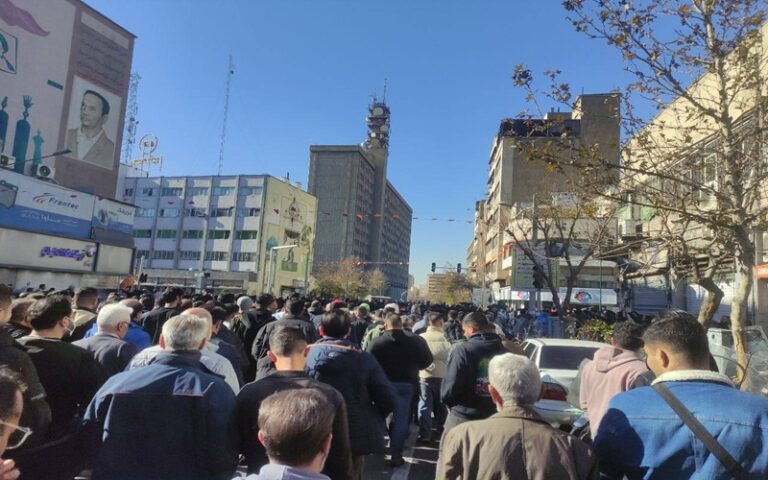
According to reports published on social media, protest gatherings and strikes by bazaar merchants in Tehran spread to various parts of the capital on their second day.
The striking merchants chanted protest slogans during their Monday, December 29, gatherings, including “Death to the dictator,” “Neither Gaza nor Lebanon, my life for Iran,” “The bazaar merchant may die but will not accept humiliation,” and “This homeland will not become a homeland until the mullah is shrouded.”
Subsequently, chants of “This year is the year of blood, Seyed Ali will be overthrown” were heard among the protesters.
Tehran Bazaar Shopkeepers Stage Protests in Response to Surge in Foreign Currency PricesReports indicate that merchants and shopkeepers halted their business activities and held protest gatherings in bazaars and commercial centers, including Chaharsouq, the Gold Bazaar, Alaeddin Mall (a major electronics shopping center in Tehran), Charsou Commercial Complex, Delavaran Furniture Market, Jafari Bazaar, Shoush Market, the Grand Bazaar of Tehran, Amin Hozour Market, and Bagh-e Sepahsalar. At the same time, the scope of these protests extended to streets and main urban thoroughfares. The protests then spread to squares, intersections, and other areas of Tehran. As the protests expanded, reports indicated that security and law enforcement forces were deployed in front of Tehran’s City Theater, a major cultural landmark. At the same time, the state-run Fars News Agency, affiliated with the Islamic Revolutionary Guard Corps (IRGC), reported that the gathering of shopkeepers and bazaar merchants continued from Lalehzar Street to Istanbul Square.
In some other Iranian cities, including Karaj, citizens protesting the dire economic situation and fluctuations in the foreign exchange market also held gatherings. Videos and reports published from Karaj and Tehran show that Iranian regime security forces clashed with protesting citizens in many areas. In some areas of Tehran, including Kargar Street and Bagh-e Sepahsalar, forces used tear gas against protesting shopkeepers. Yesterday as well, shopkeepers at the Alaeddin Mobile Mall, the Charsou Commercial Complex, and the Shoush Iron Market protested by closing their shops in response to the rise in the dollar exchange rate and called on other merchants to join the strike.This video shows that during today's protests in Tehran, a protester sat on the ground in the middle of Jomhuri Street in front of Iranian regime motorcycle officers, preventing them from passing.#IranProtests pic.twitter.com/091rulYWeA
— Iran Focus (@Iran_Focus) December 29, 2025
Iran’s Suffers from Negative GDP Growth in First Half of Persian Year

Tasnim News Agency, affiliated with Iran’s Islamic Revolutionary Guard Corps (IRGC), reported that according to the latest figures released by the Central Bank, gross domestic product growth in the first six months of the current year (from March 21 to September 22, 2025) once again entered negative territory, with economic growth including oil recorded at minus 0.6% and excluding oil at minus 0.8%.
The outlet wrote on Sunday, December 28, that among the main economic sectors, agriculture experienced negative growth of 2.9% and the industries and mining group recorded negative growth of 3.4%.
Price Of Dollar and Gold Surge to Unprecedented Levels in IranTasnim emphasized that these figures stem from the continued recession in industrial production, energy constraints, declining investment, and rising cost pressures. In recent months, intensified international sanctions, alongside the regime’s structural inefficiency and escalating energy and water crises, have placed heavy pressure on the country’s productive sectors, particularly agriculture and industry. These conditions have led to a rising exchange rate and higher prices for essential goods, severely straining people’s livelihoods. The state-run Mehr News Agency reported on November 30 that due to drought last year, wheat production in the country declined by more than 30%. The decline in agricultural output has occurred alongside rising prices of products, including the price of bread. Iran’s Statistical Center had previously announced that point-to-point inflation reached 52.6% in December, indicating an increase of 3.2% compared to November. The officially announced inflation rate, due to the weighting factors applied by the Statistical Center to consumer groups, is viewed by many citizens and experts as not reflecting market realities.
Deepening recession in the construction sector
Tasnim further reported that six-month growth in the construction sector fell to minus 12.9%, indicating a deep and unprecedented recession in this sector. This comes as, according to Tasnim, the construction sector is regarded as the “engine of employment and a driver for many industries.” Quoting experts, the news agency wrote: “The sharp decline in construction is the result of a combination of reduced purchasing power, higher costs of construction inputs, high financing rates, and uncertainty about the future of the economy; factors that could continue to negatively affect economic growth.” On October 13, the Research Center of Iran’s regime parliament, referring to falling behind the targets set in the country’s macroeconomic plans, announced that estimated growth in the first six months of the year (from March 21 to September 22, 2025) stood at minus 0.3%.Positive growth in the oil sector
Tasnim went on to write that the oil group managed to record positive growth of 1.1% in the first six months of the year. The IRGC-affiliated outlet added: “Although this growth is positive, it has not been able to offset the negative impact of other sectors.” Donald Trump, the president of the United States, less than two weeks after taking office, resumed a new campaign of the “maximum pressure” policy against the Iranian regime that he had launched during his first term in the White House. In just the first 100 days, his administration imposed a total of 17 rounds of sanctions related to the Iranian regime, targeting 40 individuals, 117 companies and entities, and 77 oil tankers. These sanctions continued thereafter, and in the latest case, on December 18, the U.S. Treasury Department sanctioned 29 vessels as well as the companies operating them for their involvement in circumventing Iran oil sanctions. The Trump administration’s actions in expanding sanctions against the Iranian regime have sharply increased the costs for Tehran of evading sanctions. Over the past three months, Iran’s oil exports have remained at around two million barrels per day, although the United States has sought to limit Iran’s oil exports to 100,000 barrels per day, an effort that appears to have so far been unsuccessful.Tehran Bazaar Shopkeepers Stage Protests in Response to Surge in Foreign Currency Prices
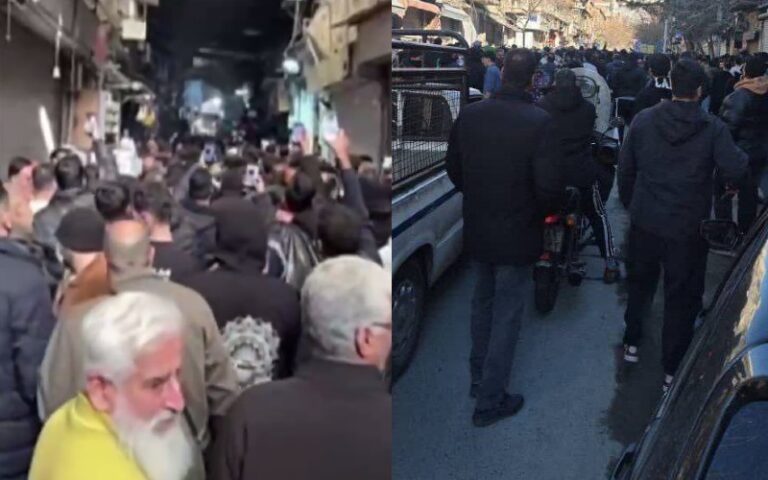
Some shopkeepers at the Alaeddin Mobile Market, a well-known electronics mall in central Tehran, and the Charsou Commercial Complex protested the rise in the price of the U.S. dollar by closing their shops. Videos shared on social media show a tense atmosphere around Hafez Bridge, a major overpass in central Tehran.
From around the afternoon of Sunday, December 28, videos circulated on social media showing shopkeepers at the Alaeddin Mall beginning their protest from inside the complex after shutting their stores, chanting slogans such as “Don’t be afraid, don’t be afraid / we are all together.”
Iran’s Point-To-Point Inflation Surpassed 52% In DecemberOther videos show the shopkeepers leaving the mall and moving toward Hafez Bridge at the intersection of Jomhuri Street and Hafez Street in Tehran. At the same time, other videos were published showing similar protests by shopkeepers at the Charsou Commercial Complex, located opposite the Alaeddin Mall. The rise in the price of the dollar, which directly affects all sectors of Iran’s economy, has accelerated sharply over the past month. At the same time as the protests at the Alaeddin Mall, the price of one U.S. dollar in the free market surpassed 1.44 million rials. Yesterday, December 27, each U.S. dollar was trading at 1.37 million rials, while one month earlier on the same day, the free-market price was 1.14 million rials per dollar. This is while a worker’s base monthly wage barely reaches 115 dollars. In recent months, runaway inflation and the rising value of foreign currencies have intensified concerns about the deterioration of Iran’s economic conditions.
Price Of Dollar and Gold Surge to Unprecedented Levels in IranOver the past year, the prices of food items in Iran have increased by an average of more than 66%. Even official sources have confirmed the uncontrolled rise in prices in Iran. The Statistical Center of Iran, a state-run body, reported on December 27 that the country’s point-to-point inflation rate had exceeded 52%.
Iran Has Become the Record Holder for Soil Erosion
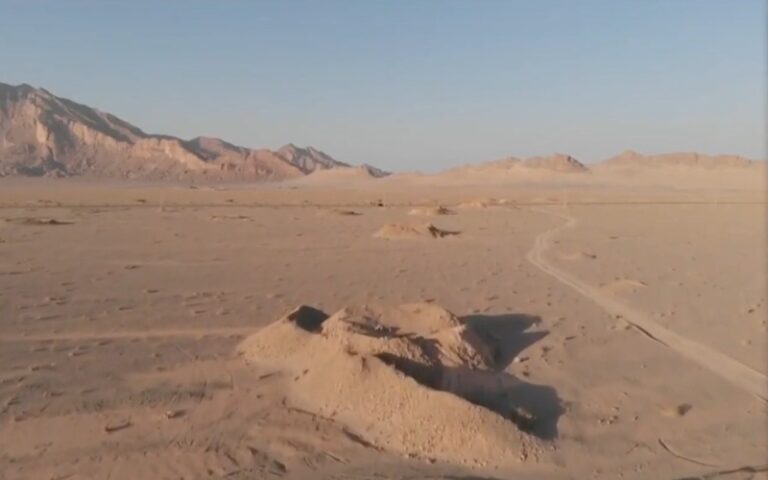
Hadi Kiadaliri, the vice president of the Iran Forestry Association, criticized prevailing approaches to development, food security, the water crisis, and forest protection, stating that Iran has reached the highest level of soil erosion and has become the record holder for this crisis.
Kiadaliri said in an interview with the state-run ISNA news agency on Sunday, December 28, that according to the findings of a study, “50% of oil revenues” must be spent annually solely on restoring soil fertility in the Zagros region.
He added that between 2004 and 2020, 3.6 million hectares were added to orchard and rain-fed agricultural lands, meaning that nearly 500 hectares of rangelands and forests were destroyed every day.
Every Year, Tens of Thousands of Hectares of Land in Iran Become DegradedThe vice president of the Forestry Association emphasized: “Agriculture in a country where about 93% of the land is arid and semi-arid cannot carry the burden of development, but we have done this, and to achieve it, we have converted many natural resource lands into farmland.” In recent months, the Iranian regime’s policies on water, agriculture, and industry and their widespread consequences across the country, including environmental damage and direct impacts on people’s livelihoods, have drawn increased attention. In November, Roozbeh Eskandari, an environmental researcher, warned in an article that Iran is facing a negative water balance of about 130 billion cubic meters, and that the continuation of the current situation has led to soil erosion, a drinking water supply crisis, the drying up of rivers and wetlands, the spread of dust storms, and an accelerated process of desertification and uninhabitability of the land. Referring to the “failure of the Iranian regime in environmental governance,” he added that in the government’s view, water is not regarded as a vital element and part of the land’s ecological cycle, but rather as an economic resource and a tool for expanding agriculture and industry.
