

Iran’s Water Crisis is Getting WorseThe Washington Post noted that after the February 1979 revolution, the amount of irrigated land nearly doubled, adding that these policies created millions of agricultural jobs and led farms to produce crops they could not have produced without government support. However, critics of central planning had long predicted that these policies would eventually result in water shortages. In this regard, the state-run Mehr News Agency wrote on November 29 that due to last year’s drought, wheat production had fallen by more than 30%. The current water crisis in Iran is not merely the result of drought but the consequence of decades of mismanagement and failed policies. Officials of Iran’s regime ignored expert warnings for years, delayed urgent reforms needed for sustainability, and are now disrupting the lives of millions through policies such as water rationing. These policies belong to a regime that has sacrificed Iran’s natural resources and ecosystems for its political interests—and now the people of Iran are paying the price. In part of its report, the Washington Post drew parallels between the ideological governments of Iran’s regime and the former Soviet Union, and the inefficiency they imposed on agriculture. It wrote that in a market economy, farmers, faced with water scarcity, would adopt more efficient irrigation methods or cultivate different crops. The Washington Post added that free trade would allow farmers to offset production shortages by purchasing goods from other countries better suited for growing them. But in Iran’s regime and the former Soviet Union, agriculture had to continue regardless of circumstances, with politicians claiming it was necessary for national security. According to the paper, the result was predictable. Today in Iran, water levels behind dams near Tehran are dangerously low, and water is being rationed. Meanwhile, the capital is not the only place facing shortages and rationing. Some regime officials have spoken of the possibility of water rationing in Mashhad and Isfahan as well. The Washington Post also referred to remarks by Massoud Pezeshkian, the president of Iran’s regime, who had spoken about relocating the nation’s capital. The paper noted that supporters of industrial policy often cite a few seemingly successful examples—mostly in East Asia—when arguing for greater government intervention in economic direction but emphasized that these cases are exceptions. To demonstrate this, the Washington Post pointed to various sectors in Japan and China where industrial policies either fail or succeed only at enormous cost—costs that outweigh the benefits.
Washington Post: Actions of Tehran’s Leaders Are Clear Example of What Not to Do in Running an Economy
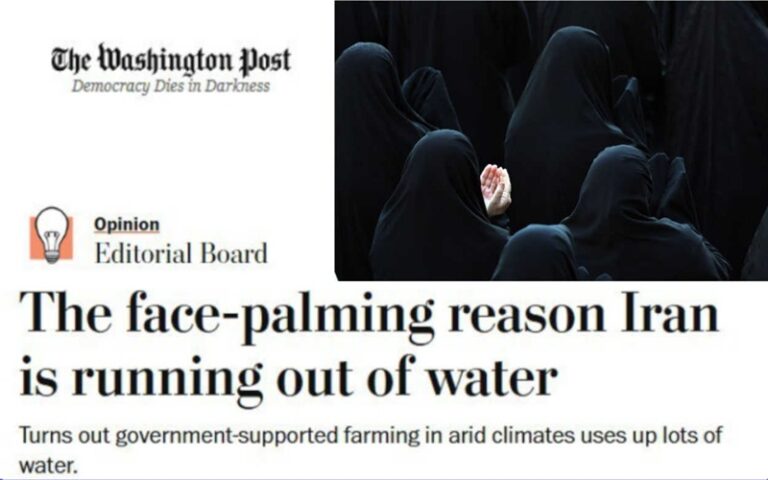
The Washington Post, in a report about Iran’s water shortage crisis, wrote:
Iran is best known as an exporter of terror and mayhem around the Middle East, but its leaders also provide a great example of how not to run an economy. Consider the country’s decades-long dalliance with industrial policy.
The paper wrote on Tuesday, December 2, that trade restrictions and insistence on self-sufficiency have prevented Tehran from compensating for low agricultural output through imports. If international trade made countries worse and industrial policy made them better, Iran should by now have been a wealthy nation.
The Washington Post, referring to decades of industrial policy in Iran, wrote about the regime’s emphasis on “self-sufficiency” and “producing all food domestically,” noting that the problem is that water is the foundation of agriculture—and Iran is running out of it.
The paper wrote that Iran, with a population of 90 million, has a predominantly dry climate and lacks significant comparative advantage in large-scale agriculture. The government has attempted to create such an advantage by subsidizing fertilizer, promising to buy crops, and offering farmers favorable loans.
357 Dead From Air Pollution In Tehran In One Week
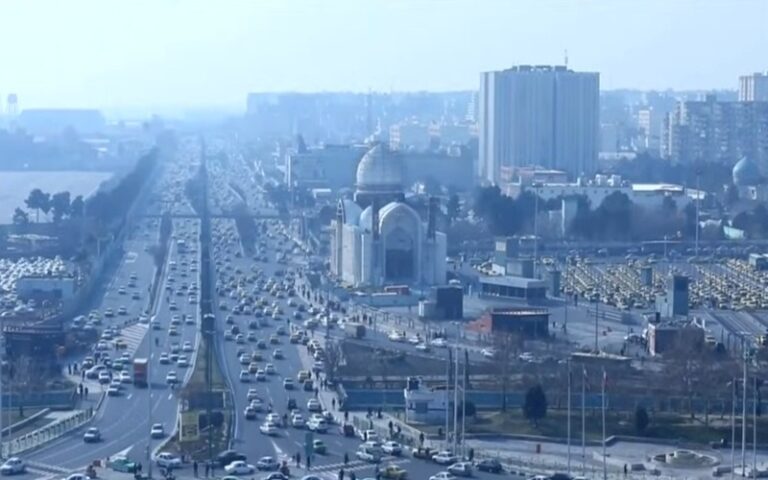
With the continued inability of Iran’s regime to control pollution sources, air pollution has kept many Iranian cities in a state of crisis.
Mohammad-Esmaeil Tavakoli, the head of Tehran’s emergency services, told the state-run ISNA news agency on November 30: “Of the 57,000 calls over the past eight days, 31% were related to respiratory and cardiac problems caused by air pollution. This means every three minutes one person has called 115 because of Tehran’s toxic air. In November, 22% of the 93,000 emergency missions were for the same reason. Iran’s regime still avoids closing schools and factories because it will not halt the production of even dirtier petrochemical gasoline. In the past eight days, 357 people have lost their lives due to complications from air pollution.”
30% Of Emergency Cases in Iran Caused by Air Pollution; Schools Closed In 14 Provinces
A shortage of four hundred emergency bases and five hundred ambulances
Tavakoli stated plainly: “Tehran is short four hundred emergency bases and five hundred ambulances. When one ambulance is stationed in Vanak Square, seven million people fall out of the service radius. Iran’s regime has not had the money to purchase ambulances for years, but it doubles the budget for building intercontinental ballistic missiles every year.” On Monday, December 1, Tehran’s air quality was again in the red zone for the tenth consecutive day, and two-thirds of government offices in the capital were rendered inactive. According to reports, from March 21 to November 25, Tehran experienced six clean days, 123 acceptable days, 106 unhealthy days for sensitive groups, 16 unhealthy days, two very unhealthy days, and two hazardous days. Sadegh Hassanvand, head of the Air Pollution Research Center at the University of Tehran, told the state-run outlet Eghtesad120 that the power plants in Alborz and Qazvin provinces use fuels that have deadly effects on public health. He added: “The sulfur standard for power-plant fuel is fifty, but the power plants around Tehran burn horrifying fuels with sulfur levels of thirty thousand, which are extremely harmful to public health.” Despite the persistence of this crisis, officials of Iran’s regime have still not introduced or implemented any effective or lasting solutions to reduce air pollution in the capital or other major cities, continuing instead to rely on temporary closures and short-term decisions. At the same time, the director-general of crisis management in Hormozgan Province announced that on Wednesday, December 3, government offices were closed due to rising cases of influenza. In Kurdistan Province, the spread of influenza also led to the closure of schools and universities on December 3.An Island Nation in the Pacific Ocean Enables Iran’s ‘Shadow Fleet’ to Evade Sanctions
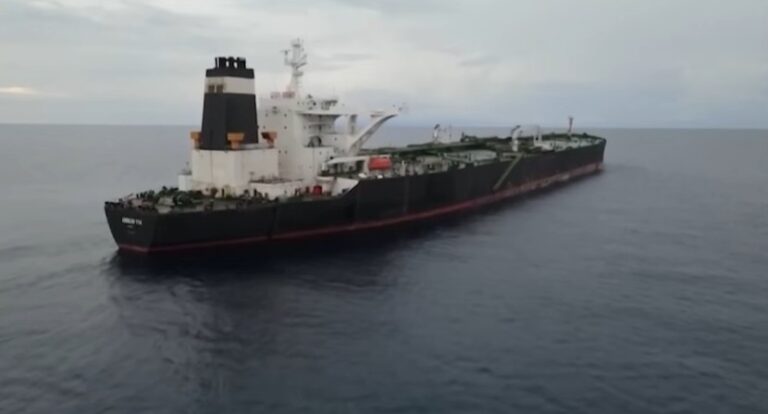
Agence France-Presse (AFP), citing sanctions-data analysis, reported that dozens of oil tankers suspected of smuggling crude for Iran and Russia have used a coastal office in the Cook Islands—located in the tropical South Pacific—to hide traces of their activities.
Next to a pizza shop in the remote Cook Islands sits the small but growing headquarters of one of the world’s ship-registration companies.
Iran’s Regime and Venezuela Are the Largest Users of Shadow-Fleet Oil TankersAccording to AFP, foreign shipowners can, without ever setting foot in this tiny palm-covered nation, pay fees to “Maritime Cook Islands,” the Cook Islands maritime authority, to operate their vessels under its flag. U.S. sanctions data identified twenty tankers registered in the Cook Islands suspected of smuggling fuel for Russia and Iran between 2024 and 2025. Another fourteen tankers flying the Cook Islands flag were also blacklisted in a separate UK sanctions database for the same period. New Zealand—historically the Cook Islands’ closest diplomatic partner—responded to the report by stating that undermining sanctions-related efforts is “concerning and infuriating.” A spokesperson for Winston Peters, New Zealand’s foreign minister, whose country maintains close ties with the Cook Islands through a “free-association” pact, said this is a completely unacceptable and indefensible divergence in foreign policy. According to him, New Zealand has repeatedly conveyed its serious concerns over the Cook Islands’ ship-registry management in recent years. The Cook Islands Maritime Authority, responsible for ship registration, denied any failure in due diligence or sheltering sanctioned vessels and said any such ships would be removed from its registry. In recent years, multiple reports have documented global networks of shell companies used to help Iran evade international oil sanctions. In one example, the Financial Times, in August, identified an Iranian broker named Saeed Alikhani and presented a new picture of the illicit oil-transfer network moving sanctioned Iranian, Russian, and Venezuelan crude to China. According to that report, thirty tankers moved at least 130 million barrels of oil—worth roughly 9.6 billion dollars—over about six years.
The shadow fleet
Western sanctions aim to limit revenue from Iranian and Russian oil sales in order to reduce funding for Iran’s regime’s nuclear program and for Russia’s war in Ukraine. With the start of Donald Trump’s second presidential term, a new phase of the U.S. “maximum pressure” campaign against Iran’s regime began. One-third of U.S. sanctions target Iran’s shipping sector. A shipping company based in the United Arab Emirates was accused in April of smuggling “millions of dollars” worth of fuel on behalf of Iran’s regime military in the Persian Gulf. The company owned tankers flying the flags of Barbados, Gambia, Panama, and the Cook Islands. These vessels are said to be components of the maritime smuggling network known as the “shadow fleet,” which evades sanctions by posing as cargo ships engaged in legitimate missions. They hide their trail by registering in countries such as the Cook Islands, where regulatory scrutiny is far lighter. Most registries remain unaware of the vessels’ true purpose. Many maritime registries, including that of the Cook Islands, do not publicly disclose their fees or revenues, but AFP estimated that a 30-thousand-ton tanker may pay around 10,000 dollars in registration fees. Cook Islands budget documents show that government revenue from maritime fees has grown by more than 400% over the past five years, reaching roughly 175,000 dollars in the most recent fiscal year.Iran Marks One Driest Autumns in Past 50 Years
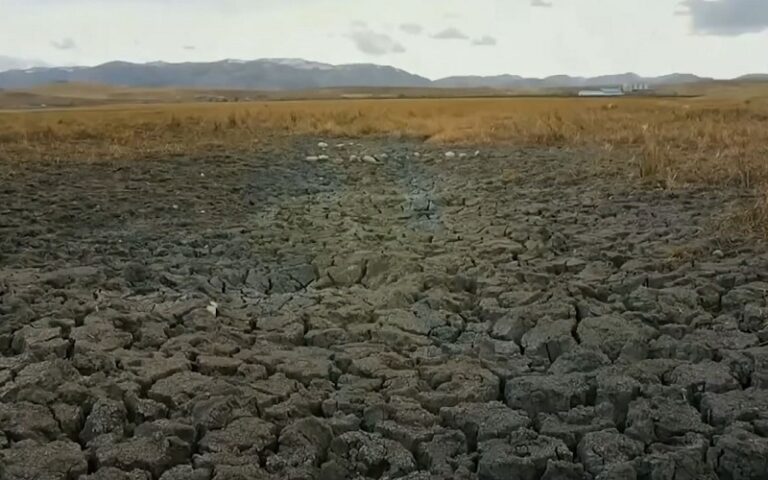
Ahad Vazifeh, head of the National Center for Climate and Crisis Management at Iran’s Meteorological Organization, explained the unusually low precipitation this autumn and announced that Iran has experienced “one of the driest autumns of the past five decades.” Vazifeh is a senior official within Iran’s state meteorological system.
On Monday, December 1, he described such a dry autumn as “extremely rare” in recorded climate statistics and said that after around seventy days of autumn, many areas of the country have received no rain or snow.
Iran’s Water Crisis is Getting WorseVazifeh added: “In nearly three decades of working in meteorology, I have never seen such a situation, and statistical data from the past five decades confirm this.” This official from the Meteorological Organization emphasized that the unprecedented drought is not limited to Iran and that other countries in the region are also facing similar conditions. Data from Iran’s Meteorological Organization show that the national average precipitation from the beginning of the season until November 28 has been only 3.9 millimeters, indicating an 88.3% decrease compared to the long-term average. Earlier, several officials and experts had warned that Iran is on the verge of one of its most critical water-scarce years. Experts say the main problem lies in the policies of Iran’s regime — from hasty dam construction to inefficient agriculture and fragmented resource management — which have pushed the country to the brink of “water bankruptcy.” On December 1, the state-run ISNA news agency reported, citing the latest data, that water inflow into the country’s dam reservoirs has decreased by 38% compared to last year. At present, the volume of water stored in Iran’s dams is only 32% of their total capacity, and sixteen dams in the country are less than 10% full.
Possibility of incoming precipitation systems next week and in winter
The head of the National Center for Climate and Crisis Management continued by noting that, based on weather models, precipitation systems are likely to enter the country starting this week. Vazifeh explained that the rainfall expected to begin on December 1 in the northern coasts, as well as in the northwest and west, will not be heavy but will represent a noticeable change compared to current conditions. According to him, another system will enter the country in the middle of next week, and by the end of that week, suitable rainfall is expected in the west, southwest, and the southern slopes of the Alborz Mountains, including Tehran, and that “the northern highlands of Tehran will be completely covered in snow.” In recent days, new dimensions of Iran’s water shortage crisis have come to light, sounding a serious alarm for people’s daily lives and for the ongoing operations of many industries. On November 29, ISNA reported that Iran has entered one of the most complex historical periods in its water sector, and that the drying of wetlands, unprecedented drops in humidity, reduced cloud cover, and intensified land subsidence paint a worrying picture of the country’s climatic future.97th Week of Iran’s ‘No To Execution Tuesdays’ Campaign in Fifty-Five Prisons
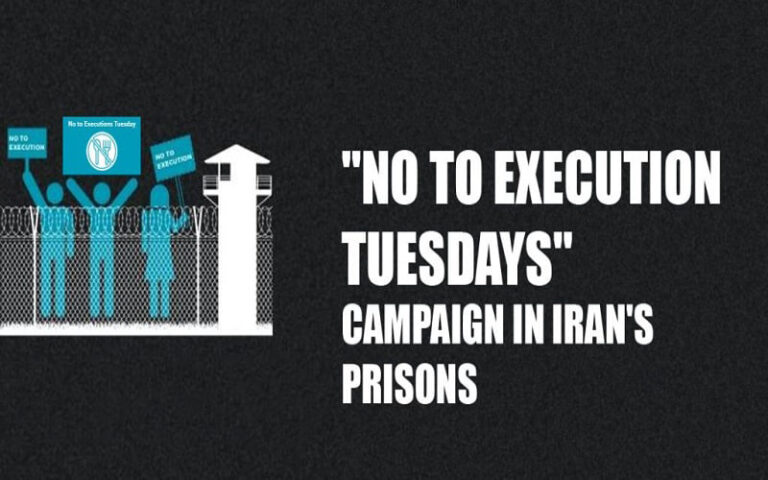
The ninety-seventh week of the “No to Execution Tuesdays” campaign is continuing in fifty-five prisons across the country with prisoners on hunger strike. This week, marked by a sharp rise in executions, has been one of the bloodiest periods of 2025, with nearly 100 prisoners executed in a ten-day span.
Political prisoners in Iran’s prisons, referring to the approaching Iran’s Student Day (December 7), emphasized that repression, imprisonment, and executions have not been able to stop students from pursuing the struggle for freedom. They stressed that once again, universities have become targets of authoritarian attacks, and this time the political prisoner Ehsan Faridi, a twenty-three-year-old student, is facing a potential death sentence on charges of advocating freedom, placing his life in grave danger.
More Than Sixty Executed in Iran in November; Alerts Raised Over Upcoming Political ExecutionsThe full text of this statement is provided below: Continuation of the “No to Execution Tuesdays” campaign in the ninety-seventh week across fifty-five prisons We begin the ninety-seventh week of the “No to Execution Tuesdays” campaign on the eve of December 7, Student Day. Since December 7, 1953, universities have remained the beating heart and the vanguard of the struggle against dictatorship. On this day, we honor the memory of all those who lost their lives for freedom, especially students who became victims of enforced disappearance, including Saeed Zeinali, who disappeared following the 1999 attack on the Tehran University dormitory and has never been seen again. This is one example among hundreds of students and citizens who have been victimized by authoritarian rulers — an immense injustice inflicted upon their families and grieving mothers. Yet repression, imprisonment, and executions have not managed to stop students from their pursuit of freedom. And now, once again during these days, universities have come under attack by authoritarian forces, with political prisoner Ehsan Faridi, a twenty-three-year-old student, facing a potential death sentence on charges of advocating freedom, placing his life at serious risk. In the past week, we witnessed an expanding wave of executions, with nearly 100 prisoners executed in the past ten days, including two women. One execution was even carried out in public to spread fear among the population. With this, the number of executions since March 21, 2025, has reached 1,564 — an unprecedented figure in the past three decades, triggering global outrage against the regime’s criminal use of the death penalty.
Global Athletes Demand UN Action to Stop Execution of Iranian BoxerNow, with this sweeping wave of executions, it is expected that the political community, student activists, and all awakened consciences will join in supporting prisoners sentenced to death and stand with the families seeking justice. They must raise the voice of “No to Executions” in every possible way so that the regime’s main tool of repression is taken away from the ruling clerical authority, clearing the path toward freedom and the people’s right to self-determination. Political prisoners participating in the “No to Execution Tuesdays” campaign are on hunger strike on Tuesday, December 2, 2025, in the ninety-seventh week, across fifty-five prisons in the country.
Iran Could Standardize Mazut Fuel With The Money For 10 Missiles
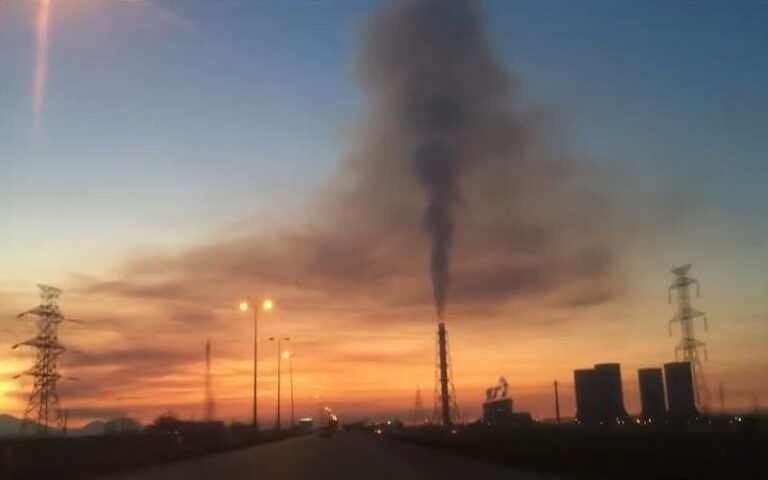
Esmail Kahrom, a former adviser to the Environmental Protection Organization of Iran’s regime, criticized the regime’s environmental policies and said the government could solve the problem of mazut fuel quality in Iran by redirecting the money it spends on part of its missile production. Kahrom is a well-known environmental expert in Iran.
On Sunday, November 30, Kahrom told the state-run Jamarān website: “If people and their health mattered to the officials, each missile that is manufactured costs two million dollars, and with the money for ten missiles we can standardize our mazut. We do not do it because the priorities are something else.”
Use Of Mazut in Iranian Power Plants Due to Gas ShortageHe warned that the mazut used in Iran contains sulfur “seven times the global standard,” and the quality of gasoline used in the country is “not suitable.” Contrary to earlier promises by officials of Iran’s regime, burning mazut has become an official and relied-upon option for the government in managing the energy crisis, and this practice is still ongoing. Kahrom’s comments come amid a severe air-pollution crisis in Iran’s major cities, which has caused serious harm to public health and forced the closure of many educational centers. The reference to the regime’s missile-building costs comes at a time when Iran’s regime is under extensive international sanctions because of its nuclear and missile ambitions. Nevertheless, Ali Khamenei, the leader of Iran’s regime, and other senior officials have stressed the continuation of these programs despite global concerns.
Sulfur in Iran’s diesel fuel is 1,500 times the global standard
Hamid Hosseini, spokesperson for the Oil Exporters Union, said Sunday that diesel fuel in Iran generates more pollution than gasoline and warned: “Our diesel has 1,500 times the global sulfur standard.” Hosseini is a well-known figure in Iran’s Chamber of Commerce. In an interview with the state-run Didban Iran website, he added: “Out of 20 million registered passenger cars, about nine million are worn-out—vehicles whose fuel quality and performance are both substandard.”Excessive gasoline consumption on Tehran’s streets
According to this member of Iran’s Chamber of Commerce, there are about four million motorcycles in Tehran, and this fleet plays a major role in air pollution. Hosseini also commented on the excessive gasoline consumption by vehicles in Tehran, saying: “A car should travel 20 to 25 kilometers daily in Tehran, but vehicles working for Snapp (Iran’s main ride-hailing service) or as taxis may drive up to ten times that amount each day.” He added: “These vehicles are not up to standard and are often worn-out, producing ten times the pollution of a typical car. They may consume 30 liters of gasoline per day, while the national average fuel consumption for cars is about six liters.” The spokesperson of the Oil Exporters Union called on the government to allocate part of the revenue from the gasoline price increase to “scrapping worn-out vehicles.” This comes while the government of Masoud Pezeshkian, despite approving gasoline at 50,000 rials per liter, has not announced any intention to assist with vehicle renewal.Wheat Production in Iran Down By 30% In Past Year Due To Drought
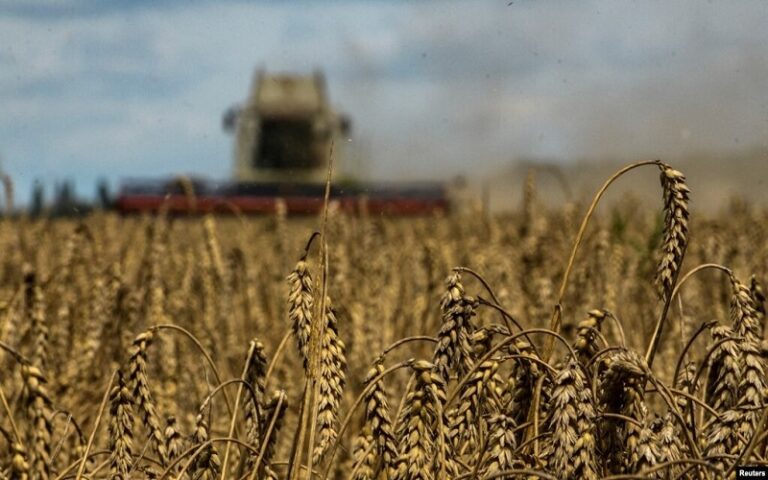
The head of Iran’s National Wheat Farmers Foundation, referring to an “unprecedented drought” in the past sixty years, expressed hope that wheat production would remain similar to last year. Meanwhile, the state-run Mehr News Agency wrote that due to last year’s drought, wheat production had dropped by more than 30%.
Ataollah Hashemi told the state-run Mehr News Agency on Saturday, November 29, that there has been no rainfall this autumn so far and that “the amount of precipitation has been almost zero.”
Extensive Damage to Farmers Due to Power Outages in IranHe added that some farmers have begun planting and are waiting for rain, while others are waiting for the soil to gain enough moisture before planting. Hashemi noted that about 80% of rainfed (dryland) wheat fields were damaged in the 2024–2025 agricultural year and added that irrigated wheat yields are twice those of rainfed fields, and last year some of the damage was compensated through irrigated cultivation. According to the report, yield in rainfed fields is 1,200 kilograms, while the figure for irrigated fields is 4,200 kilograms. Currently, four million hectares of wheat farmland are rainfed and two million hectares irrigated. Hashemi said: “If, according to the Meteorological Organization’s forecasts, the drought trend continues, then despite irrigated wheat cultivation, the production of this strategic crop will be in a more unbalanced condition compared to last year.” He also mentioned other problems wheat farmers face, including the supply of imported fertilizers, the risk of locust infestations, and fuel provision.
Tehran’s Subsidence and Drying Wetlands Reveal New Dimensions of Iran’s Water CrisisHashemi also called on the government to pay its debt to the Agricultural Insurance Fund in order to strengthen the fund and support farmers.
A 50% reduction in agriculture’s share of water
The Mehr News Agency also noted that Iran has been experiencing drought for several years, writing: “The decline in water stored behind dams has caused the agricultural sector’s water share to drop by more than 50%.” The agency reported: “Due to last year’s drought, wheat production fell by more than 30%, and farmers delivered about eight million tons of wheat to the government.” Concerns over declining wheat production and financial losses among farmers come as a report by Iran’s Water Resources Management Company shows that from September 23 to November 4, twenty of Iran’s thirty-one provinces did not witness “a single drop of rainfall.” According to the report, rainfall in Iran during this period shows a 77% decrease. In this regard, Mohammadreza Kavianpour, head of the Water Research Institute, emphasized the need for a “change in approach” in agricultural and industrial water consumption on September 22, saying that the country must “move toward producing crops with higher added value that ensure real food security.” He added: “People, farmers, and industries must prepare for these times. In this regard, industries and farmers must change their practices and base their models on new technologies.” Meanwhile, government officials have so far said little about their plans to secure food supplies in the event of reduced crop production. This comes as the latest inflation report from Iran’s Statistical Center shows that point-to-point inflation for bread and cereals in September reached its highest level since July 2022, with bread inflation estimated at nearly 100%. The state-run EcoIran website reported on November 21 that studies show monthly inflation for bread and cereals has sharply increased since December of last year, rising from around 3% to nearly 17% in July 2025 — the highest level since 2022. In recent months, as the water crisis has intensified, officials of Iran’s regime have repeatedly blamed the public and urged citizens to “save water,” warning about declining dam reserves. On the other hand, despite repeated warnings about water resource management, no clear or sustainable plan has been presented, and in some cases temporary province-wide shutdowns have been used as emergency measures.Tax Revenues in Iran 5.5X Higher Than Oil Revenues

Mohammad-Hadi Sobhaniyan, the head of the Tax Administration of Iran’s regime, announced that during the first seven months of the current year (from March 21 to October 23), the ratio of tax revenues to oil revenues in funding the general state budget reached an unprecedented level of 5.5 times. Can this figure be considered a sign of efficiency in the regime’s tax system?
Sobhaniyan said on Saturday, November 29, that the ratio of taxes to GDP had reached its highest level in seven years.
He added that this ratio had risen to 8.3% based on Central Bank figures and to 6.4% according to the Statistical Center of Iran.
The Iranian Regime’s New Tax Law: Collecting Taxes from Citizens on InflationSobhaniyan described this development as “the result of implementing smart policies, improving taxpayer compliance, and expanding systemic auditing,” adding: “The rise in the tax-to-GDP ratio is a clear sign of budget sustainability, reduced reliance on oil, and the enhancement of tax justice.” Earlier, on August 16, Masoud Pezeshkian, the head of Iran’s regime government, issued the directive to enforce the “Speculation and Arbitrage Tax Law,” a law whose legislative process began in 2020 and aims to tax half of the nominal increase in the value of people’s assets caused by inflation. This law had been approved by the regime’s parliament on June 29. “A major portion of the government’s current expenses is funded through taxes” The head of the Tax Administration went on to state that the ratio of taxes to government current expenditures had reached “an unprecedented 65.5%” last year and that a major portion of the government’s current expenses is now funded through tax revenues. According to Sobhaniyan, the ratio of taxes to current expenditures rose from 40.9% in 2021 to 65.5% in 2024. Under Ebrahim Raisi’s administration, from July 2021 to April 2024, Iran’s tax revenues saw a sharp increase; a trend that coincided with growing poverty among Iranian citizens. The state-run daily 7Sobh wrote on November 13 regarding the consequences of rising taxes: “While the government has turned to increasing tax bases to compensate for its budget deficit, the main burden of this policy has fallen on small businesses and minor trade sectors.” According to the report, taxes on businesses such as barbershops, restaurants, small grocery stores, repair shops, and clothing retailers increased on average by 15 to 20% in 2024. Small workshops in the food industry and building-material sectors also faced roughly 10 to 12% increases in performance taxes. Meanwhile, all businesses, in addition to taxes, are facing cost pressures imposed by inflation above 45%. These costs have not only increased production prices but also drastically raised the final price of services. Earlier in June, the state-run Tasnim News Agency wrote that rapid growth in tax revenues in Iran without corresponding growth in GDP or improvements in the business environment could be concerning. This IRGC-affiliated agency described tax revenues surpassing oil revenues as a milestone for Iran’s economy, while also stressing that achieving any positive impact depends on identifying tax evasion, fairly distributing the tax burden, and allocating stable revenues toward production infrastructure and social welfare. However, reviews of media reports and the views of critical economists show that the government has taken no significant measures to develop production infrastructure or expand social welfare. The 5.5-to-1 ratio may stem from declining oil revenues rather than increased tax efficiency. If oil income has dropped due to sanctions, export restrictions, deep discounts, or low-price transfers to China, the tax-to-oil ratio rises artificially. The largest actors in Iran’s economy—such as the Executive Headquarters of Imam’s Directive, the Foundation of the Oppressed, Astan Quds, Khatam-al Anbiya Construction Headquarters, hundreds of paramilitary subsidiaries, dozens of religious, promotional, and clerical institutions, and a vast network of front companies tied to security agencies—pay virtually no real taxes. The regime’s reliance on taxation crushes small and medium-sized businesses, resulting in bankruptcies, halted economic activity, and ultimately reduced employment and declining economic growth.
30% Of Emergency Cases in Iran Caused by Air Pollution; Schools Closed In 14 Provinces
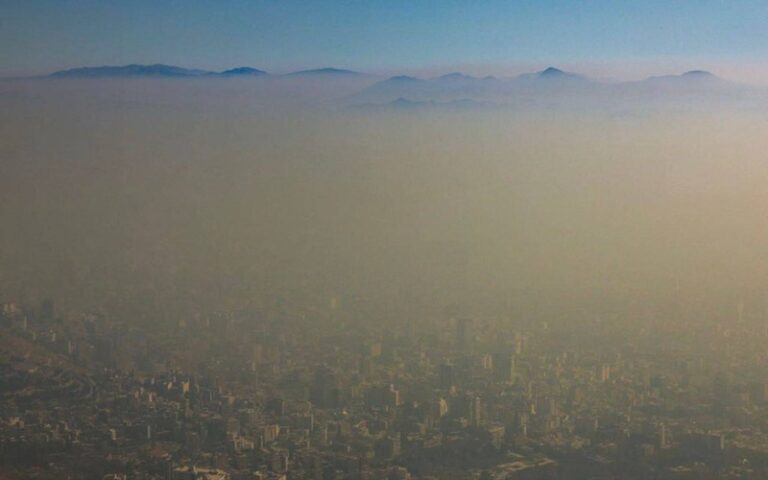
Following the worsening air-pollution crisis across various regions of Iran, Mohammad-Esmaeil Tavakoli, the head of Tehran Province’s emergency services, announced that in late November—equivalent to late November in the Gregorian calendar—emergency missions related to air pollution in this province had increased to more than 30%.
He added: “In the past eight days, 28,000 missions have been carried out, 31% of which were related to pollution.”
With the intensification of air pollution and the spread of influenza in Iran, emergency task forces in various provinces announced the broadest wave of school and university closures in recent months for November 30.
Air Pollution Among Five Leading Causes of Death in IranIn Tehran Province, education in all schools and universities is remote on November 30 and December 1. Emergency task forces in fourteen provinces announced the most extensive wave of school and university closures in recent months for December 1. Government offices in the capital have also been instructed to operate with only one-third in-person capacity and to send most employees to remote work. At the same time, truck traffic inside the city has been banned; parks, cinemas, amusement parks, sports halls, and public gathering centers have been closed; and all outdoor and indoor sports or cultural events have been suspended. This decision has affected millions of students and disrupted a significant portion of urban activity.
Severe shortage of emergency equipment in Tehran
As citizen demand for urgent medical services has increased, the head of Tehran Province’s emergency services announced a serious shortage of equipment. Tavakoli said Tehran currently lacks 400 emergency bases and 500 ambulances. He added that Tehran, with a population of about 14 million, has only 200 ambulances, and due to the city’s geography, heavy traffic, and limited access routes, the current resources do not meet the needs of residents. Despite repeated warnings about shortages in emergency resources, Iran’s regime has taken no effective measures in recent years to address equipment shortages or improve medical infrastructure. The head of Tehran Province’s emergency services added that the institution has only two helicopters and three fixed-wing aircraft. Tavakoli also defended the decision not to station emergency units in Tehran’s main squares, saying: “In the past, fourteen bus-ambulances were stationed in major squares, which was mostly symbolic.”Continuation of heavy fuel oil (mazut) burning in Iran
In September, Shina Ansari, the head of Iran’s Department of Environment, cited the country’s political conditions, sanctions, and restrictions as reasons for the failure to fully implement the Clean Air Act. Defending the government’s performance, she said low-sulfur mazut was burned last year at the Shazand Arak power plant.Iran’s Power Plants Burning Mazut Despite Ongoing Air PollutionHowever, the state-run Fars News Agency reported on November 30 that fifteen power plants—including Tous, Montazer-e Qaem, Rajaei, Salimi, Sahand, Tabriz, Iranshahr, Montazeri, Zarand, Bandar Abbas, Moftah, Bistoon, Shazand, Ramin, and Isfahan—burn a total of 21.1 million liters of mazut daily. Contrary to earlier promises by officials of Iran’s regime, burning mazut has become an official and relied-upon method for the government to manage the energy crisis, and this practice continues.
A Voice of Defiance: Escape from Iran’s Prison — Massoumeh Raouf’s Powerful Memoir
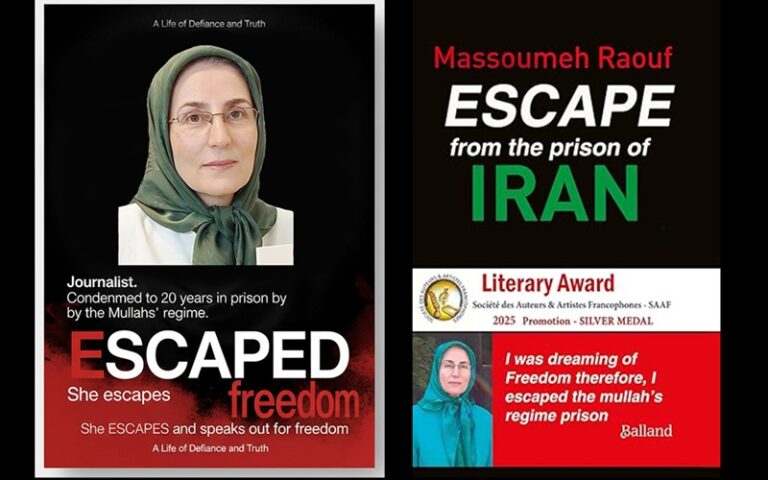
There are books you read — and then there are books that change the way you see the world. Escape from Iran’s Prison by Massoumeh Raouf is one of those rare stories that burns with truth, courage, and an unshakable belief in freedom.
In this gripping memoir, Massoumeh Raouf — an Iranian writer and activist now living in exile in France — takes us inside the walls of one of Iran’s most feared prisons. She writes not as a victim, but as a witness to a time and system built to silence people like her. What she endured — and how she ultimately found the courage to escape — reveals the extraordinary resilience of those who refuse to surrender their voice.
But this book is more than just a personal story of survival. It is a window into the hidden struggles of countless Iranians who continue to fight, often at great risk, for basic human rights and dignity. Through Raouf’s words, readers around the world can understand — and stand with — a people whose bravery too often goes unseen.
Winner of the 2025 Silver Literary Medal from the Société des Auteurs et Artistes Francophones (SAAF), Escape from Iran’s Prison has been praised for both its literary power and its unflinching honesty.
Every page pulses with defiance and hope. It is a story that reminds us that freedom is never granted — it is claimed, again and again, by those who dare to dream of it.
If you believe in justice, in the strength of the human spirit, and in the power of a single voice to challenge oppression, this book deserves a place on your shelf — and in your heart.
Escape from Iran’s Prison on Amazon
Join the growing chorus of readers standing with Massoumeh Raouf — and with all those in Iran who still fight for the simple right to live free.
