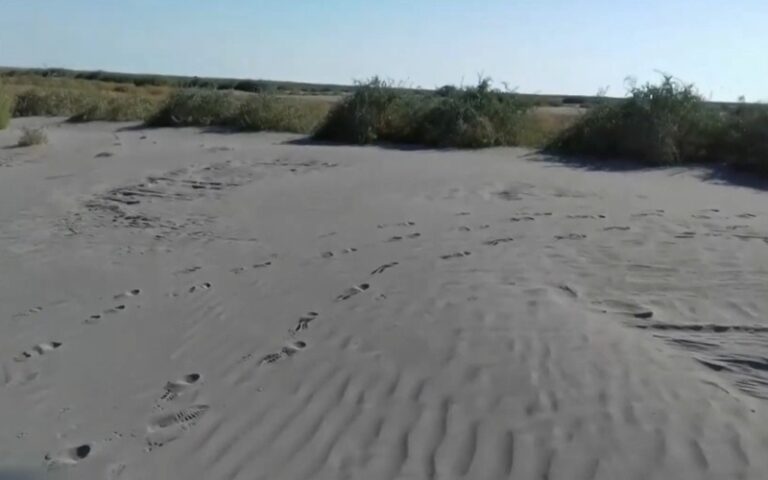
The head of Iran’s Soil and Water Research Institute warned that Iran’s soil has reached a “warning point,” and tens of thousands of hectares of the country’s land are eroding each year. He said that despite public awareness of the crisis, no serious action has been taken, and the country needs urgent investment to prevent the recurrence of environmental disasters.
Hadi Asadi-Rahmani, the head of Iran’s Soil and Water Research Institute, said that the soil degradation crisis in Iran has reached a point where “lamentation” is no longer enough.
According to him, everyone knows that soil protection is vital, but “despite this awareness, no practical action has been taken and the destruction continues.”
He noted that only 24 million hectares of Iran’s land area are arable, explaining that the share of arable land per person is about two thousand square meters, but “the soil becomes poorer every year.”
Iraj Soleimanzadeh, the representative of West Azerbaijan Province in the Supreme Council of Provinces, warned on October 14 about the consequences of excessive extraction of groundwater and repeated droughts. He said that land subsidence in the plains of the province, especially the Salmas Plain, has reached 17 centimeters.
Soleimanzadeh described the main cause of the crisis as “management mistakes” and the construction of 32 dams in the eastern river basin of Lake Urmia, which has disrupted the natural flow of water toward West Azerbaijan.
Asadi-Rahmani said that a large portion of Iran’s agricultural production takes place on third- and fourth-grade lands, and now “75% of the country’s soils have less than one percent organic carbon,” a condition that indicates severe soil degradation.
According to him, Iran is following the same path in soil protection as it did with its water resources.
He warned that about 30 thousand hectares of the country’s land are affected by erosion and degradation annually, and this trend will continue in the absence of corrective policies.
Ali Beitollahi, head of the Engineering Seismology and Risk Department at the Road, Housing and Urban Development Research Center (a government-run institution), warned on August 22 that due to the drastic decline of groundwater resources, Iran is now among the top three countries in the world in terms of the number of land subsidence zones.
He stated that the main cause of subsidence in Iran is the lowering of groundwater levels, adding: “Around Tehran, there were places where the water table was twenty to thirty meters deep; now we dig down even one hundred twenty meters, but there is no water anymore. The water has been extracted and not replaced. This is what they call a negative water balance.”
The soil’s need for retirement
Asadi-Rahmani, referring to the United States’ experience in the 1930s, said: “The excessive expansion of mechanized agriculture in that country led to dust storms and the destruction of millions of hectares of land; a crisis that was later contained by the passage of the Soil Conservation Act and the planting of millions of trees.”
He said that the United States today has more than 42 million hectares under conservation agriculture, whereas in Iran the figure is only about 600 thousand hectares.
Asadi-Rahmani also referred to the U.S. “soil retirement” program, in which millions of hectares of farmland were removed from production, leading to the restoration of aquifers and the revitalization of agriculture.
Safdar Niazi-Shahraki, the deputy for water and soil at the Ministry of Agriculture Jihad, said in September 2024: “Soil erosion in Iran is roughly two to 2.5 times that of Asia and five to six times the global average.”
According to him, the average soil erosion in the country is estimated at “about 16.5 tons per hectare.”
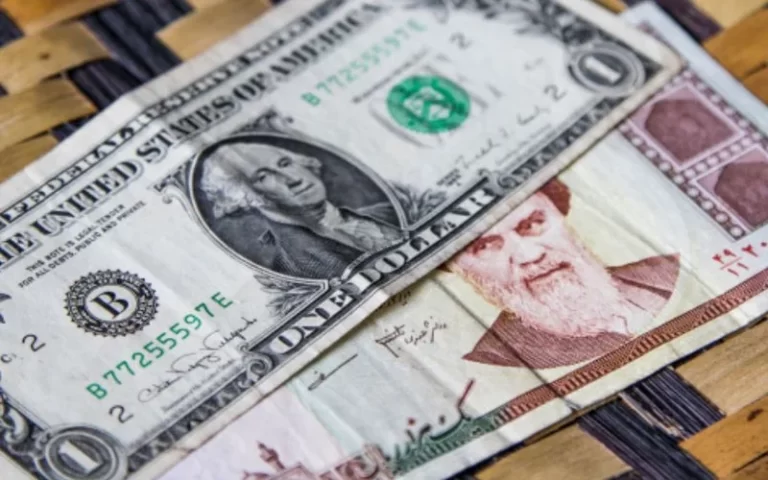
Continuing the upward trend in currency and gold prices in Iran, the price of each U.S. dollar surpassed 1.22 million rials, and the price of the new-design gold coin known as the “Emami” exceeded 1.29 billion rials.
The price of each dollar in Iran’s free market
In recent weeks, an upward wave has swept through Iran’s currency and gold markets, repeatedly setting new records and creating a new path of price increases.
On December 1, the prices of various gold items in domestic markets set new records, and the price of the “Emami” gold coin exceeded 1.26 billion rials.
The rise in currency and gold prices comes as a third-tier gasoline price of 50,000 rials was scheduled to be introduced starting December 6.
Fatemeh Mohajerani, the government spokesperson, wrote on her personal account on X on the evening of December 5: “The exact date for implementing the gasoline price reform plan has not yet been finalized.”
Many citizens have described the introduction of three different gasoline price tiers as contradicting the election promises of Masoud Pezeshkian, the president of Iran’s regime, and as a factor that increases economic pressure on the population.
In recent months, runaway inflation and the rise of foreign exchange rates have added to concerns about the worsening economic situation in Iran. This trend intensified following the return of United Nations sanctions and the insistence of Iran’s regime officials on continuing the nuclear program.
In the past year, food prices in Iran have increased by more than 66% on average.
During this period, bread and grains increased by 100%, fruits and nuts by 108%, vegetables by 69%, beverages by 68.3%, fish and shellfish by 52.3%, and milk, cheese, and eggs by 48.6%.
Worsening economic conditions amid the ongoing nuclear deadlock
The economic crisis in Iran has intensified while the prospects for nuclear negotiations remain highly uncertain.
In response to Pezeshkian’s request for Saudi Arabia to mediate between Tehran and Washington, the U.S. government once again emphasized its three conditions for negotiations with Iran’s regime.
Steve Witkoff, Donald Trump’s special envoy for Middle East affairs, had previously demanded that Iran’s regime fully abandon its nuclear and uranium enrichment program, dismantle its proxy forces, and accept limits on its missile program.
Some media outlets in Iran have reported that, in addition to diminishing hopes for reviving nuclear talks and political openings, discussions about the 2026 budget deficit and the gasoline price increase have also contributed to the turmoil in Iran’s currency and gold markets.
Youssef Rajji, the Lebanese foreign minister, stressing that disarming Hezbollah is a “national necessity,” stated that the group cannot hand over its weapons without the approval of Iran’s regime.
Rajji, in an interview with Al Arabiya on Saturday, December 6, referred to the role of Iran’s regime in Lebanon’s disarmament issue and said the group’s main concern today is buying time and preserving its position within Lebanon so it can regain its power.
He added that Hezbollah, as its officials have declared, is rebuilding itself in various ways, including with money, so that whenever an opportunity arises, it can regain its previous influence and position in Lebanon.
The Lebanese foreign minister emphasized that for this reason, Hezbollah’s activities are no longer focused on border areas and fighting Israel.
In September, a high-level U.S. delegation including Tom Barrack and Morgan Ortagus met Lebanese officials in Beirut. In their discussions, members of the delegation stated that Iran’s regime is the main obstacle to the process of disarming Hezbollah.
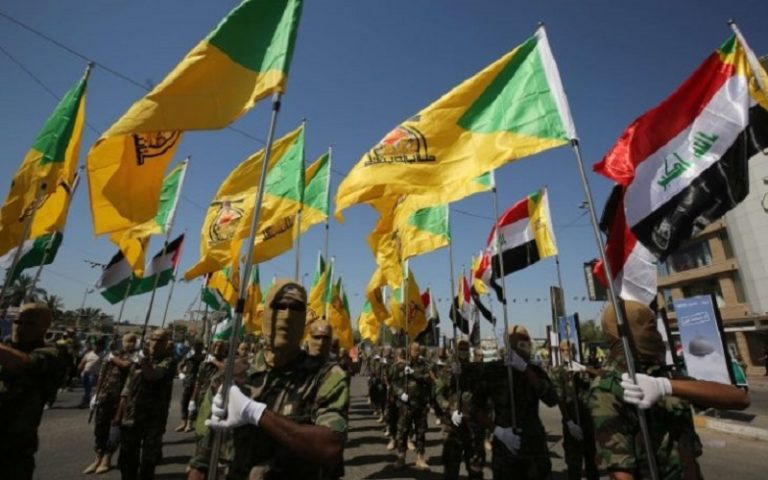
On August 7, the Lebanese government approved the main framework of a U.S. plan for disarming armed groups. However, Hezbollah—considered the most important proxy of Iran’s regime and severely weakened by repeated Israeli attacks—has refused to accept disarmament.
Rajji continued in the interview, saying he had seriously raised issues related to Hezbollah’s disarmament with Abbas Araghchi, the foreign minister of Iran’s regime, on the sidelines of regional meetings.
On December 4, Araghchi sent a written message to his Lebanese counterpart, inviting him to visit Iran for consultations on “expanding bilateral relations and reviewing regional and international developments.”
The Lebanese foreign minister added that he will respond to the invitation through “a diplomatic note.”
Ynet recently reported that Rajji had expressed readiness to meet Araghchi in a “neutral country” to discuss bilateral disagreements.
Lebanese officials have repeatedly emphasized in recent months that Tehran must refrain from interfering in Lebanon’s internal affairs.
In one example, on December 4 the Lebanese Army denied reports by media outlets affiliated with Iran’s regime claiming that large numbers of its soldiers were simultaneously members of Hezbollah.
Recent remarks by Ali Akbar Velayati, an adviser to Ali Khamenei, the leader of Iran’s regime, stating that “the existence of Hezbollah is more essential for Lebanon than daily bread,” also sparked strong reactions from Rajji and Lebanese Prime Minister Nawaf Salam.
“Hezbollah challenges the Lebanese state”
In his interview with Al Arabiya, the Lebanese foreign minister described the disarmament of Hezbollah and dismantling its military structure as a “Lebanese demand,” regardless of international requests.
Rajji expressed regret that Hezbollah remains unconvinced that handing over its weapons would benefit both Lebanon and the group itself as a “political party.”
According to him, the credibility of the Lebanese government now depends on its ability to exercise authority over the entire country and to restrict weapons to state-authorized forces.
Naim Qassem, Hezbollah’s deputy secretary-general, once again opposed the full disarmament of the group in a speech on December 5.
As international pressure on the Lebanese government to disarm Hezbollah increases, the Tehran-backed group has threatened that if the government insists and acts toward this goal, there may be a risk of “internal conflict.”
However, findings from a new Gallup survey show that the majority of Lebanese people want only the Lebanese Army to have the right to possess weapons.
The Lebanese foreign minister also warned that Hezbollah challenges and provokes the government on a daily basis.
Rajji stressed that the international community will take Lebanon seriously only if the government can demonstrate control over the country by monopolizing weapons and asserting the authority of its legal forces.
He added that the success of any diplomatic solution with Israel begins with the disarmament of Hezbollah.
Local officials in several provinces of Iran, including Tehran Province, have announced school closures due to air pollution and the spread of COVID-19 and influenza.
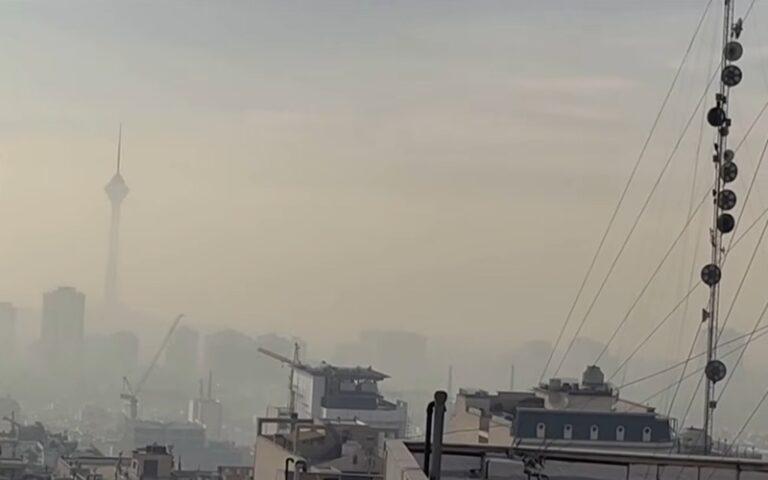
Hassan Abbasnejad, secretary of Tehran Province’s emergency air-pollution task force, announced on Friday, December 5, that due to the emergency air-pollution conditions, elementary schools in Tehran city and province—except for Firouzkouh, Malard, Robat Karim, and Qarchak—will be closed on Saturday and Sunday, December 6 and 7, and students will receive their lessons “online.”
He also stated that truck traffic in the capital is banned around the clock, except for vehicles transporting perishable goods or fuel.
According to Iranian media, schools in Alborz Province will be closed on Saturday, December 6, due to air pollution; schools and universities in Chaharmahal-and-Bakhtiari Province will be closed on Saturday due to influenza; all schools, universities, and educational centers in Kurdestan Province will be closed on Saturday because of the spread of influenza; and kindergartens, preschools, and schools in Hormozgan Province—including Kish Island—will be closed on Saturday and Sunday due to influenza.
Conditions in several other provinces and cities—such as Isfahan Province—are similar, and schools have been closed.
In some cities, such as Isfahan, the cause of closures has been announced as “a combination of influenza and air pollution.”
Earlier, Iranian health authorities had stated that COVID-19 has also spread alongside influenza.
Ghobad Moradi, head of the Center for Communicable Disease Management in Iran’s Ministry of Health, announced on November 19 the spread of COVID-19, saying: “Although COVID-19’s share is low, continuous monitoring of it and other causes continues, because any respiratory agent can mutate and cause more severe disease.”
Influenza season in Iran begins in November and continues until March.
This is not the first time schools in Iran have been closed due to various reasons, including air pollution, energy crises, or COVID-19 outbreaks.
Academic decline among students due to repeated closures
Previously, Ali Farhadi, spokesperson for the Ministry of Education, had warned that repeated school closures in Iran have negatively affected the quality of students’ learning.
On March 22, Farhadi stated in an interview with the state-run news agency that one day of school closure costs about 10 trillion rials (approximately 8.7 million dollars), and virtual education cannot be an effective substitute for in-person learning.
In recent years, experts have repeatedly warned about the academic decline among Iranian students.
Masoud Kabiri, a faculty member at the Education Research Institute, warned in January 2025 that two out of every five Iranian students lack effective learning, and that 70% of boys in rural schools fail to reach the minimum expected learning standards.
Rezvan Hakimzadeh, deputy for elementary education at the Ministry of Education, stated in November 2024 that 40% of students suffer from learning poverty, adding that this significantly reduces their chances of academic and professional success in the future.
She described learning poverty as a condition in which some students, despite being present in school, fail to properly acquire basic literacy skills such as reading, writing, arithmetic, and speaking.
Gholamali Afrooz, a professor at the University of Tehran, also stated in November 2024 that only 70% of Iranian students who enter elementary school go on to complete high school.
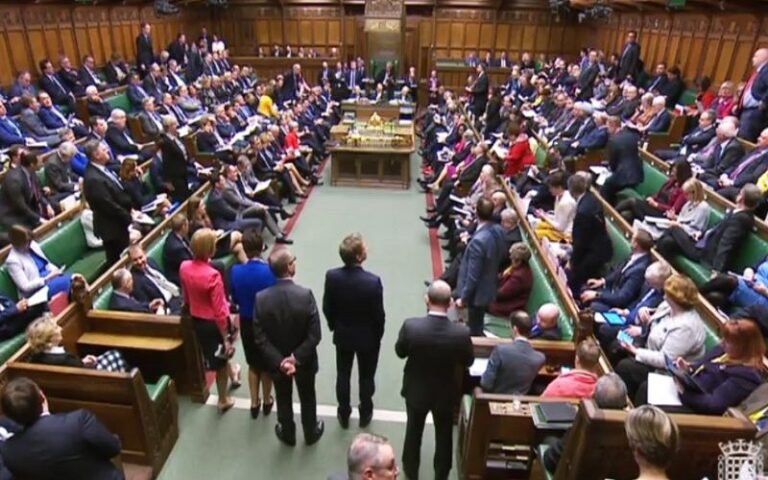
The British Parliament, in a newly published report, wrote that concerns about the Iranian regime’s foreign policy are not limited to its nuclear program or its support for armed groups and “terrorist” organizations in the Middle East, but also include targeting critics, journalists, and dissidents abroad.
The UK House of Commons, in the report released on Friday, December 5, wrote that the Quds Force of the Islamic Revolutionary Guard Corps (IRGC) has played a central role in expanding the Iranian regime’s influence in the Middle East and in directing broader global operations.
The report added that individuals targeted by the Iranian regime in the UK include dissidents, journalists, government critics, Israelis, Jews, and sectors such as government institutions, the travel industry, and universities.
The House of Commons emphasized that actions by agents linked to Iran’s regime are part of a broader pattern of transnational repression. Transnational repression typically includes harassment or intimidation of individuals abroad, with the goal of silencing them, coercing them, or extracting information.
This is not the first time the British Parliament has warned about the Iranian regime’s transnational repression.
On July 30, the Joint Committee on Human Rights of the UK Parliament issued a report calling for stronger measures to counter the growing transnational repression carried out by foreign governments on British soil.
On July 7, The Telegraph reported that the findings of a confidential report by the UK Parliament’s Intelligence and Security Committee confirmed that the Iranian regime’s attempts to assassinate its opponents inside the UK are still ongoing.
The Iranian regime’s use of criminal groups
The House of Commons added that the Iranian regime, in addition to using its own state institutions such as the IRGC and the Ministry of Intelligence, has also used criminal groups to carry out operations in the UK and elsewhere.
The report stated that the UK will impose further sanctions against the Iranian regime in the future and also referred to additional measures already announced for 2025, including police training on state-sponsored threats, strengthened enforcement of immigration laws, and funding to enhance security for synagogues.
Britain is not the only Western country concerned about threats posed by the Iranian regime to its national security.
In August, the United States and thirteen of its allies, including the UK, issued a joint statement condemning the increasing threats from the Iranian regime’s intelligence services, calling these threats “a clear violation of our national sovereignty.”
Albania, Austria, Belgium, Canada, the Czech Republic, Denmark, Finland, France, Germany, the Netherlands, Spain, and Sweden were among the countries that signed the statement.
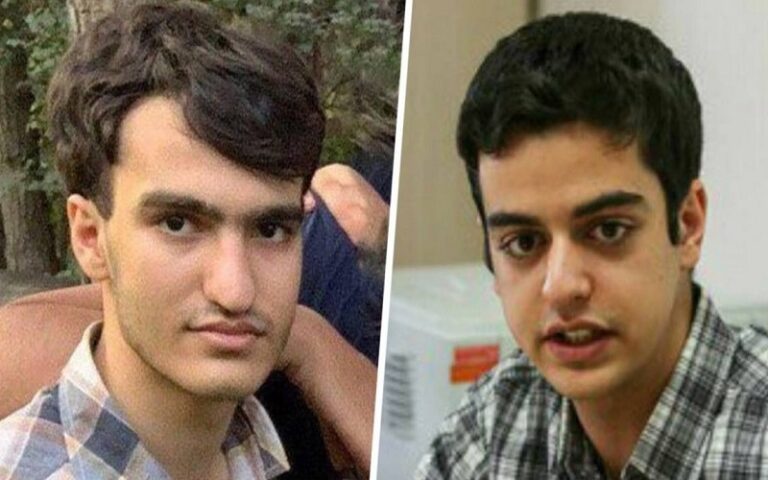
Amirhossein Moradi and Ali Younesi, students imprisoned in Evin and Ghezel Hesar prisons, wrote notes on the eve of Student Day in which they referred to executions, poverty, and the dictatorship ruling Iran’s regime, emphasizing the necessity of “breaking the silence, the young generation’s struggle for freedom, and the role of the university as the beating heart of protest against tyranny.”
They wrote in these notes, published on Friday, December 5, that December 7 is “a symbol of the covenant between generations standing against despotism” and a sign of the continuation of the “struggle for freedom,” adding that the university, despite repression and imprisonment, remains “the beating heart of this path and the source of hope for the spring of freedom” in Iran.
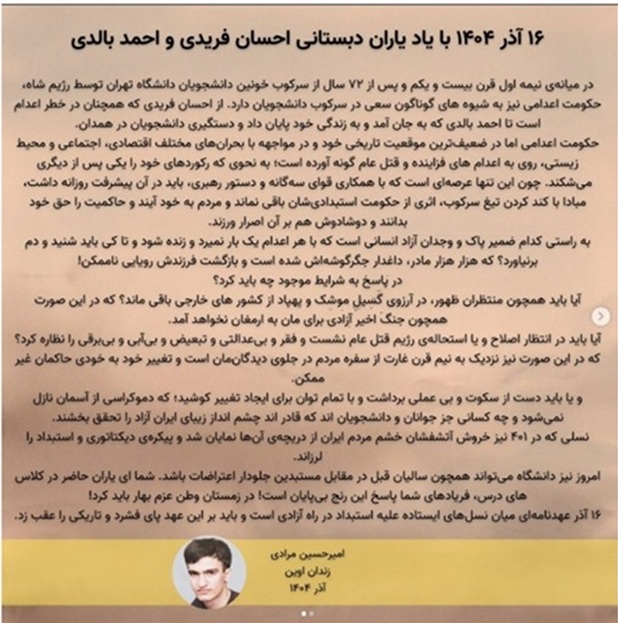
Moradi opened his note by remembering fellow students Ehsan Faridi and Ahmad Baledi, and described the fate of these two students as a symbol of the continued repression of the student movement—from the risk of execution faced by Faridi to the death of Baledi, who set himself on fire in protest against economic pressure and the destruction of his family’s workplace.
He recalled that seventy-two years have passed since December 7, 1953, and wrote of an “execution-driven government” that continues targeting students and, in the face of economic, social, and environmental crises, has resorted to “increasing and massacre-like executions.”
Message of Amirhossein Moradi on the Students Day 2025
In his view, the cooperation of the three branches of power and the implementation of orders from the leader of Iran’s regime have cemented this cycle of repression.
Moradi listed three paths before society: waiting for foreign intervention, hoping for reform or transformation of the government, and breaking the silence and inaction.
He considered the first two paths dead ends and stressed that “democracy does not descend from the sky,” and the only way forward is collective effort for change—a task whose main burden rests on young people and students.
Referring to the role of universities in the 2022 nationwide uprising, he called the university the primary capacity for confronting tyranny and addressed students: “Your cries are the answer to this endless suffering! In the winter of the homeland, one must resolve for spring! December 5 is a pact between generations standing against despotism on the path to freedom, and we must uphold this pact and push back the darkness.”
The struggle for freedom
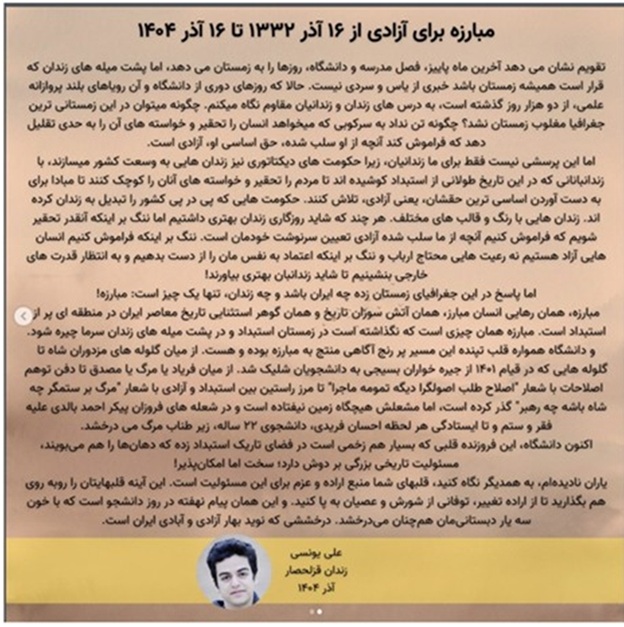
Younesi began his note with the image of the beginning of winter and a calendar leaving autumn behind, writing that although “it is supposed to be always winter” behind prison bars, this winter does not necessarily mean despair.
Having been kept away from university and his scientific dreams for more than two thousand days due to imprisonment, he wrote that during this time he has looked to “the lessons of prison and its resilient prisoners.”
Message of Ali Younesi on the Students Day 2025
The imprisoned student asked how one can avoid succumbing to the cold in “the most wintry geography,” stressing that this question is not only for prisoners, because dictatorships build “prisons as vast as the country.”
He warned that forgetting freedom and pinning hopes on foreign powers to bring a “better jailer” is a form of “humiliation of human will.”
Younesi wrote: “Struggle is the very liberation of the fighting human, the burning fire of history, and the exceptional jewel of Iran’s contemporary history in a region full of tyranny. Struggle is what has prevented the cold from taking over in the winter of despotism and behind prison bars.”
He described the university as “the beating heart of the arduous path of awareness that leads to struggle” and wrote: “The torch of this path still shines in Baledi’s burned body in protest to poverty and oppression and in Faridi’s steadfastness under the noose of death.”
Addressing his “unseen friends” at the university, the imprisoned student wrote that their hearts are the source of the will for this historic responsibility, urging them to place “these mirrors” before one another so that from the will to change, “a storm of revolt and defiance” may rise—a message that, he said, has continued to shine since Student Day and the blood of “the three elementary school friends,” promising “the spring of freedom and the flourishing of Iran.”
Younesi, winner of the gold medal in the 2018 International Astronomy and Astrophysics Olympiad, and Moradi, winner of the silver medal in Iran’s 2017 Astronomy Olympiad, are both students of Sharif University of Technology—one of Iran’s leading technical universities.
They were arrested in 2020 at the age of nineteen and about two years later were each sentenced by a Revolutionary Court to sixteen years in prison; the portion of their enforceable sentence was reduced in March 2025 to six years and eight months.
However, the judiciary opened new cases against them, and on August 9, Branch 29 of the Revolutionary Court sentenced the two students to fifteen months in prison on the charge of “propaganda activities against the system.” In a separate case, Younesi was also sentenced to five years in prison in Kerman on the charge of “endorsing and strengthening Israel.”
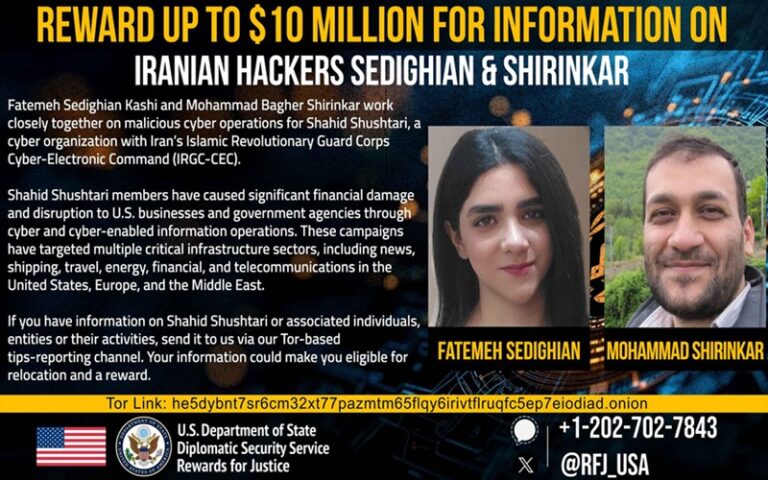
The U.S. State Department’s “Rewards for Justice” program has offered a reward of up to 10 million dollars for information leading to the identification and location of two Iranians who, acting under the direction of a foreign government and in violation of the Computer Fraud and Abuse Act, carried out cyberattacks against U.S. infrastructure.
The U.S. State Department released information and photos of Fatemeh Sedighian Kashi and Mohammad Bagher Shirinkar, stating that they are operatives of the Shahid Shushtari group, which is affiliated with the Intelligence Organization of the Islamic Revolutionary Guard Corps (IRGC) and has been involved in cyberattack campaigns targeting critical U.S. infrastructure.
According to the statement, Sedighian and Shirinkar have a close relationship, and Sedighian cooperates with Shirinkar in planning and executing cyber operations.
According to the U.S. State Department:
“Shahid Shushtari is a malicious cyber organization with Iran’s Islamic Revolutionary Guard Corps Cyber-Electronic Command (IRGC-CEC) that has previously been identified as Aria Sepehr Ayandehsazan (ASA), Ayandeh Sazan Sepehr Arya (ASSA), Emennet Pasargad (Emennet), Eeleyanet Gostar, and Net Peygard Samavat Company.”
According to the Rewards for Justice program, members of this group have carried out coordinated cyber and intelligence operations that caused extensive financial damage and disrupted the activities of U.S. companies and government institutions. These campaigns have targeted critical infrastructure in the news, maritime transportation, tourism, energy, financial, and telecommunications sectors in the United States, Europe, and the Middle East.
The U.S. report states that since August 2020, operatives of the “Shahid Shushtari” network launched a multi-faceted campaign aimed at targeting the U.S. presidential election.
Prior to that, the group had used fake identities to conduct intelligence and cyber-operation planning.
The U.S. State Department recalled that on November 18, 2021, the U.S. Treasury sanctioned “Shahid Shushtari,” which was operating at the time under the name Emennet Pasargad (Emennet), along with six of its employees, for attempting to influence the 2020 U.S. election.
At the same time, the Rewards for Justice program highlighted the roles of Seyyed Mohammad Hosein Musa Kazemi and Sajjad Kashian in efforts to carry out foreign interference in the U.S. election.
The program called on anyone with information about Sedighian and Shirinkar, the “Shahid Shushtari” group, or individuals and entities involved in malicious cyber activities targeting critical U.S. infrastructure or foreign interference in U.S. elections to contact the Rewards for Justice program.
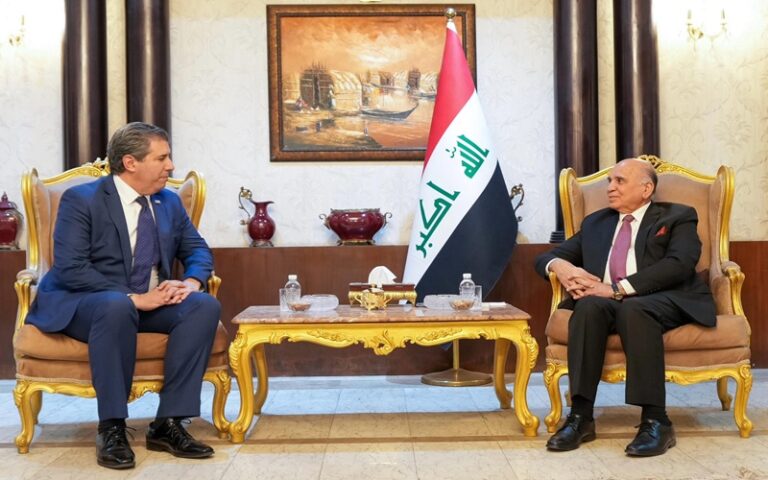
Following talks between Michael Rigas, the U.S. Deputy Secretary of State, and Fuad Hussein, Iraq’s foreign minister, Washington once again emphasized the necessity of dismantling militias affiliated with Iran’s regime in Iraq.
The Persian-language account of the U.S. State Department published images of the meeting and referred to earlier remarks by U.S. Secretary of State Marco Rubio, writing that the United States “will continue to speak clearly about the need to dismantle Iran-backed militias that undermine Iraq’s sovereignty, threaten Americans and Iraqis, and loot Iraq’s resources for Iran.”
مایکل جی. ریگاس، معاون وزیر امور خارجه آمریکا در حوزهٔ مدیریت و منابع، گفتوگوهای سازندهای با فؤاد حسین، وزیر امور خارجهٔ عراق، دربارهٔ ساختن آیندهای قدرتمندتر و شکوفاتر برای آمریکاییها و عراقیها داشت. همانگونه که وزیر امور خارجه، مارکو روبیو، گفته است، ایالات متحده همچنان… https://t.co/Ws95VVhU1Opic.twitter.com/0FRKbBpuye
These positions are being reiterated at a time when Iraq’s political developments and broader regional security concerns carry significant implications for the future of the Baghdad government and the balance of power in the Middle East. A few weeks ago, on November 11, Iraq held its parliamentary elections, but various factions have still not reached an agreement on forming the next government.
U.S. warning to Baghdad regarding militia presence in the future government
Washington had previously warned Baghdad explicitly that if any ministry in Iraq’s future government is handed to armed groups supported by Iran’s regime, the United States will not recognize that government.
U.S. support for strengthening Iraqi sovereignty and countering foreign influence
Mark Savaya, the special envoy of President Donald Trump for Iraq, stated a few days earlier in a press release that Washington supports Baghdad’s efforts to counter foreign influence, including Tehran’s influence and its proxy groups.
He emphasized the need to end the activities of armed groups operating outside the framework of the Iraqi state and said that Iraq must place all weapons under the control of the legitimate government and organize its security forces under a unified command.
The Rigas–Hussein meeting and Washington’s renewed emphasis on dismantling militias linked to Iran’s regime represent only one dimension of the United States’ current regional policy and Iraq’s internal developments. Numerous reports indicate that not only the political future of Baghdad but also regional security—and in particular the state of tensions between Iran’s regime and Israel—are increasingly tied to the role and influence of Iraqi armed groups.
Iran’s regime adopted a policy of intervention in regional countries—especially Iraq—from the outset. This policy reached its peak after the fall of Iraq’s former government, and ever since, Iraq has been a battleground between Iran’s regime and its allies on one side and the Iraqi people on the other.
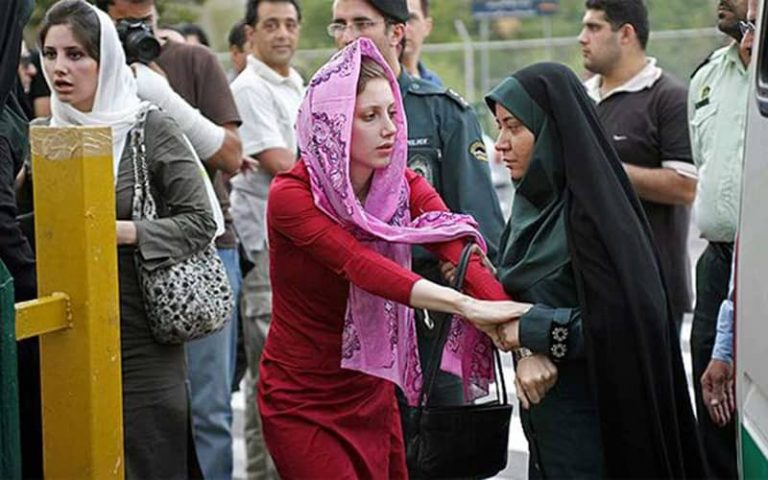
The head of Iran’s regime judiciary has threatened firm action against institutions described as “promoters of indecency and improper hijab.” Gholamhossein Mohseni Ejei said punishments would become harsher and that violator businesses—such as shops, cafes, and restaurants—would be sealed for long periods. Ejei is a long-time judicial figure within Iran’s regime and is known for his role in politically motivated prosecutions.
Speaking during his trip to Yazd, Ejei said he had recently issued a directive obligating intelligence agencies to identify what he called “organized networks promoting indecency and improper hijab.”
He added that Iran’s police force “is legally responsible for confronting obvious crimes… when a person is officially half-naked or naked, there will be legal action in such cases.”
The judiciary chief said: “Violating businesses, such as restaurants and coffee shops, have also been notified that if actions contrary to law and Sharia occur on their premises, firm and legal measures will be taken, and it will no longer be the case that a violating business is sealed only for a short time.”
Ejei made these remarks at Yazd’s Administrative Council, one day after comments by Ali Khamenei, the leader of Iran’s regime, regarding compulsory hijab and women’s attire. Khamenei is the regime’s highest authority and directly influences judicial and security policies.
The leader of Iran’s regime yesterday criticized what he called Western ideas about women’s freedom and warned media outlets not to repeat such views.
Ejei’s warning about confronting the promotion of “indecency and improper hijab” comes as dozens of regime parliament members recently sent a letter to the judiciary chief demanding enforcement of the hijab law. Iran’s parliament is dominated by factions aligned with Khamenei.
Ejei also said: “I am not saying that only coercive measures should be taken in this matter, but I emphasize that this situation must not continue.”
He also addressed ceremonies and conferences in which women do not observe the attire mandated by the regime, adding: “Regarding chastity and hijab, and the problems arising in conferences and events, we will hold the officials who issue permits accountable as well.”
Yesterday—December 3—Ali Khamenei, the leader of Iran’s regime, met with a group of women and, while criticizing “Western culture,” said: “When discussing hijab, women’s attire, and cooperation between men and women, domestic media must not repeat and amplify the words of Westerners.”
At the same time, members of Iran’s parliament also warned about what they called the “growth of indecency and a nudity movement” in the country.
Ali Khamenei told state media: “The profound and effective view of Islam must be presented and amplified domestically and globally; this is the best way to promote Islam and will attract many people of the world, especially women, to it.”
One week ago, Elias Hazrati, the head of the government’s information council, confirmed that the leader of Iran’s regime had issued instructions to the government on “cultural and social matters.” Hazrati is a long-time political figure who often conveys guidance passed down from Khamenei’s office.
It is said that this directive was issued after the Intelligence Ministry sent Khamenei a report on the “status of hijab” and other social issues. Hazrati stated that the report addressed at least 23 social matters.
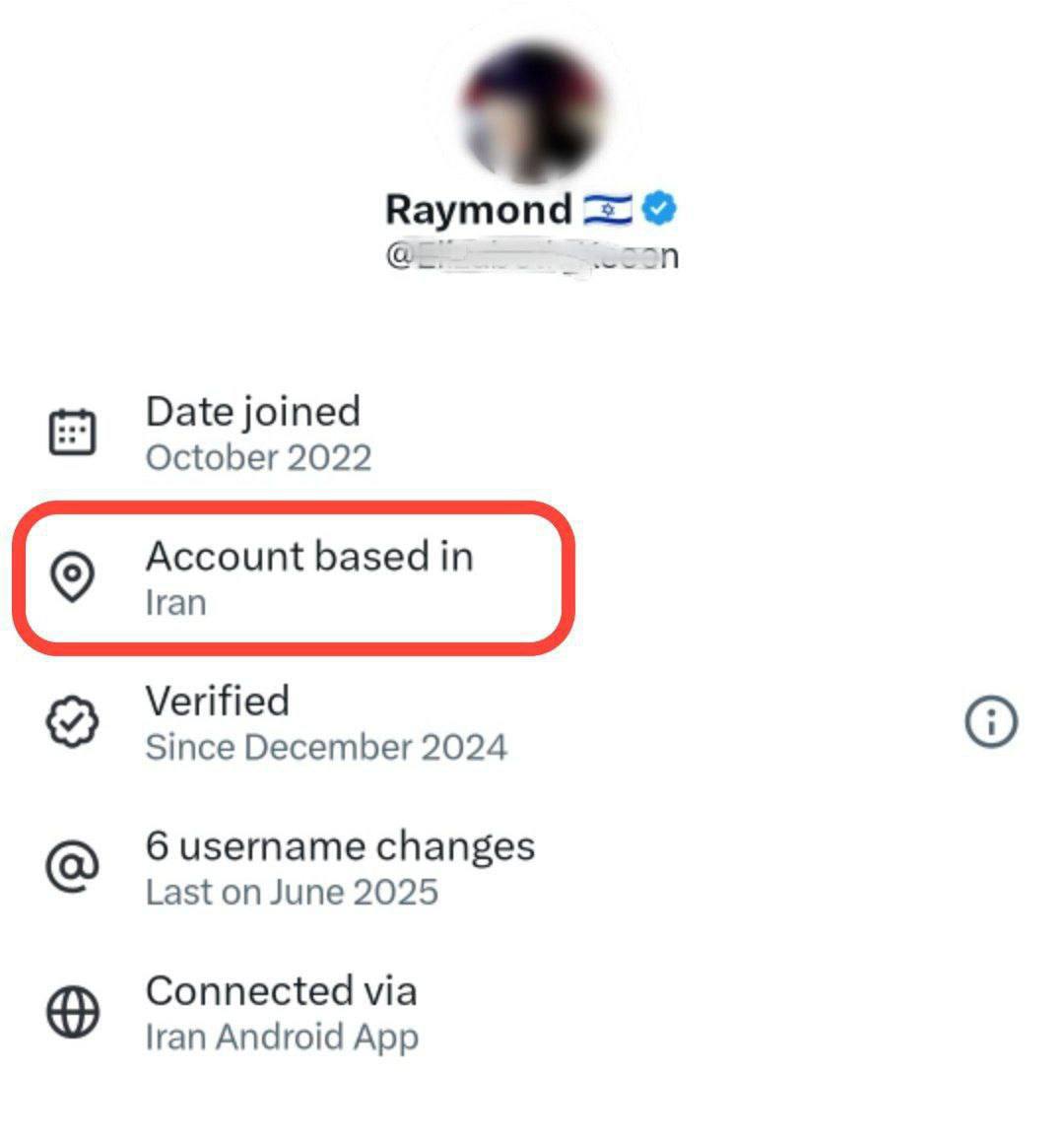
With the new update on the X platform, which shows users’ locations, it became clear that a number of Iranian journalists and political figures are using unfiltered internet access known as “white SIM cards”—a privilege available to only about 16,000 people out of a population of 90 million. In Iran, accessing platforms like X is only possible through VPNs, and the display of “Iran” as a user’s location means they are connected to the internet without filtering.
The revelation triggered widespread debate, as many white SIM card holders are the same individuals who shape narratives in the media and influence newsroom agendas. Some of them were publicly critical of the government. Among these accounts were even those that, using white SIM access, promoted the return of monarchy in Iran and expressed support for Israel. The purpose of Iran’s regime in creating such accounts has been to discredit the opposition groups such as the National Council of Resistance of Iran (NCRI) abroad and create despair inside Iran about democratic change.
X users, by posting thousands of screenshots, claimed that a significant portion of the highly active accounts promoting Reza Pahlavi and the restoration of monarchy were operating not from Europe or the United States but from inside Iran, mainly from major cities.
According to screenshots posted up to November 25, 2025, the locations of many of these accounts showed the following cities: Tehran, Mashhad, Isfahan, Shiraz, Tabriz, Karaj, Qom, Ahvaz, and Kermanshah.
Some of these accounts changed their location setting to “region” after being exposed, but the original screenshots are still available. Some of these accounts have blue verification badges and as many as 20,000 followers, operating without any filtering restrictions.
Critics argue that these accounts, by posting coordinated content and extreme slogans, exaggerate support for Reza Pahlavi while undermining the main opposition movements and the broader popular uprising.
Earlier, reports by the Israeli newspaper Haaretz and the Canadian research institute Citizen Lab in October 2025 had already exposed an organized network of thousands of fake accounts and AI-generated content aimed at legitimizing Reza Pahlavi, the son of the former shah.
Public opinion is now asking how people who claim to support free access to information simultaneously benefit from a privilege that turns the internet into a class-based and exclusive commodity.
In the “About This Account” section on X, details such as connection method and country of activity are displayed. If the user is connected through an Android phone, their real location is recorded, which is why many white-SIM users appeared with an “Iran” location. VPN users appear with a shield icon, whereas white-SIM users show no such VPN marker. A location reading “Bulgaria” often indicates Starlink usage—a service not officially available in Iran and accessible only if activated in another country and used via roaming.
Criticism intensified when it emerged that a significant number of reformist-leaning journalists—individuals whose accounts of government pressure had long been amplified in the media—were using unfiltered internet. This contradicted their public claims of opposing class-based internet access. One example involved the sister of Elaheh Mohammadi—an Iranian journalist who served a few months in jail—who switched her account to private after her location was revealed and claimed that during the twelve-day conflict, her SIM card “was unintentionally turned white,” a claim widely doubted by users.
In the following days, state-run media defended white SIM cards. The state-run Tabnak website called the exposure of user locations a “conspiracy” and claimed it aimed to damage Iran’s media credibility and create division between the public and media elites. Other state-run outlets echoed this narrative.
The origins of class-based internet access go back to 2019, when the communications minister at the time first acknowledged the existence of such privileged connectivity. This was seen again in November 2019, when public internet was shut down for one week, yet a limited number of journalists remained active on Twitter.
A revelation by political analyst Abbas Abdi—who himself also has a white SIM card—showed that about 16,000 people have access to this privilege. Many of these individuals, who are publicly perceived as government critics, have in practice been guiding mainstream narratives in state media and on social networks. According to sources close to these groups, in private gatherings and online channels, coordinated decisions were made regarding promoting figures such as Masoud Pezeshkian, defending his ministers, encouraging election participation, and attacking opposition users and groups.
For years, a large segment of reformist-leaning journalists has enjoyed this special access. During the 2024 elections, many of the major hashtags originated from these groups, who then encouraged other users through private messages to join in. The new revelation on X merely confirmed that Iran’s information ecosystem—even among those who appear to be critics of the government—is built on unequal access to the internet. This privileged access allows a small group to shape dominant narratives, while the majority of society must struggle through filters and disruptions to reach open internet.



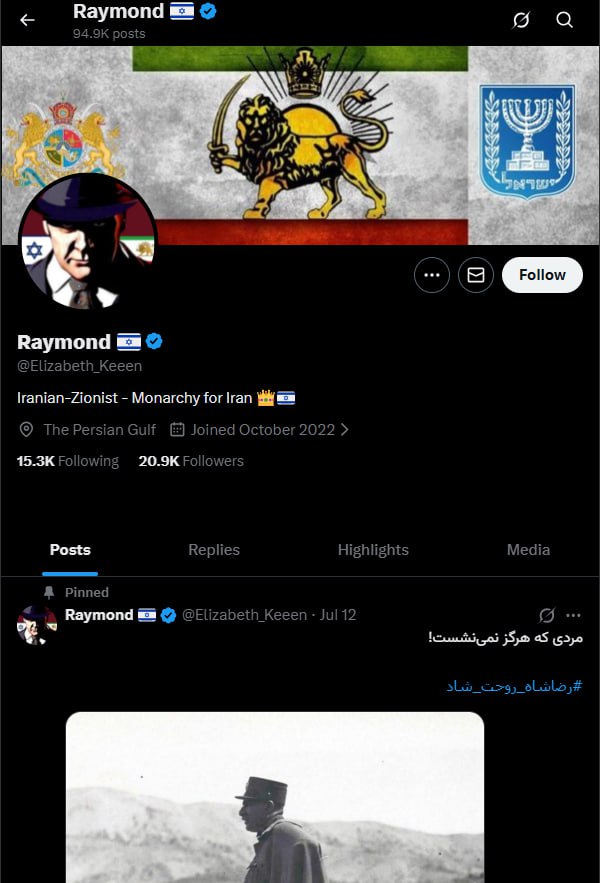 Critics argue that these accounts, by posting coordinated content and extreme slogans, exaggerate support for Reza Pahlavi while undermining the main opposition movements and the broader popular uprising.
Earlier, reports by the Israeli newspaper Haaretz and the Canadian research institute Citizen Lab in October 2025 had already exposed an organized network of thousands of fake accounts and AI-generated content aimed at legitimizing Reza Pahlavi, the son of the former shah.
Public opinion is now asking how people who claim to support free access to information simultaneously benefit from a privilege that turns the internet into a class-based and exclusive commodity.
In the “About This Account” section on X, details such as connection method and country of activity are displayed. If the user is connected through an Android phone, their real location is recorded, which is why many white-SIM users appeared with an “Iran” location. VPN users appear with a shield icon, whereas white-SIM users show no such VPN marker. A location reading “Bulgaria” often indicates Starlink usage—a service not officially available in Iran and accessible only if activated in another country and used via roaming.
Criticism intensified when it emerged that a significant number of reformist-leaning journalists—individuals whose accounts of government pressure had long been amplified in the media—were using unfiltered internet. This contradicted their public claims of opposing class-based internet access. One example involved the sister of Elaheh Mohammadi—an Iranian journalist who served a few months in jail—who switched her account to private after her location was revealed and claimed that during the twelve-day conflict, her SIM card “was unintentionally turned white,” a claim widely doubted by users.
In the following days, state-run media defended white SIM cards. The state-run Tabnak website called the exposure of user locations a “conspiracy” and claimed it aimed to damage Iran’s media credibility and create division between the public and media elites. Other state-run outlets echoed this narrative.
The origins of class-based internet access go back to 2019, when the communications minister at the time first acknowledged the existence of such privileged connectivity. This was seen again in November 2019, when public internet was shut down for one week, yet a limited number of journalists remained active on Twitter.
A revelation by political analyst Abbas Abdi—who himself also has a white SIM card—showed that about 16,000 people have access to this privilege. Many of these individuals, who are publicly perceived as government critics, have in practice been guiding mainstream narratives in state media and on social networks. According to sources close to these groups, in private gatherings and online channels, coordinated decisions were made regarding promoting figures such as Masoud Pezeshkian, defending his ministers, encouraging election participation, and attacking opposition users and groups.
For years, a large segment of reformist-leaning journalists has enjoyed this special access. During the 2024 elections, many of the major hashtags originated from these groups, who then encouraged other users through private messages to join in. The new revelation on X merely confirmed that Iran’s information ecosystem—even among those who appear to be critics of the government—is built on unequal access to the internet. This privileged access allows a small group to shape dominant narratives, while the majority of society must struggle through filters and disruptions to reach open internet.
Critics argue that these accounts, by posting coordinated content and extreme slogans, exaggerate support for Reza Pahlavi while undermining the main opposition movements and the broader popular uprising.
Earlier, reports by the Israeli newspaper Haaretz and the Canadian research institute Citizen Lab in October 2025 had already exposed an organized network of thousands of fake accounts and AI-generated content aimed at legitimizing Reza Pahlavi, the son of the former shah.
Public opinion is now asking how people who claim to support free access to information simultaneously benefit from a privilege that turns the internet into a class-based and exclusive commodity.
In the “About This Account” section on X, details such as connection method and country of activity are displayed. If the user is connected through an Android phone, their real location is recorded, which is why many white-SIM users appeared with an “Iran” location. VPN users appear with a shield icon, whereas white-SIM users show no such VPN marker. A location reading “Bulgaria” often indicates Starlink usage—a service not officially available in Iran and accessible only if activated in another country and used via roaming.
Criticism intensified when it emerged that a significant number of reformist-leaning journalists—individuals whose accounts of government pressure had long been amplified in the media—were using unfiltered internet. This contradicted their public claims of opposing class-based internet access. One example involved the sister of Elaheh Mohammadi—an Iranian journalist who served a few months in jail—who switched her account to private after her location was revealed and claimed that during the twelve-day conflict, her SIM card “was unintentionally turned white,” a claim widely doubted by users.
In the following days, state-run media defended white SIM cards. The state-run Tabnak website called the exposure of user locations a “conspiracy” and claimed it aimed to damage Iran’s media credibility and create division between the public and media elites. Other state-run outlets echoed this narrative.
The origins of class-based internet access go back to 2019, when the communications minister at the time first acknowledged the existence of such privileged connectivity. This was seen again in November 2019, when public internet was shut down for one week, yet a limited number of journalists remained active on Twitter.
A revelation by political analyst Abbas Abdi—who himself also has a white SIM card—showed that about 16,000 people have access to this privilege. Many of these individuals, who are publicly perceived as government critics, have in practice been guiding mainstream narratives in state media and on social networks. According to sources close to these groups, in private gatherings and online channels, coordinated decisions were made regarding promoting figures such as Masoud Pezeshkian, defending his ministers, encouraging election participation, and attacking opposition users and groups.
For years, a large segment of reformist-leaning journalists has enjoyed this special access. During the 2024 elections, many of the major hashtags originated from these groups, who then encouraged other users through private messages to join in. The new revelation on X merely confirmed that Iran’s information ecosystem—even among those who appear to be critics of the government—is built on unequal access to the internet. This privileged access allows a small group to shape dominant narratives, while the majority of society must struggle through filters and disruptions to reach open internet. 