

Global Athletes Demand UN Action to Stop Execution of Iranian BoxerFull text of the statement by the “No To Execution Tuesdays” campaign Expansion of the “No To Execution Tuesdays” campaign in its ninety-fourth week across fifty-four different prisons
Iran’s ‘No To Execution Tuesdays’ Campaign Marks 94th Week
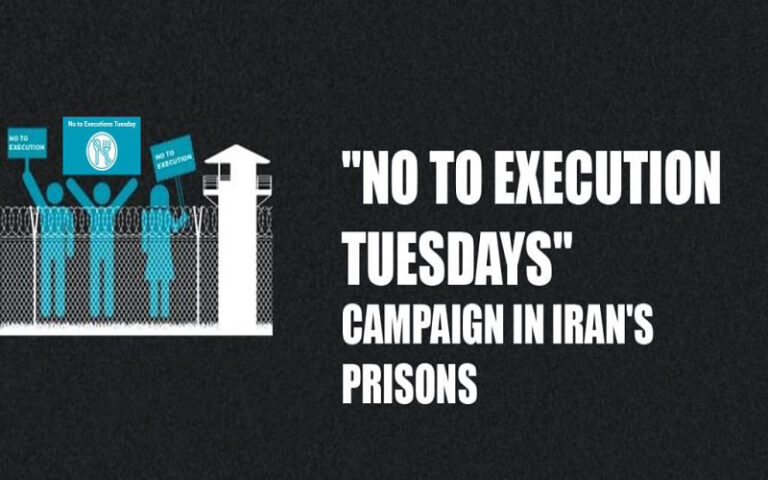
Reports from Iranian prisons indicate that the “No To Execution Tuesdays” campaign continued on Tuesday, November 11, entering its ninety-fourth week. This campaign, launched nearly two years ago to end the massive waves of executions in Iran, has continued uninterrupted and is expanding. In a statement, the campaign emphasized that no government can silence the powerful voices of truth, justice, and freedom through executions, calling on all conscientious individuals to turn the cry of “No to execution” into a powerful wave in every city and street, because inaction and silence mean the taking of innocent and defenseless lives in the prisons of the tyrannical and bloodthirsty rule of the supreme leader.
Tehran-Linked Hacking Group Leaks Technical Designs of Australia’s $7 Billion Armored Vehicles
According to Sky News Australia, a hacker group supporting Hamas and linked to the Iranian regime launched a major cyberattack against Israeli defense companies, obtaining and publishing online the technical blueprints of Australia’s new infantry fighting vehicles, worth $7 billion.
The report, published on Sunday, November 9, stated that the hacker group “Cyber Tornado,” believed to be connected to the Iranian regime, obtained and released 3D renderings and technical details of the next-generation “Redback” armored vehicles being developed for the Australian Army.
According to the report, these military vehicles are to be equipped with advanced weapon turrets produced by the Israeli defense company Elbit Systems.
Anonymous Hackers Tied to Iran’s Regime Targeted American Researchers with Fake e-MailsThe hacker group claimed in a statement that after infiltrating the security cameras of “Maya Technologies,” an Israeli defense supply-chain company, over a year ago, it accessed classified data from 17 Israeli defense firms. According to Sky News, since October 22, the group has claimed it “penetrated the heart of Israel’s defense engineering operations” and began releasing classified details of 36 Israeli military projects on its Telegram channel. Elbit’s turrets include advanced sensors and remote-controlled weapon systems designed by the Australian defense company EOS (Electro Optic Systems). They are armed with Elbit’s 30mm cannon and equipped with the “Iron Fist” active protection system. Sky News Australia reported that the leaked data also revealed designs for a helmet-mounted display system developed by Elbit. The system’s design and technology are similar to the displays used in Redback armored vehicles and the “Spike NLOS” anti-tank missile system that Australia is considering purchasing. Sky News wrote that it remains unclear how much data was stolen and whether it could be used to develop countermeasures against Redback’s weapons or defense technologies. The report also noted concerns that Israel’s advanced military capabilities could be reverse-engineered using the stolen data. Under the contract, the Australian Army is to receive 127 Redback armored vehicles—tank-like infantry fighting vehicles—designed by South Korea’s Hanwha Defense, at a total value of about $7 billion. Elbit’s turrets will be supplied under a separate contract worth approximately $920 million.
Claim of hacking Israel’s Rafael defense systems
The Cyber Tornado group also claimed that after its initial breach of Maya Technologies, it managed to hack into the systems of both Elbit and another Israeli defense giant, Rafael Advanced Defense Systems.Tehran-Backed Hackers Carried Out a Cyber Intrusion Against Mediators in the Gaza Ceasefire NegotiationsIn the group’s statement, referring to what it called the hacking of Elbit’s and Rafael’s systems, phones, printers, routers, and cameras, it said: “We have recorded your meetings with audio and video for more than a year. This is just the beginning with Maya.” Katherine Mansted, executive director of cyber intelligence at CyberCX, told Sky News Australia that Iranian regime-backed hacker infiltrations of Israeli companies—and subsequent harm to their Australian clients—had occurred before, adding that this incident highlights one of the “most complex and potentially existential threats” facing Australian organizations. Mansted noted that Cyber Tornado is “a highly active anti-Israel hacking persona,” adding: “The group claims to have infiltrated at least 100 Israeli entities… and we strongly suspect that this group is, in fact, a proxy force of the Iranian government.” Cyber Tornado emerged on October 27, 2023, only a few weeks after Hamas’s October 7 attack on Israel. Israel’s International Institute for Counter-Terrorism stated that the group’s activities—focused on infiltrating servers, databases, and leaking information—“strongly indicate state sponsorship, with evidence suggesting that Iran is most likely backing it.”
State Cleric Blames ‘Women Not Wearing Hijab’ For Drought in Iran
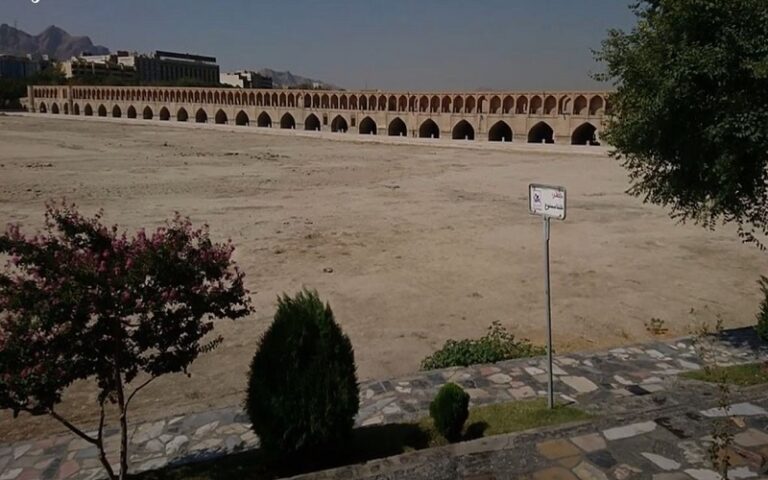
As Iran’s water crisis worsens and the regime fails to manage its water resources, a member of the Assembly of Experts claimed that the regime’s desired form of mandatory hijab not being observed in the streets is the cause of Iran’s water crisis, drought, and reduced rainfall.
On Sunday, November 9, Mohsen Araki said: “Drought, water crisis, and reduced rainfall are signs of God’s warning to awaken us from negligence and inattentiveness toward Him.”
He added: “The Islamic Revolution is built on the blood of martyrs, and it is not right that our streets become a parade ground for open sin, unveiled women, and public immorality.”
The Assembly of Experts member continued: “These behaviors have consequences, and a society known for its faith and Shiism must be sensitive toward such deviations.”
Iranian Regime President Issues Belated Water Shortage Warning—The Reality Is Even More TerrifyingThese remarks reflect the recurring approach of Iranian regime officials, who instead of examining scientific causes or offering solutions to the water crisis, attribute it to “individual sin” and “women’s appearance.” By repeating religious rhetoric, they avoid accountability for mismanagement and failed policies. In such narratives, technical questions and demands for transparency are sidelined and replaced by moral warnings and police threats. Independent experts in water and environmental issues have emphasized that Iran’s drought results from a combination of the water mafia’s influence, climatic trends, and decades of structural mismanagement—including the expansion of water-intensive and subsidy-driven agriculture, overexploitation of groundwater, and lack of sustainable consumption models in industries and cities. According to them, reducing this multilayered crisis to the issue of hijab not only lacks any scientific basis but also hinders the political will necessary to reform water policies and hold responsible institutions accountable.
Nighttime water cuts in Iran
As Iran’s water crisis continues, Abbas Aliabadi, the regime’s minister of energy, announced on November 9 that nighttime water cuts will be implemented across the country and urged people to install household water storage systems. Ahad Vazifeh, head of the National Center for Climate and Drought Crisis Management, said forecasts show that no significant rain system will pass over Iran in the next 10 days. Mehdi Chamran, head of Tehran’s City Council, also proposed holding a “rain prayer” as one of the ways to address the water shortage crisis. He added: “People today have forgotten that in the past, people used to go into the desert, pray for rain, and they succeeded. Alongside all other measures for water shortage, we should not neglect this.” On November 6, regime president Masoud Pezeshkian warned that if it does not rain in December, water in Tehran will be rationed, and if the drought persists, the capital will have to be evacuated. In response to these remarks, Reza Haji Karim, head of Iran’s Water Industry Federation, stressed that the water situation in the capital is “more worrying” than Pezeshkian’s statements and “more terrifying” than official statistics suggest. Experts say Iran’s water crisis reflects years of mismanagement, flawed policies, and the regime’s neglect in reforming key structures in water resource management—a crisis that now makes accountability and reform unavoidable.Air Pollution In Khuzestan Caused More Than 1,600 Deaths In Past Year
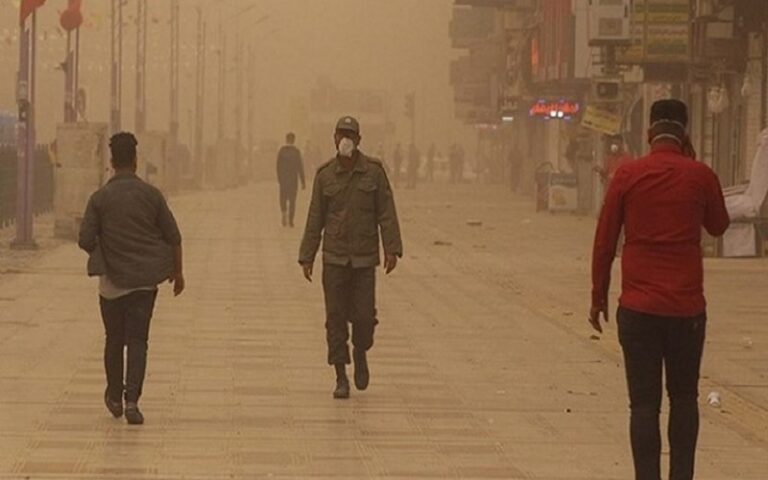
Mehrdad Sharifi, deputy director of health at Ahvaz Jundishapur University of Medical Sciences, announced that air pollution in the past year has caused the deaths of 1,624 people in Khuzestan province.
On November 9, Sharifi said that in the past year, air pollution has inflicted more than 427 million dollars in damages to the health sector.
He added that in October alone, at least 22,000 people were hospitalized in Khuzestan due to air pollution.
Critical Air Pollution in Iran’s Major CitiesThe Research Center of Iran’s regime Majlis (parliament)had previously announced that in 2023, air pollution was responsible for the premature deaths of more than 30,000 people across 57 cities with a combined population of about 48 million. In August 2025, Iranian media also reported that air pollution in the previous year had caused the deaths of 6,000 people in the capital, Tehran. According to government officials, Isfahan province has the highest number of cancer and multiple sclerosis (MS) patients in the country, largely due to air pollution. The air pollution situation in Khuzestan is extremely critical, with the air quality in several cities of the province often categorized as “purple” or even “brown”—the most hazardous levels—on many days of the year. According to Sharifi, the air in the cities of Ahvaz, Dasht-e Azadegan, and Hoveyzeh has been classified as “healthy” for only two days over the past few months. The Air Quality Index (AQI) is divided into six categories—“clean,” “acceptable,” “unhealthy for sensitive groups,” “unhealthy,” “very unhealthy,” and “hazardous”—with purple and brown representing the most dangerous levels for breathing. This index is determined based on measurements of various air pollutants, including carbon monoxide, ozone, nitrogen dioxide, sulfur dioxide, and particulate matter smaller than 2.5 microns. With the continuation of air pollution in Khuzestan, all elementary and lower secondary schools in the province will remain closed until late November. So far, several sources have been cited as contributors to Khuzestan’s air pollution, including industrial emissions, fires in the Iraqi part of the Hoor al-Azim wetland, burning of crop residues, rice and sugarcane cultivation, fires at old waste sites, and vehicle emissions. However, air pollution is not limited to Khuzestan province; this crisis has affected citizens’ lives across other cities and provinces in Iran as well. In recent years, air pollution levels in Iran have repeatedly reached critical thresholds, while frequent dust storms have further exacerbated environmental crises and public health threats. Despite the growing severity of the problem, Iran’s regime has so far failed to introduce any coherent or sustainable plan to control or manage this crisis.
Belated Warning by Regime President About Water Shortages—The Reality Is Even More Terrifying
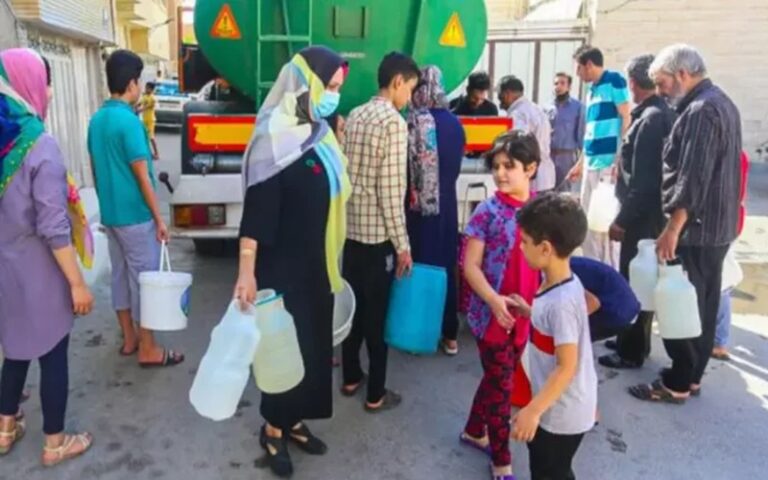
The head of Iran’s Water Industry Federation emphasized that Tehran’s water situation is worsening exponentially, warning that the capital’s water condition is “more concerning” than Iranian regime president Masoud Pezeshkian’s recent remarks about the need to evacuate Tehran and “more terrifying” than official statistics indicate.
Reza Haji Karim, in an interview with the state-run Didban Iran website published on Saturday, November 8, said: “The reality is that Tehran’s water situation is as bad and even more alarming than what the president warned about.”
Iranian Regime President Issues Belated Water Shortage Warning—The Reality Is Even More TerrifyingThe head of the Water Industry Federation stressed: “This warning has come very late.” On November 6, Masoud Pezeshkian warned that if it does not rain by late November, water in Tehran will be rationed, and if the drought continues, the city must be evacuated. Amid the ongoing water crisis across many provinces in Iran, Mohsen Ardakani, the director-general of Tehran’s Water and Wastewater Company, described the capital’s water status as “critical and concerning.” The head of the Water Industry Federation, referring to the “severe depletion of Tehran’s groundwater reservoirs,” added: “Currently, 62% of Tehran’s water supply comes from underground sources and 38% from surface water, which is almost exhausted or nearing depletion.” Haji Karim also questioned the statistics on Tehran’s dam reserves, saying: “The figure that states only 5% of the water reserves in the dams supplying Tehran remains is not very accurate — the reality is somewhat more terrifying than the official numbers.” While some Iranian media outlets have reported unofficial water rationing in Tehran, the head of the Water Industry Federation said: “This should have started much earlier. We had repeatedly requested in meetings with national water officials that water rationing in Tehran begin sooner, though this measure comes with its own challenges.” He added that by rationing, he meant that “water, like electricity, should be cut off at specific times of the day, district by district.”
The solutions are not feasible in the short term
Currently, various solutions are being discussed to tackle the water crisis, such as water recycling systems, changing consumption patterns, using water-saving devices, public education, and reducing agricultural water use.The Karaj Dam’s Reservoir Can Only Supply Tehran’s Drinking Water for Two WeeksThe head of the Water Industry Federation stressed: “These measures cannot be implemented in the short term, but some could show results within a few months.” He explained: “For example, in densely populated areas, wastewater can be recycled and reused for various purposes such as green spaces, cooling towers, or toilet flushing. In the medium term, revising agricultural policies can help reduce water consumption in that sector.” Haji Karim continued: “The ultimate solution is to prevent 30 million cubic meters of Tehran’s water from being used for construction or non-essential purposes. Drinking water should not be used for toilet flushing, and the province of Tehran should not consume 1.8 billion cubic meters of water for agriculture.”
The water transfer policy has failed
In recent months, Iran’s regime announced plans to transfer water from other regions to Tehran, but the head of the Water Industry Federation emphasized: “In principle, water transfer policies have failed.” He added: “Unfortunately, some officials believe this project could save Tehran, but even Taleghan itself depends on rainfall. Naturally, when there’s no rain in Taleghan, there’s no water to fill the dam. The Taleghan Dam is now facing complete dryness.”Criticism over Tehran’s decaying water infrastructure
Pezeshkian’s comments about water rationing in Tehran if it doesn’t rain in November and the possible evacuation of the capital have sparked criticism from media outlets, including those aligned with the regime’s opposition factions. In the latest criticism, Hamed Pak-Tinat, founder of the Association of Economic Activists, wrote in an Instagram post criticizing Pezeshkian’s remarks: “Instead of holding useless meetings with the Meteorological Organization and relying on rain, find $200 million—maybe from the budget of one of those meaningless cultural centers—and spend it on repairing Tehran’s decaying water pipes.” In August of last year, Ali Beytollahi, head of the earthquake department at the Road, Housing, and Urban Development Research Center, said: “About 40% of the country’s drinking water network is very old and practically worn out.” He added: “Thirty percent of major ground sinkholes have originated from ruptured water pipes and powerful water leaks.” According to a report by the Ministry of Energy published last year, the volume of leaked and unaccounted-for water nationwide amounts to about 1.9 billion cubic meters annually, equivalent to the yearly water consumption of about 26 million urban residents. In Tehran alone, water losses from transmission network leaks are estimated at about 130 million cubic meters, roughly twice the volume of Lake Chitgar. Over the past decades, Iran’s regime’s water management system has neglected investment in infrastructure, despite repeated expert warnings, focusing instead on dam construction and deep well drilling while reducing the water shortage issue merely to a lack of rainfall. Meanwhile, regime officials, following superstitious and ideological approaches, have absurdly blamed droughts and water crises on women’s non-compliance with the mandatory hijab.Iranian Regime MP: The Government No Longer Has Money To Import Gasoline
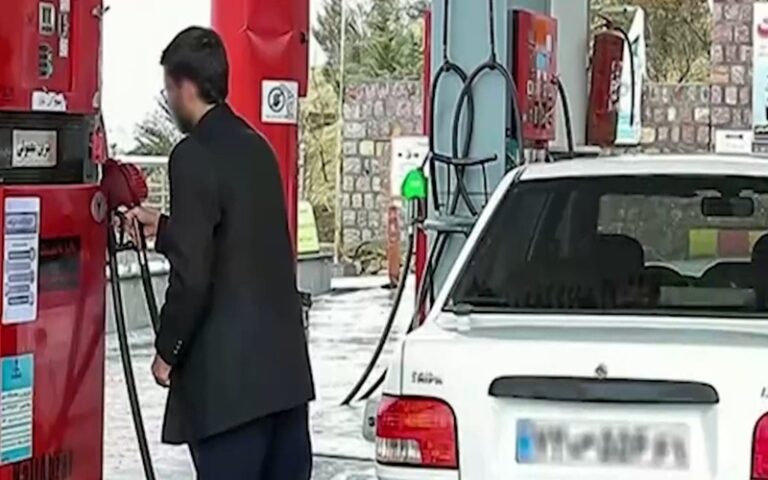
Farhad Shahraki, the first deputy chairman of the Energy Committee in Iran’s regime Majlis (parliament), said in an interview with domestic media that the budget allocated for gasoline imports this year has been depleted in the first few months, and the government no longer has foreign currency to buy gasoline. He made the remarks while referring to the possibility of changing the price of gasoline purchased with the “free fuel card” at gas stations.
On Saturday, November 8, Shahraki told a reporter from the state-run Young Journalists Club that this situation has prompted the government to consider increasing gasoline prices.
He added that the government is unaware of the issue, saying, “So far, this matter has not been raised in the Majlis, and even the Energy Committee has not been consulted.”
The member of the Energy Committee referred to ongoing debates and speculations in recent weeks about a possible fuel price increase, saying, “It is possible that the free fuel card at gas stations will undergo a price change, in order to encourage fuel savings.”
Shahraki, however, emphasized, “The government does not need Majlis’ approval to increase gasoline prices.”
Nevertheless, Fatemeh Mohajerani, spokesperson for the government, announced on Tuesday, November 4, that the government has not yet made any decision to raise the price of rationed gasoline, which will continue to be sold at current rates.
This comes while Iran’s regime president, Masoud Pezeshkian, stated on October 23 that there is “no doubt” about the need to increase gasoline prices.
Reports about Pezeshkian’s government planning to raise fuel prices have been circulating for weeks.
Hossein Samsami, a member of the Economic Committee of the regime’s Majlis, confirmed on Friday, November 7, that a “three-tier fuel pricing system” had been approved in the meeting of the heads of the three branches of power.
According to him, under the new plan, gasoline will be sold at three different prices: the first 60 liters at 15,000 rials per liter, the next 100 liters at 30,000 rials per liter, and the remainder up to 160 liters at 50,000 rials per liter. Currently, one U.S. dollar is worth about 1.1 million rials, and a worker’s monthly wage is roughly 130 dollars.
Warning about the consequences of rising gasoline prices
On Wednesday, November 5, regime MP Ebrahim Rezaei warned about the rise in gasoline prices, saying that there are “rumors about an upcoming price hike,” the “method of implementation” of which could be “very dangerous.” Rezaei added, “Given the importance of this matter for the country, care must be taken to ensure that some of the past tragedies are not repeated.” The last gasoline price increase in Iran in November 2019 triggered a wave of widespread nationwide protests that were brutally crushed by the Iranian regime’s security forces. According to reports, at least 1,500 people were killed and thousands more were arrested during those protests.Tribunals against Criminals in Iran
Pezeshkian’s government fabricates figures to justify the fuel price hike
According to government officials, raising prices is “inevitable” due to what they describe as the “high cost of gasoline production.” Mohammad Jafar Ghaempanah, executive deputy to Masoud Pezeshkian, the Iranian regime’s president, said on November 5, “Each liter of gasoline costs the government 340,000 rials, but we sell it for 15,000 or 30,000 rials.” However, studies show that the government’s actual production cost is about 90% lower than the stated figure. It is clear that Iran’s regime is trying to use every possible tactic to cover its budget deficit while continuing to spend oil revenues on funding its regional proxy groups and suppressing its own people.Tehran Has Sent One Billion Dollars to Hezbollah This Year
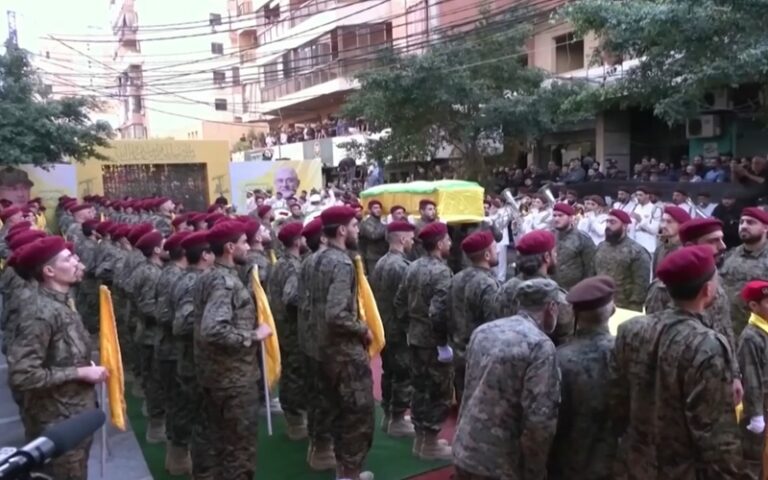
John Hurley, the U.S. Deputy Assistant Secretary of the Treasury for Terrorism and Financial Intelligence, said that despite sanctions, the Iranian regime has sent about one billion dollars to Hezbollah this year.
In an interview with Reuters in Istanbul, he added: “There’s a moment in Lebanon now. If we could get Hezbollah to disarm, the Lebanese people could get their country back.”
The U.S. Deputy Assistant Secretary of the Treasury for Terrorism and Financial Intelligence said the key to disarming Hezbollah is cutting off Iran’s funding, and that if Hezbollah can be disarmed, the Lebanese people can reclaim their country.
Hezbollah Secretly Rebuilding Itself with Help from Iran’s RegimeOn November 6, the U.S. Treasury Department sanctioned several active members of Hezbollah involved in financial operations, as part of efforts to support the group’s disarmament. In 2025, they transferred tens of millions of dollars from Iran to Hezbollah. According to the Treasury Department, their methods included selling Iranian oil and goods and transferring the proceeds to Lebanon through both licensed and unlicensed exchange houses.
Tehran’s role in rebuilding Hezbollah
Israel says Hezbollah is trying to rebuild its capabilities and, despite a ceasefire agreement, carried out heavy airstrikes in southern Lebanon on Thursday. The Lebanese government is committed to disarming all non-state groups, including Hezbollah, which was founded in 1982 by Iran’s Islamic Revolutionary Guard Corps (IRGC). While Hezbollah has not prevented government forces in southern Lebanon from seizing its depots, it has rejected complete disarmament. During his first trip to the Middle East since the inauguration of U.S. President Donald Trump, Hurley raised the issue of Iran in meetings with government officials, bankers, and private sector executives. He said: “Even with everything Iran has been through, even with the economy not in great shape, they’re still pumping a lot of money to their terrorist proxies.”The Shah’s Despotism Laid the Foundation for the Clerical Dictatorship in Iran
At the invitation of Judy Sgro, a member of Canada’s ruling Liberal Party, and Mike Cooper, a Conservative Party MP—co-chairs of the Canadian Committee of Friends of a Democratic Iran—a parliamentary session titled “Iran at a Crossroads: Geopolitical Changes and Human Rights Realities” was held. The meeting was attended by Canadian MPs, senators, and representatives of the Iranian-Canadian community.
Judy Sgro spoke about her support for the National Council of Resistance of Iran (NCRI), saying that the council “provides accurate and comprehensive information about Iran—whether on human rights, nuclear issues, or regional destabilization.” She added that this credibility has allowed the NCRI “to unite a broad spectrum of political voices around this goal.”
Opening the session, Michael Cooper noted that recent months had seen both a sharp increase in executions and a significant weakening of Tehran’s regional influence. He referred to new United Nations sanctions and the reactivation of the “snapback” mechanism by France, Germany, and the United Kingdom under the JCPOA framework. At home, he said, decades of corruption and mismanagement had pushed millions of Iranians below the poverty line, with inflation and power shortages now part of daily life. More than a thousand executions have reportedly taken place in the first nine months of 2025. Guest speaker Senator Robert Torricelli, a former U.S. senator and long-time advocate for human rights in Iran, gave an extensive overview of Tehran’s domestic repression, its international posture, and the shortcomings of Western policy. He said Western governments bore historical responsibility for supporting the Shah’s dictatorship, which paved the way for clerical rule, and now had a duty to help end this cycle of despotism. Torricelli recalled that the 1979 revolution had been intended to establish democracy and improve living standards but was “stolen” by the clerical establishment. Today, he said, the Iranian Resistance has become a global movement committed to democratic values, including gender equality, free elections, and peaceful coexistence with neighboring states. He warned against efforts to promote monarchist restoration as an alternative, arguing that portraying the choice as “mullahs or monarchs” serves only the interests of the current rulers. “The NCRI and the PMOI,” he said, “have articulated a non-nuclear, democratic vision that aligns with universal principles of governance and human rights — the very outcome the world should support.”Thank you to everyone who joined us for our powerful parliamentary briefing on Iran at the Crossroads.
— Judy Sgro (@honjudysgro) November 4, 2025
The testimonies shared by victims of the Iranian regimewere deeply moving and a stark reminder of the ongoing persecution faced by countless Iranians today. pic.twitter.com/fRGS21ZXGW
Iranian Regime President Issues Belated Water Shortage Warning—The Reality Is Even More Terrifying
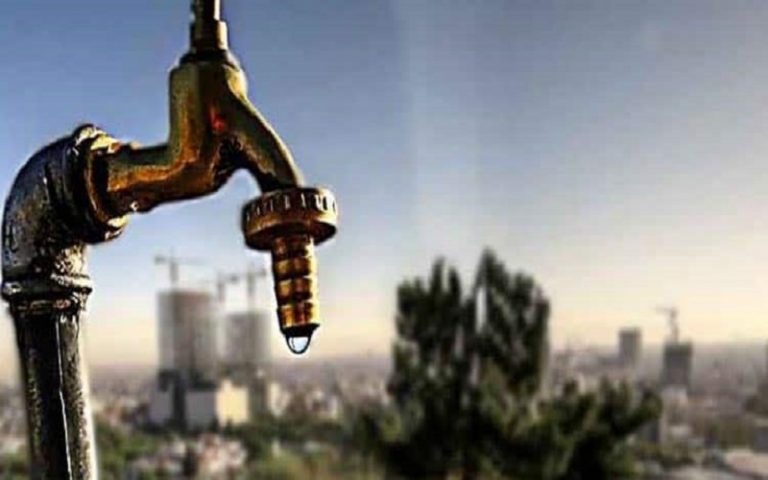
The head of Iran’s Water Industry Federation emphasized that Tehran’s water situation is worsening exponentially, warning that the capital’s water condition is “more concerning” than Iranian regime president Masoud Pezeshkian’s recent remarks about the need to evacuate Tehran and “more terrifying” than official statistics indicate.
Reza Haji Karim, in an interview with the state-run Didban Iran website published on Saturday, November 8, said: “The reality is that Tehran’s water situation is as bad and even more alarming than what the president warned about.”
The Karaj Dam’s Reservoir Can Only Supply Tehran’s Drinking Water for Two WeeksThe head of the Water Industry Federation stressed: “This warning has come very late.” On November 6, Masoud Pezeshkian warned that if it does not rain by late November, water in Tehran will be rationed, and if the drought continues, the city must be evacuated. Amid the ongoing water crisis across many provinces in Iran, Mohsen Ardakani, the director-general of Tehran’s Water and Wastewater Company, described the capital’s water status as “critical and concerning.” The head of the Water Industry Federation, referring to the “severe depletion of Tehran’s groundwater reservoirs,” added: “Currently, 62% of Tehran’s water supply comes from underground sources and 38% from surface water, which is almost exhausted or nearing depletion.” Haji Karim also questioned the statistics on Tehran’s dam reserves, saying: “The figure that states only 5% of the water reserves in the dams supplying Tehran remains is not very accurate — the reality is somewhat more terrifying than the official numbers.” While some Iranian media outlets have reported unofficial water rationing in Tehran, the head of the Water Industry Federation said: “This should have started much earlier. We had repeatedly requested in meetings with national water officials that water rationing in Tehran begin sooner, though this measure comes with its own challenges.” He added that by rationing, he meant that “water, like electricity, should be cut off at specific times of the day, district by district.”
The solutions are not feasible in the short term
Currently, various solutions are being discussed to tackle the water crisis, such as water recycling systems, changing consumption patterns, using water-saving devices, public education, and reducing agricultural water use. The head of the Water Industry Federation stressed: “These measures cannot be implemented in the short term, but some could show results within a few months.” He explained: “For example, in densely populated areas, wastewater can be recycled and reused for various purposes such as green spaces, cooling towers, or toilet flushing. In the medium term, revising agricultural policies can help reduce water consumption in that sector.” Haji Karim continued: “The ultimate solution is to prevent 30 million cubic meters of Tehran’s water from being used for construction or non-essential purposes. Drinking water should not be used for toilet flushing, and the province of Tehran should not consume 1.8 billion cubic meters of water for agriculture.”The water transfer policy has failed
In recent months, Iran’s regime announced plans to transfer water from other regions to Tehran, but the head of the Water Industry Federation emphasized: “In principle, water transfer policies have failed.” He added: “Unfortunately, some officials believe this project could save Tehran, but even Taleghan itself depends on rainfall. Naturally, when there’s no rain in Taleghan, there’s no water to fill the dam. The Taleghan Dam is now facing complete dryness.”Criticism over Tehran’s decaying water infrastructure
Pezeshkian’s comments about water rationing in Tehran if it doesn’t rain in November and the possible evacuation of the capital have sparked criticism from media outlets, including those aligned with the regime’s opposition factions. In the latest criticism, Hamed Pak-Tinat, founder of the Association of Economic Activists, wrote in an Instagram post criticizing Pezeshkian’s remarks: “Instead of holding useless meetings with the Meteorological Organization and relying on rain, find $200 million—maybe from the budget of one of those meaningless cultural centers—and spend it on repairing Tehran’s decaying water pipes.” In August of last year, Ali Beytollahi, head of the earthquake department at the Road, Housing, and Urban Development Research Center, said: “About 40% of the country’s drinking water network is very old and practically worn out.” He added: “Thirty percent of major ground sinkholes have originated from ruptured water pipes and powerful water leaks.” According to a report by the Ministry of Energy published last year, the volume of leaked and unaccounted-for water nationwide amounts to about 1.9 billion cubic meters annually, equivalent to the yearly water consumption of about 26 million urban residents. In Tehran alone, water losses from transmission network leaks are estimated at about 130 million cubic meters, roughly twice the volume of Lake Chitgar. Over the past decades, Iran’s regime’s water management system has neglected investment in infrastructure, despite repeated expert warnings, focusing instead on dam construction and deep well drilling while reducing the water shortage issue merely to a lack of rainfall. Meanwhile, regime officials, following superstitious and ideological approaches, have absurdly blamed droughts and water crises on women’s non-compliance with the mandatory hijab.Global Athletes Demand UN Action to Stop Execution of Iranian Boxer
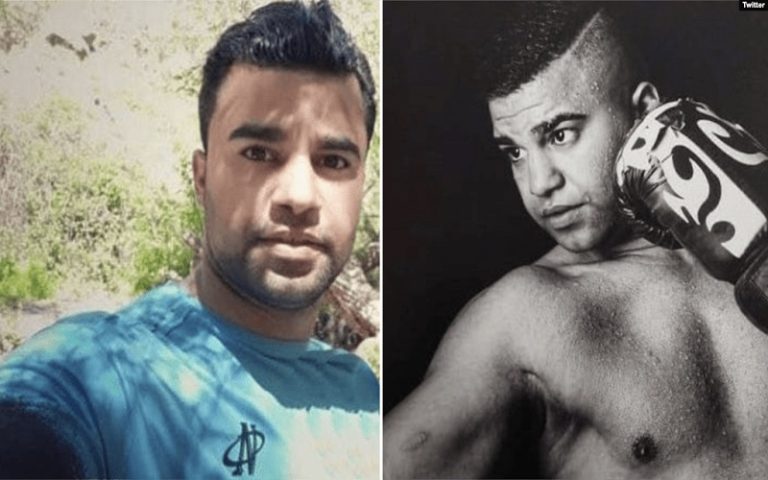
A group of prominent international and Iranian athletes issued a joint statement addressed to the United Nations, international sports federations, and governments, calling for the urgent rescue of Mohammad Javad Vafaei Sani, a 30-year-old boxing champion and coach, whose execution they said is imminent.
Mohammad Javad Vafaei Sani has been sentenced to death on charges of “corruption on earth through arson and destruction of public property.”
Babak Paknia, the attorney for Mohammad Javad Vafaei Sani, who was among the protesters in November 2019, stated that his client’s death sentence has been upheld by Branch 9 of Iran’s Supreme Court, despite “numerous flaws” in the case.
Iran’s Regime Sentences 54 “Political and Security” Prisoners to DeathThe statement was signed by a group of prominent athletes, including Martina Navrátilová, former world number one tennis player from the United States; Sharron Davies, British Olympic medalist swimmer; Riley Gaines, American swimmer and twelve-time U.S. national champion; Craig Andrew Foster, former captain of Australia’s national soccer team; and Bahram Mavedat, former goalkeeper of Iran’s national soccer team, along with other renowned sports figures. “We, athletes and sports figures from around the world, strongly condemn the Iranian regime’s decision on 4 October 2025 to uphold the death sentence of Mohammad Javad Vafaei Sani, a 30-year-old boxing champion and coach from Mashhad,” the letter writes. In their statement, they strongly condemned the Iranian regime’s October 4, 2025 decision to uphold the execution sentence of Mohammad Javad Vafaei Sani, a 30-year-old boxing champion and coach from Mashhad. They emphasized that Mohammad Javad has spent over five years in prison under torture and solitary confinement, solely for participating in the pro-democracy protests of 2019 and for supporting the democratic opposition group, the People’s Mojahedin Organization of Iran (PMOI/MEK). The statement adds that his case is not the only tragedy. The Iranian regime has a dark record of executing athletes for their beliefs. These include Habib Khabiri, former captain of Iran’s national soccer team, and Forouzan Abdi, captain of the women’s national volleyball team, the latter of whom was executed in the 1988 massacre alongside 30,000 political prisoners. In 2020, Iranian wrestling champion Navid Afkari was also hanged after participating in peaceful protests in 2018. The signatory athletes also stressed that in recent months, Iranian regime authorities have executed many other protesters on similarly baseless charges, without any accountability. These political executions are a brutal attempt by the regime to intimidate and silence a population no longer willing to tolerate a corrupt and oppressive rule. Sport should inspire hope, unity, and courage. Executing an athlete for his political views is a direct attack on these values and a warning to every athlete who dares to speak out. They called on the United Nations, international sports federations, and governments to take immediate action to save the life of Mohammad Javad Vafaei Sani. The world must not stay silent while the voices of Iran’s champions are silenced.
