


By Pooya Stone
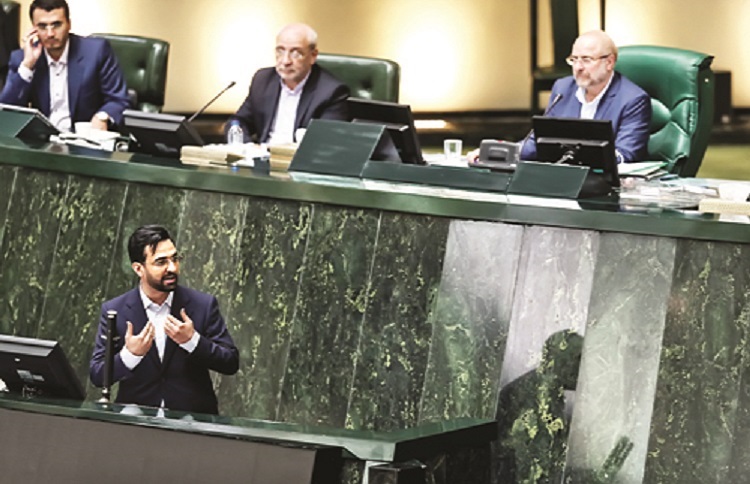
Mohamad Bagher Ghalibaf, Iran’s Parliament speaker: “Manage cyberspace like a car”
Mohammad-Javad Azari Jahromi, Iran’s Minister of Information and Communications Technology: “The future economy of the world and our culture depends on cyberspace”
These were the expression of Iran’s Parliament speaker Ghalibaf and Azari Jahromi which show the government’s infighting about the future of Iran’s internet. But this was not all. One of the parliament members Musa Ghazanfarabadi went further and showed the government’s fear about the Internet and said: “Instagram has become a slaughterhouse of youth beliefs.”
Ghalibaf too showed his fear and said: “Some of the content is definitely available to other devices and people, but there is no policy or management. How do we make policy, tariff, and support for the domestic industry in the field of automobiles so that this industry grows. Why isn’t this policy applied and given the opportunity in the area of the relevant ministry’s duties, which should have adjustment policies and the growth of the domestic and foreign areas should be proportionate? Content support is not provided by the internal section.”
Ghalibaf continued by stating that we do not expect the production of content from the Ministry of Communications: “But policy-making is in your hands. This is an important issue for the country.
“We pursue two priorities: economics and culture, and the Ministry of Communications and Information Technology are leading the way. Inshallah, in the next meetings, we will follow the issues clearly and in accordance with the policies of the Supreme Council of Cyberspace.”
These expressions by Iran’s parliament speaker show the government’s significant fear about the content of the internet. Based on the regime’s track record, these officials are not concerned about criminal or abusive contents like other countries, while giving them the right to control and check the content in social media and other parts of the internet, but they are concerned about issues that are related with their security.
As an example, Reporters Without Borders in a report on 26 February said that “Iran concealing coronavirus figures, blocking independent reporting.”
Netblocks reported on 3 March: “Wikipedia Farsi blocked in Iran as coronavirus fears spread.”
In a contrariwise expression at the time, Ghalibaf showed his concern about the internet and said: “Our children, teenagers, and families are exposed to this polluted space. This polluted space must be looked at in two ways, one is content production, which is the responsibility of both the ministry and the other agencies, and one is the development of internal services, government policies, and network management practices.”
Angry about the non-implementation of the National Information Network, he added: “This national information network that exists now has its drawbacks. There is no proportionality in the growth of domestic and foreign traffic, and as much as the growth of traffic in the foreign sector, we have not been able to control in the domestic sphere, so we need adjustment and strategic policies which are at the disposal of this ministry.”
Following him, another parliament member, Gholam Ali Koohsari, called for more control over cyberspace.
The conclusion is very simple, fearing the effects of the internet on the people while breaking the regime’s censorship the Iranian government is doing everything to cut off the global connection and replace it with the so-called National Information Network, most important to prevent the lack of any news in upcoming protests.
Meanwhile, Maryam Rajavi, the President-elect of the opposition National Council of Resistance of Iran (NCRI), underlined in a speech on 20 June, that the Iranian opposition wants for the Iranian people: “Freedom of speech, freedom of political parties and assemblies, freedom of the press and the internet.”
Read More:
Protestors Respond to Calls for Information As Tehran Moves to Further Restrict Internet


