


Iran Focus
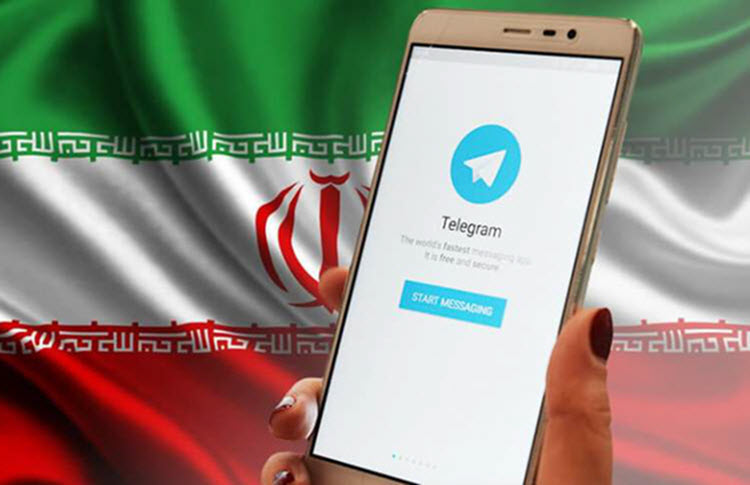
London, 5 May – In Iran on Monday, following the ruling by the Tehran-based Culture and Media Court, access to the hugely popular Telegram messaging app gradually began to be cut off by Web service providers. A judicial order was issued to block Telegram, affecting tens of millions of Iranian users.
The chief of Iran’s judiciary is appointed by the supreme leader. The judiciary pushed the ban of the app in the wake of mass demonstrations late last year, in an attempt to disrupt the ongoing uprising, and disrupt peoples’ communication.
Telegram was used by nearly half of Iran’s population of some 80 million. The messaging app was used for personal communications, as well as for business and entertainment purposes. Telegram was also used to circumvent media censorship.
Publishers, who might not necessarily be approved by the state, were able to broadcast news and multimedia messages to millions of followers.
Saeed Laylaz, a Tehran-based economist and political analyst, said in a interview, “Blocking Telegram is a huge step backwards in social, economic and cultural development of Iran.” He added,” Compared to its population, Iran has been one of the biggest users of this app. This reflects the great flaws that exist in Iran’s communication system – and Telegram was actually making up for those flaws.”
The Iranian government has blocked Twitter, Facebook and YouTube for years, but they are accessible using a virtual private network (VPN).
Human Rights Watch issued a statement denouncing the decision as an “unjustifiable restriction on freedom of expression and access to information.”
The Iranian people are angry at President Hassan Rouhani, who promised more openness in Iranian society during his campaign for re-election. The Iranian people believed Rouhani when he promised to keep Telegram free, but it seems that the ruling system’s primary objective is to keep itself in power.
The case for entirely banning Telegram was its role in the nationwide protests that erupted in December and January, that surprised and frightened Iran’s leadership. At that time, the app was temporarily banned because it was being used to help organize the protests.
The government claimed that it was also being used to promote violence and vandalism, and cited security and economic concerns for the shutdown.
Tasnim news agency quoted Rouhani as saying that “the goal of creating and improving Iranian software and messaging applications should not be blocking access [to existing applications], but should be the end of monopolies.” This is good excuse to establish an alternative to Telegram, such as Soroush. But many Iranians question the security and privacy protection of such apps.
On Tuesday, a government statement claimed that it plans to provide “easy, cheap and secure access to information and communication.” The statement went on to say, “Identifying threats to national security; policymaking and taking proper measures [to address them]; is a task of Supreme National Security Council alone. And others are obliged to coordinate with this supreme body.”
A designer of handmade accessories, Elmira Tehrani, who founded and runs the online brand JUTE, said that the ban is hurting her business. “Most of the orders I take is on Telegram. It helps me reduce cost and save energy,” she said. “I don’t know who exactly is accountable. The increasing pressure comes while I, as a woman, am already dealing with so many challenges here.”


