


Iran Focus
London, 26 Jul – Iranian authorities confess that the greatest threat to theocracy is not a foreign enemy, like the US, but popular protests, especially by the disenfranchised poor people and youth, according to an article on Tuesday by freelance journalist Hamid Bahrami in Al Arabiya English.
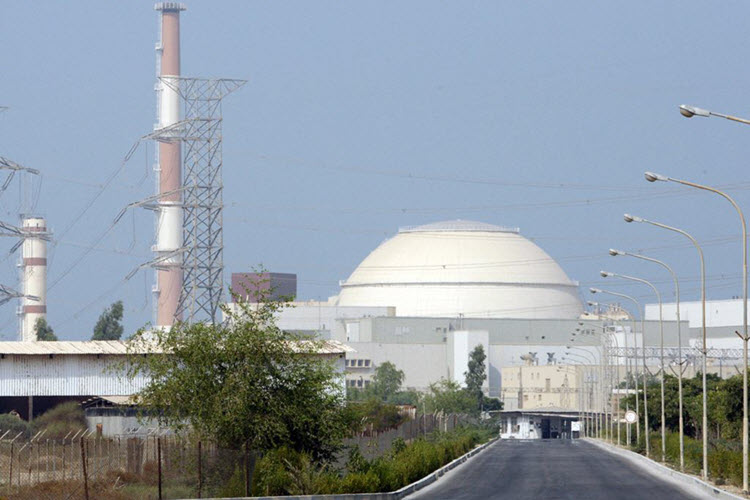
The nuclear deal between Tehran and world powers, officially known as the Joint Comprehensive Plan of Action (JCPOA), has been in effect for two years.
The Supreme Leader Ali Khamenei decides all foreign policy in Iran, even the nuclear deal, and before and during the negotiations, Khamenei said that Oman played a key role in the negotiations between Iran and the U.S. That said, President Hassan Rouhani was not the one who changed the 10-year-long stalemate.
Using nuclear energy is both expensive and controversial, as Iran has an abundance of oil, gas and others natural resources. Independent experts say that Iran’s goal of maintaining a nuclear program is to produce a nuclear weapon, while Iran claims that its program is of a peaceful nature.
Because having a nuclear warhead will guarantee Iran’s dominance in the region, Iran is trying to achieve it. In fact, Hashemi Rafsanjani, the former Iranian president, stated prior to his death last year that Iran was trying to make nuclear bomb. “When we first began, we were at war and we sought to have that possibility for the day that the enemy might use a nuclear weapon,” he said in an interview.
Comprehensive sanctions against Iran targeting its finance sector and its selling of oil were imposed by the West. This exacerbated the already failing Iranian economy that, according to statistics from Iran’s own Central bank, already suffered from decades of economic mismanagement. Inflation exceeded 30 percent in 2013.
The Iranian middle class was pressured by the economic poverty. The Iranian government even tried to redefine the government subsidies to the Iranian middle class to control the inflation. Rouhani’s government began to distribute special food baskets. Warnings of rebellion were issued by the regime’s National Security Council. Laborer’s salaries were unpaid. The economic deadlock was dire.
The economic crisis threatened the regime’s very existence, and so, although Iran’s goal of making nuclear weapon was in reach, and Tehran had increased its intervention in the region, the Supreme Leader ordered his officials to start the negotiation with the West.
The JCPOA was meant to stop Iran’s nuclear development. According to the deal, Iran’s abilities to develop and produce nuclear weapon is limited for several years. Some experts, diplomats, and government officials argue that the sanctions achieved their goal. However, the JCPOA did not address such activities as Iran’s ballistic missile program, or its involvement in Syria. The JCPOA also did not mention the human rights situation in Iran.
A conditional approval was published by the Supreme Leader Khamenei with regard to Tehran agreeing to the JCPOA. One of the conditions in that document spoke to new sanctions after signing of the agreement. It said that “Any sanctions against Iran at every level and on any pretext, including terrorism and human rights violations, by any one of the countries participating in the negotiations will constitute a violation of the JCPOA, and a reason for Iran to stop executing the agreement.” The US has imposed several sanctions on Iran after the deal, yet Iran has not stopped executing the agreement.
Social discontent is sweeping over Iran. Reportedly, more than 10 million people are unemployed, and many ordinary Iranians are forced to live below the poverty-line.
Iranian authorities now say that the greatest threat to the regime is not a foreign enemy, like the U.S., but popular protests and anti-regime demonstrations by disenfranchised poor people and the Iranian youth. The younger generation desires individual liberties and social freedoms, which challenges the foundation of the regime.
If Tehran abandons the nuclear agreement, all sanctions will be re-imposed that will lead to economic and political collapse. Coupled with the overwhelming amount of protests by its people recently, this displays a frightening outcome for the regime.
This is a good time to renegotiate the JCPOA, or impose new effective sanctions, such as designation of the Islamic Revolutionary Guard Corps (IRGC) as a terrorist organization. The Iranian regime will be forced to come back to the negotiation table.


