


Iran Focus
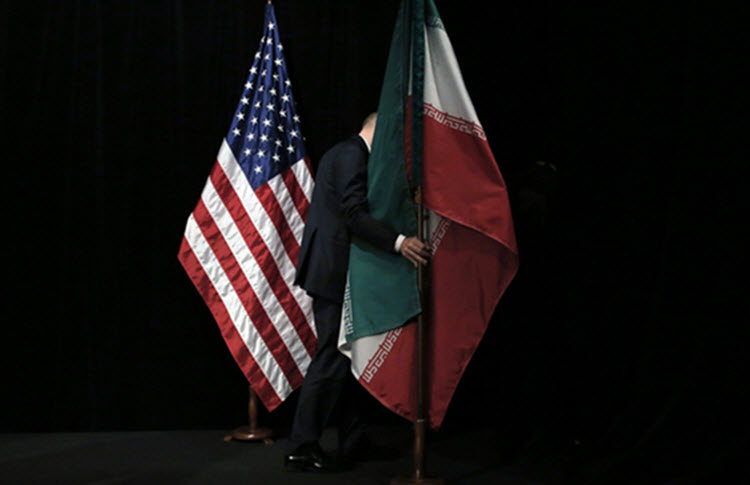
London, 8 May – As Donald Trump’s final decision on the Iran Nuclear Deal, otherwise known as the Joint Comprehensive Plan of Action (JCPOA), is due later today, it seems about time we look at a way out of the crisis.
It seems likely that Trump will pull out of the deal, despite last-minute attempts to convince him otherwise by France, Germany, and the UK. We can guess that Trump will withdraw, given that he has previously promised to, that he has stacked his cabinet with Iran hawks, and as fixes that he wanted to the deal have not materialised.
The thing is that there’s actually a way out of this crisis, but Western leaders would need to listen to the facts in order for this solution to work. Considering that all sides want to stop Mullahs from obtaining nuclear weapons, you’d think they’d jump for joy at a solution that does that.
JCPOA proponents claim that it has halted the Iran’s nuclear programme and that the current levels of international monitoring are more than adequate. But even they admit that the deal has major flaws (i.e. the expiration dates that allow Iran to gain nuclear weapons in the future and the lack of protection against Iran’s malign meddling) and it’s likely that they’d prefer an option with fewer flaws.
The problem is that Iran won’t agree to address this.
When the deal was being negotiated, Maryam Rajavi, President-elect of the National Council of Resistance of Iran, warned that the deal would not block Iran from creating a bomb, would not force the closure of nuclear sites, and that it wouldn’t make the mullahs any more transparent.
Critics of the JCPOA highlight the flaws in the deal, but they also address that Iran has exhibited worrying behaviour in the period since the deal came into force, particularly with regards to its ballistic missile programme and increased regional meddling.
They, however, recognise that Iran cannot be trusted to abide by restrictions on these matters, any more than they have abided by the JCPOA.
Evidence shows that Iran has been conducting nuclear research in secret facilities and with the North Koreans. Even Iranian President Hassan Rouhani admitted to deceiving the West on Iran’s nuclear programme, when he acted as their chief negotiator in 2003.
Worse still, the money that Iran has gained from the nuclear deal has not been spent on its people, but rather its military. The mullahs have ploughed money into their foreign wars, their terrorist proxies, and their suppressive security forces, while bankrupting their own people.
This was predicted by Rajavi at the time and she has sadly been proved right.
The solution: change
The mullahs will never give up on their nuclear ambitions; they’ve not reformed in nearly 40 years; why would they do so now?
As Rajavi said in 2015: “ “The P5+1 [countries, who signed the deal with Iran,] should now insist on evicting the Mullahs from the Middle East and prevent its interferences in the region. This is a fundamental principle that needs to be included in any agreement, otherwise any country in this tumultuous region would have the right to demand all the concessions given to the clerical ruling system. This would only result in a further catastrophic escalation of the nuclear arms race in this part of the world.”
She also stressed that any agreement with Iran should be based on improvements to human rights. But, the world didn’t listen and the suppression of the Iranian people, along with the violence of the dictator has only gotten worse.
Now, it seems that the US is listening to the calls of the Iranian people who are loudly calling for regime change. The international community must stand with them also. It’s the only way to ensure a non-nuclear Iran.


