


 The Times, By William Hague: Ahmadinejad’s refusal to negotiate is a crucial test of Europe’s ability to act forcefully on the world stage
Times Online
Ahmadinejad’s refusal to negotiate is a crucial test of Europe’s ability to act forcefully on the world stage
William Hague
This week the UN Security Council sent a strong signal to Iran that the world will not walk away in the face of its refusal to negotiate over its nuclear programme. The new resolution is a statement of resolve and determination that the new British Government welcomes and played a leading role in bringing about. Tomorrow marks the anniversary of the 2009 Iranian presidential elections and the dramatic scenes that followed. The two events are distinct, but they paint a picture of an Iran that is isolated and at loggerheads with the international community as well as many of its own people.
The Iranian Government often blames its woes on Britain and the outside world. This should not fool anyone. The British Government would like a constructive relationship with Iran, an important country with a long and proud history and a dynamic and youthful population. It helps none of us that Iran is excluded by its own actions from consultation on issues that affect it and the region, and that matter to us in Britain too. Neither does it serve the interests of millions of young Iranians who find themselves left behind on the international stage, unable to use their energy and skills to their full potential or to enjoy the rights and freedoms that all peoples are entitled to.
President Ahmadinejad’s public response to the UN sanctions has been predictable. By likening the sanctions to a “used handkerchief, fit only for the rubbish bin” he may have made the news, but he is evading the key issue for his Government that these sanctions will have a real impact on their economic situation. His calls for Iran to revise ties with the International Atomic Energy Agency will only further the sense of an Iran that is isolated from international norms.
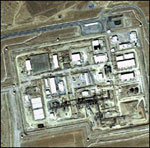
This isolation is entirely of the Iranian Government’s own making. Over the past year it has continued to enrich uranium far above the level needed for a civil nuclear power programme, defied UN resolutions and accumulated a stockpile of enriched uranium sufficient to build a nuclear weapon over time. Nothing that Iran’s Government has done in recent months alters these facts. While we welcome the recent efforts to secure a deal to supply fuel to an Iranian research reactor (a deal Iran originally walked away from), this deal never addressed the wider concerns over its programme. Tehran knew that new sanctions would follow if it did not comply with United Nations resolutions and for it to assert otherwise is a distortion.
The Iranian Government claims that its nuclear programme is peaceful. But it cannot explain why the military arm of the state is heavily involved in that programme, or why it insists on enriching uranium when it has no power stations that need such fuel. Its history of nuclear deception and secrecy inevitably leads other countries to believe that its intention is a nuclear weapons capability.
Tehran’s actions risk a nuclear arms race in the Middle East and the fatal undermining of the Nuclear Non-Proliferation Treaty at a time when the international community has just renewed its commitment to a world free of nuclear weapons. This is why international action is so urgent and why as a new Government we pressed for UN sanctions this week and will energetically argue for strong additional EU measures against Iran in the coming months, as well as close co-operation with our partners in the region. Reinforcing UN sanctions will be an important test of European resolve and a positive example of how the EU’s collective political and economic weight in the world could be harnessed to telling effect.
Some seek to reduce this crisis to a clash between Iran and the US, Israel and their allies. The Iranian Government seeks to portray itself as the champion of the developing world against an imperious and uncaring West.
Nothing could be farther from the truth. The fact that Mexico, Nigeria and Uganda were among the countries that voted in favour of new UN sanctions exposes this rhetoric for what it is. Iran’s actions on the nuclear front undermine the position of non-nuclear weapons states that play by the rules, and its posturing in the Middle East – such as threatening to send naval vessels to Gaza — unacceptably undermines those working to support the peace process.
We are seeking a long-term solution through diplomacy and negotiations. That is why we continue to urge the Iranians to come to the table and discuss their nuclear programme. The new UN sanctions are designed to persuade Iran to do just that. The pressure on Iran to engage will only grow over time. This is a message that the Iranian Government should not ignore.
As well as sanctions, the costs to Iran of its deliberate defiance are already high. Its oil production is declining because of lack of investment from international companies. Its economy is in a parlous condition, adding lack of opportunity to the political repression endured by its population, which is prominent in everyone’s minds this weekend. These factors only underline the case for Iran altering course.
Iran can have a far better relationship with the outside world. The international community would respond to a change of direction from the its Government overnight, if it took meaningful steps to restore confidence that its intentions are serious. Britain and its partners remain ready to meet Iranian negotiators at any time for meaningful discussions on their nuclear programme. Iran has been offered a package of incentives that would lead to the lifting of sanctions and provide trade benefits, dialogue on key international issues and, importantly, co-operation on the civil nuclear power that Iran claims is its goal.
It is a powerful and important offer, made in good faith and one that the new British Government has reaffirmed. We call upon the Iranian Government carefully to consider this offer for what it is — a genuine attempt to change the dynamic between our governments and present a path forward that can address all of our concerns.
The tactic of simply refusing to negotiate over its nuclear programme will not work and will not weaken our resolve.
William Hague is Foreign Secretary


