


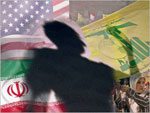
 Wall Street Journal: For those who have hoped that the Syrian quagmire might swallow up Iran’s influence in the region, it’s time to wake up: Tehran and its ally Hezbollah are set to emerge from the Syrian conflict more aggressive than ever. Unchecked, Tehran and its ally will emerge more aggressive than ever.
The Wall Street Journal
By DANIEL NISMAN
For those who have hoped that the Syrian quagmire might swallow up Iran’s influence in the region, it’s time to wake up: Tehran and its ally Hezbollah are set to emerge from the Syrian conflict more aggressive than ever.
Last month, Hezbollah’s campaign to wrest the city of Qusayr from Syrian rebels was projected to be the beginning of the end for the group. The international media made comparisons to the Nazi defeat in Stalingrad. In Lebanon, the battle for Qusayr raised fears of renewed civil war between Sunnis and Shiites, amid threats of revenge by rebel sympathizers.
But after three weeks of intense fighting, Hezbollah brought Qusayr back under the control of the Assad regime. That victory marked a turning point both in Syria and in the wider Middle East. Hezbollah fighter Abou Ali put it best in a recent interview with the Lebanese press: “People have to understand that Hezbollah is now a regional party.”
Rather than obsess about the risks of stopping Assad and his backers, the West must consider the consequences of not stopping them.
Contrary to common perceptions, Hezbollah’s ambitions stretch far beyond protecting Lebanon’s once-demeaned Shiite community or defending the country against Israeli occupation. Hezbollah is a political Islamist organization that seeks to export its version of Shiite Islam throughout Lebanon and the greater Muslim world. The Iranian Revolution enabled the group’s emergence as an anti-Western military force in the early 1980s. The resemblance of Hezbollah’s emblem with that of Iran’s Revolutionary Guard is no coincidence.
Hezbollah’s rise to power has been fueled by its leaders’ pragmatism and their ability to strategize according to the limitations of their environment. During negotiations to end Lebanon’s civil war in 1989, Hezbollah’s leadership debated internally whether to pursue an Islamized state or to grow their prominence within Lebanon’s democratic political system. They chose the latter. Since then, Hezbollah’s “Loyalty to Resistance” party has become Lebanon’s main power broker while also serving to legitimize the group’s private army.
Hezbollah’s decision to intervene in Syria is the result of another reassessment of strength by its leaders and their partners in Tehran. How the West responds will ultimately prove whether their calculations were correct.
Two weeks after the fall of Qusayr, Hezbollah continues to defy the international community, the Arab League and its own past pledges of neutrality by inserting itself even deeper into the Syrian conflict. In a speech last week, Hezbollah chief Hassan Nasrallah reaffirmed the group’s dedication to Bashar Assad, vowing that “to defeat this very dangerous conspiracy [against Syria] we will bear any sacrifices and all the consequences.” Hezbollah is now providing tactical support and training to thousands of Assad forces deploying to Aleppo, likely in an effort to dislodge a longstanding stalemate in one of the conflict’s most crucial fronts.
Hezbollah’s adventure in Syria has captured the attention of everyone from its adversaries in the Persian Gulf to Assad’s investors in Moscow. On June 10, the Gulf Cooperation Council announced punitive measures against Hezbollah, two months after Bahrain became the first Arab nation to blacklist the group as a terrorist organization. The Sunni-dominated countries are looking to oppose Iran’s regional influence and also fear that Hezbollah may establish militant proxies within their own Shiite communities.
Meanwhile, Hezbollah’s victories have reassured Russia and Iran that Assad’s troops will continue to be augmented by an arguably more effective and motivated fighting force. Weeks before the Qusayr campaign, in April, Mr. Nasrallah met with Iran’s Ayatollah Khamenei in Tehran and with Russia’s deputy foreign minister in Beirut, presumably to coordinate their positions. Since the Qusayr offensive, Moscow has remained conveniently silent, and Tehran has boosted its troop presence in Syria, according to ground reports.
Israel more than most stands to lose from a resurgent Hezbollah. Despite sustaining hundreds of losses in Qusayr alone, Hezbollah’s fighters are gaining valuable combat experience that could be useful in a future conflict with Israeli forces. After witnessing Hezbollah’s ability to capture large swaths of territory in Syria, Jerusalem can no longer shrug off Mr. Nasrallah’s threats to invade Israel’s Galilee region in the next war.
Iran is also likely to continue leveraging the Assad regime to transport weapons to Hezbollah’s coffers, despite threats of additional Israeli airstrikes. Hezbollah’s acquisition of Iranian anti-air, anti-ship and surface-to-surface missiles would not only guarantee Mr. Nasrallah long-term military hegemony within and without Lebanon. It would also provide Tehran with a greater deterrent against any future Israeli strike on its nuclear facilities.
It’s doubtful whether the West fully comprehends the implications of Hezbollah’s growing involvement in Syria. The European Union continues to fumble over whether or not to blacklist Hezbollah as a terror group, which would do untold damage to the group’s financial operations across the Continent. The U.S., meanwhile, has only begun to warm up to the idea of arming the Syrian rebels.
Rather than confront the looming threat of Hezbollah, Western strategists are still grappling with concerns over which rebel group to arm, or what regime might replace Assad’s. They fail to realize that if Hezbollah’s involvement continues unchecked, these questions will become irrelevant. The time has come for the West to stop obsessing about the risks of stopping the Assad regime, Hezbollah and Iran, and start considering the consequences of not stopping them.
Mr. Nisman is the Middle East and North Africa intelligence director at Max Security Solutions, a geopolitical and security risk consulting firm.


