


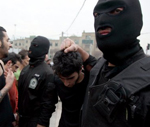
 Azcentral: I am all the more worried for the future of Iran because the friendly, overly trusting tone of the West has taken crucial pressure off of the clerical regime and may prolong its brutal rule within Iran and its sponsorship of terrorism abroad.
Azcentral.com
Leaders may smile, but country remains a brutal place
By Khalil Khani
As an Iranian-American, I dream of one day returning to the land of my birth. The Iran that I visit will be a place where people are as free as the people of the country that has adopted me.
In light of recent deals and phony smiles by the Iranian regime, some might mistakenly think that day is not far off, but nothing could be further from the truth. In fact, I am all the more worried for the future of Iran because the friendly, overly trusting tone of the West has taken crucial pressure off of the clerical regime and may prolong its brutal rule within Iran and its sponsorship of terrorism abroad.
My family fled Iran during a time of mass executions and brutal repression of dissidents. As a political opponent, my life would be in serious danger if I go back.
Today, there is no objective indication that Tehran has taken a genuine step toward respect of human rights and moderation with President Hassan Rouhani, despite a misplaced hope in some Western circles.
Cleric Mostafa Pourmohammadi, who played a major role in the execution of as many as 30,000 political dissidents in 1988, is now, ironically, Iran’s justice minister. Rouhani has been the supreme leader’s representative at the National Security Council for 16 years.
Considering such veteran servants of an oppressive regime at the helm, one wonders why Western powers were so eager to make concessions during the nuclear talks in Geneva. Was the regime’s mere willingness to negotiate — even if not in good faith — the only thing that mattered?
A brutal regime
The people of Iran and Iranians in exile know better the intent and nature of the clerical regime. The West should know better, too. The Iranian regime continues to wreak havoc in the region in a bid to dominate the Middle East with its fundamentalist ideology.
The character of the clerical regime in Iran hasn’t changed. Many of the students I taught were later murdered by this regime for standing up to their beliefs, including those who went into exile to carry on the fight.
On Sept. 1, more than 50 Iranian dissidents were murdered execution-style in Camp Ashraf, Iraq. On Dec. 26, a community of 3,000 Iranian dissidents came under a massive rocket attack at Camp Liberty near Baghdad, leaving four dead and 71 wounded. Iraqi Prime Minister Nouri al-Maliki has increasingly acted as a puppet of Tehran.
And there are also numerous credible reports that Iran has been sending weapons and financial support to the Syrian government of Bashar Assad, another regional dictator who wants to stay in power at all costs. Western powers are virtually universal in their condemnation of Assad, and yet they have also engaged in friendly, forgiving negotiations with the very people who have been helping support him throughout the Syrian conflict.
It is as if they believe two entirely different governments are handling Iran’s nuclear-weapons program and its regional policies.
A positive response to Tehran would have been understandable if its diplomatic moves were genuine. But when a dangerous regime adopts a friendly rhetoric, one has to step back and wonder about its motives.
The regime’s ongoing repression of the Iranian people make it exceptionally unlikely that the regime would relinquish nuclear ambitions to get into the good graces of the global world community. It is far more likely that such a regime would approach the negotiating table only because it felt threatened.
Iran’s decision to take part in nuclear talks didn’t indicate a change of its character. It was a sign of weakness in the face of crippling economic sanctions, until they were relaxed as a result of recent negotiations.
Reapply pressure
Western economic sanctions were having significant impact on the regime. Meanwhile, the international campaign of the main Iranian opposition, the Mujahedin-e Khalq, symbolized a rising tide of dissent and revealed crucial intelligence about the regime’s nuclear program.
Under such circumstances, the weakening regime would not have been able to maintain its tenuous hold on power for very long.
If the West had seen Iran’s gestures for what they were — pragmatic necessities and tactics to give it time to return to the status quo — the international community might have been able to compel dismantling of the regime’s nuclear program or even bring an end to a regime that is dangerous to its core.
U.S. Sen. John McCain and 58 of his colleagues should be commended for insisting that the mullahs of Tehran be held accountable for their nuclear deception and denial, egregious human-rights abuses and sponsorship of terror.
While the West is negotiating with Iran, the regime continues to imprison more journalists than any other Middle Eastern nation, and it remains a world leader in Internet censorship and rate of executions, with 107 executions taking place in the first five weeks of 2014, according to the National Council of Resistance of Iran.
With placating policies prevalent in the West toward Iran, I fear that it will be a long time before I can visit my country once again.
Khalil Khani of Phoenix is a member of the Organization of Iranian-American Communities.


