


 The Hill: The rise of Islamic extremists in Iraq is extremely problematic for US policy. But it is every bit as problematic to equate the Iraqi uprising’s character and inspiration to those of the minority extremists that are trying to hijack it. The marginalization of moderate groups and other political and ethnic identities in the western press is ironic.
The Hill
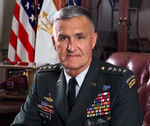
By U.S. Army Gen. Hugh Shelton (Ret.) and former Gov. Tom Ridge (R-Pa.)
The rise of Islamic extremists in Iraq is extremely problematic for US policy. But it is every bit as problematic to equate the Iraqi uprising’s character and inspiration to those of the minority extremists that are trying to hijack it. The marginalization of moderate groups and other political and ethnic identities in the western press is ironic, seeing as it was Prime Minister Nuri al-Maliki’s increasingly authoritarian policies that actually led to the current crisis.
With headlines almost exclusively focused on an extremist group called the Islamic State of Iraq and Syria (ISIS), the Sunnis’ year-long peaceful protests brutally cracked down on by the government went virtually unnoticed. As to the recent rebellion, news coverage has even been conspicuously short on references to the role of Shiite militias – particularly Iranian-supported Shiite militias – in exacerbating the violent, sectarian nature of the conflict.
Such a limited view of the main players in the conflict threatens to lead the U.S. towards another short-sighted set of policy decisions and military adventures. There have even been reports about possible American willingness to coordinate with Iran and shore up support for the Maliki government.
Maliki has developed a close alliance with the Iranian regime. It appears that he has been Tehran’s partner in supporting the Assad regime in Syria and has coordinated attacks on Iranian exiles residing in Iraq who are affiliated with Iranian opposition groups. Baghdad’s human rights abuses and methods of political repression are eerily similar to those practiced by Tehran. Iraq actually has the highest number of executions per capita in the world, with Iran a close second.
Maliki’s heavy-handed tactics and exclusionary policies have alienated much of the country’s population, including Sunnis, Kurds and also Shiites. Until recently, even some Shiite politicians were considering an alliance with the country’s Sunni and Kurdish population to prevent Maliki’s third term in office.
Washington cannot simply ignore realities on the ground. To maintain a more realistic perspective on the conflict, the US and global media should recognize that the crisis in not the result of a spontaneous attack by a marginalized extremist group; the area under Sunni control now is far too vast to be held the ISIS.
Clearly, despite the horrors witnessed recently, a growing segment of the Iraqi population had a legitimate reason to angle for the removal of Maliki from power. The US must, of course, vigorously oppose the extremist elements of the uprising. But it has to do so without ignoring the people’s legitimate grievances.
The removal of Maliki is in America’s national interests because it eliminates the cause of the current instability. To put down the rebellion without addressing its central grievance would only further stoke the bitterness of the Iraqi people. And the world would be left waiting for that resentment to surge to the surface again at a later date.
Washington’s gravely dangerous attitude of leading from behind prescribes siding with Iran to counter the ISIS threat. But we can do better than pitting one villain against another. The US has regional partners in the likes of Turkey, Saudi Arabia, Jordan, and, maybe, Egypt. There are also groups inside Iraq that could be partners in the fight against ISIS if they knew that the central government had jettisoned Maliki and would subsequently represent all moderate interests.
Extremism in the long run cannot be defeated if the US aligns with the foremost state sponsor of terrorism to meddle in Iraq and contribute to its sectarian tensions. To expect the Iranian regime to play a role in Iraq is like asking the arsonist to put out the fire. One only needs to recall that the Mullahs supplied Shia militias with Improvised Explosive Devices, which killed or maimed thousands of Americans. They actively interfered in Iraqi politics, ensuring it remained deeply fractured and pro-Tehran. Worst of all they directed several massacres in Iraq against the camps that are home to Democratic Iranian dissidents, killing hundreds of men and women dedicated to a peaceful, secular, non-nuclear Iran.
The antidote to extremism is an inclusive central government in Iraq, which is able to represent all voices in Iraq. Western partnerships should also support Iranian resistance groups, who can expose the regime’s regional transgressions and thus help to curtail them.
Representatives and allies of Iranian resistance groups will attend a huge gathering in Paris on June 27. A considerable number of Western lawmakers and personalities are expected to join 100,000 Iranians in attendance. Both of us will be there.
A better understanding of the conflict in Iraq will help the US avoid the predominant assumption that dangerous regimes are our only possible allies when things go terribly wrong. Washington cannot possibly contemplate joining the alliance of Maliki, Syria and the Iranian regime. It should support the legitimate forces that represent the future of Iraq, not its past.
Shelton was the 14thChairman of the Joint Chiefs of Staff, serving from 1997 to 2001. Ridge was governor of pennsylvania from 1995 to 2001 and the first U.S. Secretary of Homeland Security from 2003 to 2005.


