Home Blog Page 108

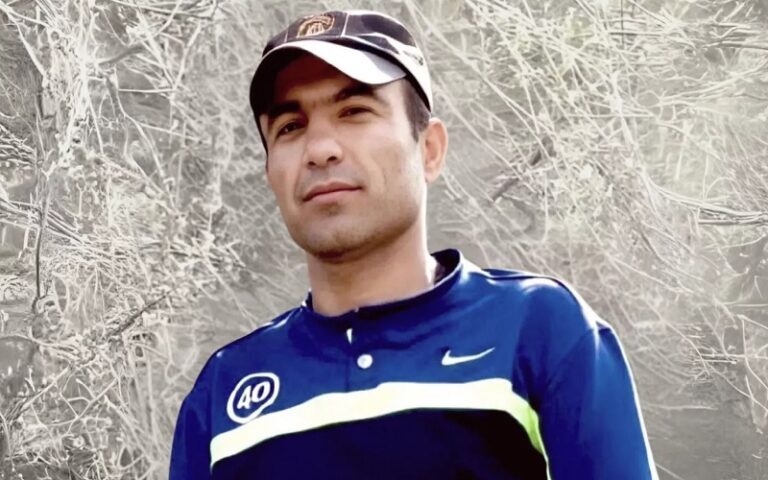
Hamid Hoseinnezhad Faces Imminent Execution in Iran

The political prisoner Hamid Hoseinnezhad Heydaranlu, who has been sentenced to death, has been transferred from the political ward of Urmia Central Prison to the prison’s quarantine section. Human rights sources reported that this transfer, along with the Supreme Court’s confirmation of his sentence, has intensified concerns about the imminent risk of his execution.

Human rights organizations reported on Wednesday, April 16, 2025, that Hamid Hoseinnezhad Heydaranlu has been transferred to the quarantine ward of Urmia Prison and stated that this move puts him on the verge of imminent execution.

Hoseinnezhad’s family has been informed to visit the prison for a final meeting, and his lawyer has written that the execution is scheduled to be carried out on Friday, April 18, 2025.

At the same time, the human rights website Hengaw also reported on his transfer to one of Urmia Prison’s solitary confinement cells, stating that his life is in danger.

Previously, on March 29, 2025, Branch 9 of Iran’s Supreme Court upheld the death sentence for Hoseinnezhad Heydaranlu without any changes. The ruling was formally delivered to him in Urmia Prison.

In July 2024, Hoseinnezhad was tried by Branch 1 of the Revolutionary Court of Urmia, presided over by Judge Najafzadeh. He was sentenced to death on the charge of “armed rebellion through membership in the Kurdistan Workers’ Party (PKK).”

The death sentence was issued despite the fact that he had denied all charges against him during the court session.

The Iranian regime’s Ministry of Intelligence, without providing any evidence, accused Hoseinnezhad of cooperating with the Kurdistan Workers’ Party (PKK). The judge, disregarding his defense, issued a death sentence in a court session lasting only a few minutes, solely based on what is referred to as the “judge’s knowledge” — a vague concept that allows rulings without hard evidence.

Hoseinnezhad, born in 1985 and a father of three, had been working as a “kolbar” — a porter who carries goods across Iran’s mountainous western borders — to make ends meet in recent years.

The Expansion of The “No to Executions Tuesdays” Campaign To 40 Prisons Across Iran

He was arrested by border patrol forces on April 13, 2023, near the Chaldoran border crossing. After a few hours of interrogation, he was transferred to the Intelligence Department’s detention facility in Urmia.

Hoseinnezhad was subjected to psychological and physical torture for 11 months and 10 days in order to extract forced confessions regarding his alleged participation in an armed clash between PKK members and Iranian regime border forces. Interrogators forced him to sign pre-written documents.

In recent months, the rising number of executions as well as the issuance and confirmation of death sentences for political prisoners in Iran has triggered a wave of protests both inside the country and internationally.

In the latest example, a group of families of political prisoners sentenced to death gathered in front of Evin Prison on April 15, 2025, during the 64th week of the “No to Execution Tuesdays” campaign. The campaign includes hunger strikes by prisoners in 40 prisons across the country.

According to human rights sources, around 60 individuals in prisons across Iran are currently under death sentences on political or national security-related charges.


National Development Fund of Iran Drained by Regime Mismanagement and Military Control

Statistics from the Iranian regime’s Majlis (parliament) Research Center show that since the establishment of the National Development Fund in 2011 until March 2024, about 82% of its $161 billion revenue has been spent, and 88% of the loans disbursed were allocated to the government and public institutions such as the Islamic Revolutionary Guard Corps (IRGC).

Of the $132 billion in loans disbursed by the fund over 13 years, only $8 billion has been repaid. An additional $18 billion, despite reaching maturity, remains unpaid and has turned into overdue loans.

Iran’s 2025 Budget: Massive Oil Revenues for Military, State Assets Transferred to IRGC

The parliamentary research report shows that by March 2024, the fund’s foreign currency reserves stood at only $26.5 billion. After subtracting $6.5 billion in outstanding foreign exchange obligations, only $20 billion remains in manageable assets for Iran’s National Development Fund.

The fund has yet to release its report for the previous fiscal year, which ended on March 20, 2025. However, reviews show that last year the government borrowed at least $10 billion from the fund — either directly (via approval from regime supreme leader Ali Khamenei) or by seizing part of the fund’s share of oil export revenues. According to the current year’s budget law, the government is also expected to borrow at least $9.4 billion from the projected $16 billion in oil revenue allocated to the fund.

This financial institution was established 14 years ago to save a portion of the country’s oil revenues and provide loans to the private sector, replacing the former “Foreign Exchange Reserve Account.” In practice, however, the government and military forces have seized control of most of the fund’s financial resources. Only $14 billion — less than 10% of the total — has been allocated to the private sector, and given the widespread corruption and cronyism, it is unlikely that even this amount was distributed to genuine private enterprises.

If no further unexpected withdrawals are made by the government by the end of the current year, total government debt to the fund will exceed $125 billion.

The key issue is that the government lacks the financial resources to repay its debts. For the current year, the Iranian regime has projected daily oil exports of 1.8 million barrels, with one-third of that allocated directly to the military. If the National Development Fund is also turned into a direct oil exporter, the government would effectively be sidelined in Iran’s oil export sector.

While Iran’s National Development Fund now holds less than $20 billion in manageable assets, data from the Global SWF (Sovereign Wealth Fund) Institute shows that the total reserves of oil-related sovereign wealth funds in the Persian Gulf countries and Azerbaijan have surpassed $3.6 trillion.

In addition to the $3.6 trillion in oil-related funds, these neighboring countries also hold an equivalent amount in other sovereign wealth funds.

For example, the United Arab Emirates operates eight sovereign wealth funds worth a combined $2.3 trillion. Only one of them, the Abu Dhabi Investment Authority (ADIA), is oil-related, and it alone manages over $1.1 trillion in assets.

Beyond the $6.7 trillion in oil-related or independent sovereign wealth funds, public pension funds in Iran’s oil-rich neighboring countries also hold $650 billion in assets. In contrast, Iran’s public pension funds have effectively gone bankrupt for years and are reliant on government funding.

Additionally, the central banks of Arab Persian Gulf countries hold over $850 billion in foreign currency reserves. By comparison, according to the Global SWF Institute, the Central Bank of Iran holds only $25 billion in reserves, most of which has been loaned to the government or domestic banks.

The National Development Fund’s share of the region’s sovereign wealth fund value doesn’t even reach half a percent, even though Iran holds the largest gas reserves in the region and the second-largest oil reserves after Saudi Arabia.

Iran’s oil production ranks third in the region after Saudi Arabia and Iraq, and it produces more natural gas than any other country in the region.

Decades of misguided policymaking, widespread corruption, and plunder-based management have worked hand-in-hand with international sanctions to bankrupt Iran’s financial institutions one after another.


U.S. Imposes New Sanctions on Shipping Companies and Oil Tankers Linked to Iran’s Regime

Reuters, quoting the U.S. Department of the Treasury on Wednesday, reported that new sanctions have been imposed on shipping companies and oil tankers operating under the framework of U.S. sanctions programs related to Iran.

The sanctions target seven entities and five oil tankers. The companies named in this round of sanctions are registered in several countries, including Panama, Hong Kong, Malaysia, China, and the Marshall Islands.

The U.S. Treasury Department also sanctioned an independent Chinese refinery named Shandong Shengxing Chemical for purchasing over $1 billion worth of crude oil from the Iranian regime.

According to the department, any refinery or company involved in the purchase or trade of Iranian oil exposes itself to serious risk. The U.S. remains committed to disrupting the Iranian regime’s oil supply chain, which it says is used to fund proxy terrorist groups.

According to the statement, the new sanctions also cover six other companies, including Bestla Company Limited from the Marshall Islands, Civic Capital Shipping and Oceanic Orbit Incorporated and Starboard Shipping from Panama, Pro Mission SDN BHD from Malaysia, and Dexiang Shipping from Hong Kong and China.

These companies have been sanctioned for their role in the transport and sale of Iranian oil and for cooperating with entities affiliated with the Islamic Revolutionary Guard Corps (IRGC).

In addition, five oil tankers—Bestla, EGRET, NYANTARA, and RANI flying the Panamanian flag, and RESTON flying the Cameroonian flag—have also been sanctioned for their involvement in transporting Iranian oil and working with the blacklisted companies.


Forced Transfer of Five Political Prisoners Sentenced to Death in Iran

Following orders to transfer five political prisoners sentenced to death from Evin Prison to Ghezel Hesar Prison, tension and unrest broke out in Ward 4 of Evin. According to informed sources, prison guards entered the ward and cracked down on the protests by using force against the inmates.

The names of these political prisoners are Mohammad Taghavi, Pouya Ghobadi, Vahid Bani-Amrian, Ali Akbar (Shahrokh) Daneshvarkar, and Babak Alipour. These individuals were previously sentenced to death by Judge Iman Afshari on charges of affiliation with the People’s Mojahedin Organization of Iran (PMOI/MEK).

Iranian Regime’s Contradictory Justifications for Executing Political Opponents 

According to witnesses, prison guards, under the orders of Heydatollah Farzadi, the warden of Evin Prison, locked the ward doors and created a security-heavy environment to prevent other inmates from protesting. Human rights sources have reported that the transfer was carried out in coordination with the Ministry of Intelligence.

This move comes as the European Union, on April 14, placed Heydatollah Farzadi on its sanctions list for his role in the systematic repression of prisoners.

Previously, in February 2025, two other political prisoners, Mehdi Hasani and Behrouz Ehsani, were also transferred to Ghezel Hesar without prior notice. In recent months, political prisoners Ali Moezzi, Khosro Rahnama, Asadollah Hadi, and Abolhassan Montazer have also been similarly moved to Ghezel Hesar.

The six political prisoners sentenced to death who have recently been transferred to Ghezel Hesar or are awaiting execution have extensive records of political arrests and convictions.

In response to these developments, families of several political prisoners sentenced to death gathered outside Evin Prison, demanding a halt to the executions and sudden transfers.

Names and Status of the Six Political Prisoners Sentenced to Death

Seyed Mohammad Taghavi

Seyed Mohammad Taghavi, 57, is a political prisoner from the 2000s. He graduated in graphic design from the University of Tehran and had previously been imprisoned due to his political activities. In March 2024, he was rearrested and transferred to Ward 209 of Evin Prison. He had also been imprisoned in 2020 for approximately three years in Evin, charged with affiliation to the People’s Mojahedin Organization of Iran (PMOI/MEK).

Pouya Ghobadi

Pouya Ghobadi, born in 1992 in Sonqor, is an electrical engineering graduate from Sanandaj University. He was arrested on February 23, 2024, while attempting to cross the border in Chaldoran and transferred to Maku Prison. On March 1, 2024, he was moved to Ward 209 of Evin Prison, where he remained for several months. Ghobadi had previously been arrested in 2018 on charges of “propaganda against the state” and “insulting the Supreme Leader,” and was sentenced to 18 years in prison and exile to Nikshahr.

Babak Alipour

Babak Alipour, born in 1991 in Amol and a law graduate, was arrested in January 2024 and transferred to Ward 209 of Evin Prison. He had previously been arrested on November 4, 2018, along with his brother, Roozbeh Alipour, at the produce market in Rasht. He was sentenced to seven years in prison on charges of “membership in the PMOI” and “insulting the Supreme Leader,” and was released in 2023 after serving two years of his sentence.

Shahrokh Daneshvarkar

Akbar (Shahrokh) Daneshvarkar, born in September 1966, is a dismissed civil engineer. He was arrested at his home on January 3, 2024. Daneshvarkar, who resides in Tehran, is married and has a 12-year-old son. Following his arrest, he was transferred to Evin Prison.

Seyed Abolhassan Montazer

Seyed Abolhassan Montazer, born in 1959 and an architecture graduate, was arrested by security forces in Tehran on December 22, 2023, and later transferred to Ward 4 of Evin Prison. He is a political prisoner from the 2000s and had also been arrested in 2018. Montazer has been sentenced to five years in prison.

Vahid Bani-Amrian

Vahid Bani-Amrian, born in 1992 and a native of Sonqor, holds a master’s degree in management from K. N. Toosi University of Technology in Tehran. He had previously been arrested in 2017 and 2018. In January 2019, he was sentenced to five years in prison on charges of “propaganda against the state” and “insulting the Supreme Leader.”

These prisoners have been sentenced to death due to political charges and alleged affiliation with the PMOI, and their situation has attracted significant international attention.

Human rights activists, warning of the imminent possibility of executions, have called for immediate intervention by international bodies to prevent widespread human rights violations in Iran’s prisons.


Grossi: Iran’s Regime Is Not Very Far from Building a Nuclear Weapon

Rafael Grossi, Director General of the International Atomic Energy Agency (IAEA), arrived in Tehran on Wednesday evening.

Prior to his trip, Grossi said that the IAEA is not part of the bilateral discussions between Abbas Araghchi, the Iranian regime’s foreign minister, and Enrique Mora, the EU’s coordinator for nuclear talks, but it is not indifferent to them either.

Grossi added that they are well aware that the IAEA must provide its opinion on any potential agreement, as the agency will be responsible for its verification.

Before his trip to Iran, Rafael Grossi expressed his willingness for the IAEA to be involved in the nuclear negotiations between the United States and Iran’s regime in an interview with the French newspaper Le Monde.

Iran’s Nuclear Power Dream: From Fantasy to Reality

Grossi said the IAEA has already initiated informal exchanges with the negotiating parties and added that once there is a text with concrete content, the agency will be asked to give its opinion regarding the procedures and the extent of inspections conducted.

Grossi emphasized that without the presence of the IAEA, any agreement regarding Iran is merely a piece of paper… For such an agreement to be meaningful, there must be credible systems and strong monitoring mechanisms, which only the IAEA can provide.

Regarding the nuclear capability of Iran’s regime, Grossi said that although the regime possesses enough material to produce not just one, but several nuclear bombs, it does not yet have a nuclear weapon. He likened it to a puzzle: they have the pieces, and they may one day be able to put them together.

He emphasized that while the Iranian regime is still some distance away from acquiring a nuclear weapon, it must be acknowledged that it is not very far from it either.

According to Grossi, over the past four years, the Iranian regime has significantly accelerated its uranium enrichment process, while at the same time, the scope of the IAEA’s intervention has diminished.

He stated that for the international community, it is not enough for Tehran to simply say, “We do not have a nuclear weapon”; in order for the world to believe it, the IAEA must be able to verify that claim.


Massive Data Breach Exposes Personal Information of 30 Million Hamrah Aval Users in Iran

0

A hacker group has claimed to have infiltrated the customer database of Mobile Communications of Iran (commonly known as Hamrah Aval), the largest mobile phone operator in Iran, gaining access to the personal information of 30 million of its users.

According to reports, the hacked data includes customers’ personal information such as full names, dates and places of birth, national identification numbers, birth certificate numbers, and complete postal addresses.

The hacker group, named ShadowBits, also announced that it has obtained information about Hamrah Aval’s employees.

As of now, neither Hamrah Aval nor any state-affiliated media outlets in Iran have issued any statements or reports on the matter.

The Iranian technology news website Digiato initially reported the breach but later removed the article from its platform.

ShadowBits shared a screenshot of the deleted Digiato article on their Telegram channel, claiming that “pressure from intelligence agencies” led to the article’s removal.

Telecommunication companies in Iran, including Hamrah Aval, maintain close ties with intelligence and security agencies, and telecom data is often used for surveillance of citizens.

These companies have reportedly provided means for security services to intercept two-factor SMS authentication codes without the phone owner’s knowledge, allowing them to secretly access citizens’ online accounts.

Iranian Regime Presidency Servers Taken Over By Dissidents, Exposing Regime Vulnerabilities

This is not the first time that Mobile Communications of Iran has been targeted in cyberattacks.

In October 2022, during a wave of cyberattacks on websites affiliated with Iran’s regime, Hamrah Aval’s website was hacked and customer billing information was altered to show zero charges.

In July 2016, Iranian media reported that “information pertaining to 20 million users” of a mobile operator had been hacked.

In June 2020, MAHER (Iran’s Computer Emergency Response Team Coordination Center), which is affiliated with the Ministry of Information and Communications Technology, confirmed the leak of data for over five million users of Rightel, another Iranian mobile operator.

In January 2024, anonymous hackers put up for sale a dataset of 160 million customer records from 23 Iranian insurance companies on the internet.

Leakfa, an Iranian data breach tracking platform, confirmed the authenticity of the leaked data and stated that it was obtained through a cyber-infiltration of the infrastructure of “Fanavaran Etela’at Khebreh” (a technology service provider), which occurred shortly before.

At the time, none of Iran’s official institutions—including the Security Office of the Central Insurance Organization and the regime’s cyber police—published any official report on how the hackers accessed the private data of citizens.

This attack has raised serious concerns about privacy and data security for Iranian citizens.

The structure of the leaked dataset indicates that the breach revealed both current and historical customer records, likely affecting both current and former subscribers of Hamrah Aval.


Iranian Regime’s Contradictory Justifications for Executing Political Opponents 

In yet another attempt by Iran’s regime to mask its crimes against political activists under a legal pretense, a recent report submitted by the judiciary to the United Nations High Commissioner for Human Rights reveals yet another layer of the systematic and nationwide crackdown on freedom-seekers. This time, the justification centers around the execution sentences handed down to two political prisoners, Mehdi Hasani and Behrouz Ehsani—activists whose charges are based not on justice, but on a strategy of intimidation and suppression of dissent.

The 12-page report by the so-called “Human Rights Headquarters of the Judiciary”—which laughably introduces itself as the “High Council for Human Rights of the Islamic Republic of Iran”—is a web of contradictions and lies aimed at legitimizing the executions. The Iranian regime claims in the report that since 2022, some street protests, allegedly involving groups such as the People’s Mojahedin Organization of Iran (PMOI/MEK) and domestic collaborators, have led to terrorist activities.

The regime further claims that Mehdi Hasani and Behrouz Ehsani were arrested as the “main planners and perpetrators” of these acts and lists serious charges against them, including:

  • Membership in the PMOI/MEK
  • Propaganda against the regime
  • Chanting anti-regime slogans
  • Insulting state officials
  • Collecting classified information
  • Producing and sending videos to opposition media
  • Participating in live programs on affiliated networks
  • Establishing safe houses
  • Destruction of public property
  • Constructing launchers and mortars
  • Possession of firearms

These allegations pointless to a fair judicial process and more to fabricated national security cases and forced confessions.

Blatant contradiction by the Iranian regime

On one hand, the regime has consistently claimed in international forums that the PMOI has no presence in Iran. Yet in this very official report, it amplifies and dramatizes the group’s activities to justify the executions.

The regime’s judiciary claims that these sentences “do not contradict the International Covenant on Civil and Political Rights” and that “all principles of fair trial have been upheld.” It also calls the allegations of torture and forced confessions “completely unfounded,” insisting that there are no signs of torture in the case files.

The absurdity lies in the regime citing its own constitution, which declares that “torture is prohibited,” despite thousands of documented cases of torture, inhumane treatment, prolonged solitary confinement, and denial of legal counsel reported by international human rights organizations.

The regime also claims that the defendants “had official legal representation throughout the proceedings.” However, in national security cases, defendants are only allowed to choose attorneys from a list approved by the head of the judiciary—effectively stripping them of the right to independent legal counsel.

Meanwhile, Iran’s regime has been condemned at least 71 times in international forums for systematic human rights violations.

Iran’s regime cannot quell the wave of protests through repression and executions. On the contrary, such actions only deepen its political and international isolation. The issuance of death sentences for Mehdi Hasani and Behrouz Ehsani is merely one more page in the regime’s extensive record of human rights abuses.


New EU Sanctions Target Iranian Regime Judiciary Officials 

0

On Monday, April 14, the European Union announced new sanctions against seven judicial and security officials of the Iranian regime, as well as two affiliated institutions, in response to Iran’s organized policy of hostage-taking and gross human rights violations.

According to Reuters, EU foreign ministers decided at their recent meeting to respond firmly to the growing trend of arbitrary detentions—especially those targeting European citizens. The EU described these arrests as “state-backed hostage-taking” and demanded an immediate end to the practice. This policy, combined with the regime’s dark record of mass executions, torture, and horrifying prison conditions, has become a symbol of Iran’s systematic repression.

Diplomatic sources confirmed that the sanctions include travel bans and asset freezes within EU territory. All sanctioned individuals are key figures in Iran’s judiciary and security apparatus, directly involved in suppressing dissent, issuing death sentences, and executing hostage-taking policies.

Sanctioned Individuals by the European Union
The following figures were named among the sanctioned:

  • Abbasali Houzan, judge at Branch 36 of Tehran’s Appeals Court, played a central role in upholding harsh sentences against political dissidents, women protesting compulsory hijab laws, and religious minorities, especially Baha’is.
  • Hedayatollah Farzadi, head of Evin Prison, was sanctioned for imposing severe restrictions on political prisoners, including cutting off communication and visitations, and widespread use of solitary confinement.
  • Mehdi Nemati, head of protection and intelligence for Fars Province prisons, oversees Shiraz Central Prison (Adelabad), which has become a site for mass executions—especially of ethnic and religious minorities—and the detention of foreign hostages.
  • Kamran Zare, an appellate court judge in Shiraz, is accused of issuing unfair rulings against political protesters and followers of persecuted religions.

Human Rights Violators

  • Mahmoud Sadati, a judge in Shiraz, played an active role in issuing death sentences, securing forced confessions, and broadly violating fair trial standards for political activists and religious minorities.
  • Ali Salehi, Tehran’s public prosecutor, is a key figure in the systematic prosecution of women protesting mandatory hijab, university students, and civil movement activists. He is also accused of issuing and enforcing execution orders and employing torture.
  • Mohammad Khosravani, special prosecutor at the Shiraz court, has been involved in arbitrary detentions, pressuring political defendants, and suppressing minorities.

In addition to these individuals, two institutions were also sanctioned:

  • Shiraz Central Prison (Adelabad), for systemic human rights abuses, large-scale executions, inhumane detention conditions, and unlawful imprisonment of European hostages.
  • Branch One of the Shiraz court, for issuing unjust rulings, suppressing protesters and minorities, and implementing the Iranian regime’s repressive policies.

Dark Record of Human Rights Violations

These sanctions are a symbolic response to only a fraction of the Iranian regime’s repression machinery—a regime with a long history of hostage-taking, from diplomats and dual nationals to tourists and journalists, and one of the world’s highest execution rates.

The EU’s latest sanctions—alongside over 70 international resolutions condemning the Iranian regime for human rights violations—indicate that the international community can no longer remain silent in the face of ongoing repression. Although these measures have yet to include more decisive actions like referring regime officials to international courts, they highlight the growing erosion of the regime’s legitimacy on the world stage.


The Expansion of The “No to Executions Tuesdays” Campaign To 40 Prisons Across Iran

In the 64th week of the “No to Executions Tuesdays” campaign, female prisoners in Zahedan prison and Ezbaram prison in Lahijan also joined this protest movement. With this development, the number of prisons participating in the campaign has reached 40.

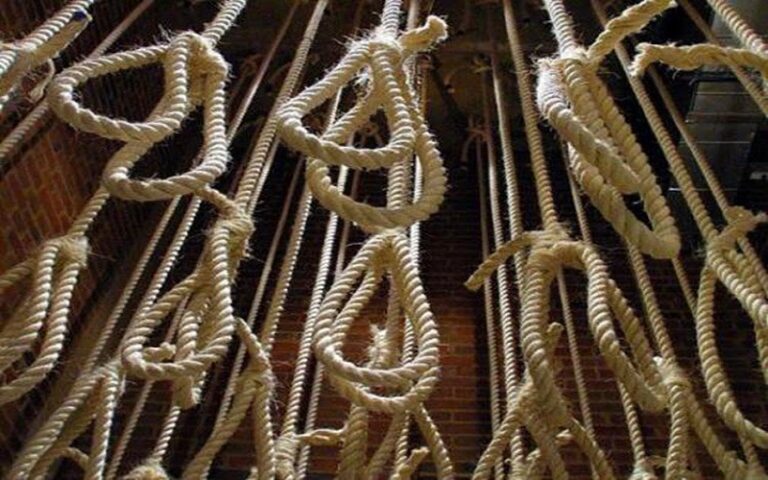
The hunger strike by political prisoners continues while a new wave of executions in Iran has heightened human rights concerns. On just April 8 and 9, 29 prisoners were executed across the country. Among them were five political and ideological prisoners and a 22-year-old Baluch inmate. Additionally, a juvenile offender was hanged in Gonbad-e Kavus prison.

Human rights activists have warned about the scope of this brutal repression and have called on international bodies not to remain silent in the face of systematic human rights violations in Iran.

“No to Execution Tuesdays”: Hunger Strike in 38 Iranian Prisons

Below is the full statement from this week’s campaign:

With the women’s ward of Zahedan prison and Ezbaram prison in Lahijan joining the “No to Executions Tuesdays” campaign, the movement has expanded to 40 prisons in its 64th week.

The paralyzed regime, now entangled in a swamp of domestic and international crises, has intensified executions to prevent public uprisings—as is its usual approach. On April 8 and 9 alone, it executed 11 and 18 prisoners, respectively.

Furthermore, on the morning of Monday, April 14, a 22-year-old Baloch prisoner named “Ali Dehmani” was executed in Zahedan Central Prison. He had been arrested in November 2022 during nationwide protests following the brutal massacre of nearly 100 people in the “Bloody Friday” events in Zahedan and Khash. He was accused of killing four regime agents in the town of Bampur and was executed without access to a fair trial.

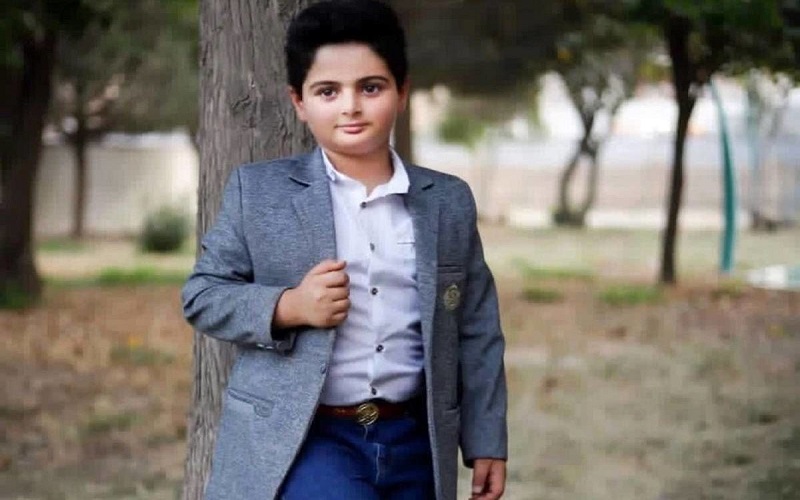
Additionally, a juvenile prisoner named “Behzad,” who was under the legal age at the time of his alleged crime, was hanged in Gonbad-e Kavus prison.

From April 8 to 14, the number of executed Baluch prisoners totaled at least 18. The vast and ongoing human rights violations in Iran are a dire warning to society, human rights defenders, and international organizations that any inaction or neglect toward this oppressive regime will cost the lives of more oppressed people and prisoners.

The “No to Executions Tuesdays” campaign, which has now expanded to 40 prisons with the participation of female prisoners from Zahedan and Ezbaram prisons, continues to resist the inhumane death penalty with all its might. It calls on all international human rights and political organizations to be the voice of the people and prisoners in Iran, as dozens of political and ideological prisoners, along with thousands convicted of ordinary crimes, remain under death sentences and are deprived of even the most basic rights to a fair trial.


Iran’s Nuclear Power Dream: From Fantasy to Reality

Despite Iran’s immense potential in hydrocarbon resources and renewable energy, the country remains heavily dependent on natural gas to meet its electricity needs. Nuclear energy, despite massive investment, does not play a significant role in Iran’s energy security.

The Iranian regime, under its long-term strategy, has planned to increase its nuclear power generation capacity to 20 gigawatts by 2041.

Currently, the Bushehr nuclear power plant, with a capacity of 1,000 megawatts, has been the country’s only operational nuclear power facility since 2013. Two additional units are under construction at the same site, each also designed for 1,000 megawatts.

The regime has launched new nuclear power projects. The most significant is a 5-gigawatt plant planned in Hormozgan Province, consisting of four units, each with a capacity of 1,250 megawatts. This project, expected to take about nine years to complete, requires an investment of over $20 billion. Additionally, a smaller 300-megawatt plant is under construction in Khuzestan Province.

Challenges Facing the Iranian Regime’s Nuclear Program

Currently, nuclear power contributes only 1% to Iran’s electricity supply, amounting to 1,000 megawatts. To cover the existing 25,000-megawatt shortfall in the national grid, Iran would need to construct 25 plants similar to Bushehr—a plant that took about 20 years to build with Russian assistance. Since its commissioning in 2011, Bushehr has only produced 70 terawatt-hours of electricity, with a regional market value of under $6 billion.

This limited electricity output pales in comparison to the massive costs Iran has borne to develop its uranium enrichment program under the guise of nuclear power generation. The regime’s nuclear program has led to extensive international sanctions, which are estimated to have caused between $2 to $3 trillion in direct economic losses.

Iranian Regime Accelerates Uranium Enrichment to Concerning Levels

The Potential of Renewable Energy in Iran

Iran, with over 300 sunny days per year and access to windy coastal and mountainous regions, possesses a high potential for developing solar and wind energy. However, these renewable sources account for only 1% of the country’s electricity generation.

Meanwhile, according to the International Energy Agency, in 2024, more than 75% of newly built power plants worldwide were based on renewable sources, while nuclear power accounted for only 5% of new global electricity generation capacity.

Economic Analysis of Iran’s Nuclear Program

Every program, including the nuclear initiative, must be assessed based on cost-benefit analysis and associated risks. While nuclear energy could help reduce the electricity supply-demand imbalance, the heavy direct and indirect costs it has imposed on Iran’s economy have rendered it economically unviable.

According to conservative estimates, the Iranian regime has spent around $300 million annually on its nuclear program over the past three decades—totaling approximately $9 billion. However, the indirect costs have been significantly higher, with the program serving as a major driver behind international sanctions and a sharp decline in foreign investment. It is estimated that due to these sanctions, Iran has lost over $450 billion in oil export revenues alone. Over the last 20 years, it has also had one of the lowest foreign investment-to-GDP ratios globally.

Despite official claims of the program being peaceful, Iran’s pursuit of uranium enrichment up to 60% and continuation of its nuclear activities under the harshest sanctions suggest that deterrence and boosting its bargaining power in foreign policy outweigh economic and developmental interests.

The regime’s massive investments in a program with minimal economic return and negligible contribution to electricity production, combined with the damaging effects of sanctions and international isolation, indicate that decision-makers in Tehran are more focused on regime survival and external deterrence than on actual energy goals.

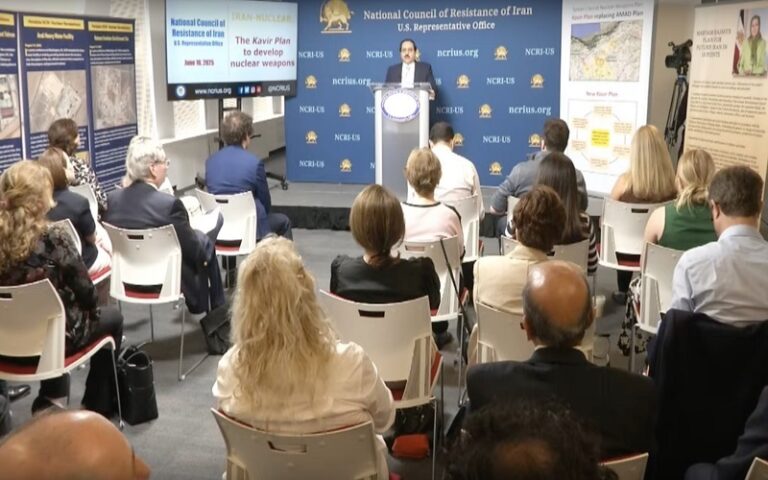
Iran’s secret nuclear program was first exposed by the National Council of Resistance of Iran (NCRI), the largest Iranian opposition group. Prior to that, the program was unknown. If the regime’s intentions had been peaceful, it would have had no reason to hide nuclear sites or enrich uranium to weapons-grade levels.

The reality is that the regime’s nuclear strategy, which centers on deterrence and intentions to develop nuclear weapons, has sidelined economic and energy priorities.

The Iranian regime sees nuclear weapons as essential to its survival and to suppress the growing domestic unrest. All current claims about nuclear energy production are nothing but a mirage, and the regime has consistently proven this approach over the years.

Western governments must realize that the only effective way to confront this regime and its destructive and terrorist policies in the region is through firmness. The remaining path toward regime change will be taken by the people of Iran themselves. In this regard, the only request from the Iranian people to the West is to refrain from interfering, assisting, or granting concessions to the ruling clerics in Iran.