Home Blog Page 166

Women Protest in Iran’s Evin Prison, Attacked by Guards on Prisoners

Following the execution of Reza Rasaei, who was accused of killing the head of the IRGC Intelligence in the city of Sahneh, reports indicate protests in the women’s ward of Evin Prison in Tehran and clashes between security forces and prisoners.

Political female prisoners in Evin Prison, Tehran, have started a campaign in recent months to oppose executions in Iran, a campaign called “No to Executions Tuesdays.”

This campaign coincided with the execution of Reza Rasaei on Tuesday, August 6, despite uncertainties in his case. Following the protest by prisoners in Evin Prison, security forces attacked them, and the phones in the ward were also cut off.

Female prisoners did not remain silent in protest against the news of Rasaei’s execution and repeatedly called on the people to shout “No to executions.”

The Iranian regime used the news of a possible war with Israel to execute Reza Rasaei without informing his family, taking advantage of the media silence.

Following the protests by female prisoners in Evin Prison against Rasaei’s execution and the attack by the prison guards, several political prisoners were injured and transferred to the infirmary. Due to the phone lines being cut off, there is no news about the condition of the prisoners in this ward.

During his imprisonment, Reza Rasaei was subjected to brutal torture by the IRGC and the Ministry of Intelligence to force him to confess against himself.

Reza Rasaei had told his cellmates that he had no role in the killing of the IRGC member but was forced to make a false confession, which led to his death sentence.

Reza Rasaei was arrested in December 2022 during the protests following the killing of Mahsa Amini by the regime’s Morality Police.

Iran’s Regime Withdraws $6 Billion From Central Bank to Cover Budget Deficit

A member of parliament reported that the Parliamentary Research Center has reviewed the budget situation for the past Persian calendar year (starting March 21) and found that the budget for 1402 (March 21, 2023, to March 21, 2024) has a “very high imbalance.”

Gholamreza Tajgardoon told the parliamentary news agency that the report from the Parliamentary Research Center indicates severe deficits and a very high imbalance in budget items and performance over the past year.

The head of the Parliamentary Planning, Budget, and Accounts Commission added that according to this report, in 2023, the government’s main foreign exchange expenditures amounted to over $18 billion, of which $12 billion was provided through the government budget, leaving a deficit of nearly $6 billion, which was withdrawn from the Central Bank’s foreign exchange reserves and the National Development Fund.

He stated that approximately 140 to 150 trillion tomans (around $2.285 to $2.449 billion) of the targeted subsidies budget were also unrealized.

Recently, the Court of Audit also released a report on the government’s widespread violations regarding targeted subsidies, particularly wheat subsidies, stating that aside from tens of trillions of tomans in irregularities in subsidy financing, the government forced the Central Bank to withdraw over 31 trillion tomans (about $506.122 million) without legal procedures from the accounts of executive agencies and deposit it into the Targeted Subsidies Organization’s account.

The widespread budget imbalance last year contrasts with former Iranian President Ebrahim Raisi’s claim in May 2024 that the government had not had a budget deficit since 2021.

His statements come while Central Bank statistics show that the government’s budget in 2021 faced an operational and capital deficit of 213 trillion tomans (about $3.478 billion), which increased to 295 trillion tomans in 1401.

The Central Bank has not yet released the budget realization status for last year, but previously, the Parliamentary Research Center predicted that the operational budget deficit for 2023 would be about 455 trillion tomans (around $7.428 billion), equivalent to 20% of the government’s public budget.

To cover the budget deficit, Ebrahim Raisi’s government, contrary to its promises to stop debt growth, engaged in extensive borrowing from domestic banks. Central Bank statistics show that since the 13th government took office last February, the government’s debt to domestic banks has more than doubled, reaching a staggering 1.31 quadrillion tomans (around $21.387 billion).

The National Development Fund also states that the government owes it $100 billion.

Iran’s Police Assault and Arrest Girls for Not Wearing Mandatory Hijab

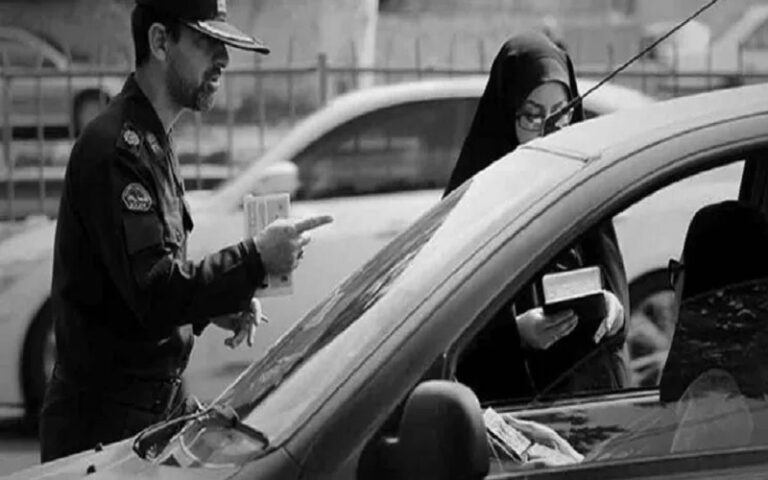
Following widespread reactions to a recently released video showing the violent behavior of police officers towards women, the Iranian regime’s police claimed the footage was “from the past” and called “everyone to uphold the law and prevent the occurrence and spread of social anomalies.” Meanwhile, a media outlet, referring to the same video, asked Masoud Pezeshkian, the president of the Iranian regime, to dismiss the Minister of Interior and appoint an “acting minister” for the ministry until his proposed candidate gains a vote of confidence.

In a police statement, the date of the mentioned video was confirmed as June 21, 2024, as previously stated by the mother of one of the two girls involved in the incident. The police confirmed that the confrontation occurred due to the hijab issue and referred to it as “inappropriate attire and unveiling,” which prompted the officers’ “warning.”

In response to the widespread reaction to the released video, the Asr Iran website wrote in an article, “The harsh treatment of these girls is very painful and regrettable. The police behavior is such that it seems like they are arresting two habitual criminals.”

This media outlet recalled Pezeshkian’s statements during the election debates, where he said, “For 40 years, we have tried to institutionalize the hijab through intervention.”

The release of a video showing government officials confronting two 14-year-old girls over their hijab sparked a wave of reactions among Iranians on Tuesday, August 6.

In the video, Maryam Abbasi, the mother of the 14-year-old girl featured in the footage, says that on June 21, her daughter and her friend were attacked and beaten by authorities on a street in Tehran. During the confrontation and arrest, one of the girls’ heads hit an electric pole, and the assaults continued inside the van.

According to Mrs. Abbasi, her complaints and follow-ups were only addressed to the extent that the duty judge of the Military Prosecutor’s Office allowed her to obtain the area’s CCTV footage. However, after that, no further response was given to her complaints and requests.

Masoud Pezeshkian, now appointed as the president of the regime, had said during his debate with five other presidential candidates selected by the Guardian Council to succeed Raisi: “I guarantee that the entire government will stand firm against mandatory patrols (for hijab), internet filtering, and external pressures in all sessions.”

These promises by Masoud Pezeshkian and the demands of his supporters come at a time when the pressures of the Iranian regime on women and the suppression of their right to free attire intensified in 2024 from April 13, following Ali Khamenei’s directive in a plan named “Noor Plan.”

Meanwhile, on July 30, during his inauguration ceremony, Masoud Pezeshkian once again explicitly emphasized the necessity of continuing Ali Khamenei’s policies.

Iran’s Regime Executes Reza Rasaei, A Detainee of 2022 Protests

Reza Rasaei, one of the detainees from the 2022 protests, was executed on Tuesday, August 6. Rasaei’s body was buried under security measures in a remote location.

Rasaei, 34, was arrested during the 2022 protests in Sahneh, Kermanshah.

According to the Hengaw Human Rights Organization, the execution was carried out secretly at dawn in the central prison (Dizelabad) of Kermanshah without informing his family.

A few hours later, security agencies informed Rasaei’s family of his execution and warned them that they were not allowed to bury him in his hometown of Sahneh.

Hours later, Fatemeh Heydari, the sister of Javad Heydari, who died in the 2022 nationwide protests, announced on social media that only Rasaei’s mother, sister, and brother were allowed by officers to attend his funeral. His body was being buried in Mina Abad Cemetery in Kermanshah, a very remote cemetery three hours away from Sahneh, with a heavy security presence. The public was not allowed to attend the cemetery.

Reza Rasaei was sentenced to death by the Second Branch of the Criminal Court of Kermanshah Province last September. This sentence was later upheld in December by Branch 17 of the Supreme Court.

This protester was sentenced to death for the alleged murder of Nader Beyrami, the head of the Intelligence Office in Sahneh, but he denied this accusation.

Previously, an informed source from Dizelabad Prison had reported that pressure on Reza Rasaei had increased, and his access to phone calls with his family and in-person visits had been cut off.

Simultaneously, pressure on Rasaei’s family also increased.

This informed source mentioned that “threatening phone calls and threats of arresting family members are among the pressures applied on Reza Rasaei’s family since July.”

Reza Rasaei’s death sentence was upheld by the Supreme Court despite “numerous procedural and substantive errors in the verdict issued by the lower court,” including reliance on coerced confessions of the defendants against each other, deliberate disregard of testimonies by several defendants in favor of Rasaei, acknowledgment of deficiencies in the preliminary investigations, neglect of forensic expert opinions, and particularly the court’s reliance on the “judge’s knowledge” to prove guilt.

Amnesty International warned in February 2024 of the risk of execution of this protester following the Supreme Court’s rejection of Reza Rasaei’s appeal.

In recent months, human rights organizations and activists have warned about the possible execution of several political prisoners, including Reza Rasaei, Mojahed Koorkoor, Habib Deris, and Abbas Deris.

Despite widespread domestic and international protests, the Iranian regime continues to execute prisoners.

Pursuing Justice for Iran’s 1988 Massacre: A Significant Step Forward

In 1988, Iran’s Supreme Leader Ruhollah Khomeini issued a decree for the mass execution of political prisoners, particularly targeting members of the People’s Mojahedin Organization of Iran (PMOI). He aimed to eradicate their ideals by eliminating them physically. Khomeini’s decree was clear: anyone loyal to the PMOI should be executed immediately. This act marked an attempted genocide against the Mojahedin, a policy continued by his successor, Ali Khamenei. The bodies were secretly buried in mass graves, and efforts were made to erase all traces of these victims from history.

Despite the regime’s efforts, the massacre could not be hidden. Over 45 years of theocratic rule have brought international attention and numerous UN condemnations. A significant milestone in the pursuit of justice came with the report from Javaid Rehman, the UN Special Rapporteur on Human Rights in Iran. This report was achieved through the relentless efforts of the Iranian Resistance and the families’ seeking justice for the victims. It represents a significant victory for those who have consistently fought against the regime’s attempts to deny and cover up the massacre of 30,000 political prisoners.

The regime’s reaction to the report was one of hysteria. The so-called “human rights secretary” of Iran dismissed Rehman as a “paid mercenary” of the PMOI, attacking the credibility of the report. Nevertheless, the report stood as an undeniable document of crimes against humanity and genocide. Rehman used the term “atrocity crimes” to describe the systematic murders, torture, and enforced disappearances carried out by the regime. He noted that between June 1981 and March 1982, thousands of dissidents, including children, were executed under vaguely defined charges of “waging war against God” and “spreading corruption on Earth.”

Among those executed were many children, including 13-year-old Fatemeh Mesbah, a PMOI supporter. The report highlighted Khomeini’s 1988 fatwa, which explicitly ordered the mass execution of PMOI members as a religious group. This fatwa was a clear document of genocidal intent, aiming to physically destroy the PMOI.

The Special Rapporteur called for an international mechanism to investigate and hold accountable those responsible for these crimes. He urged UN member states to use universal jurisdiction to conduct thorough investigations and preserve evidence for future prosecutions. Rehman emphasized the need for swift, impartial, and transparent criminal investigations into the atrocities committed, including the mass murders and other inhumane acts against political opponents.

The global recognition of these mass killings as “atrocity crimes” marks a qualitative step in the justice-seeking movement in Iran. This movement, which aligns with the broader struggle for regime change, aims to bring the perpetrators of these crimes to justice.

In conclusion, the UN Special Rapporteur’s report is a critical step toward acknowledging and addressing the horrific crimes committed by the Iranian regime. It highlights the ongoing struggle for justice and the necessity of international accountability mechanisms to ensure that the perpetrators of these atrocities face consequences.

Iran’s People Facing Bread Scarcity and Massive Government Debts

Simultaneously with the release of the Audit Court’s report on the significant deviation of the Iranian regime in paying bread subsidies and the 1.16 quadrillion toman (approximately $1.933 billion) outstanding debt to wheat farmers, the economic advisor to the Minister of Economy says the price of bread should increase.

The economic advisor to the Minister of Economy, without mentioning the massive government debt to wheat farmers and the deviation in the allocation of bread subsidy resources, only referred to the increased costs of bakers and stated that the price of bread should be adjusted.

Mohammad Jalal, who is also the spokesperson for the government’s smart flour and bread subsidy plan, told ILNA news agency on Sunday, August 4, that the previous administration maintained the price of subsidized flour and bread for three years and did not allow price increases to avoid raising the cost of bread for people, but during this period, rent and wages logically increased.

He further stated, “The concern of bakers for the increase in bread prices is justified.”

Mr. Jalali’s claim about the Thirteenth Government’s prevention of bread price increases comes at a time when the official price of bread has significantly increased over the past three years.

ILNA news agency described Mr. Jalal’s statements as “the siren of bread price increase.”

Also, citing the “concern of bakers” for raising bread prices comes as the new Audit Court report reveals significant government deviation in paying bread subsidies, and the outstanding debt to wheat farmers has peaked at 1.16 quadrillion tomans.

The Audit Court states that the Ministry of Economic Affairs and Finance has paid more than 950 trillion tomans (approximately $1.583 billion) to the Targeted Subsidies Organization, including 345 trillion rials (approximately $575 million) in 2023, 420 trillion rials (approximately $700 million) for payments to wheat farmers in 2024, and 188 trillion rials (approximately $313.33 million) this year from trust funds and the overall public budget as cash advances for commodity coupons and guaranteed wheat purchases.

The report adds that the Central Bank has also withdrawn 315 trillion tomans (approximately $525 million) from the accounts of executive bodies without following legal procedures and deposited it into the Targeted Subsidies Organization’s account to settle wheat farmers’ claims.

Meanwhile, Ali Gholi Imani, CEO of the National Wheat Farmers Foundation, announced last week that over 9 million tons of wheat produced by farmers have been delivered to the government this year, and the government has paid nearly 540 trillion tomans (approximately $900 million) for wheat purchases, but 1.16 quadrillion tomans (approximately $1.933 billion) of the farmers’ claims remain unpaid.

The status of wheat in Iran

The United Nations Food and Agriculture Organization (FAO) estimates that Iran’s wheat production this year will not grow compared to last year and will remain at 13.5 million tons, but Iran’s wheat imports will increase by 30 percent to 3 million tons.

It is expected that Iran’s wheat consumption will be 16.5 million tons this year.

Per capita wheat consumption in Iran is slightly more than 162 kilograms per year, which is 2.5 times the global average.

The vast difference in per capita wheat consumption between Iranians and the global average is due to the country’s dietary culture, as bread is one of the main foods in Iranians’ meals. For example, Iranians’ per capita wheat consumption is 4 to 5 times that of citizens of Bangladesh and Myanmar; however, rice consumption of Myanmar and Bangladeshi citizens is also 4 to 5 times that of Iranians.

Another example is the per capita bread consumption of Turkish citizens, which is 27 percent higher than that of Iranians, but rice consumption of Turkish citizens is several times less than that of Iranians, and on the other hand, the per capita meat consumption of Turkish citizens is also 50 percent higher than that of Iranians.

Over the past years, Iranian regime officials, without addressing this issue, have repeatedly accused people of “wasting bread.”

Iran: Rent Increases Up to 50% in Some Tehran Areas

Davood Beigi-Nejad, Vice President of the Tehran Real Estate Consultants Association, says that rent in some areas of Tehran has increased by more than 50%.

Beigi-Nejad told the regime’s ILNA news agency that while the “point-to-point inflation rate is 47%” and “annual inflation is 37%,” landlords are unwilling to limit rent increases to 25%, as mandated by the government.

Previously, despite the Iranian regime setting a 25% ceiling on rent increases nationwide, Iranian media reported a 43% rise in rents and the failure of the government’s directive policy in the rental market.

On July 27, the state-run Donya-e-Eqtesad newspaper addressed this issue, writing: “Last month’s housing rent inflation was 1.7 times what the officials had set.”

Reports indicate that housing rent inflation from late June to mid-July has surpassed the annual inflation rate of 39%. Several experts attribute this record-breaking rent inflation to the recent surge in housing prices and persistent high inflation levels.

The newspaper Donya-e-Eqtesad criticized government policies in this market, writing that since 2020, “unprecedented government intervention in the rental housing market’s transaction mechanisms” has acted as an inflationary stimulus in this market.

The newspaper referred to the rent ceiling, which, according to the Vice President of the Real Estate Consultants Association, landlords circumvent in various ways.

On July 24, Samaneh Moharami stated that in some housing contracts, antiques and Bitcoin are exchanged instead of the national currency because landlords do not want to get involved in court due to the rent ceiling.

Meanwhile, the newspaper Ham-Mihan wrote in its Saturday, July 27 issue that a look at rental and sale listings shows “cases of rent in dollars have also been heard in districts 1 and 2 of Tehran.”

The newspaper wrote that taking coins and dollars is not very common, but sometimes this happens between the owner and the tenant, and they write the contract by hand themselves.

Ham-Mihan emphasized that the prevalence of renting with foreign currencies or valuable metals is to circumvent the rent ceiling law and avoid taxes.

These events in the housing market come as last summer, the Parliament Research Center reported an increase in the number of income deciles being pushed out of the housing market, stating that deciles one to three absolutely, and deciles three to five and even part of the sixth decile, “relatively” cannot afford to secure housing for themselves.

Iranian Regime Authorities Deny Medical Transfer for Zeinab Jalalian in Her 17th Year of Imprisonment

Human rights sources report the continued “lack of medical care” for Zeinab Jalalian and state that the authorities of Yazd prison are opposing the repeated requests of this political prisoner for transfer to medical centers outside the prison.

According to these reports, a source close to Zeinab Jalalian‘s family confirmed that this political prisoner “has been suffering from multiple physical problems for a long time,” but judicial authorities do not accept her “requests” for hospital transfer.

This political prisoner “is kept with general crime prisoners without observing the principle of separation of crimes” and “suffers from pterygium (eye condition), kidney, and gastrointestinal diseases.” She also “suffers from severe side pain.”

Zeinab Jalalian, a native of Maku, was arrested in 2007 and in 2009 was sentenced to one year of imprisonment for “illegal exit from the country” and to death for “enmity against God due to membership in opposition groups.” Her death sentence was confirmed by the appeals court and the Supreme Court, but later commuted to life imprisonment.

Ms. Jalalian has stated that during her detention she was subjected to torture methods such as flogging on the soles of her feet, punching in the stomach, banging her head against the wall, and threats of rape.

International human rights authorities, including United Nations reporters, have repeatedly called on the Iranian regime’s authorities to end this situation.

Iran’s Regime Intensifies Pressure on Dissident Families

In continuation of the pressure on the families seeking justice, the Islamic Revolutionary Court of Isfahan sentenced Maryam Mehrabi to six years in prison and additional punishments.

According to hra-news, the six-year prison sentence and additional punishments for Maryam Mehrabi were recently issued by Branch One of the Isfahan Revolutionary Court, presided over by Mohammadreza Tavakoli, and were communicated to this political prisoner on Sunday, August 4.

Ms. Mehrabi was sentenced to one year in prison for “propaganda against the regime” and five years for “seducing or inciting people to war and killing with the intent of disturbing national security.” The Revolutionary Court also issued additional punishments of “two years of service prohibition and a two-year travel ban.”

Maryam Mehrabi’s conviction comes despite her only protesting her brother’s death sentence.

Branch Five of the Isfahan Islamic Revolutionary Court sentenced Mahmoud Mehrabi, a political prisoner arrested during nationwide protests, to death in May 2024 on charges of “corruption on earth.”

According to Mr. Mehrabi’s lawyer, the death sentence for this political prisoner has “10 fundamental flaws,” and an appeal has been filed with the Supreme Court of the Islamic Republic.

Another part of Maryam Mehrabi’s case involving charges of “spreading falsehoods” is ongoing in Isfahan Criminal Court Two, and no verdict has been issued yet.

Meanwhile, Mahmoud Mehrabi’s sister has been “deprived of the right to access a lawyer,” and according to hra-news, “recently went on a hunger strike to protest her continued solitary confinement.”

Maryam Mehrabi was arrested on June 18 while her young children were with her. Previously, in March 2022, she was arrested by intelligence agents at the Mobarakeh County prosecutor’s office while pursuing her brother Mahmoud Mehrabi’s case and was transferred to Dolatabad Prison in Isfahan. However, she was released three days later on bail.

In September 2023, Ms. Mehrabi was sentenced to 74 lashes and three months in prison by Mobarakeh County Criminal Court Two, but this sentence was converted to a fine.

The pressure of the Iranian regime’s judicial authorities on the families of political protesters continues, including the arrest of Ali Adinezadeh, the father of the killed protester Abolfazl Adinezadeh, and the deprivation of medical care for Mashallah Karami, the father of executed protester Mohammad Mehdi Karami.

Farmers Continue Protests in Iran

0

On Friday, August 2, farmers from eastern Isfahan once again gathered to protest the closure of the Zayandeh-Rud River. They continued their protest by parking tractors and setting up tents, emphasizing that they have not yet received any response from the authorities.

Videos and reports show that on Friday, Isfahan farmers continued their protest, demanding the reopening of the Zayandeh-Rud River.

The farmers’ gathering in Isfahan started on July 27 in Khorasgan Square of the city.

On July 30, they also protested the lack of agricultural water rights by setting up tents and parking their tractors in Khorasgan Square, demanding their needs be addressed.

Protests by Isfahan farmers over the dry Zayandeh-Rud River and unmet water rights for the province have made headlines repeatedly in recent years.

The protesting farmers believe that Isfahan’s water rights are being allocated to other cities.

In March 2024, they also held a protest near the Abshar Dam due to the closure of the Zayandeh-Rud River affecting their lands.

Earlier, on July 14, Reza Haji-Karim, a member of the Water Industry Confederation, stated, “In the water sector, the largest consumer is the poorest, unable to invest. Despite 90% of the country’s water being used in agriculture, farmers face livelihood issues and significant difficulties in securing water for current cultivation.”

Isfahan is one of the most critical provinces in Iran concerning water shortage problems.

The people of this province have repeatedly gathered and protested against the Iranian regime’s mismanagement in solving this problem.

In some cases, these protests have met with violent and deadly responses from the Iranian regime’s security forces.

In 2012, news of the first-time breaking of water transfer pipes from Isfahan to Yazd indicated the depth of a crisis that has intensified in the following years.

The latest reports from the Parliamentary Research Center, published in July 2024, showed that Iran’s average rainfall is only one-third of the global average, and the water evaporation rate is three times the global average.

According to this report, the water crisis in Iran, which has become one of the country’s main challenges in recent years, continued into the winter of 2024.

Mehdi Taghiani, a representative of Isfahan in parliament, stated on March 27 that land subsidence in Isfahan has reached a very dangerous level. He told Khabar Online, “If a solution for the dryness of the Zayandeh-Rud River and the resulting subsidence is not found, we all have to leave Isfahan. He added, “Under these conditions, this civilization will not survive.”