Home Blog Page 174

Maryam Akbari Monfared Faces New Case Ahead of End of Prison Sentence

The lawyer of Maryam Akbari Monfared, a political prisoner whose siblings were executed by Iran’s regime and who had previously been sentenced to 15 years in prison, says Iranian regime officials have opened a new case against her a few months before the end of her sentence.

According to Akbari Monfared’s lawyer, this prisoner has not been granted a single day of leave during this period.

Hossein Taj told the news site Shargh: “In October 2024, Ms. Akbari Monfared’s 15-year prison sentence in the first case will end. During this time, she has not been granted a single day of leave. Ms. Akbari Monfared has also been sentenced to two years in prison in another case. Recently, a new case has been formed against her based on a request from the Headquarters for the Follow-up and Supervision of Cases Related to Article 49 of the Constitution.”

Hossein Taj added: “In the claims made by this headquarter, allegations have been made against Ms. Akbari Monfared’s family and relatives. This headquarters has requested the seizure and acquisition of the Akbari Monfared family’s assets and those of her relatives for the benefit of the ‘Executive Headquarters of Imam’s Directive.’ This case has been referred to Branch 6 of the Revolutionary Court, which is specifically responsible for cases related to Article 49 of the Constitution. The trial date for this case has not yet been determined, and only a monitoring date has been set for August.”

He says, according to current laws in the Iranian regime, “Punishment should only be applied to the individual and not extend to their relatives.”

It has previously been reported multiple times that Iranian regime officials have opened new cases against political prisoners nearing the end of their sentences to extend their prison terms.

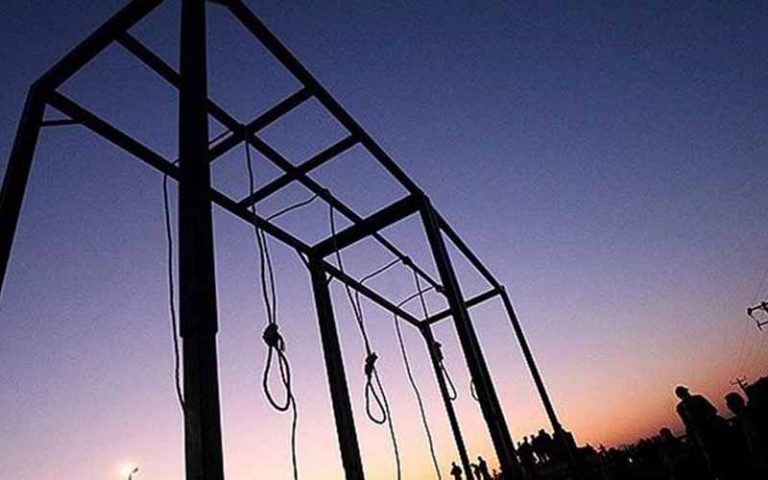
In September 2023, it was reported that the Semnan Criminal Court sentenced Maryam Akbari Monfared to an additional two years of “ta’zir” imprisonment and a fine of 150 million rials for “spreading lies in cyberspace” in a new case.

Maryam Akbari Monfared, born in 1975, is married and has three children. She was arrested on December 31, 2009, following the protests that year, and Judge Abolqasem Salavati in Branch 15 of the Islamic Revolutionary Court of Tehran sentenced her to 15 years of imprisonment.

The court charged this political prisoner with “supporting the People’s Mojahedin Organization of Iran.”

Three brothers and one sister of Maryam Akbari Monfared, all supporters of Mojaheding, were executed in the 1980s.

More Than 17,500 Oil Workers on Strike in Over 75 Sites Across Iran

A labor organization announced that “more than 17,500 oil project workers in over 75 contracting companies” in various regions are on a full strike.

The Council for Organizing Protests of Contract Oil Workers (Third Party) wrote on June 22, noting the start of the project workers’ strike from June 19: “Eliminating contractors, increasing wages, and also 14 days of work and 14 days of rest” are the main demands of the striking workers.

The striking workers have also emphasized the necessity of improving dormitory conditions, working conditions, and workplace safety.

The regime’s ILNA news agency also wrote on Saturday: “With the arrival of summer, a new wave of protests by project workers and continuous projects in the south of the country in the oil, gas, and third-party sectors has begun, with the main demand being the consideration of changing work times and eliminating contractors.”

According to this report, the new protest campaign of the striking workers, under the slogan “All workers’ tables are the same” and named “14-14,” has started in refineries, petrochemicals, and other oil and gas centers and third-party sectors, and these workers went home after handing over their tools.

Meanwhile, according to ILNA, with the publication of the news of the project workers’ protest campaign, Alireza Mirghafari, a member of the board of directors of the Supreme Association of Labor Unions, reported the sending of threatening text messages in support of contractors to the active protesting workers.

In recent years, project workers have repeatedly gone on strike in protest of their living conditions. Additionally, the number of labor protests such as strikes and gatherings in various regions of Iran has been on the rise over the past few years. These protests have mainly been due to unpaid wages, low wages, layoffs from factories and companies, and privatization.

Meanwhile, the Etemad newspaper wrote in a report on Thursday, June 20, that “an examination of labor protests over the past 27 months, from March 2022 to June 2024, shows that during this period, thousands of coal, copper, iron ore, and chromium miners in the provinces of Kerman, Mazandaran, Yazd, Razavi Khorasan, South Khorasan, and Semnan have demanded their legal rights in gatherings that lasted from a few hours to several days and weeks.”

Amidst the propaganda for the sham elections, the regime’s selected candidates are busy giving deceitful and repetitive promises, but workers and retirees, away from this clamor and indifferent to it, are busy protesting and striking to obtain their rights. This shows that Iranian workers have no hope of improving their situation by participating in elections.

It is worth noting that in the Iranian government, no independent labor unions or syndicates are allowed to operate, and the regime prevents workers’ protests and strikes by any means possible. The other so-called unions are under the regime’s control. Employers of oil and petrochemical companies, all of which are affiliated with government institutions such as the Islamic Revolutionary Guard Corps (IRGC), threaten and fire workers.

Contract workers, despite working in these projects for years, do not receive any rights, and sometimes their meager wages are delayed for months. It should be noted that working in oil and gas fields is extremely difficult and exhausting, and workers are forced to work in temperatures exceeding 50 degrees Celsius for up to 12 hours.

Economic Erosion Under Iran’s Despotic Leaders

Iran’s history has shown that oil in the hands of despotic and anti-development rulers has turned into a curse. Oil revenue has led to corruption, the extravagance of rulers, military adventurism, and regional destabilization. An example of this is the Iranian regime’s adventurism in Lebanon and Iraq, with the most recent example being the October 7 attack.

The class gap among the people of Iran is widening daily, and the regime has no solution other than to continue on this path.

Experts say that squandering such underground resources and human capital requires a skill that only the Iranian regime seems to possess.

The state-run Jahan-e-Sanat wrote on January 24, 2024, “The Iranian economy is not in good condition in terms of decision-making structures and the costs of managing the economic environment of the country. Under such circumstances, it can be said with bitterness and dissatisfaction that Iran’s economy has lost its geoeconomic playing cards. Indeed, it takes a lot of skill for a country with this level of geographical capacities and natural and human resources to have practically no share in the global economy! Nevertheless, due to the country’s movement towards industrial, economic, human, and geopolitical erosion, there must be an immediate fundamental review of all economic governance procedures in the country.”

The Iranian regime, in addition to suppressing the Iranian people and exporting instability to the region, has caused the loss of exploitation of many unique geographical opportunities. According to a study on corridors passing through Iran, “Iran is continuously and serially being excluded from East-to-West land, rail, sea, and air transport corridor projects, and major energy transmission lines are being drawn along routes far from Iran’s borders with the presence of new players.”

This is while, due to a lack of necessary investment in oil resources, the Iranian regime will soon be forced to import oil and gas.

“Iran, due to severe imbalance in various sectors of its energy economy, has lost the ability to be present as a player in the fuel carriers market, not as a determining or medium power, but even as a small and ordinary player, and has transformed from a major exporter to an importer of gas, electricity, gasoline, and diesel,” Jahan-e-Sanat added.

Most economists acknowledge that due to the low rate of physical fixed capital formation in the last 12 years, depreciation has outpaced investment in the country, and the country is on the path of infrastructure erosion. On the other hand, the continuous decline of the clerical regime’s social capital has led not just to the migration of elite forces but to their escape from the country.

A January 23 report by the Ham-Mihan daily states, “Our country has faced a reduction in investment in the oil and gas sector for many years, and the urgent need of the country’s oil and gas industry to reach an acceptable condition (not even a desirable one) is approximately 200 billion dollars. Recent years’ experience clearly shows that attention to oil has been solely from the perspective of ‘financial returns,’ and this instrumental view has led to the neglect of long-term planning for the continued exploitation of Iran’s oil industry capabilities through investment in infrastructure activities.”

The issue of reduced investment in the country’s macroeconomy has reached a critical state.

“The vice president of the Tehran Chamber of Commerce stated that the most important issue in the country today is ‘investment,’ and said: In the 2010s, the investment rate in the country decreased to the point that in the final years of this decade and the early 2020s, the depreciation rate surpassed the investment rate” according to the ILNA news agency on June 12.

With the death of its former president Ebrahim Raisi, the regime is busy staging the election show and has no concern for the future of the Iranian people; otherwise, economists have been warning for years about what the super crisis of stagflation and the accumulation of imbalances in the macroeconomy will bring to the existence of Iran, especially if the global transition from fossil fuels, the pension fund crisis, energy imbalances, environmental issues and water tension, the exacerbation of the class gap, infrastructure decay, and financial constraints are taken into account.

Explaining the super crises and serious challenges of Iran’s economy, economist Vahid Shaqaqi Shahri told Etemad newspaper on June 11: “Since 2018, the growth of depreciation compensation costs has outpaced investment growth, which sends a warning signal to Iran’s economy, indicating that Iran’s economy has entered the phase of infrastructure erosion.”

Shaqaqi considers the financial resource constraints and the exacerbation of infrastructure decay in Iran’s economy due to lack of investment over recent decades as a massive crisis for Iran, which requires at least 500 billion dollars over the 2020s to compensate for.

Iran Needs to Import $2bn Gasoline This Year

Gholamreza Dehghan Nasrabadi, a member of the Iranian regime’s Parliament, announced a deepening energy imbalance in Iran and claimed that the country needs to import two billion dollars of gasoline this year.

Dehghan Nasrabadi said on Friday, June 22: “It is estimated that this year we will have over two billion dollars in gasoline imports, which is approximately equivalent to building a refinery with a capacity of 100,000 barrels per day.”

Since last year, Iran has faced a gasoline shortage due to the government’s inability to build new oil refineries.

An official document from the Ministry of Oil shows that last year, the production of gasoline by the country’s refineries grew by only 1.5%, while the country’s gasoline consumption increased by 10.5%.

The large increase in gasoline consumption was due to the entry of one million inefficient and domestically produced cars into the market.

To compensate for this deficit, the government has mixed significant amounts of petrochemical and chemical substances into the gasoline produced by refineries; the combination of chemical substances in the country’s gasoline has increased by 280% over the past three years.

In fact, according to the Ministry of Oil’s document, last year the production of gasoline by the country’s refineries reached slightly over 97 million liters per day. However, the government mixed a huge volume of aromatic, chemical, and petrochemical-produced gasoline with regular gasoline, raising the volume of gasoline delivered to fuel stations to more than 111 million liters per day.

The country’s gasoline consumption was also above 115 million liters, with the remaining deficit being covered by imports or exchanging mazut for gasoline.

Data from the Ministry of Oil’s document shows that only one-quarter of the country’s produced gasoline meets Euro 4 and Euro 5 standards.

Dehghan Nasrabadi also warned that Iran will face a diesel shortage this year.

According to the aforementioned official document, Iran’s diesel shortage also began last year; in 2023, there was a daily shortage of 1.5 million liters of diesel in the country, which was supplied through imports.

Iran is also facing a significant gas shortage in winter and a notable electricity imbalance in summer.

Recently, the Deputy Minister of Industry, Mine, and Trade announced in a letter to the Minister that starting from the beginning of summer, electricity delivery to the steel and cement industries will be halved.

Iran’s steel industry needs 5,500 megawatts, and the cement industry needs 1,000 megawatts of electricity.

Iran’s electricity losses in the outdated transmission and distribution network are equivalent to the steel industry’s electricity consumption. By modernizing it, a large part of the electricity shortage can be compensated, but no specific action has been taken in this regard over the past two decades.

In terms of gas losses, Iran ranks second in the world after Russia. Dehghan Nasrabadi also mentioned that annually, about 18.5 billion cubic meters of associated gas is flared in the country. Assuming an export price of 30 cents per cubic meter for Iranian gas, this results in an annual loss of over 5.5 billion dollars to the country.

These statistics also align with reports from the World Bank and the International Energy Agency.

To prevent flaring, Iran needs only a 5-billion-dollar investment, but this has not been done over the past two decades.

Dehghan Nasrabadi continued by saying that the issue of energy imbalance has two major consequences and risks for the country; first, the country’s energy security is endangered, and second, the production of the country’s industries decreases, resulting in reduced foreign exchange earnings and increased foreign exchange spending.

Oil Workers on Strike in Multiple Regions Across Iran

Two labor organizations reported on Thursday, June 20, that a number of project workers from several companies in oil regions have gone on strike. Some reports have stated that the number of striking workers is at least 3,000.

The Council of Organizing Informal Oil Workers noted that the project workers had previously announced they would start protests if their demands were not met by June 20. It wrote, “Contractual project workers at Dasht Abbas, Samin, and Darbast Bandon Zamani Company went on strike on Wednesday, June 19, demanding higher wages and a schedule of 14 days of work followed by 14 days of rest.”

The Council for Organizing Protests of Oil Contract Workers also reported that workers employed by a contracting company at the Salman Farsi Petrochemical Plant went on strike on Thursday, demanding higher wages and a 14-day work and 14-day rest schedule.

The received reports indicate the formation of protest cells in other project sectors.

This labor organization emphasized that an important demand of the project workers, like us third-party workers, is the elimination of contractors and added, “There should be no difference in the wage and living conditions of workers who work for oil, gas, and petrochemical companies.”

The Council of Organizing Informal Oil Workers (third-party workers or those working with specific contracts for oil companies) declared that “there should be equal pay and equal working conditions for the same work” and wrote, “It is the right of all of us third-party, temporary, volume, daily wage, specific contract, contractual, and project workers to enjoy all the job benefits of the oil industry like the official workers.”

Meanwhile, reports from Telegram channels of some labor organizations and retirees indicate that project workers from 30 companies in refineries, petrochemicals, and other oil, gas, and power plant centers, mainly in southern Iran, went home after handing in their tools.

According to this report, more than 3,000 workers have joined the campaign so far.

Project (contract) workers have gone on strike several times in recent years to protest their living conditions. Additionally, the number of labor protests, such as strikes and gatherings, has been on the rise in various parts of Iran in recent years. These protests have mainly been directed at the non-payment of wages on time, low wages, layoffs from factories and companies, and privatization.

Meanwhile, the regime’s Etemad newspaper reported on Thursday that “an examination of labor protests over the past 27 months from March 2022 to June 2024 shows that during this period, thousands of coal, copper, iron ore, and chrome mine workers in the provinces of Kerman, Mazandaran, Yazd, Razavi Khorasan, South Khorasan, and Semnan have demanded their legal rights in gatherings that lasted from a few hours to several days and weeks.”

According to this report, “while out of the 12 protest gatherings of mine workers in these 27 months, the common focus of 10 protest gatherings was the increase in wages and several months’ delay in wage payments. In these protests, the line of coal mine workers has been much longer, and it seems that the ground for the violation of the rights of underground mine workers is more extensive.”

Iran-Backed Houthis Sink Second Commercial Ship in the Red Sea

On Wednesday, June 19, the world’s top shipping companies released a joint statement after the sinking of a second ship in the Red Sea, calling for immediate actions to stop Yemeni Houthis’ attacks on commercial ships in the Red Sea and the Gulf of Aden.

The Greek-owned cargo ship Tutor was attacked by Iran-backed Houthis last week, and observers confirmed its sinking on Wednesday. This is the second commercial ship to sink due to Houthi attacks in the region. The Houthis have also seized another ship and its crew.

The Houthis began their drone and missile attacks on ships in the Gulf of Aden and the Red Sea in November, claiming solidarity with the people of Gaza. Three sailors have been killed in these Houthi attacks.

Sabrina Singh, the Deputy Pentagon Press Secretary, reported on Tuesday, June 18, that the Houthis have carried out about 190 attacks since they began their assaults.

The world’s top shipping companies said in their joint statement that it is deplorable that innocent seafarers are being attacked while simply performing their duties, transporting energy, food, and clothing to various parts of the world.

Reuters, citing informed sources, reported that the Tutor ship was hit by a missile and a remotely controlled boat filled with explosives.

International naval forces have been deployed in the region to provide defensive support to ships still navigating the Red Sea, but Houthi attacks have significantly increased.

Reuters also reported, citing sources in the insurance industry, that there are growing concerns about the Houthis’ use of unmanned assault boats.

Munro Anderson, head of operations at maritime war risk and insurance specialist Vessel Protect, also told   that the Houthis, who carried out five attacks in May, have conducted ten attacks so far in June.

Informed sources in the insurance industry said that the additional war risk premium, which is paid when ships pass through the Red Sea, has recently been around 0.7% of the value of a ship, down from about 1% earlier this year.

They added that with the sinking of the second ship and the potential damages resulting from it, the increased insurance rates are likely to remain stable, adding hundreds of thousands of dollars in additional costs to the voyages of ships passing through the Red Sea and the Gulf of Aden.

Stephen Cotton, the general secretary of the International Transport Workers’ Federation, said that ships should change their routes towards South Africa. This is the best way to protect the seafarers.

He added that they also welcome proper escort and protection of the ships by naval forces, as this measure reduces the risks of ships being hit.

Arrest of Suspect in Shooting of Spanish Politician Supporting Iranian Opposition

0

Spanish authorities announced on Wednesday, June 19, that another suspect related to the shooting of Alejo Vidal-Quadras, the former leader of the People’s Party of Catalonia, has been arrested in the Netherlands.

The suspect, a Frenchman with Tunisian citizenship, has a criminal record and, according to the Spanish police, is the sixth person to be arrested in connection with this assassination attempt. Another suspect was arrested in Colombia.

The arrest of the suspect in the Netherlands was carried out based on an international warrant issued by the Spanish court. Spanish police had identified the suspect using CCTV footage from the area.

Alejo Vidal-Quadras, who was Vice President of the European Parliament from 2009 to 2014, was attacked in Madrid in November last year. He firmly believes that the “Iranian regime” is responsible for this act.

Vidal-Quadras, who has close ties with the National Council of Resistance of Iran, has decisively said the Iranian regime is involved in this assassination attempt. He confidently states that the “Iranian regime” was behind this attack.

Alejo Vidal-Quadras was attacked in Madrid in November 2023 and strongly believes that the “Iranian regime” is responsible for this action.

Vidal-Quadras, 79, was shot while walking last November, resulting in a broken jaw and a bullet passing close to his neck and brain.

The Iranian regime had placed Vidal-Quadras and several other supporters of the Iranian resistance on the sanctions blacklist in October 2022.

Among these officials are Steve McCabe, Bob Blackman, and Theresa Villiers, members of the UK House of Commons, as well as U.S. Senator Joe Lieberman, General George William Casey, and former U.S. Secretary of State Michael Pompeo.

Canada Designates IRGC as a Terrorist Organization

0

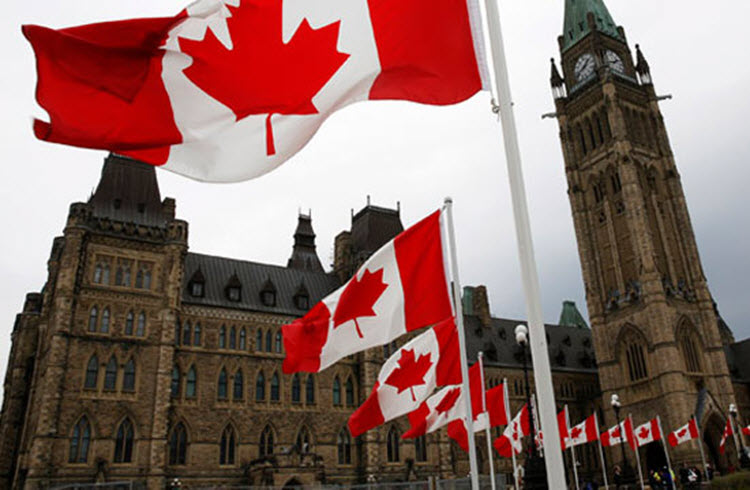
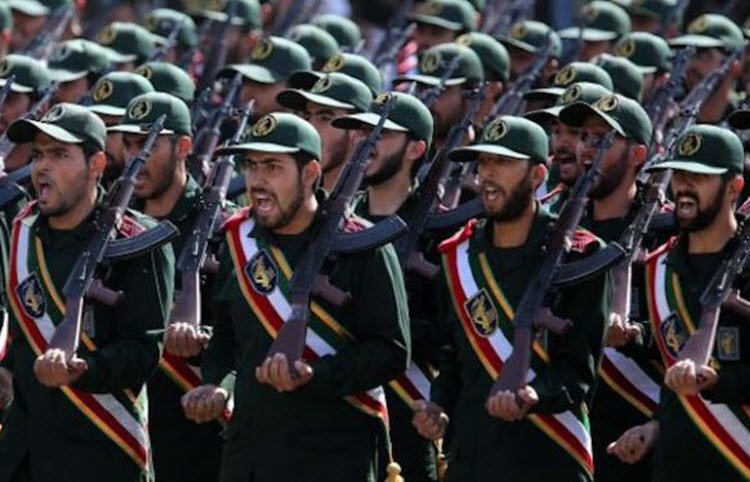
The Canadian government has officially declared the Islamic Revolutionary Guard Corps (IRGC) as a “terrorist organization” and has asked its citizens to leave Iran.

Following this action by the Canadian government, Prime Minister Justin Trudeau posted on X: “The IRGC is now listed as a terrorist group in Canada.”

According to Fars News Agency, Nasser Kanaani, the spokesperson for the Iranian Ministry of Foreign Affairs, condemned Canada’s decision and said, “This repulsive action will have no effect on the IRGC’s legitimate and deterrent power production and the increase in its level and scope of authority.”

He added, “We reserve our right to respond appropriately and reciprocally.”

Kanaani described the Canadian government’s decision as a “hostile move contrary to the accepted principles of international law, including the equality of sovereignties and non-interference in the internal affairs of states, and an example of aggression against Iran’s national sovereignty,” and strongly condemned it.

He also claimed that the IRGC is “a sovereign entity emerging from the heart of the Iranian nation.”

This claim is made despite the fact that Iranian citizens have had no say or vote in the establishment or continued activity of the IRGC, and protesting citizens have repeatedly chanted slogans such as “Basiji, IRGC, you are our ISIS” during nationwide protests.

In a press conference on Wednesday, June 19, Dominic LeBlanc, the Canadian Minister of Public Safety, said that the government had decided to designate the IRGC as a terrorist organization under criminal regulations.

He accused the Iranian regime of supporting terrorism, violating human rights “inside and outside of Iran,” and seeking to destabilize the rules-based international order.

Mr. LeBlanc told reporters that Canada uses all possible tools to combat the IRGC’s terrorist activities.

He added that the designation of the IRGC as a terrorist organization is based on very strong and convincing evidence.

The Minister of Public Safety in Justin Trudeau’s cabinet also clarified in response to the question of why it took Canada so long to take this action that the decision to designate the IRGC as a terrorist organization was made based on law and the recommendations of security organizations, not as a result of political pressures.

After the Canadian government declared the IRGC as a terrorist organization, the country’s Foreign Minister, Mélanie Joly, pointed out that Ottawa had cut diplomatic relations with Tehran years ago and advised Canadians to avoid traveling to Iran.

She added that for those currently in Iran, it is time to return home.

Mrs.Maryam Rajavi, the president-elect of the National Council of Resistance of Iran (NCRI), wrote:

“The Iranian Resistance has been advocating for this designation for years. This measure is essential in response to four decades of suppression, terrorism, and warmongering by the regime.”

Among the officials of the Iranian regime, according to Fars News Agency, Nasser Kanaani, the spokesperson for the Ministry of Foreign Affairs, condemned Canada’s decision and said, “This repulsive action will have no effect on the IRGC’s legitimate and deterrent power production and the increase in its level and scope of authority.”

He added, “We reserve our right to respond appropriately and reciprocally.”

Meanwhile, Kazem Gharibabadi, the Deputy for International Affairs of the Judiciary, called the Canadian government’s declaration of the IRGC as a terrorist organization “hostile” and condemned it on the social media platform X.

Opposition parties to Justin Trudeau’s government intensified their calls to add the IRGC to the list of terrorist organizations following the Iranian regime’s airstrike on Israel.

In October 2022, Ottawa clarified that such an action might “unfairly” lead to the arrest of those Iranians in Canada who had been forced to serve in this force and have now fled the country and come to Canada.

Canada had previously listed the Quds Force, the IRGC’s external branch, as a terrorist group. Ottawa also cut its diplomatic relations with Tehran in 2012.

On Wednesday, Canada’s CBC TV reported that when a group is listed as a terrorist organization, the country’s police can charge anyone who financially or materially supports this group, and banks can also freeze their assets.

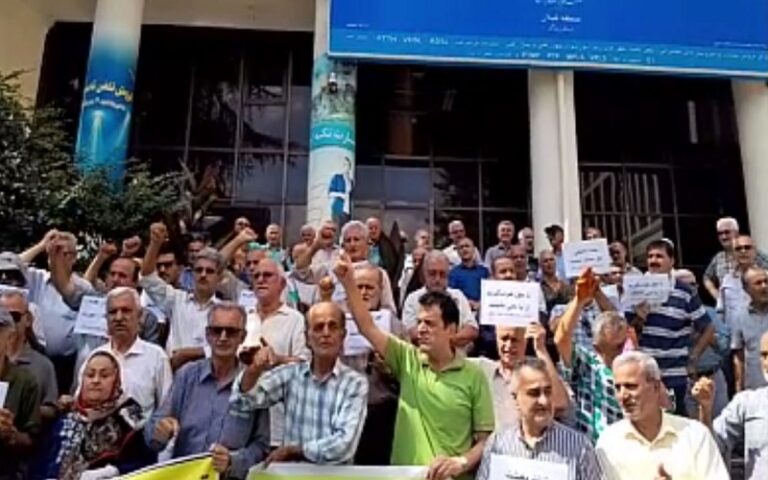
Iranian Workers Continue Protests Due to Unemployment and Unpaid Wages

0

The workers of the old Darougar factory in Tehran, which was handed over to the public sector last year to prevent its closure, say they have about “four months of unpaid wages and seven months of unpaid insurance” and have repeatedly protested in the factory yard.

According to the state news agency ILNA, a Darougar worker reported on Wednesday, June 19, that due to the protest over arrears, “yesterday morning, one of the factory’s production workers with at least 20 years of experience was denied entry to his workplace by the employer’s order.”

This labor activist said that the workers of this factory are being threatened with dismissal and added that in recent months, several workers who had “asked some officials for help due to livelihood problems caused by not receiving wages” were dismissed.

The old Darougar factory was once one of the major producers of detergents and hygiene products in the Middle East and employed over 1,800 workers. However, according to this labor activist, “the number of workers has now dropped to 42.”

Last year, the Darougar factory was threatened with closure due to managerial incompetence and a lack of raw materials for production, and it finally survived by being transferred from the private sector to the “Industrial Support Board” in August 2023 and reducing its workforce.

Regarding the shutdown of Darougar factory’s production lines, this labor activist said that “the factory’s production activity has reached a minimum” and added that “currently, out of two production lines for shampoo and dishwashing liquid, only one line is operational due to a lack of raw materials.”

Expressing concern about the possibility of non-renewal of workers’ contracts, he said, “In total, 42 workers in the Darougar Tehran complex are employed in production, security, guarding, and administrative sectors, and all workers’ contracts will expire at the end of this month.”

In another news report, a labor activist in Chovar County, Ilam province, reported on the continuation of protests by laid-off workers in the “Arghawan Gostar Petrochemical Project” in Ilam. This protest began early last week.

This labor activist reported that some project workers in Arghawan Gostar Petrochemical “became unemployed with the end of the contractor’s contract, and the trend of unemployment continues for other workers.”

Last week, several laid-off workers from the Arghawan Gostar Petrochemical Project in Ilam gathered in front of the entrance gate of this complex.

These workers, most of whom worked in connections, installation, and equipment sectors, became unemployed with the completion of the project.

The labor activist from Chovar emphasized that after years of effort in this project, “it is the right of local workers” to be prioritized for employment after the operation of the Arghavan Gosar Petrochemical Project in Ilam.

The history of petrochemical workers’ protests in recent years has led to violence and worker suicides, with six instances of economic suicides occurring in the past two years alone at the Chovar Petrochemical Plant.

At Least 9 Killed in Fire at Hospital in Iran’s Rasht

0

Reports from Iranian news agencies indicate that at least nine people lost their lives in a fire at the private Qaem Hospital in Rasht.

This 250-bed hospital caught fire at 1:13 AM on Tuesday, June 18.

Sadegh Niaraki, the Chief Justice of Gilan Province, told Iranian state television that following the incident, eight people who were hospitalized in the ICU lost their lives, and 120 injured were also admitted to other medical centers.

Hours later, it was announced that the death toll had increased to nine.

Mohammad Taghi Ashoobi, the President of Gilan University of Medical Sciences, stated that about 140 patients were hospitalized at the time of the fire.

The head of the Rasht Fire and Safety Services Organization also mentioned that the fire started from the basement but did not refer to the cause of the incident.

On November 3, 2023, 36 people lost their lives in a fire at the “First Step to Liberation” addiction rehab center in the city of Langarud, Gilan Province.

On January 5, the Gandhi Hospital in Tehran also burned down. The CEO of the Tehran Fire Department told ISNA news agency that “if a thousandth of the damage caused to this hospital had been spent on safety, this incident would not have occurred on such a scale.”

The Iranian regime has a long history of not adhering to safety regulations in buildings, and fires and collapses of buildings in Iran claim many lives annually. In December 2016, the Plasco Building in Tehran caught fire and subsequently collapsed, resulting in at least 25 deaths.

On May 23, 2022, the Metropol Building in Abadan collapsed while still under construction. The cause of the collapse was the lack of safety measures and security checks by the municipality. In this incident, 43 people lost their lives.