Home Blog Page 211

Iran’s Inflation Rate at Highest Level in Past 22 Months

While the Statistical Center of Iran had announced an inflation rate of about 39 percent for October 2023, the latest report from the Central Bank of Iran to the judiciary shows that the inflation index in October was 54.8 percent, the highest figure in the past 22 months.

The regime’s Central Bank suspended the publication of consumer price index data in 2023. The Statistical Center also released these indices with significant delays on a monthly basis to make their changes less noticeable compared to previous years.

The changes in the consumer price index over one year compared to a similar period in the previous year indicate the annual inflation rate. Evaluating this index is important because it includes a higher inflation memory.

In the early months of the Persian calendar year 1402 (which began on March 21, 2023), the Statistical Center of Iran changed the base year for inflation evaluations from 2016 to 2021, with the help of statistical manipulations to show a reduction in the inflation rate. However, the recent report from the Central Bank to the judiciary reveals that prices in October 2023 have increased by over a thousand percent compared to the base year of 2016.

The Central Bank provides the judiciary with a table of consumer goods and services price indices every year. An examination of this table, which has been leaked to the media, reveals a significant decline in people’s purchasing power and a continuous increase in the inflation rate.

The Central Bank’s report also indicates a significant monthly growth in inflation. This index had a 3.2 percent growth in October, and the monthly inflation rate in the past three months was also above three percent.

The growth of the consumer price index in October 2023 compared to the same period in the previous year also shows that point-to-point inflation is still above 50 percent. According to the data from this center, the point-to-point inflation in October was 54.3 percent, which, despite a 14-percentage point decrease in recent months, is still high.

In the first month of this fall, the average inflation was approximately equivalent to the point-to-point inflation and exceeded the threshold of 50 percent.

The significant growth of the inflation rate indicates the increasing economic turmoil in Ebrahim Raisi’s government.

Earlier, the Statistical Center of Iran had announced in a report that in October, the annual inflation rate had surpassed 45 percent for all Iranian households.

Although the Statistical Center had set the average of 45.5 percent as the annual inflation rate baseline, the data from this center also showed that people in at least nine provinces, including Hamadan, Chaharmahal and Bakhtiari, Kurdistan, Lorestan, Isfahan, Kermanshah, North Khorasan, Yazd, and East Azerbaijan, faced inflation rates above 50 percent, with the rate exceeding 56 percent in Yazd province.

Despite the fact that price increases are clear indicators of the upward trend in inflation in Iran, Ebrahim Raisi and his government officials continue to claim a reduction in the inflation rate and argue that it will drop below 30 percent by the end of this year.

These claims persist while people directly feel the impact of inflation and high prices in their daily lives. Examining the living conditions of Iranians reveals the reality that millions of people are getting poorer day by day, and among them, the situation of workers and minimum wage earners is even more concerning.

Iran’s 60%-Enriched Uranium Stockpile Enough For 3 Atomic Bombs, IAEA Reports

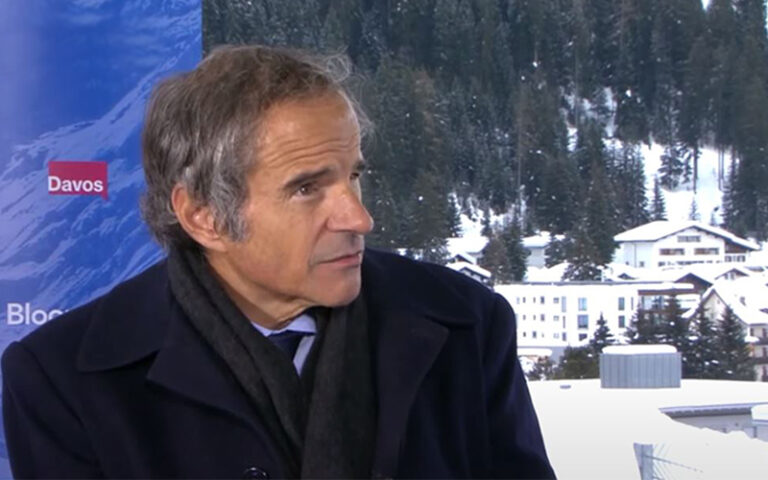
According to a new report by the International Atomic Energy Agency (IAEA), Iran’s stockpile of 60% enriched uranium has increased from 6.7 kilograms to 128.3 kilograms since the agency’s last report in September.

This amount is more than three times the approximately 42 kilograms that, according to the agency’s definition, theoretically suffices for the construction of a nuclear bomb if further enriched.

Reuters reported that Iran currently has enough uranium with a concentration of 60% to produce three atomic bombs, according to the IAEA’s standards, and it has not yet answered the agency’s key questions and concerns regarding its nuclear program.

In a section of the recent confidential report of the International Atomic Energy Agency, which was obtained by this news agency on November 15, it is stated that since the previous report by the agency on September 4, the volume of 60% enriched uranium in Iran has increased by 6.7 kilograms and reached approximately 128 kilograms.

According to the agency’s standards, this amount, if its concentration is increased to 90%, is more than three times the uranium needed to produce a nuclear bomb.

In its new report, dated November 14, the IAEApoints out that no progress has been made in negotiations with the Iranian government regarding two old and important issues. The first issue is the installation of additional control and inspection equipment in Iran’s nuclear facilities after their dismantlementat the request of the country’s government last year. The second issue is obtaining satisfactory answers regarding the discovery of uranium traces at two nuclear facilities in Iran.

Furthermore, the new report by the agency reminds that there has been no progress regarding the acceptance of several inspectors designated by the agency, which the Iranian government objected to when they were sent to the country in September.

According to diplomats, the designated inspectors, who are reportedly French and German and said to be the most experienced inspectors of this agency, have so far been unable to go to Iran and begin their work due to Tehran’s opposition.

“The U.N. nuclear watchdog’s 35-nation Board of Governors passed a resolution a year ago ordering Iran to comply with an IAEA investigation into uranium traces found at three undeclared sites. Since then the IAEA has narrowed the list of sites to two but little other progress has been made,” Reuters added.

“This measure, while formally permitted… was exercised by Iran in a manner that directly and seriously affects the Agency’s ability to conduct effectively its verification activities in Iran, in particular at the enrichment facilities,” the report reads in part.

“The (IAEA) Director General (Grossi) continues to strongly condemn Iran’s sudden withdrawal of the designations of several experienced Agency inspectors,” the report added.

Iran’s Regime Exported $1 Billion In Military Gear In 2022

0

In a speech at Tehran’s Rajaei University on November 13, Mehdi Farahi, the deputy defense minister of the Iranian regime, claimed that Iran had “almost $1 billion” in military exports in the past year.

Without referring to the details of the military export items, Farahi stated that the Ministry of Defense uses “knowledge-based companies, industrial towns, universities, and science and technology parks,” and that “7,000 companies” and over “100,000 individuals” collaborate with this ministry.

This Defense Ministry official announced the “billion-dollar” military exports of Iran in the past year while the United Nations Security Council sanctions against Iran’s missile program, based on the nuclear agreement, the JCPOA, ended in October.

However, the United States government declared that it would intensify efforts to counter this program and the production of drones in Iran by imposing new sanctions.

Previously, in a statement on October 6, Josep Borrell, the EU’s chief foreign policy official, announced that the United Kingdom, France, and Germany had no intention of lifting the sanctions against Iran, which were set to expire on October 18.

Based on numerous evidence and reports of Russian attacks on military and non-military infrastructure in Ukraine using Iranian-made drones, most of Tehran’s military exports in the past year and a half have been to Moscow.

The Ukrainian government reported in October that over 600 attacks had been carried out on cities in the country by unmanned aerial vehicles (UAVs) in the preceding three months.

On August 4, the United States’ Defense Department showcased an exhibition on Iranian drones used in the war between Russia and Ukraine, and a spokesperson for the U.S. State Department stated that the United States had “definitely” provided evidence in this regard.

The purpose of presenting this evidence to foreign officials, members of Congress, and journalists is to prove that Iran’s public denial of providing drone assistance to Russia in the Ukrainian war is baseless.

For months, the Iranian regime denied sending drones to Russia for the purpose of targeting civilians and non-military infrastructure in Ukraine. However, eventually, with the presentation of credible evidence by Western institutions, Iranian Foreign Minister Hossein Amir-Abdollahian confirmed this matter in November 2022. He claimed, however, that the drones had been delivered to Russia before the Ukrainian war and in limited numbers.

Russia has utilized drones in many of its attacks on Ukraine, and the recovered remnants of these downed UAVs indicated that Russia was employing Iranian-made suicide drones in the conflict.

Theft Increases as Poverty Soars in Iran

The economic crisis in Iran has exacerbated various social anomalies, and in the latest case, Reza Akbari, the regime’s Deputy of Road Administration at the Road and Transportation Organization, has stated that road equipment worth up to one trillion rials (approximately $2 million) is stolen annually.

Akbari emphasized that this road equipment, including road signs and safety measures, is usually stolen by low-income and addicted individuals.

According to this regime official, these thefts are not limited to the country’s highways alone, and theft rates are much higher in cities, especially in Tehran.

In March, the “Open Data Iran” platform reported a 70-percent increase in theft rates in Iran between 2012 and 2021, based on data from the regime’s Statistics Center.

According to this platform’s report, during this period, theft cases increased from approximately 545,000 per year to over 900,000.

Theft is one of the consequences of the economic crisis, as poverty and livelihood problems lead to an increase in the number of thieves in the country.

Tehran Police Chief Hossein Rahimi announced last November that 55 percent of detained thieves are first-time offenders.

The state-run Etemad newspaper also wrote on June 15: “Thieves, in their interviews with the media, mostly say that they had economic problems, which led them to resort to theft. However, theft has a very close relationship with societal crises. Economic crises and livelihood problems, increasing class disparities, inflation, divorce, unemployment, and family problems, among others, influence people’s inclination towards theft.”

On the other hand, while thieves face severe punishments such as amputation according to the regime’s criminal laws, theft rates in the country have not only failed to decrease but, according to regime officials, have had a worrisome growth in previous years.

Earlier, Reza Masoudifar, the regime’s Deputy for Social Affairs at the Judiciary, had reported a seven-fold increase in theft cases over a 12-year period, from 2009 to 2021.

The state-run “Donya-ye Eghtesad” newspaper explained the reasons for this situation in the country, stating that inflation has led to an increase in the prices of assets. As a result, the price of consumer items such as mobile phones or car parts has reached several times the minimum wage of workers. This has prompted thieves to accept the risk and consequences of theft.

The price of an iPhone 15 Pro Max in the global market is around $1,200, but in Iran, it is sold at approximately $2,000. It is worth noting that the minimum wage for a worker in Iran is 80 million rials (approximately $155).

Etemad newspaper also emphasized that the high youth unemployment rate indicates that the economy lacks the capacity to absorb job seekers, which is another factor contributing to the increase in crimes committed to earn income.

The “Tajarat News” newspaper stated: “The economic disease has spread from the macro level to the intermediate and micro levels and is reflected in the thief and their behavior. We impose imprisonment and punishment on the thief, while the thief is forced to commit theft to make ends meet.”

Sociologists sounded the alarm of social collapse years ago. Now, it is not just a talk of crisis but rather the country is trapped in a major crisis.

In a situation where people are forced to steal road signs to meet their basic needs, the Iranian regime, the greatest thief of the people’s wealth, spends all the money obtained from the sale of oil and other natural resources of Iran on terrorism and warmongering in the region.

Iran: Special and Hard-to-Treat Patients in Dire Conditions

While the economic pressure on patients suffering from “special and hard-to-treat” diseases has increased in Iran more than ever due to inflation and drug shortages, Saeed Karimi, the Deputy Minister of Health, Treatment, and Medical Education, has stated that only 25 percent of diseases are covered by the government.

Karimi stated that the “Special Diseases Fund” operates to cover some of the treatment expenses for these patients, but currently, only 107 out of 400 rare and special diseases in the country are covered by this fund.

Regarding the shortage of drugs for this group of patients, Karimi also mentioned that they announce the needs three months prior to the end of the year and indicate an additional 30 percent requirement, and the Food and Drug Organization is also working to provide these drugs.

This claim by the Deputy Minister of Health comes at a time when Heidar Mohammadi, the regime’s head of the Food and Drug Organization, stated on January 21, 2022, that the funds related to the subsidies for infant formula, deductible reduction cash handouts, and drugs for hard-to-treat diseases have significantly decreased and are even lower than the funds allocated for this year.

“Certainly, our supply in these areas faces difficulties,” Heidar Mohammadi said.

However, this warning ultimately manifested itself as a crisis in drug and infant formula supply in the country, and Fathollah Tavassoli, a member of the Parliamentary Economic Commission, stated in October, “The method of supplying drugs for special and hard-to-treat patients is wrong and has caused these patients and their families severe economic stress and problems.”

Fathollah Tavassoli emphasized that the situation is “worrisome,” but “with the adoption of appropriate and special measures,” the existing problems can be resolved.

This Majlis (parliament) member also rejected the claims of Iranian regime officials about the drugs being under sanctions and said, “The drugs are not under sanctions. Of course, there may be difficulties in the transfer of money, but the drugs are not under sanctions, and it is possible to proceed with the importation of drugs.”

Hamidreza Edraki, the CEO of the Rare Diseases Foundation, stated on October 18 to the state-run “Ham-Mihan” newspaper, “The problems in procuring drugs due to their high cost are distressing patients and their families to the extent that they are deviating from normal life to provide these drugs.”

Hamidreza Edraki emphasized, “Unfortunately, insurance covers a small percentage of the costs of purchasing these drugs, and a significant portion of these drugs is not covered, and supplementary insurances also cover a smaller percentage of them.”

The crisis of drug supply for this group of patients is even more complicated in smaller cities because access is less compared to the capital. In this regard, the head of the Supreme Council of Special and Hard-to-Treat Patients in Kermanshah, western Iran, considered the conditions of patients in this city critical and stated on May 22 that 40,000 patients from Kermanshah are officially members of associations for “special and hard-to-treat” patients, and their biggest problem is the shortage of drugs and the inactive status of the Red Crescent Pharmacy in Kermanshah.

The issues surrounding the availability of drugs in Iran are not of recent origin.

Even last year, patients faced difficulties in obtaining children’s flu syrups and simple drugs like antibiotics. This year, the crisis of drugs and infant formula has worsened, and it is predicted that with the onset of the cold and flu season in winter, the drug crisis will enter a new phase.

Despite the scarcity of drugs in public hospitals, all high-quality drugs were available on the black market at several times the price. Unfortunately, all the medicine in the public sector enters the black market through people with connections.

One of the problems that is causing the surge and fluctuation of the prices of medicine and medical equipment is the mafia-style management of the healthcare and medicine industry.

The import, production, and distribution of medicine is controlled by bands that have very close ties to regime officials and agencies. Regime-run organizations, including the Setad (controlled by regime supreme leader Ali Khamenei), the Social Security Investment Company, and Shafa Daru, control 70 percent of the medicine market.

These organizations control supplies and prices, and their only loyalty is their bottom line, not the people’s welfare.

Iran’s medicine smuggling network is so rampant and out of control that the amount of smuggled medicine has exceeded even the country’s official exports, according to a September 21, 2020, report by the Fars news agency.

Patients with special illnesses have come to bear the painful burden of inadequate medicine supply before anyone else in Iran. Now, with inflation and poverty running rampant, most of Iran’s society is reaching a point where they cannot pay for treatment if they have a serious illness.

Government-linked thieves and looters in Iran no longer consider any limits or boundaries on their smuggling and looting.

Wetlands of Iran’s Fars Province Gradually Dying

Ata Pourshirzad, the Director General of Environmental Protection in Fars Province, announced on November 9 that climate change and excessive extraction of groundwater have led to the gradual demise of the wetlands in this province.

According to the semiofficial ILNA news agency, Ata Pourshirzad, spoke about the role and effects of climate change on wetland ecosystems in Shiraz, stating that Fars Province has 14 wetlands, five of which are registered under the Ramsar Convention. The Arzhan and Parishan wetlands, located in the protected area and recognized as biosphere reserves, have completely dried up. The Ramsar Convention is the oldest modern environmental treaty for the conservation of wetlands worldwide, signed by member countries in Ramsar on February 2, 1971.

Referring to the fact that two wetlands, Tashk and Bakhtegan, are also located in the area of the national park, he added that this year we witnessed the drying of these wetlands due to excessive water extraction and a decrease in rainfall and atmospheric precipitation.

The regime’s official stated that the province of Fars is facing severe crisis conditions, water scarcity, and the drying of wetlands, noting that on average, 7.1 billion cubic meters of water from the sources in this province are decreasing annually.

Pourshirzad attributed the increase in dust and salt formation to the drying of the wetlands and said that this phenomenon is particularly evident in the vicinity of Bakhtegan, Tashk, and Maharloo wetlands, while dust storms prevail in other areas surrounding the dried-up wetlands of this province.

Ata Pourshirzad emphasized the need to stop water-intensive agricultural cultivation and stated: “These cultivations must be stopped. For example, Fars should not be a place for growing corn, but corn is still being cultivated in this province.”

Meanwhile, Fars Province is not the only province in Iran facing a crisis.

Hassan Vahid, the Deputy of Water Resources Development at the Natural Resources Organization of Iran, announced that the Hamoun Lake is currently “completely dry,” and told the state-run news agency “ISNA” that the lack of water in this area has turned it into a “critical center of dust storms.”

Most of the news about the wetlands in northern provinces of Iran highlights how they are drying up due to factors such as excessive groundwater extraction for agriculture, dam construction on rivers, and changes in precipitation patterns.

At least six wetlands in Iran, which were listed under the Ramsar Convention, are now on the “Montreux List of Wetlands in Danger” and are considered to be on the brink of extinction.

Nasser Taleb Bidokhti, a member of the scientific faculty at Shiraz University, stated in April that Iran’s wetlands are on the verge of “complete extinction,” including five wetland sites (Anzali, Hamoun Puzak, Hamoun Saberi, Hamoun Hirmand, Neyriz and Komijan) that are at the forefront of the Ramsar Convention’s list.

In provinces like Fars, however, there are specific conditions. The wetlands in Fars Province have significant ecological value, serving as a refuge for migratory birds and supporting various other wildlife species.

In many areas, the drilling of wells within the wetland and river boundaries, as well as numerous dam constructions, have restricted the water supply to the wetlands. For example, the situation of the Hoor-al-Azim wetland is noteworthy, as it faces multiple challenges due to oil companies’ activities. According to a report by the Shargh website on May 24, the battle between the wetland and oil exploration in Hoor-al-Azim continues.

According to the report, four oil fields with over 300 oil wells have encroached upon Hoor-al-Azim, and now another new field has opened up in this last remaining stretch between the two rivers, called the Sohrab Oil Field, which, according to Shargh, aims the heart of Hoor-al-Azim.

It is said that the presence of oil companies in the unmodified area of Hoor-al-Azim will deliver another devastating blow to this completely exhausted wetland.

Previously, the Deputy of Marine Environment Protection at the Department of Environment had mentioned the government’s role in the drying up of this wetland in the year 2021 and stated, “Hoor-al-Azim wetland has dried up for the benefit of a Chinese oil company under the permit of the Supreme National Security Council.”

Fars Province has the highest average land subsidence globally, and many farmers have been forced to abandon their lands. According to statistics from 2020, 50 percent of the villages in this province are now uninhabited.

The destruction of nature and its resources in provinces where people directly rely on water and soil can lead to human crises such as poverty and migration.

The drying up of Hoor-al-Azim is one of the hundreds of examples of the slaughtering of nature by the regime. This regime that has spent all the wealth of the country for its own survival, does not care about the improvement of the environmental situation. For this reason, we are witnessing the destruction of many wetlands, rivers, etc. Zayandeh Rud, Gavkhoni, Maharlo, Karun, and… are just examples of this great crime by the current regime.

Iran’s Regime Main Suspect of Assassination Attempt Against European Politician

0

On November 9, Dr. Alejo Vidal-Quadras, a prominent Spanish politician and the President of the International Committee in Search of Justice and Vice President of the European Parliament (1999-2014), was the target of a terrorist attack in Madrid.

An informed source in the Spanish police told the Associated Press that Dr. Vidal-Quadras himself has considered Iran’s involvement in this attack as one of the possible hypotheses and has shared it with the police.

The news agency also quoted another informed official stating that the police’s counterterrorism unit has joined the investigation, which could indicate the expansion of the scope of the investigation and the possibility of involvement by foreign elements, including those affiliated with Iran, in this assault.

Alejo Vidal-Quadras was injured and taken to the hospital after being shot in the face at around 1:30 p.m. on Thursday near his residence in the center of Madrid, the capital of Spain.

So far, no arrests have been made in connection with this attack, and the police are busy examining the observations of witnesses and CCTV footage.

Based on the information gathered so far, the police say that the assailant, wearing a black motorcycle helmet, fired a bullet towards Mr. Alejo Vidal-Quadras and then fled the scene on a motorcycle driven by an accomplice.

During his time as a member of the European Parliament, Mr. Vidal-Quadras had close relations with the main opposition to the Iranian regime, People’s Mojahedin Organization of Iran (PMOI/MEK). It was due to this connection that the Iranian regime Ministry of Foreign Affairs announced in January 2023 that he, along with several other foreign politicians, had been sanctioned.

In response to this attempted assault, Maryam Rajavi, the President-elect of the National Council of Resistance of Iran (NCRI), wrote in a message on the social network X on Thursday:

Dr. Vidal-Quadras has consistently supported the Iranian people’s resistance to freedom and human rights over the past quarter-century. He played a key and unforgettable role in delisting the MEK from the European Union’s terror list, and in ensuring the protection of the MEK in Camp Ashraf (Iraq) and their safe and collective relocation out of Iraq.

It is widely known that the mullahs’ regime has a deep animosity towards Dr. Alejo Vidal-Quadras, evident by his inclusion on their list of terrorists.

Iran: Regime Insiders Admit That Innocent People Were Executed During Protests

Nearly a year after the execution of Mohammad Hosseini and Mohammad Mehdi Karami in relation to the case of the killing of a member of the Revolutionary Guards Corps Basij force, the brother of the deceased Basij member says that the two individuals who were executed had no connection to the “murder of my brother” and their “crime was enmity against God (Moharebeh).”

Horrific Details of Torture and Execution of Detained Protesters in Iran’s Prisons

A few days after the controversial claims made by the father of Rouhollah Ajamian, a Basij member who was killed in the 2022 protests, who called for the “execution” of all the accused in the case, now his brother is also demanding the execution of Dr. Hamid Gharahassanloo and his wife, two other people who were arrested in the case. Ajamian was killed while Basij members were dispatched to quell protests in Karaj.

Dr. Hamid Gharahassanloo and his wife, sentenced to 15 years in prison
Dr. Hamid Gharahassanloo and his wife, sentenced to 15 years in prison

Hossein Ajamian said in an interview with the regime’s Etemad newspaper, “The issue is that the person who caused the death of my brother has not been executed.”

Ajamian claimed, “In fact, this man (Dr. Gharahassanloo) is the one who killed my brother. But because he is wealthy and a doctor, he has many connections, and… no one has confronted him.”


The brother of Rouhollah Ajamian said in part of this interview, “In this case, they executed two homeless individuals, but they did not execute the main person, who was a doctor.”

He reiterated his father’s recent statements and said, “Some individuals and influential parties have exploited their positions and changed the course of the case. We only want this person and his wife to be executed in accordance with the law.”

On November 7, Saleh Eskandari, the advisor to Ali Akbar Velayati (the advisor on international affairs to Ali Khamenei, the Supreme Leader of the Iranian regime), in response to the criticisms made about his intervention in stopping and changing the death sentence of Dr. Hamid Gharahassanloo, wrote, “The repeated messages from international medical circles calling for intensified sanctions in the medical field and the repeated contacts of medical associations with Velayati” led him to “request further investigation” in a letter to a high-ranking regime official.

Saleh Eskandari emphasized that this action influenced 102 heads of medical organizations throughout the country and a petition signed by more than 6,000 doctors, all advocating for the innocence of Gharahassanloo.

Velayati’s advisor considered the statements made by Rouhollah Ajamian’s father to be based on “misinformation” provided to him by “malicious individuals” and described some of the reactions as a “kind of political settling of accounts with Mr. Velayati.”

On November 1, Mirza Vali Ajamian, the father of Rouhollah Ajamian, criticized Ali Akbar Velayati, the advisor to Ali Khamenei, and blamed him for the individuals in connection with the killing of his son not being executed.

Without presenting evidence, he claimed that “80 individuals were accused in the case, of whom only eight are in custody, and if Velayati turns his head, these eight individuals will also be set free.”

As reported by Iranian media, the father of the Basij member who was killed demanded more executions and, in response to the host’s attempt to “manage the program,” said that on several occasions during his presence at the state broadcaster IRIB, he was told not to say anything about Velayati and that they were afraid of him.

According to the published images of the program, the father of the deceased Basij member stood up from his chair, shouting, “Velayati is the murderer of my child,” and stormed out of the studio.

In March, the Revolutionary Court in Alborz Province issued a new verdict sentencing Hamid Gharahassanloo, the physician arrested in the case of the killed Basij member Rouhollah Ajamian, to 15 years in prison.

Hamid Gharahassanloo and his wife Farzaneh were arrested after the 40th-day commemoration ceremony of the Hadis Najafi in the city of Karaj, western Tehran.

Hadis Najafi, 22, shot by the state security forces in Karaj

Gharahassanloo, a 53-year-old physician, was one of the five individuals initially sentenced to death for the “killing of a Basij member,” but this sentence was later reduced in subsequent stages.

Like many other people arrested during the protests, these people were subjected to brutal torture and forced to make incriminating confessions. Karami and Hosseini, the two-youth executed in relation to this dossier, were tortured even more brutally than others, according to witnesses.

Last year’s protests in Iran began with the death of 22-year-old Mahsa Amini. The regime’s morality police arrested her on September 13 for allegedly improperly wearing a hijab, the mandatory head covering imposed upon Iran’s women. Two hours after her arrest, she was taken to a hospital where, three days later, she succumbed to skull injuries that had been sustained during her detention.

The escalation of the widespread protests in 2022, led the regime to order a crackdown on the demonstrations with excessive violence and lethal forces, including live ammunition, which led to the arrests of over 30,000 people and the deaths of over 750.

Iran: Kurdish Man at Risk of Execution

On November 6, Amnesty International issued a statement warning that Reza (Gholamreza) Rasai, 34, one of the detainees of last year’s nationwide protests in Iran, is at risk of execution.

Amnesty International says that Reza (Gholamreza) Rasai has been arrested in relation to the September-December 2022 nationwide protests in Iran and has been subjected to “torture.”

According to the report, following a grossly unfair trial, on 7 October 2023, Branch Two of Criminal Court 1 of Kermanshah province convicted him of “murder” and sentenced him to death, admitting his torture-tainted forced “confessions” as “evidence”.

“In the verdict, the court summarily dismissed Reza Rasaei’s retraction of his forced ‘confession’, which he had said during trial was obtained under torture and other ill-treatment during interrogations, without conducting investigations”, Amnesty International reported.

Reza (Gholamreza) Rasaei, aged 34, hails from Iran’s oppressed Kurdish and Yaresan ethnic and religious minorities.

The nationwide protests last year began in response to the death of Mahsa (Zhina) Amini, a 22-year-old woman from Saqqez who died in the custody of the Morality Police.

The death of Mahsa Amini sparked a wave of nationwide protests against the Iranian regime, which were unprecedented in terms of geographical spread and duration.

According to the statements of the National Council of Resistance of Iran (NCRI), during the nationwide uprising of the Iranian people, at least 750 individuals were killed by regime security forces.

Amnesty International warned, “To date, the authorities have arbitrarily executed seven men in connection with protests after grossly unfair trials marred by torture allegations. On 19 May 2023, Iranian authorities executed Majid Kazemi, Saleh Mirhashemi and Saeed Yaghoubi, who were put on trial in December 2022 and January 2023, and sentenced to death on the vaguely worded and overly broad charge of ‘enmity against God’ (moharebeh).”

Iran Is Failing Largely at Preserving and Supporting Its Human Capital

The results of a recent study indicate that according to the Global Talent Competitiveness Index in 2023, Iran has a notable number of individuals with innovative and scientific skills but ranks among the worst countries in terms of preserving and supporting human capital.

This study, conducted by INSEAD, one of the world’s largest business schools, and simultaneously published in the United States and France, shows that Iran ranks 116th out of 134 countries in the overall ranking of this index, alongside countries such as Zimbabwe, Nicaragua, and Bangladesh.

However, Iran has shown significant performance in categories such as “innovation output,” “scientific publications,” “researchers,” “university rankings,” and “urbanization.” In these categories, Iran ranks 37th or higher than countries like India, Russia, the United Arab Emirates, Turkey, and Egypt.

In the category of “scientific publications,” which measures the number of scientific and technical journal articles per 10,000 population, Iran ranks 40th, higher than Russia, Turkey, the United Arab Emirates, and China.

In the category of “researchers,” which measures the number of full-time researchers per million population, Iran ranks 43rd, surpassing China, Egypt, and India.

In the “university rankings” category, Iran ranks 46th, higher than Turkey, Greece, Egypt, and Hungary.

These results indicate that Iran is globally leading in terms of scientific and technological production. Iran possesses a skilled and educated workforce that can play a significant role in technology development and innovation.

However, the weak performance of the Iranian regime in areas such as “corruption,” “individual rights,” “political stability,” “rule of law,” “government effectiveness,” “economic empowerment of women,” and “leadership opportunities for women” has led Iran to rank very low in the overall ranking of this index.

In the “corruption” category, Iran ranks 120th, only ahead of Bangladesh, Nigeria, and Zimbabwe.

In the “individual rights” category, Iran ranks 123rd, alongside countries like Belarus and Saudi Arabia.

In the “political stability” category, Iran ranks 129th, alongside countries like Congo, Burkina Faso, Pakistan, and Nigeria.

In the “rule of law” category, Iran ranks 119th, alongside Mali, Angola, Lebanon, and Belarus.

In the “government effectiveness” category, Iran ranks 120th, alongside Belarus, Zambia, Nigeria, and Zimbabwe.

In the “economic empowerment of women” category, Iran ranks 133rd, lower than Kuwait, which ranks 132nd.

In the “leadership opportunities for women” category, Iran ranks last at 134th and has the worst performance in this category.

This study shows that despite Iran’s considerable innovative potential, due to the weak performance of the government in key areas, it faces serious challenges in attracting and retaining human capital.