Home Blog Page 235

For Iran’s Revolution, There Is No Turning Back

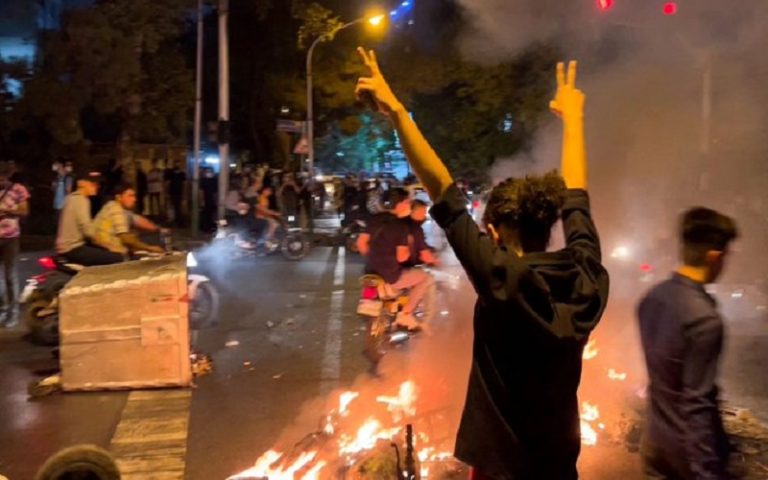
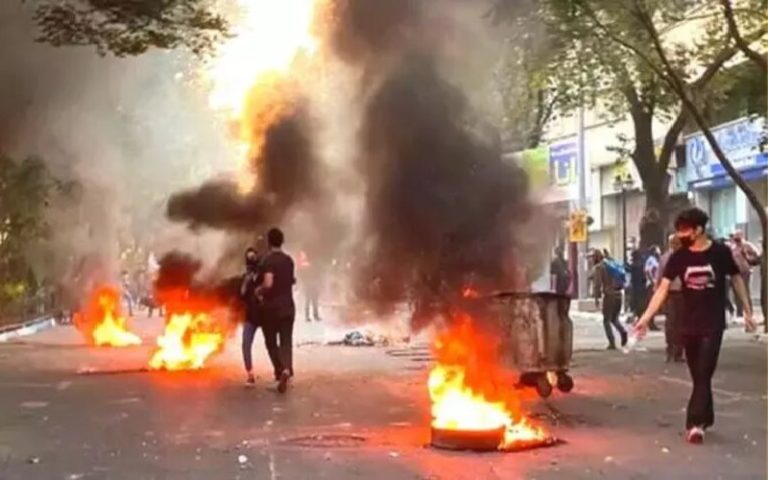
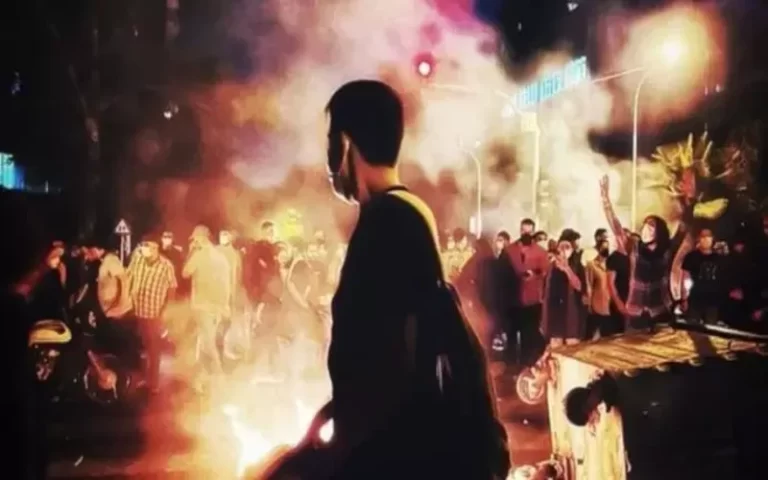
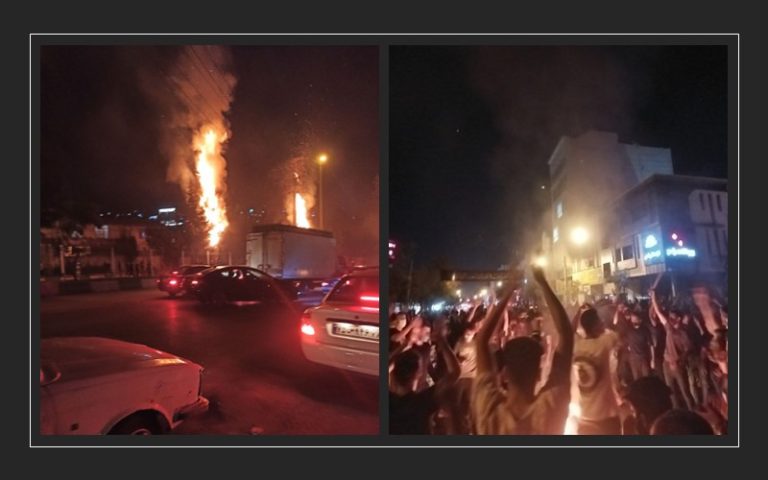
For almost three weeks, people from all walks of life have raged against Iran’s theocratic regime. From the metropoles to the small cities, the majority of the Iranian population has been involved in the protests, which has significantly changed the face of the country’s society.

Fear is being defeated slowly, as the major chant of the people has become ‘Death to the dictator’ and ‘Death to Khamenei.’

We have reached the point where arrests, tortures, and repressive measures will not hold the people from the path towards freedom. Like wildfire, a new revolution is sweeping across the country and finding its way into every Iranian city. This revolution has united the people. From the Baluchis to the Kurds, they are sending a message of solidarity as the country fights to defeat the regime.

At the forefront of this revolution are the county’s brave women, who have been repressed for over four decades by the worst misogynist regime in history after World War 2.

This current situation was predictable, due to the country’s bleak economic situation, runaway inflation, extremely high prices, and a population close to the poverty line. Adding to the crises is the recent elimination of subsidies, growing unemployment, the emigration of the country’s elites, and a frustrated and futureless new generation which, according to the Persian calendar, have called themselves the generation of the ‘1380s’. Their average age is 20.

Seeing the fate of their parents, these youths are unwilling to accept any more of this current situation, while the Iranian regime wastes the country’s entire wealth on malign activities and precedent its security to the people’s prosperity. As a result, the Iranian people have decided to revolt, even at the cost of their own lives.

The regime thought that it could quell the people’s uprisings with violence as they have in the past. However, with the current unrest approaching its third week, times have changed. On October 3, the regime’s supreme leader Ali Khamenei took to warning the people of the brutal repression that was to follow as retaliation to their uprisings.

Dictatorships have historically denied or accepted the collapse of their totalitarian rule, even in its latest moments, but what history has shown is that nothing is more powerful than a rising nation.

For now, the regime can still count on its Revolutionary Guards (IRGC), the infamous ministry of intelligence, and the Basij militias. Tyrannies often fall when losing the power of their repressive institutions and tools, so it is only a matter of time in Iran’s case.

For many years, Khamenei has been trying to push the country’s political body to a younger generation, which he dubbed the ‘Young Hezbollahi’ government. What he did not consider though is the lack of a generation that is ideologically loyal to the regime’s principles, as set by the regime’s founder Ruhollah Khomeini. This can be seen in the lifestyle of many of the regime’s children, many of whom are currently living abroad in extreme wealth.

On October 3, discussing this new generation that has now revolted against the regime, the state-run Etemad daily wrote, “This generation has practiced fighting and winning in video games. The main issue is the recognition of life for all Iranian people, which is expressed in the voice of these youths. They want a good life not only for themselves but for their parents and all Iranian generations. They have seen deprivation in the eyes of their mothers and felt the pain of their fathers’ unsuccessful efforts to live a minimal life.”

They added, “This generation questions the basis of system values ​​and chooses different values, criteria, and patterns. Patterns are taken from the communication space of the new world and virtual space. The new generations realize that women all over the world and throughout history have tried to pursue their demands, but none of these global demands have had anything to do with the hijab. The rights they demand are much more important than the hijab and cover a wide range of basic issues.”

The daily then warned the regime’s officials, writing, “In fact, when the concern is not to improve the lives of the people, a significant part of whom are young people, it is natural that this frustration will continue and lead to protests. Every decade and every generation you look at, the quality of life has declined. That is, the quality of life in the 80s was far better than in the 90s, and the quality of life in the 2000s was better than in this decade.”

Speaking about the root of this situation, the Etemad daily added, “Young Iranians want a normal life, and although some of its statements are economic, its roots are social. It means minimum welfare, social security, bright future, and based on this foundation, other social, and cultural demands are mounted.”

They concluded their piece by stating, “In fact, these protests are not only the protest of this generation but also a symbol of all the restrictions that have been created in the political and social context over many decades. The recent protests are also the natural result of the behavior of a governance system that has no concern for improving the quality of people’s lives.”
Iran, the Resurrection of the Concept of ‘Revolution’

These days, Iran’s political and social environment has witnessed massive storms, which have changed the meaning of all concepts. The weight of the regime, its opposition, and the concepts, like overthrowing the Iranian regime, have all changed and evolved over the past few years.

We all know that the ‘Velayat-e Faqih’ rule, imposed by the regime’s mullahs, was never the will or choice of the Iranian people. The reason for that is very simple.

Ruhollah Khomeini, the regime’s founder, ignored all forms and mechanisms of democratic rule from the beginning. He forbade the formation of a constituent parliament with the participation of elected representatives. Instead, he created the so-called ‘council of experts’, which had the mission to implement Khomeini’s desired constitution based on his own medieval and inhumane thoughts.

When he came to power, he introduced himself as the representative of God on earth, therefore he was even not faithful to his own written laws. In a previous speech, he even stated that he may say something today and change it tomorrow.

He knew much better than anyone else that his system would have no supporters, both domestic and international. Therefore, he decided to wipe out and slaughter all the progressive forces of the country, especially the People’s Mojahedin Organization of Iran (PMOI/MEK) and the Organization of Iranian People’s Fedai Guerrillas, the two major organizations that fought with the Shah’s regime.

In order to combat the progressive forces, Khomeini founded the Islamic Revolutionary Guard Corps (IRGC), which is mainly responsible for the protection of the supreme leader. This institution also advances several objectives in parallels, such as bloody domestic repression and terrorism, hostage-taking, crisis-making, and warmongering outside of Iran’s borders.

Alongside its repressive forces, the regime’s propaganda, mainly its radio and television organization, known as IRIB, is responsible for publishing the narrative that nothing significant is happening in Iran and that the country under the rule of the mullahs is an island of stability, as the regime’s foreign minister recently claimed.

The purpose of this is to despair the people and diminish any hope about any changes towards a free and democratic Iran, while also wiping the people’s heads of this thought.

However, thanks to the presence of organized resistance over the past four decades, the regime’s mission to keep the Iranian people in the dark has been not realized, and all the regime’s dreams of a solid, continuing rule are now fading away.

When we speak about a fundamental change, we should analyze the changes in the ongoing protests. The most important request of the people, the overthrow of the regime, has finally become attainable.

Many people and analysts have introduced this current situation, not as a ‘national uprising’ but as a ‘revolution’, akin to the 1979 revolution that overthrew the Shah’s regime.

This evolution is happening because of the collapse of the walls of fear, the regime’s disbelief in the overthrow, and the resurrection of the keyword ‘revolution.’

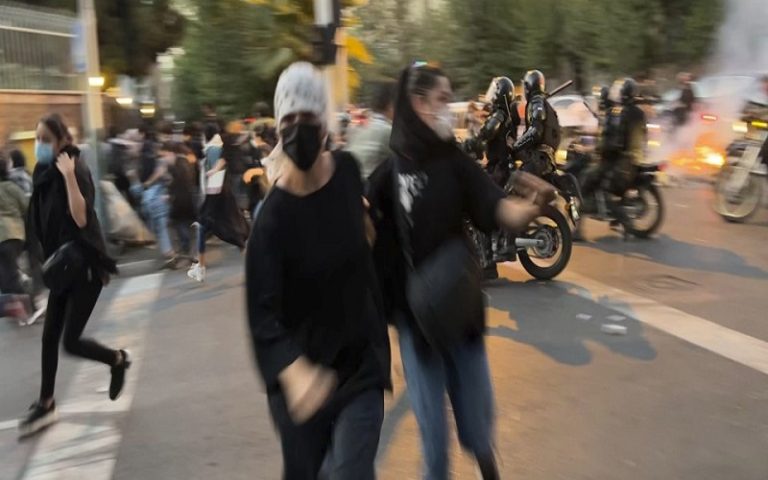
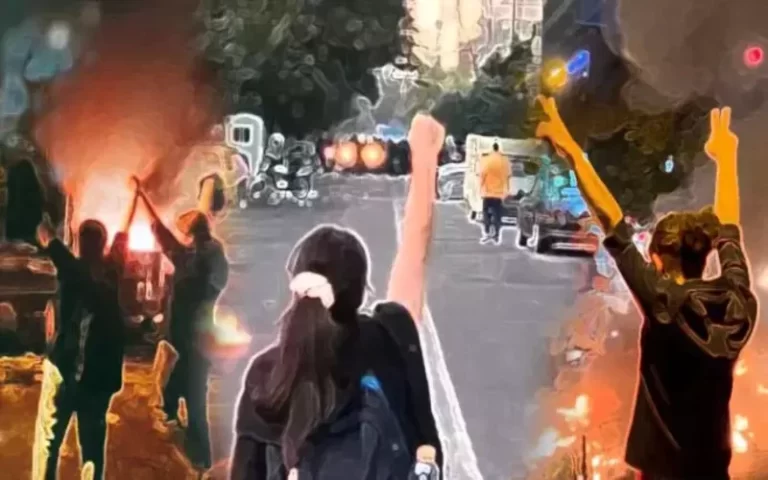
The people, especially the youths, have realized their miraculous power in shaping the destiny of their country. No one is afraid of the anti-riot police, the Revolutionary Guards, the Basij, the plain cloth agents, or the regime’s infamous Ministry of Intelligence. Brave Iranian women and girls have been standing face to face with the regime’s forces and have planted fear deep in their hearts.

This fundamental change, if we don’t pay attention to it, will go astray in the analysis of political and social events in Iran. The only way forward is to recognize the people’s right to self-defense and keep it going.


Iran Regime’s Response to Protests Censorship and Violence

The Iranian regime’s leadership has reacted to the ongoing wave of protests over the death of Mahsa Amini, the 22-year-old who died in police custody over a week ago after being subjected to violence.  The shutdown of the internet in Iran is one of the main aspects that is allowing the regime to increase its acts of violence against innocent civilians.

Since Wednesday, especially, the internet has been severely restricted across the country. Mobile networks are largely switched off according to reports from the organization NetBlocks, an organization founded in 2017 to monitor internet freedom. Access to Instagram, the only major social media platform still permitted in Iran, has still been restricted.

Iran is now subject to the strictest internet restrictions, as a result of the November 2019 massacre. According to human rights organizations, around 1,500 people were killed in protests against rising petrol prices in late 2019. These days, the situation in Iran is very tense. Many people are angry and desperate and feel like to have little to lose. They are suffering greatly from the current economic crisis and from everyday reprisals.

The recent death of a young woman, who was detained for allegedly violating the compulsory headscarf rules, has erupted anger and resentment at the political system. It is a deep internal crisis, and the government has had no other answer to resolve the issues than to conduct further repression of Iranian citizens.

The regime is a political system that is at constant war with its own people. The shutdown of the internet has a clear purpose: to hide the fact that the police and security forces will crack down on the demonstrations with all their might and massacre protesters, and prevent the world from seeing pictures of what is happening.

Restrictions on international Internet access can be judged from two perspectives. This issue can be viewed both from the perspective of citizenship rights and from the perspective of economic benefits.

The developments of the last decade have made the right to access the Internet practically one of the rights of the country’s citizens. That is, just as governments consider access to drinking water, electricity, telecommunication network, and public education as their duty, they should also consider the development and continuation of Internet access as their inherent duty and invest in it.

For this reason, limiting this right can be seen as a form of depriving citizens of their fundamental rights. From the economic perspective, the internet shutdown will only increase the growing poverty levels in the country. At the moment, one in five people in Iran is currently living under the poverty line.

The state-run Donya-e Eghtesad daily pointed out some of the definite losses and disadvantages of the Internet shutdown in everyday life and wrote, “Certainly, one of the first consequences of such decisions is the reduction of sales of online businesses. It should be noted that being connected to the internal Internet (i.e., conditions where access to external services is not established, but internal services are working) does not solve this problem.”

They stated, “A significant number of people do not understand the difference between the domestic Internet and the international Internet, and when they cannot use the Google search engine, they assume that the Internet is completely disconnected.”

The daily further added, “Especially, they do not keep the domain addresses of Iranian sites. There are estimates that Iranian sites spend about 3000 billion rials annually for SEO only on Google to be seen higher and better by customers when searching for goods and services. When Google is down, all these costs are wasted.”

In a national survey conducted by the Iranian Student Opinion Center (ISPA) in the summer of 2021, among the urban and rural populations, for those over 18 years of age, 79% of people said that they use social media; 71% via WhatsApp, 53% on Instagram, and 40% used Telegram. In contrast, the most used internal social media site is Rubika, which only 8% of people have used.

In the same survey, 50% of the society said that they prefer to use only foreign social media apps, while only 2% said that they prefer to use domestic social media apps.

These numbers show that similar domestic tools have not been welcomed by the public, mostly due to the citizens’ mistrust of the regime. This is because nearly almost all of the working IT companies in Iran are cooperating with the regime and their apps are being used for surveillance, or they have functional and quality problems.

In such a situation, it is only natural that the blocking of messenger apps and external social network sites will seriously harm businesses and increase people’s livelihood difficulties.

It should be concluded that the internet shutdown is a double-sided blade for the regime. While helping it to create passing security measures, from a pervasive perspective, it will only increase dissatisfaction among citizens and flame new protests.

Iran’s New Generation Seeks Nothing but Regime Change

In a silly and desperate statement, the Iranian regime’s foreign minister Hossein Amir-Abdollahian claimed that nothing special is going on in Iran, despite the country being in an uproar following the death of 22-year-old Mahsa Amini while in police custody. Amini had been detained for not adhering to the regime’s mandatory hijab rules.

In a recent publication, the NPR media outlet stated, “Amir-Abdollahian acknowledged the tragedy of Amini’s death, but said such incidents happen around the world and downplayed the significance of the nationwide protests.”

In an interview, Amir-Abdollahian said, “I’m assuring them that there is not a big deal going on in Iran. There is not going to be regime change in Iran. Don’t play to the emotions of the Iranian people.”

The question is, what is the reality of the situation and what is the regime facing?

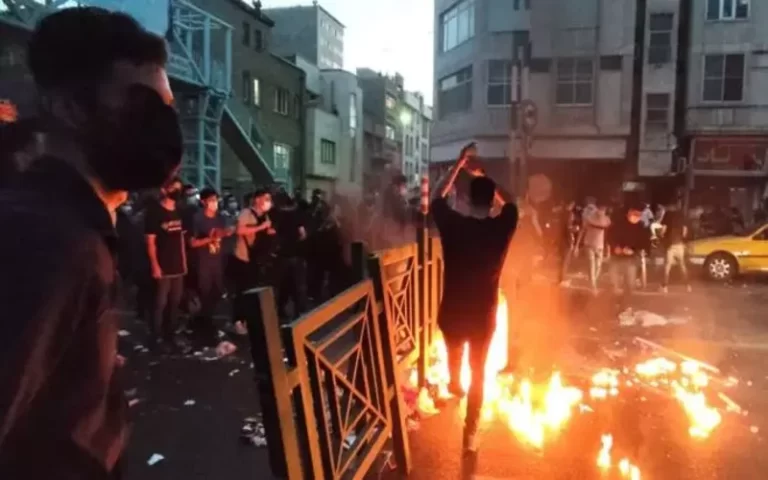
Angry demonstrations are ongoing in dozens of cities across Iran in the most extensive public protests since the 2019 uprising. Iranians have come to the streets to condemn the murder of Mahsa Amini, but they are being faced with violent attacks by the regime’s security forces.

Despite the Internet restrictions in Iran, the conflict between the angry citizens and the security forces has not subsided. People have set police cars on fire in Tehran and chanted slogans against the Iranian regime in dozens of other cities from Qom, Mashhad, and Tabriz, to the south of the country.

In response to these protests, the Iranian regime’s President Ebrahim Raisi has pledged to deal with these demonstrations decisively, and the Ministry of Interior drew the line that it will stand up to the protesters.

Widespread frustrations from the devastated economy to the alienation between Iran’s regime and many of its younger citizens have kept the protests active and ongoing.

This time, the main characters on the ground are not the poor people of the January 2018 protests, nor the middle-class people who mourned because of the Ukrainian plane shot down by the regime’s Revolutionary Guards (IRGC).

These unexpected new protesters are Iranian youths, dubbed ‘generation Z’, and they have imposed a serious challenge on the regime. They have decided to take to the streets and revolt, using this as their main tool to implement their policies and demands.

They have completely shocked the regime with their fearlessness and bravery, and caused concern as they do not care about, or believe in, any of the regime’s factions.

The truth is that the ecosystem of generation Z is the media, especially social media. Through this, the youths are well educated, and they have a much brighter perception of freedom and new thoughts. With their minds opened to the wider world, they refuse to believe the regime’s media, whose articles are routinely filled up with the lies and propaganda of the regime’s mullahs, who are stuck in the Middle Ages.

The pain of livelihood issues has not affected only their fathers; They are also mourning their own livelihood conditions too. The future for these youngsters has become unclear to them, and in their view, a home, a good profession, and marriage are difficult prospects to achieve.

They have been influenced by cultural industries. They see no reason to be limited and restricted from things in their lives and have therefore decided to prevent the regime from disconnecting them from the outer world.

The youths of Iran want to be like their peers in other nations to be free. The fact is that with the help of international media, they have learned how they can live differently from what the regime has offered them and their generations before. They are the children of the 21st century, a century of the explosion of information and digital relations.

The truth is that the regime has no examples of life for the new generation to follow. Instead, they are just trying to force them to accept their old and medieval patterns, but this generation is not accepting them. They demand a regime change. They are filled up with the regime’s theocratic rules. Now cries about the overthrow of the regime can be heard all over the country.

The regime is facing a serious transformation, which will definitely lead to its demise. This is because, unlike older generations of Iranians, generation Z has decided to reach its goals by facing the regime on the streets. At this point, further repression of society, at the hands of the regime, will only have negative effects and radicalize the situation.

Iran’s Youths Broke the Spell of Fear

One of the main characteristics of the recent protests in Iran is the courage and fearlessness of the people, especially youths, revolting against the regime forces.

The behavior and resistance shown by the women of Iran have been exemplary. They have learned that the only solution to liberate Iran from the regime is by portraying their resistance against the Iranian regime’s rule at any price, by overcoming their fears and taking back their fate, which has been taken away from them for decades.

In many videos published on social media, protesters have been seen attacking the regime’s forces and hunting them, despite being not armed.

Now, the time has come where the regime’s mullahs and repressive forces should be afraid of the consequences of their actions over the past decades. Reaching this point is a qualitative session in the people’s fight against the tyrannical regime, who have ruled Iran by relying on intimidation, repression, terror, and violence.

When fear tactics do not work; the inevitable result is the dismantling of the tyranny and totalitarianism of the mullahs.

Over the past six years, with heavy sacrifice, courage, and non-stop struggle, the Resistance units of the People’s Mojahedin Organization of Iran (PMOI/MEK) have shown their power and have despaired the regime. Risking their lives, the organization’s members and supporters have paved the way for a new uprising and encouraged the Iranian people to withstand the regime.

We are now witnessing the formation of hundreds, if not thousands, of Resistance Units up and down the country and in each and every city. The people have learned from their past, and by implementing new tactics they are defeating the regime’s forces. The streets and alleys are in their control as they divide and fatigue the regime’s forces.

Learning from these Resistance Units, many people, including youths, are burning down the regime’s propaganda and other symbols installed in the cities across Iran.

On September 24, the state-run Tabnak daily wrote, “There are organized entities that destroy places, burn them and escape, and repeat the same on other places, which shows that they are organized who commit these actions.”

Astonished and scared about the blazing development of the continuing uprising, Mohsen Mahdian, a member of the regime’s revolutionary Guards (IRGC), said, “I want to tell you that the events that happened in these two days are unprecedented. These protests were unprecedented in the last 40 years. Why unprecedented, because there has never been a period of protests in such a way that you can see violence and disturbance from the first hour.”

He added, “The real story is not the hijab, the story is not about the morality police or the death of Mahsa, they are targeting the system. And this is obvious in their slogans if you analyze them logically over the past two days. You will understand that the slogans are clearly saying that our problem is not the issues that have been said, it is the principle of the rule.”

Iran Is on the Brink of a Revolution

The wall of fear has been broken. In many cities across Iran, women are taking to the streets, leading the protests against the Iranian regime, and fearlessly standing in front of the armed security forces.

The protests began with the death of 22-year-old Mahsa Amini. The regime’s morality police arrested her on September 13 for allegedly improperly wearing a hijab, the mandatory head covering imposed upon Iran’s women. Two hours after her arrest, she was taken to a hospital where, three days later, she succumbed to skull injuries that had been sustained during her detention.

It is not just the violent death of the young woman that has driven women and men to take to the streets to protest. Their anger was also fueled by the authorities’ unabashed attempts to cover up the cause of Mahsa’s death. The moral police claimed that an ‘unfortunate heart failure’ is what took her life.

Thanks to the appeasement policy of the Western powers, who are trying to save the regime from a demise in a new nuclear agreement, very few protests in Iran have made it to international news. In the past year, there are said to have been more than four thousand protests across the country, most of which were only local and were reactions to economic hardships and widespread dissatisfaction.

In their entirety, however, they undermine the legitimacy of the rulers. This also applies to the most recent wave of protests. It is about the core of the mullahs’ regime.

The protests, which have spread like wildfire in many cities across the country over the past week, according to reports, protests have spread to at least 146 cities and all 31 provinces throughout the country. Over 180 people have been killed by the regime’s repressive security forces.

With a mixture of pity for the protesters’ anger and a threat not to take it too far, the regime hoped that the protesters would go home after a few days.

However, with no signs of the uproar easing, the power apparatus is discarding its restraint and starting to threaten the demonstrators. The regime is thus heading for a bloodbath because the predominantly young demonstrators are by no means willing to retreat as the videos from Iran over the past nine days have shown.

Protests that undermine the legitimacy of the regime, now challenging the ruling axis of the mullahs and the Revolutionary Guards, have continued throughout the country.

This wave of protests is growing into a broad social movement that threatens to endanger the very existence of the medieval regime because it is finding support from all social classes in society.

Iran’s young people, want to live in freedom and in a secular country. The unequal showdown has begun, but as history has shown, it seems inevitable that the people will finally win the battle against tyranny, even if they are forced to pay a huge price and make many sacrifices.

Iran’s Regime Claims To Fill Global Energy Gap Despite Crippled Petroleum Sector

0

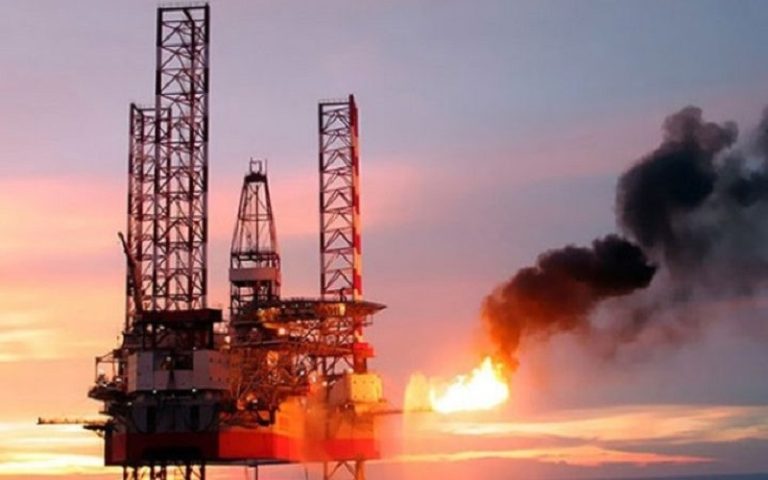
In recent weeks, the Iranian regime’s officials have been constantly exaggerating their huge capacity in oil and gas reserves and promising to provide energy to the world. The regime is desperately hoping to compensate for the shortage of gas and oil across the globe, which is due to the war in Ukraine.

According to the state-run Mardom Salari daily, Javad Oji, the regime’s oil minister, spoke during the 32nd meeting of OPEC+ last week, saying that the world needs the increase of the regime’s oil production, and they are ready to guarantee the energy security of the world.

The spokesperson of the regime’s Ministry of Foreign Affairs said that Iran, as one of the main countries owning oil and gas, has the capacity to cover some parts of the world’s oil and gas necessities. Some of the regime’s MPs have also repeated the same claims.

Despite having the second biggest gas resources in the world, the regime has never been able to find a proper place in the global gas market. This has many reasons. The main reason is the widespread corruption in the regime, which has effectively crippled the hydrocarbon industry.

One of the most famous cases of corruption in the country’s oil industry was the embezzlement of $7.4 billion. According to the regime’s state media, most of the defendants were chief executives of the regime’s petrochemical producers and exporters, which are all under the control of the Revolutionary Guards (IRGC).

The country has been struggling for many years to meet even its domestic fuel needs, let alone being able to secure the global energy shortage.

The optimization of gas consumption, both in power plants and factories and in the sources of consumption, was not taken very seriously and this greatly increased gas consumption in the country.

The balance of gas production and consumption in Iran has become almost negative, and last year’s gas cut in industries and factories was not applicable for domestic gas.

Another issue is that due to the decrease in investment in gas fields, because of the sanctions, and the drop in gas pressure in fields that are already developed but require new investment, the regime is actually facing a drop in its gas production.

In order to circumvent the sanctions, the regime has been smuggling oil and gas to neighboring countries for many years, mostly Iraq and Turkey, at a much lower value than the world-determined oil and gas price, which has caused large damage to the country.

False promises and over-optimism are nothing new in the regime, particularly where the regime’s oil industry is concerned. In 2020, the regime’s supreme leader Ali Khamenei and former president Hassan Rohani promised that they would replace the oil revenue with other sources and that the country would be able to withstand the sanctions. In general, the regime’s oil income has been compromising about 80 percent of its budget over the past forty years. Therefore, such a claim without the proper infrastructure is baseless.

According to the IMF, Iran is now producing about 1 million barrels of oil, while the regime’s officials, in the most optimistic view, have claimed that the regime will be able to produce 3.9 million barrels of oil per day. Of this, they would only be able to export 1.8 million barrels and use the rest for domestic consumption.

The amount of oil being churned out through Russian oil production was more than ten million barrels per day, which has decreased slightly during the sanctions against them. Still, Russia remains the largest oil producer in the world, along with the United States and Saudi Arabia. In comparison, Iran’s oil production and export capacity are still far below that of Russia, so there is no way they would be able to fill the gap in the world energy market.

At the same time, the regime is still struggling with an economic crisis. According to the World Bank report of April 2022, “Only a third of the pandemic-period jobs losses have so far been recovered. Oil revenue shortfalls led to a growing budget deficit, adding to inflationary pressures through the government’s deficit financing operations. Iran’s economic outlook is subject to significant risks.”

Also, a paper published by IMF researchers this month stated, “High and volatile inflation has been an endemic economic and social issue in Iran that has contributed to rising poverty and social tensions.”

What Is Happening in Iran?

Following the brutal killing of Masha Amini, the Iranian people have once again united to fight and defeat the theocratic mullahs’ regime that is ruling Iran. The protests began to fight against the compulsory hijab rules, but have now extended to tackle the Iranian regime’s many forms of repression against its people, from censorship, discrimination, looting, deception, and abusing religion, to torture, human rights violations, poverty, etc.

All these factors have united the people and showed the world that the Iranian people, from all walks of life, have decided that they wish to overthrow the regime. Iran is in the midst of coordinating a new revolution. Masha Amini, as the people say, has become a symbol and a spark for a new revolution and the people’s final round to defeat the regime.

It has reached a situation where there is no more ambiguity among the people about the rule of mullahs. No faction within the regime can play the role of an ‘opposition’ and so-called ‘reformist’ to deceive the people and divert their real will, which is for a free and democratic country.

Only nationwide solidarity with the common goal of overthrowing the Islamic Republic is what lies ahead. The political challenge of each person and trend is to be in harmony with this common national interest. If not, they are playing in the same court as the regime.

After nine days of protests in over 130 cities across the country, three main factors have been realized:

  1. All the cities are targeting the totality of the regime, which is symbolized by the regime’s supreme leader Ali Khamenei as a common enemy.
  2. Emphasis on national unity and solidarity.
  3. The leadership and decisive roles of women in advancing the movement against the entire sovereignty.

In anger, people are revolting against the armed forces, fighting them with bare hands, and in most cases, the regime’s forces are then forced to retreat. Most of them have lost their motivation to fight the people in fear of the fury brewing within society.

After 41 years, the Iranian people are controlling the streets, and in contrast to the protests in November 2019, the people have the upper hand as they continue attacking the regime’s forces.

Among the cities that have risen so far to fight against the regime are Tehran; Karaj; Mashhad; Qazvin; Zanjan; Shiraz; Rasht; Hamadan; Arak; Kerman; Ilam; Kermanshah; Sanandaj; Qorveh; Tabriz; Urmia; Ardabil; Qom; Kish; Gorgan; Sari; Amol; Sabzevar; Fardis Karaj; Naqadeh; Izeh; Bushehr; Marivan; Bandar Abbas; and Rafsanjan etc.

Hossein Saffar Harandi, the adviser to the head of the regime’s Revolutionary Guards (IRGC) revealed the extent of the situation in an interview with the state TV channel Ofogh on September 20. He said, “Well, sir, if you want to express your loyalty to a person whom you think is oppressed, express your sympathy, well, this will be not fulfilled with destruction and obscenity and with gestures that attack national interests.”

He added, “But they responded that this is just an excuse, and our main target is the principle of the system, that means we will deal with the entire system.”

The Fars news agency published a fearful statement from the regime’s supporters in the universities and wrote, “We condemn the abuse of recent events by the adversaries, our main red line is the values ​​and ideals of the system.”

It is true, the people are attacking the regime’s red lines, values, and ideals in their slogans. They are doing so to get their message across and reverberate their fury to the so-called leaders of their country.

Among these slogans are:

  • “Death to Khamenei”
  • “Khamenei is a murderer and his rule illegitimate”
  • “Khamenei you murderer, we will bury you”
  • “This year Khamenei will be overthrown”
  • “Khamenei shame on you, let go of the country”
  • “Down with oppressor, whether Shah or (supreme) leader”

Iran Regime’s Ministry of Culture’s Decision To Eliminate Children’s Intellectual Centers

With the so-called ‘Cultural Revolution’ which took place between 1980 and 1983, the Iranian regime tried to purge the country’s academic world of Western and non-Islamic influences. At that time, the regime used extreme violence to take over the university campuses. Following this decision, many of the country’s prominent academics left the country and the result is that today, we are seeing Iran as one of the countries with the highest brain drain.

On September 13, the state-run daily Salamat news confirmed the regime’s decision to eliminate the academic structure of the country. They wrote, “The issue of the escape of brains and elites has now reached mass migration of doctors and medical staff. According to statistics, 160 cardiologists have migrated in the last year. In the same period, 30,000 medical staff applied for a certificate of good average from the faculties of medical sciences, whose destination was Oman. Also, 16,000 general doctors have emigrated from the country in the last four years.”

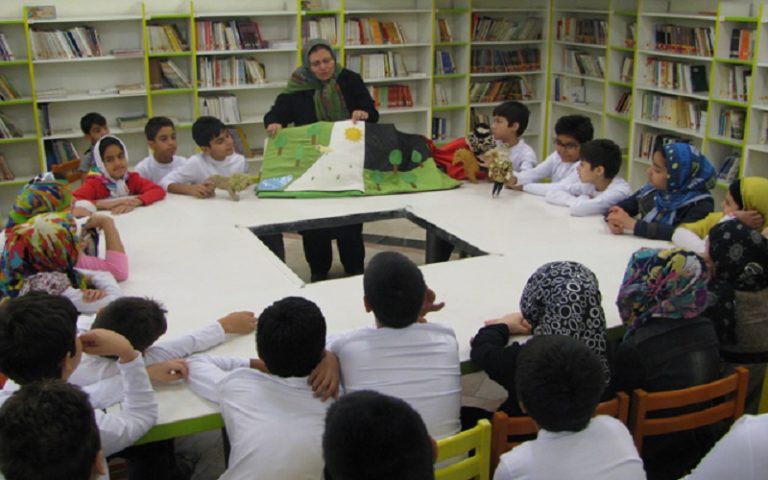
It seems that this was not enough for the regime in destroying the most valuable resource of the country, which is its specialists and intellectuals. Recently, the regime’s Ministry of Culture and Islamic Guidance has decided to hand over the libraries of the intellectual development center for children and teenagers to the country’s public libraries.

This is following the regime’s major plan to inject its intellectual, ideological, and political principles into the content created for children and teenagers.

Publicizing this news, the regime called the libraries of the country ‘public, non-governmental, coordinated with the Islamic principles and influent on the society’ and announced that children and teenagers are at the center of the ‘major policies’ of the regime.

The latest statistics of the reading time per capita for 2020, as announced by the regime’s Ministry of Culture, is two minutes. This indicates that the regime’s plan is nothing more than an injustice to the children of Iran, erasing the opportunity for them to have access to books and libraries.

The regime’s Ministry of Culture suggested this plan according to Article 1 of the law on the establishment and management of public libraries in the country. This dictates that the establishment, construction, equipping, development, management, and supervision of the country’s libraries should be under the supervision of the Public Libraries Institution.

This is despite the libraries of Astan Quds Razavi, the Shrine of Hazrat Masoumeh, the Shrine of Hazrat Abdol Azim, Shahcheragh, National Library, the Ayatollah Marashi Najafi Library, the Islamic Council Library, and other appropriative libraries, being exempt from this law.

The regime has ridiculously claimed that libraries for children are not profitable and are harmful to the country’s economy.

The profitability of a cultural and educational center, such as a library, can never be measured by commercial criteria and perspective. The profitability of libraries and cultural centers, especially for children, in any country will show itself in the promotion of the next generation.

In addition, we should mention that the current high prices of books have brought educational resources out of the reach of most Iranian children. Families even have problems purchasing notebooks for their children, as the price of a single notebook has increased from 60,000 rials to 150,000 rials.

Water Shortage Crisis and the Destruction of Iran’s Water Resources

0

Iran is currently suffering from a number of dangerous natural disasters. One of the most worrying is the drying up of nearly almost water resources across the country. Many of the regime’s environmental experts have been warning about the critical situation of the Mazandaran Sea (Caspian Sea) which is witnessing a rapid water regression, on average around 20 cm annually.

This situation not only is endangering the indigenous mammal life, but also the businesses and livelihoods of the Iranian people, while many ports are becoming practically useless.

Masoumeh Banihashemi, the director of the Mazandaran Sea National Research and Studies Center stated in June, “As a result of the 170 cm decrease in the water level of the Mazandaran Sea since 1995, there has been a great retreat of the sea and an increase in the coastal area in the northern coasts of Iran.”

She added, “Only from 2014 to 2021, with a decrease of about 50 cm in the water level, about 10 to 100 meters of retreat of the Mazandaran Sea have taken place on different coasts.”

Behzad Layeghi, the Director General of the Atmospheric and Oceanic Science Center in the regime’s Meteorological Organization, said that during the last 26 years, the sea level of Mazandaran has decreased by 1.5 meters.

The decrease in the water level of the Mazandaran Sea further adds to a similar situation at Lake Urmia, which has also dried up, with environmental experts being left disappointed as they try to revive it.

Local reports have also alluded to talk of the drying up of the Sarab Niloufer lake in Kermanshah; while in Sistan and Baluchistan province, concerns about the dryness of the Hamon lake have also increased.

The Anzali, Hawizeh, and Miankaleh wetlands are also not in a good condition. The same conditions govern the permanent and seasonal rivers of Iran.

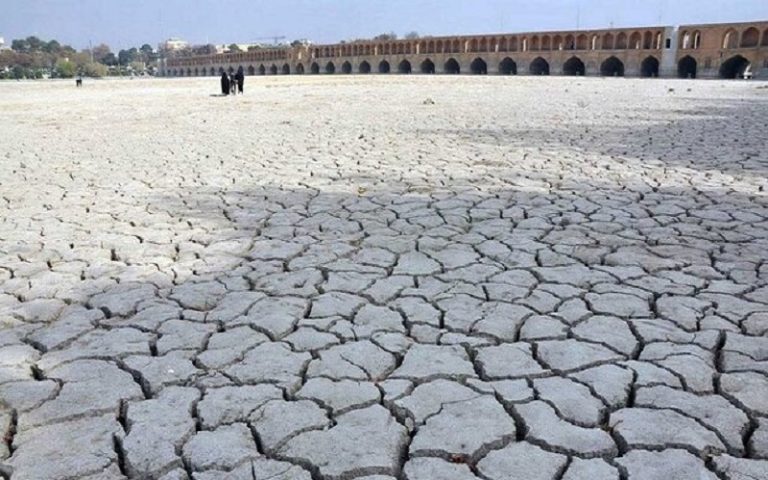
One of the most affected rivers is the famous Zayandeh Roud River in Isfahan. The expansion of occupations on the river’s coasts, agricultural lands, and villa constructions in the boundary and bed of the Zayandeh River, as well as the drying up of this river, has turned this vital artery of the country into a depot for construction debris and pasture for livestock.

The Zayandeh Roud river revival plan was implemented in 2013 but, due to the regime’s benefits and budget deficit, none of the plans were implemented. The drying up of the Zayandeh Roud is heavily affecting the land subsidence in Isfahan.

It is estimated that when the Zayandeh Roud River was flowing, an average of 130 cubic meters of water entered the Isfahan aquifer, but now due to the lack of river flow, the aquifer is not being fed, while withdrawals from underground water sources in the area are extremely high.

Annual water harvesting in the plains downstream of Zayandehrud, including Lanjanat and Najaf Abad, Segzi, and Isfahan-Barkhar, is around 1.2 billion cubic meters which are moving this region towards water bankruptcy.

Even provinces like Mazandaran are suffering from great water shortages. Officials of the Mazandaran Water Company have said that the level of underground aquifers in this rainy province has decreased, and the lack of proper infrastructures and the high population of the area, as well as unrestrained tourism, have disrupted the water supply of this province.

Dehydration and the lack of water have already taken over most of the provinces of Iran, just months after the residents of Chaharmahal and Bakhtiari, the people of Hamadan, and West Azerbaijan, protested the water scarcity. In Hamedan, according to the reports of the regime’s media, the Ekbatan Dam has dried up and the people of Hamedan must use soft drinks instead of water to quench their thirst.

Drought and the lack of rainfall, apart from directly affecting the water crisis in the country, increase the risk of land subsidence. This issue, along with the lack of planning by the regime’s officials, will cause an even greater water crisis that may cause some regions of the country to become unhabitable in the future.