Home Blog Page 244

Sale of Iran’s Historical Items; Is There Anything Left To Sell?

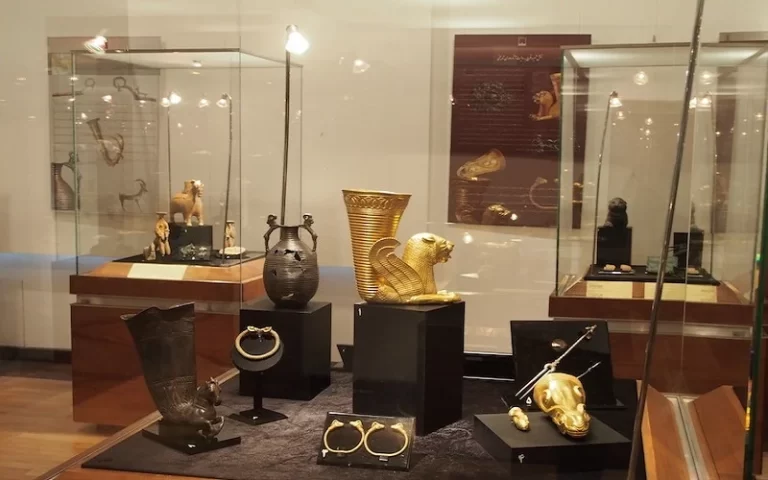
Some of the members of the Iranian regime’s parliament have submitted a plan on the ‘optimal use of antiquities and treasures,’ which is suspected to be the base for auctioning and looting Iran’s historical artifacts.

This plan has already caused many concerns among the archaeological community and the supporters of cultural heritage. This community believes that the approval of such a plan will give legal legitimacy to the excavations and illegal smuggling of historical objects by the regime’s parliament.

Background of the plan:

Back in 2010, Hamid Baghaei, at the time the head of the regime’s Cultural Heritage and Tourism Organization, presented a plan with the same name to the Iranian parliament, but at that time this plan was not approved, and eventually, it was removed from the agenda of the parliament due to the objections. Baghaei was later reported to have been planning to set up a market for buying and selling historical objects in Qeshm and Kish Islands.

Twelve years later, this plan has once again been presented to parliament, this time by the regime’s MPs. This turn of events is indeed surprising as the major duty of the parliament is to prioritize the protection of the national heritage, antiques, and treasures.

As regards Iran’s cultural heritage, the regime has set up inefficient laws to deal with smugglers of historical objects and antiques, which is a major problem as this practice is becoming extremely commonplace, even in cyberspace.

When this latest plan was introduced to the government, the regime’s MPs mentioned that this plan was being actioned because historical objects and antiques are being sold on the black market, and therefore, they must prevent this illegal activity.

As for the benefits of this plan, the regime has stated that the sale of these objects will provide the country with foreign currency. In a more precise sense, the regime is intending to find an alternative way to pay for its malign financial activities.

It goes without saying that in the wake of the country’s dire economic situation, and the inadequacy of the regime to improve the situation leaving the economy in a state of complete bankruptcy, such plans can only signify the regime’s intentions for blatant looting and legalizing it, while at the same time usurping the national assets of the Iranian people. The regime’s officials and leaders have a long history in this regard.

In a letter to the regime’s parliament speaker Mohamad Bagher Ghalibaf, Iran’s archeologists asked him, “Which country do you know, with a historical background like Iran, auctions its national and cultural assets for cash inflow?”

In their letter, they stated, “It has been a long time that the rein of protecting the achievements and cultural heritage of our beloved Iran is out of the hands of those in charge. The number of damaged and looted archeological sites is out of number, and the only solution is to change the law, but not in favor of the profiteer.”

The archeologists went on to state, “Only a glance of any archaeological graduate is enough to clarify that the creators of the project are not only unaware of the axioms and alphabets of archeology, but also they did not gain any consultation of any official archaeological institutions in the country; The presence of the shameless and misleading word ‘treasure’ in the title of the plan makes everything crystal clear.”

Following the objections of the archaeologists, regime MP Hossein Jalali explained that there is negligence in the plan that provides the ground for the smugglers and gives the profiteers free rein. He stated, “To this end, we realized that the plan needed to be modified.”

According to the MPs, the benefits of the plan are as follows:

  • Iran will become a regional hub for the trade of antiquities, providing the country with foreign currency.
  • It will create a new source of revenue for the Ministry of Tourism and Cultural Heritage to help them purchase and preserve antiquities.
  • It will provide abundant job creations for graduates of fields related to history, gemology, and archeology.
  • It will preserve the treasures of civilization and ancient heritage from destruction and unprofessional excavations.
  • It will also preserve the treasures of civilization and ancient heritage by selling them at a bargain price to brokers and smugglers.

Iran: Bread Protests Are on Way, Stronger Than Gas Protests

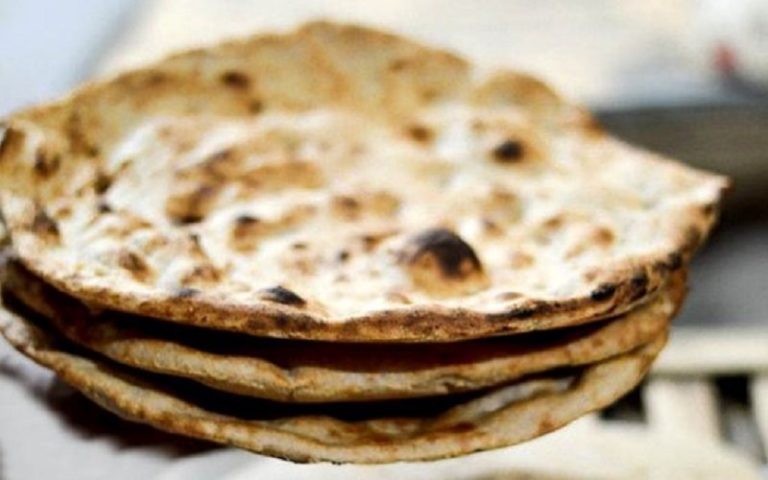
Observers in Iran believe that nationwide protests and uprisings are underway following the Iranian regime’s decision to increase the price of flour and remove subsidized bread from the shelves. The regime’s President Ebrahim Raisi has also breached his promises about ‘eliminating absolute poverty’, ‘constructing one million homes’, and ‘supporting the underprivileged’, even before marking his government’s first anniversary.

Fazel Meybodi, a low-ranking mullah at Qom Howzeh [an Islamic Seminary], challenged the regime’s president in regard to his insufficiency and failure, asking, “Mr. Raisi; didn’t Prophet Mohammad say, ‘Damn be upon who accepts a task without knowledge?”

Meybodi also questioned the authority of the regime’s Supreme Leader Ali Khamenei, who extraordinarily purged Raisi’s rivals during the 2020 Presidential election to appoint his protégé, warning “People’s ‘riot’ is more dangerous than a revolution.”

On November 15, 2019, Raisi’s so-called ‘reformist’ predecessor Hassan Rouhani suddenly increased the price of gas by 200 percent, prompting hundreds of thousands of citizens to protest across the country. Two days later, Khamenei declared his support for the gas price hikes and hampered the Parliament [Majlis] bill to decrease the prices.

Khamenei referred to protesters as ‘rioters and hooligans,’ and ordered the Islamic Revolutionary Guard Corps (IRGC) to, “Do whatever it takes to end [protests].” The IRGC quelled the nationwide demonstrations with helicopters, armored vehicles, heavy machineguns, snipers, and live ammunition, leaving more than 1,500 dead and many more wounded. Now ‘hardline’ and IRGC-backed Raisi have targeted people’s staple food.

A Glance at Bread Price in Iran

The authorities have resorted to increasing flour and bread prices to compensate for their stellar budget deficits, at a time that the country is suffering from an economic crisis due to the regime’s mismanagement and wasting national wealth on terrorism and nuclear ambitions.

On April 26, the main state-run TV channel acknowledged that the price of flour would increase from 25,000 rials [$0.09] per kilogram to 120,000 to 169,000 rials [$0.42-0.60]. The official IRNA news agency unveiled the regime’s critical conditions eight days later, writing in their May 4 publication, “The crisis is [too dangerous] as the only remaining solution is to remove subsidies, meaning a stellar increase in the bread price.”

Following the price hike of flour, the price of bread also soared, while the price of baguettes soared 13-fold. State media soon sounded alarm bells about rampant costs, with the Eslahat News website reporting on May 3, “Sandwich prices have reached 300,000 to 500,000 rials [$1.07-1.78]. It is no longer possible to purchase falafel; its bread costs 100,000 rials [$0.35] alone.”

Adding to the price hikes, the regime is yet to adjust the minimum wages to compete with the skyrocketing inflation in the country. The semiofficial ILNA news agency reported on May 7, “In less than two months, high prices have significantly emptied working families’ product baskets. The minimum wages were raised by 57 percent this year; however, the average increase in foodstuff prices was more than 200 percent, meaning a 150-percent decrease in ‘workers’ real wages.’”

At the same time, the Economy Ministry announced that it would begin rationing bread. The people will be required to pay $0.35 for a loaf of bread. As the workers’ minimum wage is $100 per month, this means that every working family of an average of 3.3 people has to pay $106 monthly in order to receive three loaves of bread per day, which is simply unaffordable considering other expenses.

According to the Iranian government, Raisi is reportedly putting a cap on the price hikes. Cabinet spokesperson Ali Bahadori Jahromi was quoted in an article on the Jamaran website on May 6, saying, “The President will not allow the bread to become more expensive in such circumstances.”

However, even people loyal to the theocratic regime mocked Raisi and his failures again on social media, with many stating that “Raisi’s commanding economy no longer works.”

“The expensive bread is equivalent to cheap lives,” stated the Iranian opposition People’s Mojahedin Organization of Iran (PMOI/MEK) on May 5. “The regime has extended its claws to people’s food baskets. This process began with gasoline price hikes—in November 2019—and continued with increasing the house, pharmaceutical drugs, and foodstuffs prices. Today, it has reached the lone food that remained in people’s tablecloths.”

In a message to Raisi by a group of Basij students on May 5, warned him that “the multiple-fold increase in the flour price may lead to social unrest, particularly when anti-revolutionary media have laid in ambush to drag the country to chaos.”

Iran: Tax Pressure on the People and Exemption for the ‘Super Rich’

In a critical situation where most of the Iranian regime’s officials and media outlets are warning its leaders to take control over the inflation and astronomical prices of most of the basic goods, which are adding to the people’s grievances, Raisi’s administration is compensating its budget deficit with VAT.

Something that has shown this critical situation is the increase in the price of macaroni. The state-run daily Entekhab wrote about this increase, which is the result of VAT, stating, “The maximum consumer price of simple noodles with a value of 500 grams was set at 17,000 tomans, 700 grams at 24,000 tomans, and 1,000 grams at 34,000 tomans. The previous price of 500 g, 700 g and 1000 g of pasta was 6300, 8600 and 12,500 tomans, respectively.”

This is just one example. It is not only pasta prices that have skyrocketed but also the prices of other food items and people’s needs following the increase in ‘VAT’. According to one of the regime’s economic experts, ‘increasing consumption tax’ is one of the main causes of inflation.

Of course, it is not only through VAT that commodity prices have risen exponentially, leaving the poor and oppressed living under pressure, but also through the increase in taxes in the 2022 budget, many people are being systematically extorted.

The state-run daily, Khabar Online said, “Employees pay 10 percent of the country’s tax and profitable state-owned companies nothing.”

While the vulnerable members of society are struggling with the regime’s latest decisions, wealthy institutions such as the Execution of Imam Khomeini’s Order (EIKO), the Mostazafan Foundation, the Housing Foundation, the Relief Committee, etc. do not pay any taxes formally, or they avoid them under various coverings such as tax evasion and arrears, each of which is denoted by astronomical figures.

The state-run daily Kayhan, the mouthpiece of the regime’s supreme leader Ali Khamenei, wrote about tax arrears in their publication, stating, “224 trillion tomans of tax arrears is close to the budget of one year of the country.”

This pressure on the people through direct and indirect taxes is in a situation where state-owned companies, and companies affiliated with the regime supreme leader Ali Khamenei’s office, are either exempt from paying taxes or avoiding paying them altogether.

The tax burden on the people is so great that fears of a social explosion have alarmed even the pro-government media. The state-run Iran daily wrote, “A 73 percent increase in taxes, in addition to putting pressure on poor people, will increase the recession, and livelihood pressures on people will increase this year.”

Even heads of the regime’s Basij are warning the regime and expressing their fears. In Raisi’s recent meeting with some of them in the local university, they accused the administration of having “sold the future government to the rich and super-rich” who do not pay taxes, and “delayed the reform of the tax system in favor of the super riches.”

Of course, they did not name these people as doing so would mean that they would have had to name Khamenei and the institutions affiliated with him.

Another one of the regime’s super-rich institutions is the Revolutionary Guards (IRGC), which controls a large part of the country’s economy. The Khatam al-Anbiya construction base, affiliated with the IRGC and which oversees the country’s largest projects, is one of the largest super-rich institutions in this system.

Iran’s Regime and Its Expertise in Reversing the Truth

In order to get an insight into the Iranian regime’s real behavior and culture, you first need to analyze the speeches and comments of its officials. In a landmark trial in Sweden, which has been ongoing over the last nine months, the former Iranian prison official, Hamid Noury was accused of war crimes for his involvement in the purge of political prisoners, mainly members of the People’s Mojahedin Organization of Iran (PMOI/MEK), during the summer of 1988.

This is the first time that a regime official has been put on trial for this massacre, and the prosecutors have requested a life sentence for Noury, who has been on trial in Stockholm district court since 2021.

According to the testimonies of the prosecutors, survivors, and family members of the victims, Noury was the assistant to the deputy prosecutor of Gohardasht prison, near Tehran, at the time of the event. One of his main duties during the massacre was guiding the victims to the execution chamber.

The life sentence request by the prosecutors has raised much happiness among the victims’ families and the survivors, with many of them expressing hope that all the regime’s officials involved in the massacre will face the same verdict.

Something that hasn’t been discussed much is the rude comments that have been made by Hamid Noury himself, his family, and regime officials during his trial.

In an interview with Press TV, an English TV channel operated by the regime, Noury’s daughter said, “If I want to talk about human rights violations, there are so many that I do not know where to start. Human rights have not been respected at all. My father was arrested in the worst of circumstances when he came here at the invitation of a family.”

She added: “They humiliated him. When he was arrested, he was under a lot of psychological pressure. It was a very difficult time for my father.”

In other interviews, his family members have claimed that the Swedish prison authorities refused to give him access to consult ophthalmology specialists.

The silliness of these claims becomes transparent when a simple search about ‘Sweden’s prison or rehabilitation system’ is made on the internet. The truth is that Sweden has one of the most unique systems in the world, and this country is famous for its human rights values and principles.

In a questionable comment made by Kazem Gharibabadi, the Secretary of the Human Rights Headquarters and Deputy Chief of Staff for International Affairs of the Judiciary of the regime, he claimed that until Noury’s family was informed about his detention, his arrest in Sweden could be considered a case of enforced disappearance.

Gharibabadi said, “Violent treatment during detention and disrespect for human dignity, violation of the 1963 Vienna Convention, and keeping the Iranian embassy and his family unaware of his whereabouts to exert psychological pressure and prevent family visits are just some of the inhumane acts against a person who has been arrested by fabricated and false allegations.”

He added, “The lack of access to a lawyer and the denial of his right to defend himself in court is another proof that this court is a show that was set up with politically biased goals and did not observe the basic principles of judicial justice.”

Now the question remains, how many of these claims are being observed by the regime in its prisons, which according to the former inmates and survivors of the regime’s brutalities, are considered hell on earth?

The footprint of such claims can be overserved in the speeches of the regime’s officials. This is how the regime reverses the truth and devalues the sense of the words. As an example, in the recent speeches of Ahmad Alamolhoda, one of the regime’s main clerics, discussing the reason for the extreme poverty in the country, he said, “The second issue is the issue of not observing hijab and immorality, which is the worst denial and should not be ignored. This laziness and insolence have their effects in the matter of livelihood.”

This statement was so absurd that even some of the regime’s officials were forced to object to such a claim, due to their fear of the people’s reaction. Regime cleric Mohammad Taqi Fazel Meybodi, responded saying, “If not observing hijab is the cause of high prices, the world must be starving. Think a little.”

Cleric Rahmatollah Bigdeli mocked him too, and on behalf of Alamalhoda he tweeted, “The reason for the high cost in the Rouhani’s government was he self, but the unbridled high prices in the time of my dear son-in-law have two causes: brokerage, none obeying the hijab and immorality of women.”

Capital Outflow Intensified in Iran

One of the current major crises in Iran’s economy is the capital outflow, which is implemented by the regime’s officials who are depositing huge amounts of wealth into foreign banks and private accounts. One way in which they transfer the currency they have received from the central bank abroad is under the pretext of importing basic goods. However, in practice, they do not import any goods in return, which has raised many skepticisms even among the regime’s experts.

On May 1, the state-run Etemad Online website quoted one of the regime’s economic experts in their publication, writing, “$20 billion was taken out of the country in 2018 in the name of importing goods, many of which did not return.”

According to unofficial statistics, more than $10 billion leaves the country annually. On May 1, the Jahan-e-Sanat newspaper cited the Central Bank in an article, stating that the outflow of capital from the country in 9 months in 2021 was “more than $10 billion”, which is double the amount compared to the same 9 months of 2020.

They added, “The outflow of capital in the third quarter of 2021 was accompanied by a growth of 96 percent compared to the same period in 2020. The increase of the outflow of capital from the country according to the government’s statistics, can be a warning signal for the situation of investment in the country.”

These are just the official statistics that are ringing the alarm bells. Unofficial statistics are painting a picture of a much worse situation.

In regards to the capital outflow over the past four years, the state-run daily Jahan-e Sanat wrote, “In fact, in a situation where the outflow of capital from the country has increased during the last four years and in 2020 for the second time the depreciation rate exceeded the investment rate, the economic situation for producers was such that in most seasons with increasing production costs and they faced a decline in consumer purchasing power.”

One example that has exposed the severity of this critical situation is the bankruptcy of small businesses. According to Jabbar Kouchaki Najad, a member of the regime’s parliament, “Many small production centers are in crisis and some workers have been laid off.”

It is clear that under this amount of pressure, it is impossible to form a real private sector, and what is left are so-called private businesses that are owned by the regime’s officials, which are operating to support the regime’s looting and thefts.

Discussing the regime’s pressure on the private sector, the Jahan-e-Sanat daily wrote in their April 29 publication, “The government has blamed the private sector and employers for the entire costs. Now we must see how it can continue this policy.”

The Incurable Housing Crisis in Iran

After Ebrahim Raisi took office last year as the Iranian regime’s President, he promised to build one million houses in Iran annually to keep up with demand. He previously claimed, during a visit to Qazvin, that, “It is necessary to build one million housing annually and this is not just a slogan.”

However, after nine months it has become clear that like all the regime’s promises, this was fake too. This comes at a time when the prices of rental properties are increasing, compared to previous years.

In an article on May 1, the state-run daily Jahan-e Sanat wrote, “In April 2022, the average purchase and sale price of one square meter of residential unit infrastructure in Tehran was more than 34 million Tomans, which is an increase of 16.9% compared to the same month last year. The rental housing rent index in Tehran and all urban areas in April 2022 shows a growth of 45.6 and 50.1 percent, respectively, compared to the same month last year.”

In a post on the Iranian parliament’s official website ICANA, which quoted MP Gholamreza Shariati, it is stated that most of the tenants and applicants for housing are the poorest in society, and they are required to pay between 40 and 50 million rials for the initial payment to get housing through the government, an amount which most of these people are unable to pay.

This scandalous failure of Raisi even raised the voices of the regime’s officials. On April 27, the state-run daily Bultan News wrote, “Not only has the government not taken action to address this concern and not properly exercise its role, responsibilities, and duties, but it has been and is a bystander as in the past. So, because of the increasing prices and inflation in this field, renting of rooms and storage has taken the place of housing. According to the developments in the housing market, the inflation of rent in Tehran, according to the latest report of the Central Bank, has reached 46% in March 2022 and 50% in the whole country.”

A spokesperson for the regime’s civil commission later stated, “Unfortunately, the field reports do not reflect good news about the housing rents, and while people are experiencing several percent increases in rents, the government has not put in place a plan to control the market this year.”

This means that the living conditions of the homeless population have worsened compared to previous years, and Raisi’s promises have shown themselves to be nothing but vain statements.

The government has been so reluctant to deliver on its promise that a plan has recently been proposed to outsource the construction of part of the housing to the so-called private sector, and the contract has been signed by Rostam Ghasemi, the director of a government agency.

The involvement of the private sector in the construction of housing means that the government and its private institutions, especially institutions such as the regime’s Housing Foundation and the Khatam al-Anbiya base of the Revolutionary Guards, will be involved.

These looting institutions have been involved in the bulk of housing construction for the past 16 years, and the current situation of skyrocketing housing and rental prices has been the result of their corrupt actions.

There is currently no private sector company, independent of the government, that can build mass housing. This is because institutions affiliated with Khamenei’s office and the government, such as banks, have stolen the housing market from the non-governmental private sector.

This regime lacks the desire and will to solve the housing problem but is content with destroying the homes of poor people in some parts of the country, like the recent incidents of demolition of suburban homes in Zabul and Zahedan on April 15, where municipal and police officers demolished people’s homes.

The following day, on April 16, municipal agents, in cooperation with security and military forces, also attacked the Shirabad area of ​​Zahedan, destroying several residential houses, without any warning.

In video clips posted on social media of the demolitions, a female citizen is seen shouting and crying, saying that she has spent millions of rials to buy and build on the land where her property stood, which was destroyed by the Road and Urban Development Administration in cooperation with the military.

Iran: Producing Nuclear Bombs Under the Cover of a Religious Ban

Many years ago, the Iranian regime’s supreme leader Ali Khamenei issued a fatwa, claiming that the development of any kind of nuclear weapon is considered haram [forbidden in the Muslim faith]. This fatwa is completely in contradiction with the regime’s behavior over the past years, especially where its nuclear activities are concerned.

This contradiction has been mocked by many people, with a number of them comparing it to the regime’s founder Ruhollah Khomeini’s claims in Paris about the offering all kinds of freedom to the Iranian people, from his special villa in Neauphle-le-Château.

Khomeini said, “The first thing for human beings is freedom of expression…we want a government that does not kill someone because they which the death of someone.”

In regard to giving freedom to the women, he added, “Women are free in the Islamic government. Their rights are like the rights of  men.”

Once Khomeini had acquired power in Iran, he began to repress and torture the women, even for a visible strand of hair. His Hezbollah forces started to hunt the women with the slogan, ‘either headscarf or punishment’, as they knew very well that the women would be the first barrier to establishing his medieval and religious fascism.

His priority was not to fulfill the promise of housing for the homeless but to kill freedom in the political atmosphere of the time. He regretted that he had not erected gallows in the squares from the very first day and that he had not broken the pens and shut the mouths of the intellectuals and the revolutionaries. This was the only time where Khomeini criticized himself.

The development of an atomic bomb is a serious priority for the regime for the simple reason that the regime considers it as their ‘guarantor of survival.’ They are convinced that they can survive the inevitable demise of the nuclear bomb.

Ali Motahari’s naive confession about the regime’s decision to create a bomb from the outset of the regime’s nuclear activities is only one of the many examples of secret conversations in the inner circle of power, that reveal the regime’s true evil intentions. He confessed something at the wrong time and wrong place, that should have been kept secret forever.

He stated, “From the very beginning, when we entered nuclear activity, our goal was to build a bomb and strengthen the deterrent forces, but we could not maintain the secrecy of this issue, and the secret reports were revealed by the MEK [People’s Mojahedin Organization of Iran].”

This reality was also expressed as threats and warnings by some of the regime’s officials. On April 10, Mahmoud Reza Agha Miri, President of the regime’s University of Nuclear Engineering, said, “That means you have the power to increase your enrichment to 99% in a short time. You have the power to control nuclear fission if necessary. That means you can charge a warhead and give it to him to do with it whatever he wants. You have the power to do this. We call this an inalienable right.”

Prior to these statements, Mahmoud Alavi had already revealed the ‘secrets of the regime’ in other literature. He said, “In his fatwas, the Supreme Leader stated that the production of nuclear weapons is illegal and that the Islamic Republic will not go for it, but if a cat is kept in a corner; its behavior may be different from that of a free cat. If Iran is pushed in that direction, then it is not Iran’s fault.”

With Ali Motahari’s confession, once again it becomes clear that:

  1. Khamenei and his regime have never given up the evil desire to develop a nuclear bomb.
  2. This vicious policy, which is endangering world peace and security, is contained under a ridiculous fatwa.
  3. Appeasement with this regime, under any guise, will only encourage the regime to gain the bomb.
  4. If it were not for the revelations by the MEK, which took many risks and many accusations against it, Khamenei would have achieved the bomb now.

What Do We Know About Iran Regime’s Mollah Al-Movaheddin Charity?

The Iranian regime’s Molla Al-Movaheddin Charity was established in 1987 by Hussein Marashi, the cousin of Effat Marashi, who is the wife of former regime president Ali Akbar Hashemi Rafsanjani. The charity is one of the regime’s financial empires with undeclared assets and wealth. However, its connection to Mahan Airlines, whose name is linked to the IRGC’s Quds Force, further questions the public credibility of the charity.

This charity owns 100% of Mahan Airlines shares, and 50% of Kerman Khodro shares.

The charity, which is headed by the current spokesman for the regime’s Executives of Construction Party Hossein Marashi, was officially established in the Kerman Registry Office in order to ‘achieve the goals of the Islamic Republic and address the affairs of the deprived people by creating employment and eliminating underprivileged areas.’

It can be said that this charity is the largest financial cartel of the so-called reformist faction of the regime, which has a very wide range of activities, and it currently owns the following companies: Arman Motor Arg; Omran Arg; Negin Bam; Bam Khodro Arman Electric Services; Carmania Automobile; World Tourism Organization; Kerman Civil Organization; Arian Mahtab Gostar Company; Omran Kar Sirjanan; and Jopar passenger trains.

One interesting fact is that Qassem Soleimani, the slain commander of the regime’s Revolutionary Guards’ Quds Force, is still listed among the members of the charity board.

Despite its extensive activities and turnover of a billion rials, there is no clear record of its economic activities. Responding to a question about the financial transparency of this charity, the charity’s founder Hossein Marashi explicitly stated that the law did not mention to whom they should give their financial reports.

While many corruption cases regarding the charity have been uncovered over the years, none of these cases have been investigated due to the support from top-ranking regime officials. When it was suggested that the cases of corruption and lack of financial transparency should be discussed in the regime’s parliament, influential figures stepped in to prevent this process from taking place.

The biggest case against the charity is regarding the activities of Mahan Airlines, a company that has been used by the IRGC’s Quds Force to move troops and equipment for military and terrorist operations outside of Iran in recent years.

This charity has also had extensive economic relations with the infamous Babak Zanjani who helped the regime circumvent international sanctions with the help of Mahan Airlines. Among these corrupt activities was the case of Hamid Arabnejad Khanouki from Mahan, a member of the board of directors of Faraz Qeshm Airlines, which was later renamed Qeshm Airlines.

This charity has also had trade and economic relations with Shahram Jazayeri, another of the regime’s corrupt agents who had the case of Kerman’s Haft Bagh land grabbing in his record but was never audited due to the support from the regime’s officials.

Another surprising fact about this foundation is that despite being founded and operated by the regime’s so-called reformists, many of the regime’s IRGC officers are shareholders or members of its board of trustees. Gholam-Ali Abu Hamzeh, the former commander of the Sarallah Corps in Kerman province, and the names of several other senior IRGC commanders can be seen among board members in this so-called charity.

Reports have indicated that the foundation received at least 400 million Euros, at an exchange rate of 42,000 tomans preferred currency, from Rouhani’s government, but there is no information on how and where this huge amount of money has been spent. More shocking reports have also uncovered that a member of its board of trustees is currently present and active in 23 companies with different positions.

In 2005, Hossein Marashi attempted to change the statute of the charity by getting the signatures of Mohammad Reza Bahonar and Qassem Soleimani to join the board of trustees, but the governor and representative of Kerman announced that they would not be accepting the amendment. However, Marashi, who relied heavily on Soleimani, did not pay any attention to their protests.

According to Article 13 of this statute, the board of trustees must appoint a successor and inherit this charity in practice. Qassem Soleimani’s daughter Zaynab reportedly donated around $2 million towards the marriage of Lebanese girls, which appears to have been funded from her inheritance from her father’s share in this charity.

In addition to these activities, this charity has also established a bank. The Resalat Bank has more than 30 branches across Iran, and some of the senior commanders of the Revolutionary Guards are partners on the board of directors.

No Foreign Company Is Willing To Invest in Iran Regime’s Ports

A brief look at the extent of foreign investments in Iran’s economy reveals the real situation of the overall economic situation.

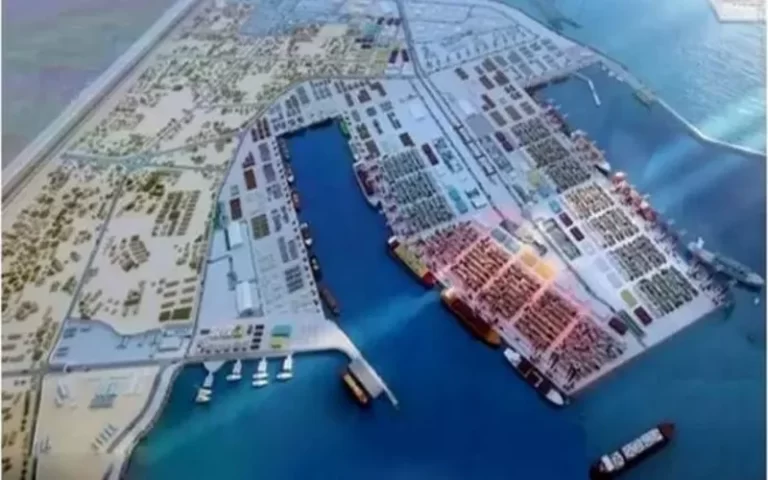
At the heart of this story is the fate of the Chabahar port. It has now been more than two years since a contract for investment has been signed by India, but the Indians have not implemented it yet. As a result, none of the regime’s goals for this port have been realized.

The Indians have requested the application of international arbitration to resolve disputes with the regime and did not allow the regime to use the six port cranes installed by Indian companies at another port, called the Beheshti port.

Rouzbeh Mokhtari, the chairman of the regime’s Board of the Shipping Association, accused the Indians of buying time and added that he believes that no country or foreign company has the appetite to invest in Iran’s ports. He stated that the reason for this is that all of them are waiting to analyze the fate of the regime’s nuclear negotiations.

On April 24, the state-run ILNA news agency wrote in their publication, “The Indian company even with this amount of green light that it has received for investing in Chabahar port, has still problems in the banking sector, and the fear of sanctions has created a graver situation than the sanctions itself.”

They added, “Although the activity in Chabahar port is not subject to sanctions, fear of sanctions for international companies has prevented the formation of the necessary determination to fulfill the contractual obligations and has caused the Indian side to move with caution in the case of the Chabahar port. The Indian operator has not fulfilled its obligations, and one of the reasons is the continuation of sanctions.”

As reported by ILNA, according to published statistics, India has not made any other significant steps to increase ship and cargo traffic in Chabahar, despite the significant volume of trade with Iran, Afghanistan, and Central Asian countries, in addition to the transit of 75,000 tons of wheat through the Beheshti port to Afghanistan in 2020.

According to the Indian media, New Delhi has not yet provided the promised $150 million credit line for the development of the Beheshti port. In February 2016, the loan to Iran was approved through EXIM Bank, but the lender is said to be reluctant to provide the funds due to problems with US sanctions against the regime.

More than 6 years have passed since the agreement on the establishment of transportation, and trade corridors between Iran, India, and Afghanistan called the ‘Chabahar Agreement’ was signed.

According to the agreement reached between Iran and India, the state-owned company India Ports Global Limited (IPGL), under the management of India’s Ministry of Ports, Shipping and Waterways, was selected as the operator of Chabahar port and was scheduled for a 10-year contract after two years of operations at the Beheshti Port.

Now, Chabahar has not only become the transportation and trade corridor between India and Afghanistan and other countries in the region as the regime wished, but it has been downgraded as a port for the transportation of basic goods and minerals and the transit statistics of the container, and transit cargoes at this port have been drastically reduced.

Recently, the Indian government chose Pakistan over Iran to ship its wheat to Afghanistan, and just last week, it was reported that Indian cargo had been sent to Russia via Georgia. Considering Russia’s critical situation at the moment, it seemed like this was the best opportunity for the regime to be a bridge for the transfer of transit cargo from India to Russia, but of course, this did not happen.

The Cause of Violence in Iran’s Society

More often than not, the bitter news published by the Iranian regime’s media or distributed by the people on social media is sad and unbearable.

News about poverty, misery, critical economic situation, and social crises have become a common occurrence, and it seems that people are getting used to such a situation. It may very well be the regime’s evil intention to desensitize people about their miserable situation in a bid to accelerate the speed of the social and moral collapse.

In such an atmosphere, there is no room for the people to think and deal with politics, the future of their society, and of course, the regime’s crimes. One of the dangerous consequences of such an approach by the regime has been the expansion of violence in society.

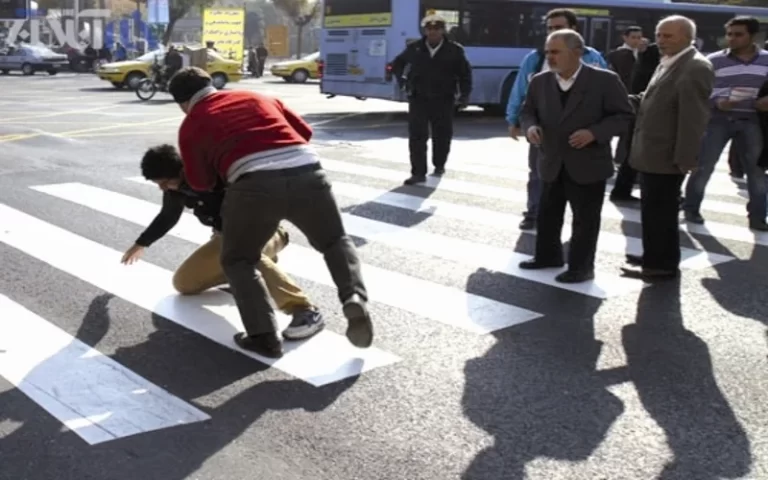
On April 20, the state-run Hamdeli daily wrote, “In Iran, in addition to the (miserable) economic situation, from radio and television to the officials, on a daily basis, they all are busy spreading violence and hatred. Forensic statistics confirm the rage of the people and the aggression in society. Last year, nearly 100,000 people in Tehran went to a forensic doctor because of a dispute.”

In an interview with the state-run daily Rouydad-e 24 on April 13, Hassan Lofti, a member of the regime’s parliamentary social commission, said, “Depression and many social tensions are rampant.”

Such news is abundant in the regime’s media. In another article, the Hamdeli daily wrote, “What has now raised the level of violence in Iranian society is the status of poverty, unemployment, inability to earn a living and class differences. Violence has become rampant.”

Giving a glimpse of this social crisis, they added, “It seems that the garbage bins in many cities do not cover the needs of the many garbage collectors. If you take a short stroll in the streets of the capital, you will see many people from 10-11 years old boys to families and even women busy collecting garbage. People who are collecting garbage with trucks, cars, motorbikes, and bicycles to the poorer who are collecting garbage with shopping carts or plastic bags.”

In reference to the root of the increasing rage in Iran’s society, the state-run Shafa Online daily explained, “It is predictable that when some political and ruling figures in the country promote violent discourse and behavior, violence in society increases as a consequence.”

Discussing the regime’s repressive actions, which have a direct effect on the people’s behavior, this newspaper added, “When violent discourse is promoted from public forums and in contrast to the law, or when it is declared that some music lovers must leave a particular city, it is natural that violent discourse manifests itself in form of violent behavior.”

They further added, “But another issue that forms the roots of violence in society goes back to the pressures on public opinion for a variety of reasons. During the Iran-Lebanon soccer match, it was observed that women were mistreated and attacked with pepper spray. These pressures also form the deep roots of violence in society. The next important issue is the spread of poverty and difficulties in earning a living. A person who has difficulties in meeting his or her basic needs cannot exhibit peaceful behaviors.”

In its concluding paragraph, Hamdeli daily confessed to the lack of freedom in Iran and its consequences despite all the regime’s claims about human rights and democracy. It wrote, “In a society where there is no happiness, there exists nothing. For example, in India, a large portion of the population is poor, to the extent that some people are born as cardboard sleepers and die as cardboard sleepers, but the TV programs and the atmosphere of that society are happy because there is freedom. Freedom generates happiness.”