Home Blog Page 249

Daily Protests in Iran Are Developing Into a ‘Dangerous Situation’ for the Iranian Regime

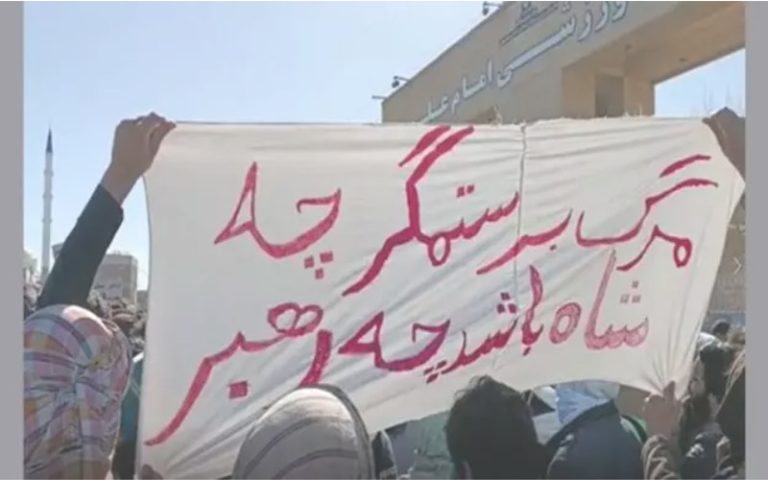
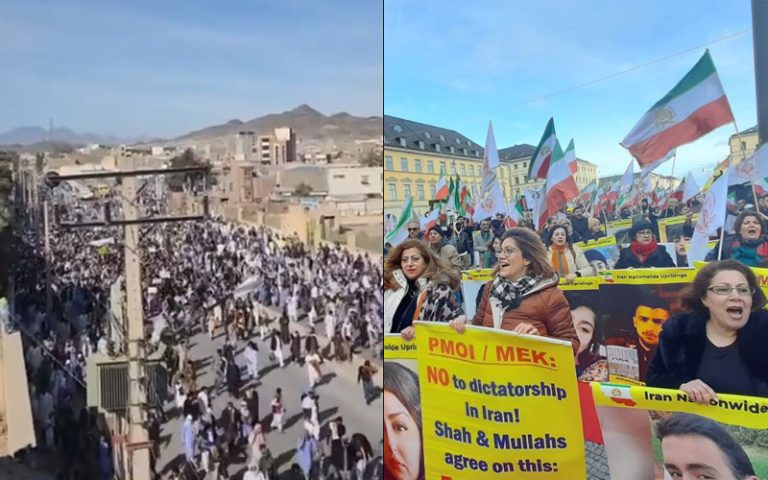
Due to the Iranian regime’s mismanagement of the economy, their rampant corruption, and their brutal oppression of society, protests are a daily occurrence across Iran and the depth of the socio-economic problems in the country have left society on the verge of explosion.

During the recent protests in Isfahan, people who had initially started the protests by demanding their social rights began chanting political slogans. Iran’s state media have sensed society’s restiveness and have acknowledged this fact in recent days.

The state-run Jahan-e Sanat daily wrote on December 2 that the deterioration of the socio-economic situation in Iranian society is due to mismanagement by regime officials ‘from the ninth to the twelfth government’.

As a result, even the middle class in Iran has become poor. Many protests have taken place across Iran since 2009, with people from across all social classes being involved in different protests year after year.

Jahan-e Sanat wrote, “We had the middle class [protests] in 2009 after [sham] elections, then the frustrated poor people who protested in November 2019 after the increase of fuel prices. Recently we had the protest rallies and strike of farmers in Isfahan, a traditional section of society that had not protested before.”

They warned that if the Iranian people’s demands are failed to be addressed by the regime, ‘the situation will become more sensitive’.

Jahan-e Sanat said, “We now see that the protesters include teachers, workers, the lower classes, and other walks of life. This means that people are aware [of the regime’s misdeeds]. This is dangerous if their demands are not fulfilled.”

They referred to the current social situation in Iran as ‘dangerous’ and acknowledged that the regime will most likely resort to further oppressing the Iranian people as the problems have reached a level where it is practically impossible to address the demands of the people.

Jahan-e Sanat said, “No ruler allows protests to advance more than a certain limit. The system is not unaware of the extent of dissatisfaction. But this is not the way to solve the problem. Protests have accelerated since 2009.”

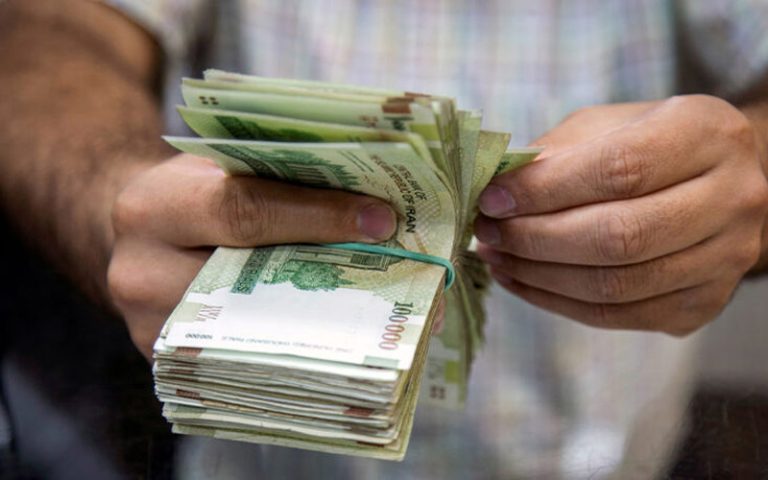
The state-run Ebtekar daily wrote that the levels of inflation in Iran are continuing to increase, leaving society under unbearable socio-economic pressure, and making more and more families fall below the poverty line.

While many commentators blame international sanctions as the reason for the Iranian people’s financial problems, state media acknowledged that people are suffering since the regime has been wasting national wealth on its malign activities.

The regime has wasted over $2 trillion of Iran’s national wealth on its nuclear program so far while the country’s population is struggling to survive and provide for their families. All the while, the state-run Arman daily has stated that ‘there is no economic justification’ for the regime’s nuclear program whatsoever.

The Iranian regime can no longer oppress these protests or deceive people. Once the regime oppresses a protest or an uprising, another unrest begins. As described by Iran’s state media, this situation is “dangerous” for the regime and a real threat to its grip on power.

Huge but Hidden Corruption

0

The chairman of Iran’s Privatization Organization Hossein Ghorbanzadeh previously said that about 525,000 properties have been registered in the SADA system and emphasized that naturally, this number must be much higher about the properties owned by the regime’s officials and their institutions, but they are not registering them and are hiding them from the public.

According to state-run news agency Tasnim, in an interview, he said that despite that these properties should create money they are wasting. The reason for that is improper management, and its result is the waste of these properties. And said that unfortunately, this has become a rule which is one of the factors of corruption and something that is destroying the country’s economy.

He added that in the SADA system 525,000 properties have been registered, from this number 314,000 belong to the executive systems of the government and the rest to other systems. This is while in Turkey about 3 million properties have been registered. And according to the extent and population of Iran, naturally, the number of properties that are owned by the executive systems of the government must be much higher and the regime’s officials have hidden most of them.

He said that the head of all branches of the government and the so-called private-governmental companies and their institutions own many properties and buildings. Even many non-military properties have been usurped by the Revolutionary Guards (IRGC) and other military institutions. Even fields belonging to the medical science universities are captured by them.

According to the latest regime’s statistics two times the liquidity of the country, inventories have been identified, this is something that Mohammad Reza Pur Ebrahimi, chairman of the regime’s Parliamentary Economic Commission, has confessed, which is showing the amount of the wealth in the hands of the regime’s officials.

The estimated value of the properties in the hands of the government is $634 billion. While these properties could be used for urban development, the government has blocked all these fields.

With this $634 billion the regime can administrate the country for nearly 12 years but the budget to run the country is only $58 billion.

If we want to see the amount of this disaster created by corruption like this, it is enough to have a look at the statistics of the government’s budget statistics. According to the state-run daily Rouydad24, what the government has published about the country’s budget is contrary to the speeches of the Head of Program and Budget Organization.

The government is predicting that they will be able to sell about 1.2 million oil barrels. While there is no official statistic about the regime’s oil sale, but estimations are suggesting that the regime was only able to sell about 600,000 barrels.

The amazing part is that the regime said that for the next year’s budget they are not counting on the lifting of the sanctions but has doubled the oil sale predictions. Even if we predict that the government can sell 1.2 million barrels next year, it will have problems entering the gained money into the country’s economy.

Another strange thing is that the government is predicting the exchange rate to be 23,000 tomans for each dollar. While all the predictions for the coming months are speaking about an exchange rate of 40,000 tomans and even more.

The only solution to decrease the exchange rate in a short time urgently is the increase of the export income so that the regime will be able to inject more dollars into the market. But the reality is that the regime is bartering oil, therefore something like this is just an illusion. Now add to this the number of the 44 percent of inflation, then the extent of the disaster will become visible.

The question is how a corrupt government which has captured most of the public’s properties and frozen them so that none of the people can use them, and with such a minimum allocation of budget for the country’s administration and such an oil export and inflation rate, is even able to speak about an economic boom and ‘Resistive Economy.’

This reveals the regime’s lies and deadlock.

Iran Government’s Quagmire in the Nuclear Negotiations

After the first round of Iran’s nuclear negotiations with world powers, known as the JCPOA, Ali Bagheri, the Iranian regime’s lead negotiator said: “The result of the previous six rounds of the negotiations is a draft and not an agreement. And a draft relates to the place of negotiations. Nothing is agreed upon until everything has been agreed upon.” (State-run daily Entekhab, November 30, 2021)

The AP on Tuesday reported: “Iran struck a hard line Tuesday after just one day of restarted talks in Vienna over its tattered nuclear deal, suggesting everything discussed in previous rounds of diplomacy could be renegotiated.” (AP, November 30, 2021)

After this round of negotiations in fear, Iranian state media warned the regime about the failure of the negotiations.

They are suggesting to the regime that the result of the negotiations is a landmark therefore the regime’s government should not lose this opportunity and prevent any failure.

The state-run daily Arman said that the negotiations are hanging on a ‘hair stream’ and suggested to the regime’s negotiators that, ‘this hair should not be cut’ and if it is cut, ‘one of the most difficult stages of the country’s history will happen’ and ‘if the negotiations fail, dangerous events will engulf the country (read the regime), in short, said, the delegation of Iran should not leave the negotiations with empty hands in any circumstances.” (State-run daily Arman, November 30, 2021)

Then this daily attacked the regime’s principlist faction and said, ‘did you have understood now that the lifting of all sanctions is more important than the burning of the JCPOA.’ Then it pointed to the changing approach of many of the regime’s media mainly those affiliated with the regime’s supreme leader who in the past said the ‘JCPOA should be burnt’, but now the situation has become so critical that they are not only speaking about the burning of the JCPOA but, ‘their fear and panic’ has become so widen, so that ‘they are calling the JCPOA, not a harm’ and ‘people who called the sanctions a gift, are now negotiating for the lifting of the sanctions. If they really believed that the sanctions are a gift, why are they now struggling to destroy this gift?” (State-run daily Arman, November 30, 2021)

Iran experts believe that if the negotiators seek an agreement and wish for the lifting of the sanctions, they must pay the price for it. The price as the columnist of the Jahan-e Sanat daily wrote, ‘The United States wants Iran to set aside its ambitions not only in the use of nuclear energy but also in regional affairs defined by the United States and the great world powers. Accept what the United States calls terrorism and abandon support for terrorism as defined by the United States.”

Tehran is making many maximalist requests, none of which have been accepted by the US government, which has led to a halt in the negotiations.

These are, guarantee by the US government not to impose new sanctions and not re-impose previously lifted sanctions. They asked the US government to unfreeze $10 billion in assets as an initial goodwill gesture. And finally, they asked that the US government should ensure that they will not leave the agreement ever again.

Iran experts say Iran does not have the possibility of any new maneuver, and it is facing a dilemma and must make the final decision.

Either it should step back from its conditions and by accepting the conditions of the world power it must drink from a new poison chalice, or it must face itself with greater problems.

To prevent greater dangers, the state-run daily Setareh-e Sobh suggested to the regime: “The negotiators must be fully aware of the consequences of the JCPOA revival negotiations and try to find a way to at least prevent the negotiations to fail once they have entered into negotiations. This could be, in the short term, opening the door to negotiation or finding a temporary agreement with the joint venture and leaving the door open to negotiate to resolve disputes in the future.” (State-run daily Setareh-e Sobh, November 30, 2021)

Assuming that the regime’s negotiators accept such a situation then the regime must accept a serial of retreats and as the regime’s supreme leader Ali Khamenei said, ‘to be caught in endless decline.’ And in such a situation the regime will get to its final stage which is the confrontation with the people.

If Tehran fails to accept the conditions of the US and EU, it will face a great confrontation in the region.

“The domestic, regional and international situation of the country will be very different from the current situation after the possible failure of the negotiations; Nothing more can be said at this time.” (State-run daily Arman, November 30, 2021)

“If the other side does not agree to the demand, it will put Iran (regime) in a much more difficult situation than before, and it is unlikely that even Russia and China will be willing to support Iran (regime). (State-run daily Shargh, November 30, 2021)

Iranian Teachers Continue To Protest Their Rights Due to the Regime’s Inaction To Resolve Their Demands

On December 2, Iranian teachers in nearly 50 cities across Iran held demonstrations to protest the Iranian regime’s lack of action and disregard of the demands that the teachers have been making for months since the start of the academic year.

Both working and retired teachers are demanding for a ‘classification plan’ to be implemented, which will divide teachers into five classes and have their salaries adjusted accordingly.

as well as the adjustment of the salaries of retired teachers and for other socio-economic problems they are facing to be addressed.

According to the Iranian opposition, “The rallies were planned and organized in advance. The Iranian Teachers Coordination Council, which had organized the rallies, had declared that the announced budget for teachers in the classification legislation is not enough and the government and parliament are just trying to put something on paper.”

In a statement from the council, they stated that the government has only allocated 25 trillion rials to the classification plan. Of this total, 12.5 trillion rials cover the needs of the teachers for the remainder of this year, with the rest being postponed until the next Persian year which starts in mid-March 2022 if enough funds are available. The regime’s own experts have stated that the plan requires double the allocated amount.

Iranian opposition highlighted that “Demonstrations took place in at least 66 cities in most provinces, including Tehran, Isfahan, Kermanshah, Khuzestan, Yazd, Fars, Qazvin, Mazandaran, Khorasan, Kerman, and Sistan and Baluchestan.”

Teachers in the provinces of Tehran and Alborz gathered in front of the Iranian Majlis (parliament), while in other cities and provinces, rallies took place outside of the education ministry’s offices.

Among the slogans chanted during the demonstrations were, “Detained teachers must be released,” in response to the regime’s repressive actions towards the protests and demands, and “This nation has never seen such injustice.”

The President-elect of the National Council of Resistance of Iran (NCRI), Maryam Rajavi expressed her support for the protest rallies of the hordes of teachers across Iran.

She said, “Khamenei, Raisi, and his cabinet of IRGC terrorists and torturers squander the Iranian people’s assets to make bombs, missiles, and drones. Thus, they keep teachers and other sectors of society under the poverty line.”

The teachers, who have been protesting since September, are rightly disappointed at the regime’s disregard of the problems they are facing. The ratification of the legislation for the classification plan was delayed by the regime for several months, and they are now only addressing a small part of the problems.

The Teachers Coordination Council has also stated that the legislation to adjust the salaries of retired teachers was brought before the Majlis in the summer but has still yet to be discussed during the parliamentary sessions. A number of reports have suggested that the delay in ratifying this legislation is due to a number of MPs who are circulation petitions against it.

The Iranian opposition in this regard said, “The Iranian regime is literally stealing from the country’s teachers by maintaining their salaries at a low level. Many teachers have committed suicide in recent years due to poverty and not being able to provide for their basic needs.”

Frustration of Iran’s Middle Class

These days, the middle class of Iran still maintains its cultural conditions, but economically it has collapsed into the lower classes, which results in despair, depression, and frustration of this social class.

For more than a decade, the issue of Iran’s class divide, its intensification, and its impact on the shrinking of the middle class has been discussed. The middle class is a social class and includes many people in different occupations who are more similar to the upper class in terms of cultural values ​​and in terms of income they are more similar to the lower class.

According to some classifications, if the upper class makes up 10% of the rich and the lower class makes up 50% of the poor; the middle class comprises the middle 40% (6th to 9th deciles) of society in terms of wealth.

The inflation rate in Iran is skyrocketing so that the destruction of the middle class is near. On the other hand, the class divide in Iran is so deep that it seems that society is being divided between the upper and lower classes.

Thus, if we consider the economy from the process that has started from Mahmoud Ahmadinejad’s government until now, based on inflation, etc., the economic power, the purchasing power of the people, and the power to receive services have been reduced. Therefore, the people are getting weaker and weaker.

For example, a retired teacher used to receive a salary of 300 thousand tomans and the price of a golden coin was 100 thousand tomans. Now the teacher’s salary has reached 6 million tomans, but the price of a gold coin has reached 12 million tomans, and this is a sign of the decrease in people’s purchasing power. In addition, other groups face various problems to perform any type of activity.

Many people, despite being economically in the lower class, are still culturally active in the middle class. Thus, we are witnessing the fall of the middle class to the lower class of society.

Over time, with increasing inflation, the middle class becomes completely weak, and this has an impact on culture and society. That is, the weakening middle class shows the economic dilemma in the first place, but then it will affect the culture and social relations of the society with devastating impacts.

Because this group is a cultural producer and builds the culture of the society, if they have economic problems, they would no longer have enough opportunities to build progressive ideas for the society.

Things that happen positively and justly in a society are the responsibility of the middle class. Some economic experts argue that a society is a happy and prosperous society in which a small part of the society belongs to the upper and lower classes, and most of the society belongs to the middle class.

In Iran, in the current situation, since 2006, with the wrong policies of the ninth, tenth, eleventh, and twelfth governments, etc., the gap between rich and poor widened so that the middle class became thinner day by day. A very small percentage of them went to the wealthy community, and a large part of them sinks into the lower classes of society.

The problem that has arisen in Iran because of the regime’s corruption is that the class divide is not only economic. The most important problem that the middle class has found is that people who are still intellectually and culturally middle class are belonging economically to the lower class.

This contradiction between their economic, intellectual, and cultural status has made them despair, frustrated, feel no security, facing failure, depression, anxiety, and other mental disorders.

As a result, the situation of Iran’s middle class is very bad economically and culturally, because financial worries have become the priority of this group. Since they cannot meet their cultural and mental needs, this paradox has created a very bad mental state for these people, and when it expands to their families, it will cause all kinds of injuries in this class.

Hamid Noury Contradicts His Own Testimony During His Trial

The fifth day of former Iranian prison official Hamid Noury’s own testimony at his trial in Sweden took place on Wednesday, as he answered questions from Swedish prosecutors in regards to his role in the 1988 massacre in Iran. As a prison officer, he was responsible for leading political prisoners to their deaths at the gallows in Gohardasht Prison.

Noury’s defense flipped between denial of basic facts of the case and acknowledging the crimes of the Iranian regime. Prior to him giving his own testimony, the case had been temporarily expedited to Albania to hear from witnesses who were former political prisoners during Noury’s time working at Gohardasht Prison, an establishment that Noury vehemently denied ever existed. He also referred to the massacre as a ‘made up and undocumented’ event.

Noury’s remarks reflect the inherent secrecy of Iran’s judicial system, not any serious dispute about the severity or focus of the massacre.

Over the years, the Iranian Resistance has uncovered details of the massacre and identified sites of mass graves where the victims were hastily buried. As these mass graves are evidence of the atrocities that took place during the summer of 1988, the Iranian regime has desperately tried to cover them up by ordering construction projects to take place on those sites.

The massacre took place following a fatwa issued by then-Supreme Leader Ruhollah Khomeini that ordered the executions of dissidents, most notable supporters of the Iranian Resistance group, the People’s Mojahedin Organization of Iran (PMOI/MEK). In his testimony, Noury claimed that the fatwa had been fabricated in order to defame the regime, however, many regime officials stated that Khomeini had personally issued the order stating that the MEK was an ‘enmity against God’.

Despite his attempts to dispute the nature of Khomeini’s fatwa, Noury’s further testimony communicated very similar devotion to its contents. Much of his time before the Stockholm court involved praising regime authorities and maligning the MEK, while also emphasizing the strength of the conflict between the two.

Noury claimed that the mere mention of the MEK would permit him to be arrested upon entrance to Iran and detained. He even told the prosecutor to avoid mentioning the Resistance group or it would create problems for him later.

The former prison official also spoke freely about the use of solitary confinement and white torture as forms of extrajudicial punishment, noting that both this and flogging were common strategies for dealing with inmates who flouted prison guidelines, communicated with one another using Morse code, or gathered in groups for athletics or for prayers.

Within the last few months, a number of legal scholars have argued that the religious motive behind the mass executions means that the massacre can be identified as an act of genocide. The conferences, where the discussions took place, came about in response to this year’s presidential campaign in Iran, and later the ‘election’ of the regime’s new president, Ebrahim Raisi.

Raisi’s installation was part of a process whereby Khamenei has consolidated power among ultra-hardline figures, including participants in the 1988 massacre. Raisi’s participation occurred at the highest level, as he was one of four officials to serve on the Tehran death commission, which had jurisdiction over Evin and Gohardasht Prisons.

Amnesty International spoke out in June following the announcement that Raisi would become the regime’s president and said that the fact that Raisi has been allowed to become president instead of being held accountable for his history of human rights abuses is a “grim reminder that impunity reigns supreme in Iran.”

When Noury’s trial began in August, it became the first threat to the regime’s impunity. It highlighted that the massacre can be subject to ‘universal jurisdiction’, meaning that serious violations of international law can be tried and prosecuted in any court around the world.

Iran: Militarization of the Country’s Education

0

After months of contention about the position of the minister of education, the Iranian regime’s president Ebrahim Raisi finally introduced a Revolutionary Guards officer called Yousef Nouri as the new education minister and with him completed his gunslinger cabinet, and he finally received the vote of confidence from the regime’s parliament.

The Raisi government that has been introduced by the regime’s supreme leader Ali Khamenei as the young Hezbollahi government, and now it has become clear that the purpose of such a government is nothing other than the repression of the people that we have seen in the recent protests. Meanwhile, the regime’s agents last week shot freely the people with pellet guns used usually for hunting birds.

The truth is that the academic education of this person has nothing to do with his new post. The degree they have obtained for him, namely a doctorate in tourism management from Allameh Tabatabai University, has nothing to do with the responsibility of the country’s education department, but this is nothing new in this regime because the country’s and people’s development are not the primary interest of the regime.

Dissidents say the authorities have added other titles to him, to make him a little more acceptable and tolerable. Like the “Management of NGOs and charities of the Tehran Beheshti University of Medical Sciences and Health Services.” What has a charity to do with the country’s education is another question that is exciting someone’s wonder.

In addition to these, a handful of other mouth-filling titles have been also added to him, including: Member of the Electronic Content Commission of the Supreme Council of Cyberspace, which, of course, is exactly in line with the repressive nature of this IRGC officer.

For many years, Nouri has also been one of the directors of the IRGC’s looting and plundering foundations known as the Khatam al-Anbiya camp and the Foundation of Martyrs and Veterans Affairs, and the representative of the Khatam camp in the government and the regime’s parliament.

The parliament’s vote of confidence for this person was also a calculated act precisely, as the representative of Nishapur in a parliament session said: “The parliament has decided to vote for you.”

In the parliament, this new minister said something that revealed his inhuman and dangerous nature for the future of the country which are its children: “We must turn education into Qasem Soleimani Educational School and educate supreme leader loyal students.”

He added: “The Higher Education Council, “acted completely passively against the influence of the 2030 document (The 2030 Agenda for Sustainable Development). The leaders of the 2030 educational document in Iran, who are very few, should know that they will have no place in education.”

The UN’s 2030 agenda with 17 Sustainable Development Goals and 169 targets is speaking about the people’s and world development in a peaceful and free atmosphere, something that is in contradiction with the nature of this ‘Pasdar’ (IRGC officer) and his regime. Khamenei opposed the document in 2019, and Raisi in September this year repealed it forever.

Naturally, such a combination of people for the cabinet was not unexpected, because of its miserable situation especially after the November 2019 protests. A combination of mass killers, corrupt officials, and thieves.

Thirteen Revolutionary Guards ministers and at least nine Revolutionary Guards governors make up the collection, which even made headlines in the government newspapers, that the interior minister has appointed the governors from the Revolutionary Guards because of their military and security experience (read repression) to control the provinces and protests.

As Thousands of Iranian Prisoners Were Executed in the 1988 Massacre, the World Remained Silent

0

With the trial of former Iranian prison official Hamid Noury still ongoing in Sweden, proceedings were briefly expedited to Albania in order to hear the testimonies from survivors of the 1988 massacre in Iran, where over 30,000 political prisoners were sentenced to death for being supporters of the Iranian Resistance group, the People’s Mojahedin Organization of Iran (PMOI/MEK).

Noury was arrested by Swedish authorities in 2019, under the principle of universal jurisdiction, due to his involvement in the massacre in the summer of 1988 when he was a prison official in Gohardasht prison in Iran.

Former political prisoner Mohammad Zand, who gave his testimony during the trial said, “I was told that I would be the first person to testify in Albania. So, I went to the District Court in Durres. When I first entered the hall, I suddenly recalled those dreadful days in the 1980s, mainly the summer of 1988, when my friends were executed rapidly.”

Mohammad Zand was a student in 1981 when he was arrested for supporting the MEK, which was in its infancy at the time. He was sentenced to 11 years in prison, while his brother Reza, who had been arrested around the same time on the same charges, was sentenced to 10 years. While Mohammad walked free at the end of his sentence, Reza became one of the victims of the 1988 massacre who were suddenly given death sentences in response to a fatwa issued by then-Supreme Leader Ruhollah Khomeini.

Zand said, “When it was my turn to stand before the death commission, I asked its four members why they had executed my brother even though the criminal court had already assigned him a lesser sentence. I was given no answer, but it later became clear that the very purpose of the death commission was to eliminate anyone whom they believed was still committed to the democratic principles of the MEK.”

Zand believed that his brother was aware of his fate, as Reza handed over his personal belongings to him and conveyed the notion that they would not see each other again. He also expressed the same notion to their mother during her last visit to the prison to see both of her sons.

Before the atrocities began to take place, prisoners reportedly became suspicious of something about to happen when newspapers stopped being delivered and televisions were removed from cells. So much so that ahead of the prison is locked down, prisoners felt the need to inform their friends and family members of their suspicions to get the message to the outside world.

Zand said, “It is, therefore, deeply upsetting to know that no one took action to stop it. Iran’s own activist community could not have done much on their own, but parts of that community reached out to their friends and families within the Iranian diaspora and urged them to raise the alarm about an emerging crime against humanity.”

When the Iranian Resistance took evidence of the massacre to Western powers, their concerns were ignored by those governments, who were more focused on appeasing the Iranian regime to keep friendly relations. Sadly, this strategy still continues to this day while the regime continues to cover up its brutal crimes against humanity.

In June of this year, the extent of their cover-up came to a head when the sham election of Ebrahim Raisi was orchestrated by top officials in the regime. Raisi was one of the worst perpetrators of the 1988 massacre, being one of four officials who sat on the Tehran ‘Death Commission’, sentencing thousands of prisoners to their deaths.

Zand said, “Western powers’ refusal to condemn Raisi’s particular role in the 1988 massacre represents a whole new dimension of their betrayal of shared humanitarian principles. Fortunately, this collective inaction is counterbalanced somewhat by the efforts of rights groups like Amnesty, and especially by the various lawmakers and the single European government that has actually committed to a reversal of longstanding policies of neglect.”

Even a Revived JCPOA Will Not Save Iran’s Government

Since the beginning of the Iranian regime’s nuclear crisis, which was revealed by the Iranian opposition group, the MEK, the policies of this case have been determined directly by the regime’s supreme leader Ali Khamenei, and the games played by the different governments are just a show to buy time and deceive the Western governments.

This is something that is now continuing in Ebrahim Raisi’s government. All the negotiators are obliged to follow the orders and the policies dictated by the regime’s supreme leader.

However, the regime faces many problems so that even the orders of the supreme leader and his insistence on the continuation of the nuclear program will not help them.

All the sides from the US to the EU and even the regime have announced that they desire to restart and continue the JCPOA but even in Obama’s government, the US was unable to meet their obligations to the JCPOA because they were faced with an obstacle of the initial US sanctions imposed before the JCPOA, which were imposed because of the regime’s missile, human rights violations and support of global terrorism and has nothing to do with the regime’s nuclear case. This is something that will continue even if the JCPOA will be revived once again, in Biden’s government and this US government has not had the power to remove any of them.

In addition, in Trump’s government, the US has imposed many new sanctions which will continue too, and the sad news for the regime was that even China and Russia accepted the implementation of a weak JCPOA despite all the regime economic auctions and one-sided concessions.

Under UN Security Council Resolution 2231, UN arms embargoes on Iran were lifted last fall. The Trump administration has re-imposed arms embargoes on Iran by issuing a new executive order so that any country that intends to trade arms with Iran will be sanctioned by the United States.

The Biden government has not yet decided to repeal the previous executive instructions, stating that similar regulations had been enacted in previous governments even before the JCPOA, but that it could not repeal them.

Assuming an agreement to revive the JCPOA, the US Congress could impose similar sanctions on Iran under other headings, such as terrorism, missiles, region interference, and human rights, to prevent the JCPOA from being implemented.

In such a situation, the regime is unable to hold direct talks with the US and must negotiate with the P4 + 1 countries.

In the absence of the United States, none of the world powers can solve the problem, nor can they fully implement the JCPOA without the United States. The reality of the current global economy is that the United States accounts for about 25 percent of the global economy and about 80 percent of global trade is in US dollars, so trade with the United States is a priority for all the world’s most influential countries.

No country can be trusted as a mediator between Iran and the United States. The United States trusts the three European countries as mediators, while Iran does not trust the Europeans, and in return Iran trusts Russia and China as mediators, but the United States considers these two countries rivals and enemies.

Since Trump’s exit from the JCPOA, the regime’s economy has been under the most severe economic sanctions, with devastating effects. Some of its officials have also stated that the government is smuggling oil and smuggling foreign currency.

The problem is that the government of Raisi and no other government will be able to run the economy by smuggling. The economy based on smuggling will lead to the growing spread of corruption and poverty, inflation.

The JCPOA was implemented only in the final year of the Obama administration, from late 2015 to the beginning of 2017. And the implementation of JCPOA in that short period was incomplete, and the regime was not able to benefit from its created economic opportunities, because it wasted the funds on malign activities.

With more than $27 trillion, Iran has the fifth-largest natural resource wealth in the world, even more than China. China’s GDP at the time of the Iranian Revolution in 1979 was $191 billion, which has reached $1,400 billion over the past 40 years, which is about 14% of the world economy. At present, Iran’s GDP with a population of more than 85 million is about $191 billion, while the GDP of the small neighboring UAE country with a population of 9 million is $360 billion.

China has rescued more than one billion people out of poverty over the past 40 years, raising its per capita income from $195 to $10,500, while according to official figures, at least 30 percent of Iranians live below the poverty line.

This is the only solution for the regime to secure its future which of course is all in contradiction with the principle of the regime which is based on repression, corruption, and looting.

  1. Efforts to revive the JCPOA to lift economic sanctions, change the international environment, reduce tensions with the United States, open relations with world economic powers, and positively change the country’s macroeconomic characteristics.
  2. Solve problems with countries in the region.
  3. Revolution of privatization of Iran’s economy. To eliminate corruption, rent-seeking, and the great change in the country’s economy and industry, the first and most important measure is the privatization and rescue of Iran from the state economy. In the last forty years, no government in Iran has succeeded in doing this important thing.
  4. Establish effective rules and regulations to attract tens of millions of Iranians abroad. There is great scientific, technical, political, economic, and financial potential in Iranians living abroad. During the last forty years, no government has been able to prevent the escape of the country’s brains and capitals. On this issue from the people’s view, the regime must beg for pardon from the people and step back and face justice for forty years of crime and destruction and this is the only real solution for Iran. Anything else is a waste of time.

Iran’s 1988 Massacre Will Never Be Erased From History

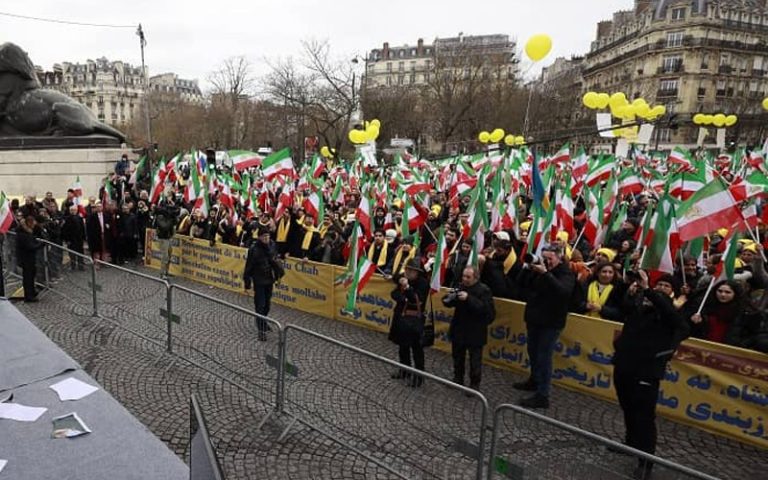
As the trial of former Iranian prison official Hamid Noury races forward in Sweden, supporters of the Iranian Resistance have been continuing their demonstrations outside of the court. Since the trial started in August, many witnesses and plaintiffs have been giving their testimonies, with Noury recently being given his chance to defend his case.

Noury was originally arrested for his involvement in one of the worst crimes against humanity in Iran’s history. He was given four days to give his testimony in the court in Stockholm, but his remarks only highlighted the scale of the atrocities that took place during the 1988 massacre.

In 1988, then-supreme leader Ruhollah Khomeini issued a fatwa, a religious decree, ordering the purge of Iran’s prisons of all supporters of the People’s Mojahedin Organization of Iran (PMOI/MEK). Following Khomeini’s orders, more than 30,000 political prisoners were executed across Iran.

In charge of sentencing, the prisoners to death were the ‘Death Commissions’, panels of judges who summoned the prisoners before minutes-long trials before sending them to the gallows if they refused to denounce their support for the MEK.

At the time of the massacre, Noury was a senior prison guard in Gohardasht prison in Karaj who routinely tortured and threatened prisoners housed there. Witnesses in his trial gave detailed, horrific accounts of the atrocities that took place in the prison and stated how Noury would read out the names of prisoners, take them before the Death Commissions, and then lead them to the Death Hall, where they were hanged in groups, with Noury actively assisting in the executions by pulling the chairs from under the prisoners’ feet.

During his testimony, Noury mostly went off-topic with other discussions before being reminded by the judge, on several occasions, to keep within the context of the case.

Noury resorted to lies and profanity against the MEK, rehashing the propaganda that Iranian state media and the regime’s foreign agents have been disseminating for decades. Albeit contradictory, his remarks were nonetheless important, revealing the fear that the regime has from the main opposition movement.

As the main defense for his case, Noury completely denied the 1988 massacre, claiming it never happened, and referred to it as a ‘made-up story’. He claimed that Gohardasht prison did not exist and at the time the massacre took place in the summer of 1988, said he was on leave during those three months.

Further denials included the fact that Khomeini had issued to fatwa to execute all MEK prisoners, and that there were political prisoners in Iran’s jails.

These lies are so outrageous that even the regime’s officials have not made such claims. During the 33 years that followed the 1988 massacre, the Iranian Resistance has gathered so many documents that this crime against humanity can’t be denied.

The MEK has delivered hundreds of testimonies from survivors of the 1988 massacre, and the families of the victims, to several international human rights organizations. They have also uncovered and documented several mass graves where the Iranian regime secretly buried the bodies of the victims.

Many months after the massacre had taken place, the families of the executed prisoners were informed of the death of their loved ones but were not told where the bodies had been buried.

Noury’s testimony is further proof that the regime has been given a free pass for its crimes for too long. It is worth noting that Noury’s trial is just the beginning of the justice that must be served. All the perpetrators of the 1988 massacre, including regime supreme leader Ali Khamenei and president Ebrahim Raisi, must one day be tried for their crimes against humanity.